Beginner's Guide to Ecommerce AI Chatbots

Running an ecommerce business means you face constant customer questions. Shoppers expect instant answers, often in under a minute on live chat. This pressure can feel overwhelming, especially after business hours.
What if you had a 24/7 sales assistant? It could answer questions, suggest a product, and guide users to checkout without you lifting a finger.
This beginner's guide shows you how an AI chatbot makes this possible. Modern ai chatbots are an accessible solution. You can easily set up ecommerce chatbots, like the Sobot chatbot, to improve your ecommerce store. This powerful AI tool for chatbot ai ecommerce is simpler than you think.
Why Your Ecommerce Store Needs an AI Chatbot
An AI chatbot is more than just a tool; it's a vital part of a modern ecommerce strategy. It helps you solve common problems like high support costs and missed sales opportunities. By automating customer interaction, you can improve your service and grow your business.
Boost Sales with 24/7 Engagement
Your online store is always open, and your customer service should be too. An AI chatbot provides instant support, day or night. This 24/7 engagement turns late-night browsers into buyers. When a customer has a question after hours, the chatbot provides an immediate answer, preventing them from leaving your site. This constant availability is crucial, as studies show that live chat can increase conversion rates by 40%. A chatbot offers this benefit without needing a live agent, making it a powerful sales tool for any ecommerce store.
Slash Support Costs with Automation
Answering the same questions repeatedly costs time and money. An ecommerce chatbot automates this process, freeing up your team for more complex issues. For example, the Sobot chatbot can handle routine queries, which improves agent productivity by 70% and can save you up to 50% on agent costs. This efficiency is a significant advantage. AI chatbots reduce customer service operational costs by up to 30% by handling simple interactions automatically. This automation allows your business to scale its customer support without a proportional increase in expenses.
Enhance the Customer Experience
A great shopping experience builds loyalty. AI chatbots create a smoother journey for your customers by providing instant, accurate answers. This quick service leads to higher satisfaction. When a customer gets help right away, they feel valued. This positive interaction makes them more likely to return. In fact, customers who engage with a chatbot are 63% more likely to come back to a website. A better experience directly translates to a stronger customer relationship and more repeat purchases.
Gather Valuable Customer Insights
Every conversation is an opportunity to learn. A chatbot collects important data from every customer engagement. You can learn what products are popular, what questions people ask most, and where they face problems on your site. This information is gold for your marketing and product strategy. For instance, if many users ask about a specific feature, you know to highlight it in your marketing. This direct feedback helps you understand your audience better and make smarter business decisions.
Choosing a No-Code Ecommerce Chatbot
Selecting the right tool is your first step toward automation. A no-code chatbot platform is perfect for beginners. You can build and launch a powerful chatbot using a simple point-and-click interface. This approach saves you time and removes technical barriers, letting you focus on your ecommerce business.
Key Features for Chatbot AI Ecommerce
When you evaluate a chatbot platform, look for features that directly support ecommerce growth. Your ideal tool should make your job easier. Here are the essentials:
- No-Code Interface: You need a platform that lets you design conversations without writing any code.
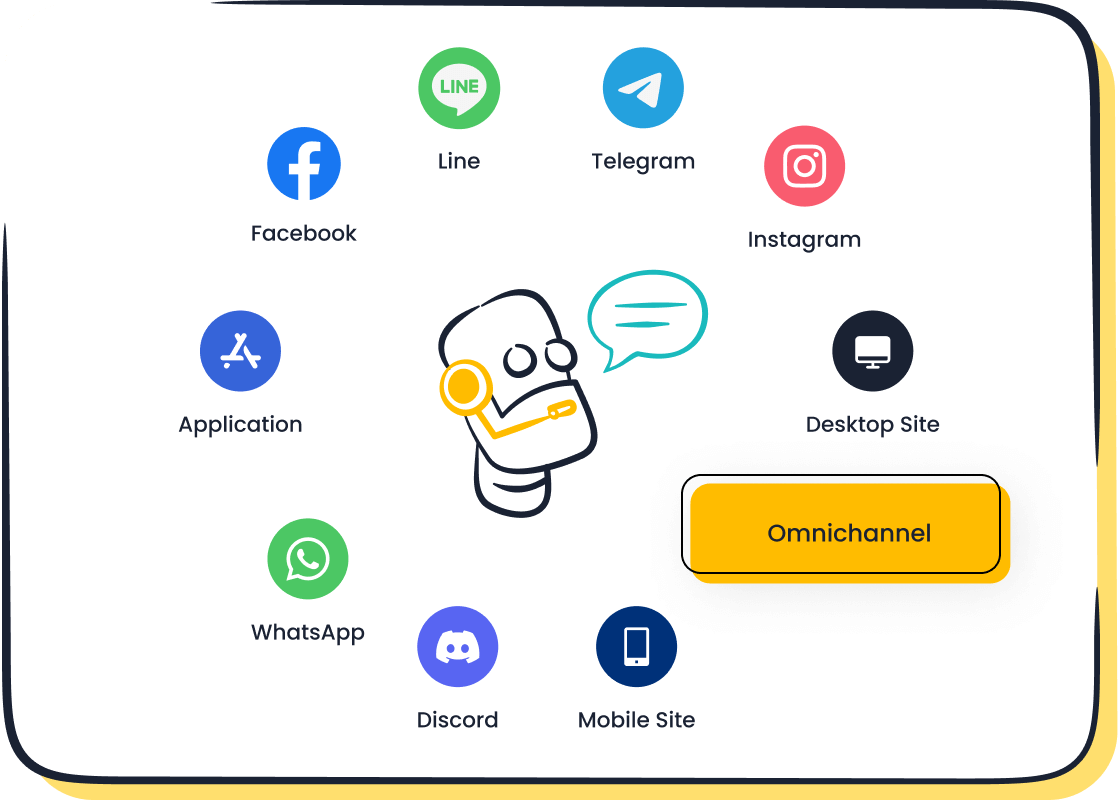
- Omnichannel Support: Your customers use different channels. Your chatbot should meet them there.
- Multilingual Capabilities: You can expand your market reach by speaking your customers' language.
Today’s customers interact with brands across multiple platforms. Conversational AI ensures a consistent experience by integrating with channels like WhatsApp, Instagram, and Facebook Messenger. This omnichannel approach creates a unified customer journey, enhancing satisfaction and engagement.
Understanding Free vs. Paid Plans
You will find many free and paid options. Free plans are a good starting point, but they often have limits. You might see vendor branding on your chatbot or face caps on monthly conversations.
Paid plans unlock the full power of a chatbot ai ecommerce tool. They offer advanced features like deep customization, robust analytics, and integrations with other business systems. These features help you create a more professional and effective ecommerce chatbot experience.
Introducing the Sobot Chatbot
The Sobot chatbot is a powerful, beginner-friendly solution. It offers all the key features you need in one easy-to-use platform. You get a no-code builder, multilingual support, and omnichannel capabilities. Sobot integrates easily with major ecommerce platforms like Shopify and WooCommerce.
This ai tool is more than just a chatbot. It is part of an all-in-one contact center solution that includes live chat, a ticketing system, and voice capabilities. This allows you to manage all customer communications in one place, creating a seamless experience as your business grows.
Setting Up Your First Conversations
Once you choose a platform, you can start designing your chatbot's conversations. This is where you bring your brand's personality to life. Your goal is to create a helpful and smooth experience for every visitor.
Crafting a Friendly Welcome Message
Your welcome message is your chatbot's first impression. You should make it warm and inviting. A good welcome message immediately tells visitors how the chatbot can help them. You can also add a touch of personality with an emoji. 👋
Tip: Start with a simple greeting like, "Hi there! I'm here to help you find products, track your order, or answer any questions. What can I do for you today?" This sets a helpful tone from the start.
Proactively Engaging Website Visitors
A smart chatbot doesn't wait for customers to start a conversation. You can set it up to proactively engage visitors based on their actions. Your website visitors leave clues through their behavior. These actions can trigger a helpful message at the perfect moment. For example, if a user spends more than 60 seconds on a product page, your bot can ask, “Need help deciding if this is right for you?”
You can also create targeted messages for different situations:
- For Repeat Visitors: Welcome them back with a special discount to show you value their loyalty.
- During Seasonal Campaigns: Greet visitors with messages about your Black Friday or holiday promotions.
This proactive interaction makes your site feel more responsive and can guide a hesitant shopper toward a purchase.
Using Buttons for Guided Navigation
Buttons make it easy for customers to get what they need without typing. You can add buttons to your welcome message and other responses. These buttons act like a menu, guiding users to common destinations like "Track My Order," "Browse New Arrivals," or "Contact Support."
Using buttons simplifies the user's journey. It provides a quick and structured way for them to find information. This leads to a faster, more efficient experience and higher customer satisfaction.
High-Impact AI Chatbots Use Cases
A chatbot can do more than just greet visitors. You can use it to drive sales, improve service, and grow your business. These practical applications turn your chatbot into a powerful engine for your ecommerce store. Leading brands like OPPO use these strategies to achieve incredible results. By implementing a Sobot chatbot, OPPO saw its chatbot resolution rate climb to 83% and its customer repurchase rate increase by a massive 57%.
These results come from using ai chatbots for specific, high-impact tasks. Let's explore four use cases that can transform your business.
Personalized Product Recommendations
Imagine having a personal shopper for every visitor on your site. A chatbot can act as this guide. It uses advanced AI to understand what a customer wants, even from vague descriptions. This creates a dynamic and helpful shopping experience.
Your chatbot can analyze a customer's browsing habits and past purchases to offer a tailored product recommendation. This is far more effective than showing everyone the same popular items. For example, a chatbot like Amazon's Rufus can take a request like, "Find me a bohemian dress under $100," and provide perfect suggestions. This level of service makes product discovery easy and enjoyable.
The impact of a good product recommendation on sales is huge.
- Amazon reports that its recommendation engine drives 35% of its sales.
- Personalized product recommendations can increase revenue by up to 26%.
- Most companies see a 5-15% revenue lift from personalization.
Your chatbot can also suggest complementary items to increase order value. When a customer adds a camera to their cart, the bot can recommend a memory card or a camera bag. Business leaders report that this type of upselling has increased sales by 67%. A smart product recommendation turns a simple purchase into a complete solution for the customer.
Instant Order Status Updates (WISMO)
"Where is my order?" (WISMO) is one of the most common questions in ecommerce. Answering these queries manually consumes a lot of your customer service team's time. An AI chatbot completely automates this process.
You can set up your chatbot to provide instant, 24/7 order tracking. Customers get the information they need right away without waiting for a human agent. This simple feature has a massive impact.
- It provides automated, 24/7 order tracking updates on your website, app, or through SMS and WhatsApp.
- It transforms customer frustration into trust by keeping them informed.
- It frees up your support team to focus on complex problems that require a human touch.
Automating WISMO requests can resolve up to 70% of these tickets without any human help. This improves your team's efficiency and boosts customer satisfaction. Customers value predictability. Giving them easy access to order tracking information makes them feel valued and reduces their anxiety. In fact, loyal customers are five times more likely to repurchase from a brand that provides a great post-purchase experience. Your chatbot delivers this experience by making order tracking effortless.
Reducing Cart Abandonment
Shopping cart abandonment is a major challenge for every ecommerce business. A proactive chatbot can step in at the critical moment a customer is about to leave. It can identify the reason for abandonment and offer a solution to save the sale.
For example, if a customer hesitates on the checkout page, the chatbot can intervene. It can address common issues like high shipping costs or problems with a discount code.
| Scenario | Trigger | Chatbot's Opening Line |
|---|---|---|
| Unexpected Shipping Cost | User lingers on the checkout page. | "Hi there! Just wanted to let you know we offer free shipping on orders over $75." |
| Failed Payment | A payment transaction fails. | "Looks like you might be having some trouble at the payment step. Can I help?" |
| Forced Account Creation | User stays on the "Create an Account" page. | "In a hurry? You can check out as a guest. No account needed!" |
This intelligent interaction can recover a significant number of lost sales. Some ecommerce brands using a chatbot ai ecommerce strategy report a 17-37% higher cart recovery rate. By offering a timely discount or clarifying a shipping policy, your chatbot can provide the final nudge a customer needs to complete their purchase, boosting your conversion rate.
Automating Lead Capture
A chatbot is also an excellent tool for capturing leads without disrupting the shopping experience. Instead of an annoying pop-up form, a chatbot can start a natural conversation. It can engage visitors who show interest, like someone who spends a long time on a product page.
The chatbot can ask a few simple questions to qualify the lead, gathering information like their name, email, and what product they are interested in. This interaction feels helpful, not intrusive. The chatbot then automatically sends this information to your CRM for your sales team to follow up.
This method is more effective than traditional web forms.
- Chatbots can increase lead capture rates by up to 25% compared to forms.
- One study found that digital bots increased sales by an average of 67%.
- Some companies have seen conversion rates jump by 30-50% after switching to a chatbot for lead capture.
The data shows a clear trend toward more conversational methods.
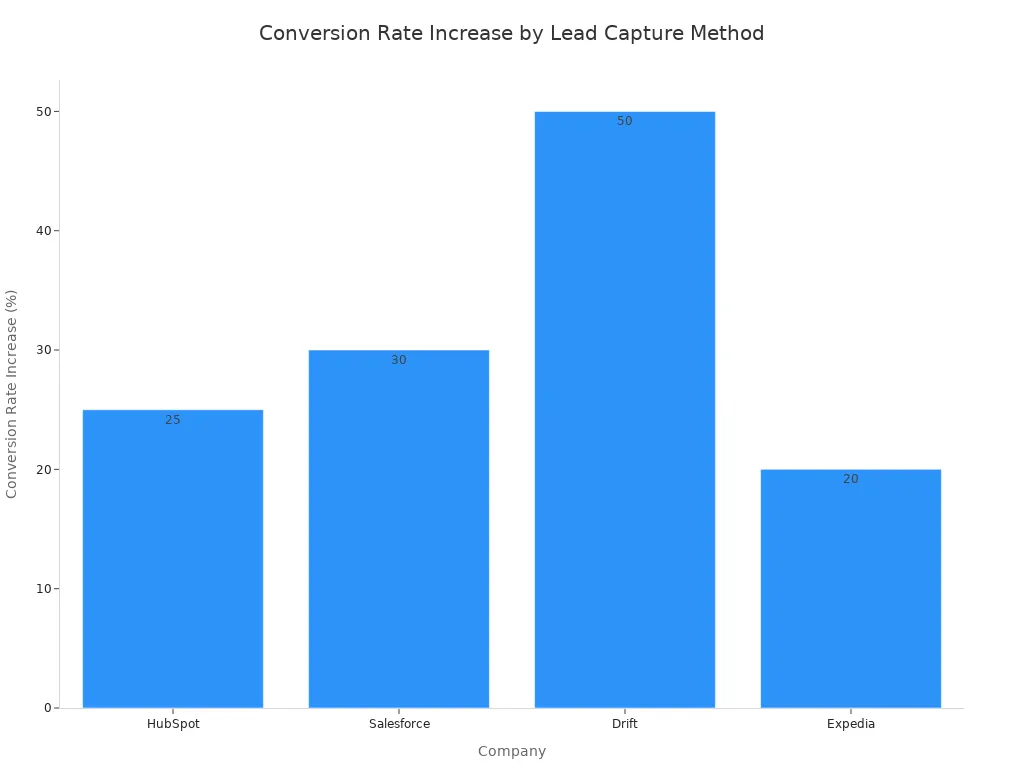
By using a chatbot for lead capture, you create a better experience for potential customers and generate higher-quality leads for your business.
Best Practices for a Successful Launch
You have your chatbot ready. Now you need to launch it successfully. Following a few best practices ensures your new tool helps customers and grows your business from day one.
Making Your Chatbot Visible
Your chatbot cannot help customers if they cannot find it. You should make it easy to see without annoying your visitors.
- Placement: Place the chat widget in the bottom-right corner of your website. This spot is common and users know to look there.
- Appearance: Use a color that contrasts with your site's design. This makes the icon stand out.
- Timing: You can set the chat window to appear after a visitor spends 5-10 seconds on a page. This gives them time to look around before you offer help.
Tip: Keep the chat icon small and clean. It should be appealing but not block important content on the page.
Designing a Seamless Human Handoff
Sometimes, a customer needs to speak with a person. A good chatbot knows when to step aside. You should set up clear rules for a smooth transfer to a live agent.
Your chatbot should hand off the conversation in these situations:
- Direct Request: The user types "agent" or "talk to a person."
- Bot Failure: The bot does not understand a question after two tries.
- High-Stakes Keywords: The customer uses words like "refund," "cancel," or "legal."
This process prevents customer frustration. It also ensures complex issues get the attention they need from your team.
Testing and Refining Your Chatbot
A successful launch is just the beginning. You must test and improve your chatbot continuously. Look at key metrics to see how well it performs. Pay attention to the resolution rate, which shows how many problems the bot solves on its own. Also, track user sentiment to see if customers are happy with the interaction.
You can use A/B testing to find what works best. For example, try two different welcome messages to see which one gets more engagement.
| Version | Welcome Message |
|---|---|
| A | "Hi! How can I help you today?" |
| B | "Welcome! I can help you track orders or find products. What are you looking for?" |
By measuring the results, you can make data-driven decisions to optimize your bot's performance over time.
You can see that AI chatbots are a simple and powerful tool for your ecommerce business. These AI chatbots improve your customer service, boost sales, and create a better shopping experience. An ecommerce chatbot is an achievable step for any ecommerce owner.
Your journey starts with a single step. Explore a no-code chatbot platform like the Sobot platform. You can set up a simple welcome message today. This small action can bring a big payoff for your ecommerce service.
FAQ
How much does an AI chatbot cost?
The cost varies. Many platforms offer free plans with basic features. Paid plans unlock advanced capabilities like deep customization and analytics. You should choose a plan that matches your business goals and conversation volume.
Is it hard to set up an AI chatbot?
No, it is not hard. Modern platforms like Sobot offer a no-code, point-and-click interface. You can design and launch your chatbot without any programming experience. This makes it easy for anyone to get started.
Can a chatbot speak multiple languages?
Yes, many chatbots offer multilingual support. This feature helps you serve a global audience. The Sobot chatbot, for example, can interact with your customers in their preferred language, helping you expand your market reach.
How does a chatbot connect to my store?
Chatbots connect to your store through simple integrations. Platforms like Sobot integrate seamlessly with major ecommerce systems, including Shopify and WooCommerce. This connection allows the chatbot to access order information and product details to help your customers.
See Also
Elevating E-commerce Customer Satisfaction Through Intelligent Chatbot Interactions
Crafting Effective Chatbots for Optimal Website Performance and Growth
Selecting the Ideal Chatbot Software: A Comprehensive Implementation Guide
Effortlessly Deploying Website Chatbots: Practical Examples for Quick Setup
Building Your Website's Chatbot: Simple Steps for Seamless Integration

