How to Train Employees for Guest Service in 2025

Guest service in 2025 isn’t just important—it’s vital. Customers expect more than quick responses; they want personalized experiences and seamless interactions. Businesses that prioritize customer service often see incredible results. For example:
- Companies focusing on customer experience report an 80% revenue increase.
- Customer-centric brands enjoy 60% higher profits.
- 90% of businesses now make customer experience their top priority.
These numbers prove one thing: great guest service tips and strategies can transform your business.
To meet these growing demands, you need innovative training methods for your employees. This is where Sobot shines. With solutions like its Voice/Call Center and omnichannel tools, Sobot helps your team deliver exceptional service while making every customer interaction meaningful.
Core Principles for Exceptional Customer Service
Understanding Guest Expectations in 2025
Guest expectations are evolving rapidly, and understanding them is key to delivering good customer service. In 2025, customers will demand hyper-personalized experiences, seamless technology integration, and flexible service options. For instance, 71% of consumers expect personalized service, while 75% of travelers prefer businesses that cater to their preferences. Guests also value wellness and sustainability, such as eco-friendly practices and wellness-focused amenities.
To meet these expectations, your customer service team must embrace a customer-centric culture. Equip employees with tools like Sobot's omnichannel solution, which consolidates customer data across platforms. This ensures your team can provide personalized and consistent service, no matter the channel. By understanding what your customers value most, you can create positive customer experiences that drive guest satisfaction.
Personalization and Empathy as Key Drivers
Personalization and empathy are the heart of exceptional customer service. Did you know 76% of shoppers are more likely to buy from brands that personalize their experiences? Empathy, on the other hand, builds emotional connections, making customers feel valued. Together, these elements foster loyalty and trust.
Your employees can achieve this by leveraging tools like Sobot's AI-powered Voicebot. It recognizes customer intent and provides tailored solutions, freeing your team to focus on complex issues. For example, The Ritz-Carlton empowers its staff to create personalized interactions, resulting in 82% of guests reporting higher satisfaction. When your team combines empathy with personalization, you cultivate a customer service culture that leaves a lasting impression.
Building Trust and Consistency in Service Delivery
Trust is the foundation of guest satisfaction. Customers expect consistent service across all touchpoints. In fact, 78% of customers use multiple channels to complete transactions, making consistency essential. A seamless experience reassures customers of your reliability and builds long-term loyalty.
To achieve this, train your team to deliver consistent service by using tools like Sobot's Voice/Call Center. Its unified workspace ensures agents have access to accurate customer information, reducing errors and repetitive questions. Consistency not only enhances guest satisfaction but also strengthens your brand's reputation for customer service excellence.
Essential Skills to Train Employees for Great Guest Service
Communication Skills for Clear and Effective Interaction
Clear communication is the backbone of good customer service. When your employees communicate effectively, they reduce misunderstandings and create a smoother customer experience. For instance, research shows that clear communication can prevent miscommunications that often lead to customer frustration. It also helps employees demonstrate empathy, which makes customers feel heard and valued.
To train employees in communication, focus on practical methods like role-playing exercises. These allow your team to simulate real-life guest interactions and practice delivering clear, concise messages. For example, Sobot's Voice/Call Center provides a unified workspace where agents can access customer data instantly. This ensures they have all the information they need to communicate effectively and resolve issues quickly.
Encourage your team to use positive language and active listening. These skills not only improve guest satisfaction but also build trust. When customers feel understood, they’re more likely to return and recommend your business.
Developing Empathy and Emotional Intelligence
Empathy and emotional intelligence are essential for managing difficult guest interactions. Studies reveal that workplaces prioritizing empathy see higher employee satisfaction and lower turnover rates. This directly impacts guest satisfaction, as happy employees provide better service. Additionally, hotels that invest in emotional intelligence training report a 20% increase in guest satisfaction scores.
You can help your team develop these skills by incorporating scenario-based training into your employee training program. For example, create scenarios where employees must identify and respond to emotional cues from customers. Sobot's AI-powered Voicebot can assist by handling routine queries, giving your team more time to focus on emotionally complex situations.
Empathy also fosters personalized service. When employees understand a guest’s emotions, they can tailor their responses to meet individual needs. This not only enhances the customer experience but also strengthens loyalty. A kind gesture or a thoughtful response can turn a one-time visitor into a lifelong customer.
Adaptability to Handle Diverse Situations and Challenges
In today’s fast-paced world, adaptability is a must-have skill for delivering exceptional customer service. Employees who can pivot quickly and think on their feet are better equipped to handle diverse customer needs. Adaptability ranks among the top qualities businesses seek, as it helps teams navigate challenges and turn them into opportunities.
To train employees in adaptability, invest in ongoing learning and development programs. Encourage them to embrace new tools and methods, such as Sobot's omnichannel solution. This platform consolidates communication channels, making it easier for your team to manage unexpected situations. For example, if a customer switches from email to live chat, the system ensures a seamless transition without losing context.
Adaptability also involves staying calm under pressure. Teach your team to view challenges as opportunities to shine. Whether it’s managing difficult guest interactions or resolving a technical issue, adaptable employees can maintain professionalism and deliver excellent service. This not only boosts guest satisfaction but also enhances your brand’s reputation for customer service excellence.
Leveraging Technology for Employee Training and Guest Service
Tools and Software for Training Employees in 2025
Technology has revolutionized how you train your employees, making the process faster, smarter, and more engaging. In 2025, tools like virtual reality (VR), AI-driven platforms, and cloud-based learning systems are transforming employee training programs. These tools not only save time but also improve skill retention and engagement.
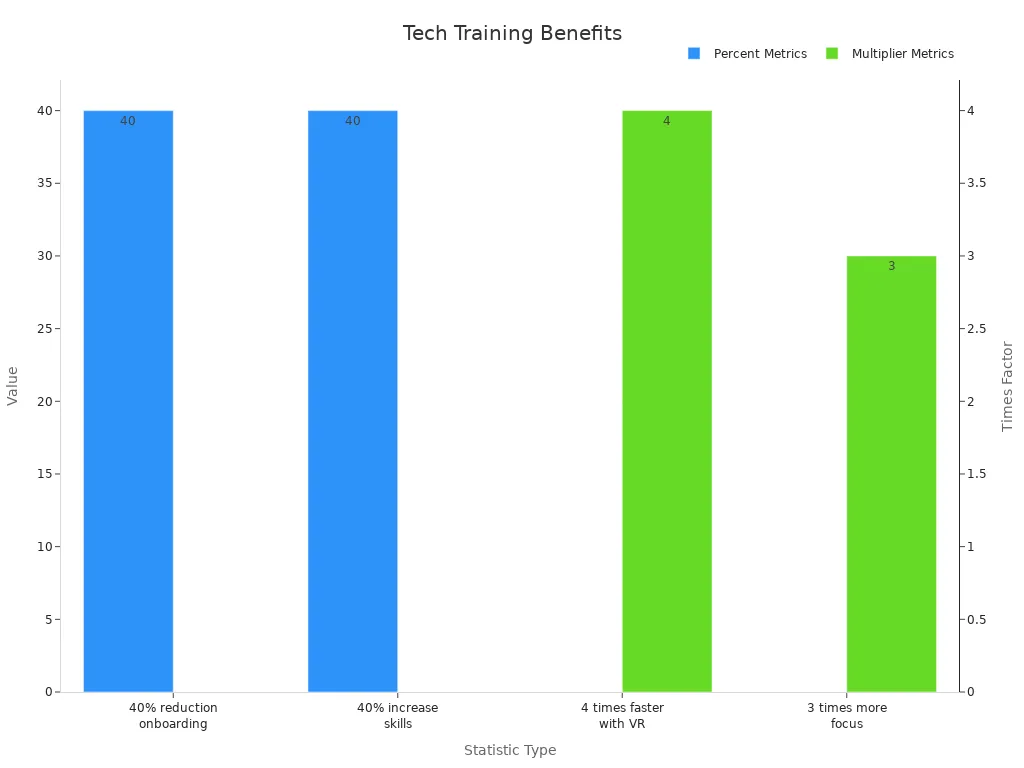
For instance, VR training allows your team to practice real-world scenarios in a risk-free environment. Walmart has already embraced this by simulating store situations, boosting employee confidence and preparedness. The benefits of such tools are clear:
| Statistic | Benefit |
|---|---|
| 40% reduction in onboarding time | Faster integration of new employees into the workforce |
| 4 times faster training with VR | Increased efficiency in training processes |
| 3 times more focus during training | Enhanced employee engagement and retention |
| 40% increase in skill proficiency | Improved overall effectiveness of training programs |
When choosing training software, you have options like LearnDash, LearnWorlds, and Moodle. LearnDash offers simple course distribution tools, while LearnWorlds provides AI integration and customizable templates. Moodle stands out for its flexibility, allowing personalized learning paths. Each platform caters to different needs, so you can pick the one that aligns with your goals.
Sobot’s omnichannel solution also plays a key role here. By consolidating customer data, it helps your team understand customer preferences better, making training more targeted and effective. With the right tools, you can empower your employees to deliver exceptional customer service.
Sobot Voice/Call Center: Enhancing Training and Service Delivery
Sobot’s Voice/Call Center is a game-changer for training and guest service. It equips your team with advanced tools to handle customer interactions efficiently while improving their skills. The platform’s unified workspace ensures agents have all the information they need at their fingertips, reducing errors and enhancing communication.
One standout feature is the AI-powered Voicebot. It handles routine inquiries, allowing your team to focus on complex issues. This not only improves response times but also gives employees more opportunities to develop problem-solving skills. For example, Samsung used Sobot’s solutions to unify its communication channels, leading to a 30% increase in agent efficiency and a 97% customer satisfaction rate.
The platform also supports real-time monitoring and analysis. Managers can track call performance, identify skill gaps, and provide immediate feedback. This creates a continuous learning environment where employees can refine their abilities. With Sobot’s Voice/Call Center, you’re not just training your team—you’re setting them up for customer service excellence.
AI and Automation for Streamlined Guest Service
AI and automation are reshaping guest service, making it faster, smarter, and more personalized. By integrating these technologies, you can enhance both employee efficiency and customer satisfaction. For example, AI-powered chatbots can handle up to 70% of guest inquiries, responding 8-10 times faster than traditional methods.
Hotels that adopted digital transformation saw an 18% increase in guest satisfaction and a 23% boost in operational efficiency. Four Seasons even reduced recurring complaints by 26% using AI, while properties with AI voice assistants reported a 22% rise in in-room service utilization.
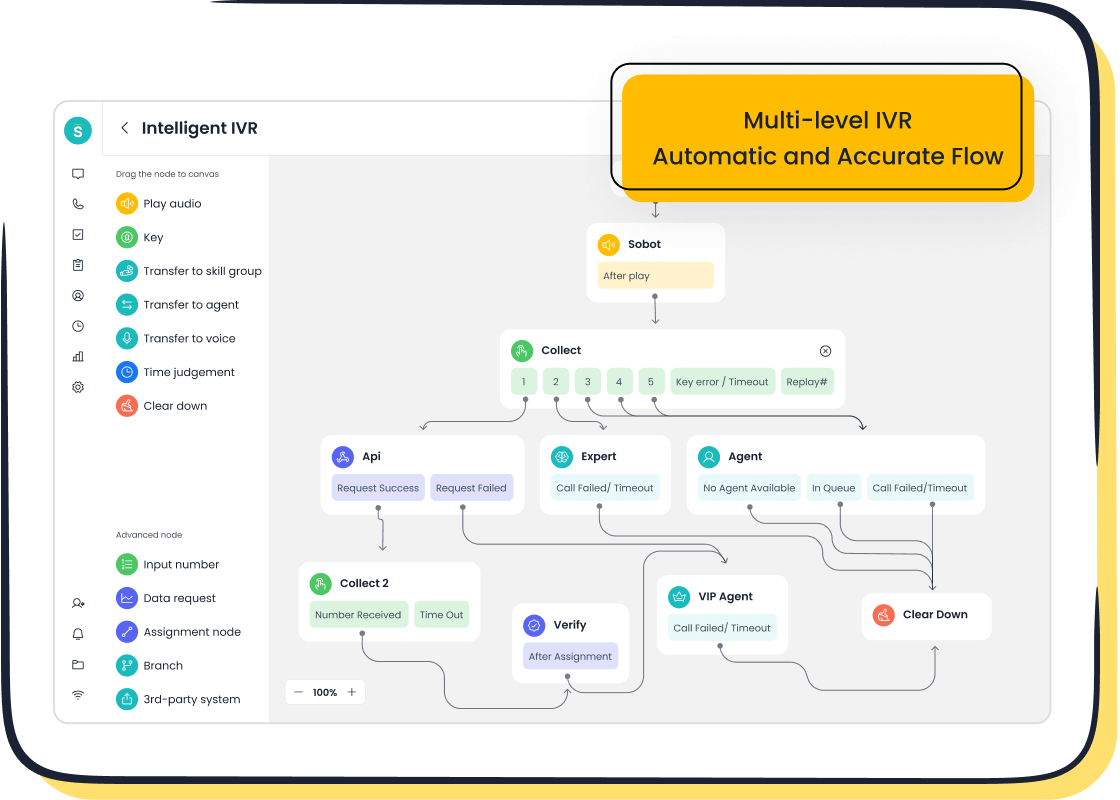
Sobot’s AI-driven solutions, like its omnichannel platform and Voicebot, take this a step further. They automate repetitive tasks, freeing your team to focus on creating meaningful guest experiences. The platform’s smart call routing ensures customers are connected to the right agent, improving first-contact resolution rates. McKinsey estimates that AI automation could save the hospitality industry $160 billion annually, with labor costs reduced by 15-20%.
By leveraging AI and automation, you’re not just streamlining operations—you’re empowering your customer service team to deliver excellence. These tools help you stay ahead of the curve, ensuring every customer interaction is seamless and satisfying.
Steps to Create a Comprehensive Training Program
Designing an Effective Onboarding Process
A strong onboarding process sets the tone for your employees' success. It’s not just about paperwork; it’s about helping your team feel confident and prepared from day one. A comprehensive onboarding program should include structured on-the-job training to familiarize employees with their roles and responsibilities. This approach enhances organizational socialization and ensures new hires feel like part of the team right away.
Discussing long-term career goals during onboarding is another game-changer. When you help employees map out their development plans early, you foster a culture of continuous learning. For example, Sobot’s Voice/Call Center can streamline onboarding by providing a unified workspace where new hires can access customer data and communication tools in one place. This simplifies their learning curve and boosts their confidence in handling customer interactions.
Tip: Pair new hires with experienced team members for mentorship. This builds relationships and accelerates learning.
Implementing Continuous Development and Upskilling
Training shouldn’t stop after onboarding. Continuous training and development keep your team sharp and ready for new challenges. Gallup reports that employees who feel encouraged to learn new skills are 47% less likely to look for another job. This shows how ongoing training not only improves job performance but also boosts retention.
Upskilling is especially important in today’s fast-changing world. By investing in your team’s growth, you prepare them for future responsibilities and foster innovation. For instance, Sobot’s omnichannel solution helps employees adapt to new technologies by consolidating communication channels. This makes it easier for your team to manage customer interactions across platforms, enhancing both efficiency and customer service.
| Benefit Type | Description |
|---|---|
| Improved job performance | Employees become more effective and efficient at their tasks, leading to better business results. |
| Increased innovation and adaptability | Teams stay competitive by learning new technologies and methodologies. |
| Higher retention | Employees are less likely to leave when they see growth opportunities. |
Establishing Feedback Mechanisms for Improvement
Constructive feedback is the backbone of any successful training program. It helps employees identify areas for improvement and reinforces their strengths. To make feedback effective, focus on creating a two-way dialogue. Encourage your team to share their thoughts on the training process and suggest improvements.
Using tools like Sobot’s Voice/Call Center, managers can monitor employee performance in real-time and provide immediate feedback. This ensures employees can correct mistakes quickly and build confidence in their skills. Collecting data at various intervals, such as after training sessions and during regular check-ins, also helps track progress over time.
Note: Combine qualitative feedback (like employee comments) with quantitative data (like performance metrics) for a well-rounded view of training effectiveness.
By designing a comprehensive onboarding program, prioritizing ongoing training and development, and establishing robust feedback mechanisms, you can create a training program that empowers your team to deliver exceptional customer service.
Fostering a Positive Work Environment for Exceptional Customer Service
Encouraging Collaboration and Teamwork
When your team works together, magic happens. Collaboration ensures that everyone contributes their strengths, creating a seamless customer experience. Research shows that companies prioritizing teamwork in customer service see a 10% boost in customer satisfaction. Why? Because collaboration helps resolve issues faster and ensures no detail gets overlooked.
You can foster teamwork by creating an environment where employees feel empowered to share ideas and take initiative. Tools like Sobot’s omnichannel solution make this easier by unifying communication channels. Your team can access customer data in one place, ensuring smooth handoffs and consistent service. For example, if one agent starts a conversation via live chat, another can pick it up on email without missing a beat.
Encourage open communication during team meetings and celebrate collaborative wins. When your team feels connected, they’ll deliver better performance and create memorable customer experiences.
Recognizing and Rewarding Employee Contributions
Recognition isn’t just a nice-to-have—it’s a game-changer. Employees who feel valued are more motivated, engaged, and committed to delivering exceptional service. Studies reveal that recognition programs boost morale, improve job satisfaction, and even reduce turnover.
| Benefit | Description |
|---|---|
| Higher productivity | Recognized employees work harder, driving better customer outcomes. |
| Positive workplace culture | Recognition aligns employees with company values, fostering a sense of belonging. |
| Retention of top performers | Employees who feel appreciated are less likely to leave, saving you time and resources. |
You can implement recognition programs by celebrating milestones, offering rewards for outstanding performance, or simply saying “thank you.” Sobot’s Voice/Call Center can help track employee performance metrics, making it easier to identify and reward top contributors. When your team feels appreciated, they’ll go the extra mile for your customers.
Promoting Work-Life Balance to Boost Morale
A happy employee equals a happy customer. Work-life balance plays a huge role in employee satisfaction and, by extension, customer service quality. Studies show that a positive workplace environment enhances employee commitment and achievement-striving ability, both of which directly impact performance.
You can promote balance by offering flexible schedules, encouraging breaks, and respecting personal time. For instance, Sobot’s AI-powered tools, like the Voicebot, handle repetitive tasks, reducing workload and giving your team more breathing room. This not only improves morale but also ensures they’re energized and ready to deliver exceptional service.
Remember, when your employees feel supported, they’ll bring their best selves to work. That positivity will shine through in every customer interaction, creating experiences that keep guests coming back.
Training your employees for guest service in 2025 requires a mix of strategy, technology, and a supportive work environment. Start by focusing on essential skills like communication, empathy, and adaptability. Combine these with cutting-edge tools like Sobot’s Voice/Call Center to streamline operations and enhance learning.
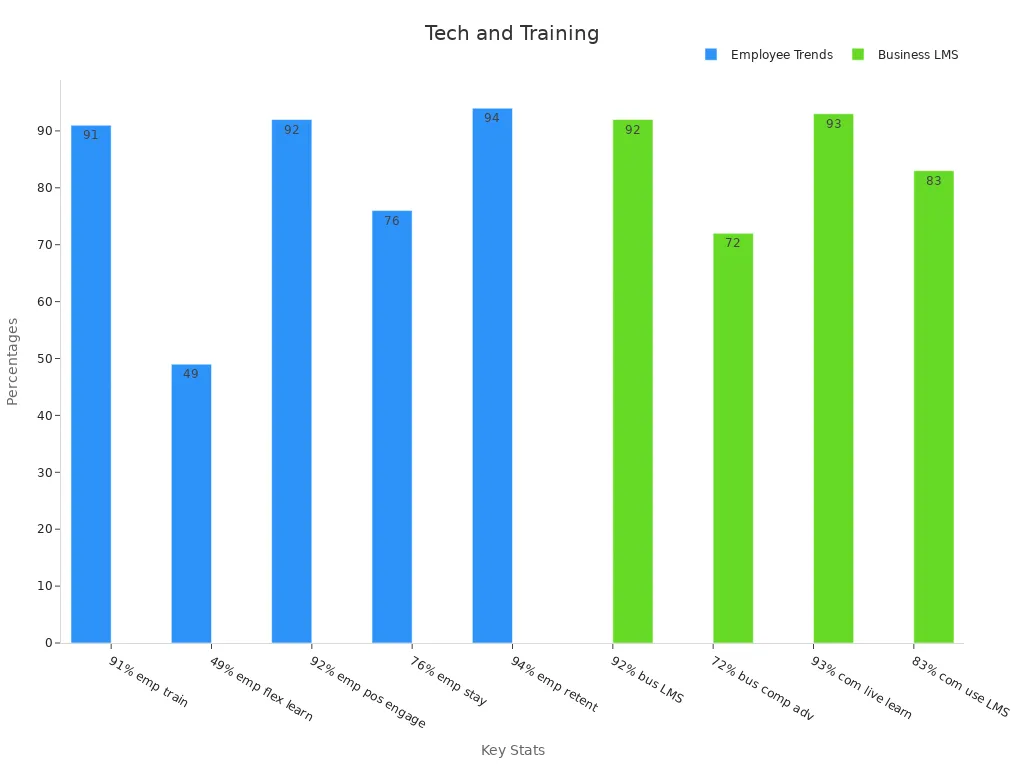
Technology plays a huge role in modern training. For example, 92% of businesses now use learning management systems (LMS) to deliver structured training, while 76% of employees say continuous learning makes them more likely to stay with their employer. A positive work environment is equally important. Employees who feel valued and supported are more engaged and motivated to deliver exceptional service.
| Statistic | Evidence | Source |
|---|---|---|
| 91% of employees seek personalized training | Highlights demand for customized learning experiences | Axonify |
| 92% of businesses use LMS | Demonstrates the embedded role of LMS in corporate learning cultures | Docebo |
| 76% of employees are more inclined to stay with current employer due to continuous learning | Highlights link between training and retention | SHRM |
By adopting Sobot’s solutions, you can create a seamless training experience that empowers your team to deliver outstanding guest service. Whether it’s through AI-powered tools or omnichannel platforms, Sobot helps you stay ahead in a competitive market. Ready to transform your training program? The future of guest service starts with you.
FAQ
How can Sobot help train employees for guest service in 2025?
Sobot offers tools like the Voice/Call Center and omnichannel solutions. These platforms simplify training by providing real-time monitoring, unified workspaces, and AI-powered features. Employees learn faster and deliver better service with tools designed for efficiency and personalization.
What makes Sobot’s Voice/Call Center unique for training?
Its unified workspace consolidates customer data, enabling employees to access everything they need in one place. Features like AI-powered Voicebot and smart call routing improve problem-solving skills while reducing errors. Samsung achieved a 30% efficiency boost using this solution.
Can Sobot’s solutions improve guest satisfaction?
Absolutely! Sobot’s omnichannel platform ensures seamless communication across channels. It helps employees deliver personalized service, which 76% of customers prefer. By automating repetitive tasks, your team can focus on creating meaningful guest experiences.
Is Sobot’s technology easy to integrate into existing systems?
Yes, Sobot’s solutions integrate seamlessly with CRM systems like Salesforce and Shopify. This makes it easy to unify communication channels and streamline operations. Businesses benefit from faster deployment and improved efficiency.
How does Sobot support continuous employee development?
Sobot provides real-time analytics and feedback tools, helping managers identify skill gaps and track progress. Employees can refine their abilities while staying updated on new technologies. This fosters a culture of continuous learning and growth.
See Also
Effective Strategies for Managing Live Chat Teams
Top Practices for Ensuring Quality in Call Centers
A Comprehensive Guide to Omnichannel Contact Center Setup

