Key Tactics for Developing a Customer-Focused Workplace


A customer-focused workplace prioritizes building meaningful connections with customers. When you focus on delivering exceptional experiences, you create loyalty that drives growth. Did you know companies earning $1 billion annually can gain $700 million more within three years by investing in customer experience? It’s a good practice in customer care that pays off.
Customer-centric culture isn’t just a buzzword—it’s transformative. U.S. consumers spend more with companies offering great service, and retaining customers boosts profits by over 25%. Sobot helps businesses achieve this by offering innovative solutions, like its omnichannel platform and Voice Call Center, to streamline communication and enhance service quality.
Principles of a Customer-Centric Culture

Putting Relationships First in Customer Care
Building strong relationships with your customers is the foundation of great customer care. When you prioritize understanding their needs, you create trust that lasts. Market research plays a big role here. It helps you learn what your customers value most, so you can tailor your services to meet their expectations. For example:
- Businesses that use market research to understand customer satisfaction often improve experiences, leading to repeat business.
- Identifying purchasing behaviors through research allows you to stand out from competitors and boost revenue.
By focusing on relationships, you’re not just solving problems—you’re creating loyal customers who keep coming back.
Aligning Core Values with Customer-Centric Principles
Your company’s values should reflect a commitment to putting customers first. When your team shares this vision, it creates a culture that drives satisfaction. Companies that align their values with customer-centric principles often see better results. For instance:
- A unified team working toward customer-focused goals leads to improved satisfaction.
- A supportive environment built around customer needs enhances experiences and loyalty.
- Harmonizing employee behaviors with customer expectations ensures true customer-centricity.
When your values match your customers’ needs, you build a culture that fosters trust and long-term success.
Connecting Company Culture to Customer Outcomes
Your company culture directly impacts how customers perceive your brand. A customer-focused culture ensures every interaction leaves a positive impression. Research shows that respecting your customers’ timelines and empowering them to make decisions improves outcomes. Here’s a snapshot:
| Evidence Type | Description |
|---|---|
| Respecting Buyer’s Timeline | Vendors who respect the buyer’s timeline are 60% more likely to be treated as a preferred vendor. |
| Empowering Buyers | Customers who feel they’ve made their own purchasing decisions are more likely to become repeat buyers. |
| Enhancing Product Adoption | Companies focusing on product adoption see renewal rates improve by up to 25%. |
| Customer-Centric Profitability | Customer-centric companies are 60% more profitable than their peers. |
When your culture aligns with customer outcomes, you create a workplace that thrives on loyalty and satisfaction.
Building a Customer-Centric Company with Sobot
Leveraging Sobot's Voice/Call Center for Seamless Communication
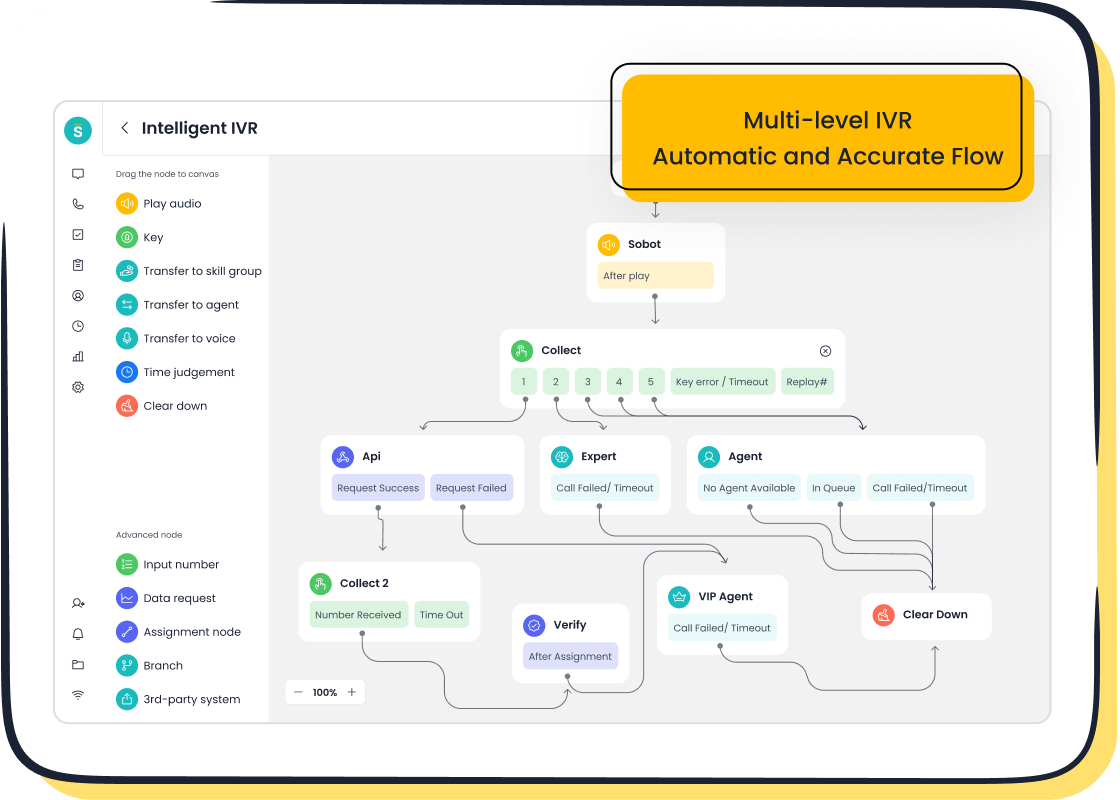
Clear and efficient communication is the backbone of any customer-centric company. When your customers reach out, they expect quick and accurate responses. Sobot’s Voice/Call Center makes this possible by offering tools that simplify communication and improve customer satisfaction.
With features like intelligent IVR and smart call routing, you can ensure that every call reaches the right person without delays. Imagine a customer needing urgent assistance—Sobot’s system routes their call to the most qualified agent in real time. This approach not only saves time but also builds trust.
The platform’s AI-powered Voicebot takes it a step further by handling repetitive queries, freeing up your team to focus on complex issues. Plus, with global number availability and encrypted data transfer, you can provide secure and reliable service to customers worldwide. By integrating Sobot’s Voice/Call Center, you’re not just answering calls—you’re creating meaningful connections that drive loyalty.
Democratizing Customer Data Across Teams
A customer-centric company thrives when every team has access to the same customer insights. Sobot’s unified workspace ensures that all your teams—sales, marketing, and support—can collaborate seamlessly. This transparency eliminates silos and empowers your employees to deliver consistent and personalized experiences.
Companies like Salesforce and Spotify have shown the power of democratizing customer data. Salesforce saw a 34% increase in customer retention and a 45% boost in product development speed by making data accessible to all employees. Similarly, Spotify’s 'Data Insights Guild' led to a 5x increase in experiment velocity and a 40% improvement in user engagement.
When you adopt this approach, you’re not just sharing data—you’re fostering innovation and improving customer satisfaction. Sobot’s platform makes this easy by consolidating customer information into one place, enabling your teams to work smarter, not harder.
Promoting Active Listening and Feedback Integration
Listening to your customers is more than just hearing their words—it’s about understanding their needs and acting on their feedback. Sobot helps you do this by providing tools that capture and analyze customer feedback across all channels.
Active listening builds trust and makes customers feel valued. Studies show that businesses practicing active listening can address issues faster and with greater empathy. Customers who feel heard are more likely to stay loyal and recommend your brand to others.
Sobot’s omnichannel solution ensures you never miss a piece of feedback, whether it’s through email, chat, or social media. By integrating this feedback into your processes, you can continuously improve your services and show your customers that their opinions matter. This approach doesn’t just enhance satisfaction—it turns your customers into advocates for your brand.
Good Practices in Customer Care
Hiring and Training for Customer Success
Hiring the right people is the first step to delivering exceptional customer care. You need team members who genuinely care about helping customers and solving problems. Look for candidates with strong communication skills and a knack for empathy. Once you’ve built your team, training becomes the key to success.
Effective training programs teach employees how to handle customer interactions with confidence. Role-playing exercises can prepare them for real-world scenarios, while workshops on active listening help them understand customer needs better. When employees feel equipped to handle challenges, they’re more likely to create positive experiences for your customers.
Investing in hiring and training isn’t just a good practice in customer care—it’s a strategy that drives growth. Happy employees lead to happy customers, and that’s a win-win for everyone.
Empowering Employees with the Right Tools
Your employees can’t deliver great service without the right tools. Imagine trying to solve a customer’s issue without access to their history or preferences—it’s frustrating for both sides. That’s why empowering your team with advanced tools is essential.
Sobot’s solutions, like its AI-powered Voicebot and unified workspace, make it easier for employees to manage customer interactions. These tools streamline workflows and provide instant access to customer data, saving time and improving accuracy. Industry reports show that frontline workers using AI experience better job satisfaction and deliver higher-quality service.
When you give your team the tools they need, you’re not just improving their efficiency—you’re boosting customer satisfaction and driving growth.
Encouraging Cross-Functional Collaboration
Collaboration across teams is a game-changer for customer care. When sales, marketing, and support work together, they create a seamless experience for your customers. Teams motivated by shared goals perform five times better than those working in silos.
Cross-functional collaboration also fosters engagement. Employees who collaborate report a 30% increase in job satisfaction and are less likely to leave their roles. New interactions among team members spark fresh ideas and improve customer engagement.
You can encourage collaboration by hosting regular team meetings, using shared platforms like Sobot’s unified workspace, and celebrating joint successes. When your teams work together, they don’t just solve problems—they create opportunities for growth and innovation.
Personalizing Customer Experiences

Using AI and Data Analytics to Understand Preferences
Understanding your customers’ preferences is the first step to delivering a standout customer experience. AI and data analytics make this process faster and more accurate. By analyzing patterns in customer behavior, you can uncover what they truly value. For example, AI tools can identify trends in purchasing habits or highlight common pain points.
Studies back this up. A Harvard Business School study found that AI-powered tools like GPT can quickly provide insights into consumer preferences. Reuters also reported a surge in companies mentioning AI in earnings calls, showing its growing importance in shaping customer strategies. Even Amazon uses AI to summarize reviews, helping customers make informed decisions.
When you use AI and data analytics, you’re not just guessing—you’re making informed decisions that align with your customers’ needs. This strategy builds trust and ensures your customer-centric approach stays on point.
| Evidence Source | Description |
|---|---|
| Harvard Business School Study | AI tools provide quick, cost-effective insights into consumer preferences. |
| Reuters Analysis | Highlights AI’s growing role in understanding customer trends. |
| Amazon AI-Generated Review Highlights | Demonstrates AI’s ability to summarize reviews for better decision-making. |
Tailoring Interactions with Sobot's Omnichannel Solutions
Personalization is key to a great customer experience. Sobot’s omnichannel solutions make it easy to tailor every interaction. By unifying communication channels, Sobot ensures your customers receive consistent and personalized service, no matter how they reach out.
The results speak for themselves. Businesses using Sobot’s platform have seen a 20% reduction in inbound discussions and a 96% positive feedback rate. The system’s ability to resolve 22.2% of self-service questions and achieve a 97% customer satisfaction score highlights its effectiveness.
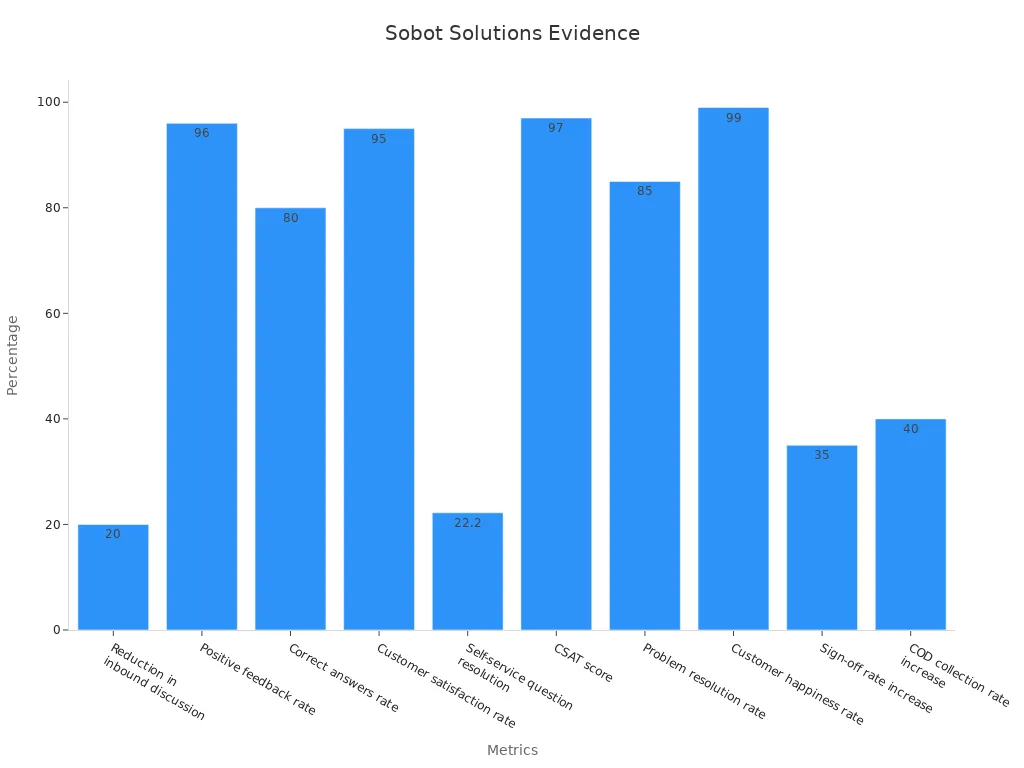
With Sobot, you’re not just managing interactions—you’re creating experiences that leave a lasting impression. This customer-centric approach strengthens loyalty and boosts customer happiness.
Anticipating Customer Needs Proactively
Imagine solving a problem before your customer even mentions it. That’s the power of anticipating needs. By analyzing past interactions and leveraging AI, you can predict what your customers might need next.
For instance, if a customer frequently purchases a specific product, you can recommend complementary items or offer timely discounts. This proactive strategy not only enhances the customer experience but also increases retention. Metrics like Customer Lifetime Value (CLV) and Net Promoter Score (NPS) improve significantly when businesses anticipate needs effectively.
| Metric | Description |
|---|---|
| Customer Lifetime Value (CLV) | Measures total revenue attributed to a customer, reflecting satisfaction. |
| Customer Retention | Percentage of existing customers who continue to make purchases, indicating loyalty. |
| Customer Churn Rate | Measures the rate at which customers stop purchasing, with lower rates indicating better retention. |
| Customer Effort Score (CES) | Indicates the effort required by customers to interact with the business; lower scores suggest ease of use. |
| Customer Satisfaction Score (CSAT) | Measures satisfaction on a scale, with higher scores indicating better experiences. |
| Net Promoter Score (NPS) | Assesses the likelihood of customers recommending the brand, with higher scores indicating happiness. |
By anticipating needs, you show your customers that you truly understand them. This strategy doesn’t just meet expectations—it exceeds them, creating a customer-centric culture that drives growth.
Measuring Success in Customer-Centric Initiatives
Tracking Metrics Like NPS and CSAT
How do you know if your customer-focused strategies are working? Metrics like Net Promoter Score (NPS) and Customer Satisfaction Score (CSAT) give you the answers. These tools help you measure how happy your customers are and whether they’d recommend your business to others.
NPS is a great way to gauge loyalty. It asks one simple question: “How likely are you to recommend us?” The higher the score, the more loyal your customers are. CSAT, on the other hand, dives deeper into specific interactions. It tells you how satisfied customers are with a particular experience, like a product purchase or a support call.
Combining these metrics gives you a complete picture. NPS shows the big picture of loyalty, while CSAT highlights areas needing improvement. For example:
- Businesses that track NPS and CSAT can identify trends and align strategies with customer expectations.
- Continuous measurement fosters trust and builds stronger relationships.
- Companies using both metrics often see long-term growth and better customer retention rates.
Sobot’s omnichannel solutions make tracking these metrics easy. By consolidating feedback from multiple channels, you can analyze customer sentiment and act on insights quickly. This approach doesn’t just improve scores—it enhances the overall customer experience.
Monitoring Customer Retention and Lifetime Value
Retention is the backbone of sustainable growth. Keeping your existing customers happy is often more cost-effective than acquiring new ones. Metrics like Customer Lifetime Value (CLV) and retention rates help you understand how well you’re doing.
CLV measures the total revenue a customer brings over their lifetime. High CLV means your customers trust your brand and keep coming back. Retention rates, on the other hand, show how many customers stick with you over time. Together, these metrics reveal how effective your engagement strategies are.
Here’s why monitoring these metrics matters:
- High retention rates correlate with customer satisfaction and loyalty.
- Tracking CLV helps you spot obstacles like churn and missed upselling opportunities.
- Focusing on retention boosts profitability and strengthens relationships.
Sobot’s AI-powered tools help you analyze these metrics effortlessly. For example, its Voice/Call Center tracks customer interactions, giving you insights into behaviors and preferences. By using these insights, you can anticipate needs and create experiences that keep customers coming back.
Highlighting Success Stories, Including Samsung's Experience with Sobot
Success stories show what’s possible when you prioritize customer-centric initiatives. Samsung’s partnership with Sobot is a perfect example. Faced with the challenge of managing countless inquiries across multiple channels, Samsung turned to Sobot’s all-in-one contact center solution.
The results were remarkable:
- A 30% increase in agent efficiency.
- A 97% customer satisfaction rate.
- Seamless omnichannel service that improved the overall experience.
Sobot’s platform unified Samsung’s communication channels, connected internal systems, and provided intelligent tools like chatbots and video support for VIP customers. This integration didn’t just solve problems—it transformed Samsung’s customer service operations.
Samsung’s story proves that investing in customer-centric solutions pays off. When you focus on creating meaningful experiences, you build trust and loyalty that drive growth.
Creating a customer-focused workplace isn’t just about processes—it’s about understanding customer needs and building loyalty. When you prioritize customers, you unlock benefits like stronger retention, better financial performance, and even global growth. Studies show that customer orientation boosts innovation and business success.
Sobot’s solutions make this journey easier. From seamless communication to personalized experiences, they help you meet customer expectations effortlessly. Ready to transform your workplace? Start with Sobot today.
FAQ
What makes Sobot's solutions stand out for customer-focused businesses?
Sobot's tools simplify communication, unify data, and personalize interactions. These features help you deliver seamless experiences that keep your customers happy and loyal.
How does Sobot help improve customer satisfaction?
Sobot provides AI-powered tools and omnichannel solutions. These features let you anticipate customer needs, resolve issues faster, and create personalized experiences that exceed expectations.
Can Sobot's solutions scale with growing customer demands?
Yes! Sobot's platform supports businesses of all sizes. Its scalable tools ensure you can handle increasing customer inquiries without compromising service quality or efficiency.
See Also
Enhancing Customer Satisfaction Through Effective Live Chat Strategies
Essential Practices for Quality Management in Call Centers
A Comprehensive Guide to Omnichannel Contact Center Implementation
Understanding Quality Management Systems in Call Center Operations

