Future-Proof Your Business with a Multi Channel Platform


Your customers expect a seamless journey, but they often face disconnected experiences when interacting with your brand across different channels. This fragmentation can lead to a poor customer experience and negatively impact your business. You can resolve this by implementing a powerful multi channel communication platform. Adopting this technology is a critical investment to unify customer engagement and future-proof your business.
The market for multi-channel platforms is booming. Projections show the U.S. market growing from USD 5.49 billion to over USD 26.53 billion by 2034, proving its strategic importance.
A solution like the Sobot call center, enhanced by Sobot AI, delivers this unified communication. This approach is the core of a winning strategy, helping you build a resilient business. Sobot helps you perfect your multi-channel communication strategy, ensuring every customer interaction is consistent and effective.
Why a Multi-Channel Comms Strategy is Essential

A strong multi-channel comms strategy is no longer a luxury; it is a fundamental requirement for survival and growth. You must connect with your audience where they are most comfortable. This approach builds stronger relationships and sets your business up for long-term success. Adopting this strategy allows you to create a seamless experience for every customer.
Meet Customers on Their Preferred Channels
Your customers use many different communication channels today. A successful business meets them on their preferred platforms. This shows you value their time and convenience. Popular channels include:
- Phone: Still a top choice for complex issues, with an 86% customer satisfaction score.
- Email: A favorite for non-urgent matters, used by over 4 billion people globally.
- Live Chat: Preferred by 72% of customers for its immediate and convenient support.
- Social Media: An essential channel where 70% of U.S. consumers expect a response in under 24 hours.
- Messaging Apps: The fastest-growing channel, projected to make up 61% of all B2C communication by 2025.
Effective multi-channel communication means being present and responsive across these key touchpoints.
Unify Your Multi-Channel Communication
Having many communication channels is only the first step. You need to unify them. Disconnected multi-channel platforms create frustrating experiences. A customer might explain an issue on chat, then have to repeat it on a phone call. Unified multi-channel communication solves this problem. It gives your team a single view of every customer interaction. This ensures consistent and efficient customer engagement. Your business can deliver a smooth journey, no matter how a customer contacts you. This builds trust and improves the overall experience.
Gain a Sustainable Competitive Edge
A unified strategy for multichannel communication gives you a powerful advantage. Businesses with strong multi-channel strategies see much higher customer retention. This creates a loyal customer base that drives sustainable growth.
Powerful multi-channel platforms can improve customer retention by as much as 91% when customers engage with a brand through more than one channel.
Companies with robust multi-channel engagement achieve an 89% average customer retention rate. This is far higher than the 33% rate for companies with weak strategies. Better engagement leads to greater loyalty. This loyalty payoff is the direct result of providing superior service across all your channels.
Core Benefits That Drive Growth and Resilience

Adopting a unified multi-channel communication strategy does more than just connect you with customers; it builds a stronger, more resilient business. You unlock powerful benefits that fuel sustainable growth and create a loyal customer base. These advantages transform your operations from the inside out, giving you a clear path to long-term success.
Elevate the Customer Experience
You can deliver a truly exceptional customer experience when you unify your communications. Customers want to feel understood, not forced to repeat themselves. Multi-channel platforms create a single, continuous conversation, no matter which channel a customer uses. This seamless journey builds trust and makes every interaction feel personal and effortless. A positive and consistent customer experience across all touchpoints fosters brand loyalty, leading to repeat business.
Customers who engage with a brand across multiple channels show a 30% higher lifetime value. This proves that a great multi-channel experience directly contributes to business growth.
This is not just a theory; it is a proven path to success. For example, the financial service platform Opay transformed its customer service by using Sobot's omnichannel solution. By unifying their social media, email, and voice channels, they created a frictionless experience. The result?
- Customer satisfaction skyrocketed from 60% to an incredible 90%.
This shows the massive impact of a well-executed multi-channel communication strategy on customer happiness and loyalty. When you make things easy for your customer, they reward you with their business.
Boost Operational Efficiency
Disconnected systems create chaos for your teams and waste valuable resources. A unified platform streamlines your workflows and automates repetitive tasks. This frees your agents to focus on solving complex problems that require a human touch. Your entire business operates more smoothly, reducing costs and boosting productivity.
Opay’s success story again highlights this benefit. By implementing Sobot's intelligent IVR system, they empowered their customers with self-service options. This simple change had a huge effect:
- 60% of customers could resolve their issues independently.
- This led to an overall cost reduction of over 20%.
These impressive results are achievable when you use a single platform like Sobot that integrates sales, marketing, and support. You eliminate the need to switch between different tools, which reduces errors and saves time. This boost in efficiency directly impacts your bottom line and drives sustainable growth. Better efficiency means a stronger, more profitable business.
Improve Team Collaboration
Silos between departments are a major barrier to growth. Marketing, sales, and support teams often work separately, leading to a fragmented customer journey. Multi-channel platforms break down these walls. They provide a shared workspace where everyone has access to the same customer information. This unified view fosters incredible collaboration.
When your teams work together, everyone wins. Cross-functional teamwork enhances employee satisfaction and retention. It creates a sense of shared purpose and makes employees feel more valued.
Workplaces with high levels of collaboration see a 20% increase in job satisfaction and can reduce employee turnover by up to 50%.
Better collaboration means your teams can solve problems faster and deliver a more consistent experience. This internal strength translates directly into external success, enhancing customer engagement and building a stronger brand. Strong collaboration is the foundation of a resilient and adaptive organization.
Leverage Data for Strategic Decisions
Data is one of your most valuable assets. However, scattered data is useless. Unified multi-channel solutions bring all your customer data into one place. This gives you a 360-degree view of every interaction. You can finally map the entire customer journey, from their first click to their latest support ticket.
With omnichannel analytics, you can track key behaviors and identify important trends. This includes:
- Engagement rates across different channels
- Conversion and bounce rates on your website
- Click-through rates on marketing campaigns
This complete picture allows you to pinpoint friction points and understand what truly drives purchases. You can move beyond guesswork and make decisions based on real evidence. This data-driven strategy helps you refine your products, optimize your marketing, and perfect your customer service. The table below shows how a centralized platform helps you overcome common data challenges.
| Challenge | Solution with a Unified Platform |
|---|---|
| Data Silos | A centralized platform consolidates data from all channels into one place, creating a single source of truth. |
| Inconsistent Data | It standardizes data collection, ensuring all information is accurate and reliable for better insights. |
| Identifying Customers | It uses advanced methods to link customer profiles across different devices and platforms for a complete view. |
| Complex Attribution | It offers sophisticated models to show you which channels and touchpoints contribute most to conversions. |
By leveraging a multi channel communication platform, you turn raw data into your roadmap for growth. You gain the insights needed to stay ahead of the competition and build a future-proof business.
Key Features of a Future-Proof Multi-Channel Communication Platform
Selecting the ideal multi-channel communication platform is about more than just adding channels; it's about choosing a partner for growth. The right solution should not only meet your current needs but also adapt to future challenges and opportunities. You need a foundation built on powerful, forward-thinking features. These core capabilities are what separate a temporary fix from a long-term strategic asset that drives resilience and success for your business.
Scalability and Flexibility
Your business is not static, and your communication platform shouldn't be either. As you grow, your interaction volumes will fluctuate. You might experience seasonal peaks, launch new marketing campaigns, or expand into new markets. A future-proof platform must handle these changes without any drop in performance. This is achieved through smart architectural design.
Modern multi-channel platforms are built to scale dynamically. They use advanced systems to manage demand, ensuring a smooth experience for every customer. Key architectural features include:
- Dynamic Scaling: Solutions like Contact Center as a Service (CCaaS) allow you to easily scale operations up or down. You can handle a holiday rush or a viral campaign spike without overhauling your infrastructure.
- Event-Driven Architecture: This approach decouples services, so you can scale one part of the system (like chat) without affecting others. It prevents crashes and slowdowns under heavy load.
- Intelligent Load Balancing: The system acts like a smart traffic cop, distributing incoming requests across multiple servers. This maximizes speed and responsiveness, even during the busiest times.
A platform like Sobot exemplifies this flexibility. As an official WhatsApp Business Solution Provider (BSP), Sobot allows you to scale your multi-channel communication to include one of the world's most popular messaging apps for both marketing and support. This, combined with a guaranteed 99.99% system stability, gives you the confidence to grow without limits.
Seamless System Integration
Your multi-channel communication platform cannot operate in a vacuum. It must connect effortlessly with the other tools that run your business. Seamless integration creates a single source of truth, eliminates data silos, and empowers your teams with the context they need to provide outstanding service. When your systems talk to each other, your entire operation becomes more efficient.
You should look for platforms that offer out-of-the-box integrations with the systems you already use. For example, Sobot provides native integration with essential tools like:
- CRM platforms (e.g., Salesforce): Sync customer data and interaction history automatically, giving your agents a complete view of every relationship.
- E-commerce platforms (e.g., Shopify): Pull in order details, shipping status, and purchase history to resolve customer issues faster.
Native integrations offer significant advantages because they are built directly into the software. This gives you full control over data flow, ensures faster and more reliable connections, and provides access to expert support from the teams who built the technology. This deep integration is fundamental for unifying your communication channels and creating a truly connected experience.
Robust Security and Compliance
In today's digital world, customer trust is your most valuable currency. A single data breach can destroy your reputation and lead to costly fines. Therefore, robust security and compliance are non-negotiable features. Your chosen platform must protect sensitive customer data across all communication channels and adhere to complex privacy regulations like GDPR and CCPA.
When evaluating multi-channel platforms, you must verify their commitment to security. Look for recognized certifications that prove their systems have been independently audited and validated.
| Certification | What It Means for You |
|---|---|
| ISO 27001 | A global standard for managing information security. It shows the company has a systematic approach to protecting your data. |
| SOC 2 / SOC 3 | An audit focused on security, availability, processing integrity, confidentiality, and privacy. It is a key benchmark in North America. |
| HIPAA | Essential if you handle protected health information, ensuring compliance with U.S. healthcare privacy laws. |
| CSA Cyber Trust | A mark awarded by the Cyber Security Agency of Singapore, signifying strong cybersecurity practices. |
Beyond certifications, a compliant platform helps you manage data responsibly. It should enable you to gather only essential data, obtain clear consent from users, and provide them with control over their information. This commitment to privacy is a cornerstone of ethical and sustainable multichannel communication.
Intuitive User Experience
The most powerful technology is useless if your teams cannot use it effectively. Feature-rich multi-channel platforms must also be intuitive and user-friendly for both your agents and administrators. A great user experience (UX) reduces training time, increases adoption rates, and empowers your team to work more efficiently. This directly translates to better, faster service for your customers.
An intuitive interface empowers your team to focus on the customer, not on fighting with complicated software. This boosts both employee satisfaction and customer engagement.
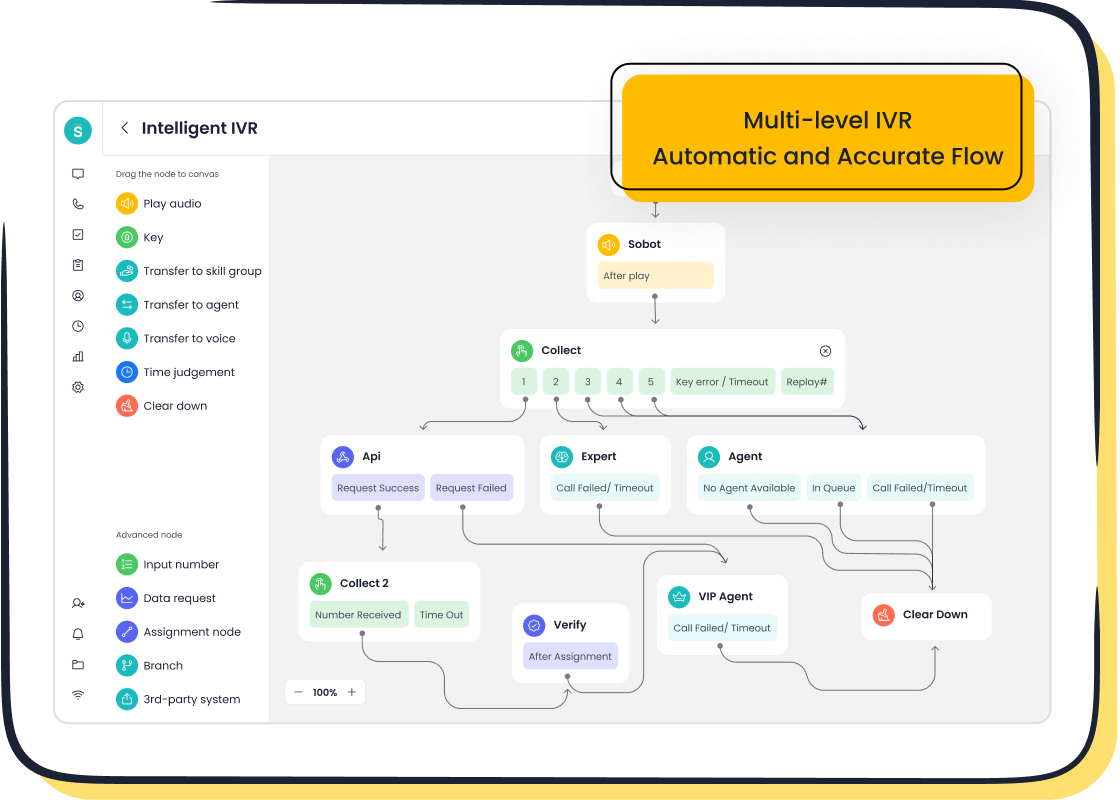
Look for features designed with the user in mind. For instance, Sobot's Voice/Call Center includes a drag-and-drop IVR builder. This no-code tool allows non-technical staff to design and modify call flows in real-time, without needing a developer. This simplifies a once-complex process, making your business more agile.
Other features that create a superior user experience include:
- A Unified Workspace: Sobot's Live Chat brings messages from all channels into a single, AI-enhanced inbox. Agents no longer need to switch between screens, giving them a complete customer history at their fingertips.
- AI-Powered Assistance: An AI-powered Chatbot can handle routine queries 24/7, freeing up human agents for more complex issues. This reduces agent workload and ensures customers get instant answers.
By prioritizing an intuitive UX, you equip your team with tools they will love to use. This fosters a more collaborative and productive environment, which is the engine behind exceptional multi-channel communication.
Implementing Your Multi-Channel Strategy
A powerful strategy is your roadmap to success. Implementing multi-channel platforms requires a clear plan. You must identify the right channels, create a consistent voice, train your teams, and measure your results. This approach turns your multi-channel communication into a powerful engine for growth.
Identify Your Most Important Channels
You need to meet your customers where they are. Do not guess which communication channels they prefer; use data to find out. Surveying your audience is the best way to discover where your business should focus its efforts. Different channels have unique strengths for gathering feedback.
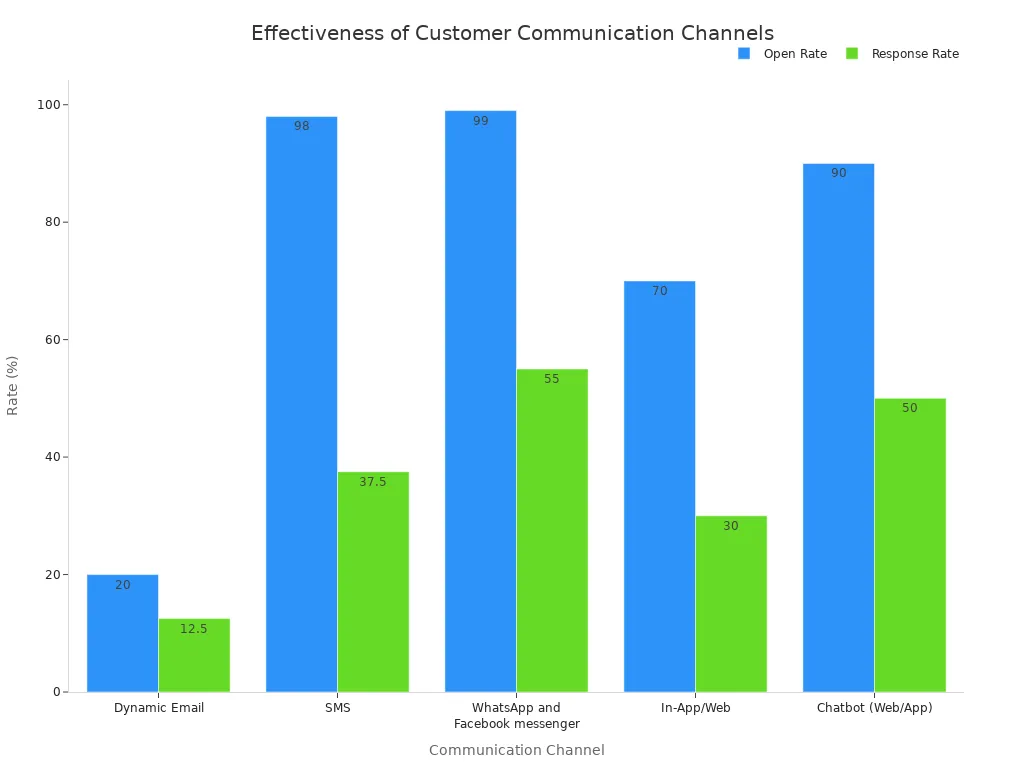
The right channel often depends on the situation. For example, SMS and WhatsApp are great for instant feedback after a purchase. The table below shows how each channel performs.
| Channel | Open Rate | Response Rate | Ideal For |
|---|---|---|---|
| Dynamic Email | ~20% | 10–15% | Detailed feedback, follow-ups |
| SMS | ~98% | 30–45% | Instant feedback, short surveys |
| WhatsApp and Facebook messenger | ~99% | 50–60% | Conversational feedback, real-time surveys |
| In-App/Web | ~60–80% | 20–40% | Contextual feedback in product |
| Chatbot (Web/App) | ~90% | 40–60% | Automated, intelligent feedback collection |
Develop a Consistent Brand Voice
Your brand should sound the same everywhere. A consistent voice builds trust and makes your brand recognizable. You can achieve this by creating a brand style guide. This guide is the foundation of your entire communication strategy. It should define key elements, including:
- Tone of Voice: Is your brand friendly, professional, or witty?
- Color Palette: Your primary and secondary brand colors.
- Typography: The specific fonts you use for headlines and text.
- Logo Usage: Clear rules for how and where to use your logo.
This guide ensures every email, chat, and social media post reflects your brand’s personality. This consistency is essential for effective multichannel communication.
Train Your Teams for a Unified Approach
Your multi-channel platforms are only as good as the people using them. Proper training ensures your team can deliver a seamless customer experience. You should use a progressive approach to prepare your agents.
- Start with fundamentals: Master core skills like empathy and problem-solving.
- Use channel-specific modules: Create dedicated training for email, chat, and phone.
- Train one channel at a time: Let agents become experts on one channel before moving to the next.
This method builds confidence and ensures every agent understands how to represent your brand effectively across all touchpoints.
Measure, Test, and Optimize Performance
Your multi-channel comms strategy must evolve. You need to track performance, test new ideas, and optimize your approach. Focus on key metrics like customer engagement and conversion rates to understand what is working. A/B testing is a great way to improve your results. You can test different email subject lines or chatbot greetings to see what performs best. This process of continuous improvement is key to a successful multichannel strategy and is simplified by implementing multi-channel platforms that provide clear analytics.
Adopting a multi channel communication platform is a vital strategy to future-proof your business. This approach transforms your customer engagement and delivers a superior customer experience. You gain operational agility and unlock data-driven growth. Unifying your multi-channel communication is no longer a luxury; it is a necessity for survival. Take control of your multichannel communication with powerful multi-channel platforms. Build a resilient brand and secure your long-term success. Embark on Your Contact Journey.
FAQ
What is a multi channel communication platform?
A multi channel communication platform unifies all your customer conversations into one place. You can manage interactions from email, chat, social media, and phone calls seamlessly. This creates a single, consistent experience for every customer and simplifies work for your team.
How does this platform improve customer satisfaction?
You improve satisfaction by meeting customers on their favorite channels without making them repeat information. This unified approach provides faster, more personal service. A great experience builds trust and loyalty, turning happy customers into repeat buyers.
How quickly can you implement a multi-channel strategy?
You can start quickly by identifying your most important channels first. A platform like Sobot offers fast deployment and intuitive tools. For example, the drag-and-drop IVR builder lets you set up call flows in real-time, making implementation simple and efficient.
Can this platform connect with my existing tools?
Yes, a future-proof platform must integrate with your current systems. Sobot connects effortlessly with essential tools like Salesforce (CRM) and Shopify (e-commerce). This seamless integration syncs all your data, giving your team a complete view of the customer.
See Also
Your Essential Guide to Omnichannel Call Center Software Solutions
Implementing Omnichannel Contact Centers: A 10-Step Practical Guide
Best Live Chat Software for E-commerce Businesses This Year
Boost Shopify Sales: Leverage Live Chat for Customer Engagement
Leading Live Chat Software Solutions for Small Businesses Today

