Why We Reviewed Forethought's Ecommerce Chatbot

Forethought promises powerful, human-like AI, a tempting offer for any ecommerce business. Yet, its high cost and complex setup create hesitation. With nearly 50% of U.S. adults using an AI chatbot for customer service, the pressure to adopt is real. However, 29% of businesses identify high cost as a primary barrier to AI adoption. This review cuts through the hype. We provide an evidence-based answer on whether Forethought's advanced automation is worth the investment for a typical ecommerce store, especially when accessible alternatives like the Sobot conversational ai chatbot platform for ecommerce exist.
Evaluating Forethought's 'Agentic AI' Claims
Forethought centers its value proposition on "Agentic AI." Understanding this concept is crucial for evaluating its platform. We broke down their claims to see how the technology performs in a real-world ecommerce setting.
Defining 'Agentic AI' for Ecommerce Support
Agentic AI in customer support refers to autonomous AI systems. These agents can understand customer intent, make decisions, and execute actions without constant human guidance. In an ideal ecommerce scenario, this AI would:
- Act autonomously to resolve a customer issue.
- Proactively identify and fix recurring problems.
- Dynamically prioritize support tickets based on urgency.
- Provide agent assistance with smart recommendations.
This level of AI promises to move beyond simple chatbot responses toward true problem-solving.
Testing AI Reasoning on Complex Customer Issues
A true test of advanced AI is its ability to handle complex, multi-step queries. We looked beyond simple "Where is my order?" questions. We assessed its capacity for conversational commerce tasks. These include personalized product discovery and providing dynamic product recommendations. The goal was to see if the AI could function like capable ai shopping assistants, guiding a customer through a nuanced journey rather than just answering a single question. This requires a deep understanding of context and real-time engagement.
Investigating AI Rigidity and Looping Behavior
A common frustration with any chatbot is repetitive looping. This often happens for technical reasons. A lack of escalation logic, poor personalization, or limited AI training data can cause a chatbot to get stuck. Without strong personalization, a customer receives generic responses. Without session memory, the AI forgets the conversation history. We investigated if Forethought's AI could overcome these typical chatbot pitfalls.
Performance on Common Ecommerce Inquiries
On standard inquiries, Forethought's data shows significant impact. Case studies report impressive results for their clients.
| Company | Metric | Impact |
|---|---|---|
| Upwork | Time to Resolution | Reduced by 50% |
| Cotopaxi | Deflection Rate | Increased by 28% |
These numbers suggest the AI is effective at handling high-volume, common questions.
Does Forethought's AI Reduce or Create Agent Work?
The ultimate goal of automation is to increase efficiency. According to one report, Forethought's AI helped a team manage a 40% ticket growth while avoiding the need to hire three new agents. This indicates that a well-implemented AI can indeed reduce agent workload. It deflects simple tickets, freeing up human agents for more complex customer issues. A powerful conversational ai chatbot platform for ecommerce should empower agents, not create more work through poor personalization or failed recommendations.
Forethought as a Conversational AI Chatbot Platform for Ecommerce
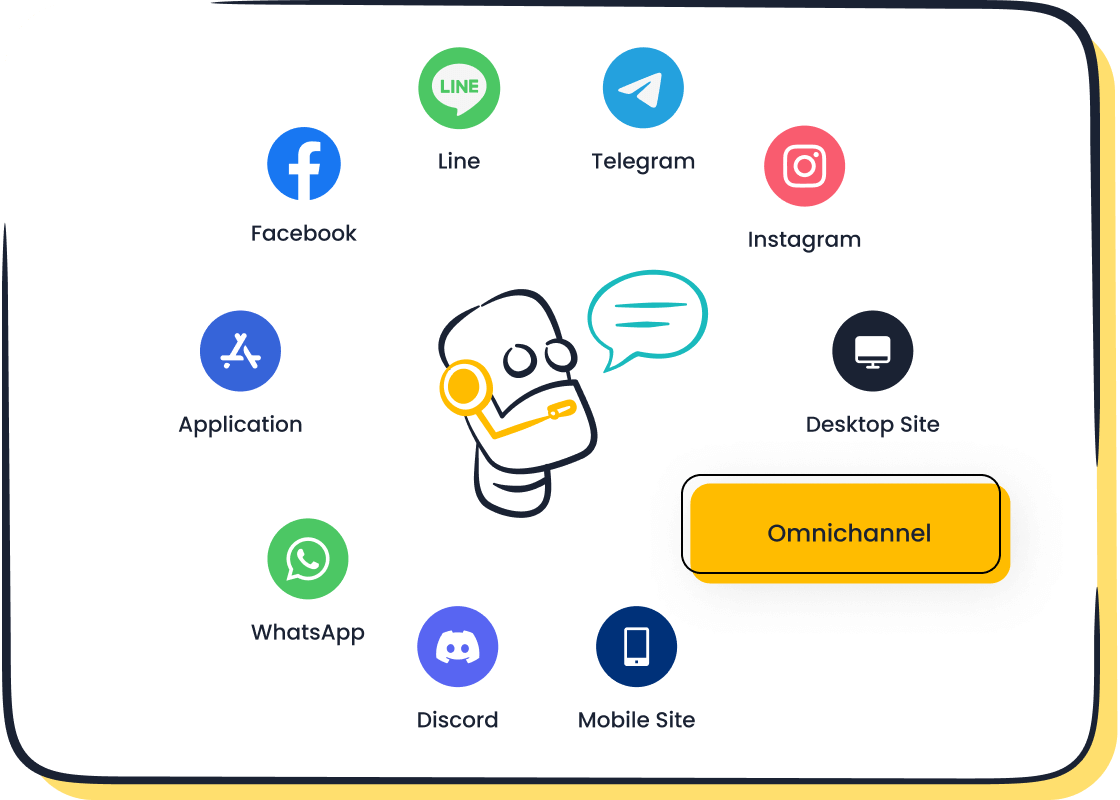
An AI chatbot platform's true value is measured not just by its intelligence, but by its accessibility and practicality. While Forethought's 'Agentic AI' presents a compelling vision, its business model creates significant barriers for many ecommerce brands. This section deconstructs the platform's high entry requirements, from its pricing and data needs to the overall investment required, and contrasts it with more accessible alternatives.
Deconstructing the Opaque Pricing Model
One of the primary challenges when evaluating Forethought is its lack of transparent pricing. The company does not publish standard pricing tiers. Instead, it requires potential customers to engage with its sales team for a custom quote. This approach, common among enterprise-grade solutions, makes it difficult for businesses to perform a quick cost-benefit analysis.
This opacity often conceals a range of potential expenses beyond the initial license fee. Implementing a complex AI platform can involve significant hidden costs.
Note: For many businesses, especially those in regulated industries like finance or healthcare, the total cost of ownership for a custom AI solution can be substantial. For example, developing a specialized LLM-powered chatbot can exceed $250,000, with compliance-related expenses adding tens of thousands more.
Analyzing the High Historical Data Requirement
Forethought's AI relies heavily on a large volume of historical customer service data to train its models effectively. The platform typically requires a minimum of 20,000 past support tickets to achieve optimal performance. This prerequisite immediately disqualifies many small to medium-sized businesses (SMBs) and newer companies that have not yet accumulated such a vast dataset.
This data requirement is a double-edged sword.
- On one hand, it enables a high degree of personalization and accuracy, as the AI learns directly from a company's unique customer interactions.
- On the other hand, it creates a significant barrier to entry, limiting the platform's viability to established enterprises with extensive support histories.
For businesses that cannot meet this threshold, the AI may struggle to deliver on its promises of human-like reasoning and effective problem-solving.
Estimating the True Implementation Investment
The true cost of implementing a platform like Forethought extends far beyond the sticker price. The total investment includes direct costs, indirect costs, and significant resource allocation. A comprehensive AI implementation involves much more than just software.
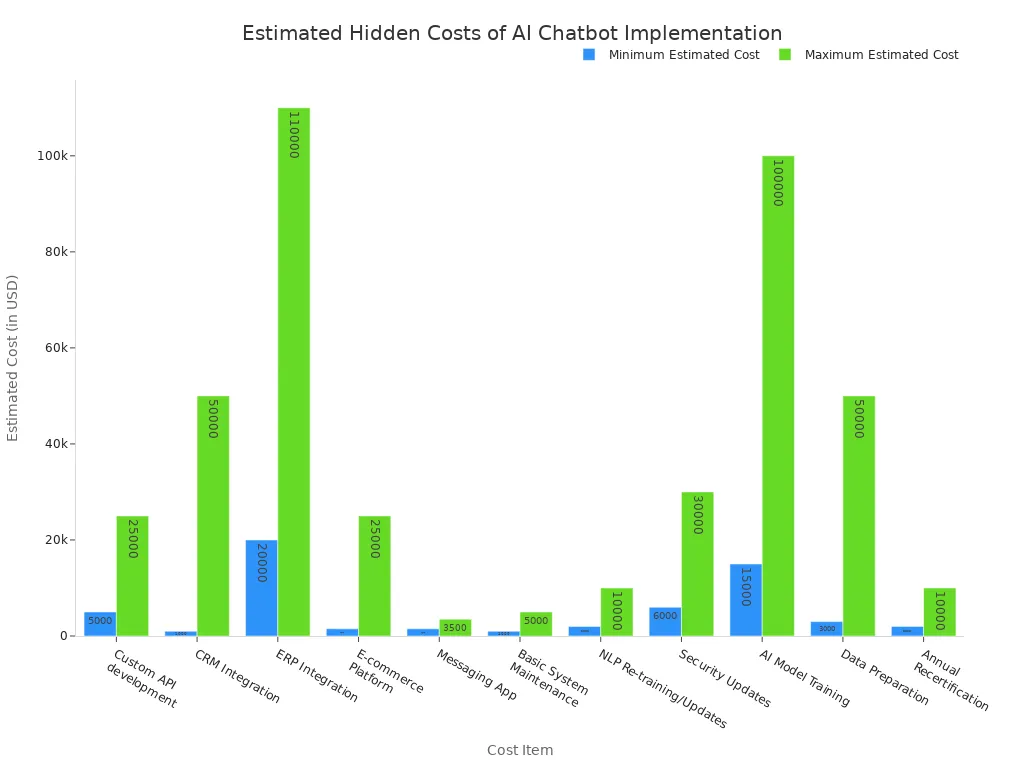
Hidden costs can accumulate quickly and include:
- Data Preparation: Cleaning, labeling, and structuring the required 20,000+ tickets can cost anywhere from $3,000 to over $50,000.
- Integration: Connecting the AI to existing systems like CRMs, ERPs, and ecommerce platforms can range from a few thousand to over $100,000, depending on complexity.
- Ongoing Maintenance: Annual upkeep, including model re-training and security updates, can amount to 15–20% of the original build cost.
- Personnel: Training your team and potentially hiring specialized talent to manage the AI platform adds to the long-term operational expense.
These factors transform the implementation from a simple software purchase into a major strategic and financial commitment.
Why This Model Excludes Most SMBs
The combination of opaque pricing, high data requirements, and substantial implementation costs makes platforms like Forethought unsuitable for most SMBs. These businesses typically operate with limited budgets and cannot afford the high upfront investment or the risk of an uncertain ROI.
Key barriers for SMBs include:
- Prohibitive Costs: An enterprise AI solution can require an initial investment of tens of thousands of dollars, a significant hurdle without a guaranteed return.
- Lack of Data: Most SMBs simply do not have the 20,000+ historical support tickets needed for effective AI model training.
- Talent Gap: Implementing and managing a complex AI system requires specialized expertise that is expensive and difficult for smaller companies to hire.
- Uncertain Payoff: The benefits of advanced AI, while powerful, are often harder to quantify upfront, making it a risky investment for budget-conscious businesses.
This model effectively reserves the most advanced conversational AI for large enterprises, leaving a gap in the market for powerful yet accessible solutions.
A Look at Sobot's Transparent and No-Code Alternative
In contrast to the high-barrier model, platforms like Sobot offer a more accessible path to powerful automation. Sobot is a conversational ai chatbot platform for ecommerce designed for transparency, ease of use, and rapid deployment, making it an ideal choice for businesses of all sizes.
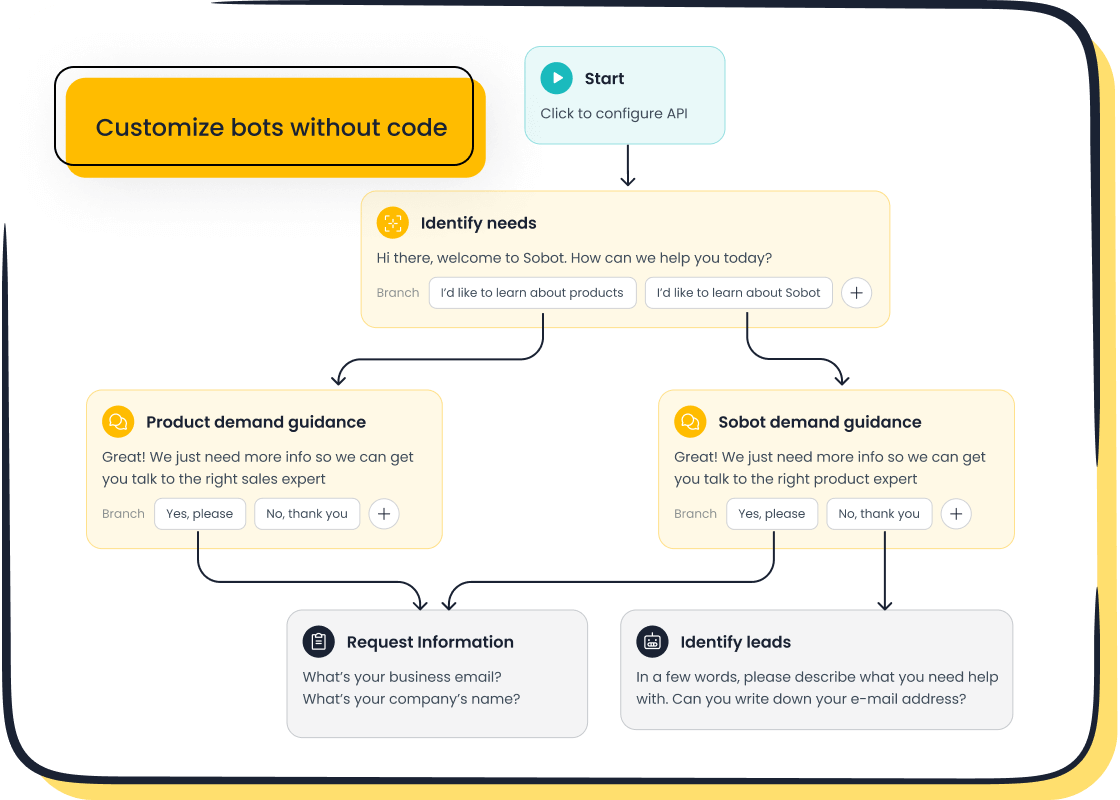
Sobot addresses the key challenges that exclude SMBs from enterprise-grade AI:
- Transparent Pricing: Sobot provides clear, predictable pricing plans, allowing businesses to choose a tier that fits their budget and scale as they grow. This eliminates the uncertainty of custom quotes.
- No-Code Builder: The platform features an intuitive, point-and-click interface. Teams can design and deploy a sophisticated chatbot without writing a single line of code, drastically reducing implementation time and the need for specialized developers.
- Accessible Data Requirements: Sobot's AI does not demand tens of thousands of historical tickets. Its knowledge base can be built quickly by ingesting existing resources like PDFs, spreadsheets, and website content, enabling powerful personalization from day one.
By providing a straightforward and powerful conversational ai chatbot platform for ecommerce, Sobot empowers businesses to leverage advanced conversational commerce and AI shopping assistants without the prohibitive cost and complexity. This approach democratizes access to high-quality conversational AI, allowing more ecommerce brands to enhance customer experience, improve efficiency, and drive growth.
Assessing Day-to-Day Usability for Support Teams
An AI platform's power is only as good as its usability. If support agents find a system difficult to navigate, its potential to improve efficiency and customer satisfaction diminishes. This section examines the day-to-day practicalities of using a platform like Forethought, focusing on the agent experience. We assess everything from the user interface to the ongoing maintenance required, comparing it to more streamlined solutions.
Evaluating the User Interface and Workflow
A platform's user interface (UI) directly impacts agent adoption and efficiency. A complex UI can create a steep learning curve, slowing down workflows instead of accelerating them. While Forethought offers powerful AI capabilities, its interface can be less intuitive for teams accustomed to simpler tools.
DeepConverse, in contrast to Forethought, provides a user interface that is more intuitive and is simpler for admins and support staff to utilize. This facilitates faster onboarding of agents and a simpler setup process.
In contrast, platforms like Sobot prioritize a unified agent experience. Sobot's integrated workbench, praised by clients like Weee!, combines channels like live chat and a ticketing system into a single view. This approach simplifies workflows, reduces context switching, and allows agents to manage all customer interactions from one place, enhancing the overall customer experience.
Gauging the Accuracy of AI-Assisted Suggestions
The accuracy of AI-driven recommendations is critical. High-quality suggestions empower agents, while poor ones create frustration and distrust in the AI system. Effective AI should deliver precise, context-aware recommendations that help agents resolve issues faster.
- Accurate AI suggestions boost agent productivity by providing relevant information in real time, leading to quicker response times.
- This improvement is reflected in key metrics like lower average handling time (AHT) and higher first-contact resolution (FCR) rates.
- Ultimately, better recommendations lead to higher customer satisfaction scores (CSAT) and Net Promoter Scores (NPS).
Tracking the effectiveness of AI-generated suggestions is crucial. It helps determine if the AI is truly enhancing productivity or creating friction. Strong personalization is key to ensuring the AI delivers valuable recommendations.
The Level of Ongoing Maintenance Required
Advanced AI platforms often require continuous "tweaking" to maintain performance. This includes updating the knowledge base, refining workflows, and re-training AI models as products and policies change. This ongoing maintenance can become a significant time commitment for support teams, diverting resources from front-line customer service. The goal is to have an AI that learns and adapts with minimal manual intervention, not one that requires constant oversight.
Assessing Helpdesk Integration Capabilities
Seamless integration with existing helpdesks and systems is non-negotiable. An AI platform must fit into a team's established workflow without causing disruption.
- A common challenge is a poor fit with existing tools. If an AI cannot integrate smoothly with a company's CRM or custom databases, it leads to inefficient, fragmented workflows and frustrated agents.
This is where a platform's open API and pre-built integrations become vital. Solutions like Sobot are designed to connect easily with other systems, ensuring data flows smoothly and agents have all the information they need without switching between multiple applications.
Agent Feedback on Training and Adoption Hurdles
Introducing any new AI system can be met with resistance. Agents may fear job displacement or feel overwhelmed by new processes.
- Employees often resist change when they feel excluded from the decision-making process or do not see immediate benefits in their daily work.
Effective change management is essential for successful AI adoption. The AI should be positioned as a helpful tool—like advanced ai shopping assistants for agents—that handles repetitive tasks, allowing them to focus on more complex and rewarding customer interactions. This approach fosters a collaborative environment where AI and human agents work together to improve customer satisfaction and achieve better real-time engagement.
Evaluating Forethought's Analytics for Actionable Insights
Powerful AI is incomplete without powerful analytics. An analytics dashboard should provide clear, actionable insights, not just a sea of data. For an ecommerce business, this means understanding chatbot performance, identifying customer friction, and making data-driven decisions. We evaluated Forethought's reporting capabilities to see if they turn complex AI interactions into simple, strategic intelligence.
A Deep Dive into the Reporting Dashboard
A comprehensive reporting dashboard is the command center for any AI support strategy. It must track the right Key Performance Indicators (KPIs) to provide a full picture of performance. An effective dashboard should include:
- Automated Resolution Rate and Human Handoff Rate
- Customer Satisfaction (CSAT) scores for bot interactions
- Fallback Rate (how often the AI fails to understand)
- Top topics the AI cannot answer
- Goal Completion Rate (GCR) for specific user journeys
These metrics are essential for gauging the AI's impact on efficiency and customer satisfaction.
Measuring Chatbot Performance and Resolution Rates
The primary measure of a chatbot's success is its ability to resolve customer issues autonomously. While Forethought's AI is advanced, its resolution rate is heavily dependent on the quality of training data. Industry benchmarks show what a well-tuned AI can achieve.
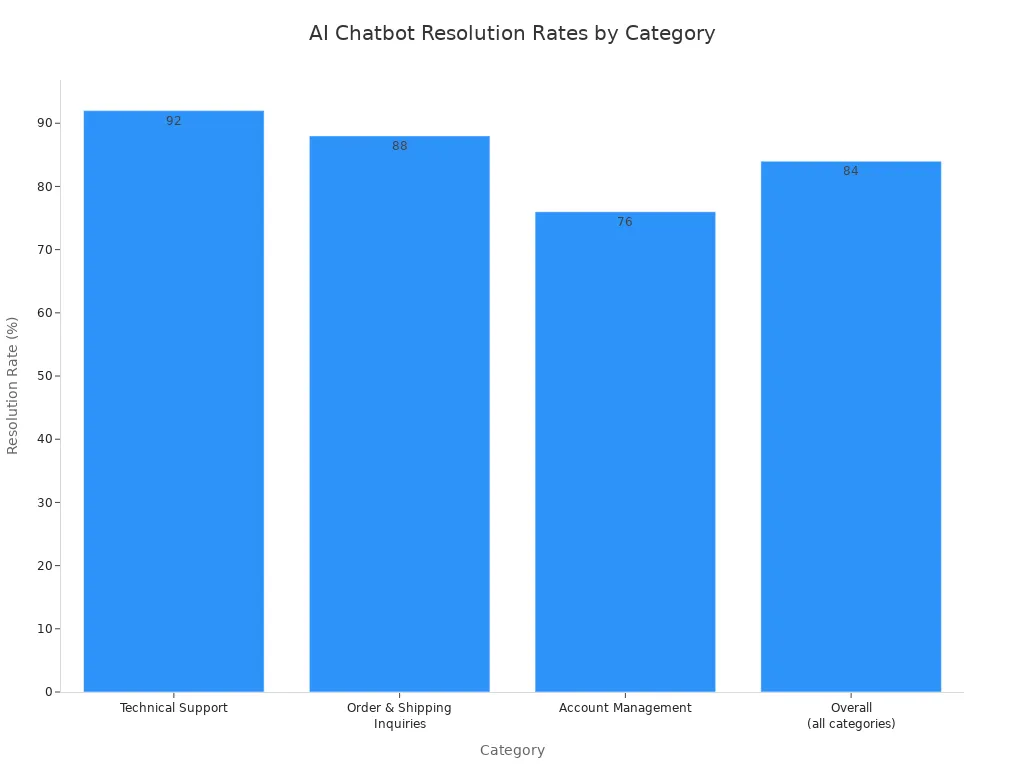
For common ecommerce inquiries, a high-performing AI can resolve a significant percentage of tickets without human help.
| Category | AI Resolution Rate |
|---|---|
| Technical Support | 92% |
| Order & Shipping Inquiries | 88% |
| Account Management | 76% |
Achieving these numbers requires clean data and continuous optimization.
Identifying Customer Pain Points with AI
Beyond resolution rates, the true value of AI analytics lies in identifying recurring customer problems. By analyzing conversation topics and sentiment, an AI can flag issues before they escalate. For example, AI can detect a sudden spike in complaints about "late delivery" or a "buggy feature" after a new software update. This allows businesses to proactively address root causes, improving the overall customer experience and satisfaction. This AI-driven analysis turns customer feedback into actionable product and service recommendations.
The Challenge of 'Messy' vs. Clean Data Reporting
The accuracy of any AI report depends entirely on the quality of the underlying data. "Messy data" can render analytics useless and lead to poor business decisions.
Common examples of 'messy data' include inaccurate or invalid data, such as an age of 200... Structural errors, like incorrect headers, merged cells, or wrong delimiters... also contribute to messy data. These issues lead to flawed analyses, incorrect conclusions, and a complete breakdown of trust in the analytics process.
Without clean data, even the most advanced AI will produce unreliable insights.
Sobot's Approach to Clear, Actionable Analytics
In contrast to platforms that can be hindered by messy data, Sobot provides a unified system designed for clarity and action. Sobot's AI platform offers real-time insights and predictive analytics, making it accessible even for non-technical users. The system integrates data from its entire suite—including the AI Agent, voicebot, and live chat—into one clean dashboard. This holistic view enables powerful personalization and accurate recommendations. By analyzing customer interactions across all touchpoints, Sobot helps businesses predict churn, improve customer satisfaction, and even provide dynamic product recommendations, turning every conversation into a growth opportunity.
This review was necessary to validate Forethought's ambitious claims against the practical realities of ecommerce. Our findings show that while its AI is powerful, the platform's complexity, high data requirements, and opaque pricing make it a high-risk choice. This model excludes many ecommerce brands from advanced AI. The market for AI-powered assistance is maturing, favoring accessible solutions.
For your ecommerce business, consider a transparent conversational ai chatbot platform for ecommerce like Sobot. Its no-code chatbot and accessible AI platform empower you to adopt powerful conversational commerce without prohibitive costs. This approach aligns your goals with your resources.
FAQ
What is the main difference between Forethought and Sobot?
Forethought targets large enterprises with a complex, data-heavy AI model and opaque pricing. Sobot offers a transparent, no-code conversational AI platform. It is designed for easy adoption by businesses of all sizes, including SMBs, to quickly enhance their ecommerce support.
Why is a 'no-code' chatbot builder important?
A no-code builder, like the one offered by Sobot, empowers your team to create and manage a powerful chatbot without any programming skills. This feature significantly reduces implementation time and cost. It removes the need to hire specialized developers for setup or maintenance.
Do I need thousands of support tickets to use Sobot?
No. Sobot's AI does not require a massive historical dataset of 20,000+ tickets. You can build its knowledge base quickly using existing documents like PDFs, articles, and website content. This makes it accessible for new and growing ecommerce businesses.
Can Sobot's AI help increase sales?
Yes. Sobot's platform includes features like AI shopping assistants and dynamic product recommendations. By engaging customers proactively and guiding them through their purchase journey, the AI can help boost conversion rates, reduce cart abandonment, and increase overall sales for your ecommerce store.
See Also
Elevating Online Shopping Experience: Chatbots Drive Customer Delight
Live Chat Solutions: Propelling E-commerce Sales and Growth
Best Live Chat Platforms for Online Stores This Year
Shopify Live Chat: Authentic Experiences From Actual Users
Comparing Leading Live Chat Tools: Shopify Against Its Rivals

