10 Features of a Great Multichannel Contact Center


A great multichannel contact center unifies your multichannel communication channels with intelligent technology from Sobot. This helps every customer Embark on Your Contact Journey smoothly. Using a platform like the Sobot call center, you create a seamless customer experience across all multichannel touchpoints. This unified multichannel approach boosts efficiency and improves customer satisfaction. Sobot AI powers these essential features. Let's explore the key call center features that transform your multichannel customer service from good to great.
1. Unified Omnichannel Communication in a Multichannel Contact Center
Many businesses operate a multichannel contact center. This means they offer support on several channels like phone, email, and social media. However, a multichannel setup often keeps these channels separate. True excellence comes from unified omnichannel communication. This approach integrates all your communication channels into one seamless system.
The Problem of Disconnected Channels
In a standard multichannel system, your channels do not talk to each other. A customer might start a conversation on chat and then call your support line. The phone agent has no record of the previous chat. This forces the customer to repeat their issue. This disconnected experience creates frustration and wastes time for everyone. A multichannel strategy provides options, but it can create a broken journey.
The Benefit of a Single Customer View
True omnichannel communication solves this problem. It gives your agents a single view of every customer. This holistic view combines data from all channels into one place. Agents can see a customer's full history, including past interactions and preferences. This information empowers them to offer personalized and effective solutions.
Pro Tip: Sobot's Omnichannel Solution provides a unified workspace for your team. It brings together interactions from email, social media, and chat. This consolidation helps agents resolve issues faster and improves the overall customer experience.
Example: A Seamless Chat-to-Call Transition
Imagine a customer is using your website's live chat to solve a complex technical problem. The chat agent realizes the issue needs a voice conversation. With omnichannel communication, the agent can seamlessly transition the customer to a phone call. The new agent who takes the call already has the full chat transcript. The customer does not need to explain anything again. This smooth handover is a key feature of a great multichannel contact center and shows the power of a truly connected experience.
2. Deep CRM Integration
A powerful multichannel contact center does more than just manage different channels; it understands the customer behind every interaction. Deep CRM (Customer Relationship Management) integration is one of the most critical features for achieving this. It connects your support platform directly to your customer database, transforming how your team operates across all multichannel touchpoints.
The Problem of Missing Customer Context
Without CRM integration, your agents are flying blind. A customer calls, but the agent knows nothing about them. They don't know their purchase history, past issues, or even their name. This forces the agent to ask repetitive questions, creating a clunky and impersonal experience. This lack of context makes it impossible to provide proactive support, turning simple customer interactions into frustrating hurdles. Your multichannel strategy is incomplete if the data from those channels remains isolated.
The Benefit of Personalized Interactions
Integrating your CRM provides a complete 360-degree view of every customer. This empowers your agents with the full story. They can see past purchases, previous support tickets, and notes from other agents across all channels. This rich context allows for truly personalized service. Agents can anticipate needs, offer relevant solutions, and make the customer feel valued. This level of personalization is key to building loyalty and increasing customer retention. A better experience often leads to:
- Shorter resolution times
- Higher customer satisfaction
- Increased customer lifetime value (CLV)
Key Integration Features in Action
Imagine a customer contacts you through your multichannel support system. With deep integration, your agent’s screen instantly populates with the customer's entire history. The agent sees the customer recently bought a specific product and had a question about it on social media last week.
Sobot in Action: Sobot offers seamless integration with major systems like Salesforce and Shopify. This capability empowers your agents with full context, turning your multichannel contact center into an intelligent hub for all customer interactions. This is one of the key features that elevates your service.
The agent can now greet the customer by name and proactively ask if their call is related to their recent purchase. This creates a smooth, intelligent, and efficient experience that builds lasting trust.
3. Automatic Call Distributor (ACD)
An Automatic Call Distributor (ACD) is the traffic controller for your contact center. It automatically receives incoming calls and distributes them to specific agents or teams based on preset rules. This technology is fundamental for managing call volume efficiently in any modern multichannel operation.
The Problem of Unorganized Call Queues
Without an ACD, your call center is a free-for-all. Customers call in and wait in a single, long queue, regardless of their needs. Your agents pick up calls randomly. This creates long wait times and connects customers with agents who may not be the best fit to solve their problem. This disorganized approach in a multichannel environment leads to customer frustration and agent inefficiency.
The Benefit of Smart, Automated Routing
An ACD brings order to the chaos. It uses smart automation to direct callers to the right place on the first try. This intelligent routing system dramatically reduces wait times and improves the customer experience. Your agents become more productive because they receive calls they are equipped to handle. This automation is a cornerstone of an effective multichannel strategy, ensuring your team's time is used wisely across all voice channels.
Example: Routing by Priority or Region
ACD routing rules can be simple or complex. For instance, you can route calls based on a customer's geographic location to connect them with a local team. You can also set up priority-based routing for your multichannel system. This means certain callers get moved to the front of the line. Common criteria for this include:
- Customer data: You can prioritize callers based on their account type, like VIP members.
- Urgency level: The system can identify calls from specific channels or numbers as more urgent.
This ensures your most critical calls are handled first, creating a more responsive and organized support system.
4. Skills-Based Routing
Automatic Call Distributor (ACD) gets your customer to the right department. Skills-based routing takes this a step further. It connects your customer to the exact agent best suited to solve their specific problem. This feature is a game-changer for any multichannel contact center.
The Problem of Agent-Customer Mismatch
Your customer has a complex problem. They wait in a queue and finally reach an agent. Unfortunately, that agent lacks the training to help. This mismatch forces a transfer. The customer must wait again and repeat their issue to a new person. This is a common failure in a multichannel system without smart routing. It creates frustration and hurts your key metrics. In fact, when an agent needs to transfer a call, first-call resolution can drop by as much as 14%. This wastes time for both your customer and your team.
The Benefit of Expert-Level Support
Skills-based routing solves this problem by matching customer needs with agent skills. This intelligent routing ensures every interaction is handled by an expert. Your customer gets their problem solved faster, which boosts satisfaction. Your agents also benefit greatly from this approach. It empowers them to succeed in their customer support role.
- Agents feel more confident and effective handling issues within their expertise.
- It reduces agent stress and can lower employee turnover rates.
- New hires can specialize in certain areas, helping them build competency quickly.
- It helps agents focus, leading to better and more rewarding work.
Example: A Technical Query Reaches a Specialist
Imagine a customer sends an email asking how to modify a feature on your product's user interface. Instead of landing in a general inbox, your system's skills-based routing identifies the technical nature of the query. It automatically assigns the ticket to an agent with proven technical expertise. This agent understands the product deeply and can provide a precise, helpful answer on the first reply. This efficient process across your multichannel channels shows the customer you value their time and have the right people ready to help.
5. AI-Powered IVR for Customer Self-Service
Interactive Voice Response (IVR) systems are a staple of customer service. Modern IVR, however, uses Artificial Intelligence to create a much smarter self-service experience. It understands natural language, so your customer can simply state their needs. This technology is a vital feature for any efficient multichannel contact center.
The Problem of High-Volume, Simple Queries
Your agents often spend a large part of their day answering the same simple questions. Queries like "What is my order status?" or "What is your return policy?" create a bottleneck. This high volume of repetitive calls increases wait times for every customer. It also prevents your skilled agents from focusing on more complex issues that require a human touch. This inefficiency across your multichannel phone channels can lead to agent burnout and a poor customer experience.
The Benefit of 24/7 Automated Support
An AI-powered IVR offers a powerful solution: 24/7 customer self-service. This automation can handle up to 70% of common inquiries without needing an agent. This frees up your team and can reduce total operational costs by 15-30%. Your customers get instant answers anytime, day or night. This immediate service improves their overall experience. Your business benefits from a more efficient multichannel operation.
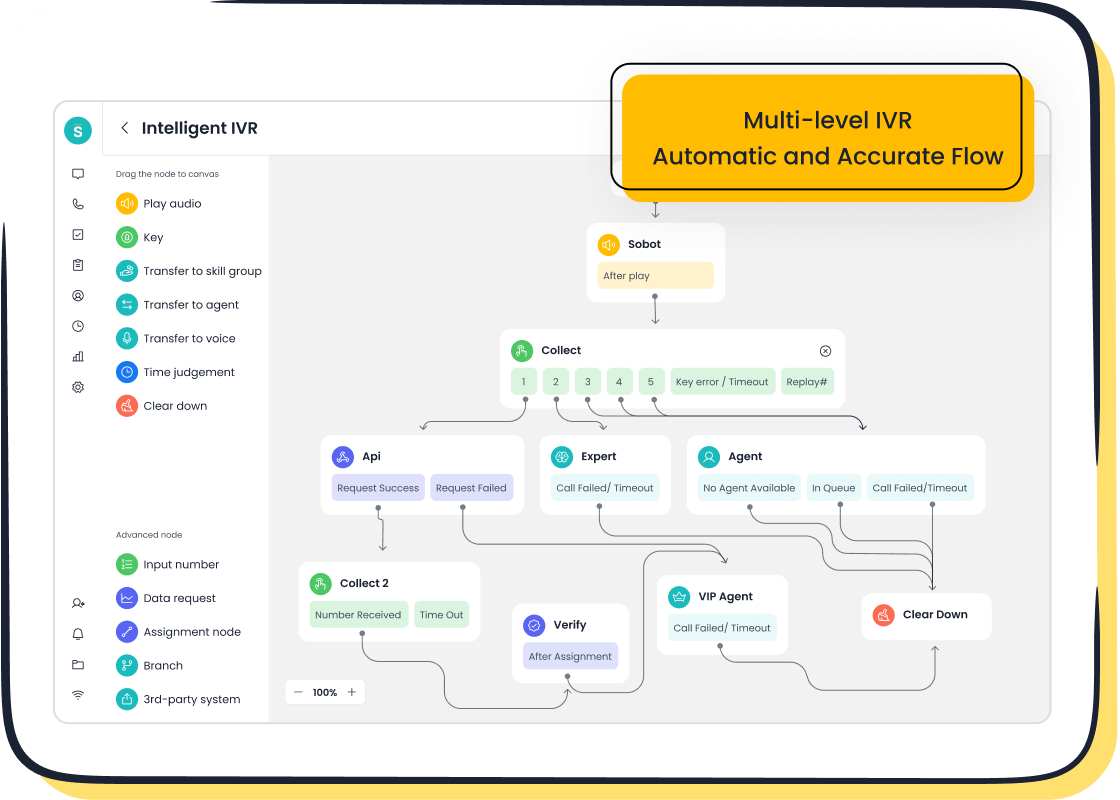
Sobot's Solution: Sobot's Voice/Call Center product features an easy-to-use drag-and-drop IVR builder. You can customize your call flows in real-time, allowing you to quickly adapt your self-service options to meet changing customer needs.
Example: Checking Order Status via IVR
Imagine a customer calls your support line after business hours. Instead of a simple "press 1" menu, your AI-powered IVR greets them. The customer says, "I want to check on my recent order." The system understands the request, asks for the order number, and provides an immediate update on its shipping status. This seamless self-service interaction is quick, convenient, and effective. It shows the power of intelligent automation in a modern multichannel customer service strategy.
6. Intelligent Chatbots and Voicebots
AI-powered IVR handles self-service over the phone. Intelligent chatbots and voicebots expand this automation to all your digital channels. These bots use AI to understand and respond to customer needs in natural language. They are a crucial part of a modern multichannel customer support strategy.
The Problem of Agent Burnout and After-Hours Gaps
Your agents face constant pressure. A heavy workload and repetitive questions can lead to burnout. This problem gets worse when you consider the main causes of agent stress:
- High Workload: A constant stream of inquiries leads to fatigue and anxiety.
- Repetitive Work: Answering the same questions all day is mentally draining.
- Tense Interactions: Dealing with upset customers takes an emotional toll.
This pressure makes it impossible to offer 24/7 customer support with human agents alone. When your team goes home, your customer is left without help. This creates a service gap in your multichannel operation.
The Benefit of Instant, Scalable Assistance
Intelligent automation offers the perfect solution. Chatbots and voicebots provide instant, scalable assistance across all your multichannel channels. Most customers expect a response in under five seconds, and bots deliver. They are available 24/7 to answer questions without making any customer wait in a queue. This frees your agents to focus on complex problems that require a human touch.
Sobot’s AI-powered Chatbot provides this 24/7 automation. It integrates seamlessly into your multichannel setup, offering a consistent service experience on your website, in your app, and across social media.
Example: A Bot Handling a Return Request
Imagine a customer wants to return a product they bought online. Instead of waiting for an agent, they open the chat window on your website. The chatbot greets them and asks how it can help. The customer types, "I need to start a return." The bot understands the request. It asks for the order number and guides the customer through your company's return policy. It can even generate a shipping label. This entire experience is handled instantly by automation. Bots can successfully resolve around two-thirds of all inquiries, turning a complex process into a simple, positive customer service interaction.
7. Analytics for Contact Center Solutions

You cannot improve what you do not measure. Great contact center solutions are built on data. Analytics tools transform raw performance data into clear, actionable insights. This empowers you to make smart decisions that enhance your entire multichannel operation.
The Problem of Data-Blind Operations
Operating a multichannel contact center without analytics is like driving with your eyes closed. You do not know which channels are busiest or why customers are contacting you. Are agents meeting their goals? Are customers satisfied? Without data, you are just guessing. This leads to inefficient processes, wasted resources, and a poor customer experience across your multichannel system. You miss key opportunities to improve service because you cannot see the root cause of problems.
The Benefit of Actionable Performance Insights
Analytics gives you a clear picture of your performance. It helps you understand customer behavior and agent efficiency across all your multichannel touchpoints. Powerful analytics tools provide deep insights by examining every interaction. This helps you understand the complete customer journey. Key analytics capabilities include:
- Interaction analytics: This reviews all communications to understand customer behavior across different channels.
- Text analytics: This processes written messages from email and chat to find common issues and gauge customer sentiment.
- Predictive analytics: This uses AI to forecast customer needs, helping you proactively address issues before they grow.
These analytics turn complex data into simple reports, showing you exactly where to focus your efforts for the biggest impact on your multichannel strategy.
Example: Optimizing Staffing with Call Volume Data
Imagine your call volume unexpectedly spikes every Monday morning, leading to long wait times. Your analytics dashboard can easily identify this trend. It shows you call volume data by hour, day, and channel. With this information, you can adjust your staffing schedule. You can assign more agents to handle phone calls on Monday mornings. This simple change, driven by analytics, reduces customer wait times and prevents agent burnout. It is a perfect example of using data to optimize your multichannel resources effectively.
8. Quality Management and Key Call Center Features
Great customer service is consistent. Quality management provides the tools to ensure every customer receives the same high level of support across all your multichannel channels. These call center features help you monitor performance, coach agents, and maintain excellence.
The Problem of Inconsistent Service Quality
Inconsistent service creates an unpredictable experience for your customer. One day they receive great help, and the next they do not. This inconsistency is a major source of frustration. When a customer faces unstable service or poor performance, they are more likely to leave. This problem grows in a multichannel environment where a customer may interact with different agents on different channels. Without a system to ensure quality, your customer service can feel random and unreliable.
The Benefit of Agent Coaching and Excellence
A formal quality management program turns inconsistency into excellence. It gives you a complete view of agent performance and helps you identify training needs. Key call center features like call recording and transcription allow you to review interactions and provide targeted feedback. This focus on continuous improvement creates a culture of excellence. In fact, companies with formal coaching programs are four times more likely to have top-performing agents. This leads to higher customer satisfaction and a more productive team.
Sobot in Action: Samsung used Sobot's all-in-one contact center solution to master quality management. By unifying its multichannel communication and leveraging powerful analytics, Samsung achieved a 97% customer satisfaction rate and boosted agent efficiency by 30%.
Example: A Manager Reviewing a Call Transcript
Imagine a manager reviewing a call transcript. They can use these call center features to pinpoint specific moments for coaching. The manager can praise the agent for showing empathy but also suggest a better way to explain a complex policy. This balanced feedback helps the agent grow. This is how a great multichannel contact center uses its features to build a stronger team. This process ensures every customer interaction moves closer to perfection, boosting overall satisfaction and trust in your service.
9. Workforce Management (WFM)
Workforce Management (WFM) is the brain behind your staffing strategy. It helps you have the right number of agents, with the right skills, working at the right time. This is essential for any successful multichannel contact center.
The Problem of Inefficient Agent Scheduling
Without a WFM system, you are likely guessing your staffing needs. This leads to two major problems. You might have too many agents on duty during slow periods, which wastes money. Or, you have too few agents during busy times. This creates long wait times and frustrates customers across all your multichannel channels. Inefficient scheduling in a multichannel environment also burns out your best agents, who feel overworked and unsupported.
The Benefit of Optimized Staffing Levels
WFM software uses data and automation to predict your needs. It helps you create schedules that match your customer demand perfectly. This optimization ensures you always have the right coverage for every channel. Your customers get faster service, and your agents have a more balanced workload. This leads to higher satisfaction for everyone.
WFM tools can even boost agent productivity. Reducing the time an agent is out of adherence by just five minutes per shift can increase their overall productivity by 1%.
This small gain adds up to significant cost savings for your multichannel operation.
Example: Forecasting for a Holiday Rush
Imagine you are preparing for a holiday sales rush. A WFM system uses forecasting to predict the surge in customer inquiries. This automation helps you build an accurate staffing plan for your multichannel team. To do this, the system analyzes key data points:
- Historical Call Volume Data: It looks at how call volume changed during past holidays.
- Volume Distribution Patterns: It understands which days of the week are busiest around the holiday.
- Business Intelligence: It considers input from your marketing and sales teams about upcoming promotions.
This data-driven approach ensures you have enough agents ready to handle the extra traffic on all your channels, creating a smooth experience for customers.
10. Robust Security and Compliance
Strong security is the foundation of a trustworthy contact center. Your customers share sensitive information across your communication channels every day. Protecting that data is not just a technical requirement; it is a core part of the customer experience, especially for industries like finance and retail.
The Problem of Protecting Sensitive Data
Your multichannel contact center is a prime target for security threats because it holds valuable customer data. Without strong protections, you expose your business and your customers to serious risks. These threats can appear on any of your channels and include:
- Data Breaches: Hackers try to steal personal information from your systems.
- Spoofing: Fraudsters fake their caller ID to trick agents into giving away account details.
- Insider Threats: Employees might accidentally or intentionally leak sensitive data.
A single security failure can damage your reputation and lead to heavy fines. It breaks the trust you have worked hard to build with every customer.
The Benefit of Building Customer Trust
Robust security does more than prevent problems; it actively builds customer confidence. When customers feel their information is safe, they are more willing to engage with your service. This trust is essential for long-term loyalty. A secure platform shows your commitment to protecting the people you serve.
Sobot's Commitment to Security: We build our platform on a foundation of trust. Sobot ensures all data transfer is encrypted and guarantees reliability with a 99.99% system uptime SLA. This level of security helps you create a safe environment for every customer interaction.
Example: Secure Payment Processing
Imagine a customer needs to update their credit card information. They contact your service team through a chat or phone call. With a secure system, this interaction happens over an encrypted channel. The agent can process the payment without ever writing down or storing the full card number in an unsecured place. This protects the customer's financial data from being intercepted or misused. This commitment to security turns a potentially risky interaction into a smooth and trustworthy experience.
These 10 call center features work together to build a powerful multichannel contact center. A modern contact center solution transforms your customer service from a cost center into a strategic asset. It improves customer satisfaction and drives growth. The right features create a better experience for every customer. Your customer support team can provide excellent service with the right tools.
Ready to improve your customer service? Evaluate your current call center features. Visit Sobot to see how our contact center solution can help you achieve your goals and boost customer satisfaction.
FAQ
What is the main difference between multichannel and omnichannel?
A multichannel contact center offers many separate communication channels. An omnichannel approach connects all those channels. This creates one seamless conversation for your customer, so they never have to repeat themselves. It provides a truly unified experience.
How does AI improve call center features?
AI automates simple tasks with tools like chatbots and smart IVR. This gives customers instant 24/7 support. It also frees your agents to handle more complex problems, making your entire multichannel contact center more efficient.
Why is a unified agent workspace so important?
A unified workspace gives your agents a single view of every customer. They see all past interactions in one place. This helps them provide faster, more personalized support without asking repetitive questions. It is a key feature for success.
How can I start improving my contact center? 🤔
You can start by evaluating your current system. Identify gaps in your customer journey. A platform like Sobot provides the key call center features needed to unify your channels and create a modern, efficient operation.
See Also
A 10-Step Guide to Deploying Effective Omnichannel Contact Center Solutions
Essential Features of Leading CRM Call Center Software Platforms Explained
Your Comprehensive Guide to Understanding Omnichannel Call Center Software
Leading Contact Center Solutions: An In-Depth Review for 2024
Evaluating the Best Cloud Contact Center Services: A 2024 Review

