Sharing stories of excellent customer service experience


You know an excellent customer service experience in 2026 means more than quick answers. It brings together technology and people to create a smooth, helpful experience. Many companies now use omnichannel and AI-driven solutions, making every customer experience unique and simple. Let’s look at how the shift from multichannel to omnichannel support, a 45% increase in resolution rates at Renogy, and Sobot’s AI-first strategy shape the way you experience service.
| Description | Impact |
|---|---|
| Transition from multichannel to omnichannel | Enhances customer experience and satisfaction |
| 45% increase in resolution rates at Renogy | Shows effectiveness of omnichannel solutions |
| Integration of generative AI in customer contact | Moves toward advanced AI-driven experience |
| Adoption of AI-first strategy by Sobot | Leads industry in AI technologies |
Real-world stories and innovative tools like Sobot help you understand what makes an excellent customer service experience possible.
Customer Service Trends in 2026
AI and Human Collaboration
You see customer service trends moving toward a blend of ai and human intelligence. Companies use ai to handle routine customer interactions, then transfer complex issues to human agents. This approach improves agent productivity and ensures customers get personalized support. You benefit from clear handoffs, smooth communication, and fast escalation procedures.
Studies show that ai extends human capabilities, while humans add emotional perception and judgment. Collaboration between ai and humans increases accuracy and credibility in customer service.
Here is how leading organizations implement ai-human collaboration:
| Protocols and Metrics | Description |
|---|---|
| Handoffs | Clear protocols for transferring control from ai to humans. |
| Communication | Defined channels for ai to share data with agents. |
| Escalation Procedures | Triggers for moving complex issues to humans. |
| Customer Satisfaction | Tracking CSAT scores to measure impact. |
| Net Promoter Score | Monitoring NPS for loyalty. |
| Conversion Rates | Evaluating lead generation and sales. |
| Time-to-Resolution | Measuring efficiency in resolving inquiries. |
| Agent Productivity | Assessing ai impact on workload. |
Proactive and Personalized Service
You experience proactive customer service when companies use predictive analytics and ai support to anticipate your needs. Businesses reach out before you ask for help, offering personalized support and solutions.
Nature (2023) found that ai collaboration improves productivity and empathy in customer interactions. Mental health counselors using ai-enabled chatbots deliver more empathetic responses.
Omnichannel platforms let you connect through your favorite channels, making interactions seamless. You receive proactive care, with ai predicting issues and offering solutions. Personalized support becomes standard, with companies using ai to tailor responses and offers.
Data-Driven Customer Experience
You notice companies using customer data to drive personalization and predictive interactions. Omnichannel solutions collect data from every touchpoint, helping businesses understand your preferences.
- 75% of companies believe human touch is critical for personalized support.
- Companies like BlueConic and Blueshift use ai for data analysis and personalization, but rely on humans for creative content.
- Human agents empathize with customers, providing personalized support that ai cannot fully replicate.
Predictive analytics and intelligence help companies deliver proactive, personalized support. You benefit from faster resolutions, tailored offers, and seamless omnichannel interactions. Customer service trends in 2026 focus on ai, personalization, predictive care, and proactive engagement.
Omnichannel Experiences with Sobot
Unified Customer Interactions
You experience unified cx strategies when you use Sobot’s platform. Sobot brings all your customer interactions together in one place. You can chat, call, or message through your favorite channels. Sobot’s all-in-one solution connects every communication method, making it easy for you to get help. You see agents respond faster because they have access to your history and preferences. Sobot uses omnichannel AI to cover every touchpoint, so you never feel lost. The platform supports scenario-based AI for industries like retail and e-commerce. You benefit from secure AI that protects your data and meets regulations.
| Feature | Description |
|---|---|
| All-in-One Solution | Integrates all customer channels and communication methods into a single platform. |
| Omnichannel AI | Covers every touchpoint to enhance customer interaction. |
| Scenario-based AI | Tailored for specific industries like E-Commerce and Retail. |
| Multi-faceted AI | Includes AI Agent, Copilot, and Insight functionalities. |
| Generative AI | Utilizes multiple advanced LLMs for improved responses. |
| Secure AI | Ensures data privacy and compliance with regulations. |
| Proven Track Record | Over 10,000 brands served, improving NPS and increasing efficiency while reducing costs. |
Sobot Chatbot for Seamless Support
You get seamless support from Sobot’s chatbot. The chatbot gives you personalized communication and routes you to the right agent or sales team. You can book appointments easily, and the system manages slots to reduce missed bookings. Sobot’s chatbot sends timely updates and reminders, helping you stay informed. You receive targeted offers that boost your loyalty. The chatbot works across channels, so you always have access to help.
| Feature | Contribution to Customer Support |
|---|---|
| Personalized Communication | Routes customers to suitable sales for 1:1 consultations by needs. |
| Automated Booking Management | Reduces missed appointments through effective booking slot utilization. |
| Precise Targeting | Boosts loyalty with timely updates, reminders, and targeted offers. |
Enhancing Customer Experience Across Channels
You see Sobot’s omnichannel service improve experiences in many industries. Retail brands use unified CRM to track your journey, reducing abandoned carts by 15%. Banks give you secure answers to your questions. Medical practices let you schedule appointments in real time. Logistics companies like J&T Express report higher sign-off rates and better cash-on-delivery collection. Samsung uses Sobot to boost agent efficiency by 30%. Property managers use chatbots to answer your questions about listings.
| Industry | Example Use Case |
|---|---|
| Retail and E-commerce | Fashion brands use unified CRM for customer journey tracking; online boutiques see 15% reduction in abandoned carts. |
| Financial Services | Banks use Sobot for secure communication and instant answers to common queries. |
| Healthcare | Medical practices enhance patient communication with real-time appointment scheduling. |
| Logistics and Delivery | J&T Express reports a 35% increase in sign-off rates and 40% in COD collection after using Sobot. |
| Technology Companies | Samsung experiences a 30% boost in agent efficiency; gaming companies manage large player bases effectively. |
| Real Estate | Property management uses chatbots for instant answers on listings and to qualify leads. |
You benefit from Sobot’s live chat, call center, voicebot, ticketing system, and customer contact center. These tools help you get answers quickly and make your experience smooth. Omnichannel experiences with Sobot show how technology and people work together to give you the best support.
Comparing Approaches for Excellent Customer Service Experience
Speed and Efficiency
You want fast answers and quick solutions. Speed and efficiency matter most when you reach out for help. Top-performing brands use smart tools and clear processes to resolve your issues quickly. You see live chat resolve problems in under ten minutes. Email support takes longer, often more than six hours. Elite eCommerce brands answer your first message in thirty to sixty minutes, while the industry average is four to six hours. Leading stores fix issues in less than twenty-four hours. The best contact centers achieve first contact resolution rates over seventy percent.
Tip: Fast resolution boosts your satisfaction and increases the chance you will buy again.
Here is a table showing how companies measure speed and efficiency:
| Metric | Description |
|---|---|
| First Contact Resolution (FCR) | Rates over 70% among top-performing contact centers. |
| Customer Satisfaction (CSAT) | Scores above 75% are considered excellent. |
| Average Handle Time (AHT) | Around 7-10 minutes for effective service. |
| Net Promoter Score (NPS) | Measures customer loyalty and satisfaction. |
| Customer Effort Score (CES) | Assesses the ease of customer interactions. |
| Average Resolution Time (ART) | Time taken to resolve customer issues. |
| Agent Utilization | Measures how effectively agents are used. |
| Average Speed of Answer (ASA) | Time taken for a customer to reach an agent. |
You see brands use AI to reduce resolution times by up to eighty-seven percent. When complaint resolution drops from eighty-two hours to seventeen hours, companies see a two percent revenue lift. Improving first contact resolution saves operating costs. You benefit from proactive support, where AI predicts your needs and solves problems before you ask. Self-service options let you find answers fast, without waiting for an agent.
- Customer satisfaction scores and net promoter scores help companies track how well they serve you.
- Conversion rates and time-to-resolution show how quickly you get help.
- Agent productivity and utilization measure how efficiently teams work.
Personalization and Empathy
You feel valued when brands understand your needs. Personalization and empathy make you feel important. Companies use AI to handle routine questions, freeing human agents to focus on emotional intelligence and complex issues. You notice that eighty-five percent of customers prefer human agents for tough problems. Sixty-two percent of customers engage more with brands that show empathy.
Note: Emotional intelligence helps agents connect with you and solve your problems with care.
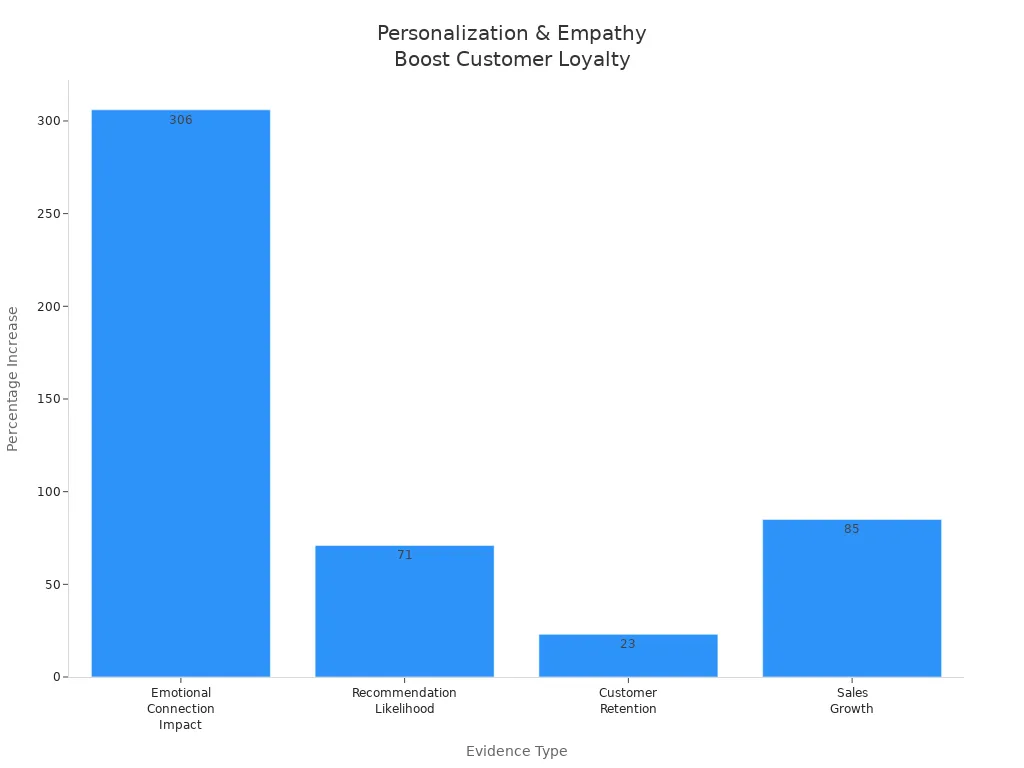
Personalized interactions create a sense of being understood. Empathetic brands build emotional links with customers. When you feel emotionally involved, you become more loyal. Here is a chart showing how personalization and empathy increase loyalty:
| Evidence Type | Statistic |
|---|---|
| Emotional Connection Impact | 306% higher lifetime value |
| Recommendation Likelihood | 71% more likely to recommend |
| Customer Retention | Increases by 23% |
| Sales Growth | 85% outperforming competitors |
You see brands use emotional intelligence to prevent bias and discrimination. Ninety-two percent of experts believe human oversight is needed to keep AI fair. Personalization has become a core expectation. When brands show genuine concern, you feel seen and valued. Proactive customer support uses AI to predict your needs and offer solutions before you ask. Self-service lets you choose how you interact, making your experience more comfortable.
Accessibility and Trust
You want easy access to help and clear information. Accessibility and trust build strong relationships between you and brands. Companies analyze sentiment to tailor messages and tone. They recognize your preferences from past interactions. Proactive support suggests solutions before you even ask. You see brands use self-service options to make support available anytime.
Alert: Transparency about data collection increases your trust in a brand.
Eighty percent of customers engage more with brands that explain how they use your data. Data minimization ensures only necessary information is collected. This makes you feel safe and respected. Here is a table showing how accessibility and trust impact retention:
| Evidence Type | Description |
|---|---|
| Emotional Processing | Trust and transparency engage the brain's emotional centers, influencing customer loyalty. |
| Anxiety Reduction | Transparent communication alleviates anxiety, fostering a sense of security among customers. |
| Trust Activation | Consistent honesty activates brain areas that reinforce trust, enhancing customer retention. |
| Proactive Engagement | Sharing information proactively strengthens emotional bonds and trust with customers. |
A streaming service used AI to analyze feedback. It found that customers stopped watching after seeing repetitive content. The service then recommended new series in your favorite genre, improving your experience. Accessibility and trust help you feel secure and valued. Emotional intelligence plays a key role in building trust. Brands that use proactive support and emotional intelligence keep you loyal.
You see customer service trends focus on speed, empathy, accessibility, and trust. Companies use proactive support, self-service, and emotional intelligence to create excellent experiences. You benefit from personalized interactions, quick answers, and clear communication.
Customer Service Stories: Real-World Excellence

Samsung’s Omnichannel Success with Sobot
You see how Samsung transformed its customer service by using Sobot’s omnichannel platform. Samsung faced a challenge with thousands of customer inquiries every day. The company needed a solution that could unify communication channels and improve agent efficiency. Sobot provided an all-in-one contact center that connected chat, voice, email, and social media. Agents accessed customer histories in one place, which helped them answer questions faster and avoid repeating information.
Samsung’s approach focused on customer satisfaction. The company used AI-powered analysis to track satisfaction scores and identify areas for improvement. After implementing Sobot’s solution, Samsung saw a 20% decrease in customer complaints. You notice a 15% rise in customer satisfaction, which shows the impact of unified support and intelligent data analysis. The platform also boosted agent efficiency by 30%. Agents spent less time switching between systems and more time helping customers.
Samsung’s story highlights the importance of seamless communication. You benefit from faster responses and personalized support. The company’s promise, “Always Here for You,” became real through Sobot’s technology. VIP customers received customized video support, which made their experience special. The integration with Samsung’s internal systems, such as ERP and ticketing, ensured that agents had all the information they needed. This reduced repetitive questioning and improved satisfaction.
You see Samsung’s results in numbers:
- Customer satisfaction rate reached 97%.
- Agent efficiency increased by 30%.
- Customer complaints dropped by 20%.
- Satisfaction scores rose by 15% after AI-powered analysis.
Samsung’s experience shows that unified platforms and AI-driven insights can transform customer service. You get faster answers, better support, and a more enjoyable experience.
AI Chatbot Delivers 24/7 Support
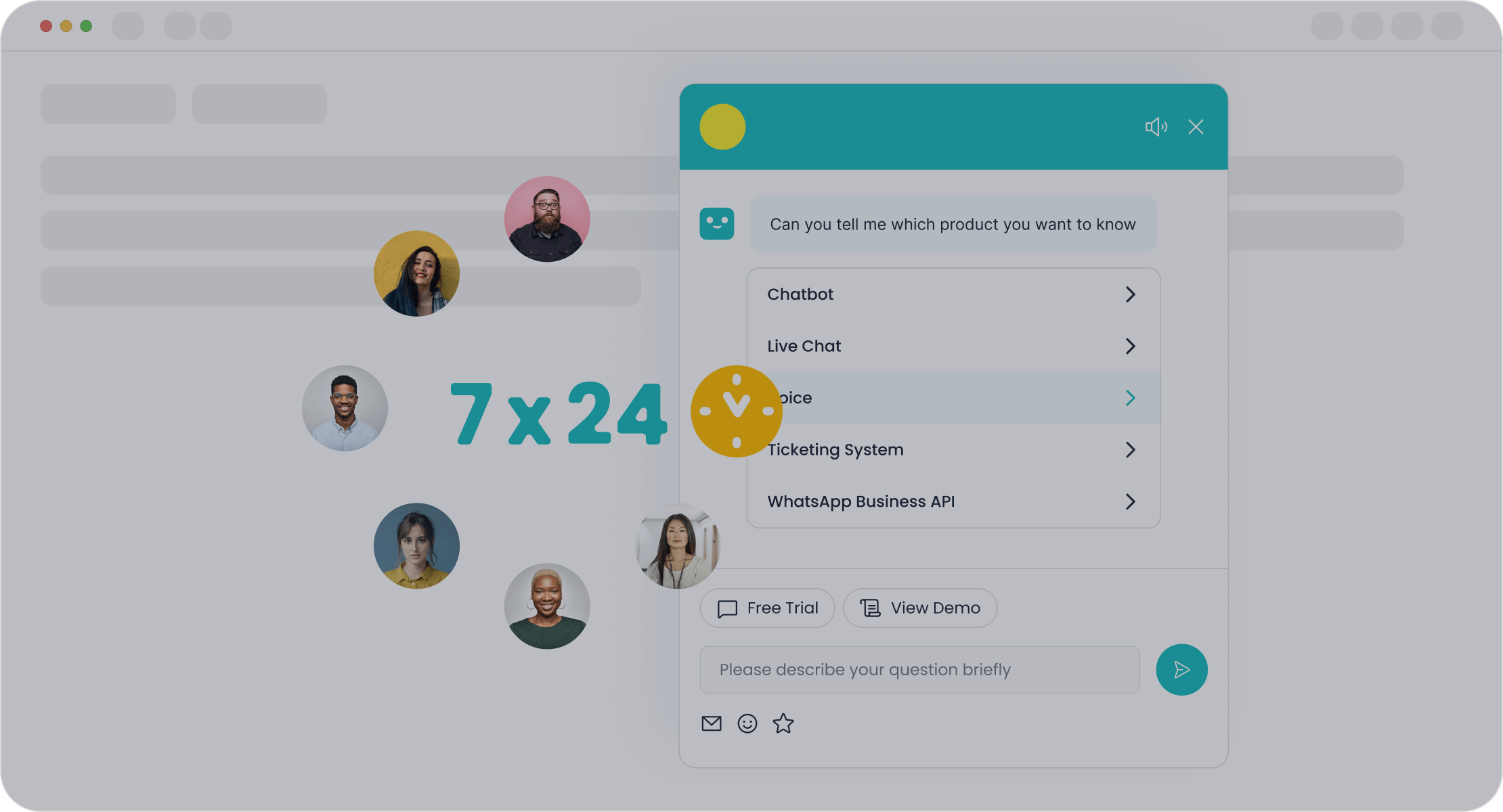
You interact with Sobot’s AI chatbot when you need help at any time. The chatbot operates around the clock, providing answers and support even when human agents are unavailable. You ask questions, and the chatbot responds instantly. It handles routine queries, books appointments, and sends reminders. You receive targeted offers based on your preferences, which increases your satisfaction.
The AI chatbot improves customer satisfaction by making support accessible and efficient. You never have to wait for business hours. The chatbot works across channels, including WhatsApp, SMS, and live chat. It speaks multiple languages, so you can communicate in your preferred language. The chatbot uses a knowledge base built from articles, PDFs, and other sources. This ensures accurate and helpful replies.
You see measurable improvements in customer satisfaction and efficiency. The chatbot autonomously solves regular queries, which boosts agent productivity by 70%. It reduces operational costs by up to 50% because fewer agents are needed for routine tasks. You benefit from smart self-service and proactive messaging, which increases conversion rates by 20%. Businesses gain 30% more leads while reducing service costs.
Here is a table showing key performance indicators for AI chatbot support:
| Metric | Description |
|---|---|
| Engagement Rates | Measures how often customers interact with the chatbot; higher rates indicate effective engagement. |
| Resolution Times | Measures how quickly the chatbot resolves issues; faster times lead to higher customer satisfaction. |
| Handoff Rates | Measures how often conversations are handed off to human agents; lower rates indicate effective resolution. |
| Direct Attribution to Sales | Measures the direct impact of the chatbot on sales; tracking sales generated from chatbot interactions. |
You notice that 24/7 support increases sales by 20-30%. Online shoppers are 53% more likely to abandon purchases without immediate assistance. AI chatbots improve conversion rates by up to 25%. They recover 15% of abandoned carts, which helps businesses grow.
Here is another table showing the impact of 24/7 AI chatbot support:
| Evidence Description | Statistic |
|---|---|
| Increase in sales due to 24/7 support | 20-30% |
| Likelihood of online shoppers abandoning purchases without immediate assistance | 53% |
| Improvement in conversion rates with AI chatbots | Up to 25% |
| Recovery of abandoned carts by chatbots | 15% |
You see that AI chatbots make customer service more efficient and accessible. You get answers quickly, which increases your satisfaction and loyalty.
Proactive Engagement in Action
You experience proactive engagement when companies use AI to anticipate your needs. Sobot’s platform analyzes customer behavior and preferences. The AI chatbot sends reminders, recovers abandoned carts, and recommends products. You receive personalized messages that make you feel valued. Airlines use AI to predict customer needs by analyzing social media and support tickets. You get automated alerts about delays, compensation, and rebooking options.
Proactive engagement creates emotional connections. You feel that companies care about your satisfaction. Personalization engages your brain’s reward systems, which enhances emotional responses and brand associations. Variety and creativity keep your experience fresh and exciting. Timing optimizes emotional impact during positive moments, which fosters loyalty.
Here is a table showing how proactive engagement strategies impact satisfaction and loyalty:
| Tactic | Impact on Customer Satisfaction and Loyalty |
|---|---|
| Personalization | Engages the brain's reward systems, enhancing emotional responses and brand associations. |
| Variety and Creativity | Maintains unpredictability and novelty, enhancing emotional impact and brand connection. |
| Timing | Optimizes emotional impact during positive moments, fostering emotional loyalty and brand affinity. |
| Transparency and Trustworthiness | Builds trust through open communication, reducing anxiety and fostering security, which are crucial for loyalty. |
| Empathetic Engagement | Strengthens emotional connections by addressing customer concerns with empathy, activating social and emotional processing areas. |
| Feedback Integration | Demonstrates responsiveness to customer feedback, reinforcing trust and loyalty as customers feel valued. |
You see that proactive engagement initiatives create emotional connections that enhance satisfaction. Transparency and trustworthiness are foundational for loyalty. Personalization drives revenue lift and improves customer experiences. You feel valued when companies respond to your feedback.
Companies automate routine tasks and personalize interactions based on customer preferences. This enhances the overall customer experience. Veeva Support Practice resolved 35,000 support tickets per month using over 2,500 knowledge articles. The company achieved a 97% customer satisfaction rate and 99% SLA adherence. Agentic AI is projected to autonomously resolve 80% of common customer service issues by 2029, leading to a 30% reduction in operational costs.
You benefit from proactive engagement in many ways:
- Airlines send alerts about delays and rebooking options.
- Chatbots recover abandoned carts and recommend products.
- Companies personalize messages and offers based on your preferences.
- You receive timely updates and reminders that improve your satisfaction.
Proactive engagement makes you feel seen and valued. You experience higher satisfaction and loyalty. Companies that use AI-powered chatbots and omnichannel platforms deliver measurable improvements in customer satisfaction and efficiency.
You see how omnichannel, AI, and human-centric strategies shape customer service excellence. These approaches boost customer satisfaction, drive data-based decisions, and build loyalty. Sobot’s solutions improve agent efficiency by up to 40% and reduce routine inquiries by 70%. You can use these insights to spot trends, personalize support, and predict customer needs. As you look ahead, you will find that customer experience will keep evolving to meet every customer’s expectations.
| Benefit | Description |
|---|---|
| Increased customer satisfaction | Omnichannel experiences allow you to engage through your preferred channels, leading to quicker response times and higher satisfaction. |
| Data-driven decision making | Comprehensive data across all touchpoints creates a clearer picture of the customer journey. |
| Better customer retention | A seamless experience fosters loyalty through consistent interactions. |
FAQ
What is an omnichannel contact center?
An omnichannel contact center lets you reach support through chat, phone, email, and social media. You get help on your favorite platform. Agents see your history in one place, so you receive faster and more accurate responses.
How does AI improve customer service?
AI answers simple questions quickly. It helps agents by suggesting solutions. AI works 24/7, so you get support any time. Companies using AI see up to a 30% increase in agent efficiency and a 20% drop in complaints.
Can chatbots handle complex issues?
Chatbots solve routine problems and answer common questions. For complex issues, they connect you to a human agent. This way, you get fast help for simple needs and expert support when needed.
Is my data safe with an AI-powered platform?
Yes. Leading platforms use strong security and follow privacy laws. Your information stays protected. Companies use encryption and regular checks to keep your data safe.
How do proactive messages improve my experience?
Proactive messages remind you about appointments, offer help before you ask, and suggest products you might like. These messages help you feel valued and keep you informed.
See Also
Engaging Conversations with Shopify: Authentic User Experiences
Transforming Customer Support with AI Service Agents
Comparative Analysis of Leading Voice of Customer Tools

