Outbound Call Success A 10-Step Guide


Making your outbound calling efforts effective is a major challenge. In 2025, sales teams face intense competition for prospect attention. Success in outbound telemarketing is not about luck. It requires a systematic and repeatable process. This guide gives you a clear framework to build high-performing call center outbound calls. A modern Sobot call center, enhanced with Sobot AI, can help you navigate these challenges. You can turn your strategy into measurable results.
- A healthy email open rate is between 20–30%.
- A standard reply rate is 5–10%.
- A strong booked call rate is 20–30% of replies.
This framework empowers your team to achieve consistent success. Sobot helps you build campaigns that deliver.
Step 1: Define Clear Campaign Goals & KPIs
Every successful journey starts with a map. Your outbound calling campaign is no different. You need a clear destination before you start dialing. Setting goals and Key Performance Indicators (KPIs) provides direction. This step turns random activity into a focused strategy. It gives your team a clear objective to work toward.
Setting SMART Goals
You should create goals that are SMART. This framework helps you define what success looks like in a clear, actionable way. Vague targets lead to poor results.
- Specific: What exactly do you want to achieve? (e.g., "Book 50 product demos.")
- Measurable: How will you track your progress? (e.g., "Track demos booked in the CRM.")
- Achievable: Is the goal realistic for your team?
- Relevant: Does this goal support your larger business objectives?
- Time-bound: When will you achieve this goal? (e.g., "Within the next 30 days.")
Tip: A SMART goal like "Increase qualified leads by 15% in Q3" is much more powerful than "Get more leads."
Identifying Key Performance Indicators
KPIs are the metrics you use to measure performance against your goals. They show you what is working and what is not. For outbound calling, you should track several key metrics.
| KPI | What It Measures |
|---|---|
| Conversion Rate | The percentage of calls that result in a sale or appointment. |
| Calls Per Agent | The number of calls an agent makes per hour or day. |
| Connection Rate | The percentage of calls where you speak to a prospect. |
| Average Handle Time | The average duration of a call with a prospect. |
The Path to Successful Outbound Calling
Defining your goals and KPIs is the first and most critical step. This foundation guides your list building, scripting, and training efforts. Without clear targets, your team is flying blind. Successful outbound calling begins with knowing exactly what you want to accomplish and how you will measure it.
Step 2: Build and Segment Your Target List
Your campaign's success depends on who you call. A powerful call list is your most valuable asset. You must start with accurate, compliant data. Using opt-in data respects privacy regulations and builds trust with prospects from the very first interaction. This foundation helps you connect with the right people effectively.
Sourcing High-Quality Contact Data
You need reliable sources for your contact information. Look for providers that offer data compliant with GDPR and CCPA. This ensures your outbound calling efforts are both legal and effective. When evaluating a data provider, you should:
- Check for phone-verified mobile numbers to increase connection rates.
- Ensure they offer coverage in your target regions.
- Read reviews on platforms like G2 to gauge user satisfaction.
- Ask for a demo or data sample to test accuracy.
“With Cognism, our email campaigns have a 95-98% deliverability rate. As a marketer, this is outstanding and the engagement rates from these campaigns match that.” — Michael Sibley, Digital Marketing Specialist EMEA @Protolabs
Audience Segmentation Criteria
A single, generic list will not work. You must segment your list to tailor your message. This helps you speak directly to a prospect's specific needs. Group your high-value contacts using clear criteria.
- Industry: Group leads by their industry to address unique sector challenges.
- Company Size: This helps you predict a prospect's pain points and resources.
- Buyer Persona: Create different campaigns for different roles, like a manager versus a director.
Targeted messaging makes your outreach more relevant and increases response rates from your leads.
List Cleansing and Maintenance
Contact data changes constantly. People switch jobs, and companies change. You must keep your list clean to maintain accuracy. Regular maintenance prevents wasted time and protects your sender reputation. Plan to clean your list at least once per quarter. If you have a high volume of leads, a monthly cleanup is even better. An immediate scrub is necessary if you see a sudden spike in bounced calls or emails.
Step 3: Master Your Timing for Maximum Connection
When you call is just as important as who you call. The right timing can dramatically increase your connection rates. Prospects are busy people. Your call needs to arrive when they are most likely to listen. Mastering your schedule helps you avoid voicemails and get more conversations.
Researching the Best Times to Call
You can use industry data to guide your initial schedule. Research shows specific windows when decision-makers are more available. This gives your outbound calling strategy a strong starting point. Consider these findings for B2B calls:
- Best Time: 10 AM to 11 AM is often a golden hour for conversations.
- Next Best Time: 2 PM to 3 PM is another productive window in the afternoon.
- Best Day: Tuesday is ideal. Decision-makers have settled into the week and are more receptive.
- Worst Day for Booking: Friday is tough for scheduling meetings. However, it can be a good day for conversations since there is less competition.
A/B Testing Call Schedules
Industry data provides a great baseline. Your specific audience might have different habits. You should test different call times to find what works best for you. This is called A/B testing. Create two different call schedules. Assign half of your list to Schedule A and the other half to Schedule B. Track your connection rates for each. This data will show you the optimal times to reach your unique prospects.
Tip: Use your CRM to tag leads based on the schedule you used. This makes it easy to compare results and identify the winning time slots.
Considering Time Zones and Cadence
Your prospects may live in different time zones. You must adjust your schedule to call them during their business hours. Calling someone too early or too late is a quick way to lose trust. Also, think about your call cadence. This is the frequency and spacing of your calls. You should not call the same person multiple times in one day. A good cadence respects the prospect's time. It keeps you top-of-mind without being annoying.
Step 4: Craft a Flexible Script for Outbound Calling
A common mistake in outbound calling is either reading a rigid script or having no plan at all. The best approach is to have a script that acts as a flexible guide, not a word-for-word mandate. This ensures you cover key points while allowing for a natural conversation. You should have a script to keep your calls consistent and on track.
Anatomy of a Compelling Script
A great script has a clear structure. It guides the conversation from introduction to a call-to-action. Think of it as a roadmap for your call.
- The Opener: Grab their attention immediately.
- The Value Proposition: Clearly state how you can help them.
- Discovery Questions: Ask questions to understand their needs.
- The Pitch: Tailor your solution to their specific problems.
- The Close: Propose a clear next step, like booking a demo.
Building a Strong Value Proposition
You have about seven seconds to capture a prospect's interest. Your value proposition must be concise and powerful. It should focus on solving a problem or delivering a key benefit.
Tip: Avoid small talk and get straight to the point. Your opener should immediately communicate value.
Here are some effective ways to present your value:
- Problem-Solving: "Hi [Prospect Name], is [common industry pain point] something you're looking to address? We help companies like yours streamline their processes."
- Specific Benefit: "Good day [Name], I notice many firms are overspending on [Specific Service]. Our solution has helped others save up to 20% annually."
- Upfront Value: "Hi [Prospect Name], a quick question: Are you currently looking for ways to [achieve a desired outcome]? We help businesses like yours do just that."
Preparing for Common Objections
Prospects will have questions and concerns. Being prepared for objections shows confidence and expertise. It is vital to have a script that includes responses to common pushback.
| Objection | Effective Response |
|---|---|
| 1. Lack of Budget | Focus on the value and potential return on investment to justify the cost. |
| 2. Lack of Trust | Share examples of past clients and highlight your company's authority to build credibility. |
| 3. Lack of Need | Ask open-ended questions to uncover their specific needs and show how your solution fits. |
| 4. Lack of Urgency | Ask what other priorities they have to determine if it's a timing issue or an excuse. |
| 5. Gatekeeper | Build trust with the gatekeeper and ask who is in charge of the buying process. |
Step 5: Equip Your Team with the Right Technology
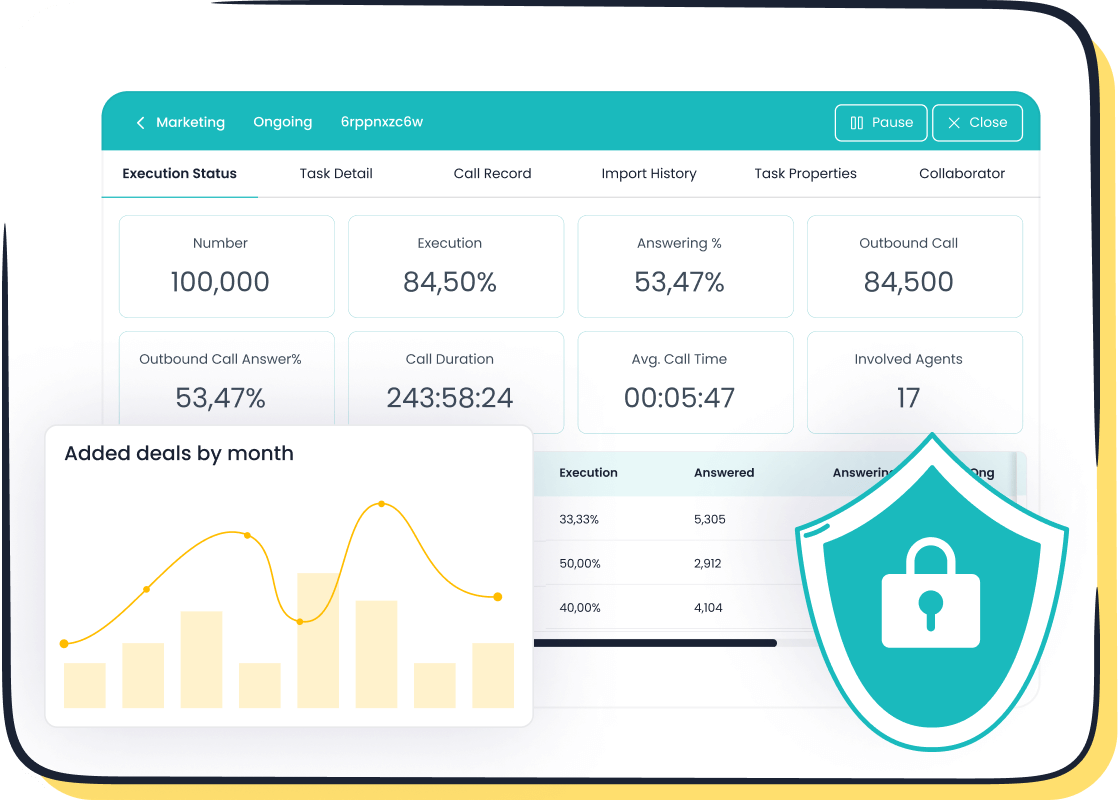
The right technology transforms your outbound calling strategy from manual effort to a high-efficiency operation. Modern tools automate repetitive tasks. They also provide valuable data to improve performance. Equipping your team with a powerful platform is essential for success in modern call center outbound calls. An all-in-one solution like Sobot’s Voice for Sales is designed to boost outbound productivity and streamline your entire workflow.
Choosing Your Dialer Type
An auto-dialer is a core component of your tech stack. It automatically dials numbers from your contact list. This saves agents significant time. Different dialers serve different purposes. You must choose one that aligns with your campaign goals. Platforms like Sobot offer multiple dialer options to fit your specific needs.
| Feature | Predictive Dialer | Progressive Dialer | Power Dialer |
|---|---|---|---|
| Dialing Mechanism | Dials multiple numbers at once, predicting agent availability. | Dials one number at a time only when an agent is available. | Dials the next number after an agent finishes the current call. |
| Primary Goal | Maximize call volume and agent efficiency. | Prioritize call quality and customer experience. | Bridge manual and automated dialing with a steady pace. |
| Best Use Case | High-volume telemarketing, collections. | High-value sales, relationship building. | Follow-ups, small sales teams, prioritized leads. |
Integrating Your CRM System
Your technology should work together seamlessly. Integrating your dialer with your Customer Relationship Management (CRM) system is critical. This connection gives agents instant access to prospect information. It also automatically logs call activity.
Tip: A smooth integration saves time and reduces manual errors. Sobot’s Voice for Sales integrates with popular CRMs like Salesforce and HubSpot in under 30 minutes, creating a unified workspace for your team.
Technology for Call Center Outbound Calls
A complete technology solution goes beyond just a dialer. Look for features that enhance connection rates and agent effectiveness. For example, using global phone numbers with high-quality caller ID helps build trust and encourages prospects to answer. The right technology provides the foundation for all successful call center outbound calls. It empowers your team to focus on what matters most: having quality conversations.
Step 6: Ensure Call Compliance and Build Trust
Following the rules is not just about avoiding fines. It is about building a trustworthy reputation. When prospects trust you, they are more likely to listen. Compliance is the foundation of a sustainable outbound calling strategy. You show respect for your audience's privacy. This respect turns into positive brand perception and better conversations.
Understanding TCPA and DNC Rules
You must understand key regulations like the Telephone Consumer Protection Act (TCPA) and the National Do Not Call (DNC) Registry. These rules protect consumers from unwanted calls. Following them is mandatory.
Key requirements include:
- You must get express agreement before making telemarketing calls.
- You cannot call cell phone numbers with promotional messages without the owner's permission.
- You must maintain an internal DNC list and honor all client requests to stop receiving calls.
- Your team needs to regularly clean your data against the National DNC list.
Implementing STIR/SHAKEN
Have your calls ever been labeled as "Spam Risk"? STIR/SHAKEN technology helps prevent this. It is a framework that verifies your caller ID information is legitimate. Phone carriers use it to fight illegal spoofing. When you adopt STIR/SHAKEN, your calls are more likely to get through to the prospect. This simple step proves your identity and builds immediate trust with both carriers and customers.
Managing Opt-In and Consent
Consent is your permission slip to contact a prospect. You must get it before you call. The best and safest method is to obtain prior express written consent. This can be a physical form or a digital one, like checking a box on your website. You should also keep detailed records of every interaction.
Tip: Always document how and when you received consent. For every customer, you should record the date, time, and method of consent. If a customer opts out, you must document that request as well. This diligence protects your business and shows your commitment to ethical practices.
Step 7: Train and Prepare Agents with Outbound Calling Tips
Your technology is in place, but your agents drive the results. Proper training turns a good team into a great one. You must prepare your agents with the right skills and knowledge. This section provides essential outbound calling tips to empower your team for success. Following these outbound calling tips ensures every agent is confident and capable.
The Role of Product Knowledge
An agent's confidence comes from what they know. Deep product knowledge is one of the most critical outbound calling tips. It allows agents to handle any question or objection with ease. When your team understands your product inside and out, they can connect its features to a prospect's specific needs.
- You can equip agents to handle objections effectively.
- You can increase the success rate of your entire campaign.
- You can program responses to common issues, turning challenges into opportunities.
Conducting Effective Role-Playing
Practice makes perfect in outbound calling. Role-playing is a safe way for agents to apply their training. It helps them build muscle memory for real conversations. You can simulate common scenarios, from dealing with gatekeepers to handling tough objections. This practice builds confidence and prepares agents for the pressure of a live call. Regular role-playing sessions are one of the most practical outbound calling tips you can implement.
Coaching on Tone and Active Listening
How an agent speaks is as important as what they say. A warm, confident tone builds trust. Active listening makes prospects feel heard and valued. You should coach your team on these soft skills. Here are some outbound calling tips for better listening:
- Repeat Key Points: Have agents mentally repeat a prospect's last sentence. This simple trick boosts focus.
- Observe Cues: Train agents to notice changes in a prospect's tone of voice. This reveals their true feelings.
- Acknowledge and Confirm: Teach agents to rephrase what they heard. This shows they are paying attention and understand the prospect's needs.
Mastering these outbound calling tips will significantly improve conversation quality.
Step 8: Motivate Your Team with Incentives
A motivated team is a productive team. Your agents are the engine of your outbound calling campaign. You must keep them engaged and driven. Incentives provide the fuel they need to perform at their best. A strong motivation strategy goes beyond just commissions. It creates a positive and competitive environment where everyone wants to succeed.
Designing an Effective Incentive Structure
You should design an incentive plan that aligns with your campaign goals. Your structure needs to be clear, fair, and attainable. Agents should know exactly what they need to do to earn a reward. A good plan motivates both top performers and the rest of the team. Consider a tiered system where agents can unlock bigger rewards as they hit higher targets. This encourages continuous improvement.
Using Leaderboards and Gamification
Gamification turns work into a fun and engaging competition. It taps into our natural desire for achievement and recognition. In fact, reports show that 89% of employees feel more productive with gamification. It also makes them happier at work.
You can implement simple gamification elements to boost morale.
- Leaderboards: Display real-time rankings for key metrics like calls made or appointments set. This sparks healthy competition.
- Points and Badges: Award points for hitting daily goals. Give out digital badges for mastering a new skill or closing a difficult deal.
- Rewards: Let agents exchange their points for tangible rewards, like gift cards or extra time off.
Recognizing Team Achievements
Recognition is a powerful motivator. People want to feel valued for their hard work. You should celebrate both big wins and small victories. This builds a culture of appreciation. Monetary rewards are effective, but non-monetary recognition can be just as meaningful.
Tip: Personalized appreciation often has a greater impact. A sincere thank-you note or public praise in a team meeting can significantly boost an agent's morale.
You can also offer development opportunities, such as funding for a new certification. This shows you are invested in their long-term growth. Recognizing achievements makes your team feel respected and motivated to keep performing.
Step 9: Monitor and Analyze Your Outbound Calling Campaign
You cannot improve what you do not measure. Monitoring your outbound calling campaign is essential for identifying what works and what needs to change. This continuous analysis turns raw data into actionable insights. It empowers you to optimize your strategy for better results in all your call center outbound calls.
Using Real-Time Analytics Dashboards
You need a clear view of your performance as it happens. Real-time analytics dashboards give you this power. They track your most important KPIs in one place. This allows you to make quick, data-driven decisions instead of waiting for weekly reports.
Tip: Platforms like Sobot provide comprehensive, real-time dashboards. You can track metrics like conversion rates and calls per agent. This helps you spot trends and manage team performance effectively.
Modern tools also use AI to provide deeper insights. For example, Sobot’s AI-driven features offer call quality monitoring and keyword spotting. This technology automatically flags calls for review. It helps you ensure quality and provides actionable coaching opportunities for your team.
The Importance of Call Recording
Call recordings are a goldmine of information for your outbound calling efforts. They provide a direct look into agent performance and the customer experience. You can use recordings to systematically improve your operations.
- You can use real-life call examples to train new hires.
- You can review calls to assess agent performance and find areas for coaching.
- You can identify common customer issues to improve your processes.
- You can ensure agents follow company policies and legal rules.
- You can resolve disputes by using recordings as clear evidence.
Analyzing recordings helps improve key metrics for call center outbound calls, such as First Contact Resolution.
Gathering Agent and Customer Feedback
Your data tells one part of the story. Your agents and customers tell the other. Gathering their feedback is crucial for a complete picture. Your agents are on the front lines. They know which scripts work and what objections they hear most often. Customers can tell you about their experience with your brand. You can collect this valuable information through surveys, website analytics, and direct conversations. This feedback helps you refine your outbound calling campaign and improve the overall customer journey.
Step 10: Refine and Optimize Your Strategy
An outbound calling campaign is never truly finished. The final step is a cycle of continuous improvement. You must refine and optimize your approach based on real-world results. This ongoing process ensures your campaigns stay relevant, efficient, and successful over the long term. It turns good performance into great performance.
Using Data for Informed Adjustments
Your call analytics data is a roadmap to a more effective strategy. You can use this information to make smart changes instead of guessing. Analyzing call data helps you pinpoint what is working and what is not. This allows you to streamline your process and improve sales efficiency.
You can use data to make specific improvements:
- Monitor Call Volume: This shows your team's activity level and helps you allocate resources better.
- Measure Call Duration: Longer calls often mean better engagement. Shorter calls might signal a need for better scripts or agent training.
- Track Conversion Rates: This metric directly measures the success of your calls and helps you identify which strategies lead to the best outcomes.
- Analyze Peak Call Times: Data reveals the best times to call, helping you schedule efforts when prospects are most likely to answer.
A/B Testing Scripts and Offers
You should never assume your first script or offer is the best one. A/B testing is a powerful way to find out what truly connects with your audience. You can create two versions of a script or offer and test them on different segments of your list.
For example, you could test:
- Different Openers: Does a problem-focused opener work better than a benefit-focused one?
- Varying Offers: Do prospects respond better to a free trial or a 20% discount?
- Call-to-Action Language: Does "scheduling a 15-minute demo" convert better than "booking a quick chat"?
Track the results of each version carefully. The data will show you which approach generates more positive responses. This testing process allows you to continuously refine your messaging for maximum impact.
Creating a Continuous Improvement Loop
Success comes from a cycle of action, review, and adjustment. You need to create a continuous improvement loop to keep your campaign sharp. This process involves a few key components.
Tip: A strong feedback loop helps your team share successes and refine outreach tactics together. This collaboration accelerates results and builds a culture of constant learning.
Your loop should include:
- Performance Tracking: Constantly monitor your KPIs, from call connection rates to meetings booked.
- Regular Team Reviews: Hold weekly meetings to discuss what is working and what challenges agents are facing.
- Feedback and Action: Use insights from data and team feedback to make specific adjustments to your strategy.
This cycle ensures your team is always learning and adapting. It transforms your outbound calling efforts into a dynamic, data-driven operation.
Achieving success in outbound calling is a continuous cycle, not a one-time setup. This guide walked you through the complete journey for your outbound telemarketing. You learned to plan with clear goals, execute with the right scripts, and optimize with data. Use this 10-step framework to build a successful outbound campaign. An integrated platform like Sobot empowers your team to turn this strategy into measurable results for your outbound calling campaign.
FAQ
What is the most important KPI for an outbound calling campaign?
Your most important KPI depends on your goal. For sales, you should focus on Conversion Rate. For lead generation, you might prioritize Appointments Set. Always align your KPIs with your main campaign objective for effective outbound calling.
How can I improve my call connection rate?
You can boost connection rates by using technology with high-quality caller ID. Calling from local numbers also helps build trust. Platforms like Sobot's Voice for Sales provide these features to help you get more answers from your outbound calling.
Is a script necessary for every outbound call?
You should use a flexible script as a guide. It ensures you cover key points and handle objections. A script provides structure but still allows for a natural conversation with your prospect during your outbound calling.
How often should I clean my contact list?
You should clean your list at least quarterly. For high-volume campaigns, a monthly cleanup is better. This practice removes bad data, improves efficiency, and ensures your outbound calling efforts remain compliant and effective.
See Also
A Ten-Step Blueprint for Seamless Omnichannel Contact Center Deployment
Mastering Quality Management Systems: Essential Principles for Call Centers
Setting Up Interactive Voice Response: A Comprehensive IVR Software Guide
Unlocking Efficiency: Your Definitive Guide to Omnichannel Call Center Software
Optimizing Operations: Understanding the Efficiency of Call Center Automation

