10 Essential Customer Service Skills for Contact Centers


You know how important essential customer service skills are for contact centers. Here’s a quick look at the top ten:
| Skill | Description |
|---|---|
| Communication | Clear and effective interactions |
| Active Listening | Understanding customer needs |
| Problem-Solving | Resolving issues quickly |
| Empathy | Showing genuine care |
| Patience | Handling tough situations calmly |
| Product Knowledge | Knowing your offerings well |
| Adaptability | Adjusting to changing demands |
| Positive Attitude | Keeping things upbeat |
| Attention to Detail | Noticing the small things |
| Time Management | Using time wisely |
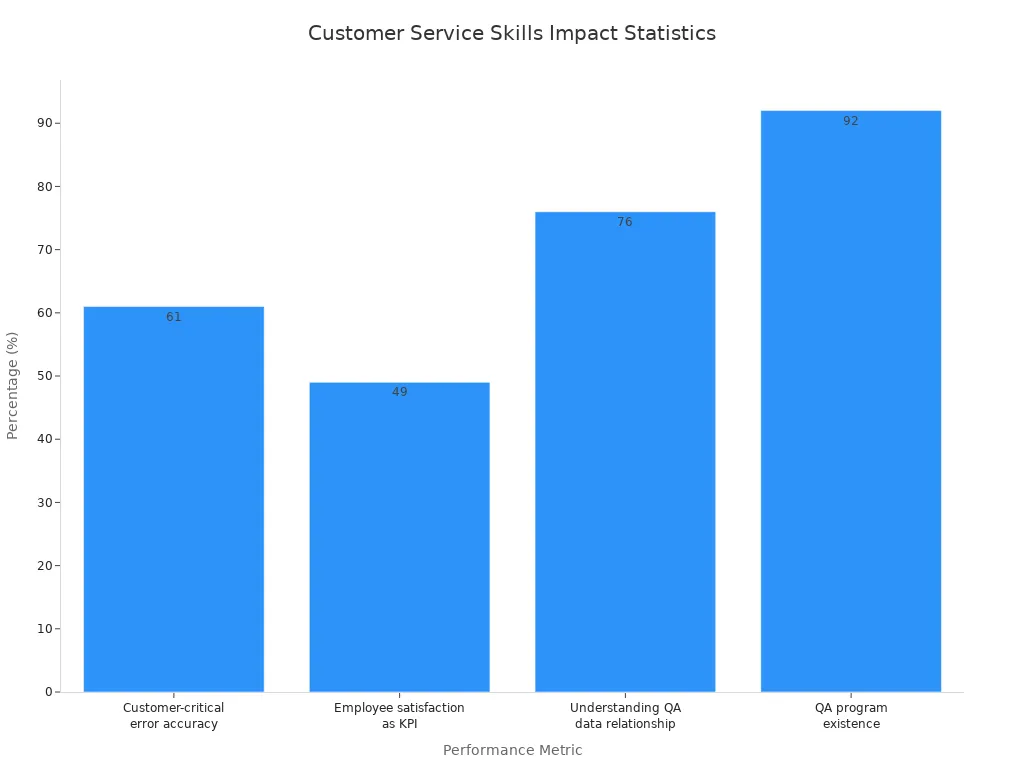
Sobot’s mission centers on enhancing customer interactions and efficiency. You can boost customer retention and deliver great customer service when you master core customer service skills and interpersonal skills. Think about how you apply these skills in your daily customer support, offering personalised service and omni-channel support. Start asking better questions and embrace your customer service duties with confidence.
Communication Skills in Contact Centers

Definition and Importance
You interact with customers every day. Communication skills help you build trust and create a positive customer experience. When you speak clearly, customers understand your message. You answer questions and solve problems faster. Good communication skills also help you handle complaints and disinterested customers in a professional way.
Here’s why communication matters in contact centers:
- You establish rapport quickly with customers.
- You share important information without confusion.
- You resolve issues and answer questions efficiently.
- You make customers feel valued and heard.
- You reduce misunderstandings and boost customer satisfaction.
Training in communication skills helps you build strong relationships. You see better customer satisfaction scores and happier customers. Active listening is part of effective communication. When you listen closely, you understand what customers need. This approach improves the customer experience and makes customers feel important.
Improving Communication

You can improve your communication skills with practice and the right tools. Sobot’s Voice/Call Center gives you features that make your job easier. The Unified Workspace lets you see all customer information in one place. You don’t waste time searching for details. You respond faster and more accurately.
Sobot’s AI-powered Voicebot handles initial inquiries. It routes calls smartly, so you get the right customer at the right time. This system increases agent productivity by 94%. Businesses report a 92% improvement in resolution speeds. You spend less time on routine tasks and more time helping customers.
| Feature | Benefit |
|---|---|
| Intelligent IVR | Smart call routing based on customer needs |
| Voicebot integration | AI handles initial inquiries before routing |
| Unified Workspace | All customer info in one place |
| Agent productivity | 94% increase reported by businesses |
| Issue resolution | 92% faster resolution speeds |
You can see how these tools support your customer service skills. They help you deliver a better customer experience and improve customer satisfaction. When you use Sobot’s solutions, you communicate more effectively and make every interaction count.
Active Listening as a Core Customer Service Skill
What Is Active Listening?
You hear a lot about customer service skills, but active listening stands out. It means you pay close attention to what customers say. You don’t just wait for your turn to speak. You focus on their words, tone, and feelings. You show you care by responding thoughtfully. This skill helps you understand what customers really need.
When you practice active listening, you build trust. Customers feel valued and understood. Research shows that poor communication can drive customers away. If you listen closely, you keep clients happy and boost retention. You also get insights that help you improve products and services. Customers who feel heard often share positive feedback and recommend your business to others. Source
Development Steps
You can develop active listening with a few simple steps:
- Give your full attention. Put away distractions and focus on the customer.
- Listen for meaning. Try to understand not just the words, but the feelings behind them.
- Ask clarifying questions. Make sure you understand the issue before responding.
- Summarize what you heard. Repeat key points to confirm understanding.
- Respond with empathy. Show you care about their concerns.
Sobot’s omnichannel solution makes active listening easier. You see all customer data in one place. You don’t miss important details. The unified workspace combines chat, voice, and ticketing systems. You get a clear view of every interaction. This helps you respond accurately and quickly. Sobot’s AI-powered tools support your customer service skills by consolidating information and guiding your responses. You deliver better service and increase satisfaction.
Tip: Use Sobot’s live chat and voicebot to capture customer feedback in real time. You can track conversations and follow up with personalized support.
Active listening is more than just hearing words. It’s a core skill that helps you solve problems and create loyal customers. When you use Sobot’s tools, you make every conversation count.
Problem-Solving Skills for Customer Service Duties

Problem-Solving Defined
You face new challenges every day in a contact center. Problem-solving means you find solutions fast and help customers get what they need. This skill is at the heart of good customer service. When you solve problems quickly, you build trust and keep customers coming back. You use your customer service skills to listen, analyze, and act. You don’t just fix issues—you make sure customers feel supported.
Studies show that teams with strong problem-solving skills reduce customer churn. Customers want quick answers and personalized solutions. If you respond fast, you create lasting relationships. Most contact centers aim to resolve issues on the first call. That’s what customers prefer. When you handle complex problems, you show your commitment to good customer service.
Application in Contact Centers
You use problem-solving skills every time you help a customer. You listen to their concerns, ask questions, and find the best solution. Sobot’s real-time monitoring and analytics make your job easier. You see call data and customer history in one place. You spot patterns and fix issues before they grow. Sobot’s unified workspace lets you track conversations and follow up with customers. You don’t miss important details.
Here’s how Sobot supports your problem-solving:
- Real-time monitoring shows you what’s happening during calls.
- Analytics help you understand trends and improve your approach.
- Unified workspace keeps all customer info at your fingertips.
- AI-powered tools suggest solutions and speed up responses.
You deliver good customer service when you solve problems fast. You use customer service skills to handle tough situations. Sobot’s tools help you work smarter and keep customers happy. You build loyalty and boost satisfaction every time you resolve an issue.
Tip: Use Sobot’s analytics to review your performance. You can spot areas for improvement and become a stronger problem-solver.
Empathy in Essential Customer Service Skills
Understanding Empathy
Empathy means you put yourself in your customer’s shoes. You try to feel what they feel. This skill helps you connect with people on a deeper level. When you show empathy, you let customers know you care about their problems. You do not just listen to words. You pay attention to feelings and emotions.
Empathy plays a big role in customer service skills. It helps you build trust and loyalty. Customers come back when they feel understood. They tell eniends about your service. You create a positive experience that makes people feel heard and valued.
- Empathy fosters trust and loyalty between customers and brands, leading to repeat business and positive word-of-mouth referrals.
- Empathetic customer support creates a positive customer experience that makes customers feel heard, understood, and valued.
- Customer empathy is essential for higher customer satisfaction and customer loyalty.
When you use empathy in your daily work, you see better results. Customers stay longer and give better feedback. You also feel more satisfied with your job.
Building Empathy
You can grow your empathy with practice. Start by listening closely to what customers say. Notice their tone and mood. Respond with kind words and show you care. Use phrases like, “I understand how you feel,” or “That must be enustrating.” These small steps make a big difference.
Sobot’s tools help you build empathy in every interaction. The chatbot and ticketing system let you respond quickly and with care. You see all customer details in one place. This helps you understand their history and needs. You can offer solutions that fit each person.
Let’s look at OPPO’s story. OPPO used Sobot’s chatbot and ticketing system to improve service. They focused on empathy and saw great results.
| Metric | Result |
|---|---|
| Chatbot Resolution Rate | 83% |
| Boost in Repurchase Rates | 57% |
OPPO’s team handled more questions with empathy. Customers felt heard and valued. More people came back to buy again. This shows how strong customer service skills, like empathy, can change your business.
Tip: Use Sobot’s unified workspace to see all customer info. This helps you respond with empathy every time.
Empathy is not just a feeling. It is a skill you can learn and use every day. With the right tools and mindset, you make every customer feel special.
Patience in Customer Service Duties
Importance of Patience
You know patience matters when you work in a contact center. Sometimes, you deal with upset customers or tricky situations. Patience helps you stay calm and focused. You listen to the customer, even if they are angry or enustrated. You show you care about their problem. This approach builds trust and makes customers feel valued.
Here are some reasons patience is necessary in challenging customer interactions:
- Resolving issues takes attentiveness, patience, and empathy.
- You need to empathize with the customer’s situation to calm them.
- Expressing genuine interest in callers’ concerns is crucial.
- Staying natural, calm, and positive matters more than exact phrasing.
- Acknowledging and accommodating anger can help resolve issues.
- You assure customers you will do your best to help.
Patience is one of the most important customer service skills. It helps you handle tough calls and keeps conversations productive. When you stay patient, you create a positive experience for the customer.
Strategies for Patience
You can build patience with practice and the right tools. Start by taking a deep breath before responding. Focus on the customer’s needs. Use simple phrases like, “I understand your concern,” or “Let’s work together to solve this.” These steps help you stay calm and supportive.
Sobot’s AI automation makes your job easier. The chatbot and AI agent handle routine tasks like FAQs, billing queries, and order tracking. This saves you time and lets you focus on complex issues. Generative AI agents save about 280 seconds per chat, which adds up to tens of thousands of hours saved each quarter. Companies report up to a 35% increase in agent productivity and lower support costs. You get more time to use your customer service skills and respond patiently.
| Sobot Feature | Benefit for Patience |
|---|---|
| AI Chatbot | Handles routine questions |
| AI Agent | Frees you for complex interactions |
| Voicebot | Supports calm, efficient responses |
| Ticketing System | Organizes follow-ups |
Tip: Use Sobot’s unified workspace to track customer history. This helps you respond with patience and accuracy every time.
Patience is a skill you can grow. With Sobot’s tools and your customer service skills, you create better outcomes for every customer.
Product Knowledge for Contact Center Agents
Product Knowledge Defined
You can’t help customers if you don’t know what you’re talking about. Product knowledge means you understand your company’s products or services inside and out. When you know the details, you answer questions with confidence. You help customers solve problems faster. This skill sets you apart in any contact center.
Strong product knowledge boosts your customer service skills. You spot issues before they grow. You give clear, accurate answers. Customers trust you more when you sound sure of yourself. Studies show that agents with strong product knowledge resolve requests up to 50% faster and lift customer satisfaction by about 30%. That’s a big win for everyone.
Improving Product Knowledge
You can build your product knowledge with the right tools and training. Sobot’s unified workspace puts all the information you need in one place. You don’t have to switch between screens or dig through old emails. Everything you need pops up right when you need it. This setup helps you avoid repeating questions and improves first-contact resolution.
Sobot’s knowledge base integration keeps answers consistent across every channel. Whether you’re chatting, calling, or using the ticketing system, you always have the latest info. Automation handles up to 70% of routine questions, so you can focus on more complex issues. Here’s a quick look at how Sobot’s features help you:
| Feature | Impact |
|---|---|
| Unified workspace | Prevents repetition and improves first-contact resolution |
| Voice AI + IVR | Handles high call volumes efficiently |
| Knowledge base integration | Keeps answers consistent across channels |
| Automation rates | Up to 70% of routine inquiries handled by AI |
| Reported impact | ~30% CSAT lift; ~50% faster request resolution |
You can see how these tools make your job easier and help you deliver better customer service skills every day. When you know your products well, you make every customer feel valued and supported.
Adaptability as a Core Customer Service Skill
What Is Adaptability?
Adaptability means you can adjust quickly when things change. In a contact center, every day brings new challenges. You might get a sudden rush of calls, or a customer may ask a question you have never heard before. You need to switch gears fast and stay calm. Adaptability helps you handle different customers, new tools, and changing company policies. This skill keeps you ready for anything.
Here’s why adaptability matters in your role:
- You work in a fast-paced environment where things change quickly.
- You must handle many types of customer interactions.
- You need to adjust your approach for each customer.
- You often learn new processes and technologies.
- You solve problems in creative ways.
- You multitask and manage difficult situations.
- You change your communication style to fit the situation.
Contact centers move fast. Customers expect quick answers and eniendly service. If you adapt well, you give better support and keep customers happy. Adaptability is one of the most important customer service skills you can develop.
Tips for Adaptability
You can build adaptability with practice and the right tools. Try these tips:
- Stay open to new ideas. Don’t be aenaid to try new ways of working.
- Learn about new products and services as soon as they launch.
- Ask for feedback enom your team and customers.
- Practice switching between tasks without losing focus.
- Use technology that helps you manage different channels.
Sobot’s omnichannel solution makes adaptability easier. You see all customer messages—calls, chats, emails—in one place. You don’t have to jump between systems. The unified workspace helps you respond quickly, no matter how the customer reaches out. Sobot’s chatbot, live chat, and voicebot tools let you handle many types of requests. You can switch enom a chat to a call or ticket without missing a beat. This flexibility supports your customer service skills and helps you deliver a great experience every time.
Tip: Use Sobot’s unified workspace to keep track of all your conversations. This helps you stay organized and ready for anything.
Adaptability helps you grow as an agent. When you use Sobot’s tools, you become more flexible and confident in your customer service skills.
Positive Attitude in Customer Service Skills
Benefits of Positive Attitude
You can change a customer’s day with a positive attitude. When you greet customers with energy and kindness, you set the tone for the whole conversation. People feel more comfortable sharing their problems. They trust you to help them. A positive attitude helps you solve issues faster and keeps stress low for both you and the customer.
Studies show that when you use positive scripting and empathetic language, you create a welcoming atmosphere. Customers feel valued. They are more likely to stay loyal and tell others about their good experience. A positive attitude also helps you handle tough calls. You stay calm and focused, even when things get busy.
A supportive work environment makes a big difference, too. When your team shares knowledge and helps each other, everyone feels better. This teamwork boosts both agent and customer satisfaction. If you feel good at work, you pass that feeling on to your customers.
Fostering Positivity
You can build a positive attitude with practice and the right support. Start by celebrating small wins. Notice when you help a customer or solve a tricky problem. Share your success with your team. Encourage others to do the same. This creates a culture where everyone feels motivated.
Sobot’s performance analytics help you see your progress. You can track your positive interactions and get recognized for great work. Managers use these insights to reward agents who show strong customer service skills. Fair scheduling and regular recognition make you feel valued. This leads to better performance and happier customers.
Sobot’s tools, like the chatbot, live chat, and voicebot, support your positive attitude. They handle routine tasks, so you can focus on building real connections. The ticketing system keeps everything organized. You spend less time on busywork and more time helping people.
Tip: Use Sobot’s analytics dashboard to review your positive feedback. Set goals for yourself and celebrate your growth.
A positive attitude is one of the most important customer service skills. When you stay upbeat, you make every customer feel special and keep your team strong.
Attention to Detail in Contact Centers
Importance of Detail
You know that small mistakes can lead to big problems in customer support. Attention to detail means you notice the little things that others might miss. This skill helps you give accurate answers and avoid errors. When you pay close attention, you make sure every customer gets the right information and feels valued.
Here’s why detail matters in your daily work:
- You reduce mistakes and improve workflow efficiency.
- You set clear expectations for your team.
- You share precise information, so everyone understands their tasks.
- You clarify responsibilities, which helps projects succeed.
- You use visual aids to keep track of roles and deadlines.
A recent report showed that 58% of retail brands struggle with inventory accuracy below 80%, which hurts customer satisfaction (source). This shows how important attention to detail is for keeping customers happy and loyal.
Strengthening Attention to Detail
You can build your attention to detail with practice and the right tools. Start by double-checking your work before you finish a call or chat. Take notes during conversations. Review customer history and past tickets. These habits help you catch errors and give better support.
Sobot’s call tracking and data analytics make it easier to stay on top of details. You can see every customer interaction in one place. The system tracks calls, messages, and tickets, so you never miss important information. Sobot’s omnichannel solution brings all channels together, making your job simpler and more accurate.
Here’s how Sobot’s features support your attention to detail:
| Feature | Benefit |
|---|---|
| Call tracking | Lets you review every call and spot patterns or issues quickly. |
| Data analytics | Helps you find trends and improve your service accuracy. |
| Omnichannel solution | Combines all customer interactions for a complete view. |
| Centralized processing system | Doubles efficiency by keeping everything organized and easy to access. |
When you use these tools, you boost your customer service skills and deliver more accurate support. You help your team avoid mistakes and keep customers satisfied. Attention to detail sets you apart as a top agent in any contact center.
Tip: Use Sobot’s analytics dashboard to review your performance and spot areas for improvement.
Time Management for Customer Service Duties
Time Management Defined
You know how busy contact centers can get. Calls come in fast, and you need to handle each one with care. Time management helps you stay organized and productive. When you manage your time well, you finish customer service duties faster and keep customers happy. You reduce wait times and make sure every caller gets the attention they deserve.
Time management matters most in high-volume contact centers. If you don’t plan your day, you might miss important customer service duties or rush through calls. Good time management means you answer questions quickly, solve problems, and move on to the next task. You build stronger relationships with customers and boost your own morale.
Here’s a quick look at some key metrics that show why time management is important:
| Metric | Description | Importance |
|---|---|---|
| FRT | Time for first response to a customer inquiry | Creates a positive first impression |
| AHT | Average time spent handling a customer interaction | Balances speed and quality |
| FCR | Percentage of issues resolved during initial contact | Higher rates mean happier customers |
Effective Techniques
You can improve your time management with a few simple strategies. Start by setting clear goals for your customer service duties. Make a list of tasks and prioritize the most urgent ones. Use technology to help you work smarter.
Sobot’s bulk outbound task lets you automate calls and assign leads based on priority. You don’t waste time dialing numbers or sorting through lists. Smart call routing sends each customer to the right agent, so you handle customer service duties efficiently. These tools help you reduce average handle time and increase first-contact resolution.
Here are some tips to manage your time better:
- Use Sobot’s unified workspace to see all customer info at once.
- Automate routine tasks with chatbots and AI agents.
- Track your progress with performance analytics.
- Take short breaks to stay focused and energized.
Effective time management means you spend less time on busywork and more time helping customers. You finish your customer service duties faster and create a better experience for everyone. When you use Sobot’s solutions, you work smarter and keep your contact center running smoothly.
Tip: Review your daily workflow and adjust your schedule to match peak call times. This helps you stay ahead and deliver great customer service.
Measuring and Improving Essential Customer Service Skills
KPIs and Assessment
You want to know if your customer service skills are making a difference. The best way is to track key performance indicators (KPIs). These numbers show how well you help customers and where you can improve. Here are some important KPIs you should watch:
- First Call Resolution (FCR): Shows how often you solve a customer’s problem on the first try.
- Average Handle Time (AHT): Measures how long you spend on each customer interaction.
- Customer Satisfaction Score (CSAT): Tells you how happy customers are after talking with you.
- Net Promoter Score (NPS): Shows how likely customers are to recommend your company.
- Abandonment Rate: Tracks how many customers hang up before reaching you.
- Call Quality Monitoring: Checks if you follow scripts and use good communication.
- Agent Turnover Rate: Measures how often agents leave, which can affect service quality.
You can use these KPIs to see your strengths and spot areas for growth. Sobot’s real-time analytics and call tracking make it easy to monitor these numbers. You get instant feedback, so you can adjust your approach right away.
Training and Continuous Improvement
You can always get better at customer service skills. Training and feedback help you grow. Sobot supports you with tools that make learning simple and ongoing. Here’s how Sobot helps you improve:
| Feature | Contribution to Customer Service Improvement |
|---|---|
| Advanced NLP | Helps you understand customer questions and route them correctly. |
| Omnichannel Support | Lets you track all customer chats, calls, and emails in one place. |
| Real-time Analytics | Gives you quick insights into your performance and customer needs. |
| Self-learning Mechanism | Updates the system to help you learn enom every interaction. |
You can use Sobot’s training support to practice new skills and review your calls. The system highlights what you do well and where you can improve. With these tools, you keep your customer service skills sharp and deliver better results every day.
Tip: Set small goals for yourself each week. Use Sobot’s analytics to track your progress and celebrate your wins.
Mastering customer service skills helps you handle tough requests, boost satisfaction, and build loyalty. Sobot’s tools like chatbots, live chat, and voicebot make your job easier and improve customer experience. You can track progress, get feedback, and use coaching plans to grow your skills. Try regular quizzes and role-playing to stay sharp. If you want to deliver outstanding service, explore Sobot’s contact center solutions.
Great customer service skills lead to happier customers and stronger teams.
| Business Metric | Impact of Training |
|---|---|
| Customer Satisfaction | Higher scores and faster resolutions |
| Agent Attrition Rate | Lower turnover and better morale |
FAQ
How can I improve my customer service skills in a contact center?
You can practice active listening, learn about your products, and use Sobot’s unified workspace. Try Sobot’s chatbot and voicebot to handle routine tasks. Review your performance with analytics. Keep learning and ask for feedback.
What Sobot tools help agents with customer service skills?
Sobot offers a chatbot, AI Agent, live chat, call center, voicebot, and ticketing system. These tools support your customer service skills by automating tasks, tracking conversations, and giving you quick access to customer info.
Why are customer service skills important for contact centers?
Customer service skills help you build trust, solve problems, and keep customers happy. You answer questions faster and create positive experiences. Sobot’s solutions make it easier to use these skills every day.
Can Sobot help me measure my customer service skills?
Yes! Sobot’s real-time analytics and performance dashboards let you track key metrics. You can see your strengths, spot areas for improvement, and set goals to grow your customer service skills.
How does Sobot compare to other contact center solutions?
Sobot stands out with its all-in-one platform, AI-powered tools, and easy integration. You get a unified workspace, strong automation, and reliable support. Sobot helps you boost your customer service skills and deliver better results.
See Also
Essential Strategies for Effective Call Center Quality Management
The 10 Leading Customer Service Software Solutions for 2024
A Complete Guide to Implementing Omnichannel Contact Centers

