What Software Powers Today's Call Centers?


A modern call center runs on an integrated ecosystem of specialized software. The industry for this technology is expanding rapidly.
| Source | Projected Market Size | Growth Rate (CAGR) | Forecast Period |
|---|---|---|---|
| Fortune Business Insights | USD 213.54 billion | 18.8% | 2025-2032 |
| Grand View Research | USD 149.58 billion | 23.9% | 2023-2030 |
| Roots Analysis | USD 384 billion | 21.12% | 2024-2035 |
This growth highlights the need for effective call center tools. Core call center software includes Call Management, customer relationship management (CRM), Workforce Management (WFM), and Analytics. These pillars work together in a cloud-based call center to deliver excellent customer service. A unified platform like the Sobot call center, powered by Sobot AI, improves the user experience and boosts efficiency. This integrated approach is key to superior customer service.
Core Call Center Software: ACD and Routing

What Is Call Management?
Call management is the process of handling all inbound and outbound phone calls effectively. The core engine of this process is the Automatic Call Distributor (ACD). This essential piece of call center software automatically receives incoming calls. It then routes them to the most appropriate agent or department based on a set of predefined rules. This technology forms the foundation for an organized and efficient contact center.
Key ACD System Features
A modern ACD is more than just a simple call router. It is powerful call center software with many functions. Key features include:
- Call Queuing: Places callers in a line when all agents are busy. It can provide wait-time estimates or offer a callback option.
- Skills-Based Routing: Matches a caller's specific need with an agent who has the right expertise to solve it.
- Call Monitoring: Allows managers to listen to live calls for quality assurance and coaching purposes.
- Reporting: Collects data on call volume, wait times, and agent performance.
Note: System stability is crucial. The best call center equipment and software must always be available. A high uptime guarantee, such as Sobot's 99.99% SLA, ensures that a business never misses a customer call.
Interactive Voice Response (IVR)
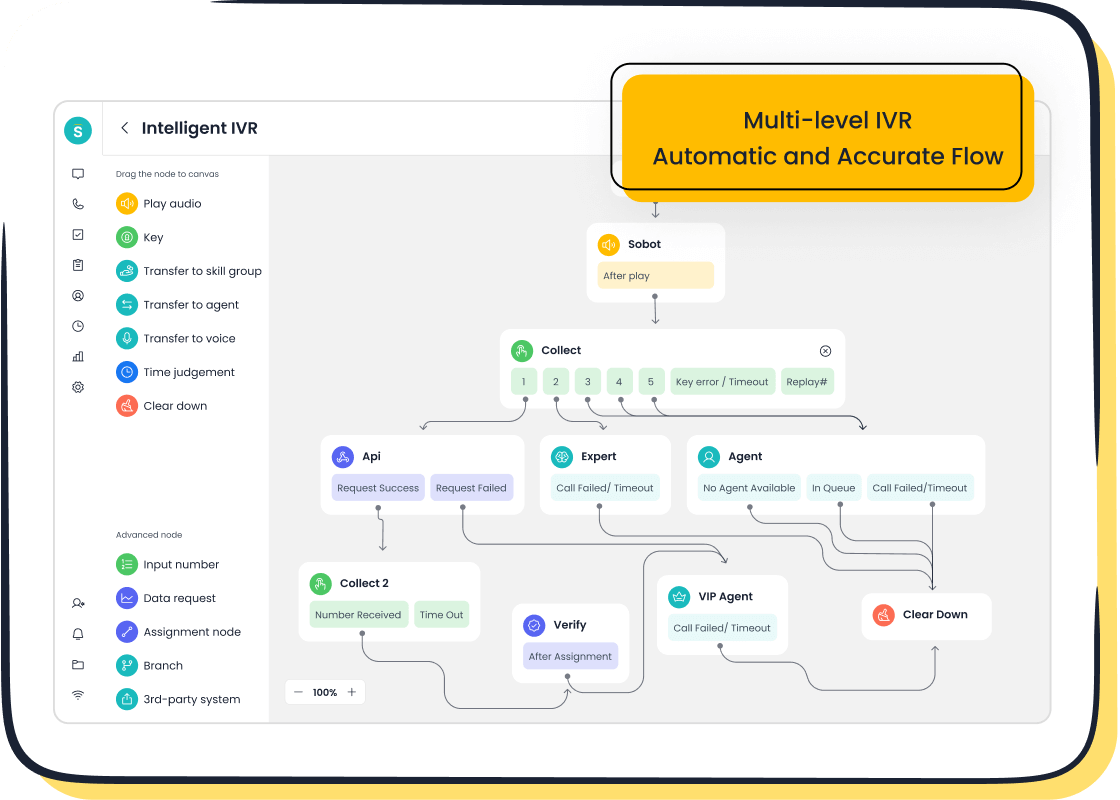
Interactive Voice Response (IVR) is a technology that allows callers to interact with a company's phone system using their voice or keypad. It acts as a virtual receptionist. IVR systems can handle common tasks like checking an account balance or an order status without needing a live agent. This frees up agents for more complex issues. Modern call center software like Sobot's Voice/Call Center simplifies this with a user-friendly drag-and-drop interface. This tool lets managers build and change custom call flows in real-time.
Omnichannel and Skill-Based Routing
Effective call routing is one of the most important call center tools. Skill-based routing directs customers to the agent best qualified to handle their specific issue. Omnichannel routing takes this a step further. It creates a unified experience across all communication channels, from voice to chat to email. An agent can see a customer's entire interaction history, no matter how they previously made contact. Advanced platforms use rule-based call routing to direct customers to the best-fit agent. Sobot's smart call routing is a prime example of this efficiency, ensuring quick and accurate connections.
The Central Hub: Customer Relationship Management (CRM)
If the ACD is the call center's engine, then the Customer Relationship Management (CRM) system is its brain. This powerful call center software acts as a central database for all customer information and interactions.
The Role of CRM in a Call Center
In a call center, a CRM's primary function is to improve customer service. It organizes and manages all customer interactions, both past and present. This gives customer service teams vital context. Agents can access a customer's purchase history and previous support requests. This accessibility allows them to provide faster and more effective support.
Core Features for Service Teams
Modern CRM platforms offer many features designed for customer service teams. Essential call center tools within a CRM include:
- Contact Management: Organizes customer information like phone numbers and emails.
- Ticket Management: Automates and tracks customer support requests from creation to resolution.
- Reporting and Analytics: Provides dashboards that show key metrics on team performance and customer trends.
- Knowledge Management: Creates a central base for articles and FAQs for both agents and customers.
CRM and Call System Integration
Integrating a CRM with call center software creates a unified workspace. This connection automates workflows and reduces manual data entry, allowing agents to handle more cases. However, connecting separate systems can cause issues like data fragmentation and synchronization delays.
Success Story: Samsung faced this exact challenge. By implementing Sobot's all-in-one contact center solution, they unified data from different systems. This eliminated data fragmentation and boosted agent efficiency by 30%.
Powering Personalized Customer Service
A unified view of the customer is the key to personalization. When agents have a complete interaction history, they can provide truly personal customer service. This avoids making customers repeat their issues. This level of tailored support builds stronger client connections and loyalty. For Samsung, this integrated approach enabled them to achieve an impressive 97% customer satisfaction rate. This result shows the direct link between integrated call center software and excellent customer service outcomes. Investing in a unified customer relationship management platform is an investment in customer happiness.
Optimizing Staffing with Workforce Management (WFM)
Having the right number of agents available at the right time is a major challenge for any contact center. Workforce Management (WFM) software provides the solution. This technology helps managers forecast staffing needs, create schedules, and track agent activity to ensure optimal coverage.
What Is WFM Software?
Workforce Management is a type of call center software designed to balance operational costs with service quality. It helps call centers manage their most valuable resource: their people. The main goal of WFM is to align staffing levels with customer demand. This prevents situations where too many agents are idle or too few are available to handle incoming calls, which would lead to long wait times. Effective WFM software combines forecasting, scheduling, and real-time management into one system.
Forecasting and Scheduling
Accurate forecasting is the foundation of WFM. The software analyzes historical data to predict future call volumes. It considers many factors, including:
- Past call volumes and handle times
- Public holidays and seasonal trends
- Upcoming marketing campaigns or product launches
Using these predictions, the call center software then generates optimized schedules. Modern systems can even account for agent preferences and specific skills, assigning the right people to the right tasks. This automated process ensures that shifts align with periods of high demand.
Real-Time Adherence
Once schedules are set, managers need to ensure agents follow them. Real-time adherence (RTA) is a feature that compares an agent's scheduled activity to their actual activity at any given moment. For example, it shows if an agent returned from a break on time.
💡 Tip: RTA allows supervisors to see adherence issues immediately. They can then make quick adjustments to reallocate staff or provide support, preventing dips in service levels and ensuring the team remains productive.
WFM's Impact on Efficiency
Implementing WFM call center software has a direct impact on a company's bottom line. By accurately predicting needs and optimizing schedules, it reduces wasteful overstaffing and costly overtime. This leads to lower labor costs and less agent idle time. Businesses that use workforce optimization can reduce operational costs by up to 10% within a year. Ultimately, WFM empowers contact centers to handle customer interactions efficiently while controlling expenses.
Essential Call Center Tools for Analytics
Data is one of the most valuable assets a call center possesses. However, raw data is not useful on its own. Essential call center tools for analytics interpret data from customer interactions and system performance. This process turns numbers and conversations into clear, actionable insights. Call center software with strong analytics helps managers understand performance, improve customer satisfaction, and drive business success. It provides the context needed to understand why key metrics are high or low, enabling leaders to make informed decisions.
Call Recording and Transcription
The foundation of call center analytics begins with call recording and transcription. Call recording captures the audio of agent-customer interactions. Transcription then converts that audio into written text. This creates a searchable record of every conversation. This call center software is vital for both quality assurance and legal compliance.
For compliance with regulations like GDPR and HIPAA, secure transcription is critical. Modern systems offer features that protect sensitive information automatically.
🛡️ Advanced call center software ensures the highest level of data security. It uses automated redaction to mask private data in audio and transcripts, access controls to limit who can view information, and full encryption to protect files.
These records also serve as a powerful resource for agent training. Managers can analyze transcripts to:
- Identify recurring patterns in agent performance.
- Pinpoint strengths and weaknesses in communication.
- Provide specific, data-driven feedback during coaching sessions.
- Develop targeted training programs based on real customer interactions.
Speech and Text Analytics
Speech and text analytics take analysis a step further. This advanced call center software examines the content and emotional tone of conversations to uncover deeper insights. It uses artificial intelligence to understand not just what was said, but how it was said. This technology typically relies on two key components:
- Natural Language Processing (NLP): This AI analyzes the transcribed text to identify topics, keywords, and customer intent. It answers the question, "What did the customer talk about?"
- Acoustic Analysis: This technology analyzes the audio itself for tone, pitch, and volume. It detects emotions like frustration or happiness, answering the question, "How did the customer feel?"
By combining these methods, speech analytics can measure customer sentiment. It determines if the customer's experience was positive, negative, or neutral. This helps businesses identify pain points in the customer journey and understand the root cause of satisfaction or frustration.
For example, analyzing conversations might reveal that customers frequently mention "laptop batteries" with a negative tone. This insight can help a company identify a faulty product batch, leading to data-driven improvements.
Performance Dashboards
Performance dashboards are visual call center tools that bring all the data together in one place. They display key performance indicators (KPIs) in an easy-to-understand format, often using charts and graphs. This allows managers to monitor performance in real-time and track progress toward goals. A well-designed dashboard provides a snapshot of the call center's health.
Key metrics often displayed on these dashboards include:
| Metric Category | Examples | Purpose |
|---|---|---|
| Efficiency Metrics | Average Handle Time (AHT), First Response Time (FRT) | Measures how quickly and effectively agents resolve issues. |
| Quality Metrics | First Call Resolution (FCR), Customer Satisfaction (CSAT) | Measures the quality of the service and customer happiness. |
| Volume Metrics | Peak Hour Traffic, Call Abandonment Rate | Helps with staffing and scheduling to meet customer demand. |
Ultimately, this call center software empowers leaders to spot trends, address issues quickly, and optimize operations for both efficiency and a superior customer experience.
Modern call centers rely on four key software types:
- ACD: Routes calls efficiently.
- CRM: Manages customer data.
- WFM: Optimizes agent schedules.
- Analytics: Provides performance insights.
The true power is not in these separate tools. It comes from their seamless integration. An all-in-one platform like Sobot's Omnichannel Solution unifies these functions. This creates superior customer service. Investing in a unified stack is a direct investment in operational excellence and better customer service. This approach ensures excellent customer service and builds loyalty. Embark on Your Contact Journey.
FAQ
What is an all-in-one call center solution?
An all-in-one solution combines multiple tools into a single platform. It integrates call management, CRM, and analytics. This approach, like Sobot's Omnichannel Solution, helps businesses unify their operations and improve agent efficiency without needing separate software for each task.
Why is system stability important for call centers?
System stability ensures a business is always available to its customers. High uptime prevents missed calls and service disruptions. A reliable platform with a 99.99% SLA, like Sobot, provides consistent service and builds customer trust.
Can call center software integrate with other systems?
Yes, modern platforms are designed for integration. A solution like Sobot connects easily with a company's existing CRM or other business tools. This creates a unified workspace for agents and eliminates data fragmentation, boosting productivity.
Does a business need special hardware?
Most modern solutions are cloud-based. This means they run on standard computers with an internet connection. Businesses do not need complex call center equipment. A headset and a computer are often all that is required to get started.
See Also
Leading Call Center Analytics Solutions: A 2024 Software Overview
Mastering Call Center Operations with Artificial Intelligence Software: A Comprehensive Guide
Navigating Omnichannel Call Center Software: An Essential Implementation Guide
Understanding Call Center Voice Analytics Technology: A Detailed Explanation
Discovering the Best Speech Analytics Tools for Call Centers in 2024

