Choosing an AI Chatbot for Ecommerce

Choosing the right AI chatbot for an ecommerce business is a strategic decision that directly impacts customer satisfaction and revenue. With 80% of retail businesses now adopting this technology, selecting the best enterprise AI chatbot platform for ecommerce is more critical than ever. As AI chatbots improve lead quality and customer engagement, this guide provides a clear, four-step framework for 2026:
- Define your primary goal (e.g., better customer support).
- Evaluate tech stack integration.
- Assess core AI capabilities.
- Align pricing with your budget and expected ROI.
This process helps you select the right ecommerce chatbot platform, like Sobot, to enhance the customer experience. An effective enterprise AI chatbot is a powerful artificial intelligence tool for any ecommerce platform.
How to Choose Your Ecommerce Chatbot
Selecting the right enterprise AI chatbot platform for ecommerce requires a structured approach. This four-step process ensures your choice aligns with your business needs, from customer support to sales growth.
Define Your Primary Business Goal
First, identify what you want your chatbot to achieve. Clear goals will guide your selection process. Many ecommerce businesses use AI chatbots to:
- Increase conversion rates and revenue.
- Reduce abandoned carts and the number of returns.
- Improve customer support and lower service costs.
- Answer frequently asked questions 24/7.
Defining your main objective is critical. For example, if your goal is personalization, remember that 80% of consumers are more likely to buy from a brand offering a tailored experience. This focus helps you find an AI chatbot platform that delivers measurable results.
Assess Tech Stack and Integration Needs
Your new chatbot must work with your existing tools. A lack of platform integration can create data silos and poor customer experiences. Assess the chatbot's integration capabilities with your core systems:
- Ecommerce Platforms: Shopify, WooCommerce, etc.
- Customer Relationship Management (CRM): HubSpot, Salesforce.
- Order and Logistics Systems: For tracking and returns.
Seamless integration is vital for real-time data access. An enterprise AI chatbot that connects easily with your tech stack prevents the complex and expensive problems that arise from connecting new AI to older systems.
Evaluate Core AI and Automation Features
Not all AI chatbots are the same. Rule-based chatbots follow simple scripts, while AI-powered conversational AI bots use natural language processing (NLP) to understand and learn from customer conversations. For a dynamic ecommerce environment, you need an intelligent conversational AI agent. Look for features that automate high-value tasks, such as AI-driven intent detection and automated ticket routing. This level of AI improves the customer experience and frees up your support team.
Analyze Pricing, Scalability, and ROI
Finally, align the chatbot's cost with your budget and expected return on investment (ROI). Pricing models often include monthly subscriptions or per-agent fees. To calculate potential ROI, compare the platform's cost to the savings from reduced customer support hours and the revenue from increased sales. Track key performance indicators (KPIs) like resolution rate and customer satisfaction (CSAT) to measure the chatbot's success. This analysis ensures your investment in an ecommerce chatbot contributes directly to your bottom line.
Top Enterprise AI Chatbot Platforms for Ecommerce
Choosing the right platform is crucial for achieving your business goals. The market offers many options, each with unique strengths. Here is a breakdown of the top enterprise AI chatbot platforms for ecommerce to help you make an informed decision.
Sobot
Sobot positions itself as a comprehensive, all-in-one contact center solution. It combines powerful AI with a full suite of customer communication tools, making it a strong contender for businesses seeking a unified platform.
- Best For: Ecommerce businesses of all sizes, from startups to large enterprises, that need a powerful, scalable, and easy-to-use solution to manage all customer interactions in one place. It is ideal for companies aiming to significantly boost efficiency and sales.
-
Key Features: Sobot's platform is built around a robust Five-AI System that includes an AI Chatbot, AI Agent, AI Copilot for human agents, and AI Insight for analytics.
- 24/7 Multilingual Support: The chatbot can handle customer inquiries around the clock in over 100 languages, ensuring a global reach.
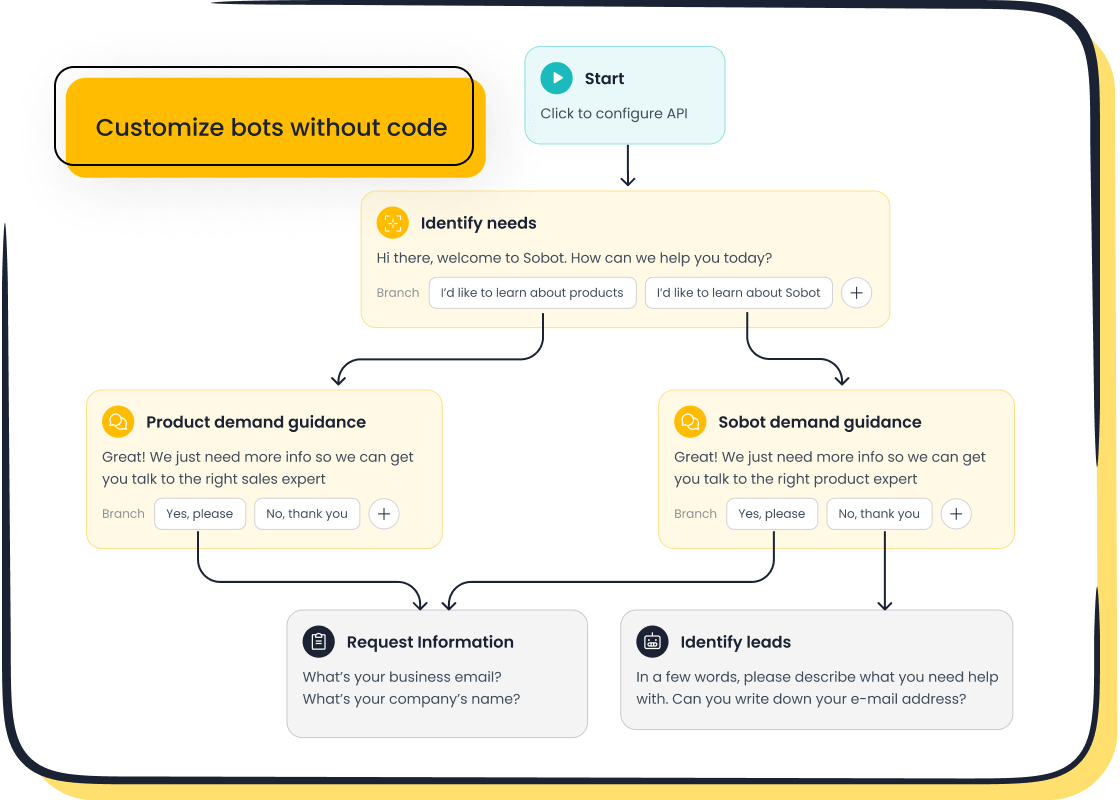
- No-Code Interface: Its user-friendly, point-and-click workflow builder allows you to design and deploy complex automation without any coding knowledge.
- True Omnichannel Experience: It unifies communications from various channels, including website live chat, email, voice calls, social media, and messaging apps like WhatsApp. Sobot is an official WhatsApp Business Solution Provider (BSP).
- Proven Results: Businesses using Sobot have seen productivity improve by up to 70% and customer service costs cut by 50%. The AI is designed to resolve up to 70% of common questions automatically.
-
Integration Highlight: Sobot offers seamless integration with major ecommerce platforms like Shopify and Amazon, as well as CRM and logistics systems. This allows the chatbot to access real-time order data, provide accurate shipping updates, and even process returns, creating a smooth customer journey.
-
Pricing Summary: Sobot offers customized pricing based on your specific needs. This ensures you only pay for the features and volume you require, making it a scalable solution for growing businesses.
Success Story: How OPPO Boosted Sales with Sobot
Global electronics giant OPPO needed to manage high volumes of customer inquiries, especially during peak shopping seasons. By implementing Sobot's AI chatbot and ticketing system, they created an efficient human-machine collaboration model. The results were remarkable:
- 83% of inquiries were resolved by the chatbot alone.
- The customer repurchase rate increased by 57%.
- The positive feedback rate for customer support reached 94%.
This case study shows how a powerful enterprise AI chatbot can transform customer service and directly drive revenue.
Gorgias
Gorgias is a popular helpdesk built specifically with ecommerce businesses in mind. Its primary focus is on turning customer support from a cost center into a revenue-generating channel.
-
Best For: Mid-to-large ecommerce stores, particularly those built on Shopify, Shopify Plus, or BigCommerce. It is an excellent choice for brands that want to empower their support agents with sales tools.
-
Key Features:
- Deep integration with ecommerce platforms to view order details and customer history directly within the support ticket.
- Automation rules (Macros) to answer common questions like "Where is my order?" instantly.
- Revenue-focused analytics that track how many sales are generated from support interactions.
- Social media integration for managing comments and messages from Facebook and Instagram.
-
Integration Highlight: Gorgias excels at its deep integration with Shopify. It allows agents to perform actions like editing orders, issuing refunds, and creating discount codes without ever leaving the helpdesk interface.
-
Pricing Summary: Pricing is based on the number of tickets your store receives per month. Plans are designed to scale with your business, but costs can increase as your ticket volume grows.
Intercom
Intercom is a well-known customer communications platform that offers a powerful enterprise AI chatbot named Fin. It is designed for businesses that need a sophisticated, all-encompassing solution for support, engagement, and marketing.
-
Best For: Large-scale businesses and enterprises that require a highly advanced and customizable AI to handle complex customer queries across multiple departments.
-
Key Features:
- Fin AI Chatbot: Built on GPT-4, Fin can understand complex questions and provide accurate, human-like responses based on your knowledge base and past conversations.
- Proactive Engagement: Tools for sending targeted outbound messages, onboarding new users, and announcing new features.
- Integrated Platform: Combines live chat, AI chatbots, product tours, and a shared inbox for a complete customer communication experience.
-
Integration Highlight: Intercom offers robust integrations with a wide range of tools, including Salesforce, Marketo, and Stripe. Its AI can perform actions in these external systems, such as processing a refund or updating a subscription.
-
Pricing Summary: Intercom's pricing is at the higher end of the market, making it more suitable for well-funded enterprises. The cost is typically based on the number of agent seats and the volume of people reached.
| Plan | Pricing (per month) | Key Features |
|---|---|---|
| Starter | US$95 (billed annually, 1 seat) | Fin AI chatbot |
| Advanced | US$395+ (per seat) | Fin AI bot, advanced NLP, priority support, advanced reporting, higher conversation limits |
| Add-ons | Extra fees | WhatsApp ($29/month), SMS ($29/month), Phone support integration ($29/month), WhatsApp messages ($9/seat/month + carrier fees) |
| Usage-Based Fees | Variable | Overage fees ($0.99-$1.49 per additional conversation) for exceeding conversation limits; full seat cost for additional users, 'Lite' seats at 40% of full cost with limited permissions |
Tidio
Tidio offers an accessible and user-friendly AI chatbot platform that combines live chat, chatbots, and marketing automation. It is a popular choice for small and medium-sized ecommerce businesses looking for an affordable yet capable solution.
-
Best For: Small to medium-sized ecommerce businesses that need an easy-to-use tool to manage customer conversations and automate simple queries without a large budget.
-
Key Features:
- Lyro AI Chatbot: A conversational AI that can answer customer questions in seconds, reducing the load on your support team.
- Visual Chatbot Builder: An intuitive drag-and-drop editor for creating custom automation workflows without any code.
- Multichannel Communication: Manage messages from your website, email, Messenger, and Instagram in one place.
- Free Plan: Tidio offers a free-forever plan with basic features, making it easy for new businesses to get started.
-
Integration Highlight: Tidio provides straightforward integration with major ecommerce platforms like Shopify, Wix, and BigCommerce, as well as email marketing tools like Mailchimp.
-
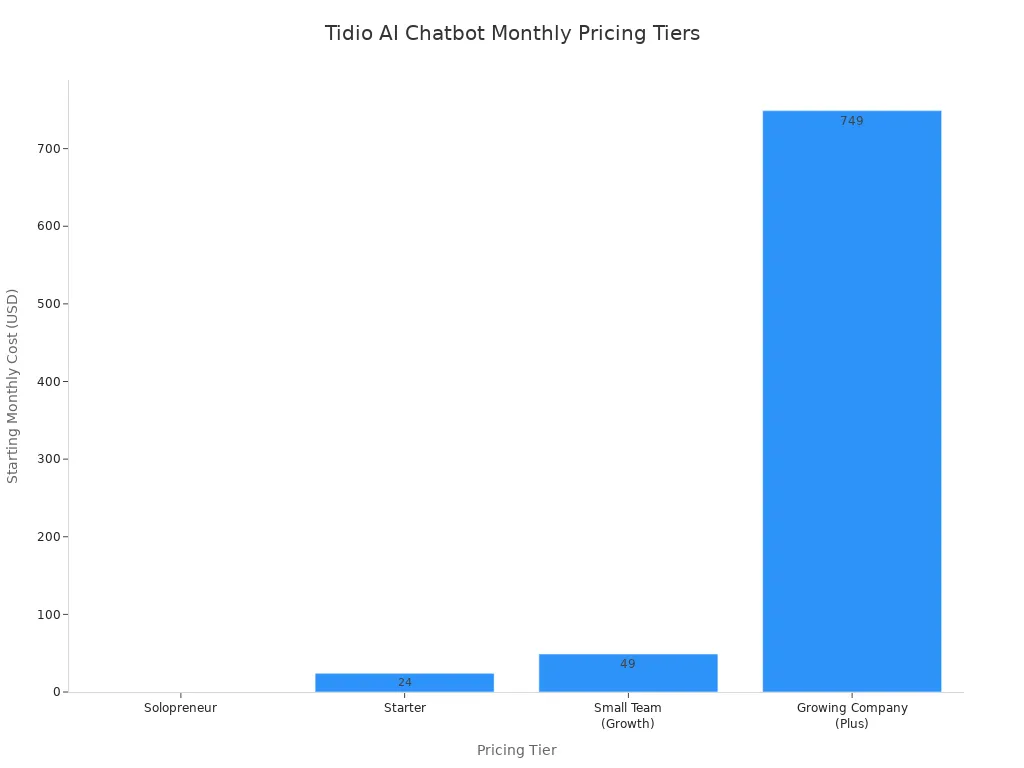
Pricing Summary: Tidio's pricing is flexible and based on usage, primarily the number of conversations. This model allows businesses to start small and scale their plan as they grow.
Zendesk AI
Zendesk is a giant in the customer service industry, and its AI capabilities are built directly into its market-leading support suite. Zendesk AI is not a standalone chatbot but rather a layer of intelligence that enhances the entire support platform.
-
Best For: Established mid-sized to large enterprise businesses already using or planning to adopt the Zendesk ecosystem for their customer support operations.
-
Key Features:
- Advanced AI Agents: Sophisticated bots that understand context, learn from interactions, and can handle complex tasks like checking order statuses or processing returns.
- Intelligent Triage: Automatically categorizes and routes incoming tickets to the right agent or department, saving significant time.
- Agent Copilot: Provides AI-powered assistance to human agents, suggesting macros and providing context to help them resolve issues faster.
- Proactive Insights: Analyzes support data to identify trends and recurring problems, helping businesses improve their products and services.
-
Integration Highlight: As an enterprise-grade solution, Zendesk AI is deeply integrated with the entire Zendesk Suite. This allows it to pull data from your help center, past tickets, and third-party systems to provide comprehensive and accurate support.
-
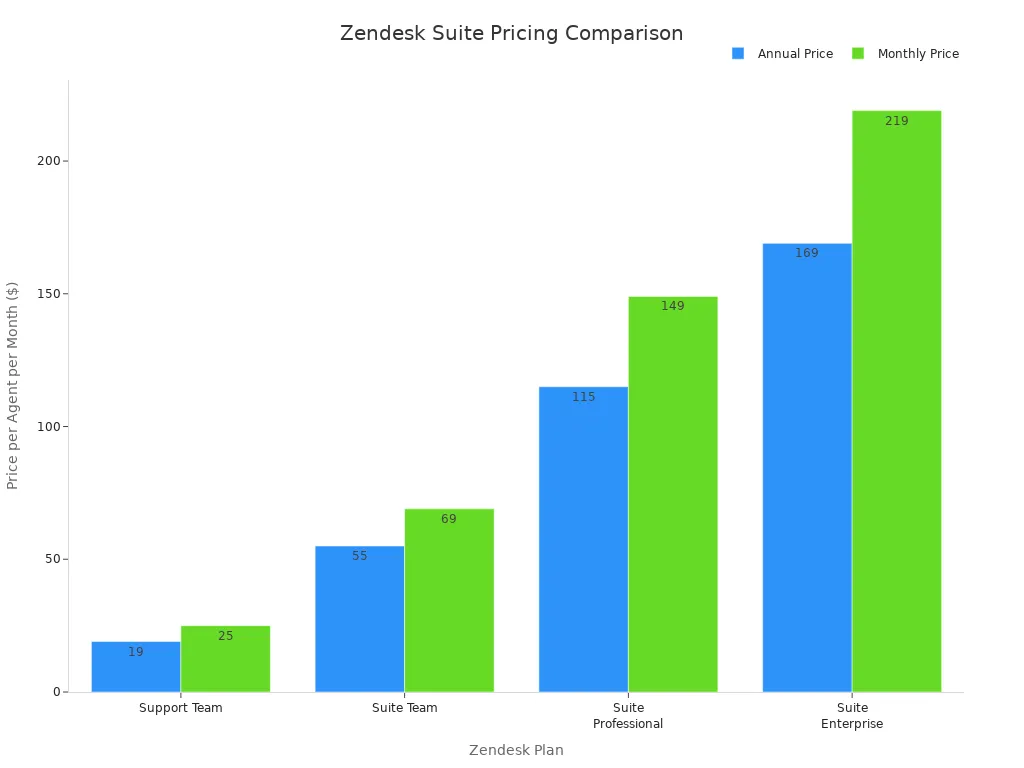
Pricing Summary: Zendesk's AI features are typically included in their higher-tier Suite plans or available as add-ons. This makes the overall cost higher than some competitors, reflecting its focus on the enterprise market.
Automating customer service with AI can lead to significant cost reductions. Studies show that businesses can achieve an approximate 35% reduction in operational costs, with some saving up to $1.3 million annually. Choosing the right enterprise AI chatbot platform for ecommerce is the first step toward unlocking this value.
Must-Have Features for an AI Chatbot Platform
An effective AI chatbot platform does more than just answer questions. It integrates deeply into your ecommerce operations to drive sales and improve the customer experience. Key features transform a simple chatbot into a powerful business tool.
Seamless Ecommerce Platform Integration
Your AI chatbot must connect flawlessly with your core systems. Proper platform integration is essential for a successful deployment. Most ecommerce-focused AI chatbots offer seamless integration with major platforms, including:
- Shopify
- WooCommerce
- BigCommerce
- Magento
- Wix eCommerce
This connection allows the AI to access product catalogs and customer data. Without this deep integration, your chatbot cannot perform essential tasks, creating a disconnected experience.
Real-Time Order and Customer Data Access
A great chatbot gives customers instant answers. With access to order data, an AI chatbot can handle common "Where is my order?" questions without any human help. This self-service flow directly reduces the number of tickets your customer support team receives. The chatbot can provide shipping updates and manage order-related issues, freeing up your agents for more complex problems. This improves efficiency and customer satisfaction.
AI-Powered Product Recommendations
Modern AI chatbots are powerful sales tools. They can create a personalized shopping experience by suggesting relevant products to customers. This AI-driven engagement directly boosts revenue. For example, retailers using comprehensive AI for guided selling can see their average order value increase by 50% or more. This turns your support channel into a source of new sales and enhances the personalized shopping journey.
Proactive Engagement and Cart Recovery
AI chatbots can actively recover potentially lost sales. When a customer is about to leave the checkout page, the chatbot can start a conversation. It can ask why the cart was abandoned or offer a small discount to encourage purchase completion. This proactive engagement turns hesitation into a sale. This two-way dialogue is more effective than a simple email reminder and improves overall customer engagement.
Intelligent Agent Handover and Workflow Automation
Even the best conversational AI agent sometimes needs human support. A top-tier platform ensures a smooth handover. The chatbot should first gather all necessary information from the customer. It then transfers the full conversation history to a live agent. This process means the customer never has to repeat themselves. This intelligent workflow automation creates a seamless support experience and builds trust.
Implementing Your Chatbot for Maximum Value
Deploying an AI chatbot is more than just turning it on. A strategic implementation plan ensures your new platform delivers real value for your ecommerce business. Following these steps will help you maximize your return on investment and improve the customer experience.
Start with High-Volume, Low-Complexity Queries
Begin by automating the simple, repetitive questions that consume your customer support team's time. This approach delivers quick wins and builds a solid foundation for your AI. Effective AI chatbots can easily handle tasks that are high in volume but low in complexity.
Focus your initial chatbot setup on automating queries like:
- Checking product availability
- Managing delivery updates
- Processing orders
- Answering basic product questions
Handling these tasks frees up your human agents for more complex customer issues, immediately improving efficiency.
Train the Chatbot with Your Brand Voice
Your chatbot is an extension of your brand. It must communicate with your unique voice and tone. Ensure the AI platform you choose allows for detailed training. Provide the AI with specific, high-quality examples of your brand's communication style.
Give your AI clear instructions. For example, define its persona: "You are our brand's friendly and knowledgeable ecommerce assistant. You are supportive and informal." This ensures the chatbot's personality is consistent in every interaction, from its greeting to its error messages. Human oversight is still needed to prevent the AI from drifting away from your brand voice.
Set and Track Clear Performance KPIs
You cannot improve what you do not measure. Set clear goals for your AI chatbots and track their performance with key performance indicators (KPIs). This data shows you what is working and where you need to make improvements. Key metrics for an ecommerce chatbot include:
- Goal Completion Rate: Is the chatbot successfully helping users?
- Fallback Rate: How often does the chatbot need human help?
- Conversion Rate: Is the chatbot driving sales or lead generation?
For the ecommerce industry, a good resolution rate to aim for is between 75-80%. Tracking these numbers helps you optimize your chatbot for better performance and customer engagement.
Promote Your New Chatbot Channel
Customers can't use a support channel they don't know exists. Once your chatbot is live, make sure to promote it. Announce the new support option through website banners, email newsletters, or social media posts. Clear promotion encourages adoption and ensures your investment in an AI platform provides maximum value to your ecommerce operations.
Choosing the right enterprise ai chatbot platform for ecommerce follows a clear path. First, define your goals. Then, check platform integration. Next, evaluate AI features. Finally, analyze the price. The best AI chatbot platform is not one-size-fits-all. It is the solution that fits your unique ecommerce goals for customer support and sales. An enterprise ai chatbot is a core part of your customer engagement strategy. AI chatbots, like the powerful AI from Sobot, evolve with your ecommerce business, improving the customer experience and engagement. This makes the chatbot a vital tool for any modern ecommerce operation.
FAQ
Why is an AI chatbot important for an ecommerce business?
An AI chatbot improves the customer experience. It provides instant AI support for common questions. This AI engagement helps ecommerce businesses increase sales and build customer loyalty.
Can a small ecommerce store benefit from AI?
Yes. AI is scalable for any ecommerce business. An AI solution can handle customer support 24/7. This allows small teams to focus on growth. Many AI tools offer affordable plans for small ecommerce companies.
How does an AI chatbot help with sales?
An AI chatbot boosts ecommerce sales by offering product recommendations. The AI can also recover abandoned carts. This proactive AI support turns browsers into buyers and improves the overall ecommerce journey for every customer.
What is the first step to get an AI chatbot?
First, define your main goal. Do you need better support or more sales? This helps you choose the right AI platform. A clear objective ensures your AI investment provides real value for your ecommerce business.
See Also
Selecting Optimal Chatbot Software: A Comprehensive Implementation Guide
Elevating E-commerce Customer Happiness Through Chatbot Integration
Driving E-commerce Revenue with Effective Live Chat Solutions
Best E-commerce Live Chat Platforms: A 2024 Review
Effortless Website Chatbot Implementation: Practical Examples and Tips

