Enterprise AI Chatbots for Ecommerce Guide

An enterprise AI chatbot for ecommerce is a scalable solution. It automates and personalizes customer interactions. This happens across the entire ecommerce journey, from sales to post-purchase support. The retail and e-commerce sectors make up 21% of the global conversational AI market. This guide will help you select, implement, and maximize the ROI of these powerful AI platforms. Many shoppers prefer AI chatbots for ecommerce. In fact, 62% of people prefer using a chatbot over waiting for a human agent.
This article provides a definitive guide for choosing the right AI chatbot for ecommerce. We will explore the best AI e-commerce chatbots to boost your business. Here are the top enterprise AI chatbot platforms for 2026:
- Sobot: The All-in-One Contact Center Solution
- Intercom: Proactive Sales and Customer Engagement
- Gorgias: Deep Integration for Shopify Stores
These AI chatbots for e-commerce offer unique strengths. They can transform your customer engagement and drive conversion. An advanced enterprise AI chatbot can enhance your ecommerce platform. It provides excellent automation and support. This makes choosing the right AI chatbot for ecommerce a critical decision for any modern e-commerce business.
Top Enterprise AI Chatbot Platforms for 2026
Choosing the right AI chatbot for ecommerce is a major decision. The best platform aligns with your business goals, integrates with your tech stack, and scales with your growth. Below is a comparison of the best ai e-commerce chatbots to help you decide.
| Platform | Best For | Key Integrations | Core Strength |
|---|---|---|---|
| Sobot | All-in-One Contact Center | Shopify, Salesforce, WhatsApp, Social Media | Unified omnichannel support and powerful AI automation. |
| Gorgias | Deep Shopify Integration | Shopify, Magento, BigCommerce | Seamless Shopify data access and order management. |
| Intercom | Proactive Sales & Engagement | Salesforce, Marketo, Stripe, Shopify | Proactive messaging and advanced customer segmentation. |
| Tidio | Support Automation for SMBs | Shopify, WordPress, Wix, Mailchimp | User-friendly interface and accessible free plan. |
Sobot: The All-in-One Contact Center Solution
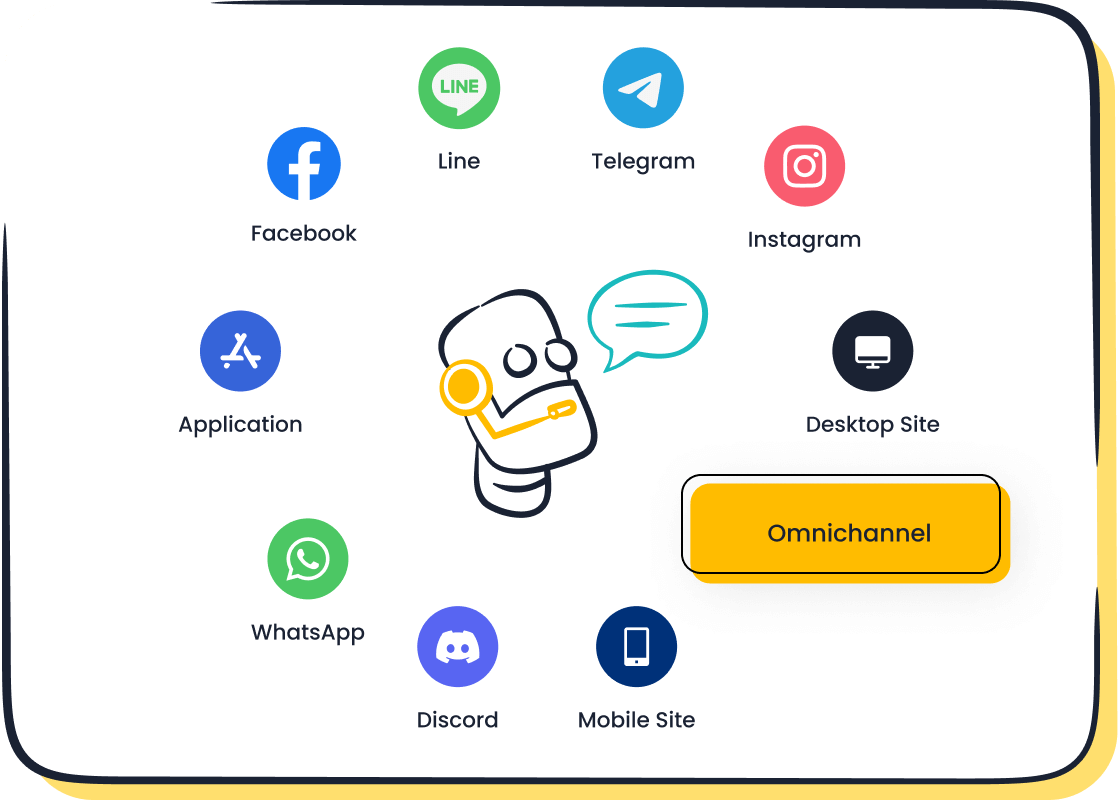
Sobot is an ideal enterprise AI chatbot for businesses seeking a single, unified solution. It combines a powerful AI chatbot with a full suite of contact center tools. This includes live chat, a voice call center, a ticketing system, and official WhatsApp Business API integration. This all-in-one approach eliminates data silos and creates a seamless experience for both agents and customers.
The platform's AI capabilities are a core strength. The Sobot chatbot uses a powerful knowledge base and natural language processing to provide instant, accurate answers. This automation drives incredible efficiency.
Proven Results with OPPO: Global tech leader OPPO used Sobot to transform its customer service. The implementation resulted in an 83% chatbot resolution rate. This freed up human agents for complex issues. The improved service quality led to a 57% increase in the repurchase rate.
Sobot's value extends beyond simple Q&A. Its features are designed to cover the entire customer journey:
- Omnichannel Support: Engage customers on their preferred channels, including web chat, social media, SMS, and voice.
- Advanced AI Automation: The AI chatbot handles routine queries 24/7. It can triage issues and escalate complex cases to the right agent. This improves productivity by up to 70%.
- Integrated Systems: The platform unifies the chatbot, live chat, and ticketing system. Agents have a complete customer history in one workspace.
- Conversion Focus: Proactive messaging and real-time intent assistance help boost conversion by an average of 20%.
Sobot's pricing is available through a custom quote. This ensures businesses get a plan tailored to their specific needs. It is a comprehensive solution for any large-scale ecommerce operation.
Gorgias: Deep Integration for Shopify Stores
Gorgias is a leading AI chatbot for ecommerce businesses built on Shopify. Its main advantage is its deep, native integration with the ecommerce platform. This connection allows support agents to access rich customer data and manage orders without ever leaving the helpdesk.
Gorgias empowers support teams to deliver highly personalized and efficient service. Key features tied to its Shopify integration include:
- Rich Customer Profiles: View a customer's complete order history and Shopify data directly within a support ticket.
- Direct Order Management: Agents can edit, refund, or duplicate Shopify orders from the Gorgias dashboard. They can also create discount codes on the fly.
- Shopify-Powered Automation: Create rules that use Shopify data. For example, you can automatically tag tickets from VIP customers or prioritize inquiries about high-value orders.
The platform's AI scans tickets to analyze intent and sentiment. It can automate responses for common questions like "Where is my order?". This level of automation helps ecommerce brands manage high ticket volumes effectively. While Gorgias offers powerful tools, its pricing is based on ticket volume. Plans start around $10/month for 50 tickets and scale up, which can become costly during peak seasons.
Intercom: Proactive Sales and Customer Engagement
Intercom excels at proactive customer engagement and driving sales. It is more than just a support tool; it is a complete customer communications platform. Intercom uses visitor tracking and user segmentation to deliver targeted messages that boost conversion. This makes it one of the top ai chatbots for ecommerce sales teams.
Intercom helps businesses start conversations with website visitors at the right moment. For example, you can trigger a chatbot to offer help if a user is lingering on the checkout page. This proactive approach turns passive browsers into active buyers.
Case Study Success: E-commerce store Appliances Online used Intercom to boost on-site conversion. The effort resulted in a 200% increase in lead conversion and an additional $1 million in annual revenue.
Key features for proactive engagement include:
- Live Chat and Real-Time Messaging: Engage visitors instantly to answer questions and guide them toward a purchase.
- Advanced Visitor Tracking: Monitor user behavior to understand their needs and personalize communication.
- Targeted Messaging: Send automated, tailored messages to different user segments based on their actions or attributes.
- Knowledge Base Integration: Allow customers to find answers themselves directly within the chat widget, improving the user experience.
Intercom's AI and automation features help manage conversations at scale. Its AI-driven chatbots can handle initial inquiries, qualify leads, and route conversations to the right sales or support team. This focus on proactive communication makes it a powerful tool for increasing revenue and customer loyalty in e-commerce.
Tidio: Support Automation for SMBs
Tidio is an excellent choice for small and medium-sized businesses (SMBs) entering the world of support automation. Its biggest strengths are its user-friendly interface and generous free plan. This makes it one of the most accessible ai chatbots for ecommerce startups.
Tidio offers a visual chatbot editor with over 40 pre-built templates. Users can set up automation for common scenarios like abandoned cart recovery and lead generation without writing any code. The platform's primary AI chatbot, Lyro, can handle up to 70% of common customer inquiries.
Tidio's pricing model is designed for flexibility.
| Feature | Free Plan | Paid Plans (Starter, etc.) |
|---|---|---|
| Live Chat | Unlimited chats | Included |
| Chatbot Conversations | 100 per month | Starts at 1000+ per month |
| Operators | Up to 3 | Additional seats available |
| Integrations | Shopify, WordPress, etc. | Zapier integration included |
The free plan provides enough functionality for a small e-commerce store to get started with live chat and basic automation. As the business grows, it can upgrade to paid plans for more chatbot conversations and advanced features. This scalability makes Tidio a practical and cost-effective solution for growing brands looking to improve their customer support and drive conversion.
How to Choose the Right AI Chatbot for Ecommerce
Selecting the right AI chatbot for ecommerce is a strategic decision. It impacts your sales, support efficiency, and customer loyalty. This four-step guide will help you navigate the process and choose a platform that aligns perfectly with your business needs.
Step 1: Define Your Primary Business Goal
Before you look at any platform, you must define what you want to achieve. An AI chatbot is a tool. The best tool depends on the job you need it to do. Are you trying to increase sales, reduce support costs, or improve customer satisfaction? Your primary goal will guide every other decision.
Common business goals for an ecommerce chatbot include:
- Reducing Cart Abandonment: AI-powered chatbots provide real-time assistance. They can answer last-minute questions about shipping or sizing that might cause a shopper to hesitate, helping to secure the conversion.
- Increasing Conversion Rates: Chatbots guide users to the right products. They act as personal shoppers, offering recommendations and handling pre-purchase questions about product availability or features.
- Improving Customer Retention: Fast response times are critical. AI-powered automation ensures customers get instant answers 24/7, which can improve retention and lifetime value. An AI chatbot can handle up to 80% of routine inquiries.
- Boosting Operational Efficiency: An enterprise AI chatbot automates repetitive tasks. This includes answering "Where is my order?" questions, processing returns, and updating customer information. This frees your human agents to focus on complex issues that build brand loyalty.
Note: A clear goal helps you measure success. For example, if your goal is to reduce cart abandonment, you will track the conversion rate in sessions where the chatbot was used. If your goal is efficiency, you will measure the chatbot resolution rate.
Step 2: Evaluate AI and Automation Capabilities
The "AI" in AI chatbot can mean different things. The technology behind the chatbot determines its intelligence, flexibility, and capabilities. Understanding the types of AI is essential for choosing the right platform for your e-commerce business.
There are three main types of chatbots:
- Rule-Based Chatbots: These are the most basic bots. They operate on simple
if/thenlogic and use keyword recognition. They are great for simple FAQs but struggle with typos, slang, or complex questions. - NLP-Based Chatbots (Conversational AI): These more advanced chatbots use Natural Language Processing (NLP) to understand user intent. They can handle conversational questions, remember context, and provide more accurate answers than rule-based bots.
- Generative AI Chatbots: This is the most advanced technology. Built on Large Language Models (LLMs), these chatbots can create entirely new, human-like responses. They understand nuance, adapt to the conversational flow, and can handle very complex problem-solving.
The right choice depends on your goal. A simple rule-based bot might be enough for a small site with basic FAQs. However, a growing ecommerce brand will benefit more from the advanced conversational abilities of an NLP or generative AI chatbot.
| Feature | Rule-Based Service Bot | AI Sales Consultant (NLP/Generative) |
|---|---|---|
| Primary Goal | Reduce Support Tickets | Guide Purchase Decisions |
| Input Handling | Buttons & Keywords | Natural Language & Intent |
| Context Awareness | Low (forgets past messages) | High (remembers preferences) |
| Outcome | Provides an FAQ answer | Recommends a specific product |
How to Test AI Quality? You can evaluate a chatbot's language understanding by testing it. Use methods like a confusion matrix to see which questions confuse the bot. You can also perform end-to-end testing by simulating real customer conversations to see if the chatbot performs as expected.
Step 3: Assess Tech Stack Integration Needs
An AI chatbot for ecommerce should not be a standalone tool. It must connect seamlessly with your existing software to be truly effective. Without proper integration, you create data silos and inefficient workflows for your support and marketing teams.
Before choosing a platform, list your essential tools. The best ai chatbots for ecommerce offer deep, native integrations with the most important platforms in the e-commerce ecosystem.
Key integration categories include:
- Ecommerce Platforms: A deep connection to Shopify, BigCommerce, or Magento is non-negotiable. This allows the chatbot to pull order history, check product stock, and even process refunds.
- CRM Systems: Integrating with Salesforce or HubSpot syncs customer data. This ensures your sales and support teams have a complete view of every customer interaction.
- Helpdesk Software: A connection to Zendesk or Freshdesk enables a smooth handover from the chatbot to a human agent. The agent receives the full chat transcript and customer history.
- Email & SMS Marketing: Integrating with Klaviyo or Mailchimp allows the chatbot to capture leads and trigger personalized marketing campaigns based on user interactions.
A platform with limited or third-party-dependent integrations can cause major headaches. Look for an ai chatbot for ecommerce that offers a direct, native connection to the tools you rely on every day. This ensures real-time data transfer and enables powerful, cross-departmental automation.
Step 4: Analyze Scalability and Total Cost
As your ecommerce business grows, your chatbot must be able to handle more conversations without a drop in performance. Scalability isn't just about volume; it's also about your ability to manage and optimize the chatbot without relying on developers.
Factors that determine scalability include:
- Conversation Volume: Can the platform handle millions of monthly interactions?
- No-Code Customization: Can your team update chatbot flows and rules easily?
- A/B Testing: Does the platform allow you to test different messages to improve conversion?
- Flexible Pricing: Does the pricing model penalize you for growth?
Beyond scalability, you must analyze the total cost of ownership (TCO), which goes far beyond the monthly subscription fee. Many businesses are surprised by the hidden costs of implementing an enterprise AI chatbot for ecommerce.
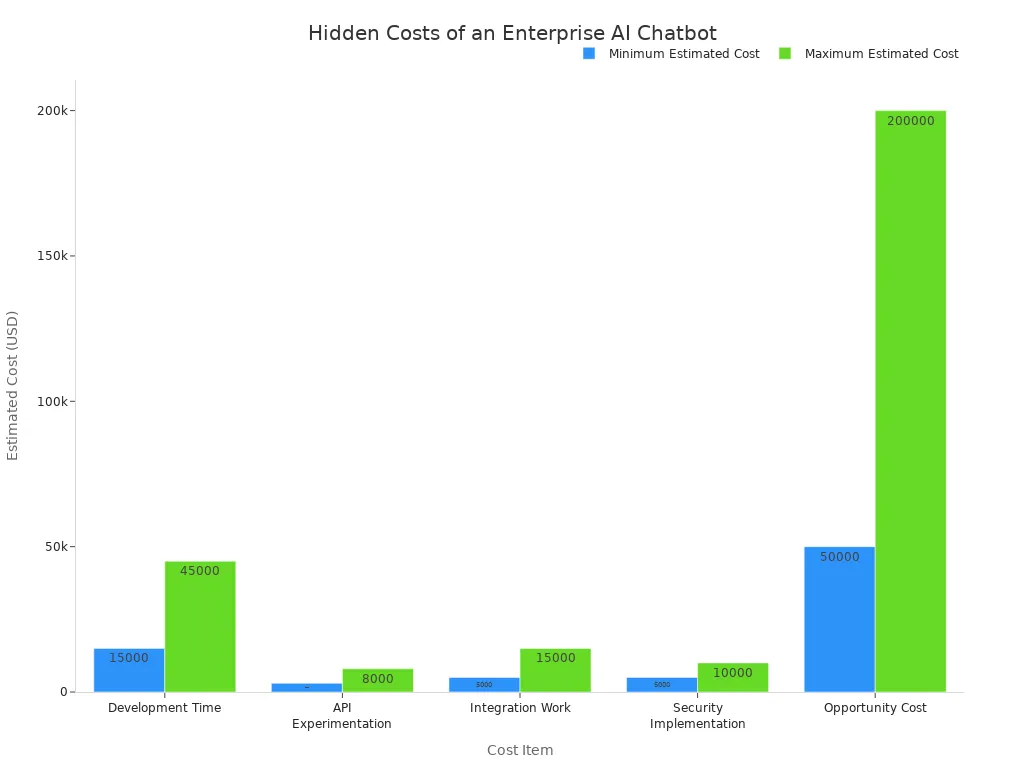
These hidden costs can include:
- Development and Integration: The initial work to connect the chatbot to your systems can range from
$5,000to$15,000. - AI Model Training: Preparing data and training a custom AI model can cost anywhere from
$15,000to over$100,000. - Ongoing Maintenance: Regular security updates and NLP model re-training can add thousands to your annual bill.
When evaluating ai chatbots for e-commerce, ask for a complete breakdown of all potential costs. A transparent partner will help you understand the true investment required. Choosing a platform that is both scalable and cost-effective is key to building high-converting ai chatbots that deliver long-term ROI.
Must-Have Features of AI Chatbots for E-commerce
Modern ai chatbots for ecommerce are more than just FAQ bots. They are powerful tools for ai-driven commerce. The best platforms offer specific features that drive sales and improve efficiency. These features transform the personal shopping experience for every customer.
AI-Powered Product Recommendations
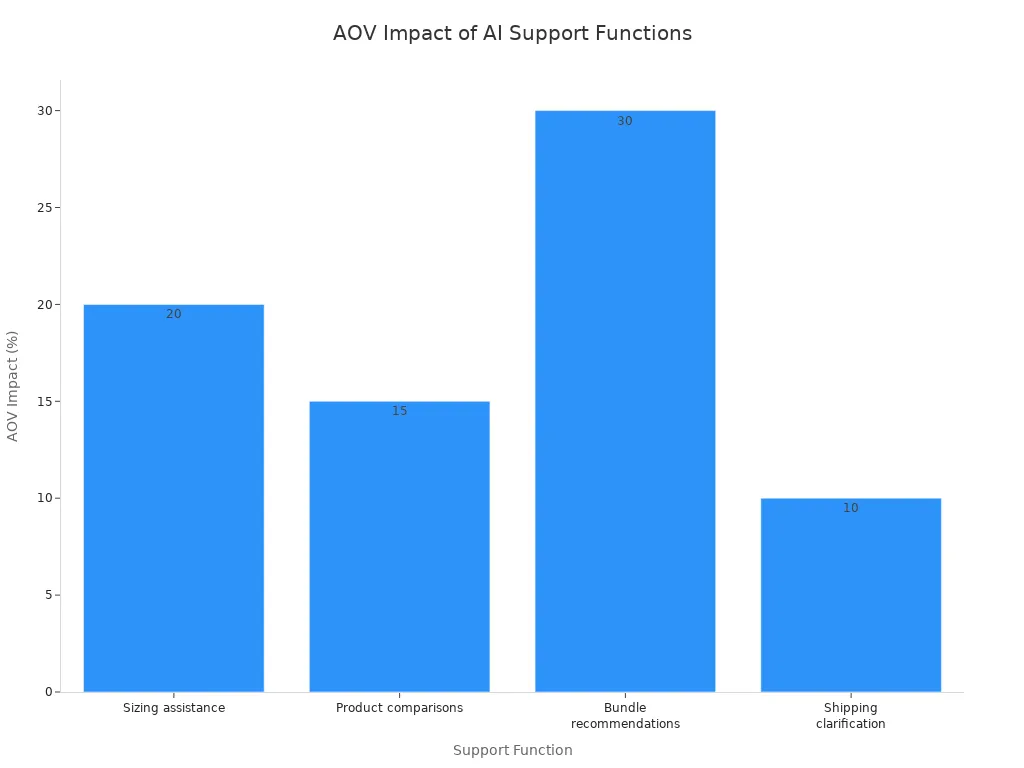
An advanced ai chatbot for ecommerce acts like a personal sales assistant. The AI processes customer data, purchase history, and browsing behavior. This allows the chatbot to provide real-time recommendations. These personalized recommendations make shoppers feel understood. This leads to a higher conversion. For example, AI can suggest a premium product version or a relevant accessory. This conversational approach to upselling feels helpful, not pushy. The impact on average order value (AOV) is significant.
Automated Order and Subscription Management
A key feature of ai chatbots for e-commerce is support automation. Customers want to know "Where is my order?" at all hours. An AI chatbot provides instant, 24/7 order tracking. This automation frees up human agents for complex problems. Chatbots can also manage returns, cancellations, and address changes. For subscription-based ecommerce businesses, chatbots allow customers to easily modify or pause their plans. This self-service capability reduces support tickets and improves the user experience.
Seamless Agent Handover and Escalation
Even the smartest AI cannot solve every problem. A crucial feature is the ability to seamlessly escalate a conversation to a human agent. The best ai chatbots for ecommerce recognize when a customer is frustrated or asks a question outside its scope. The chatbot should then route the customer to the right support team. A smooth handover includes the full chat history. This ensures the agent has all the context needed to help without asking the customer to repeat themselves.
Omnichannel and Multilingual Support
Today's ecommerce shoppers interact with brands across many channels. An effective ai chatbot for ecommerce must offer a consistent experience everywhere. This includes your website, social media, SMS, and WhatsApp. This omnichannel presence ensures your business provides reliable support wherever your customers are. Multilingual capabilities are also essential for global e-commerce brands. The AI chatbot should communicate with users in their preferred language, making your brand more accessible and improving conversion. This level of conversational AI makes automated conversations feel natural and effective.
Strategic Implementation of Your Ecommerce Chatbot
A successful enterprise AI chatbot for ecommerce requires a clear plan. This strategic implementation ensures your chatbot delivers value from day one. The process involves four key phases, from initial setup to long-term optimization.
Phase 1: AI Configuration and Data Training
The first step is to build your chatbot's brain. The best AI chatbot for ecommerce learns from your business data. You should train the AI using real support tickets and your existing knowledge base. This helps the chatbot understand customer intent accurately.
Security Tip: During training, always protect customer data. Anonymize personal information before inputting it into the AI system. This practice prevents data leakage and builds trust.
A strong AI configuration focuses on creating a high-quality knowledge base. This gives your chatbot the right information to solve problems for your ecommerce brand.
Phase 2: Deployment Across Customer Channels
Do not launch your chatbot everywhere at once. A phased rollout is a smarter approach. Start small on a single channel, like your website's main page. This is the "Crawl" stage. Once you gather feedback, you can expand its functions ("Walk"). Finally, you can scale the chatbot across all your customer channels ("Run"), including social media and WhatsApp. This method helps you manage the deployment for your e-commerce business effectively.
Phase 3: Establishing Agent Collaboration Workflows
Your chatbot and human support agents are a team. You must define clear roles for this collaboration. The AI chatbot should handle routine questions. This frees up human agents for complex, high-empathy interactions. This support automation makes your entire support operation more efficient. Create continuous feedback loops where agents can report chatbot errors. This helps the AI learn and improve over time.
Phase 4: Measuring ROI and Key Performance Metrics
You must measure your chatbot's performance to prove its value. Key metrics show the return on your investment. Track these important numbers:
- Resolution Rate: The percentage of queries the chatbot solves without human help.
- Deflection Rate: The number of conversations handled entirely by the AI. A good benchmark for an AI chatbot for ecommerce is deflecting 40-60% of repetitive inquiries.
- Customer Satisfaction (CSAT): Measures how happy customers are with the conversational support.
Monitoring these metrics helps you optimize your enterprise AI chatbot. It ensures the technology supports your e-commerce goals.
Choosing the right enterprise AI chatbot for ecommerce is a critical decision. It directly impacts revenue, support efficiency, and customer loyalty for your ecommerce business. The best ai chatbot for ecommerce, like an all-in-one solution such as Sobot, aligns with your goals for conversion and automation. As generative AI advances, these AI chatbots for e-commerce will become essential. They will shape the future customer experience on every ecommerce platform. This makes the enterprise AI chatbot an indispensable tool for modern e-commerce. The AI chatbot is key to better support and a superior customer journey.
FAQ
What is an AI chatbot?
An AI chatbot is a smart computer program. It uses artificial intelligence (ai) to talk with people. This chatbot can understand questions and give helpful answers. The main goal of the ai is to automate conversations and provide instant support.
How does a chatbot help an ecommerce store?
A chatbot helps stores in many ways. It can answer customer questions 24/7. This improves customer service. The chatbot can also recommend products to shoppers. This ai tool helps increase sales and makes the business more efficient.
Can a chatbot integrate with other tools?
Yes, a good chatbot connects with other software. It can link to your ecommerce platform, like Shopify, and your CRM. This integration allows the chatbot to access order information and customer data for better, more personalized ai service.
Is it hard to set up an AI chatbot?
No, many modern platforms are easy to use.
For example, Sobot's AI chatbot uses a point-and-click interface. You can build and launch your chatbot without any coding knowledge. This makes setup simple for any business.
See Also
Elevating E-commerce Customer Happiness Through Chatbot Integration
Driving E-commerce Revenue Growth With Live Chat Solutions
Best Live Chat Platforms for E-commerce Success This Year
Selecting Optimal Chatbot Software: A Comprehensive Implementation Guide
Effortlessly Deploying Effective Chatbot Examples On Your Website

