Emerging Trends in Voice Service Technologies for 2025


Voice service technologies are reshaping how you communicate and interact with businesses. By 2025, nearly 75% of global businesses are expected to adopt VoIP systems, with the market size surpassing $200 billion. This rapid growth reflects the increasing demand for efficient and cost-effective communication solutions. For example, voice assistants now manage smart devices, enabling you to simplify tasks like controlling home appliances with a single command. Companies like Sobot are at the forefront of these trends, offering innovative solutions that enhance customer experiences and operational efficiency. As industries like healthcare and education lead in adoption, voice service technologies continue to transform user interactions worldwide.
AI and Machine Learning Revolutionizing Voice Service
Enhanced Natural Language Processing (NLP)
Advancements in speech recognition and contextual understanding.

Voice recognition has reached new heights, enabling systems to accurately interpret human speech, even with diverse accents and tones. Natural language processing (NLP) now deciphers the nuances of spoken language, including emotions and intent. These advancements make voice technology more intuitive and versatile. For example, AI-powered voice technology can now detect customer frustration during a call and adjust responses accordingly. This capability enhances customer satisfaction and reduces errors in communication. Businesses like Sobot leverage these advancements to provide seamless voice service solutions, ensuring every interaction feels natural and personalized.
Applications in customer service for more intuitive interactions.

NLP transforms customer service by enabling conversational AI to handle inquiries with precision. Systems equipped with NLP can understand complex queries, provide relevant answers, and even predict follow-up questions. Sobot's Voice/Call Center integrates NLP to deliver actionable insights from customer interactions. This feature allows you to anticipate customer needs and offer tailored solutions, improving overall service quality. By automating routine tasks, NLP frees up agents to focus on more complex issues, enhancing efficiency and customer experience.
Real-Time Translation in Voice Communication
Breaking language barriers for global customer support.
Real-time translation has revolutionized voice communication, making global support more accessible. AI-powered tools now provide instant translations, preserving the speaker's tone and intent. This technology ensures that businesses can communicate effectively with customers in their native languages. Sobot's multilingual capabilities exemplify this trend, allowing you to serve diverse customer bases without language barriers. Whether you're in retail or enterprise services, real-time translation enhances your ability to connect with international audiences.
Use cases in industries like retail and enterprise services.
Industries like retail and enterprise services benefit significantly from real-time translation. Retailers use this technology to offer personalized shopping experiences, while enterprises rely on it for seamless collaboration across global teams. For instance, wearable devices with integrated translation features enable real-time communication during meetings. Sobot's Voice/Call Center supports these applications by providing tools that unify communication platforms, ensuring smooth interactions across languages and regions.
Predictive Analytics in Voice Technology
Anticipating customer needs through voice data insights.
Predictive analytics uses voice data to forecast customer behavior and preferences. By analyzing patterns in conversations, businesses can identify potential issues and address them proactively. This approach not only improves customer satisfaction but also fosters loyalty. Sobot's Voice/Call Center excels in this area, offering tools that generate actionable insights from voice interactions. These insights help you tailor services to meet customer expectations, enhancing engagement and retention.
Personalization in customer interactions with Sobot's Voice/Call Center.
Personalization is key to modern customer service. Predictive analytics enables you to customize interactions based on individual preferences. Sobot's Voice/Call Center uses AI-powered voice technology to deliver personalized experiences, from greeting customers by name to offering solutions tailored to their needs. This level of customization strengthens customer relationships and sets your business apart in a competitive market.
Multilingual and Multimodal Trends in Voice Communication
Expanding Global Accessibility with Multilingual Support
AI-driven language adaptation for seamless communication.
Multilingual AI has become a cornerstone of modern voice communication systems. It enables businesses to interact with customers in their preferred languages, fostering inclusivity and accessibility. AI-driven language adaptation ensures seamless communication by recognizing linguistic nuances, including accents and dialects. However, implementing multilingual support comes with challenges:
- Handling diverse dialects and linguistic variations.
- Maintaining accuracy across multiple languages.
- Managing higher computational costs for each additional language.

Sobot addresses these challenges with its advanced AI-powered Voice/Call Center. Its multilingual AI capabilities allow businesses to overcome language barriers effortlessly. For instance, Sobot's system adapts to cultural and contextual differences, ensuring accurate and meaningful interactions. This feature is particularly valuable for global enterprises aiming to provide consistent service quality across regions.
Sobot's multilingual capabilities for diverse customer bases.
Sobot's Voice/Call Center exemplifies how multilingual AI transforms customer service. By supporting multiple languages, it empowers businesses to cater to diverse audiences. For example, Weee!, an online Asian supermarket, leveraged Sobot's multilingual features to serve customers speaking Chinese, Korean, and Spanish. This implementation resulted in a 20% increase in agent efficiency and a 96% customer satisfaction score. Sobot's solution demonstrates how multilingual AI can enhance voice communication, making it a vital tool for businesses with global operations.
Integration of Voice with Other Media
Combining voice with video and text for richer customer interactions.
Integrating voice with other media creates immersive customer experiences. Combining voice communication with video and text allows businesses to deliver more engaging and personalized interactions. For example, a customer support session can include a video demonstration alongside voice guidance, ensuring clarity and satisfaction. Real-time feedback from voice interactions also provides valuable insights into customer preferences, enabling businesses to refine their services.

Sobot's unified workspace integrates voice, video, and text seamlessly. This feature enhances collaboration and ensures that agents can manage all communication channels from a single platform. By leveraging this multimodal approach, businesses can improve customer engagement and loyalty.
Applications in virtual meetings and omnichannel customer service.
Virtual meetings and omnichannel customer service benefit significantly from integrating voice with other media. In virtual meetings, combining voice with video fosters better understanding and collaboration. Omnichannel platforms use voice communication alongside text and email to provide consistent support across channels. Sobot's Voice/Call Center supports these applications by offering tools that unify communication, ensuring smooth and efficient interactions. This integration helps businesses deliver exceptional service, regardless of the medium.
Ethical and Security Considerations in Voice Technology
Privacy and Data Protection in Voice Services
Ensuring compliance with global data regulations.
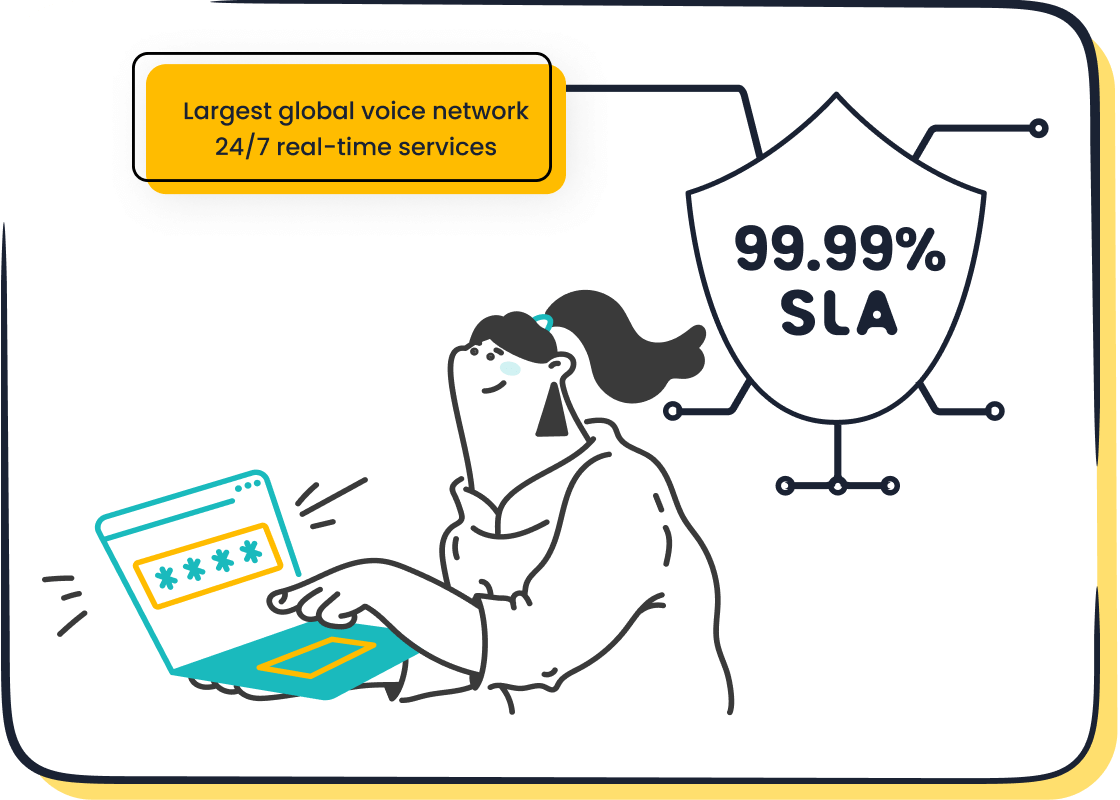
Voice service providers must adhere to strict global regulations to ensure data privacy and security. For example, compliance with the Universal Services Fund (USF) supports telecom access in underserved areas, while STIR/SHAKEN standards combat robocalls by authenticating caller IDs. Noncompliance can lead to audits and penalties, emphasizing the importance of these measures. Sobot’s Voice/Call Center ensures compliance with these regulations, offering secure and encrypted data transfer to protect sensitive information. By choosing compliant solutions, you can safeguard your operations and maintain customer trust.
Addressing customer concerns about voice data security.
Voice data, often classified as biometric information, is highly sensitive. Misuse of this data can lead to identity theft or unauthorized access. To protect yourself, consider these steps:
- Review privacy settings on voice AI devices to limit data collection.
- Use multi-factor authentication to secure voice profiles.
- Avoid sharing sensitive information through voice commands in public spaces.
Sobot prioritizes security by encrypting voice data and offering tools like real-time monitoring. These features ensure your data remains protected, even in high-risk environments.
Challenges of Voice Cloning and Deepfakes
Risks of synthetic voice misuse in customer interactions.
The rise of ai-generated voices has introduced risks like fraud and misinformation. Nearly two-thirds of U.S. adults worry about deepfake misuse, which can damage brands and disrupt operations. For instance, a cloned voice could impersonate a company executive, leading to financial fraud. As technology advances, these risks grow, making it essential for businesses to adopt robust security measures.
Solutions to detect and prevent fraudulent activities.
Advanced technologies now combat synthetic voice threats. AI-driven fraud detection analyzes vocal characteristics and speech patterns to identify impostors. Tools like Pindrop® Pulse™ enhance security by verifying user identities through voice analysis. Sobot’s Voice/Call Center integrates similar technologies, ensuring your business remains protected from fraudulent activities. These solutions are especially critical in sectors like banking, where safeguarding sensitive data is paramount.
Ethical Use of AI-Driven Voice Communication
Balancing innovation with responsible practices.
The voice-over industry faces ethical challenges as AI reshapes communication. Businesses must balance innovation with responsibility by addressing concerns like data privacy and consent. For example, using ai-generated voices without disclosure can erode trust. Sobot ensures ethical practices by providing transparent AI-powered solutions that respect user privacy.
Transparency in AI-powered voice interactions.
Transparency builds trust in AI-driven communication. Informing customers about AI usage helps them make informed decisions. Methods like upfront statements and clear voice cues enhance this transparency. Sobot’s Voice/Call Center exemplifies this approach by offering customizable AI solutions that prioritize user comfort and data control. By adopting transparent practices, you can foster stronger relationships with your audience.
Industry-Specific Applications of Voice Service Technologies
Healthcare
Voice assistants for patient care and diagnostics.
Voice technology is transforming healthcare by introducing voice-enabled assistants that simplify patient care. These assistants provide medication reminders, assist in diagnostics, and offer personalized guidance for managing health. For instance, elderly patients can use voice commands to schedule appointments or access health tips, reducing their reliance on caregivers. Voice recognition systems also analyze speech patterns to detect early signs of conditions like Parkinson’s disease, improving diagnostic accuracy. By integrating AI voice assistants into healthcare workflows, you can enhance patient engagement and streamline routine tasks for professionals.
Enhancing telehealth services with voice technology.
Telehealth services have become more interactive and accessible with voice technology. AI voice assistants enable patients to monitor their health by providing reminders for medication and dietary suggestions. In underserved areas, voice-enabled systems ensure that healthcare remains accessible. For example, a telehealth platform powered by voice commands allows doctors to retrieve patient records instantly, reducing manual errors. Sobot’s Voice/Call Center supports these advancements by offering tools that integrate seamlessly with telehealth systems, ensuring secure and efficient communication between patients and providers.
Education
Interactive and accessible learning environments.
Voice technology fosters interactive learning environments by enabling AI voice assistants to guide students through lessons. These tools adapt to individual learning styles, making education more engaging. For example, voice-enabled quizzes provide instant feedback, helping students identify areas for improvement. Teachers also benefit from voice-over services that simplify lesson planning and content delivery. By incorporating voice technology, you can create a dynamic classroom experience that enhances both teaching and learning.
Voice tools for students with disabilities.
Voice tools play a crucial role in supporting students with disabilities. Text-to-speech (TTS) technology converts written content into audible speech, aiding those with reading difficulties. Similarly, speech-to-text (STT) tools allow students to dictate their thoughts, improving written expression. These technologies promote independence and confidence, enabling students to participate fully in academic activities. For example, a student with dyslexia can use TTS to follow along with lessons, enhancing comprehension and vocabulary. By integrating these tools, you can create an inclusive learning environment that meets diverse needs.
Retail and E-Commerce
Voice-enabled shopping experiences for personalized service.
Voice technology is revolutionizing retail by enabling hyper-personalized interactions. AI voice assistants provide tailored recommendations based on your preferences and purchase history. For example, a voice-enabled assistant might suggest products during a hands-free shopping session, enhancing convenience. This shift toward voice commerce has increased customer engagement and loyalty. Retailers also use voice technology to simplify product searches and payments, creating a seamless shopping experience.
Sobot's Voice/Call Center for improving customer support.
Sobot’s Voice/Call Center enhances customer support in retail and e-commerce by integrating AI voice assistants. These tools handle inquiries efficiently, offering personalized guidance to customers. For instance, Weee!, an online supermarket, used Sobot’s multilingual capabilities to serve diverse audiences, achieving a 96% satisfaction score. With features like intelligent IVR and real-time monitoring, Sobot’s solution ensures that your business delivers exceptional service, fostering customer loyalty and satisfaction.
Smart Homes and IoT
Voice control for home automation and connected devices.
Voice control has become a cornerstone of modern smart homes, allowing you to manage connected devices effortlessly. With advancements in technology, smart speakers now offer hands-free control over various IoT devices, such as lights, locks, and thermostats. You can simply say, "Turn off the living room lights," and the system will respond instantly. These devices also feature personalized voice recognition, enabling them to identify individual family members and adjust settings based on their preferences. For example, your smart speaker might play your favorite playlist while setting the thermostat to your preferred temperature.
| Feature | Description |
|---|---|
| Hands-free control | Users can control IoT devices like lights, locks, and thermostats using voice commands. |
| Personalized voice recognition | Voice assistants will recognize individual family members and adjust settings based on personal preferences. |
| Enhanced integration | Voice-controlled devices will communicate seamlessly with other IoT systems, allowing for more complex interactions. |
Sobot’s Voice/Call Center integrates seamlessly with IoT ecosystems, ensuring reliable voice control for your smart home. Its AI-powered voicebot enhances interaction by recognizing intent and executing commands efficiently. This technology simplifies your daily routines, making your home smarter and more responsive.
Integration of voice technology with IoT ecosystems.
Voice technology has revolutionized IoT ecosystems, creating a seamless user experience. Smart speakers like Amazon Echo and Google Nest enable you to manage your home environment hands-free. You can adjust the thermostat, play music, or even lock the doors with simple voice commands. These devices also manage interconnected systems, allowing you to execute complex commands like "Turn off all the lights and lock the doors."
Voice commands extend beyond home automation. They now control augmented reality interfaces, enhancing applications in gaming and education. For instance, you can use voice commands to navigate virtual environments or interact with educational content. Sobot’s Voice/Call Center supports these integrations by offering tools that unify communication across devices. Its global network ensures high system uptime, making it a reliable choice for managing IoT ecosystems.
By integrating voice technology into IoT, you can enjoy a more connected and efficient lifestyle. Whether you’re automating your home or exploring new applications, smart speakers make it all possible.
Future Trends and Predictions in Voice Technology
Evolution Toward Human-Like Voice Interactions
Advancements in AI for more natural communication.
AI continues to push the boundaries of voice communication, making interactions more human-like. Recent advancements include:
- Voice synthesis that mimics natural speech patterns.
- Emotional intelligence enabling AI to detect and respond to emotional cues.
- NLP advancements that improve understanding of context and sentiment.
- Large language models (LLMs) enhancing conversational depth and task handling.
These developments allow voice AI to engage in more meaningful and intuitive conversations. For example, Sobot’s AI-powered Voice/Call Center leverages these technologies to deliver personalized and empathetic customer interactions. This trend ensures that your communication with AI feels less robotic and more natural, fostering better engagement.
Integration with AR/VR for immersive experiences.
Voice technology is transforming augmented and virtual reality (AR/VR) by enabling seamless interaction with digital environments. You can now use voice commands to control AR interfaces, interact with virtual objects, or navigate immersive spaces. This integration bridges the gap between the physical and digital worlds, creating engaging experiences. For instance, in retail, voice-enabled AR can guide you through virtual product demonstrations. Sobot’s solutions, with their robust voice AI capabilities, can support such integrations, enhancing customer engagement in innovative ways.
Voice as the Future of Digital Communication
Voice-first interfaces for hands-free interactions.
Voice-first interfaces are revolutionizing digital communication by prioritizing hands-free interactions. Their advantages include:
- Accessibility for individuals with reading or typing challenges, such as the visually impaired.
- Convenience for multitasking, eliminating the need for physical device interaction.
- Efficiency, as voice commands execute tasks faster than traditional methods.
These interfaces make voice communication more inclusive and user-friendly. For example, smart speakers equipped with voice AI can help you manage daily tasks effortlessly, from setting reminders to controlling smart home devices.
Implications for businesses and customer engagement with Sobot's solutions.
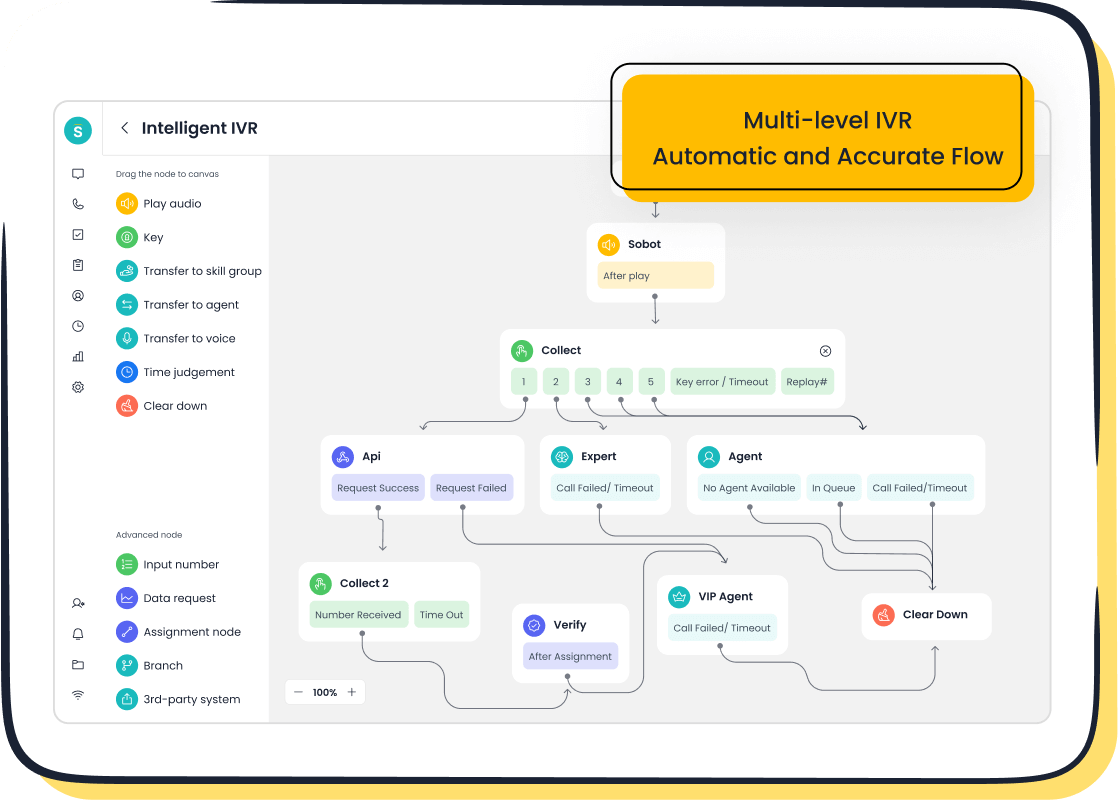
Voice-first interfaces are reshaping how businesses interact with customers. Over 45% of consumers express interest in voice assistant features within apps, highlighting the growing demand. To stay competitive, you must adapt by integrating voice technology into your operations. Sobot’s Voice/Call Center offers voice-enabled APIs and predictive analytics, helping you enhance customer engagement and streamline workflows. By adopting these solutions, your business can deliver seamless, voice-driven experiences that meet modern expectations.
The future of voice service technologies is defined by groundbreaking trends that promise to reshape communication. Key advancements include real-time translation, biometric voice recognition, and AI-driven personalization, enabling seamless and secure interactions. Businesses adopting these innovations gain speed, hands-free convenience, and intuitive communication, meeting modern customer expectations. For example, nearly 70% of consumers are expected to replace in-person visits with voice assistants, showcasing the growing reliance on this technology.
Sobot's Voice/Call Center exemplifies the transformative potential of these advancements. By integrating AI and predictive analytics, it enhances customer satisfaction, achieving metrics like a 97% CSAT score and a 20% reduction in inbound discussions. These features empower businesses to deliver exceptional service while optimizing workflows. Embracing these technologies ensures your business stays competitive in an increasingly voice-first world.
FAQ
What are voice service technologies, and why are they important?
Voice service technologies enable communication through voice-based systems like AI-powered assistants and call centers. These tools improve efficiency and user experience. For example, Sobot's Voice/Call Center uses AI to streamline customer interactions, helping businesses reduce response times and enhance satisfaction.
How does AI improve voice service technologies?
AI enhances voice services by enabling features like real-time translation, predictive analytics, and natural language processing. Sobot's Voice/Call Center uses AI to personalize customer interactions, anticipate needs, and provide multilingual support, ensuring seamless communication across diverse audiences.
Can voice service technologies handle multilingual communication?
Yes, modern voice technologies support multiple languages. Sobot's Voice/Call Center offers multilingual AI capabilities, allowing businesses to serve global customers effectively. For instance, Weee! used Sobot's solution to overcome language barriers, achieving a 96% customer satisfaction score.
Are voice service technologies secure?
Voice technologies prioritize security through encrypted data transfer and compliance with global regulations. Sobot's Voice/Call Center ensures data protection with features like real-time monitoring and secure voice data encryption, safeguarding sensitive customer information.
How can businesses benefit from Sobot's Voice/Call Center?
Sobot's Voice/Call Center improves customer support with features like intelligent IVR, AI-powered voicebots, and real-time analytics. Businesses can enhance efficiency, reduce resolution times, and deliver personalized experiences, as demonstrated by Weee!'s 20% increase in agent efficiency.
See Also
Best Automated Voice Calling Tools To Explore In 2024
Leading VoIP Software Options Available This Year 2024
Best 10 Customer Feedback Software Solutions For 2024
Best Cloud Contact Center Solutions To Consider In 2024
Leading 10 IVR Systems For Enhanced Customer Interaction 2024

