Future of AI Outbound Sales Calling

Scaling your sales outreach is a constant battle. Sales teams face a staggering 35% turnover rate, making growth difficult. The future of AI outbound sales calling is not about replacing your team. It is about creating a powerful human-AI partnership. AI adoption in sales is surging for a reason. This guide shows you how to build this hybrid model. You will learn to leverage AI tools. The Sobot call center, powered by Sobot AI, helps your sales team succeed. This AI approach uses AI to enhance your sales outreach with powerful AI.
The New Team: Roles in AI Outbound Sales Calling

Building a successful hybrid team starts with defining clear roles. You must understand where AI excels and where your human talent provides irreplaceable value. This division of labor is the foundation of your new sales strategy.
The AI Role: Speed, Scale, and Automation
The primary AI advantage is its ability to execute repetitive tasks with incredible speed and precision. You can use AI to manage the high-volume, top-of-funnel activities that often consume your team's time. This automation boosts overall efficiency. The AI handles the groundwork, allowing your sales reps to focus on what they do best.
AI-Powered Task Automation Your AI can manage several parts of the sales outreach process. This AI efficiency frees up your team for more strategic work.
| Task | AI Automation Feature | AI Capabilities |
|---|---|---|
| Lead Generation | Sift through data to find leads | Extracts contact details and scores leads based on your criteria. |
| Initial Outreach | Draft and send personalized messages | Uses lead data to create relevant messages and automates follow-ups. |
| Reply Handling | Categorize incoming replies | Identifies interested leads, objections, or unsubscribe requests. |
The Human Role: Strategy, Rapport, and Closing
While AI manages scale, your human sales team drives the results. Their role shifts toward high-value engagement where emotional intelligence is key. Humans excel at building genuine rapport, navigating complex negotiations, and resolving conflicts. This human touch is critical for closing deals. Your team's deep understanding and strategic thinking turn qualified leads into loyal customers. This is a core part of your sales strategies.
A Day in the Life of a Hybrid Sales Team
Imagine this: your AI starts the day by sending thousands of personalized outreach messages. It works tirelessly, handling initial responses and filtering out uninterested contacts. When the AI identifies a high-intent lead who asks a complex question, it instantly alerts a human sales rep. Your rep then steps in with the full context, ready to build a relationship and close the sale. This is the future of AI outbound sales calling—a seamless partnership between machine intelligence and human expertise.
Core Strategies for AI-Powered Sales Success

Defining roles is the first step. Now you must implement the right strategies to unlock the full potential of your hybrid team. Effective AI-powered sales depends on more than just technology. It requires a new approach to qualification, support, and coaching. These core strategies will transform your sales outreach from a manual effort into an intelligent, data-driven engine.
Automating Top-of-Funnel Qualification
Your team's most valuable resource is time. You lose precious hours when reps manually sift through long lists of unqualified leads. This is where automation becomes your greatest asset. You can use AI to analyze thousands of data points in seconds. The AI identifies prospects who show real buying intent. This strategy frees your sales team to focus on conversations that lead to revenue.
This approach has a proven impact. A McKinsey study found that companies using AI for lead qualification can see conversion rate improvements of up to 20%. By implementing AI strategies, you can achieve similar results. Your AI can score leads based on website behavior, firm size, and past interactions. This ensures your reps only engage with the most promising opportunities, boosting both efficiency and morale.
Success with AI-Powered Lead Qualification
Many companies already see major benefits from this strategy. AI helps them increase conversion rates and shorten sales cycles. Here are a few examples:
| Company | Problem | AI Solution | Results |
|---|---|---|---|
| Global Tech Inc. | Difficulty prioritizing a vast number of incoming leads. | An AI lead scoring algorithm ranked leads by conversion chance. | 20% improvement in sales win rate; 40% reduction in lead qualification time. |
| Bloom & Co. | Inability to qualify website visitors in real-time. | An AI chatbot used NLP to assess visitor needs and conversion probability. | Increased lead qualification accuracy and visitor engagement. |
| Velocity Marketing | Inefficient manual lead qualification. | An AI system integrated with their CRM analyzed lead data automatically. | 60% reduction in lead qualification time; increased sales productivity. |
Providing Real-Time Agent Support
Even the best sales reps face tough questions and unexpected objections. An AI copilot acts as a powerful assistant during live calls. It gives your team the confidence and information they need to succeed. This is a core part of a modern sales calling strategy. Instead of fumbling for answers, your reps get instant, on-screen guidance.
Advanced platforms like Sobot offer AI copilots that transform agent performance. Here’s how this technology provides support:
- Intelligent Objection Handling: The AI uses Natural Language Processing to understand a customer's objection in real time. It then instantly suggests the best response based on historically successful strategies.
- Dynamic Scripting: The AI provides reps with dynamic smart scripts and compliance reminders. This helps them navigate complex conversations and stay on message.
- Instant Knowledge Access: If a customer asks a technical question, the AI can pull relevant data from your knowledge base. Your rep gets the answer without placing the customer on hold.
- Automated Call Summaries: After each call, the AI generates a perfect summary. This reduces manual work and ensures consistent, high-quality notes are logged in your CRM.
This level of support boosts agent confidence and improves customer engagement. Your team can focus on the conversation, knowing their AI partner has their back. This is one of the most effective AI strategies for improving sales performance.
Leveraging AI for Data-Driven Coaching
Effective coaching is the key to building a top-tier sales team. However, managers often lack the time to review every call. AI analytics tools solve this problem. They analyze 100% of your sales calls and provide objective, actionable insights. This allows you to move from guesswork to a data-driven coaching strategy.
AI call coaching platforms like Sobot give you a complete view of your team's performance. The AI intelligence tracks critical metrics that reveal skill gaps and coaching opportunities. These analytics go far beyond simple call duration.
📈 Key Metrics for AI Call Coaching:
- Talk-to-Listen Ratio: See if your reps are dominating the conversation or actively listening.
- Sentiment Analysis: The AI gauges customer sentiment (positive, negative, neutral) throughout the call.
- Keyword Spotting: Track mentions of competitors, pricing, and key features.
- Pacing and Tone: Identify reps who speak too quickly or lack enthusiasm.
- Objection Handling Patterns: Discover which objections consistently cause trouble for your team.
With these insights, you can deliver personalized, high-impact real-time coaching. For example, the AI might flag that a rep struggles with pricing objections. You can then review that exact moment in the call and provide targeted feedback. This approach to AI call coaching makes your training more efficient and effective. You build a stronger sales team by focusing on the specific behaviors that drive results. This is how you build a culture of continuous improvement for your AI-powered sales efforts.
Your Guide to Successful AI Integration
Integrating AI into your sales process is more than a technical upgrade. It is a strategic business transformation. A successful rollout requires a clear plan and a methodical approach. This five-step guide provides an actionable checklist to help you build a powerful human-AI sales engine. Follow these steps to ensure your AI implementation strategy delivers measurable results and empowers your team.
Step 1: Define Clear Objectives and KPIs
Your AI journey must begin with a clear destination. Before you evaluate any technology, you need to define what success looks like for your business. Aligning your AI initiatives with core business goals ensures you solve problems that matter. This alignment also secures executive buy-in from the start. Your objectives should be Specific, Measurable, Attainable, Relevant, and Time-bound (SMART).
Once you set your goals, you must establish Key Performance Indicators (KPIs) to track progress. These metrics will prove the value of your AI investment.
Key KPIs for AI Outbound Sales Calling
- Connection Rate: The percentage of calls that connect to a live person. AI improves this with smart dialing strategies.
- Conversion Rate: The percentage of calls that result in a desired outcome, like a booked demo. AI can boost conversion by adapting its approach in real-time.
- Cost per Conversion: The total campaign cost divided by successful conversions. AI drastically lowers this by handling high-volume tasks.
- Pipeline Velocity: The time it takes for a lead to move from first contact to a closed opportunity. Automation speeds up this entire process.
- Customer Satisfaction Score: A measure of the prospect's experience. A well-designed AI maintains a positive and professional interaction.
Step 2: Select the Right AI Platform
Choosing the right platform is critical for a successful integration. The market is full of options, so you need to focus on features that directly support your sales strategies. Look for a platform that offers seamless CRM synchronization, powerful analytics, and robust personalization capabilities. The right tool should feel like a natural extension of your team.
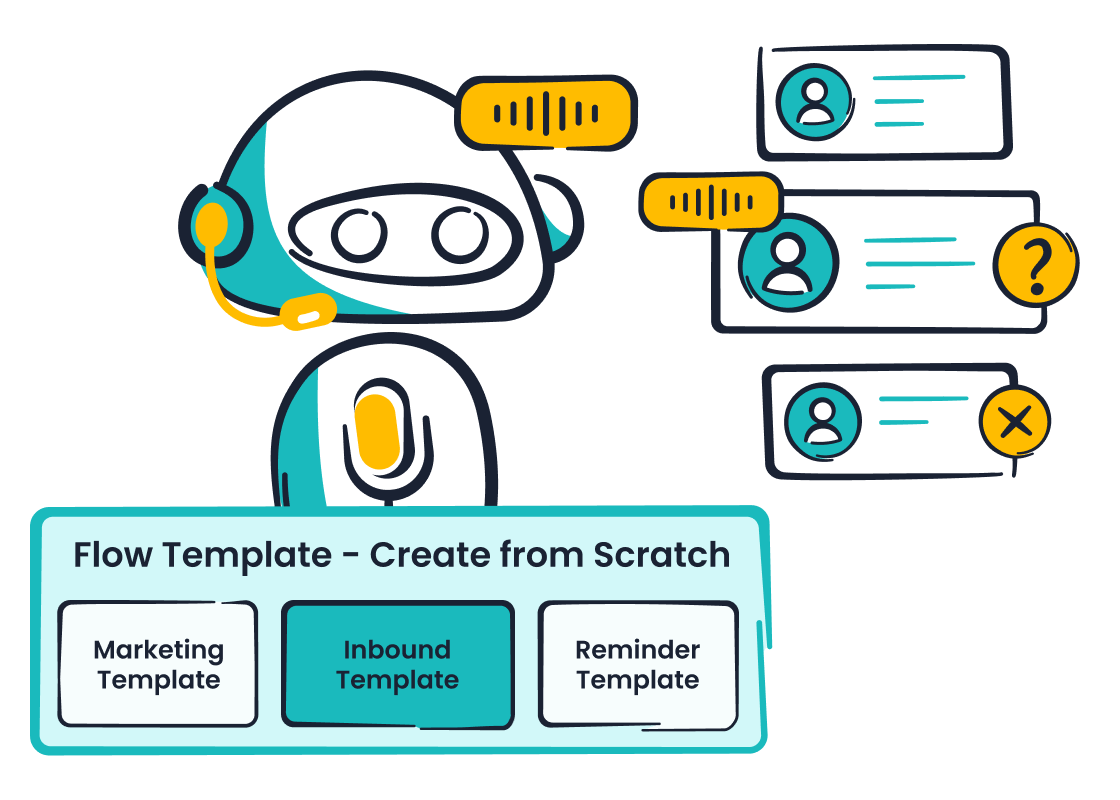
A leading solution like Sobot Voicebot offers the key features needed for modern sales outreach. Its design empowers your team rather than creating technical hurdles.
- No-Code Builder: You do not need a team of developers to create and modify your AI. Sobot’s visual drag-and-drop builder allows your sales leaders to design conversation flows quickly. This reduces deployment time and lowers development costs.
- Seamless CRM Integration: The platform offers plug-and-play integrations with major CRM systems. This ensures your AI and human reps work from a single source of truth, with all data synced in real time.
- Advanced Speech Recognition: Powered by NLP and LLM technologies, the AI understands human communication patterns, including intent and emotion. This allows for more natural and effective conversations.
Success in Action: How Weee! Boosted Efficiency with Sobot
America's largest online Asian supermarket, Weee!, needed to improve its customer service operations. They faced challenges with an inflexible system and language barriers. By implementing Sobot's voice product, Weee! achieved remarkable results. The integration led to a 20% increase in agent efficiency and an incredible 96% customer satisfaction score. This case shows how the right AI platform can deliver powerful, measurable benefits.
Step 3: Develop and Refine AI Scripts
An AI is only as effective as the script it follows. Your goal is to create conversations that feel natural and helpful, not robotic. The best scripts do not sound like scripts at all.
“Many companies use call recordings to identify problems, evaluate performance, collect statistical data, and so on... You can also use it to build and refine scripts, so they sound natural and conversational.” – Unicom
Start by analyzing your top-performing reps' calls. Identify the language they use, how they handle objections, and how they build rapport. Use these insights to build your initial AI scripts. Then, focus on continuous improvement through A/B testing. Test different variables one at a time to see what works best.
- Opening Lines: Test a warm, empathetic opener against a direct, results-focused statement.
- Value Propositions: Compare the conversion rate when you emphasize cost savings versus unique features.
- Calls-to-Action: See if a direct CTA ("schedule a demo") outperforms a softer one ("let’s talk about your challenges").
By constantly testing and refining your dynamic scripts, you ensure your AI's engagement strategy evolves with your audience's preferences. This data-driven approach to personalization is key for successful sales outreach.
Step 4: Train Your Team for Collaboration
The success of your AI integration depends heavily on your team's mindset. You must frame the AI as a collaborative partner, not a replacement. Sales leaders should position the AI as a "new intern"—smart and efficient but requiring human guidance and oversight. This approach helps manage team morale and reallocates human attention to higher-value work.
Your training should focus on a few key areas:
- Define Clear Roles: Outline which tasks the AI will handle (e.g., initial outreach, lead qualification) and where your human reps will take over (e.g., complex negotiations, closing).
- Build a Culture of Experimentation: Encourage your team to provide feedback on the AI's performance. Their insights are invaluable for refining scripts and strategies.
- Invest in Upskilling: Train your sales reps on how to use the AI platform's analytics and insights to improve their own performance. Show them how the AI makes their job easier and more effective.
When your team understands that AI is there to augment their skills, they will embrace the new technology and drive your sales strategy forward.
Step 5: Monitor, Analyze, and Optimize
AI implementation is not a "set it and forget it" project. Continuous monitoring and optimization are essential for long-term success. Your AI platform should provide deep analytics that give you a clear view of performance. Use this intelligence to refine your sales outreach and coaching strategies.
Modern AI tools can analyze 100% of interactions to give you actionable insights.
- Speech Analytics: Use this technology to analyze customer sentiment, talk-to-listen ratios, and call outcomes. This helps you understand what is working and what is not.
- Keyword Spotting: Track mentions of competitors, pricing, or specific features. This intelligence can inform both your sales and product strategies.
- Quality Scoring: Automatically score calls against predefined criteria. This allows managers to quickly identify coaching opportunities without listening to hours of recordings.
By regularly reviewing these analytics, you can identify trends, address issues proactively, and continuously improve the effectiveness of your AI outbound sales calling program. This creates a powerful feedback loop where data drives better performance and higher conversion rates.
Overcoming Common Integration Challenges
A successful AI integration goes beyond technology. You must navigate challenges related to brand identity, legal compliance, and team dynamics. Addressing these issues proactively will ensure a smooth transition and long-term success for your sales program. These strategies will help you build a resilient AI sales operation.
Maintaining a Personal Brand Voice
Your brand's voice is a valuable asset. You must ensure your AI maintains this voice to build trust and engagement. A robotic, generic AI can harm your customer relationships and lower your conversion rate. You can customize your AI to reflect your unique brand personality.
- Define the AI's Tone: Configure the AI agent's language, tone, and vocabulary to match your brand guidelines.
- Train with Your Data: Use your own call recordings and transcripts to fine-tune the AI models. This helps the AI learn your specific phrasing and rhythm.
- Customize Responses: Create unique fallback responses and escalation rules. This maintains message consistency even during unexpected turns in conversation.
This strategy ensures every interaction, whether human or AI-driven, strengthens your brand and drives a higher conversion.
Ensuring Data Privacy and Regulatory Compliance
Data privacy is not optional. Your AI sales activities must comply with regulations like GDPR in Europe and CCPA in California. These laws set strict standards for how you collect, store, and process personal information. Non-compliance can lead to heavy fines and damage your reputation.
Note on Compliance: Always obtain clear consent before recording calls or using personal data. You must also disclose when an AI is involved in the interaction. This transparency is crucial for both legal compliance and customer trust.
Your AI platform should support data security with features like encryption and data minimization. Strong analytics can help you monitor for compliance, but your core strategies must prioritize data protection. This protects your customers and your business.
Managing Team Morale and Role Transitions
Your sales team may worry that AI is here to replace them. You must manage this concern with clear communication and a supportive strategy. Frame the AI as a partner that handles repetitive tasks. This frees your reps to focus on high-value activities like building relationships and closing complex deals. This approach boosts morale and improves your conversion rate.
- Communicate the Vision: Clearly explain that the AI is a tool to assist, not replace, the sales team.
- Provide Comprehensive Training: Teach your team how to use the AI and its analytics to enhance their performance.
- Celebrate Joint Successes: Highlight wins achieved through human and AI collaboration. This reinforces the value of the new partnership.
This integration empowers your team, improves job satisfaction, and creates a culture of innovation.
The future of AI outbound sales calling is not about replacing your team; it is about augmenting it. This hybrid approach boosts sales efficiency. Your AI handles high-volume tasks, freeing your sales reps to build relationships and close deals. The most successful sales teams will be those that work alongside AI. This AI collaboration delivers unique customer experiences. Start by mapping your current sales process to identify pain points. Prepare your team for the next era of AI-powered sales by exploring advanced AI solutions like Sobot Voicebot.
FAQ
How quickly can we implement an AI sales solution?
You can deploy an AI sales solution faster than you think. With a no-code platform like Sobot Voicebot, your sales leaders can design and launch initial campaigns in days, not months. This rapid setup accelerates your path to improving sales outreach and seeing a return on investment.
Will AI replace my existing sales team?
No, the goal is to augment your sales team, not replace it. The AI handles repetitive, high-volume tasks. This strategy frees your human sales reps to focus on building relationships and closing complex deals, making your entire sales operation more effective and boosting overall sales performance.
How does AI improve the quality of sales calls?
AI improves sales call quality by providing real-time support. It offers agents instant access to scripts and objection-handling tips. AI analytics also identify coaching opportunities from every sales call, helping you build a stronger, more consistent sales team and improve your sales results.
Can the AI adapt to our specific sales process?
Yes, a flexible AI platform is designed for customization. You can tailor scripts, define lead qualification criteria, and integrate the AI with your CRM. This ensures the AI aligns perfectly with your unique sales methodology and enhances your existing sales workflows for better outcomes in your sales efforts.
See Also
Evaluating Advanced AI Solutions for Enterprise Call Centers Effectively
Comprehensive Handbook for Call Center Artificial Intelligence Software Implementation
Discovering the Best 10 AI Tools for Enterprise Contact Centers
Understanding the Efficient Functioning of Call Center Automation Systems

