Omnichannel Support for a Seamless Experience

Poor service causes 66% of consumers to leave a company, often due to disconnected interactions. Omnichannel support provides the solution. It creates a single, seamless experience that unifies your customer support and boosts customer satisfaction. A platform like Sobot, with Sobot AI and the Sobot call center, delivers this powerful omnichannel customer support.
Are your support channels creating frustrating dead ends? You need excellent omnichannel customer service. This is omnichannel customer service. It is what defines omnichannel customer service. This is the omnichannel customer service that builds loyalty. This is omnichannel customer service.
This level of omnichannel customer support creates a seamless customer experience, which is the goal of modern omni channel support.
Understanding Omni Channel Support

The Core Definition
True omnichannel customer service delivers a consistent and unified experience across all your channels. Your customer's journey feels like one continuous conversation, no matter how they contact you. This approach makes your omni channel support feel effortless for the user. An effective omnichannel strategy is built on several key principles:
- Unified Customer Data: A single profile shows agents all past interactions for complete context.
- Integrated Platforms: All channels (voice, chat, email, social) merge into one agent interface.
- Channel Consistency: Your brand voice and service quality remain the same everywhere.
- Intelligent Automation: AI tools like chatbots and smart routing direct inquiries efficiently.
- Real-Time Analytics: Dashboards track performance and customer satisfaction to drive improvement.
Multichannel vs. Omnichannel Customer Service
You might offer many support channels. That is multichannel. It is not the same as omnichannel customer service. Multichannel gives customers options, but the channels do not work together. Omnichannel customer service connects every channel for a seamless experience. This table shows you the key differences between multichannel and omnichannel customer service.
| Feature | Omnichannel Customer Service | Multichannel |
|---|---|---|
| Focus | Customer-centric for a seamless journey | Channel-centric with separate interactions |
| Integration | Channels are fully integrated and share data | Channels operate independently in silos |
| Customer Journey | Continuous and fluid across touchpoints | Disjointed, requires repeating information |
| Data | A complete 360-degree view of the customer | A fragmented view of the customer |
This difference defines modern omnichannel customer service. It is a core part of great omnichannel customer service. The goal of omnichannel customer service is a single conversation.
The Impact on Customer Satisfaction
Implementing excellent omnichannel customer support directly boosts customer satisfaction. Digitizing your service with proactive omnichannel customer service can improve customer satisfaction by 33%. The difference is clear when you look at the results.
Companies with smooth omnichannel support see an average Customer Satisfaction (CSAT) score of 67%. Disconnected multichannel systems only achieve 28%.
This improved experience has a massive effect on loyalty. One company saw its Net Promoter Score (NPS) jump by 54% after adopting an omnichannel customer support model. This level of omnichannel customer support turns good customer satisfaction into great customer satisfaction.
Building an Effective Omnichannel Strategy
An effective omnichannel strategy does not happen by accident. You must build it with purpose. This involves unifying your technology, understanding your customers' paths, and connecting your data. These three pillars are essential for creating a truly seamless customer experience. A strong omnichannel support strategy transforms your customer service from a collection of separate channels into one cohesive conversation.
Unify Your Technology Stack
Your technology is the backbone of your omnichannel customer service. Disconnected tools create data silos and frustrating experiences for everyone. You need a central support platform that consolidates all customer communications. This is where a solution like Sobot's Omnichannel Solution becomes essential. It provides a unified platform that brings all your channels—voice, live chat, email, and social media—into a single agent workspace. This consolidation is the first step toward a powerful omnichannel customer support model.
A unified system gives your team the tools they need to succeed. Key features create a smooth transition between self-service and agent support.
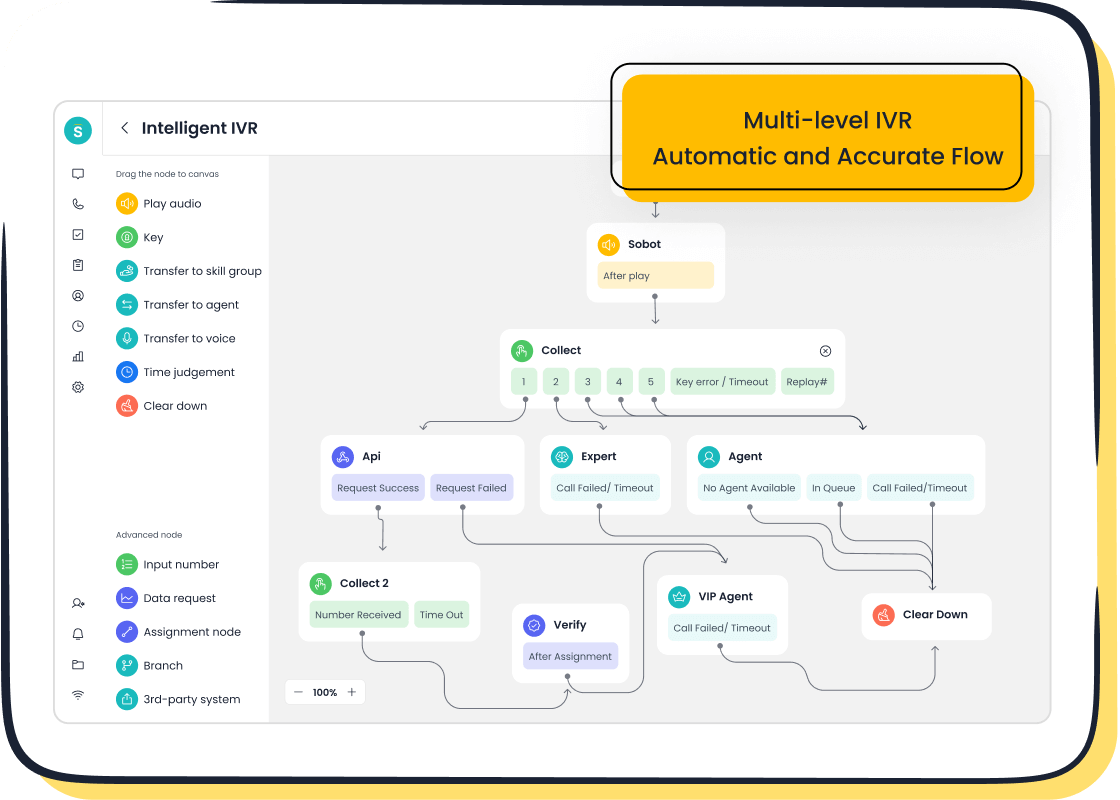
- Intelligent IVR: You can build custom call menus with a simple drag-and-drop interface. This allows customers to solve simple issues on their own.
- Smart Call Routing: This feature automatically sends calls to the right agent or team. It ensures customers connect with the person best equipped to help them, improving first-contact resolution.
This approach removes friction and empowers your agents. It is a critical part of a successful customer support strategy.
Map the Customer Journey
You cannot build a seamless journey without knowing the path your customers take. Mapping the customer journey helps you see your business from their perspective. This process is a cornerstone of a great omnichannel strategy. You should identify every interaction point to build a better customer experience.
Start by listing all the touchpoints where customers interact with your brand.
- Awareness: How do they find you? (e.g., social media, ads, reviews)
- Consideration: What happens when they visit your website or app?
- Purchase: What is the checkout or sign-up process like?
- Service: How do they ask for help? (e.g., phone call, chatbot, email)
- Loyalty: How do you follow up after an interaction?
Research shows that 93% of call center users expect their issue to be resolved in a single contact. When customers have to switch channels to solve one problem, satisfaction can drop by 15%.
Focus on your customers' emotions and goals at each stage. Identify points of friction where they might get frustrated or confused. Understanding these moments helps you design a better omnichannel support strategy that meets their needs and reduces their effort. This is how you deliver excellent omnichannel customer service.
Integrate Your CRM and Data
A unified technology stack and a customer journey map are powerful. However, they become truly effective when you integrate your Customer Relationship Management (CRM) system. Your CRM should be the central source of truth for all customer information. Integrating it with your communication channels is the final piece of your effective omnichannel strategy.
This integration gives your agents a complete 360-degree view of every customer. When a customer contacts you, your agent instantly sees:
- Past purchases and browsing history.
- Previous support tickets from any channel.
- Notes from earlier conversations.
This context is vital for providing personalized and efficient omnichannel customer service. Agents no longer need to ask customers to repeat information. They can pick up the conversation right where it left off, creating a unified customer experience. This level of preparation is what defines superior omnichannel customer support. Integrating your CRM with your contact center software makes it easier to track performance and ensure your omni channel support is effective.
Executing Your Omnichannel Customer Experience

A great omnichannel support strategy needs careful execution. You must prepare your teams, standardize your processes, and use technology to empower your agents. This turns your plan into a superior customer experience. Executing your omnichannel customer service well is what sets you apart.
Train Your Support Teams
Your agents are the heart of your omnichannel customer service. You must give them the right training to succeed. Effective training builds skills for a connected environment. You can use customer experience simulations where agents act as customers. This helps them understand user frustrations and build empathy. Your training should focus on critical agent skills:
- Data Literacy: Agents must interpret customer data for better personalization.
- Emotional Intelligence: This skill helps agents build connections and de-escalate issues.
- Tech Savviness: Your team needs to be comfortable using AI tools and a unified platform.
Standardize Service Protocols
Consistency is key to a great omnichannel support strategy. You need to standardize your service protocols across all channels. This ensures every customer receives the same high-quality service. A central knowledge base is a powerful tool for this. It acts as a single source of truth for company policies and procedures. This digital library helps agents find answers quickly. It also reduces repetitive work, freeing your team for more complex issues. This is a core part of an effective customer support strategy.
Empower Agents with Context
Agents need a full picture of the customer to provide excellent omnichannel customer service. You must empower them with complete context. A unified customer profile brings all interaction history into one view. This includes past purchases, support tickets, and agent notes.
When agents have full context, they do not need to ask customers to repeat information. This simple change significantly reduces average handling time and improves the quality of your omnichannel customer support.
This level of personalization creates a seamless conversation. It is essential for effective real time support and personalized engagement.
Leverage AI and Automation
Automation is a vital part of modern omnichannel customer service. You can leverage AI to handle common queries and free up your agents. AI-powered tools like chatbots and intelligent IVR systems provide 24/7 support. They can answer simple questions and guide users to solutions. This allows your human agents to focus on complex problems that require their expertise. Smart call routing also directs customers to the most appropriate agent based on their needs. This improves efficiency and makes your omnichannel customer support more effective, leading to better personalization.
Measuring Omnichannel Success
You cannot improve what you do not measure. A successful omnichannel support strategy requires you to track performance and listen to your customers. The right data shows you what works and where you can improve. It provides clear proof of your return on investment.
A powerful example is the financial service platform Opay. By implementing Sobot's omnichannel solution, Opay transformed its customer service. They increased customer satisfaction from 60% to 90% and reduced overall costs by 20%. Their intelligent IVR allowed 60% of customers to resolve issues through self-service, proving the tangible benefits of a well-measured omnichannel strategy.
Key Performance Indicators
You need to track the right metrics to understand your success. These Key Performance Indicators (KPIs) give you a clear picture of your performance. They help you measure the effectiveness of your omnichannel support strategy.
- Customer Satisfaction Score (CSAT): This measures how happy customers are with a specific interaction.
- Net Promoter Score (NPS): This shows customer loyalty and their willingness to recommend your brand.
- First Contact Resolution (FCR): This tracks the percentage of issues solved in a single interaction, a key sign of a seamless customer experience.
- Customer Lifetime Value (CLV): This shows the total revenue you can expect from a customer over time.
Gathering Cross-Channel Feedback
Data tells only part of the story. You must also gather direct feedback from your customers. This helps you understand their experience on a deeper level. Use simple methods to collect feedback across all your channels. You can send automated surveys via email or chat after an interaction ends. Ask clear questions to evaluate the quality of your support.
The next step is to bring all this information together. You should use a central system to consolidate feedback from every source. This creates a unified view of customer sentiment and helps you identify common pain points.
Continuous Process Optimization
Your data and feedback are tools for action. Use these insights to continuously improve your processes. If you see many customers asking the same question, create a knowledge base article or an automated chatbot response. If feedback shows a point of friction, redesign that part of the journey. This cycle of measuring, listening, and improving is the core of an effective customer support strategy. It ensures your service evolves with your customers' needs and delivers increasing value.
An integrated approach to omnichannel customer service is no longer a luxury. It is a necessity for superior customer support. A unified system delivers a truly seamless experience. This level of omnichannel customer service brings powerful benefits.
- You build loyalty, as 89% of customers will buy again after positive omnichannel customer service.
- You boost operational efficiency and reduce costs.
- You create excellent omnichannel customer service that drives growth.
This is the future of omni channel support. Your business can deliver exceptional omnichannel customer support. It is time to Embark on Your Contact Journey. Take the first step toward a unified system today.
FAQ
What is the main goal of omnichannel customer service?
The main goal is to create one continuous conversation with your customer. You connect all support channels, like chat, email, and phone. This gives your customers a seamless and unified experience, which builds trust and loyalty for your brand.
How does omnichannel support help my agents?
Omnichannel support gives your agents a complete view of the customer's history. They see all past interactions in one place. This context empowers them to solve problems faster and provide more personalized, effective service without asking customers to repeat information.
Can a small business use an omnichannel strategy?
Yes, small businesses can benefit greatly from an omnichannel strategy. Modern solutions like Sobot offer scalable and affordable platforms. You can start by unifying your most popular channels to improve efficiency and provide a superior customer experience from day one.
What technology is essential for omnichannel support?
A unified platform is the most critical technology. It brings all your communication channels into a single workspace for your agents. Features like an intelligent IVR and smart call routing are also key for creating a seamless omnichannel customer service experience.
See Also
Your Essential Handbook for Omnichannel Call Center Software Solutions
A Ten-Step Blueprint for Omnichannel Contact Center Implementation Success
Achieving Excellence: Mastering Live Chat for Superior Customer Support
Elevate Your SaaS Support Using Effective Live Chat Strategies
How Round-the-Clock Live Chat Support Drives Business Prosperity

