Ecommerce Performance KPIs Explained for Better Customer Service


You can measure the success of your ecommerce business by tracking ecommerce performance KPIs. These KPIs show how well you serve your customers. Research shows that improving order fulfillment rates increases customer retention. The table below highlights how different KPIs connect to customer service outcomes:
| KPI | Impact on Customer Service Outcomes |
|---|---|
| Repeat Purchase Rate | Higher satisfaction leads to more repeat purchases. |
| Net Promoter Score (NPS) | Reflects the complete customer experience and predicts retention. |
| Order Fulfillment Rate | Better fulfillment leads to higher retention rates. |
| Churn Rate | Helps spot patterns and address reasons for customer loss. |
Sobot helps you unify customer interactions across channels. Imagine your team quickly resolves order issues and responds to questions. You see happier customers and more repeat purchases.
What Are Ecommerce Performance KPIs?
Defining Ecommerce KPIs
Ecommerce performance KPIs are the key performance indicators that help you measure how well your online store meets its goals. Experts agree that KPIs give you a clear view of your business health. They show if you are on track or need to adjust your strategy. Here is how industry leaders define KPIs:
| Expert | Definition |
|---|---|
| Avinash Kaushik | A metric that helps you understand how you are doing against your objectives. |
| Bernard Marr | The most important performance information that enables you to see if you are on track. |
| KAIZEN Analytics | Measures that help you define and measure progress toward business goals. |
| Dennis Mortensen | KPIs echo goals, provide context, and lead to action. |
| Aurel Brudan | Selected measures that provide visibility and enable action for desired outcomes. |
You can use KPIs like conversion rate, average order value, and number of orders per month to see how your ecommerce business performs. Sobot’s solutions, such as the chatbot, live chat, and call center, help you track these KPIs in real time. This makes it easier to spot trends and act quickly.
Ecommerce Metrics vs. KPIs
Ecommerce metrics include all the data points you can measure in your online store. These might be page views, bounce rates, or social media likes. KPIs are different. They focus on the numbers that matter most for your business success. KPIs have a direct impact on your profits and customer satisfaction. For example, tracking order accuracy or customer satisfaction score gives you insights that help you grow your ecommerce business. Sobot’s unified dashboard lets you see both ecommerce metrics and KPIs, so you can make smart decisions.
Why KPIs Matter for Customer Service
Tracking KPIs helps you improve customer service in your ecommerce store. When you monitor KPIs, you can:
- Optimize your operations and boost customer experience.
- Make better decisions based on real data.
- Understand what your customers want and need.
- Increase efficiency by streamlining support and fulfillment.
- Grow your revenue by focusing on what works.
Sobot’s AI-driven tools, like the voicebot and ticketing system, give you real-time insights into customer interactions. This helps you respond faster and solve problems before they grow. When you focus on the right KPIs, you create a better experience for your customers and build a stronger ecommerce business.
Key Ecommerce KPIs for Customer Service

Tracking the right ecommerce performance KPIs helps you deliver better customer service and grow your online store. These key performance indicators show you where to focus your efforts for the best results. Let’s look at the most important ecommerce KPIs for customer service and see how Sobot’s Voice/Call Center can help you improve each one.
Response Time
Response time measures how quickly your team answers customer questions or resolves issues. Fast response times make customers feel valued and increase their trust in your brand. Slow replies can lead to frustration and lost sales. Many ecommerce businesses use first response time as a main performance indicator.
Tip: Customers expect fast answers. If you reply within minutes, you stand out from the competition.
Here is a table showing industry benchmarks for average response time in ecommerce customer service:
| Channel | Unacceptable | Below Average | Average | Above Average | Stellar |
|---|---|---|---|---|---|
| Multiple days | 1 day | 12-24 hours | Under 4 hours | Under 1 hour | |
| Social Media | Multiple days | 1 day | 12-24 hours | Under 4 hours | Under 15 minutes |
| SMS | Over 1 hour | 1 hour | 10 minutes | Under 5 minutes | Under 1 minute |
| Live Chat | Over 1 hour | 1 hour | 10 minutes | Under 5 minutes | Under 1 minute |
Sobot’s Voice/Call Center helps you meet these benchmarks. The platform uses AI-powered routing and automation to connect customers to the right agent quickly. Real-time monitoring lets you track response times and make improvements. For example, Sobot’s clients have seen resolution times improve by 25%. Opay, a leading financial service platform, used Sobot’s omnichannel solution to handle customer questions faster, raising their customer satisfaction rate from 60% to 90%.
Order Accuracy
Order accuracy shows how often customers get exactly what they ordered. Mistakes in orders can hurt your reputation and drive customers away. Accurate orders lead to happy customers and more repeat business.
| Statistic | Description |
|---|---|
| 32% | Percentage of customers who will stop supporting a brand after one negative experience. |
| 92% | Percentage of customers who will leave if mistakes keep happening. |
You can use Sobot’s Voice/Call Center to reduce errors. The system gives agents a unified workspace with all customer data in one place. This helps your team confirm order details and avoid mistakes. Automated call tracking and recording also make it easy to review and fix problems. When you improve order accuracy, you boost your customer retention rate and increase your order completion rate.
Customer Satisfaction Score (CSAT)
Customer satisfaction score, or CSAT, measures how happy customers are with your service. After a support interaction, you can ask customers to rate their experience. High CSAT scores mean your team is meeting customer needs.
| Source | Average CSAT Score |
|---|---|
| Opensend | 75% - 85% |
| Retently | 82% |
| 1Flow | 80 |
Most leading ecommerce companies aim for a CSAT score above 80%. Sobot’s Voice/Call Center helps you collect feedback automatically after each call or chat. The platform’s analytics show you trends in customer satisfaction, so you can spot issues early. Sobot’s AI automation resolves tickets 52% faster than traditional methods, which leads to higher CSAT scores. Opay used Sobot’s solution to streamline support and saw their CSAT jump by 30%.
Net Promoter Score (NPS)
Net Promoter Score, or NPS, measures customer loyalty. You ask customers, “How likely are you to recommend our brand to a friend or colleague?” Customers answer on a scale from 0 to 10. You group them as Promoters (9-10), Passives (7-8), or Detractors (0-6). Subtract the percentage of Detractors from Promoters to get your NPS. Scores can range from -100 to +100.
The average NPS score for ecommerce is 62. A score above this means you have strong customer loyalty. Companies with high NPS scores often see better revenue growth. Sobot’s Voice/Call Center helps you track NPS by collecting feedback after every interaction. The platform’s analytics let you see which agents or channels drive the best results. For example, Sobot’s clients have improved customer satisfaction scores by 35% using these tools.
Note: High NPS scores show that your customers trust you and want to come back. This is key for growing your customer lifetime value.
Conversion Rate
Conversion rate tells you how many visitors to your online store become paying customers. The average conversion rate for ecommerce businesses is between 2.5% and 3%. High-quality customer service can boost this number. Fast response times and accurate orders make shoppers more likely to buy.
- High-quality customer service leads to faster response times, which increases customer satisfaction.
- Satisfied customers are more likely to complete purchases, raising your conversion rate.
Sobot’s Voice/Call Center helps you improve conversion rates by giving customers quick answers and support. The platform’s AI chatbots handle common questions, so your team can focus on complex issues. This reduces the abandoned cart rate and increases the shopping cart conversion rate. Opay saw a 17% increase in conversion rates after using Sobot’s omnichannel solution.
Did you know? Lowering your customer acquisition cost and increasing your conversion rate can make your ecommerce business more profitable.
Why These KPIs Matter
When you track ecommerce performance kpis like response time, order accuracy, CSAT, NPS, and conversion rate, you get a clear picture of your customer service. These ecommerce metrics help you find areas to improve and measure your progress. Sobot’s Voice/Call Center gives you the tools to monitor and act on these key performance indicators in real time.
Many top brands, such as Opay, have used Sobot’s solutions to improve their ecommerce performance kpis. They saw faster resolution times, higher customer satisfaction, and lower costs. By focusing on these performance indicators, you can increase your customer retention rate, boost your customer lifetime value, and grow your ecommerce business.
Tracking the right ecommerce performance kpis is the first step to building a loyal customer base and a successful online store.
Using KPIs to Improve Service with Sobot
Tracking and Analyzing Ecommerce Metrics
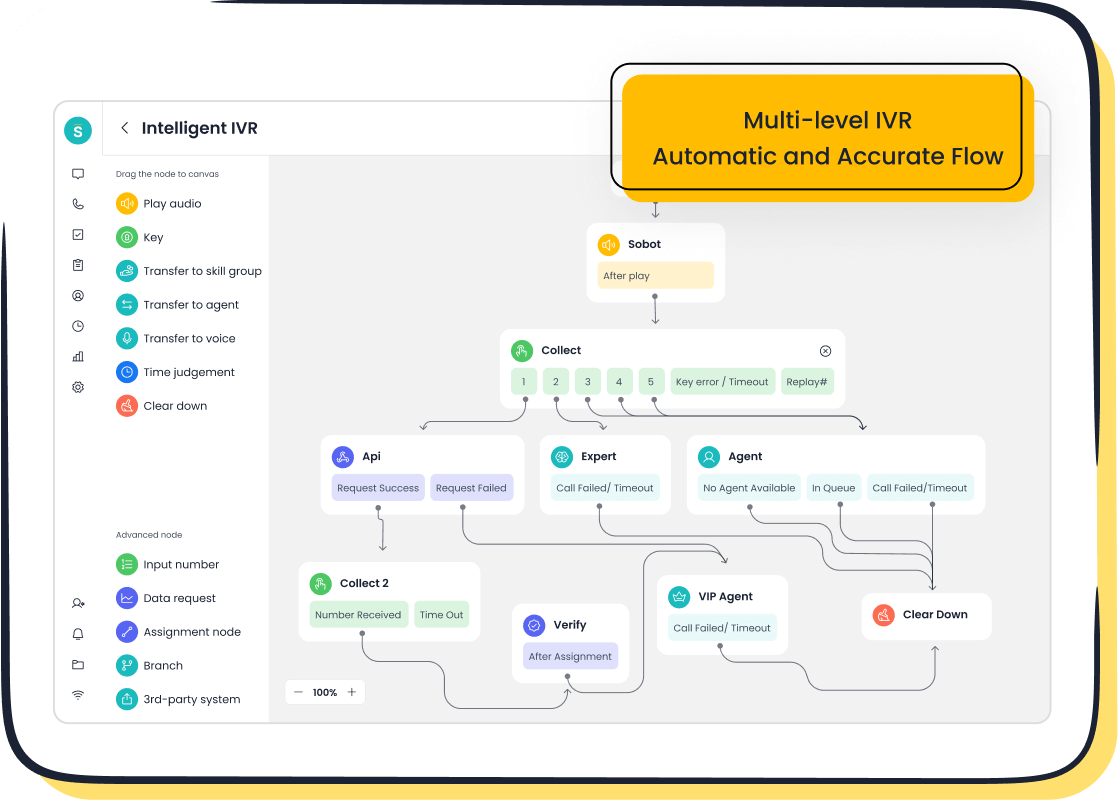
You can start improving your online store by tracking ecommerce metrics and key performance indicators. Sobot’s omnichannel platform gives you a clear view of your customer journey. You see product discovery rates, abandoned cart rate, and order completion rate in real time. Regular audits help you optimize reporting and focus on the most important performance indicators. Sobot’s dashboard lets you monitor shopping cart conversion rate and customer retention rate. You gain insights into customer behavior and spot trends quickly.
Turning KPI Data into Action
You can use KPI data to make your ecommerce business stronger. Focus on key performance indicators at every step of the customer journey. A data-driven approach helps you predict what customers need. You can:
- Audit your reporting practices and improve how you track essential KPIs.
- Analyze cart abandonment patterns to understand why customers leave.
- Maximize revenue at every touchpoint by acting on insights.
- Implement multi-touch attribution to assess campaign performance.
- Calculate customer acquisition cost and evaluate customer lifetime value.
These steps help you boost conversion rate and create a better experience for your customers.
Sobot Voice/Call Center for KPI Management
Sobot’s Voice/Call Center makes KPI management easy. The platform offers real-time monitoring and analysis. You track response times, resolve routine inquiries faster, and improve agent efficiency. Businesses using Sobot report up to 30% cost savings and a 15-20% increase in conversion rates. Agent productivity rises by 94%, and customer issue resolution speeds improve by 92%. The system resolves 70% of inquiries and helps brands personalize service, leading to a 15% revenue increase. Improved customer satisfaction scores show the value of Sobot’s solution for ecommerce.
| Benefit Description | Measurable Impact |
|---|---|
| Cost savings | Up to 30% reduction |
| Efficiency improvements | 30-40% higher agent efficiency |
| Conversion rate increase | 15-20% higher conversion rate |
| Customer satisfaction | Higher satisfaction scores |
Tip: Use Sobot’s tools to track ecommerce performance KPIs and turn data into action for your online store.
Best Practices and Common Mistakes in KPI Management
Avoiding KPI Pitfalls
You can improve your ecommerce performance KPIs by avoiding common mistakes. Many businesses focus only on numbers and forget about qualitative factors. Some set broad objectives that do not lead to specific actions. Others expect one metric to show everything or fail to connect KPIs to their strategy. Insufficient feedback can cause teams to lose faith in their goals. The table below highlights frequent mistakes:
| Mistake Description | Source Link |
|---|---|
| Focusing solely on numbers without considering qualitative factors. | Databox |
| Setting overly broad objectives that hinder specific action. | Databox |
| Insufficient feedback leading to loss of faith in goals. | Databox |
| Expecting a single metric to provide a complete picture of performance. | Atomic Revenue |
| Failing to link KPIs to overall strategy and goals. | Atomic Revenue |
You should use KPIs as indicators and diagnostics, not as goals. Create groups of related metrics that support a common purpose. Set triggers so you know when to act.
Setting Realistic KPI Goals
You need to set realistic goals for your ecommerce performance KPIs. Use the SMART criteria:
- Specific: Define clear objectives, like "Increase monthly sales by 10%."
- Measurable: Track progress with metrics such as Net Promoter Score.
- Achievable: Make sure goals match your resources and past results.
- Relevant: Align goals with your business strategy and market needs.
- Time-bound: Set deadlines, for example, "Reduce website loading time by 30% in one month."
Choose KPIs that match your objectives. Track them accurately and ensure they are actionable. Select the right analytics platform to evaluate your marketing funnel and monitor ROI. This helps you manage customer acquisition cost and improve customer lifetime value.
Continuous Improvement with Sobot
You can achieve continuous improvement by regularly measuring and evaluating ecommerce performance KPIs. Sobot’s platform helps you maintain focus on growth and optimize user experience. Enhanced user experience increases conversion rates and customer retention rate. Sobot provides ongoing support and resources, including real-time monitoring, automated feedback collection, and actionable insights. Businesses using Sobot report an 83% issue resolution rate, a 57% increase in repurchase behavior, and a 40% drop in support tickets within three weeks. You capture over 200 qualified leads per month. Sobot’s tools help you elevate your ecommerce performance KPIs and drive long-term success.
Tip: Continuous improvement in KPI management leads to sustained revenue growth and profitability.
Understanding and tracking ecommerce performance KPIs helps you spot areas for improvement and boost customer satisfaction. The table below highlights key takeaways:
| Key Takeaway | Explanation |
|---|---|
| Importance of KPIs | Tracking KPIs identifies where to improve customer service. |
| Enhancing Customer Satisfaction | Evaluating metrics increases loyalty and retention. |
| Identifying Flaws | Monitoring KPIs helps you fix issues quickly. |
| Customer Satisfaction Score | CSAT shows how customers feel about your service. |
Sobot’s solutions help you reduce costs, improve response times, and deliver personalized experiences. 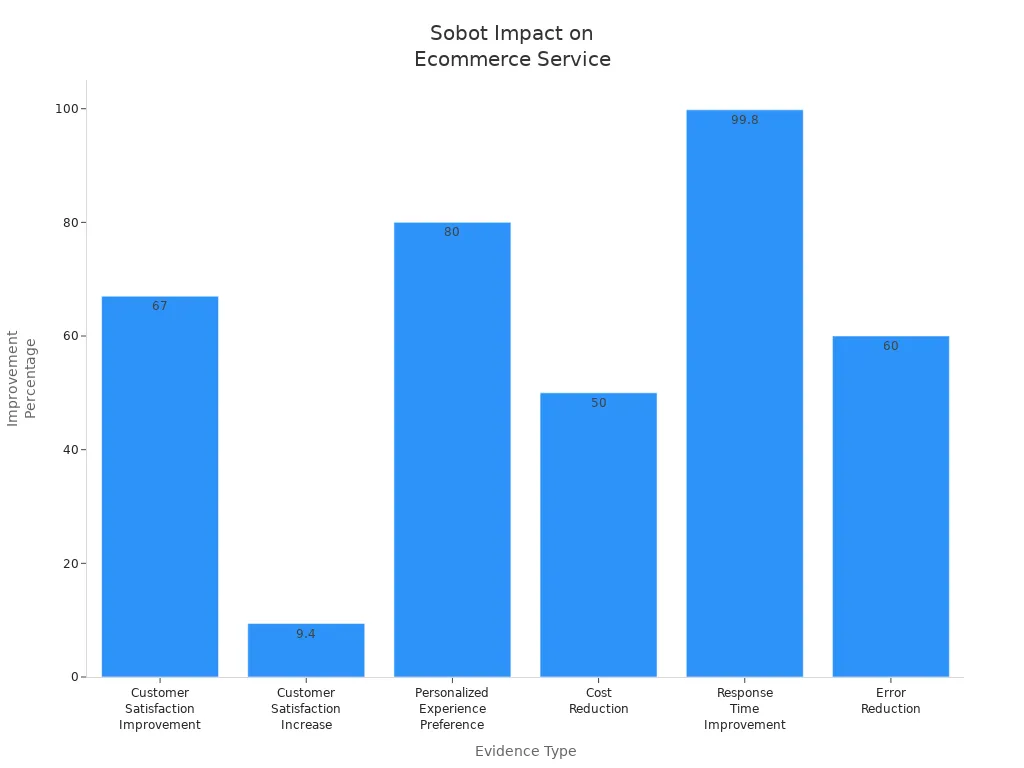 You can provide 24/7 support, consistent messaging, and valuable data insights. Start your journey with Sobot today and see how you can transform your ecommerce customer service.
FAQ
What are ecommerce performance KPIs?
You track ecommerce performance KPIs to measure how well your online store meets goals. These indicators help you understand customer satisfaction, sales, and service quality. Sobot’s platform lets you monitor these KPIs in real time for better results.
How does Sobot help improve response time?
Sobot’s Voice/Call Center uses AI-powered routing and automation. You connect customers to the right agent quickly. Real-time monitoring helps you track and improve response times, making your service faster and more reliable.
Can I track order accuracy with Sobot?
You can track order accuracy using Sobot’s unified workspace. The system displays customer data and order details for agents. Automated call tracking and recording help you review and fix mistakes, leading to higher accuracy.
Why is customer satisfaction score important?
Customer satisfaction score shows how happy your customers feel after an interaction. You use this score to spot issues and improve service. Sobot collects feedback automatically, helping you raise satisfaction levels and build loyalty.
Does Sobot support multiple ecommerce channels?
Sobot supports multiple channels, including voice, chat, email, and WhatsApp. You manage all customer interactions in one platform. This unified approach helps you deliver consistent service across your ecommerce business.
See Also
Enhancing Sales Through Ecommerce Live Chat Solutions
Increasing Customer Satisfaction With E-commerce Chatbots
Best Live Chat Solutions for Ecommerce This Year

