The Risks and Rewards of AI Chatbot Support

AI chatbots are rapidly changing customer service. Businesses see the promise of great efficiency. However, they also see the risk of an impersonal customer experience. This guide explores the pros and cons of AI customer service. The goal is not to replace people, but to support them.
The best strategy is intelligent augmentation. This approach boosts your team's power. It creates superior customer support.
Solutions like the Sobot chatbot are designed for this balance. They help create effective ecommerce chatbot solutions, enhancing interactions without losing the human touch.
The Rewards of AI in Customer Service

Implementing AI in customer service offers significant advantages. Businesses can improve operations and customer satisfaction. These rewards transform the support experience from a cost center into a value driver.
24/7 Availability & Instant Responses
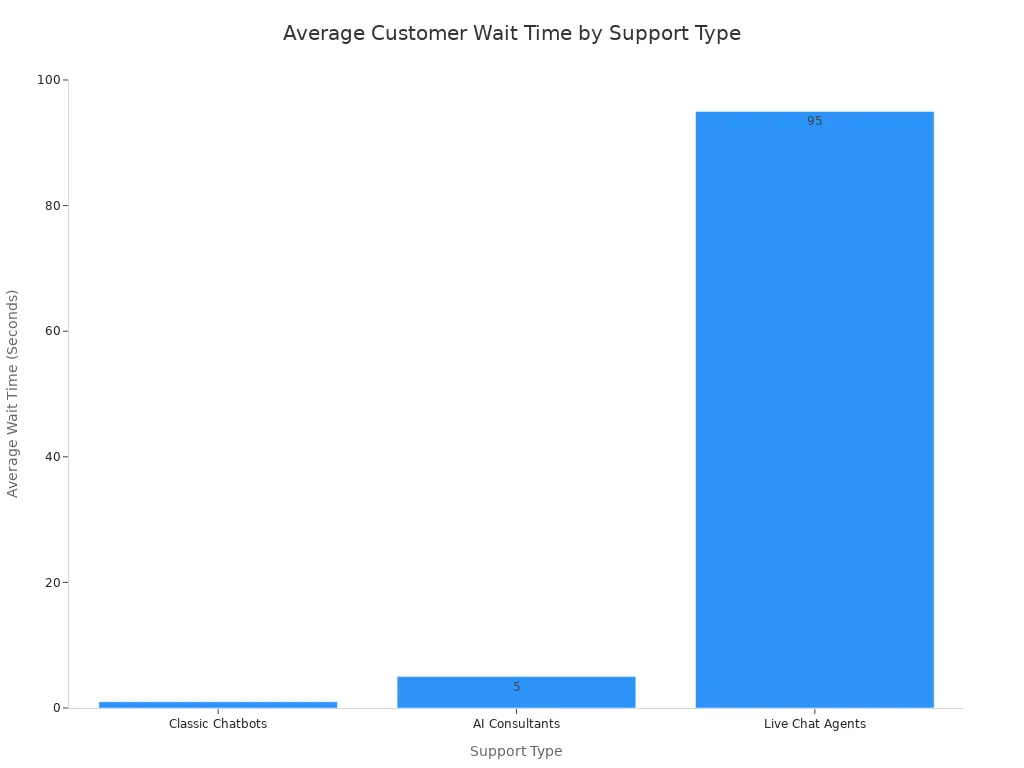
Customers expect answers now, not later. Human agents have work hours. AI chatbots offer 24/7 support. This means your business is always open to help. This constant availability builds trust and loyalty. AI customer service also provides instant replies. Customers no longer wait in long queues. The difference in response time is dramatic.
Increased Efficiency and Cost Savings
Automation is a core benefit of AI in customer service. AI-powered chatbots handle common questions. This frees up human agents for complex problems. This teamwork boosts team effectiveness. Sobot's chatbot, for example, can improve productivity by 70%. This efficiency also leads to major cost reductions. Businesses can save up to 50% on agent costs by using a chatbot for 24/7 support.
Success Story: OPPO Smart device leader OPPO used Sobot to manage high inquiry volumes. The results show the power of human-machine cooperation. OPPO achieved an 83% chatbot resolution rate. This efficiency contributed to more positive chatbot experiences and a 57% increase in their repurchase rate.
Scalable Customer Communication
Your business needs a customer service solution that grows with you. AI chatbots are highly scalable. They can handle a sudden surge in questions during sales events like Black Friday.
- They instantly answer questions about shipping, returns, and inventory.
- This automation resolves up to 80% of inquiries during peak loads.
A platform like Sobot is built for this scale. It manages millions of daily communications for its clients. This ensures your customer service quality remains high, no matter how busy you get.
Data-Driven Business Insights
Every chatbot interaction is a source of valuable data. AI customer service tools analyze these conversations to uncover trends. This helps you understand your customers better. You can identify:
- Common customer pain points.
- Sentiment shifts during conversations.
- Opportunities for product improvement.
This information allows you to make smarter business decisions. You can refine your services and proactively address issues. This turns your customer service department into a hub of business intelligence.
The Risks in AI Customer Support

While the rewards are clear, AI in customer service also presents challenges. Businesses must understand these risks to build a successful strategy. Ignoring them can harm the customer experience and waste resources.
Lack of Human Empathy
AI chatbots cannot replicate genuine human emotion. A chatbot may respond to a user's distress with an unhelpful link or a clarifying question. This lack of empathy can make customers feel unheard. For example, some commercial chatbots respond to emotional users by:
- Providing general information about a topic.
- Asking if they understood the user correctly.
- Simply stating, "Sorry, I don’t know that."
This robotic interaction can damage trust and lower customer satisfaction. It highlights a key limitation in ai customer service.
Implementation and Maintenance Hurdles
Deploying an effective chatbot is not a simple task. A major challenge is accurately understanding user intent, especially with slang or complex questions. Integrating the chatbot with existing systems like your CRM can also be difficult. Ongoing maintenance is another hurdle. Keeping a sophisticated chatbot running can cost between $16,000 and $80,000 annually. These costs cover platform licenses, updates, and performance monitoring.
Security and Privacy Concerns
AI customer service platforms handle large amounts of user data. This creates significant data security risks. Without proper safeguards, sensitive information could be exposed. Malicious actors can also manipulate chatbots to create convincing phishing emails.
Strong data security is essential for maintaining user trust. Businesses must ensure their customer support solutions comply with regulations like GDPR. This involves getting clear user consent and having robust encryption in place.
Potential for Customer Frustration
A poorly designed chatbot can quickly frustrate users. Customers get annoyed when a chatbot gives irrelevant answers or gets stuck in a loop. Phrases like "can I speak to a human?" are clear signs of a failing customer experience. This frustration happens when ai chatbots lack good training data, have no clear path to a human agent, or fail to offer any real personalisation. This ultimately hurts the quality of your customer service.
Finding the Balance with Ecommerce Chatbot Solutions
The key to success with AI in customer service is not choosing between automation and people. It is about creating a partnership between them. A hybrid model combines the strengths of both. This approach creates powerful ecommerce chatbot solutions that improve the customer journey.
A truly effective strategy integrates multiple tools into one seamless system. Sobot’s platform achieves this by unifying its Chatbot, Live Chat, and Ticketing System. A customer can start with a chatbot for a quick answer. The chatbot can then smoothly transfer the conversation to a live agent if needed. The entire history is saved in a ticket for future reference. This creates a complete and efficient system for customer assistance.
This integrated approach mitigates the risks of AI while maximizing its rewards.
Clear Escalation Paths to Human Agents
A chatbot should never be a dead end. When a customer needs more help, the path to a human agent must be clear and easy. A frustrating transfer can ruin the customer experience. The best ecommerce chatbot solutions design this handoff carefully.
Best practices for a smooth escalation include:
- Preserving Context: The human agent should receive the full chatbot conversation history. This prevents customers from having to repeat themselves.
- Being Transparent: Let the customer know they are being transferred and why. Provide updates on wait times to manage expectations.
- Using Intelligent Routing: Use automation to send the customer to the right agent or department based on their issue.
- Proactively Offering Help: An intelligent chatbot can detect frustration through repeated questions or negative language. It can then proactively offer to connect the user with a person.
A seamless transition from chatbot to human customer support is a sign of excellent customer service design.
Training AI and Staff for Collaboration
Implementing a chatbot is not just a technical task. It requires training both the AI and your team. Your staff must learn to work with their new digital teammate. Effective training helps agents understand how to get the most out of the AI.
- Agents should learn how to write clear prompts to get accurate information from the AI.
- They can provide feedback to help the AI copilot improve over time.
- Realistic simulations allow agents to practice interacting with the AI in a safe environment.
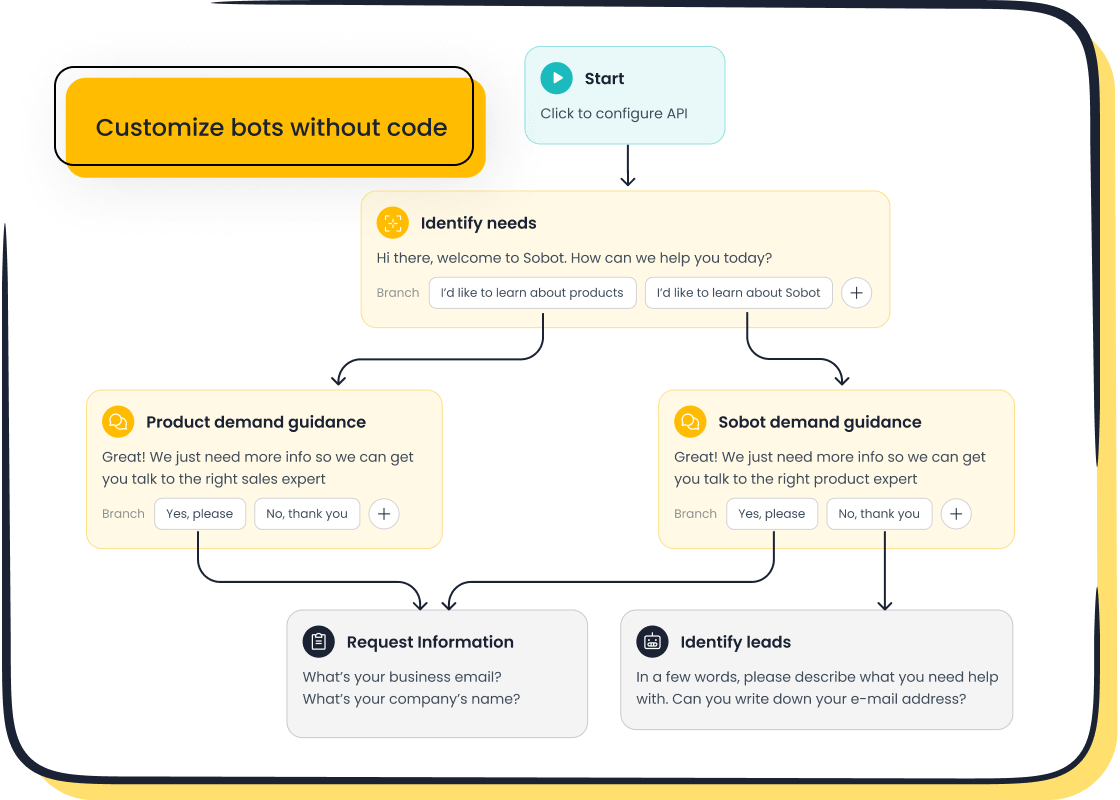
At the same time, setting up the AI should not be a major hurdle. Modern platforms lower this barrier. For example, Sobot’s chatbot uses a no-code, point-and-click builder. This allows businesses to design and launch a chatbot without needing a team of developers. You can train the chatbot by simply uploading existing documents like FAQs and PDFs. This makes powerful automation accessible to more businesses.
Choosing the Right Use Cases for Automation
Automation is a powerful tool, but it is not right for every task. The best strategy is to automate the simple and repetitive, freeing up humans for the complex and emotional. This balance is essential for quality ai customer service.
Tasks well-suited for ai-powered chatbots include:
- Answering frequently asked questions (e.g., "Where is my order?").
- Handling up to 30% of tickets that are structured and predictable.
- Routing support tickets to the correct department.
- Gathering initial customer information before a human agent takes over.
However, some situations always need a human touch. A report from Five9 found that 75% of consumers prefer speaking with a human for customer support. Human agents should handle:
- Complex problems that require critical thinking.
- Emotionally charged or sensitive issues.
- Urgent or critical situations.
- Any time a customer directly asks to speak with a person.
Knowing when to use automation and when to rely on human expertise is the foundation of a smart ai customer service strategy.
How Sobot Empowers Human Agents
The goal of ai chatbots should be to augment human agents, not replace them. The right tools make your team faster, smarter, and more effective. This is where features like an AI copilot become invaluable.
Sobot’s AI copilot acts as a real-time assistant for customer service agents. It helps in several ways:
- Input Analysis: The AI uses Natural Language Processing (NLP) to understand the customer's question.
- Context Retrieval: It instantly scans the company’s knowledge base to find the most relevant, verified information.
- Response Generation: The AI drafts an accurate, contextual reply for the agent.
- Human Review: The agent reviews, edits, and approves the response before sending it.
This process dramatically improves agent performance. It reduces the mental effort needed for finding information, allowing agents to focus on problem-solving and building rapport. The AI ensures accuracy and consistency, leading to better personalisation and higher customer satisfaction. By handling tedious tasks like summarizing calls and drafting replies, the AI copilot empowers agents to provide exceptional customer service.
Measuring the Success of Your AI Chatbot
Deploying a chatbot is just the first step. To ensure it adds real value, you must measure its performance. Tracking the right data helps you understand what works, what does not, and how to improve your ai customer service. This turns your chatbot from a simple tool into a strategic asset.
Key Performance Indicators (KPIs) to Track
Focusing on the right metrics gives you a clear picture of your chatbot's effectiveness. Vanity metrics can be misleading. Instead, track KPIs that show the true impact on your customer service operations.
Key metrics like Resolution Rate and Customer Satisfaction (CSAT) provide an honest view of performance. They reveal what truly works and what needs improvement.
Important KPIs include:
- Resolution Rate: The percentage of issues your chatbot solves without any human help.
- Containment Rate: The percentage of conversations handled entirely by the chatbot.
- Customer Satisfaction (CSAT) Score: Direct feedback from users on their interaction.
- Fallback Rate: How often the chatbot fails to understand a user's question.
Gathering and Analyzing Customer Feedback
Quantitative data tells you what is happening. Qualitative feedback tells you why. Collecting customer opinions is essential for improving the customer experience and achieving high customer satisfaction.
Effective methods for gathering feedback include:
- In-Conversation Prompts: Ask simple questions like "Was this helpful?" directly in the chat.
- Post-Interaction Surveys: Use short surveys with star ratings and open-ended comments after a conversation ends.
- Analyzing Conversation Patterns: Look for where users abandon conversations or repeat questions. This reveals points of friction.
This feedback is crucial for creating positive chatbot experiences and better personalisation.
Continuous Improvement and Iteration
A successful chatbot is never finished. It requires constant refinement based on data and feedback. A/B testing is a powerful method for this. It involves comparing two versions of a conversation flow to see which one performs better. By testing different greetings, questions, or button options, you can optimize user engagement and resolution rates. This data-driven approach ensures your chatbot evolves to meet customer expectations and deliver better results over time.
The goal of ai customer service should be augmentation, not replacement. The greatest reward comes from a smart partnership. This combines the efficiency of a chatbot with the empathy of human agents. Platforms like Sobot create powerful ecommerce chatbot solutions by balancing automation and the human touch. This hybrid approach improves the quality of your customer support. Ready to build a better system? Embark on Your Contact Journey.
FAQ
What is the main purpose of an AI chatbot?
An AI chatbot automates customer conversations. It answers common questions on its own. This helps businesses improve their efficiency. The chatbot also assists human agents with their work, making the entire support team more productive.
Do I need to know how to code to build a chatbot?
No, coding is not always necessary. Many modern platforms offer a no-code, point-and-click interface. This allows you to design and launch a chatbot using simple building blocks. You can create automated workflows without any programming experience.
How do chatbots save businesses money?
Chatbots operate 24/7 without needing a human agent. They handle many routine questions at once. This reduces the need for a larger support staff. Businesses can save significantly on agent costs while still providing constant support.
Can a chatbot speak multiple languages?
Yes, many AI chatbots are multilingual. They can detect a customer's language and respond correctly. This feature allows businesses to serve a global audience. It helps create a better customer experience for people around the world.
See Also
Discover Ten Key Advantages of Integrating a Chatbot on Your Site
Essential Advantages of Incorporating a Chatbot Into Your Web Presence
Your Comprehensive Guide to Selecting the Ideal Chatbot Software Solution
Building an Effective Chatbot for Optimal Website Performance and Growth
Elevating E-commerce Customer Happiness Through Strategic Chatbot Implementation

