Weighing the Pros and Cons of Chatbot Platforms


Choosing the right technology is crucial for your ecommerce business. You face a key choice: the powerful efficiency of an ecommerce chatbot platform versus the irreplaceable value of human connection. Your customer expects instant support, as 89% of shoppers now want 24/7 availability. AI chatbots offer a solution, but they come with pros and cons. This guide helps you weigh the pros against the cons of using chatbots from providers like Sobot to find the right balance for your customer.
The Pros of an Ecommerce Chatbot Platform

An ecommerce chatbot platform offers significant advantages for your business. These tools provide more than just automated answers; they are a strategic asset for growth. Let's explore the pros of using chatbots to enhance your operations and customer relationships.
24/7 Customer Availability
Your customers shop at all hours, not just from 9 to 5. An ecommerce chatbot platform ensures you are always available to help them. This constant presence meets a critical customer expectation. In fact, over half of consumers will choose a bot for immediate responses, preferring AI for speed and simple questions.
AI-powered chatbots provide round-the-clock support. They answer questions and resolve issues instantly, even outside of standard business hours. This responsiveness is key to a positive customer service experience. You can offer support across different time zones without needing a global team of agents. This ensures every customer receives timely help, which builds trust and loyalty.
Reduce Operational Costs
Hiring, training, and retaining a large customer service team is expensive. High turnover rates in support roles, often between 30-45% annually, add to these costs. AI chatbots offer a cost-effective alternative. Conversational AI is projected to save businesses $80 billion in contact center labor costs by 2026.
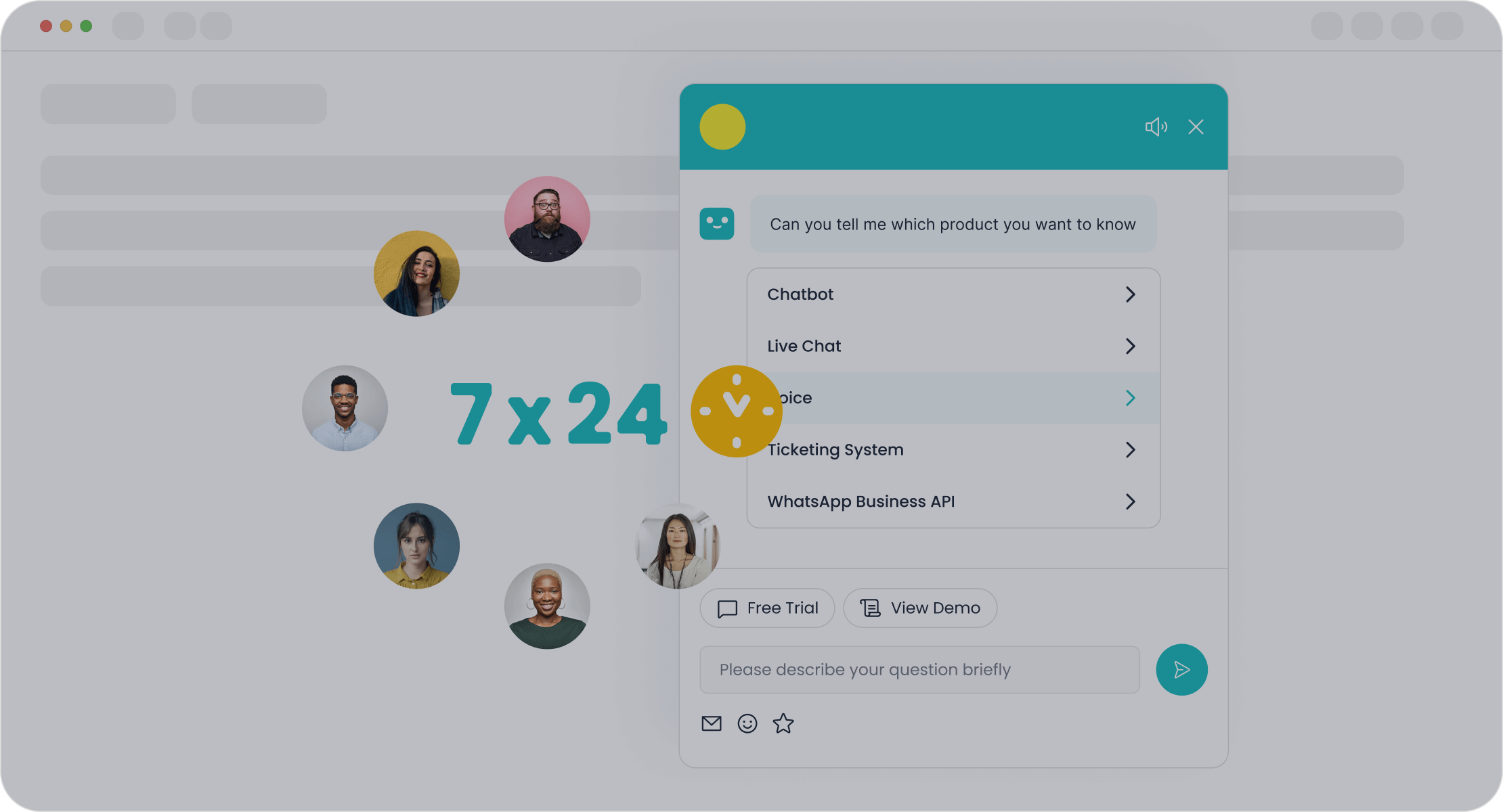
Platforms like Sobot's AI Chatbot can significantly lower your expenses. By automating routine inquiries, these chatbots allow you to manage support with a smaller, more focused team. Sobot helps businesses save up to 50% on agent costs and improves team productivity by 70%. The AI handles repetitive tasks, freeing your human agents to focus on complex problems that require a personal touch. This human-machine collaboration creates a more efficient and effective customer service operation.
Boost Sales in Ecommerce
Chatbots are powerful tools for driving revenue. They do more than just answer questions; they actively guide customers through their buying journey. Proactive engagement with AI chatbots can increase ecommerce conversion rates from an average of 3.1% to 12.3%—a fourfold increase.
Here’s how AI-driven chatbots can increase your sales:
- Upselling and Cross-selling: Chatbots can suggest complementary products or premium upgrades. For example, if a customer adds a camera to their cart, the bot can recommend a compatible lens or a protective case. These timely suggestions feel helpful, not pushy, and can increase the average order value.
- Recovering Abandoned Carts: Many shoppers leave items in their cart without completing the purchase. AI chatbots can send automated reminders to these customers. They can answer last-minute questions about shipping, offer a small discount, or clarify your return policy to encourage them to finalize their order.
- Personalized Recommendations: By asking targeted questions about a customer's needs and preferences, chatbots can provide tailored product suggestions. This creates personalized experiences that make shoppers feel understood and valued.
Solutions like Sobot's AI Chatbot are designed to turn conversations into conversions. Its smart self-service and proactive messaging can boost conversions by 20% and help you generate 30% more leads. This makes the chatbot a vital part of your sales strategy.
Scale Support Effortlessly
Your business experiences peaks and valleys in customer demand. During holidays, sales events, or viral marketing campaigns, customer inquiries can skyrocket. Scaling a human support team to meet this demand is difficult and costly. AI chatbots, however, scale instantly.
During peak sales seasons, AI solutions offer effortless scalability. Businesses using AI agents have reported reducing staffing needs by as much as 68% during these busy times.
An AI chatbot can handle thousands of conversations at once without any drop in performance. Whether it's ten queries or ten thousand, the response time and quality remain consistent. This ensures every customer gets the help they need, no matter how busy you are.
A great example of this is OPPO, a leading smart device company. During peak shopping festivals, they faced a massive surge in customer inquiries. By implementing Sobot's solution, they used chatbots to handle repetitive questions. This allowed them to achieve an 83% chatbot resolution rate and a 57% increase in repurchase rate. This success story shows how you can scale your support and improve customer loyalty at the same time.
Gather Actionable Data Insights
Every interaction a customer has with your chatbot is a source of valuable data. AI-powered chatbots collect and analyze this information, giving you deep insights into your customers' needs, preferences, and pain points. This data is a goldmine for improving your business.
You can use chatbot analytics to:
- Improve Products: Identify common complaints or suggestions about your products. If many customers ask for a different color or size, you know what to develop next.
- Optimize Your Ecommerce Website: Discover where customers get stuck on your ecommerce website. If they frequently ask for help finding the checkout page, you can make it more prominent.
- Enhance Customer Service: Pinpoint recurring issues and create permanent solutions. This reduces the number of future inquiries and improves overall customer satisfaction.
- Personalize Marketing: Understand what your customers are looking for. This allows you to create targeted marketing campaigns that speak directly to their interests.
By analyzing trends in customer conversations, you can make data-driven decisions that enhance the entire customer journey. This continuous feedback loop helps you stay ahead of the competition and deliver a superior personalized customer experience.
The Cons of Using AI Chatbots

While the benefits are compelling, you must also consider the drawbacks before integrating an ecommerce chatbot platform. Understanding these cons helps you create a balanced strategy that avoids common pitfalls. These challenges highlight why a purely automated approach may not always be the best fit for your business or your customer.
Lacks Empathy in Customer Interactions
AI chatbots operate on logic and data, not emotion. This is their biggest strength and their most significant weakness. When a customer is frustrated, confused, or upset, they often need more than just a quick answer; they need empathy. AI, in its current form, cannot replicate the genuine understanding and compassion of a human agent. This emotional gap can turn a difficult situation into a negative customer service experience.
Furthermore, AI struggles with the nuances of human language. Sarcasm, idioms, and cultural references can easily confuse chatbots. Harsh Jhamtani, a researcher at Carnegie Mellon, notes that AI cannot derive the meaning of a phrase like "piece of cake" from the words alone. This reliance on literal interpretation can lead to awkward or incorrect responses. For example:
- A sarcastic review like, "Life-changing!" for a broken product might be logged as positive feedback.
- A comment such as, "Oscar-worthy performance," on a terrible movie could be misinterpreted as genuine praise.
- When a user joked about being a "cougar," one AI model literally replied, "i’m not scared of any cats," completely missing the figurative meaning.
These errors show that while AI is powerful, it lacks the shared cultural and common-sense knowledge that makes human interaction so effective.
Complexity Limits for Chatbots
Chatbots excel at handling simple, repetitive questions. However, they often hit a wall when faced with complex or multi-step problems. A customer might have an issue that requires pulling information from multiple orders, understanding a unique situation, or thinking outside of a pre-programmed script. These are areas where chatbots falter.
According to CCW Digital, the number one frustration for consumers is difficulty explaining their issue to a bot. Fewer than two in five consumers feel confident in AI self-service for support. This lack of confidence is justified when you look at performance data.
| Task Type | Channel | Score Range (0-100) |
|---|---|---|
| Basic | Digital | 49-72 |
| Basic | Human Agents | 44-54 |
| Complex | Digital | 31-53 |
| Complex | Human Agents | 44-63 |
Source: Bain’s NPS Prism
As the table shows, digital channels (like chatbots) underperform significantly compared to human agents on complex issues. This is why a clear escalation path is crucial. Even well-designed AI-powered chatbots have an escalation rate of 10-30%, meaning that many conversations still require a human touch to reach a resolution. Using chatbots for everything can lead to customer frustration and damage your brand's reputation.
Initial and Ongoing Investment
Implementing an ecommerce chatbot platform is not free. There are both initial setup costs and continuous maintenance expenses to consider. The price can vary dramatically based on the level of sophistication you need for your ecommerce website.
A simple, rule-based chatbot might have a lower entry cost, but a more advanced AI solution requires a larger upfront investment. The chart below shows how costs can escalate with complexity.
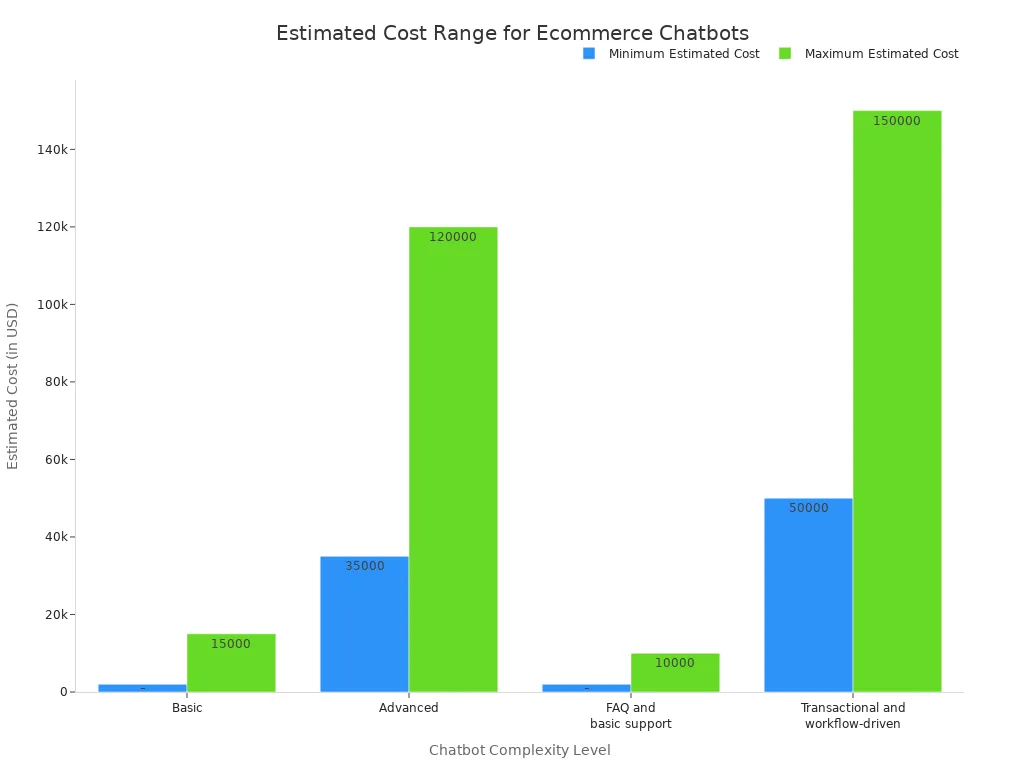
Beyond the initial build, you must budget for ongoing costs. These can include:
- Monthly Subscriptions: AI-powered chatbots can range from $800 to over $10,000 per month.
- Maintenance and Updates: Custom-built bots may require $1,000 to $5,000 annually for routine maintenance.
- AI Model Retraining: To keep your AI sharp, retraining models can cost $2,000 to $10,000 per quarter.
While the return on investment can be significant—sometimes reaching 300-400% within two years—you must be prepared for the financial commitment. Carefully weighing the pros and cons of this investment is essential for any business.
Data Privacy and Security Risks
When you use chatbots, you are collecting customer data. This data can include names, email addresses, and conversation logs. Protecting this information is not just good practice; it is a legal requirement. A data breach can be devastating, leading to financial penalties, loss of customer trust, and severe damage to your brand.
Recent incidents show these risks are real. For example, a hacker claimed to have breached the AI service OmniGPT, exposing over 34 million lines of conversation logs and thousands of user records. Such events highlight the security vulnerabilities inherent in using chatbots.
To protect your business and your customer, you must comply with data privacy regulations like GDPR in Europe and CCPA in California. These laws have strict rules for how you handle personal data.
A Key Principle: Data Minimization Your chatbot should only collect the information that is absolutely necessary for its intended purpose. You should avoid collecting unnecessary details and have a policy to regularly delete or anonymize data that is no longer needed.
To ensure security, you must implement robust measures. This includes using strong encryption for data, managing who has access to it, and conducting regular security audits. Partnering with a provider that prioritizes security and compliance is critical for mitigating these risks and building a trustworthy customer service operation.
Choosing an ecommerce chatbot platform involves a clear trade-off. You gain efficiency with AI chatbots but risk losing the human touch. The best path for your ecommerce business depends on your unique needs. A hybrid strategy offers a powerful solution. This approach combines the strengths of artificial intelligence and human agents. You can use chatbots for routine tasks and save your team for complex customer interaction. This creates an ideal customer service experience. Solutions like Sobot's ecommerce chatbot platform help you build this balanced system, boosting both customer engagement and your bottom line.
FAQ
What is the main purpose of an AI chatbot?
You use an AI chatbot to automate customer conversations. It solves common questions on its own. It also assists your support agents. This improves your team's overall productivity and efficiency.
Do I need coding skills to set up a chatbot?
No, you do not need coding experience for many modern platforms. For example, Sobot's AI Chatbot uses a simple point-and-click interface. You can design and launch automated workflows easily.
Can chatbots completely replace my human support team?
Chatbots handle simple, repetitive tasks very well. However, they cannot replace the empathy and complex problem-solving skills of human agents. A hybrid model, combining AI with human support, offers the best results.
How do chatbots help increase sales?
They boost sales through smart, proactive engagement. Chatbots can offer personalized product recommendations and send abandoned cart reminders. This active assistance helps turn browsing visitors into paying customers.
See Also
Selecting the Optimal Chatbot Software: A Comprehensive Guide for Businesses
Unlocking Key Advantages: Integrating Chatbots for Enhanced Website Performance
Effortlessly Deploying Website Chatbots: Practical Examples for Quick Implementation
Discovering the Top Ten Advantages of Website Chatbot Integration
Exploring Ten Key Benefits of Integrating Chatbots into Your Website

