Boost Engagement with Digital Tools


A powerful customer engagement strategy relies on the right digital tools. Today, 80% of customers believe the experience you provide is as vital as your products. This guide offers actionable customer engagement strategies to improve customer loyalty and revenue. You will see how digital communication tools for customer engagement, from the Sobot call center to Sobot AI, help brands like OPPO perfect their digital customer engagement. Mastering your customer journey across all digital channels creates a foundation for lasting digital customer engagement.
Understanding Digital Customer Engagement
Defining Digital Engagement
Digital customer engagement is the ongoing conversation you have with your customers across all online channels. It includes every interaction on your website, social media, email, and live chat. This process is not just about a single sale. It focuses on building strong and lasting client relationships throughout the customer's entire journey with your brand. A great digital customer engagement strategy helps you deliver personalized content, offer support, and create a positive customer experience in real time.
The Core Benefits: Loyalty and Revenue
Effective digital customer engagement delivers two critical business outcomes: greater customer loyalty and increased revenue. It is important to understand that engagement is different from customer satisfaction. Satisfaction measures if you met a customer's expectations, while engagement builds an emotional connection.
| Feature | Customer Satisfaction | Customer Engagement |
|---|---|---|
| Focus | Measures the gap between expectations and perceptions | Fosters emotional investment and ongoing interactions |
| Impact on Loyalty | Weak; customers may switch for a better price | Strong; engaged customers are more loyal |
| Business Outcome | Less effective for long-term loyalty | Superior for retention, ROI, and profits |
This emotional investment is what turns a one-time buyer into a loyal advocate. A superior digital experience directly builds this connection.
- 80% of customers believe the experience a company provides is as essential as its products.
- 54% of customer-obsessed companies see better customer loyalty from their omnichannel efforts.
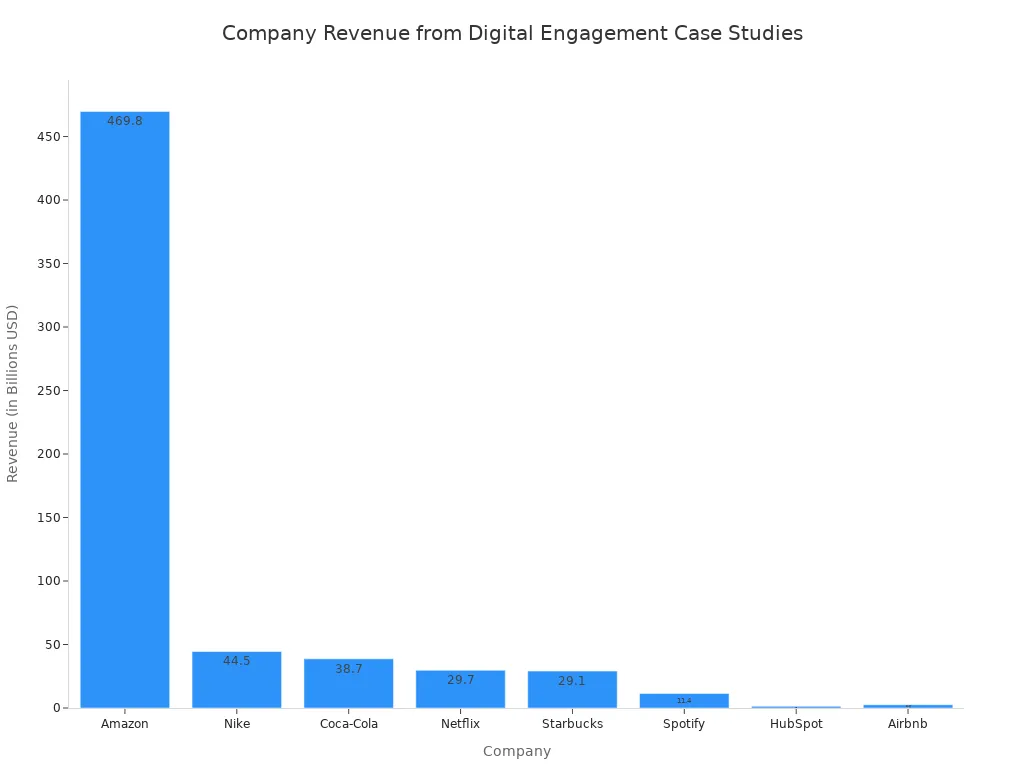
This loyalty translates directly into revenue. Engaged customers buy more often and are more likely to recommend you to others. Top brands like Starbucks and Nike use loyalty programs and mobile apps to drive engagement, resulting in billions in revenue.
Key Digital Communication Tools for Customer Engagement
An excellent digital customer engagement strategy requires the right tools. This section explores the key digital communication tools for customer engagement that help you connect with customers, personalize their experience, and drive growth.
CRM Systems: The Foundation of Personalization
A Customer Relationship Management (CRM) system is the foundation of your digital customer engagement efforts. It acts as a central database for all your customer information. This allows you to create a personalized experience for every user. Modern CRMs go beyond simply storing contact details.
A powerful CRM helps you:
- Build a 360-Degree Customer View: Store contact details, track interaction history across all digital channels, and understand customer behavior.
- Automate Marketing Efforts: Use features like email campaign automation, landing page builders, and A/B testing to refine your outreach.
- Leverage AI for Insights: Employ AI-driven personalization with features like predictive lead scoring and sentiment analysis to understand customer needs better.
- Integrate Communication Channels: Connect with tools for email, social media, live chat, and phone systems to create a unified view of all customer interactions.
With this data, you can segment customers into specific groups. For example, you can target long-term customers who haven't visited recently or send loyalty program offers to repeat buyers. This level of detail allows you to move beyond generic messages and craft campaigns that truly resonate, improving the overall customer experience.
Sobot Live Chat: Your Instant Connection
In today's fast-paced world, customers expect instant answers. Sobot Live Chat provides that immediate connection, turning your website into a dynamic conversation hub. It is one of the most effective digital communication tools for customer engagement. Websites using live chat have seen a 38% increase in conversions.
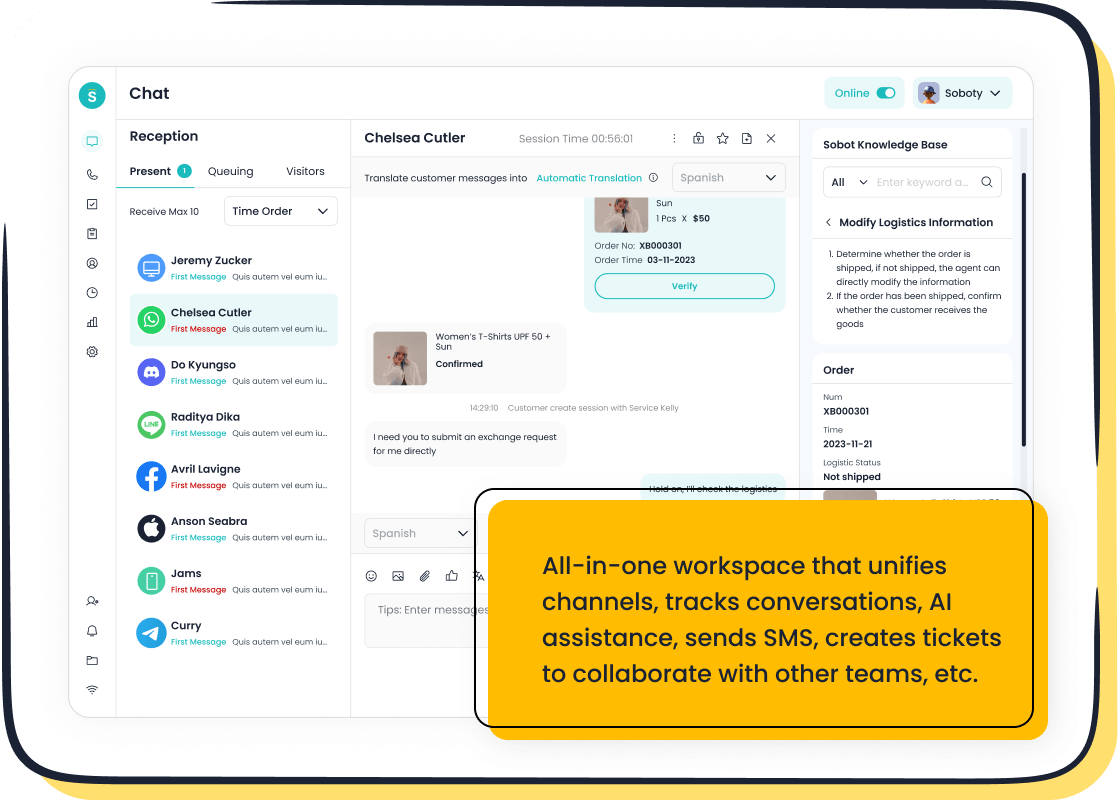
Sobot Live Chat stands out by offering a complete omnichannel communication solution. It unifies every customer conversation from your website, mobile app, and social media platforms like WhatsApp and Facebook into a single, streamlined workspace. This means your agents have the full context of a customer's journey, whether they start on social media and later send an email. This seamless flow builds trust and boosts loyalty. In fact, companies with strong omnichannel strategies retain 89% of their customers, a massive leap from the 33% for those with weak strategies.
Tip: Sobot's unified workspace gives agents a complete view of the customer journey. This speeds up response times by eliminating the need to search for information across different systems. AI-powered tools like instant suggestions and conversation summaries further boost agent efficiency.
By integrating with your CRM and other systems, Sobot Live Chat ensures every interaction is personal and informed. This creates a superior digital experience that drives both customer satisfaction and revenue.
AI Chatbots: Automate and Assist
AI chatbots work hand-in-hand with your human agents to enhance your digital customer engagement strategy. They offer 24/7 support, ensuring your customers can get help anytime, anywhere. This is crucial for global businesses operating across different time zones.
The primary benefits of using an AI chatbot include:
- Instant, 24/7 Support: Chatbots eliminate wait times by providing immediate answers around the clock.
- Scalability: They can handle a high volume of conversations simultaneously, which is perfect for product launches or peak shopping seasons.
- Reduced Agent Workload: By automating answers to common questions, chatbots free up your human agents to focus on more complex and high-value issues.
Sobot’s AI Chatbot is a key part of its all-in-one customer engagement software. It does more than just answer questions. The chatbot integrates with Sobot’s Ticketing System to automate workflows. When a query is too complex for the AI, it gathers all the necessary information before seamlessly handing the conversation over to a human agent. This ensures the agent has the full context to resolve the issue efficiently. Leading brands like OPPO use this human-machine cooperation to great effect, achieving an impressive 83% chatbot resolution rate.
Email Marketing: Nurture and Convert
Email remains one of the most powerful digital communication tools for customer engagement. It allows you to nurture leads, convert prospects, and build lasting relationships with your customers. Effective email marketing is all about sending the right message to the right person at the right time.
To create successful email campaigns, you should:
- Personalize Your Messages: Use data from your CRM to segment your audience and tailor content based on their behavior, interests, and purchase history.
- Automate Nurturing Workflows: Set up automated email sequences, or drip campaigns, that trigger based on user actions. This ensures timely and relevant communication throughout the customer journey.
- Test and Optimize: Use A/B testing to experiment with different subject lines, calls-to-action (CTAs), and content to see what resonates most with your audience.
Brands like PUMA have seen triple-digit revenue growth from email by using hyper-personalization and advanced segmentation. By focusing on delivering value in every email, you can turn your subscriber list into a loyal community and a significant revenue driver.
Analytics Tools: Measure and Improve
You cannot improve what you do not measure. Analytics tools are essential for understanding the effectiveness of your digital customer engagement strategy. They provide the data you need to make informed decisions and continuously optimize your approach across all digital channels.
Key metrics to track include:
- Session Duration and Pages Per Session: How long are visitors staying on your site?
- Conversion Rates: How many visitors complete a desired action, like making a purchase or filling out a form?
- Click-Through Rate (CTR): How many people are clicking on the links in your emails or ads?
- Social Media Engagement: How are users interacting with your content on social platforms?
Tools like Google Analytics provide a wealth of information, while specialized customer engagement software like Sobot offers built-in analytics to track agent performance and customer satisfaction in real time. By analyzing this data, you can identify which strategies are working and where you have opportunities to improve. For example, session recordings and heatmaps can show you exactly how users interact with your website, revealing areas of high interest or points of friction. This data-driven approach is the key to refining your digital channels and creating a better customer experience.
Actionable Strategies to Boost Engagement
Having the right tools is only half the battle. You need effective customer engagement strategies to turn those tools into tangible results. These four actionable strategies will help you build stronger relationships, boost loyalty, and drive revenue.
Strategy 1: Personalize Every Interaction
Today's customers expect you to know them. Generic, one-size-fits-all messages no longer work. Personalization is the key to making every customer feel seen and valued. It involves using customer data to tailor communications, offers, and the overall customer experience. When you personalize interactions, you show customers you understand their unique needs and preferences.
You can start by implementing simple but powerful tactics:
- Greet customers by name in emails and live chat sessions.
- Send customized automated emails, such as abandoned cart reminders with a special discount or product recommendations based on past purchases.
- Use human agents for complex issues where empathy and rapport-building are essential.
Many successful brands have mastered the art of AI-driven personalization to create unique personalized experiences.
| Brand | Personalization Strategy |
|---|---|
| Netflix | Uses machine learning to provide highly accurate content recommendations, keeping users engaged. |
| Adidas | Segments its email list by gender to send targeted promotions for relevant products. |
| Graze | Allows customers to rate snacks, using the data to curate personalized subscription boxes from millions of combinations. |
| Care/of | Offers 100% personalized vitamin plans based on a health quiz, adapting recommendations as the user's needs evolve. |
By collecting and using data effectively, you can transform your digital customer engagement from transactional to relational.
Strategy 2: Adopt an Omnichannel Approach
Your customers interact with your brand across many digital channels. They might discover a product on Instagram, ask a question on your website's live chat, and complete the purchase on their laptop. An omnichannel approach unifies these touchpoints to create one seamless and consistent customer journey. This strategy is crucial for a modern digital experience.
The benefits are clear. An omnichannel approach helps you:
- Build trust through consistent interactions, which boosts customer loyalty and retention.
- Gather better data from multiple touchpoints for a complete view of customer behavior.
- Increase sales by allowing customers to move effortlessly between channels.
Success Story: How OPPO Mastered Omnichannel Engagement Smart device leader OPPO partnered with Sobot to unify its global customer service. By combining Sobot's AI Chatbot and Ticketing System, OPPO created a powerful human-machine team. The results were phenomenal. They achieved an 83% chatbot resolution rate, freeing up human agents for complex issues. This seamless customer experience directly led to a 57% increase in their repurchase rate, proving that a strong omnichannel strategy drives both customer satisfaction and revenue.
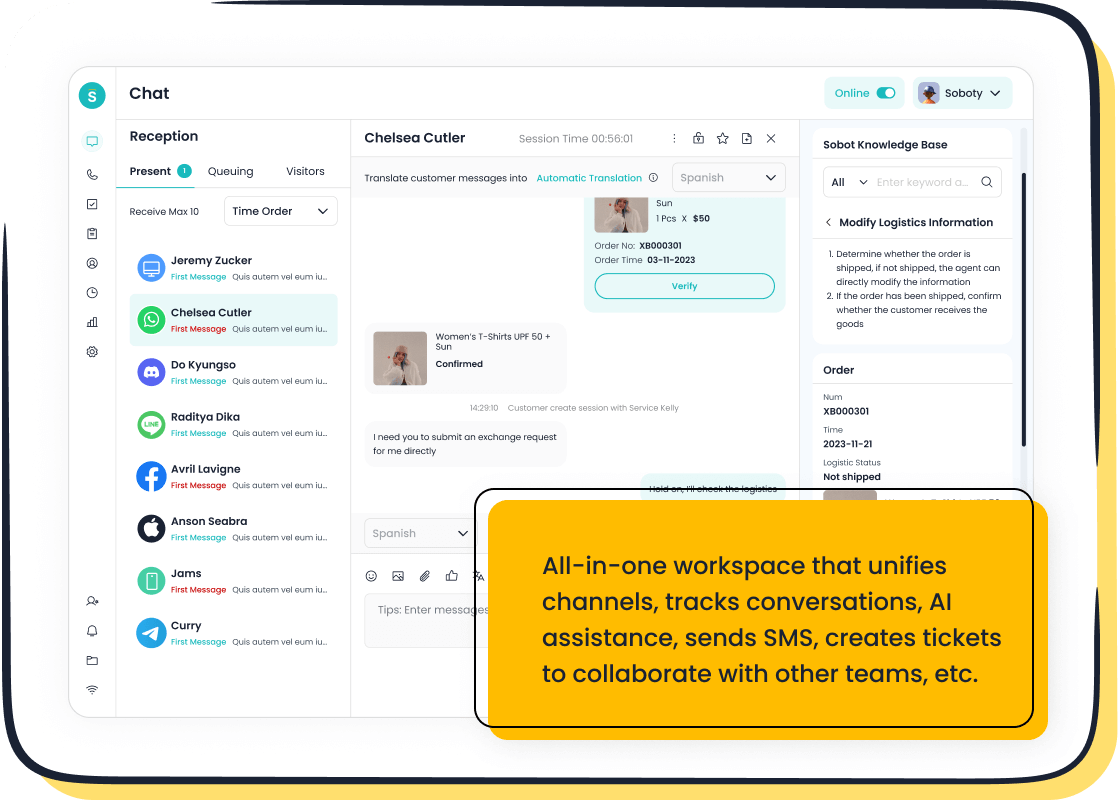
Sobot's Omnichannel Solution is designed to make this possible. It integrates all your communication channels—voice, email, social media, and chat—into a single workspace. This eliminates data silos and empowers your agents with full context for every customer interaction. As a result, businesses using Sobot see agent productivity improve by 30%, allowing them to deliver faster, more personalized service. This level of omnichannel communication is essential for a winning customer engagement strategy.
Strategy 3: Be Proactive, Not Reactive
Waiting for customers to report a problem is an outdated model. A proactive approach to digital customer engagement means anticipating needs and solving issues before they even arise. This demonstrates that you care about the customer experience and are committed to their success.
You can use data and automation to shift from a reactive to a proactive mindset. For example, AI and machine learning can analyze user behavior to predict potential issues. If a customer is repeatedly failing a setup process, an automated message can offer help.
Here are some proactive strategies you can implement today:
- Send automated alerts about potential service delays or outages.
- Offer tutorials and guides for new features before customers ask.
- Use proactive live chat to engage visitors who linger on a specific page, like your pricing or checkout page.
- Create predictive FAQs based on common support tickets to answer questions before they are asked.
By analyzing customer data, you can identify recurring issues and create solutions in advance. This not only reduces your support team's workload but also significantly boosts customer satisfaction by making their journey smoother.
Strategy 4: Build a Brand Community
The ultimate goal of digital customer engagement is to turn customers into loyal advocates. Building a brand community is one of the most effective ways to achieve this. A community is a space where customers can connect with your brand and, more importantly, with each other.
These communities foster a deep emotional connection that goes beyond products and services. They provide a platform for customers to share experiences, offer tips, and feel like part of something bigger.
To build a thriving brand community, you can:
- Create dedicated spaces like an online forum, a private Facebook group, or a Discord server.
- Encourage user-generated content by running contests or featuring customer stories and photos.
- Host exclusive events, such as webinars, Q&A sessions with experts, or early access to new products.
- Actively participate in the conversation, answer questions, and show your appreciation for members.
A strong community becomes a self-sustaining ecosystem of support and engagement. It provides invaluable feedback, drives loyalty, and turns your most passionate customers into your best marketers. This creates a powerful and lasting personalized experience across your digital channels.
Measuring Your Customer Engagement Strategy
A great customer engagement strategy needs clear goals. You must measure your efforts to know what works. This allows you to make smart, data-driven decisions for improving the customer experience and proving your return on investment.
Identifying Key Performance Indicators (KPIs)
Key Performance Indicators (KPIs) are the specific metrics you use to track success. They turn broad goals into measurable targets. Tracking the right KPIs helps you understand customer happiness and loyalty across all your digital channels. This data shows you where your digital customer engagement shines and where it needs work.
| KPI | What It Measures |
|---|---|
| Customer Satisfaction (CSAT) | Measures short-term happiness with a specific interaction or product. |
| Net Promoter Score (NPS) | Gauges long-term loyalty by asking if customers would recommend you. |
| Customer Effort Score (CES) | Assesses how easy it is for customers to get help or make a purchase. |
| Customer Lifetime Value (CLV) | Forecasts the total revenue a customer will bring to your business over time. |
These metrics provide a clear picture of your customer satisfaction and overall digital experience.
Using Analytics for Continuous Improvement
Analytics turn your KPI data into actionable steps. A continuous improvement cycle ensures your strategy evolves with your customers' needs. This process involves collecting data, analyzing it, and testing changes.
You can start by following a simple, three-step process:
- Collect and Integrate Data: Gather information from all touchpoints, including your CRM, support tickets, and social media. A unified view is essential.
- Analyze Performance: Use your KPIs to track performance against your goals. Look for trends and patterns in the data.
- Test and Optimize: Use A/B testing to experiment with different approaches. This helps you find what truly resonates with your audience.
Tip: Simple A/B Tests for Big Wins You can test small changes to see a big impact. Try testing different email subject lines, the number of emojis in a message, or the placement of a link in your SMS campaigns. Even changing send times can lift conversion rates. This is key to improving customer experience.
By constantly measuring and refining, you create a powerful feedback loop that drives growth.
Your customer engagement strategy succeeds when you combine powerful digital communication tools for customer engagement with smart actions. Sobot's all-in-one customer engagement software helps you perfect your digital customer engagement across all digital channels. Brands like OPPO prove this approach works. They boosted customer loyalty and saw a 57% higher repurchase rate after achieving an 83% chatbot resolution rate. This improves the entire customer journey and customer satisfaction. Ready to enhance your customer experience? Explore Sobot's solutions and start a free trial of Sobot Live Chat to begin your contact journey.
FAQ
What is the first step to improve digital customer engagement?
Start by understanding your customer journey. You should map every touchpoint to see where you can improve. Then, choose the right digital communication tools for customer engagement, like a CRM and live chat, to personalize the experience.
How does Sobot Live Chat increase conversions?
Sobot Live Chat helps you engage website visitors instantly. It uses precise profiling and tailored services to turn visitors into clients. This proactive approach leads to a 38% gain in conversions and a better customer experience.
Why is an omnichannel approach important?
Customers use many channels to contact you. An omnichannel strategy unifies these interactions. This creates a seamless experience, builds trust, and boosts loyalty. Sobot's platform helps you manage all channels from one place, improving your digital customer engagement.
Can AI chatbots replace human agents?
No, they work together as a team. AI chatbots handle common questions 24/7, freeing up your human agents. Agents can then focus on complex issues that require empathy. This human-machine cooperation is key to a strong digital customer engagement strategy.
See Also
Essential Tools for Integrating Social Media Chat on Your Website
Enhance Your Always-On Live Chat Operations for Better Performance
Elevate SaaS Customer Support Through Effective Live Chat Approaches
Ten Expert Tips for Selecting Social Media Customer Service Software
Fast Strategies for Achieving Great Success with Depop Live Chat

