Choosing a Call Center or a Contact Center

Businesses often face a challenge when choosing a customer service platform. Understanding the difference between call center and contact center is the first step.
A traditional call center focuses on voice calls. A modern contact center manages communication across all channels, like email and chat.
This guide clarifies the choice for any business. It uses the Sobot call center and Sobot AI solutions from Sobot to frame what a powerful contact center can achieve.
What is a Traditional Call Center?
A traditional call center is a centralized department built to handle a large volume of telephone calls. Its primary purpose is to manage customer conversations through voice. This model has been a cornerstone of customer service for decades, focusing entirely on phone-based interactions.
The Focus on Voice Communication
The defining feature of a traditional call center is its reliance on voice. Agents handle inbound calls from customers seeking help or outbound calls for sales and marketing. Every interaction happens over the phone. This singular focus makes the call center an expert in voice communication, but it also defines its boundaries in a world with many communication channels.
Core Functions and Technologies
A call center performs several key business functions. These tasks often include:
- Providing customer care and technical support.
- Acquiring new customers through outbound sales.
- Ensuring customer retention with follow-up calls.
To manage call volume efficiently, these centers rely on specific technologies. Two fundamental tools are Automatic Call Distribution (ACD) and Interactive Voice Response (IVR).
ACD systems automatically route incoming calls to the next available agent or the most appropriate department. This reduces wait times. IVR systems allow customers to use their keypad or voice to navigate a menu, get answers to simple questions, or direct themselves to the right agent.
Limitations in a Digital World
Today’s customers use many digital channels. A voice-only call center struggles to meet these modern expectations. Its limitations create significant challenges:
- Limited Channels: Customers are forced to call, even for simple issues that could be resolved quickly via chat or email.
- No Visual Context: Agents cannot see what the customer sees. This makes troubleshooting technical problems or guiding users through a website difficult and time-consuming.
- Disconnected Experiences: Each call is often treated as a new event. Customers may have to repeat their issues multiple times if they call back, leading to frustration.
These restrictions can result in longer resolution times and lower customer satisfaction.
The Core Difference Between Call Center and Contact Center
Understanding the core difference between call center and contact center is vital for choosing the right platform. The distinction goes beyond the name. It reflects a fundamental shift in business strategy, technology, and the overall customer experience. A call center manages phone calls. A contact center manages relationships across every channel.
Communication Channels
The most visible difference between call center and contact center lies in the channels they support. A traditional call center operates exclusively through voice calls. Customers must pick up the phone for any inquiry.
A modern contact center embraces an omnichannel approach. It meets customers wherever they are. This creates a more flexible and convenient service experience. These channels include:
- Live Chat and AI Chatbots
- Social Media (Facebook, X, Instagram)
- SMS and Messenger Apps (like WhatsApp)
- Video Calls
This variety allows customers to choose their preferred method of communication. It transforms customer service from a single-lane road into a multi-lane highway.
Technology and Data
Technology is another key area that highlights the difference between call center and contact center. A call center uses foundational tools like ACD for call routing and basic IVR for menu navigation. Its data is often siloed, focusing on call-specific metrics like call duration.
A contact center leverages a sophisticated, integrated technology stack. Instead of basic tools, it uses a unified platform. For example, Sobot provides a unified workspace where agents can see every customer interaction in one place. This system integrates seamlessly with a business's existing CRM.
When a customer connects, the agent instantly sees their full history. This includes past purchases, previous support tickets, and chat transcripts. Every new interaction automatically syncs back to the CRM.
This deep integration is powered by advanced tools. AI-powered analytics help managers identify trends and optimize performance. This data-rich environment empowers agents to provide personalized and efficient customer support without asking customers to repeat information. The technology in a contact center turns data into actionable insights.
Customer Experience Focus
A call center typically focuses on transactions. The main goal is to resolve an issue as quickly as possible and move to the next call. Each interaction is often treated as a separate event. This can lead to a disconnected service experience.
A contact center, however, focuses on the entire customer journey. The goal is to build a long-term relationship, not just close a ticket. This approach transforms the customer experience from a series of isolated events into a continuous conversation. A platform like Sobot's Omnichannel Solution is designed to manage this holistic journey. It ensures that the context of a customer's issue is carried across all channels, creating seamless customer experiences. This focus on the complete lifecycle helps improve customer satisfaction and build brand loyalty. The shift is from resolving a problem to nurturing a relationship, which greatly enhances the overall customer experience.
Proactive vs. Reactive Support
A traditional call center is almost entirely reactive. It waits for a customer to identify a problem and make a call. This model places the burden of initiating contact on the customer.
A modern contact center enables proactive support. It uses data and automation to anticipate customer needs and address issues before they escalate. This proactive approach can take many forms:
- Sending an SMS alert about a shipping delay.
- Notifying users about scheduled system maintenance via email.
- Using a website chatbot to offer help if a customer seems stuck on a page.
- Contacting a customer after a purchase to ensure they are satisfied.
By reaching out first, a contact center demonstrates that it values the customer's time. This proactive stance reduces customer effort, prevents frustration, and builds a stronger, more positive customer experience.
When to Choose a Modern Voice Solution like Sobot

An omnichannel platform is not always the necessary first step. A powerful, modern voice solution is the perfect choice for many businesses. This is especially true when your operations are voice-centric but you still demand the efficiency and intelligence of modern technology. A modern call center platform can deliver exceptional results.
Your Customers Prefer Phone
Voice communication remains a critical channel for customer service. For complex or urgent issues, many customers still prefer speaking directly to a person. This is particularly true in industries like financial services.
Research shows that for urgent matters, customers prefer a phone call from their financial institution two times more than a text message. Suspected fraud is the top reason customers want to receive a call from their bank.
When your customers value the direct, human connection of a phone call, investing in a superior voice experience is essential. It shows you understand and respect their preferences.
Your Goal is High-Volume Call Management

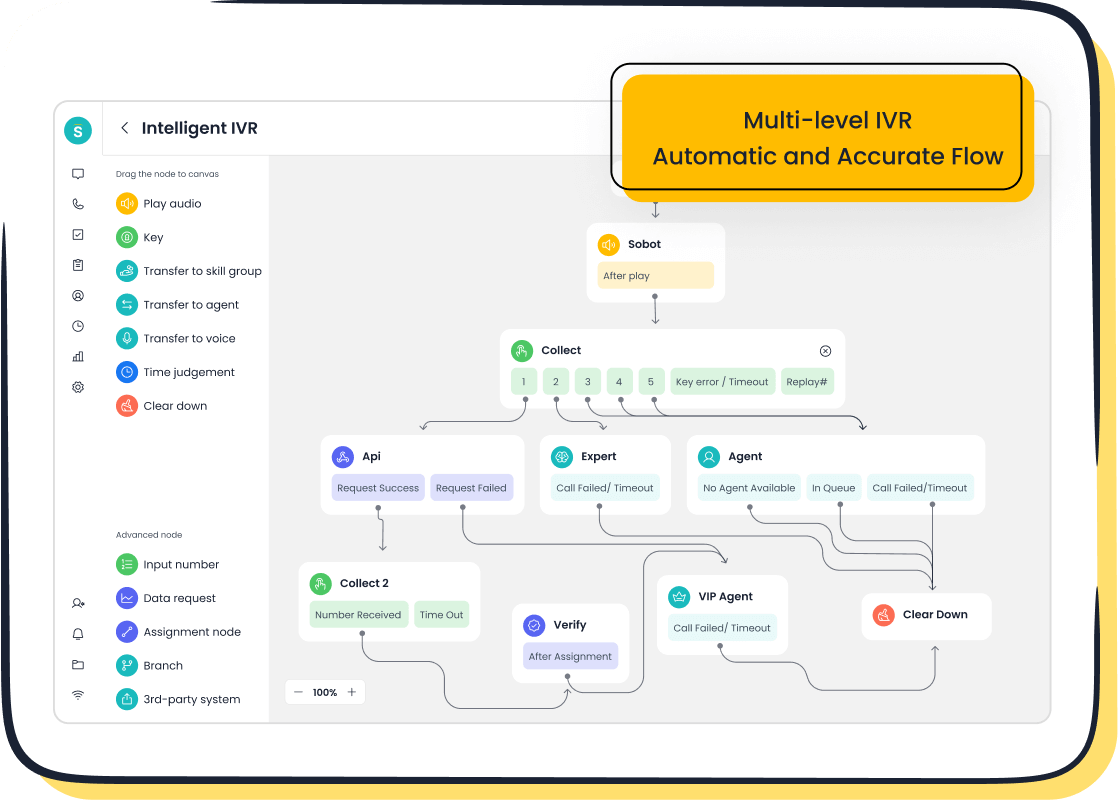
If your business handles a large number of calls, efficiency is key. A modern voice solution like Sobot uses intelligent tools to manage high volumes without sacrificing service quality. An Intelligent IVR with a drag-and-drop interface allows you to build smart menus that guide customers to answers or the right agent quickly. This improves first-contact resolution and reduces wait times.
For even greater efficiency, an AI-powered Voicebot can automate routine inquiries. This technology offers several advantages:
- Provides 24/7 availability for continuous support.
- Handles common questions, freeing human agents for complex issues.
- Scales easily during peak times to manage call surges.
These tools transform a traditional call center into a highly efficient operation.
You Need a Stable and Scalable Voice Platform
Your customer service is only as good as the technology supporting it. A modern voice solution must be both reliable and scalable. Sobot’s Cloud Call Center guarantees stability with a 99.99% SLA, ensuring your phone lines are always open for business. This high uptime provides peace of mind and builds customer trust.
As your business grows, your call center platform must grow with you. Sobot offers global number availability, allowing you to establish a local presence in new markets quickly. This scalability ensures your voice solution can support your expansion, whether you are opening a new office or entering a new country.
When to Evolve to a Sobot Omnichannel Solution
While a modern voice solution is powerful, the strategic path to future growth and a superior customer experience often leads to an omnichannel contact center. Evolving to a platform like the Sobot Omnichannel Solution becomes essential when your business goals shift from managing calls to building lasting customer relationships across every touchpoint. This move prepares your business for the future of customer engagement.
Your Customers Expect Digital Service
Today’s customers use a wide array of digital channels to communicate. They expect businesses to be available on the platforms they use every day. A voice-only approach no longer meets this expectation.
Email remains a critical communication tool, with over 4 billion users globally. Live chat is also incredibly popular, with 72% of customers choosing it to connect with brands.
An omnichannel contact center meets customers where they are. It integrates key digital channels into your customer service strategy. This omni-channel approach allows you to offer support through:
- Email: Still a primary channel for detailed inquiries.
- Live Chat: For instant, real-time assistance on your website.
- Social Media: To engage with customers on platforms like Facebook and X.
- Messaging Apps: Including SMS and official WhatsApp integration for direct, personalized conversations.
Offering these options provides convenience and creates a positive customer experience. It shows that your business values the customer's time and preferences, which is a cornerstone of modern customer service.
You Want a Unified View of the Customer
Customers today expect personalized customer service. They get frustrated when they have to repeat their story every time they contact a business. A siloed, channel-specific approach makes this problem worse. An omnichannel contact center solves this by creating a single, unified view of the customer.
This unified visibility empowers agents to deliver truly personalized customer service. When an agent receives a query, they instantly see the customer's entire history. This includes:
- Recent interactions across all channels.
- Past case histories and their resolutions.
- Customer preferences and purchase history.
This context is vital. It allows agents to provide seamless, personalized support without asking repetitive questions. This improves the service experience and helps resolve issues on the first contact. A unified view transforms every interaction into an opportunity to strengthen the customer relationship by delivering a consistent and personalized customer experience. This focus on personalized customer service is what sets a great contact center apart.
You Aim to Boost Agent Efficiency
Managing multiple communication channels can quickly become chaotic without the right tools. Agents waste valuable time switching between different platforms to handle emails, chats, and social media messages. This inefficiency leads to slower response times and agent burnout.
A modern contact center boosts efficiency with a unified inbox. Sobot’s solution brings every customer conversation from every channel into one single workspace. This integration allows agents to manage all inquiries without leaving their screen. The platform also uses AI to deliver instant, personalized resolutions to common questions.
With AI chatbots handling routine tasks 24/7, human agents can focus their expertise on complex customer issues that require a human touch. This combination of a unified workspace and automation dramatically improves productivity and enhances the real-time customer experience.
Supervisors also benefit from real-time monitoring and analytics. They can track performance, optimize strategies, and ensure the team is delivering high-quality customer support. This leads to better customer experiences and a more efficient operation.
You Want to Leverage a Partner like Samsung
Choosing the right contact center solution is a partnership. The results achieved by global leaders can provide a clear blueprint for success. Samsung, a company committed to excellent customer service, faced the challenge of managing a massive volume of inquiries across fragmented channels.
By implementing Sobot's all-in-one contact center solution, Samsung transformed its customer support operations. The results were remarkable:
- A 30% increase in agent efficiency.
- A 97% customer satisfaction rate.
Samsung achieved this by unifying its communication channels and connecting data from its internal systems. This gave agents a complete view of the customer, enabling them to provide fast and personalized customer service. Features like multilingual capabilities and real-time insights were key to this success. This partnership demonstrates how a powerful contact center platform can elevate the service experience for even the world's most demanding brands.
Key KPIs for Call and Contact Centers
Measuring performance is crucial for both a call center and a contact center. Key Performance Indicators (KPIs) help businesses understand what is working and where they can improve. While some metrics are shared, a modern contact center tracks a wider range of data to measure the complete customer experience.
Shared Metrics like FCR and AHT
Certain metrics are fundamental to any customer service operation. Two of the most important are First Contact Resolution (FCR) and Average Handle Time (AHT).
- First Contact Resolution (FCR): This measures the percentage of customer issues solved in the first interaction. A high FCR means customers do not need to follow up, which improves satisfaction. The industry benchmark for FCR is around 70%.
- Average Handle Time (AHT): This is the average time an agent spends on a customer interaction, including all talk, hold, and follow-up work. A lower AHT often indicates an efficient call center or contact center.
These KPIs provide a baseline for operational efficiency in any customer support environment.
Contact Center-Specific Metrics
An omnichannel contact center requires more specific metrics to measure success across all channels. These KPIs focus on the broader customer journey.
Customer Effort Score (CES) is a vital metric for a modern contact center. It measures how much effort a customer has to put in to get their issue resolved. A lower score is better because it means the customer had an easy experience.
Another key metric is Channel Mix. This shows which communication channels customers use most often. Understanding this helps a contact center allocate resources effectively and meet customers on their preferred platforms.
Measuring Success with Sobot Analytics
Tracking these KPIs is simple with the right tools. A powerful analytics platform is essential for any data-driven contact center. Sobot Analytics provides a clear view of all critical metrics in one place.
The platform gives managers real-time data on FCR, AHT, and CES. It also tracks customer satisfaction (CSAT) and resolution rates across every channel. Businesses using Sobot see how performance impacts results, with data showing that higher resolution rates can lead to significant cost savings and sales growth. This makes it easy to identify areas for improvement and optimize the entire contact center operation for success.
The difference between call center and contact center hinges on customer behavior and business strategy. A powerful call center is perfect for voice-centric operations. However, evolving to an omnichannel contact center is an essential investment for future growth. This move prepares a business for a superior customer experience, as enterprises increasingly adopt integrated platforms. A modern contact center delivers a consistent and personalized customer experience.
Ready to embark on your contact journey? Explore Sobot's solutions today.
FAQ
What is the main difference between a call center and a contact center?
A call center handles customer service only through phone calls. A modern contact center manages conversations across many channels. These include email, live chat, and social media. It creates a unified customer experience.
When should my business choose a call center?
A business should choose a modern call center if its customers primarily use the phone. It is also ideal for companies that need to manage a high volume of calls efficiently with stable, reliable technology.
Why should a business upgrade to a contact center?
A business should upgrade to a contact center to meet customers on digital channels. It provides a unified view of the customer. This helps agents deliver faster, more personalized service and boosts overall efficiency.
How does a contact center improve customer experience?
A contact center improves the customer experience by offering support on preferred channels. It carries conversation history across interactions, so customers never have to repeat themselves. This creates a seamless and effortless service journey.
See Also
Your Essential Handbook for Omnichannel Call Center Software Solutions
Evaluating the Leading Contact Center Solutions: An In-Depth 2024 Review
Implementing Superior Quality Management: Best Practices for Call Centers
Assessing the Foremost Cloud Contact Center Services: A 2024 Overview
A 10-Step Blueprint for Deploying Omnichannel Contact Center Solutions Effectively

