How to Develop a Strong Client Service Philosophy in 2025


In 2025, a strong client service philosophy shapes how you connect with clients and build trust. Today’s customer service landscape changes fast, with clients expecting digital access, personalized advice, and quick resolutions. Sobot AI and other innovations let you meet these needs, driving higher customer satisfaction and loyalty. Companies see real results—a 30% improvement in satisfaction when AI supports customer service, and 88% of clients make repeat purchases after excellent service.
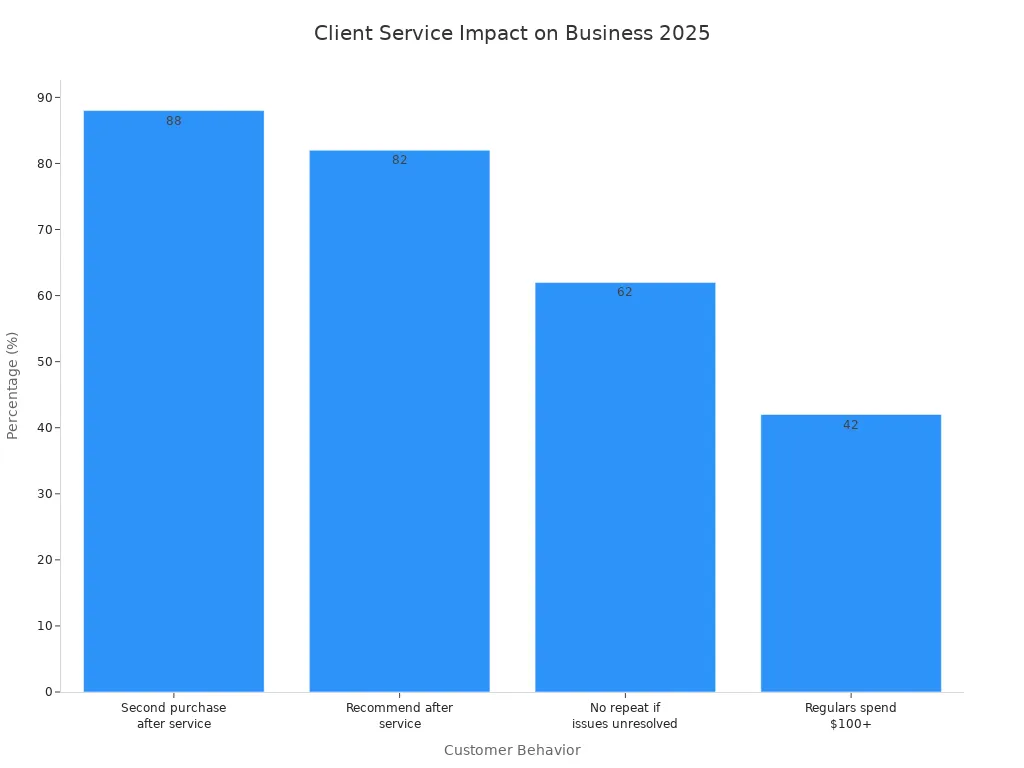
Customer service philosophy impacts satisfaction, retention, and revenue. Sobot’s mission focuses on unified customer service, helping you deliver efficient, consistent support. Reflect on your current customer service approach. Are you ready to put customers first and build lasting loyalty?
What Is a Client Service Philosophy
A client service philosophy gives your team a clear direction for every customer interaction. According to the Oxford dictionary, a philosophy is a guiding theory or attitude. In customer service, this means more than just having a list of values. A customer service philosophy explains why those values matter and how they guide your actions. You use it as a compass, helping you make decisions that match your company’s vision. For example, Apple empowers employees to break rules if it means serving the customer better. This approach helps you act quickly and flexibly, which is essential in today’s fast-paced world.
Key Principles
A strong customer service philosophy stands on several key principles. These principles help you deliver consistent and high-quality customer service. Here is a table that summarizes the most important ones:
| Principle | Description |
|---|---|
| Speed | Respond quickly to reduce customer wait times. |
| Accuracy | Give correct and reliable information about products and services. |
| Transparency | Be open and honest, even when you do not have all the answers. |
| Empathy | Show that you care about the customer’s feelings and needs. |
| Accessibility | Make support easy to find through multiple channels and self-service options. |
| Empowerment | Give customers tools like FAQs and chatbots for self-service. |
| Quality | Provide excellent service every time. |
| Respect | Treat every customer with kindness and fairness. |
| Consistency | Keep your service stable and reliable. |
| Accountability | Listen to feedback and always look for ways to improve. |
You can see these principles in action with Sobot’s omnichannel solutions. Sobot makes support accessible and consistent by unifying all customer channels in one workspace. This helps you respond faster and more accurately.
Role in Customer Service
Your customer service philosophy shapes every part of the customer experience. It bridges the gap between your company’s purpose and real action. When you have a clear philosophy, you inspire your team to deliver memorable service. For example, The Ritz Carlton’s philosophy of respectful service guides every employee’s behavior. Studies show that a strong client service philosophy leads to higher customer satisfaction and loyalty. It also helps you handle complaints better and create positive experiences. Sobot’s AI-powered tools let you put your philosophy into practice by making service faster and more personal. When you focus on customer wellbeing and value, you build trust and long-term relationships.
Understanding Customer Needs

Research and Feedback
You cannot build a strong customer service philosophy without understanding customer needs. To do this, you must gather customer feedback from many sources. You can use surveys, interviews, and focus groups to learn what clients want and how they feel about your service. Modern tools like social media monitoring and live chat transcripts also give you real-time insights. Sobot’s omnichannel solution helps you collect and organize feedback from every channel, making it easier to spot trends and pain points.
Here is a table showing some of the most effective research methods for understanding customer needs in 2025:
| Research Method | Description | Best Use Case |
|---|---|---|
| Focus Groups | Group discussions on attitudes and emotions | New ideas and emotional feedback |
| In-depth Interviews | One-on-one conversations | Deep pain points and motivations |
| Ethnographic Research | Observing customers in real settings | Real-world behaviors and culture |
| Diary Studies | Customers record experiences over time | Long-term usage and emotional patterns |
| Customer Journey Mapping | Visualizing all customer interactions | Finding gaps and optimizing experience |
| Surveys | Structured questions for large groups | Identifying trends and measuring satisfaction |
| A/B Testing | Comparing different versions | Optimizing service elements |
| Heatmaps & Click Tracking | Visualizing digital interactions | Improving user experience |
| Usability Testing | Watching users perform tasks | Finding usability issues and measuring success |
You should also use analytics to turn customer feedback into action. Prescriptive, descriptive, and predictive analytics help you see what works and what needs improvement. For example, Delta Airlines used analytics to improve response times and personalize service, showing how data-driven feedback can boost customer experience (source).
Customer Expectations in 2025
Customer expectations keep changing. In 2025, clients want fast, personalized, and seamless customer service. Over 80% expect immediate communication with a service agent, and 68% want every customer interaction to feel personal. Many clients prefer private messaging, mobile apps, and chatbots for quick answers. Gen Z, for example, values mobile experience and digital access more than older generations.
You must also meet new standards for privacy and trust. Customers want brands to use AI to make service better, but they also want their data protected. They expect proactive notifications and solutions before problems arise. Sobot’s AI-powered tools and unified workspace help you meet these needs by providing fast, secure, and personalized support across all channels. When you understand and act on customer needs, you create better engagement and stronger loyalty.
Aligning with Company Values
Mission and Vision
Your company’s mission and vision set the direction for every customer interaction. These statements tell your team what matters most and where you want to go. When you build your customer service philosophy, you start with these guiding ideas. For example, Amazon’s mission is “to be Earth’s most customer-centric company.” This clear focus shapes every decision and action (source).
| Company | Mission Statement |
|---|---|
| Amazon | To be Earth’s most customer-centric company, where customers can find and discover anything they want. |
| Starbucks | Inspire and nurture the human spirit – one person, one cup, and one neighborhood at a time. |
| Microsoft | To empower every person and every organization on the planet to achieve more. |
A strong mission and vision help you create a customer-centric approach. They guide hiring, training, and daily work. You use them to set standards for customer service values and to inspire your team to deliver on your promises.
Sobot’s Approach
Sobot builds its customer service philosophy on three core values: innovation, customer-centricity, and efficiency. You see these values in every part of Sobot’s products and services. For example, Sobot’s all-in-one contact center solutions use AI and automation to make customer support faster and more personal. This focus on customer centricity means you can respond quickly and accurately, no matter the channel.
Tip: When you align your customer service philosophy with your company values, you create a customer-centric model that builds trust and loyalty.
Here is how leading organizations use company values to shape their customer service philosophy:
- Define standards for customer interactions, like respect and empathy.
- Hire people who share your customer-centric mindset.
- Empower employees to deliver high-quality, consistent service.
- Train teams to live your customer-centric approach every day.
- Listen to feedback and adjust your customer service values as needed.
Sobot’s mission is to enhance customer interactions and improve operational efficiency. Its vision is to lead in intelligent, omnichannel contact center solutions. By following these goals, Sobot helps you build a customer-centric culture. You can see this in Sobot’s unified workspace, which brings all customer data together for a seamless experience. Sobot’s approach matches industry best practices by combining emotional connection, strategic planning, and a unique customer-centric model. This helps you deliver service that stands out and keeps customers coming back.
Setting Customer Service Standards
Setting clear customer service standards helps you deliver consistent, high-quality support. In 2025, top-performing companies use specific benchmarks to guide every interaction. These standards shape your customer service strategy and ensure your team meets rising expectations.
Actionable Guidelines
You can build effective customer service by following proven guidelines. Leading companies like Amazon and Costco set the bar by focusing on what matters most to customers. Here are the most effective customer service standards you should adopt:
- Offer easy access through multiple channels, such as phone, chat, and email.
- Show empathy and put customer needs first.
- Communicate clearly to resolve issues quickly.
- Maintain professionalism in every interaction.
- Personalize attention based on customer history.
- Adapt to changing customer needs.
- Solve problems with speed and efficiency.
- Demonstrate technical competence.
- Improve continuously using customer feedback.

Tip: Use Sobot’s Voice/Call Center to unify all your communication channels. This platform lets you manage calls, messages, and customer data in one place, making it easier to provide effective customer service every time. Learn more about Sobot Voice/Call Center.
To keep your customer service consistent and reliable, follow these actionable steps:
- Conduct regular customer satisfaction surveys.
- Use CRM tools to track and manage interactions.
- Personalize recommendations based on purchase history.
- Build a strong knowledge base for self-service.
- Train your staff on best practices and empathy.
- Provide real-time support with live chat and chatbots.
- Empower employees to solve problems on the spot.
- Keep communication transparent about delays or issues.
- Offer proactive customer service by anticipating needs and following up after purchases.
These customer service strategies help you create a seamless experience and build loyalty. Sobot’s omnichannel solutions support these guidelines by integrating AI, automation, and analytics, so you can deliver proactive customer service and exceed expectations.
OPPO Case Study: The Power of Standards
OPPO, a global smart device leader, shows how setting and maintaining customer service standards drives results. OPPO built a virtual brand community with Sobot’s solutions, offering online support, peer exchanges, and interactive forums. This approach created a strong sense of community identity and loyalty. By focusing on information sharing, entertainment, and interaction, OPPO increased customer engagement and brand differentiation. Their structured service standards led to higher satisfaction and a 57% increase in repurchase rates. You can read more about OPPO’s success here.
SMART Goals
You need clear goals to measure and improve customer service. The SMART framework helps you set goals that are Specific, Measurable, Achievable, Relevant, and Time-bound. This approach turns your customer service strategy into real results.
- Specific: Define clear targets, such as reducing first response time from 4.5 to 3 minutes.
- Measurable: Track progress using metrics like CSAT (Customer Satisfaction Score) and NPS (Net Promoter Score).
- Achievable: Set realistic goals, such as improving CSAT by 5% in the next quarter.
- Relevant: Align goals with your business objectives, like lowering cost per call.
- Time-bound: Set deadlines, for example, resolving 90% of tickets within three responses in three months.
Note: Writing down and sharing your goals helps your team stay motivated and accountable.
Here are some SMART goal examples for effective customer service:
- Increase customer satisfaction by improving CSAT scores for response times by 5% in the next quarter.
- Reduce average first response time for email by one hour within two months.
- Resolve 90% of support tickets in fewer than three responses within three months.
- Raise NPS by 10 points by the end of the year.
- Promote self-service by increasing chatbot usage by 20% in six months.
Sobot’s Voice/Call Center and omnichannel solutions give you the tools to track these goals. You can monitor performance, automate basic requests, and provide agents with real-time data. This makes it easier to achieve effective customer service and drive continuous improvement.
Empowering Teams for Service Excellence

Training and Resources
You build a strong foundation for customer service excellence by investing in your team. Start with comprehensive training that covers language, behavior, listening skills, and empathy. These skills help your agents deliver effective customer communication and understand each customer’s needs. Use roleplaying, simulations, and workshops to make learning active and memorable.
Here are five proven ways to empower your team:
- Teach active listening and clear communication.
- Foster team spirit with group activities and social events.
- Define authority boundaries so agents know when they can solve customer issues on their own.
- Celebrate achievements to boost morale and retention.
- Monitor quality and use customer feedback to improve.
You also need to hire people with empathy, patience, and strong problem-solving skills. Give your team the authority to resolve customer concerns within set guidelines. Ongoing training in phone etiquette and handling tough situations keeps your team ready for any challenge. When you invest in these resources, you create a culture of empowering customer service.
Tip: Engage front-line managers early and get leadership buy-in. This helps your team feel supported and ensures everyone works toward the same customer service goals.
Technology and Tools
Modern technology transforms how you deliver effective customer service. Sobot’s unified workspace brings all customer channels—voice, chat, email, and social media—into one platform. This integration means your agents never have to switch systems, so they respond faster and more accurately. Sobot’s AI-powered chatbots handle routine questions, saving agents over two hours each day and reducing operational costs by up to 50%.
Sobot’s Five-AI system uses advanced AI to automate tasks, provide real-time insights, and support 24/7 multilingual service. You can track key metrics like customer satisfaction and resolution rates with built-in analytics. Personalized customer profiles let your team deliver context-rich support, which increases satisfaction and loyalty.
To get the most from these tools, offer hands-on training and encourage feedback. Involve leaders in the process and use data to spot skill gaps. When you combine the right technology with strong training, you set your team up for customer service excellence.
Measuring and Evolving Your Philosophy
Metrics and Feedback
You need to measure your customer service philosophy to see if it works. Tracking the right metrics helps you understand what your customers think and how your team performs. Here are some of the most important metrics you should watch:
- Customer Satisfaction (Csat): Shows how happy customers feel after an interaction.
- Net Promoter Score (NPS): Measures if customers will recommend your service to others.
- First Contact Resolution (FCR): Tracks if you solve customer issues on the first try.
- Customer Churn Rate: Tells you how many customers leave over time.
- Customer Lifetime Value (CLV): Shows how much value a customer brings during their relationship with your business.
- Ticket Reopens: Counts how often customers need to reopen a support ticket.
- Agent Feedback: Collects ratings from customers about their service experience.
- Employee Satisfaction: Connects how happy your team feels to the quality of service they give.
You can see world-class targets for these metrics in the table below:
| Metric Name | Description | World-Class Performance Target |
|---|---|---|
| First Contact Resolution (FCR) | Percentage of customers resolving their inquiry/problem on first contact via a specific channel. | 80% or higher |
| Contact Resolution | Percentage of inquiries/problems resolved, possibly over multiple contacts. | 95% or higher |
| One Contact Resolution (OCR) | Percentage of inquiries resolved in a single contact. | 75% or higher |
| Contact Channel Customer Satisfaction (Csat) | Top box satisfaction rating for contact channels. | 85% or higher |
| Customer Emotion Experience | Top box rating reflecting customers' emotional response. | 50% or higher |
| Seamless Experience | Percentage of customers experiencing a smooth omni-channel journey. | 65% or higher |
| Omni-Channel Customer Satisfaction | Satisfaction rating across multiple channels. | 65% or higher |
| CX Greatness | Top box rating of overall customer experience. | 65% or higher |
| Net Promoter Score (NPS) | Measures likelihood of customers recommending the company. | 55% or higher |
| Net Retention Index (NRI) | Measures customer retention and loyalty. | 65% or higher |
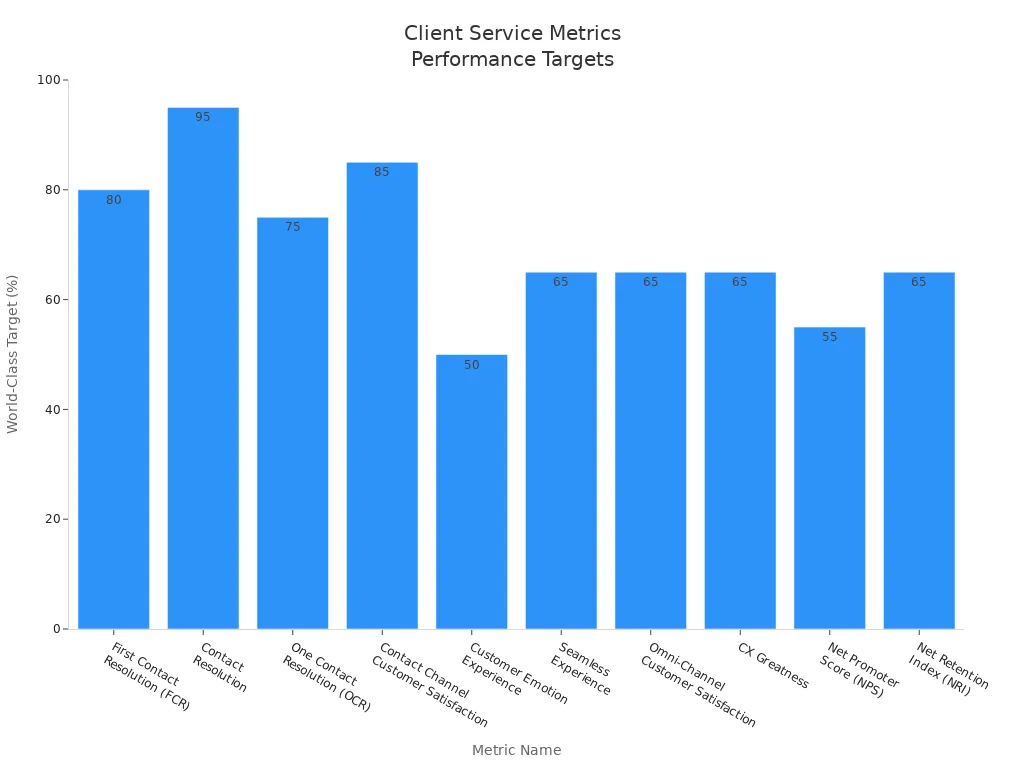
You should collect feedback from many sources. Use surveys, interviews, social media, and real-time chat to gather customer opinions. Sobot’s omnichannel platform helps you organize and analyze this feedback, so you can spot trends and improve customer satisfaction. Always close the loop by letting customers know how their feedback led to changes.
Continuous Improvement
You must keep improving your customer service philosophy to meet changing customer needs. The best companies use continuous improvement frameworks like Kaizen, Lean Six Sigma, and Total Quality Management (TQM). These methods focus on making small, steady changes instead of big, sudden shifts. For example, Kaizen encourages everyone on your team to suggest ways to make things better every day. Toyota used this approach and saved over $100 million in one year.
Follow these steps for continuous improvement:
- Collect feedback from customers at every touchpoint.
- Analyze the data to find patterns and areas to improve.
- Make small changes based on what you learn.
- Check if the changes work by asking for more feedback.
- Repeat the process to keep growing.
Sobot’s analytics tools help you track progress and spot new opportunities for improvement. When you focus on continuous improvement, you boost customer satisfaction, increase customer retention, and build stronger customer loyalty. This approach keeps your service philosophy fresh and effective.
To build a strong client service philosophy, start by understanding your customer personas and thinking from their perspective.
- Assess your goals and gather feedback.
- Empower your team with training and self-service tools.
- Align your actions with company values and use AI-powered solutions like Sobot to boost efficiency.
Companies using AI report up to 400% productivity gains and a 25% drop in customer churn.
Schedule a team workshop or review your current practices to keep improving your customer experience.
FAQ
What is a client service philosophy?
A client service philosophy is your company’s guiding approach to customer care. It shapes how you treat clients, set service standards, and build loyalty. Companies with a clear client service philosophy see higher satisfaction and retention rates.
How does Sobot support a strong client service philosophy?
Sobot provides AI-powered tools like the Voice/Call Center and omnichannel solutions. These tools help you deliver fast, accurate, and consistent service. Sobot’s unified workspace lets your team manage all client interactions in one place, supporting your client service philosophy every day.
Why is measuring your client service philosophy important?
You need to track metrics like CSAT, NPS, and first contact resolution. These numbers show if your client service philosophy works. For example, companies using Sobot’s analytics tools report up to 30% higher customer satisfaction.
Tip: Review your metrics monthly to keep your client service philosophy effective.
How can you improve your client service philosophy in 2025?
Gather feedback from clients, train your team, and use technology like Sobot’s AI chatbots. Set SMART goals and update your client service philosophy as customer needs change. Continuous improvement helps you stay ahead in 2025.
See Also
Discover The Leading Cloud-Based Contact Centers For 2025
Comprehensive Overview Of Quality Management Systems In Call Centers
Effective Strategies For Managing Quality In Call Centers
Top Ten Ways To Enhance Customer Satisfaction Via Live Chat
Step-By-Step Approach To Deploy Omnichannel Contact Center Systems

