The Truth About Ecommerce Chatbot Platforms

AI is transforming modern commerce. This raises a key question for every ecommerce business:
Are AI chatbots a genuine growth engine or just a costly distraction?
The truth is that success isn't about just having chatbots. It's about implementing the right strategy to enhance the customer experience. Understanding the real pros and cons of using chatbots on your ecommerce website is crucial. A great customer support chatbot platform for ecommerce, like Sobot, is a tool. Its value depends entirely on your plan for using it.
The Real ROI of AI Chatbots in Ecommerce
A well-implemented AI strategy delivers a clear return on investment. The advantages of using AI chatbots go beyond simple convenience. They are powerful tools for growth, efficiency, and better customer engagement. Let's examine the pros and cons of using chatbots, starting with the significant pros.
Boost Sales with 24/7 Availability
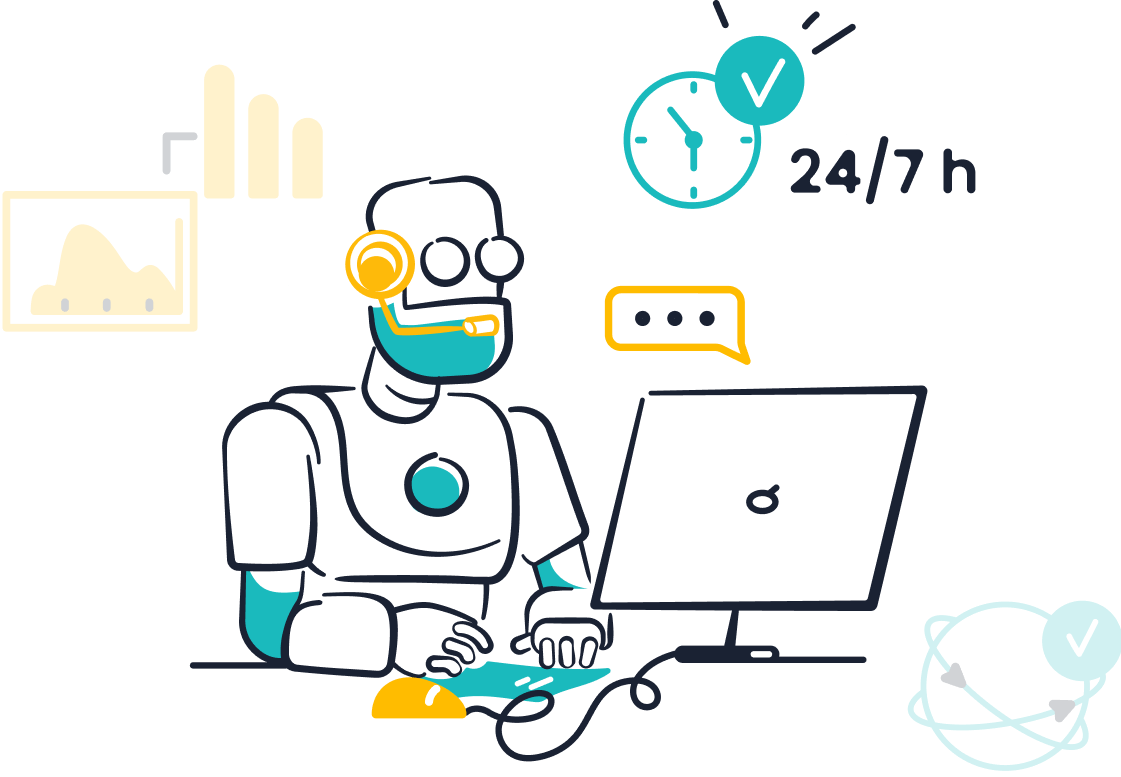
Your online store is always open. Your customer service should be too. AI chatbots provide this 24/7 availability. This constant customer assistance builds trust. Around 25% of shoppers abandon carts due to security concerns or a lack of trust. Instant responses to questions about shipping or return policies can secure a sale. This immediate engagement is crucial for modern commerce. Proactive AI chatbots can increase conversions by 20-25% compared to waiting for an email reply.
Cut Operational Costs with Automation
One of the biggest advantages of using AI chatbots is cost reduction. These bots handle simple, frequent questions, freeing your human agents to focus on complex problems. This improves the customer experience and boosts team morale. Top-tier platforms like Sobot can improve agent productivity by up to 70% and save up to 50% on agent costs. Industry research from firms like Gartner supports this, showing that AI can reduce operational costs by up to 30%. This automation turns your support center into a highly efficient operation.
Drive Conversions with Smart Personalization
Modern AI chatbots do more than answer questions. They drive sales through smart personalization. By analyzing user behavior, AI can offer personalized recommendations and guide shoppers to the right products. This level of engagement can significantly lift sales. For example, Sobot helps businesses boost conversions by 20% and get 30% more leads. Some retailers have even seen conversion rates jump from 3% to over 12% by using chatbots for real-time, personalized recommendations. This makes using chatbots on your ecommerce website a powerful sales strategy.
Scale Support Effortlessly for Peak Seasons
Peak shopping seasons can overwhelm a support team. AI-powered chatbots solve this scaling problem. They can handle thousands of customer inquiries at once without a drop in quality. This means no long wait times and fewer abandoned carts during your busiest periods. Leading brands use this to their advantage.
Smart device leader OPPO implemented a human-machine hybrid model with Sobot. They achieved an incredible 83% chatbot resolution rate. This strategy also led to a 57% increase in their repurchase rate, proving that a smart AI system enhances both efficiency and customer loyalty in ecommerce.
The Hidden Risks of Poorly Implemented Chatbots
While the pros of AI are compelling, it's crucial to understand the cons. A poorly chosen or badly configured chatbot can do more harm than good. Examining the pros and cons of using chatbots reveals that the risks often stem from poor strategy, not the technology itself. These bots can damage your brand reputation and drive customers away.
Customer Frustration from Limited Bots
The biggest risk is creating a frustrating customer experience. Basic chatbots often fail to understand complex questions. This forces customers to rephrase their queries repeatedly. Research shows that 67% of consumers report frustrating experiences with customer service chatbots. This frustration grows when bots get stuck in a loop or fail to escalate to a human agent. A bad customer service experience can quickly turn a potential buyer into a lost sale. Common failures include:
- Not understanding the customer's true intent.
- Failing to transfer conversation history to a human agent.
- Getting stuck and repeatedly asking the user to rephrase.
Losing the Human Touch in Critical Moments
Automation is great for simple tasks. However, it can fail during sensitive situations. A customer dealing with a broken product or a billing error needs empathy. The inability to understand emotions is a major weakness of many AI chatbots. Forcing an upset customer to interact with a machine that cannot show empathy can make a bad situation worse. Over 30% of consumers say a negative chatbot interaction would make them switch to a competitor. This highlights the need for a human touch in critical moments of commerce.
The Reality of Setup and Maintenance Costs
Many businesses underestimate the true cost of implementing chatbots. Beyond the initial subscription fee, there are hidden expenses. These can include costs for:
- Integrating the AI with your existing technology.
- Ongoing AI credit consumption for advanced models.
- Data storage and performance tracking.
Without a clear plan, these costs can add up, reducing the ROI you expected from your ecommerce automation.
Navigating Data Privacy and Security
AI chatbots collect a lot of customer data. This makes data privacy a serious concern. Regulations like GDPR and CCPA require businesses to protect personal information. A non-compliant chatbot platform can expose your business to heavy fines and legal trouble. It is essential to choose a secure solution that anonymizes data and follows institutional policies to protect your customers and your business.
A Strategic Framework for Your Ecommerce Chatbot
Avoiding the risks of AI requires a clear strategy. Success is not about replacing humans but empowering them. A well-designed framework helps you decide where to apply automation and where to preserve the human touch. This strategic approach turns your customer service from a cost center into a growth engine for your ecommerce business.
When to Use Automation vs. Human Agents
The first step is to map your customer interactions. You need to decide which tasks are right for bots and which require a person. An effective way to do this is by using a decision framework that sorts tasks by complexity and emotional weight.
Use automation and chatbots for tasks that are:
- Highly Repetitive and Frequent: Think of questions like "Where is my order?" or "What is your return policy?" AI chatbots excel at providing instant, accurate answers to these common queries.
- Low in Emotional Stakes: Password resets, order tracking, and simple product questions do not require empathy. Automation handles these efficiently.
- Based on Clear Data: When an answer can be pulled directly from a knowledge base or order system, a bot is the perfect tool.
Reserve human agents for interactions that involve:
- Complex Problem-Solving: When a customer has a multi-part issue or a unique situation, a human agent is needed to understand the nuance.
- High Emotional Stakes: Dealing with a damaged product, a billing dispute, or a very unhappy customer requires empathy. A human can de-escalate the situation in a way a machine cannot.
- High-Value Conversations: Building a relationship with a VIP customer or handling a complex pre-sale inquiry often requires creative thinking and a personal touch.
- Managing Exceptions: Any situation that falls outside of your standard procedures should be routed to a person who can make a judgment call.
The Hybrid Model: Blending Bots and Humans
The most successful ecommerce brands don't choose between bots and humans. They use both. The hybrid model combines the speed and efficiency of AI with the empathy and critical thinking of human agents. This creates a seamless customer service experience.
Ecommerce giant Amazon uses this model effectively. Bots handle initial inquiries and order tracking, while human teams are ready to address complex issues. This allows them to scale support while maintaining a personal touch. You can apply this same logic to your business:
- AI for the First Line: Use chatbots to answer FAQs and track orders instantly, 24/7. This deflects simple tickets and provides immediate help.
- Humans for Escalations: When a customer is frustrated or has a complex problem (like a wrong item or a late delivery), the bot should provide a smooth handoff to a live agent. The agent receives the full conversation history, so the customer never has to repeat themselves.
Measure What Matters To ensure your hybrid model is working, you must track the right Key Performance Indicators (KPIs). This data shows you where your system is excelling and where it needs improvement.
KPI Category Key Metrics to Track Industry Benchmark Bot Performance Bot Deflection Rate, Intent Recognition 50-70% Deflection Agent Performance First Contact Resolution (FCR), Average Handle Time >70% FCR Customer Experience Customer Satisfaction (CSAT), First Response Time >85% CSAT
This blend of automation and human oversight improves efficiency and boosts customer engagement.
Choosing a Customer Support Chatbot Platform for Ecommerce
Your strategy is only as good as the tools you use. Selecting the right customer support chatbot platform for ecommerce is the final piece of the puzzle. A superior solution is more than just a standalone bot. It is a unified contact center that integrates multiple tools to manage every customer interaction. Look for a platform that combines an AI-powered chatbot with live chat, a ticketing system, and even a voice call center to create a single source of truth for your customer journey.
When evaluating options, prioritize these essential features:
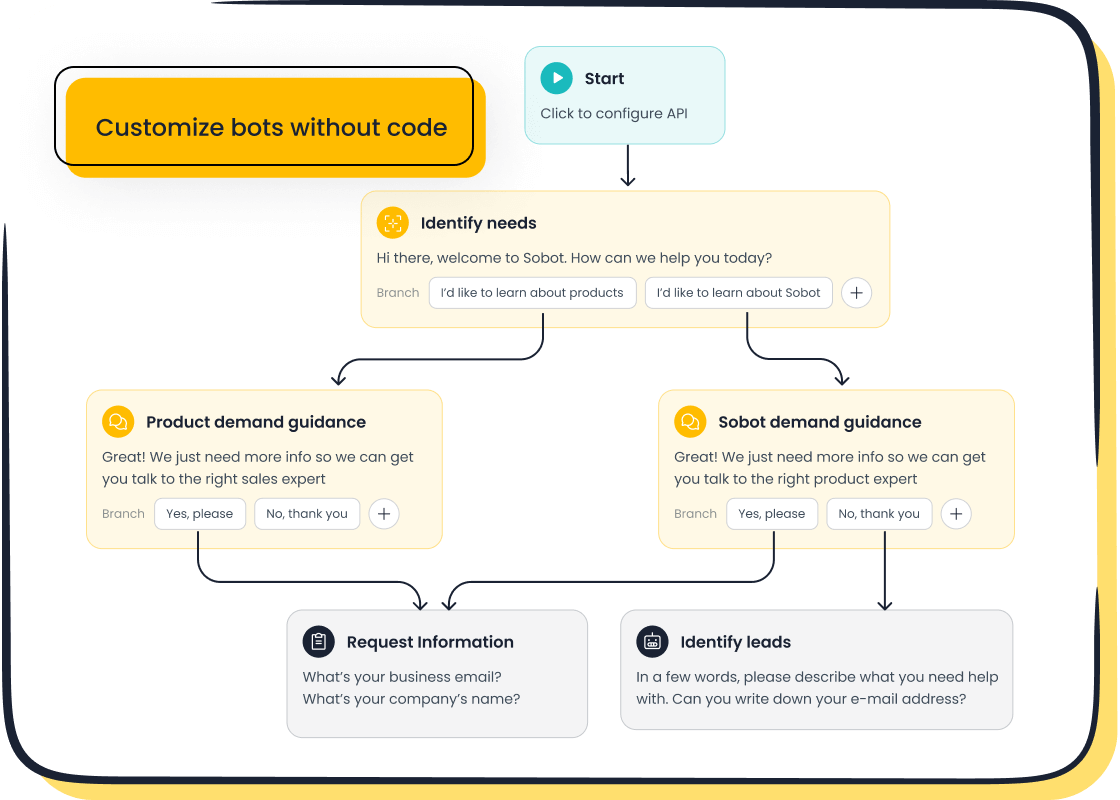
- No-Code, Point-and-Click Interface: Your marketing and support teams should be able to build and modify chatbot workflows without needing a developer. A no-code interface, a key feature of the Sobot Chatbot, makes chatbot creation as easy as building a slide deck. This empowers your team to be agile and independent.
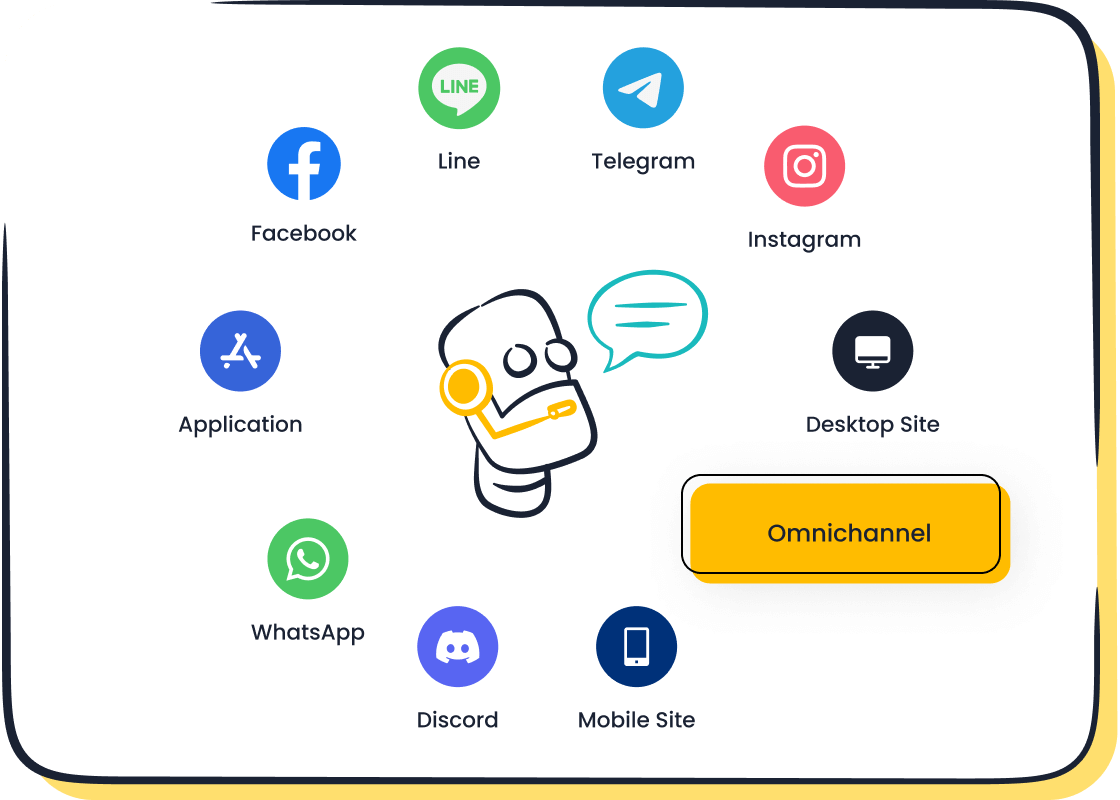
- True Omnichannel Support: Customers expect to connect with you on their preferred channels. A great platform unifies conversations from your website, WhatsApp, SMS, and social media into a single view. This consistency is critical. Companies with strong omnichannel customer engagement retain 89% of their customers, compared to just 33% for those without.
- Multilingual Capabilities: To compete in global commerce, you must speak your customer's language. Research shows that 72% of consumers are more likely to buy from a brand that communicates in their native language. Multilingual AI chatbots allow you to provide 24/7 support across the globe without hiring dozens of new agents.
- Seamless Ecommerce Integration: The platform must connect directly with your existing systems, like your CRM and ecommerce platform. This allows the AI to provide personalized recommendations and access real-time order information, which is vital when using chatbots on your ecommerce website.
Finding a customer support chatbot platform for ecommerce that delivers on these points is crucial. A platform like Sobot embodies these modern features, offering a secure, scalable, and intelligent conversational AI solution. The right customer support chatbot platform for ecommerce doesn't just answer questions—it enhances the entire customer experience, drives engagement, and fuels growth.
Remember, AI chatbots are tools, not a complete strategy. The value of chatbots in ecommerce comes from a smart hybrid model. This approach improves the customer experience. The right customer support chatbot platform for ecommerce, like Sobot, boosts sales and enhances customer engagement. The wrong bots create a poor customer service experience. Better AI leads to better commerce and customer engagement.
Stop wondering and start strategizing. Assess your customer inquiry patterns and explore how a solution like the Sobot AI Chatbot can fit into your growth plan. Embark on Your Contact Journey today.
FAQ
What is an ecommerce chatbot?
An ecommerce chatbot is an AI software on a website or app. It talks to shoppers automatically. The bot can answer questions, help find products, and track orders. This gives customers instant help at any time, day or night.
How do chatbots help an ecommerce business?
Chatbots improve business in several key ways.
- They cut costs by answering common questions 24/7.
- They boost sales by helping shoppers find products.
- They free up human agents for more complex problems. Platforms like Sobot can save up to 50% on agent costs.
Is it hard to set up a chatbot?
No, it does not have to be difficult. Modern platforms offer simple tools. For example, the Sobot Chatbot uses a no-code, point-and-click interface. This lets your team build and launch a bot quickly without any programming experience. ⚙️
Can a chatbot speak different languages?
Yes, many advanced chatbots are multilingual. This feature is essential for global ecommerce stores. A multilingual bot, like Sobot's, can talk to customers in their native language. This builds trust and helps you sell to a wider audience. 🌎
See Also
Elevating E-commerce Customer Happiness: The Power of Chatbot Integration
Driving Online Sales Growth: Leveraging Live Chat for E-commerce Success
Discovering the Best Live Chat Solutions for E-commerce Businesses in 2024
Simple Steps to Seamlessly Implement Effective Website Chatbot Examples
Your Essential Guide to Selecting the Optimal Chatbot Software Solution

