What Is Support Automation? A 2026 Guide


You can think of customer service automation as using technology to answer customer questions. Tools like AI and chatbots provide automated customer service with little human help. This strategy helps your business with customer support automation to reduce costs. It also leads to enhanced customer satisfaction. By 2025, AI is expected to handle 95% of all customer interactions. Automating customer service helps your team succeed. Solutions from Sobot provide the automated customer support you need to manage this shift and improve your customer support.
How Customer Service Automation Works

Customer service automation uses a set of powerful technologies working together. You can understand how these tools help your team by looking at their core components. This technology makes your support operations smarter and more efficient.
AI and Machine Learning Engines
Artificial Intelligence (AI) and Machine Learning (ML) are the brains behind modern customer service automation. These engines analyze vast amounts of customer data. They learn from past interactions to predict future needs and identify patterns. This allows your business to move from reactive to proactive support.
- Machine Learning (ML) learns from past customer data to forecast future needs.
- Predictive Analytics anticipates potential issues before they happen.
- Natural Language Processing (NLP) interprets human language from chats and emails.
This ai-powered customer service helps you understand customer sentiment and intent, leading to better strategies.
Natural Language Processing (NLP)
Natural Language Processing (NLP) allows machines to understand human language. When you type a message to a chatbot, NLP breaks it down to figure out your goal. It identifies your "intent" (what you want to do) and "entities" (key details like dates or product names). This technology is central to effective automated customer service.
For example, an advanced ai-powered chatbot like Sobot's uses NLP to understand exactly what you need. It can pull information from PDFs and articles to give instant, accurate answers. For global companies, its multilingual support ensures you can communicate with customers in their preferred language.
Robotic Process Automation (RPA)
Think of Robotic Process Automation (RPA) as a digital workforce. RPA bots handle repetitive, rule-based tasks that don't require complex decision-making. This frees up your human agents for more important work. Common RPA tasks in customer service automation include:
- Data entry and migration
- Invoice and order processing
- Updating customer records across systems
By automating these back-office jobs, RPA improves speed and eliminates human error.
The Role of Automated Customer Service Portals
Automated self-service portals give customers the power to find answers on their own. These platforms are a key part of a strong customer service automation strategy. They reduce the number of support tickets your team receives. Effective self-service portals include features like a detailed knowledge base, FAQs, and community forums. This approach empowers customers and reduces your team's workload, making your entire support system more efficient.
The Business Case for Automation: Key Benefits
Adopting customer service automation brings powerful advantages to your business. You can transform your support from a cost center into a value driver. These benefits go beyond simple efficiency gains. They create better experiences for your customers and your team.
Using Customer Support Automation to Reduce Costs
One of the most significant benefits is cost efficiency. Automating customer service directly lowers your operational expenses. You handle more inquiries without needing to hire more agents. This strategy of using customer support automation to reduce costs is a primary driver for many businesses. AI-powered solutions can lead to a 25% reduction in overall operating costs for contact centers. Some companies, like Neptune Flood, even saw a 78% drop in cost per ticket after implementing an AI assistant.
Real-World Impact: Agilent's Success with Sobot
Agilent, a leader in life sciences, partnered with Sobot to manage a high volume of complex inquiries. By implementing an AI chatbot and omnichannel platform, they achieved a 25% reduction in costs and a massive 6x increase in service efficiency. This shows how the right tools for customer support automation to reduce costs deliver measurable results.
The return on investment (ROI) is often realized quickly. An initial investment in automation tools pays for itself through sustained cost savings. For example, one calculation shows a solution can pay for itself in just over 13 months by saving an agent 4.2 hours of work per week. The year-one ROI can be dramatic.
| Category | E-commerce Platform Example | SaaS Platform Example |
|---|---|---|
| Annual Investment | $180,000 | $95,000 |
| Annual Returns | $1,340,000 | $780,000 |
| Year 1 ROI | 644% | 721% |
This data proves that using customer support automation to reduce costs is a sound financial decision.
Providing 24/7 Availability and Instant Support
Your customers expect answers now, not later. Automated customer service meets this demand by operating around the clock. Chatbots and self-service portals never sleep. They provide instant support on weekends, holidays, and in the middle of the night. This availability builds customer trust and loyalty.
The speed of an AI chatbot is unmatched. This immediate engagement can be the difference between a happy customer and a lost sale. Companies using AI chatbots have seen first response times drop by 37%.
| Agent Type | Average First Response Time |
|---|---|
| 🤖 AI Chatbot | A matter of seconds |
| 🧑💻 Human Agent | 5-10 minutes |
This instant availability ensures your customers feel heard and valued at any hour.
Scaling Operations with an Omnichannel Solution
As your business grows, your inquiry volume grows with it. Automating customer service allows you to scale your operations without scaling your headcount at the same rate. An omnichannel solution is key to this process. It unifies all your communication channels—email, chat, social media, and voice—into a single platform.
A powerful platform like Sobot's Omnichannel Solution gives your agents a unified workspace. This improves agent productivity by 30%. Your team can handle more conversations with less effort. This is possible because agents get a complete view of the customer's history.
- Agents see unified customer profiles with past purchases and contacts.
- AI automatically cleans and organizes customer data into one reliable source.
- Your team gets full context from the start, increasing first-contact resolutions.
Companies like Intuit used this approach to scale from 6,000 to 11,000 agents during their busy tax season. A global IT provider handled 15,000 cases monthly and grew 25% yearly after implementing a centralized omnichannel helpdesk. This level of scalability is essential for modern customer support.
Improving Data Collection for Proactive Insights
Effective customer service automation does more than just answer questions. It collects valuable data with every interaction. You can analyze this data to understand your customers on a deeper level. This allows you to move from reactive problem-solving to proactive customer support.
Valuable data for proactive insights includes:
- Customer Interactions: Chat logs and emails reveal common questions or complaints.
- Feedback and Surveys: Direct feedback highlights customer feelings and satisfaction levels.
- Behavioral Analytics: Customer actions, like abandoned carts or repeat page visits, show where they need help.
By automating customer service, you also improve the accuracy of your metrics. Automated systems collect behavioral data that gives you a more complete picture of customer satisfaction (CSAT) than traditional surveys, which often have low response rates. This customer service automation helps you identify at-risk customers, personalize support, and make data-driven decisions to improve your entire customer journey.
A Guide to Automating Customer Service
Implementing a successful automation strategy is a clear, four-step journey. You can transform your support operations by following a structured plan. This guide will walk you through each phase, from initial analysis to continuous improvement.
Step 1: Audit Repetitive Tasks and Inquiries
Your first step in automating customer service is to identify what to automate. You need to find the simple, recurring questions that consume your team's time. A thorough audit of your current customer support interactions will reveal these opportunities. Look through your chat logs, support tickets, and email chains to find common patterns.
Many e-commerce inquiries, for example, are highly repetitive. They often fall into two categories.
Pre-purchase questions often include:
- Product details like color and size
- Delivery time estimates
- Information about sales or promotions
- Help using coupons
Post-purchase questions frequently involve:
- Updates on shipping status
- Requests for product exchanges or repairs
- Questions about refunds
- Help resolving a problem with an order
By cataloging these frequent inquiries, you create a clear roadmap for your customer service automation efforts. This data tells you exactly where an automated system can have the biggest impact.
Step 2: Select the Right Automation Tools
After you identify what to automate, your next step in automating customer service is choosing the right technology. The best tools fit your budget, team skills, and business needs. You should evaluate platforms based on several key criteria to ensure a good fit.
- Ease of Use: The tool should be intuitive. A user-friendly interface helps your team adopt it quickly.
- App Integrations: Ensure the tool connects with your existing software, like your CRM or e-commerce platform.
- Scalability: Choose a solution that can grow with your business and handle more inquiries over time.
- Budget: Find a tool with a pricing model that makes financial sense for your company.
- Technical Needs: Match the tool to your team's technical skills.
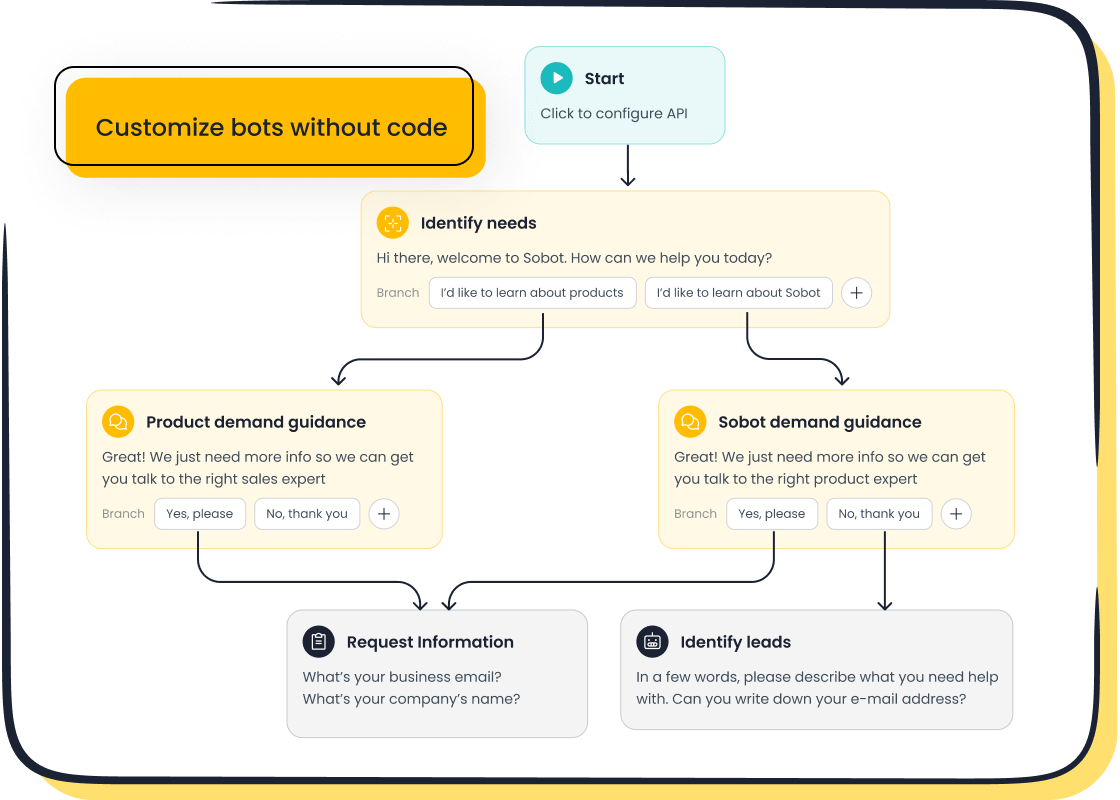
Modern tools make this process easier than ever. For instance, the Sobot Chatbot features a no-code, point-and-click interface. This allows even non-technical teams to design and launch an effective automated customer service bot. A complete solution goes beyond just chatbots. A true contact center platform like Sobot integrates multiple tools to create a seamless experience:
- AI Chatbots provide 24/7 answers to common questions.
- Live Chat allows for smooth handoffs to human agents when needed.
- A Ticketing System organizes complex issues and tracks them to resolution.
- A Voice Call Center integrates phone support into the same unified system.
Choosing a comprehensive platform gives you a powerful, all-in-one system for your automated customer service needs.
Step 3: Blending Automated Customer Support with Human Agents
A common misconception is that automating customer service means replacing your team. The real goal is to create a powerful hybrid model. In this model, technology and people work together. Automation handles the simple, repetitive tasks. This frees your human agents to focus on complex, high-value interactions that require empathy and critical thinking.
The objective is not replacement but empowerment. An automated customer service system acts as the first line of defense, filtering and resolving basic issues instantly. This allows your expert agents to dedicate their time to building customer relationships and solving difficult problems.
This approach delivers proven results. As seen with Agilent, implementing a hybrid model with Sobot's tools allowed them to handle routine inquiries with a chatbot. Their human agents could then focus on more complex technical support, leading to a massive boost in efficiency and a 95% customer satisfaction score. This partnership between automated customer support and human expertise is the key to a modern, effective strategy.
Step 4: Launch, Monitor Metrics, and Iterate
The final step in automating customer service is an ongoing one: launch, monitor, and improve. Automation is not a "set it and forget it" solution. You must continuously track its performance to ensure it meets your goals and delivers a positive return on investment. Ignoring this step is a common pitfall, as 62% of organizations see their ROI decline without proper monitoring.
To measure success, focus on a few key performance indicators (KPIs):
- Customer Satisfaction (CSAT): Are customers happy with the automated interactions? Use surveys and feedback to find out.
- Automation Uptime: Is your system reliable and available when customers need it?
- Scale of Automation: How many inquiries are being successfully handled without human help?
- Compliance Rate: Does your automation adhere to industry regulations and data privacy standards?
Use this data to find areas for improvement. Avoid common mistakes like automating a broken process or focusing only on what is easy to automate instead of what is most impactful. By regularly reviewing your metrics and refining your workflows, you ensure your automated customer service strategy evolves with your business and continues to deliver value.
The Future of Support Automation: 2026 Trends

The world of customer service automation is evolving quickly. As you look toward 2026, new trends are set to redefine how you interact with your customers. These advancements will make your support smarter, faster, and more personal. Understanding these changes will help you prepare for the future of customer support.
Proactive and Predictive AI Support
Future automated customer service will not just react to problems. It will predict them. By 2026, AI will use data to spot early warning signs of customer dissatisfaction. For example, if a customer repeatedly abandons their shopping cart, the system can proactively offer help before they complain. This shift moves your support from a reactive model to a predictive one. Agentic AI systems will also handle complex, multi-step tasks on their own, going far beyond simple chatbots.
Advanced Voice and Conversational AI
Voice interactions are becoming more reliable. New technologies are making ai-powered customer service better at understanding speech, even in noisy places.
- Advanced microphones capture clear audio with less background noise.
- AI neural networks learn to understand different tones, speeds, and dialects.
- Training on huge datasets helps the AI recognize words with high precision.
This means your customers will have smoother, more natural conversations with voice assistants, improving the overall experience when automating customer service.
Hyper-Personalization Across Channels
Customers expect you to know them. Hyper-personalization uses data to create a unique experience for every user. Businesses are already using this to build loyalty.
Imagine a system that analyzes a customer's purchase history and browsing habits. It can then offer tailored product recommendations and personalized rewards. This makes customers feel understood and valued.
However, creating this seamless experience is challenging. Data is often scattered across different systems, making it hard to get a single, unified view of the customer.
Generative AI for Empathetic Responses
Generative AI is learning to communicate with empathy. You can train these models to match your brand's voice and show genuine understanding. This is done by teaching the AI to recognize a customer's emotions and generate helpful, caring responses. While this technology is powerful, it comes with responsibilities. You must be transparent with customers when they are talking to an AI and work to prevent bias in its responses.
Automating customer service empowers your team instead of replacing it. You create a strategic partnership between technology and people. Solutions from Sobot help you build an efficient and responsive customer experience. By using automated customer service for repetitive tasks, you free up your human experts for complex issues. This strategy is key for customer support automation to reduce costs and boost loyalty.
Start your automation journey today by exploring how a tool like Sobot's AI Chatbot can handle one repetitive task. Embark on Your Contact Journey.
FAQ
What is the main goal of customer service automation?
The primary goal is to handle common, repetitive customer questions with technology. This strategy frees up your human agents. They can then focus their expertise on solving more complex problems, which improves overall efficiency and customer satisfaction.
Will automation replace my human support team?
No, the goal is empowerment, not replacement. 🤖 Customer service automation acts as a powerful assistant for your team. It handles simple tasks, allowing your agents to focus on high-value interactions that require empathy and critical thinking.
Is it difficult to set up automation tools?
Not anymore. Modern tools offer simple, user-friendly interfaces.
For example, platforms like the Sobot Chatbot use no-code, point-and-click builders. This means your team can design and launch automated workflows without needing any programming experience, making customer service automation accessible to everyone.
How does automation improve the customer experience?
It provides instant, 24/7 support, so customers get answers right when they need them. This immediate availability reduces wait times and shows customers you value their time. A good customer service automation strategy leads to higher satisfaction and loyalty.
See Also
Elevate SaaS Customer Service: Strategic Live Chat Implementation for Growth
Achieving Excellence: Expert Live Chat Techniques for Superior Customer Service
Round-the-Clock Live Chat: Propelling Business Growth and Customer Satisfaction
Streamlining Operations: Understanding Efficient Call Center Automation Mechanisms
A Ten-Step Guide: Effectively Implementing Live Chat for Shopify Stores