Understanding Customer Success Manager Responsibilities in 2025


You will see the role of a customer success manager evolve rapidly in 2025. You now use advanced tools and data analytics to create a seamless customer experience. With 72% of businesses prioritizing customer success and 55.2% of managers focusing on AI integration, you need to adapt quickly. Sobot leads the way with intelligent contact center solutions like Sobot AI, helping you streamline customer success manager responsibilities. Your day centers on building trust, leveraging automation, and driving customer success across every touchpoint.
Customer Success Manager Role
Definition
You play a vital role as a customer success manager in 2025. Your main goal is to help customers achieve value from your company’s products or services. You guide customers through onboarding, training, and ongoing support. You use data and technology to predict customer needs and solve problems before they arise. The responsibilities of a customer success manager have evolved. You now focus on maximizing customer lifetime value, not just satisfaction.
Here is a table that shows how the customer success manager role has changed over time:
| Aspect | Evidence of Evolution in CSM Responsibilities |
|---|---|
| Foundational Role Shift | You move from focusing only on satisfaction to maximizing value-in-use and lifetime value. |
| Expanded Responsibilities | You manage goals, stakeholders, and learning for customers. |
| Proactive vs Reactive | You use customer health scores to act before issues happen. |
| Organizational Role | You coordinate sales, marketing, and support as a customer advocate. |
| Managerial Definitions | You monitor product use, identify value opportunities, and manage relationships after the sale. |
| Strategic and Tactical Tasks | You handle onboarding, training, health monitoring, churn prevention, upselling, and feedback. |
| Technological Integration | You use AI and automation to personalize service and predict needs. |
| Business Examples | Companies like Microsoft and ADP have adopted these evolving roles. |
| Philosophical Shift | You now show customers the path to value, not just win their business. |
You use platforms like Sobot to unify customer data, automate workflows, and deliver a seamless customer success experience across channels.
Importance
You drive business growth as a customer success manager. Your work keeps customers engaged and loyal. In the subscription economy, customer success management is essential for stable revenue. You help customers reach their goals, which leads to higher retention and more upsell opportunities.
- A well-designed customer success program can deliver a 91% ROI over three years (source).
- 88% of customer success leaders believe their efforts will reduce churn in 2025.
- Customer-obsessed companies retain 2.2 times more customers each year.
You use customer success management tools like Sobot’s omnichannel solution to monitor customer health, automate support, and provide personalized service. This approach helps you identify at-risk customers, offer targeted solutions, and build long-lasting relationships. You also act as a bridge between customers and your internal teams, making sure every customer gets the best possible support.
Tip: Customer success teams that use advanced platforms like Sobot spend more time on meaningful customer engagements and see faster team growth.
Customer Success Manager Responsibilities
As a customer success manager in 2025, you handle a wide range of key responsibilities that drive customer success and business growth. You focus on every stage of the customer journey, from onboarding to advocacy. With advanced tools like Sobot’s Ticketing System and omnichannel solutions, you can manage customer support efficiently and deliver a seamless customer experience. Let’s break down your main duties.
Onboarding
You set the tone for the entire customer relationship during onboarding. Your goal is to help customers realize value quickly and feel confident using your product. You guide them through setup, training, and first use. You track metrics like Time to Value, Onboarding Completion Rate, and Feature Adoption Rate to measure success. For example, a high onboarding completion rate shows that your process is clear and effective.
| Metric Name | Description | How It Demonstrates Effectiveness |
|---|---|---|
| Trial Conversion Rate | Percentage of users converting from trial to paid within a given period. | Shows how well onboarding converts trial users into paying customers, indicating initial onboarding success. |
| Onboard Completion Rate | Percentage of new customers who complete the onboarding process. | Reflects how quickly and effectively customers reach product value, indicating onboarding efficiency. |
| Customer Response Rate | Rate of customer engagement through surveys, queries, and feedback during onboarding. | Measures responsiveness and engagement, showing how onboarding supports customer interaction and satisfaction. |
| Customer Adoption Rate | Frequency and extent to which new customers use the product and its features. | Quantifies product usage post-onboarding, indicating how well onboarding drives product adoption. |
| Customer Churn Rate | Percentage of customers lost over a period. | Indicates retention success; lower churn suggests effective onboarding in maintaining customers. |
You use Sobot’s omnichannel platform to automate onboarding tasks, send reminders, and answer questions across chat, email, and voice. This approach ensures every customer receives timely support and guidance, boosting customer satisfaction and engagement.
Relationship Management
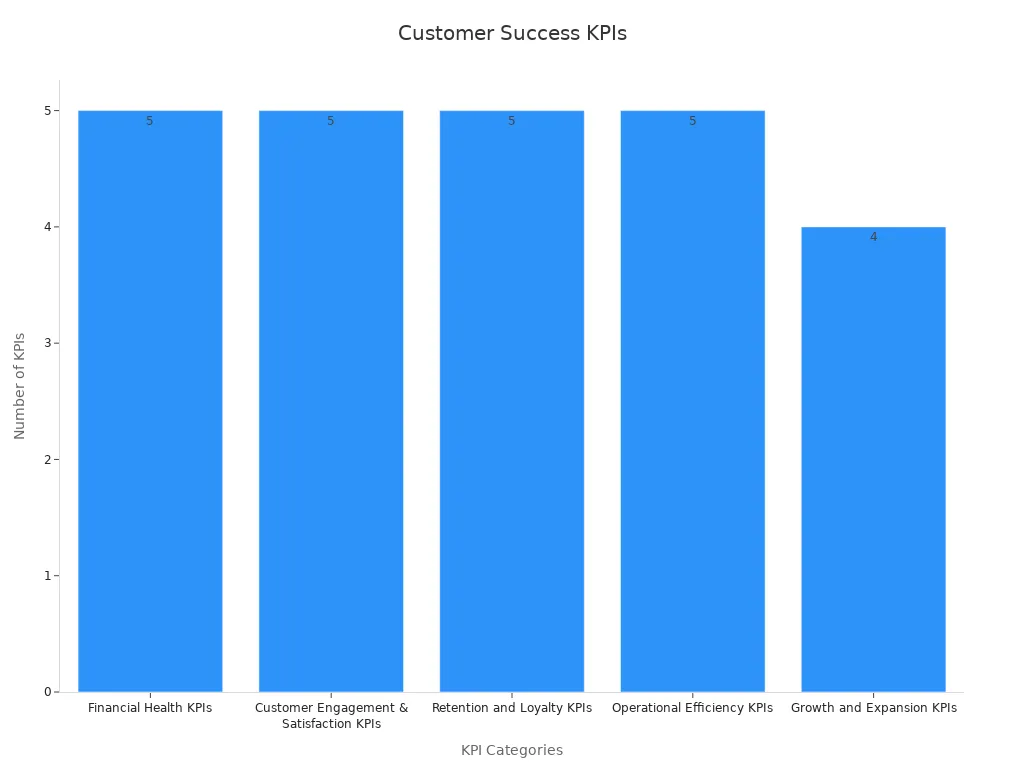
You build strong relationships with customers by staying proactive and responsive. You check in regularly, listen to their needs, and solve problems quickly. You use KPIs like Customer Retention Rate, Net Promoter Score (NPS), and Average Resolution Time to measure your impact.
| Metric Name | Description | Role in Customer Retention |
|---|---|---|
| Net Promoter Score (NPS) | Measures client loyalty and likelihood to recommend the business. | Helps identify and address customer concerns, leading to higher satisfaction and loyalty. |
| Average Resolution Time | Tracks efficiency in resolving customer issues. | Faster resolution improves customer satisfaction and reduces churn. |
| Customer Churn Rate | Percentage of customers who stop doing business over a period. | Identifies at-risk customers and informs retention strategies to reduce churn. |
| Rate of Renewal | Percentage of subscription customers who renew. | Indicates loyalty and satisfaction in subscription-based models; helps tailor retention efforts. |
| Customer Retention Rate | Reflects ability to retain clients over time. | High retention rate signals effective relationship management and customer satisfaction. |
| Customer Effort Score (CES) | Measures difficulty customers face in interactions. | Lower effort leads to higher satisfaction and retention by simplifying customer experience. |
Sobot’s Ticketing System helps you manage customer inquiries, automate workflows, and track resolution times. You can merge tickets, set priorities, and use canned responses to resolve issues faster. This efficiency leads to higher customer satisfaction and supports your client retention goals.
Data and Insights
You rely on data and insights to optimize customer success manager responsibilities. You track key performance indicators such as Adoption Rate, Monthly Active Usage, CSAT, and NPS. You use analytics to spot trends, predict churn, and make informed decisions.
- You monitor both quantitative data (wait times, handle times, channel usage) and qualitative data (customer sentiment, feedback).
- You apply AI-powered models to forecast customer behavior and identify at-risk accounts.
- You collaborate with other teams to ensure your measurement frameworks stay relevant and timely.
With Sobot’s unified dashboard, you access real-time customer success reports and analytics. This helps you act quickly, improve customer support, and deliver a better customer experience.
Upselling and Retention
You drive revenue growth by identifying upsell and cross-sell opportunities. You use customer data to personalize offers and recommend products that match customer needs. You also focus on retention by nurturing relationships and providing ongoing value.
- You offer upgrades or complementary products at the right time, such as after a positive customer interaction.
- You simplify the buying process and use feedback to refine your approach.
- You measure success with metrics like conversion rate, average order value, and renewal rate.
A SaaS company increased revenue by upselling customers from a basic to a premium plan using personalized campaigns. They also cross-sold related tools, raising average revenue per user and improving customer satisfaction. You can achieve similar results by leveraging Sobot’s omnichannel solution, which unifies customer data and streamlines communication across channels.
Feedback and Advocacy
You collect and act on customer feedback to improve products and services. You use CSAT and NPS surveys to measure satisfaction and loyalty. High CSAT scores show that customers are happy, while a strong NPS signals advocacy and future growth.
- You respond quickly to feedback, closing the loop and building trust.
- You use journey mapping to find pain points and make targeted improvements.
- You personalize service based on feedback, which increases loyalty and customer retention.
Sobot’s Ticketing System makes it easy to gather feedback from every channel and respond in real time. You can benchmark your scores against industry standards and use insights to drive continuous improvement in customer success management.
Tip: Customer success manager responsibilities go beyond support. You use technology, data, and strong relationships to create loyal advocates and achieve business goals.
Essential Skills for 2025
Technical Skills
You need strong technical skills to succeed as a customer success manager in 2025. You work with CRM systems, analytics dashboards, and automation tools every day. Many companies now expect you to create personalized reports and dashboards without help from IT. Data democratization lets you access customer data quickly, so you can make better decisions. Self-service analytics tools, like those in Sobot’s unified workspace, help you build tailored reports and track customer journeys. You also use AI-powered ticketing systems to automate routine tasks and focus on strategic work. As automation grows by over 37% each year, your technical skills become even more important for delivering value.
Tip: Keep learning new tools and platforms. Continuous upskilling helps you stay ahead in a fast-changing industry.
Communication
You rely on communication skills to build trust and keep customers engaged. You use verbal, written, and non-verbal communication skills to explain solutions, share updates, and listen to feedback. Studies show that communication skills have the biggest impact on customer satisfaction and retention. For example, CRM communication explains over 50% of the variance in customer satisfaction, and 39% of retention comes from satisfied customers. The table below highlights the impact of communication skills:
| Aspect | Description | Result |
|---|---|---|
| Customer Satisfaction | Explained by CRM communication | 50.08% |
| Retention | Attributed to satisfaction | 39% |
| Communication Process | Most influential for retention | Yes |
You use Sobot’s omnichannel platform to manage all customer conversations in one place, making your communication skills even more effective.
Problem-Solving
You face new challenges every day. Problem-solving skills help you find solutions quickly and keep customers happy. You analyze customer data, identify issues, and use critical thinking to resolve them. You also use your communication skills to explain solutions clearly and guide customers through complex situations. Sobot’s AI-powered tools give you real-time insights, so you can act fast and prevent problems before they grow. When you solve problems efficiently, you build trust and strengthen customer relationships.
Adaptability
You must adapt to rapid changes in technology and customer needs. Adaptability means you adjust your approach when priorities shift or new tools emerge. This skill helps you stay productive and maintain high service quality, even during uncertain times. Adaptable leaders foster innovation and support their teams through change. You use your communication skills to share updates, gather feedback, and keep everyone aligned. Sobot’s flexible solutions make it easier for you to respond to new challenges and deliver consistent results.
Note: Adaptability is one of the top skills employers seek. It supports resilience, stress management, and long-term career growth.
Technology and Omnichannel Solutions
AI and Automation
You see AI and automation transform customer support in 2025. Automated tools like chatbots and smart workflows save you time and help you focus on building relationships. For example, 72% of shoppers now use AI in some form, and 42% of customer service specialists say chatbots play a big role in support. AI-powered systems send instant replies, track customer health, and even predict when a customer might need help. Businesses using AI report a 30% increase in customer retention and prevent 67% of customer churn. Automation also helps you scale customer support, so you can serve more people without losing quality.
Pro Tip: Automated onboarding, follow-ups, and proactive support messages make your work easier and keep customers happy.
Sobot Ticketing System
You need a reliable system to manage customer inquiries across channels. The Sobot Ticketing System gives you a unified platform for email, chat, and voice. This system uses AI to route tickets, set priorities, and merge similar issues. Companies using Sobot have seen impressive results. For example, Klarna improved first response times by 82%, and Motel Rocks deflected 43% of tickets to AI, raising satisfaction by 9.4%. Agilent, a leader in life sciences, used Sobot to boost customer service efficiency by six times and cut costs by 25%. With Sobot, you handle customer support faster and more accurately, leading to higher satisfaction and loyalty.
| Company | Outcome |
|---|---|
| Klarna | 82% faster first responses |
| Motel Rocks | 43% tickets handled by AI, 9.4% higher CSAT |
| Agilent | 6x efficiency, 25% cost reduction |
Unified Customer View
You need a complete picture of each customer to deliver great service. A unified customer view brings together data from every channel into one profile. This approach breaks down data silos and helps you personalize every interaction. Studies show that 87% of customers want a consistent experience across all channels. When you use a unified view, you can spot trends, predict needs, and act quickly. Sobot’s omnichannel platform gives you this power, letting you see all customer support history and preferences in one place. This leads to better engagement, higher loyalty, and smarter business decisions.
Note: Companies with a unified customer view see more repeat business and stronger customer relationships.
Evolving Trends
Personalization
You now see personalization as a core trend in customer success management. Customers expect you to know their preferences and deliver tailored solutions. Recent studies show that 83% of B2B marketers report better lead generation from personalization, and 95% believe it improves relationships. Personalized emails can deliver six times higher transaction rates. When you use AI-driven tools, like Sobot’s omnichannel platform, you can create dynamic, relevant content for every customer. This approach leads to higher customer satisfaction and stronger loyalty. In fact, 71% of consumers expect tailored content, and 67% feel frustrated when it is missing. Companies that focus on personalization often see up to 40% more revenue from these efforts. You help customers feel valued, which increases their trust and engagement.
Tip: Use Sobot’s unified customer profiles to track preferences and deliver personalized support across all channels.
Collaboration
You achieve better results when your teams work together. Collaboration between customer success, support, and sales teams ensures everyone has the right context for each customer. Shared data visibility lets you see health scores and potential churn risks, so you can tailor your conversations. Joint meetings and shared knowledge bases help teams learn from each other and solve recurring issues. Sobot’s platform enables you to centralize customer data and streamline communication. This teamwork leads to faster responses and more consistent customer satisfaction. When you use collaboration tools, you prevent burnout and ensure smooth handoffs, especially for customers who need extra attention.
- Shared knowledge bases improve consistency.
- Centralized data helps you act quickly.
- Clear roles and communication protocols reduce errors.
New Metrics
You now measure success with new, advanced metrics. Traditional metrics like Net Promoter Score remain important, but you also track customer health scores, customer lifetime value, and customer retention cost. These metrics give you a deeper understanding of customer satisfaction and business growth. For example, a customer health score predicts if a customer will stay, grow, or leave. Customer lifetime value helps you identify your most valuable customers. Sobot’s analytics dashboard lets you monitor these metrics in real time, so you can act before problems arise.
| Metric Name | Description | Importance |
|---|---|---|
| Customer Health Score | Predicts retention, growth, or churn risk | Prioritizes support and reduces churn |
| Customer Lifetime Value | Total expected revenue from a customer | Guides retention investment |
| Customer Retention Cost | Cost to keep existing customers | Optimizes marketing and support budgets |
| First Contact Resolution | Issues resolved on first contact | Improves loyalty and customer satisfaction |
Note: Tracking these new metrics helps you deliver better service and drive business growth.
As a customer success manager, you shape every stage of the customer journey. You use technology and omnichannel solutions like Sobot to streamline support, automate tasks, and deliver personalized service. Technology boosts efficiency, opens global markets, and protects customer trust. Generative AI drives transformation, with 74% of early adopters seeing ROI within a year and 86% reporting revenue growth (source).
To stay ahead, keep learning new tools, adapt to evolving trends, and use platforms like Sobot to future-proof your customer success strategy.
- Embrace automation and data analytics for better decision-making.
- Foster collaboration across teams to enhance customer success manager impact.
- Monitor new metrics to measure and improve customer success.
FAQ
What are the top customer success manager responsibilities in 2025?
You focus on onboarding, relationship management, data analysis, upselling, and customer advocacy. Customer success manager responsibilities now include using AI tools like Sobot’s Ticketing System to automate workflows and deliver seamless support across all channels.
How does Sobot help with customer success manager responsibilities?
Sobot provides an omnichannel platform that unifies customer data, automates ticket routing, and supports multilingual service. You use Sobot to streamline customer success manager responsibilities, improve efficiency, and boost customer satisfaction. Learn more at Sobot’s official website.
Why is data important for customer success manager responsibilities?
Data helps you track customer health, predict churn, and personalize support. With Sobot’s analytics dashboard, you gain real-time insights to optimize customer success manager responsibilities and make informed decisions that drive retention and growth.
Can automation improve customer success manager responsibilities?
Yes. Automation reduces manual tasks, speeds up response times, and allows you to focus on building relationships. Sobot’s AI-powered tools automate ticket management, making customer success manager responsibilities more efficient and scalable.
What skills do you need for customer success manager responsibilities in 2025?
You need technical skills, strong communication, problem-solving abilities, and adaptability. Customer success manager responsibilities now require you to use platforms like Sobot, analyze data, and deliver personalized experiences across multiple channels.
Tip: Mastering these skills helps you excel in customer success manager responsibilities and drive business results.
See Also
Discover The Leading Cloud Contact Centers Of 2025
Effective Strategies For Managing Call Center Quality
How AI Agents Are Transforming Customer Support Today

