How to Implement a Customer Success Management Strategy in 2025


You can build a strong customer success management strategy in 2025 by focusing on proactive engagement, using data to guide decisions, and keeping your customers at the center of every step. Companies with a smart customer success strategy see higher retention rates because data integration helps predict needs and reduce churn. Sobot AI and omnichannel solutions, like the Sobot call center, let you track the customer journey and personalize support. Samsung improved efficiency by 30% and reached a 97% satisfaction rate with Sobot.
Customer Success Management Strategy Essentials
Definition and Core Principles
A customer success management strategy helps you guide your customers to reach their goals with your product or service. You focus on building strong relationships and making sure customers get value quickly. This approach goes beyond just solving problems. You help customers succeed at every step.
Here are the core principles that define a strong customer success strategy in 2025:
-
Understanding Customer Goals
You learn what your customers want to achieve. This helps you support them better. -
Onboarding and Training
You make sure customers know how to use your product. Good onboarding reduces time-to-first-value and builds confidence. -
Continuous Support
You offer help even after onboarding. Customers feel supported throughout their journey. -
Measuring Success
You define success metrics and track progress. This helps you see if your customer success process works. -
Proactive Engagement
You reach out before problems happen. This keeps customers happy and loyal. -
Customer Feedback
You listen to what customers say. Their feedback helps you improve your service.
Tip: When you formalize your cs process, you make it easier to deliver a consistent customer experience. Use a customer journey map to spot key moments where you can add value.
These principles work together to create a customer success process that drives results. Companies that follow these steps see better customer satisfaction and loyalty. They also grow revenue through upselling and cross-selling. According to Gartner, collecting customer evidence can increase upselling and cross-selling success rates by 15% to 20%. When you show customers that others in their industry succeed with your product, they feel more confident making big purchases.
Why It Matters in 2025
Customer success management strategy has become a core part of how companies grow. In 2025, you need to focus on delivering value to your users. This helps your business grow faster and succeed in a crowded market.
Here are some reasons why customer success matters more than ever:
- Customer success is now part of company culture. It drives growth and keeps your business moving forward.
- Companies that deliver value see faster growth and stronger results.
- Great customer experiences build loyalty and reduce customer acquisition costs.
- A positive customer experience is key to business success.
- Customer success management is proactive and strategic. You help clients succeed, not just react to problems.
- Effective customer success leads to higher retention rates. Customers stay engaged and renew their contracts.
- When customers trust your team, they upgrade their plans and tell others about your service.
- AI and automation help you predict churn and automate tasks. This lets your team focus on building relationships.
- The human touch still matters. Building trust and engaging with customers makes a big difference.
Note: In 2025, you will see new trends shaping customer success. Customer teams now own more growth targets and must show their impact on revenue. AI and automation will transform how you engage with customers and streamline your customer success process. Partnerships will focus on real business outcomes, not just product adoption.
Experts predict that customer teams will use standardized methods to drive predictable growth. AI-driven tools will help you provide value to every customer. The focus will shift from just using the product to helping customers reach their goals. This will improve the overall customer experience and reduce time-to-first-value.
Sobot’s Approach
Sobot takes a unique approach to customer success management strategy. You get access to advanced tools that help you formalize your cs process and deliver value at every stage of the customer journey.
Sobot’s all-in-one contact center solution brings together voice, chat, email, and social media in one place. This unified workspace lets your team manage every interaction without switching systems. You can use Sobot’s AI-powered features to automate routine tasks, so your agents can focus on complex issues and build stronger relationships.
Samsung’s story shows how Sobot’s approach works in real life. Samsung used Sobot to unify its communication channels and connect data across systems. This made it easy for agents to see the full customer journey map and respond quickly. Samsung reached a 97% customer satisfaction rate and improved agent efficiency by 30%. VIP customers even received personalized video support, which increased loyalty.
Sobot also helps you define success metrics and track customer success metrics in real time. You can monitor key data, such as time-to-first-value, and adjust your strategy as needed. The platform’s analytics give you insights into every step of the customer journey. This helps you spot trends, measure results, and improve your customer success strategy over time.
You can use Sobot’s tiered loyalty programs to keep customers engaged. The platform uses psychological principles like the Endowment Effect and Loss Aversion to motivate customers to stay loyal. With Sobot, you can deliver a personalized customer experience that builds trust and drives long-term success.
For more details about Sobot’s solutions, visit Sobot Omnichannel Solution or explore the Voice/Call Center.
Setting Goals and Metrics
S.M.A.R.T. Goals for Customer Success
You need clear goals to guide your customer success management strategy. S.M.A.R.T. goals help you focus on what matters most. These goals are Specific, Measurable, Achievable, Relevant, and Time-bound. When you set S.M.A.R.T. goals, you make it easier to track progress and show results.
Here are some examples of S.M.A.R.T. goals for customer success teams:
- Increase NPS score from 22 to 50.
- Maximize customer outcomes.
- Harness automation to make your low-touch customers successful.
You can also set goals like:
- Get feedback from 100 customers on product improvements.
- Conduct 25 phone interviews with active customers.
- Improve customer health score by 10% from your customer base.
- Deploy email campaigns that increase product usage in your low-touch segment by 15%.
Defining what matters and tracking progress helps you achieve more in your customer success process. When you align these goals with your company’s objectives, you make sure everyone works toward the same targets. Regularly reviewing your goals lets you adapt to feedback and new trends.
Key Performance Indicators (KPIs)
KPIs show how well your customer success team is doing. You should track metrics that matter for customer retention and customer engagement. Important KPIs include:
- Customer health
- Customer lifetime value
- Customer satisfaction score
- Net promoter score
- Customer churn rate
- Customer retention rate
- Customer effort score
- Average time on the platform
- Product stickiness
- Free trial conversion rate
Customer health scoring systems help you spot customers who need help before they leave. By watching these scores, you can act early and keep customers happy. KPIs like retention rate and NPS help you measure the impact of your customer success management strategy.
Tip: Use a table to track your KPIs each month. This makes it easy to see trends and areas for improvement.
Data-Driven Decisions
You should use data to make smart choices for your customer success team. Collect data from every customer touchpoint for a complete view. Advanced analytics tools help you find insights and predict what customers need next.
- Data-driven decisions improve customer engagement.
- You can tailor your products and services to match customer goals.
- Centralizing data in one place helps you avoid silos and make better choices.
Gartner reports that by 2025, most customer engagement interactions will be proactive.
Tracking KPIs and using analytics lets you refine your strategy and boost customer retention. When you review your data often, you can adjust your approach and keep up with changing business needs.
Customer Success Process and Journey Mapping
Mapping the Customer Journey
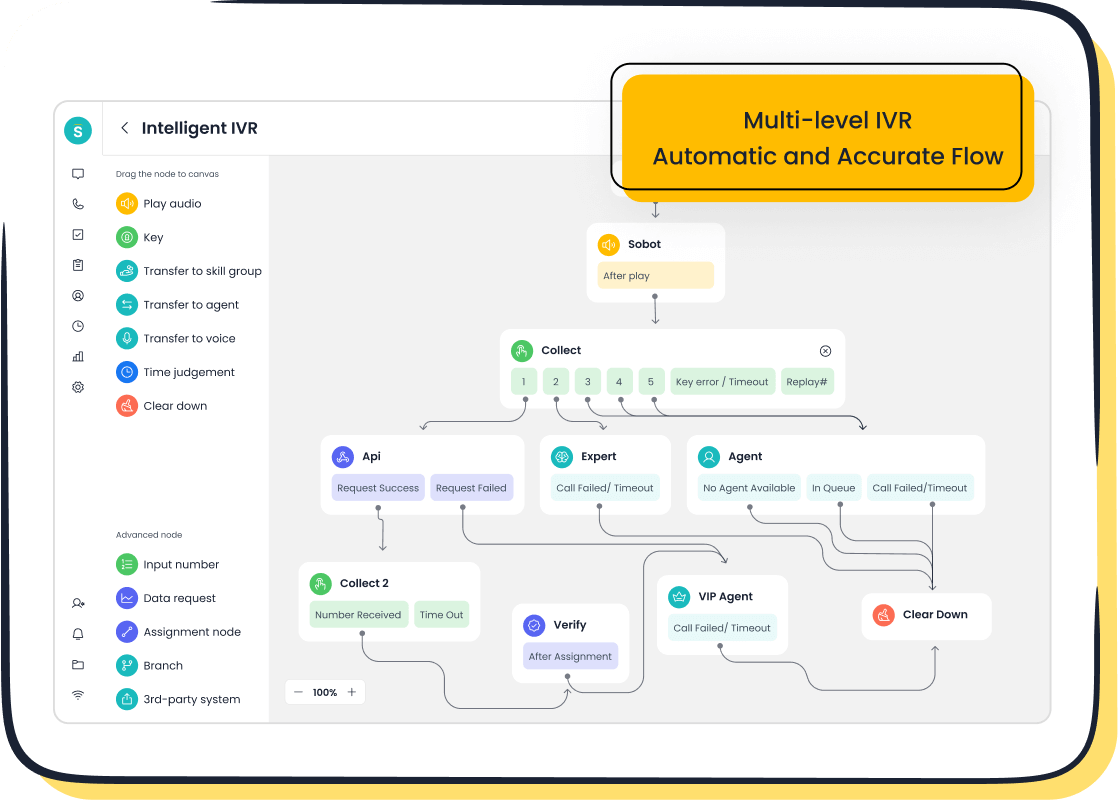
You need to see your business through your customer’s eyes. Mapping the customer journey helps you understand every step your customer takes, from first learning about your product to becoming a loyal advocate. This process forms the backbone of a strong customer success management strategy.
To map the journey effectively, follow these steps:
- Use an outside-in approach: Start by viewing the journey from your customer’s perspective. Ask yourself what your customer wants and needs at each stage.
- Define the handoffs: Identify where your customer moves from one team to another, such as from sales to onboarding or from support to account management.
- Focus on key moments of truth: Pinpoint the milestones that matter most, like onboarding, first use, or renewal. These moments shape how your customer feels about your brand.
- Share with customers and give them insights: Validate your journey map with real customers. Their feedback helps you spot gaps and improve the process.
- Measure and optimize the journey map: Regularly review and update your map as your business and customer needs change.
When you map the customer journey, you can spot where customers feel frustrated or confused. You can also see where your team delivers great experiences. This helps you close gaps between what customers expect and what you deliver.
Tip: Journey mapping is not a one-time task. You should revisit your map often to keep up with new products, services, and customer needs.
A well-mapped journey brings your teams together. Marketing, sales, support, and product teams can all see the same big picture. This shared view helps everyone work toward the same goal: making your customer successful.
Identifying Key Touchpoints
Every interaction your customer has with your business is a touchpoint. Some touchpoints matter more than others. You need to identify and prioritize these key moments to build an effective customer success process.
Here are the main stages and touchpoints you should monitor:
| Touchpoint Type | Description | Importance in Customer Success |
|---|---|---|
| Marketing Materials | Initial contact points that create awareness about your business. | Essential for attracting potential customers. |
| Customer Service | Interactions when customers seek help or support. | Critical for customer satisfaction and retention. |
| Online Experience | Website and app interactions that engage customers. | Key for providing seamless user experiences. |
| In-store Experience | Physical interactions that build relationships. | Important for trust and loyalty. |
You should look at the journey in stages:
- Awareness: Customers first learn about your product or service.
- Consideration: They compare options and gather information.
- Purchase: They make a decision and buy.
- Retention: You keep them engaged and satisfied after the sale.
- Loyalty: You encourage repeat business and advocacy.
To optimize these touchpoints:
- Map the journey to visualize every interaction.
- Analyze customer interactions to find strengths and weaknesses.
- Engage with customers through channels like chatbots, social media, and phone.
- Collect feedback to understand what works and what needs improvement.
- Review and optimize touchpoints regularly to keep the experience fresh.
When you focus on the right touchpoints, you can remove friction and make the journey smoother. This leads to higher satisfaction and loyalty. Studies show that maximizing satisfaction with customer journeys can increase customer satisfaction by 20%. It can also boost revenue by 15% and lower service costs by up to 20%.
Customers who enjoy a seamless journey are more likely to stay, buy again, and recommend your brand to others.
Personalization with Sobot Omnichannel
Personalization is the key to making every customer feel valued. Sobot’s omnichannel solution helps you deliver tailored experiences at every touchpoint, no matter where your customers interact with you.
Sobot uses generative AI to analyze customer data and behavior patterns. This lets you create true one-to-one personalization across all channels. For example, when a customer chats on your website, sends an email, or calls your support center, Sobot’s unified workspace gives your agents a complete view of their history and preferences. You can greet customers by name, suggest relevant products, and solve problems faster.
Sobot’s omnichannel platform connects social media, email, live chat, phone, and more. This integration means your team can respond quickly and consistently, whether a customer reaches out on WhatsApp, Facebook, or your website. Real-time personalization engines use behavioral data to customize offers and messages, which increases engagement and retention.
As Sobot experts explain, generative AI in customer experience by 2025 will drive hyper-personalization, proactive engagement, and smarter virtual agents. This technology helps you anticipate customer needs and deliver support before issues arise.
Sobot’s impact is clear. OPPO, a leading electronics brand, integrated Sobot’s AI-driven chatbot and marketing solutions. This led to an 83% chatbot resolution rate and a 57% increase in repurchase rate. These results show how personalized interactions can boost loyalty and drive growth.
You can also use Sobot’s analytics to track which touchpoints matter most. The platform provides insights into customer behavior, helping you refine your approach and improve outcomes. By synchronizing inventory and customer data across channels, Sobot ensures accurate product availability and personalized recommendations.
Sobot’s omnichannel solution empowers you to:
- Deliver consistent, personalized service across all channels.
- Automate routine tasks so your team can focus on complex issues.
- Use AI-powered chatbots for 24/7 support and self-service.
- Monitor performance with real-time analytics and feedback loops.
Customers expect convenience, consistency, and real-time information. Sobot helps you meet these expectations, which leads to higher satisfaction and loyalty. When you use Sobot’s omnichannel tools, you create a seamless journey that keeps customers coming back.
Learn more about Sobot’s omnichannel solution at Sobot Omnichannel Solution.
Building Your Customer Success Team

Roles and Structure
You need a clear team structure to deliver great customer success. Start by defining key roles. Each role brings unique value to your organization:
- Chief Customer Officer: Aligns company priorities with customer needs.
- Vice President of Customer Success: Leads strategy and execution.
- Director of Customer Success: Coaches team members and builds relationships.
- Customer Success Managers: Guide customers through onboarding, adoption, and renewals.
- Specialists: Focus on areas like onboarding, renewals, or digital engagement.
Some companies use generalists who handle many tasks. This works well for startups. Others use specialists who focus on specific areas. Specialists help improve retention and satisfaction. Your choice depends on your company’s size and goals.
A strong structure helps you scale and adapt as your business grows.
Training and Empowerment
Training gives your team the skills to help customers succeed. You can use different programs to build expertise. Here are some top options:
| Program Name | Description | Skills Enhanced |
|---|---|---|
| Certified Customer Success Manager (CCSM) | Full curriculum for customer success | Onboarding, success plans, communication |
| CSM Practice Workshop | Hands-on workshop | Risk management, health scoring, negotiation |
| Udemy Customer Success Manager Course | Online course | Engagement, retention strategies |
| Managing Difficult Customers | Course for tough situations | Conflict resolution, communication |
Ongoing training matters. It helps your team set the right tone during customer onboarding. Training also teaches your team to measure success and show value to customers. A culture of learning keeps your team sharp and ready for change.
Cross-Team Collaboration
You need to break down silos to deliver a seamless customer experience. Use these best practices:
- Set clear strategies for collaboration.
- Encourage your team to see things from other departments’ perspectives.
- Share insights across teams.
- Include the right people in meetings.
- Align everyone with shared business goals.
Create a customer journey map that involves all teams. Update this map often. When teams work together, you improve communication and solve problems faster. This teamwork boosts customer satisfaction and retention. Metrics like Net Promoter Score and Customer Effort Score often rise when teams align their efforts.
Leveraging Technology and Tools
Sobot Voice/Call Center Solutions
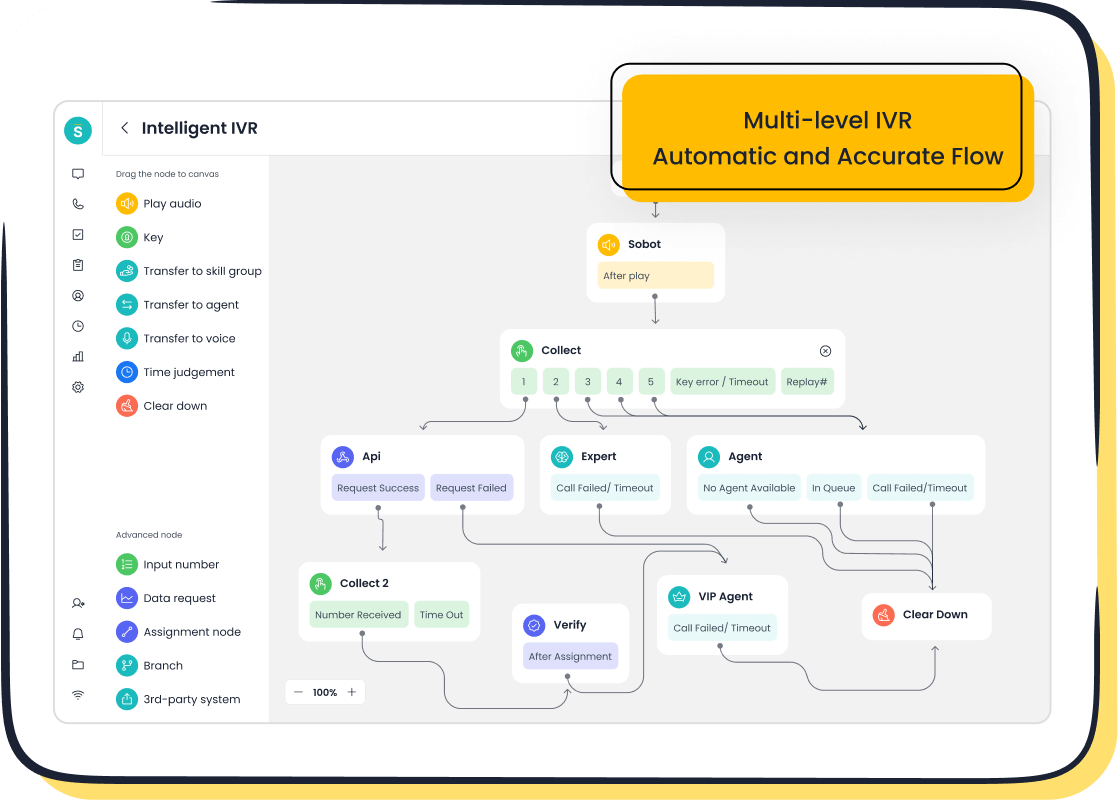
You can transform your customer relationships by using Sobot’s Voice/Call Center solutions. These tools combine AI with omnichannel capabilities, making every customer interaction efficient and smooth. Sobot’s platform stands out because it offers:
- Intelligent call routing that connects customers to the right agent quickly.
- Real-time analytics that help you track and improve customer relationships.
- Seamless integration with your existing systems, so agents have all the information they need.
- End-to-end encryption and compliance with global data regulations, keeping customer data safe.
- A user-friendly interface that helps agents adapt fast and focus on building customer relationships.
Many organizations have seen measurable improvements after switching to Sobot. The table below shows the impact on key customer satisfaction metrics:
| Metric | Improvement |
|---|---|
| Customer Satisfaction | +45% increase |
| Processing Time | -77% reduction |
| Net Promoter Score (NPS) | +15-25 points |
| First Contact Resolution Rate | +40% improvement |
| Wait Times | -50% reduction |
| Operational Cost Reduction | Up to 30% reduction |
| ROI | 300-400% over 3 years |
| Revenue Increase | 7-25% increase |
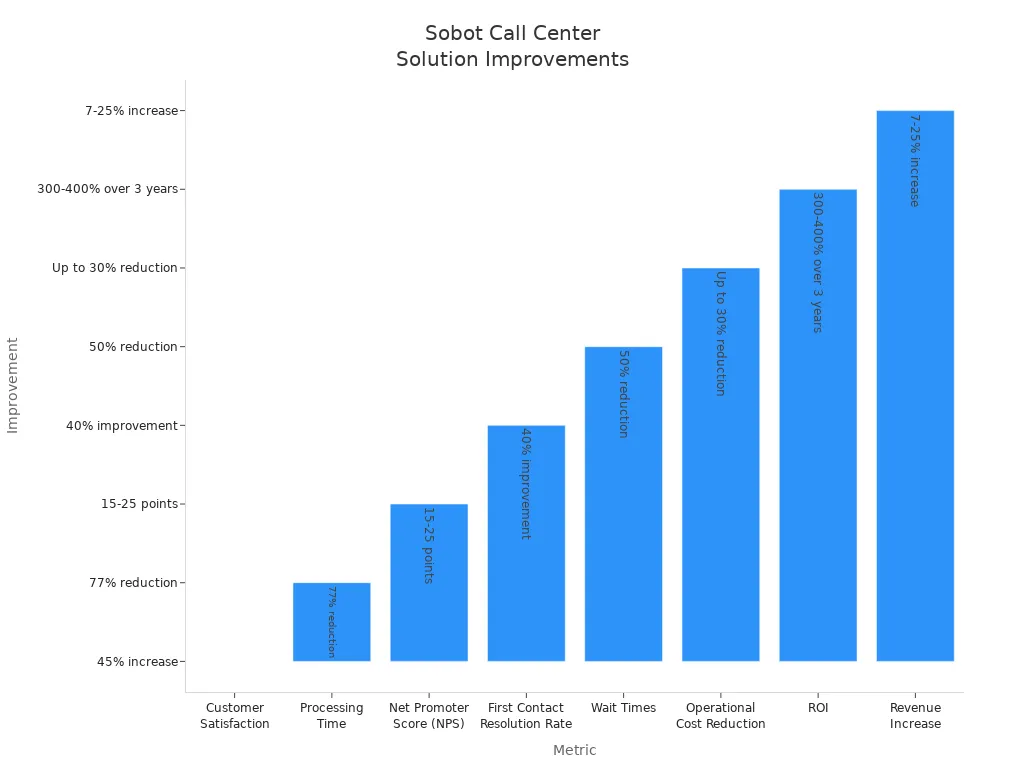
Sobot’s unified workspace also simplifies training and helps agents manage customer relationships more effectively. You can see how these features lead to higher customer satisfaction and stronger customer relationships.
AI and Automation in Customer Success
AI and automation play a big role in shaping customer relationships. You can use automation to handle routine tasks, which gives your team more time to understand customer needs. AI tracks a wide range of data and can spot risks early. It reads emotions from customer interactions and finds patterns that improve customer relationships.
With AI, you can:
- Predict customer behavior and personalize engagement.
- Streamline onboarding and nurture customer relationships.
- Automate tasks like data entry and scheduling, so your team can focus on building customer relationships.
- Suggest related products to customers, increasing value for both sides.
These tools help you create tailored solutions and build stronger customer relationships at every stage.
Analytics and Feedback Loops
Analytics and feedback loops help you improve your customer relationships over time. You can collect and analyze feedback from every interaction. This process creates a cycle of continuous improvement.
- Feedback loops let you act quickly on customer input, which builds trust and loyalty.
- Analyzing feedback helps you spot pain points and guide product decisions.
- Engaging customers in feedback loops makes them feel valued and strengthens customer relationships.
- Tracking key performance indicators ensures you see real improvements in customer satisfaction metrics.
When you listen to your customers and use analytics, you can innovate and stay ahead in your industry. This approach leads to better products, higher retention, and long-lasting customer relationships.
Continuous Improvement in Customer Success Strategy
Monitoring and Iteration
You need to keep a close eye on your customer success journey. Monitoring helps you see what works and what needs change. Use dashboards to track progress at every stage of the customer success journey. Look at data from onboarding, support, and renewal. Set regular check-ins to review your customer success journey with your team. When you spot a problem, act fast. Make small changes and test them. This process is called iteration. You repeat it to improve results. Over time, you will see fewer issues and more happy customers. Monitoring and iteration help you reduce customer churn and keep your customer success journey strong.
Acting on Customer Feedback
Customer feedback is a powerful tool in your customer success journey. Ask for feedback at key points, such as after onboarding or support calls. Use surveys, interviews, or quick polls. Listen to what customers say about their experience. When you get feedback, share it with your team. Work together to find solutions. Make changes based on what you learn. This shows customers you care about their voice. Acting on feedback builds trust and leads to customer advocacy. It also helps you spot early signs of customer churn. When you act on feedback, you make your customer success journey better for everyone.
Adapting to Trends
The customer success journey changes as new trends appear. Stay alert to new tools, technology, and customer needs. Read industry news and join webinars. Watch how other companies improve their customer success journey. Try new ideas, like using AI for faster support or adding self-service options. Update your process to match what customers expect. When you adapt, you keep your customer success journey fresh and effective. This helps you stay ahead and meet your goals.
Tip: Continuous improvement is not a one-time task. Make it part of your daily routine to keep your customer success journey moving forward.
You can build a winning customer success management strategy in 2025 by following clear steps. Focus on mapping the customer journey, setting S.M.A.R.T. goals, and using real-time data. Leverage technology like Sobot’s omnichannel and Voice/Call Center solutions to boost efficiency and satisfaction.
Start today by reviewing your current process and exploring Sobot’s resources. Visit Sobot’s website for guides, case studies, and expert support.
FAQ
What is a customer success management strategy?
A customer success management strategy helps you guide customers to reach their goals with your product. You use data, proactive support, and clear processes to improve satisfaction and retention. This strategy keeps your business growing and your customers happy.
How does Sobot support my customer success management strategy?
Sobot gives you tools like omnichannel solutions and a Voice/Call Center. You can track the customer journey, automate tasks, and personalize support. These features help you deliver a seamless customer experience and boost your customer success management strategy.
Why should I map the customer journey?
Mapping the customer journey lets you see every step your customer takes. You can spot pain points, improve touchpoints, and make sure your customer success management strategy works. This process leads to higher satisfaction and loyalty.
What KPIs should I track for customer success?
You should track Net Promoter Score (NPS), customer retention rate, customer satisfaction score, and customer health. These KPIs show how well your customer success management strategy performs. Sobot’s analytics make it easy to monitor these metrics.
Can Sobot integrate with my existing systems?
Yes, Sobot integrates with CRM and other business systems. You can connect data, streamline workflows, and manage the customer journey in one place. This integration supports your customer success management strategy and improves efficiency.
See Also
Discovering Leading Cloud Contact Centers for 2025
A Guide to Implementing Omnichannel Contact Center Strategies
Enhancing SaaS Customer Support Through Live Chat Techniques
Best 10 Customer Feedback Software Options for 2024
Essential Practices for Effective Call Center Quality Management

