Must-Have Soft Skills for Customer Service Representatives


You need several soft skills to succeed in customer service. These include empathy, active listening, clear communication, problem-solving, adaptability, and time management. Soft skills help you build trust and create strong customer care experiences. Teams that balance technical knowledge with soft skills see higher customer satisfaction. Sobot supports customer service soft skills training with tools that boost satisfaction and efficiency.
One professional services firm improved client satisfaction scores by combining simulations, coaching, and real projects.
Core Soft Skills in Customer Service

Empathy and Emotional Intelligence
Empathy in customer service means understanding and sharing the emotions of customers, which helps build trust and meaningful relationships. It involves placing yourself in the customer’s situation to feel what they are experiencing, including their challenges and frustrations.
Emotional intelligence (also called emotional quotient, or EQ) and empathy in Customer Support are more than just 'nice to have' soft skills – because in reality, Support conversations are often emotional moments.
You need empathy and emotional intelligence to connect with customers on a human level. These soft skills help you recognize feelings and respond with care. When you show empathy, you make customers feel heard and valued. This approach builds trust and leads to better customer satisfaction. Emotional intelligence helps you manage your own emotions and understand the emotions of others. You can stay calm and positive, even when customers feel upset.
Empathy directly correlates with customer satisfaction. When you show understanding and concern for customers’ feelings, you personalize the experience. This emotional connection enhances customer satisfaction levels, leading to positive feedback and increased brand loyalty.
Sobot’s omnichannel solution supports empathy and emotional intelligence by giving you a complete view of each customer’s history and preferences. You can see past conversations, tickets, and notes in one place. This unified workspace helps you understand the customer’s journey and respond with empathy. For example, Samsung used Sobot’s all-in-one contact center to unify communication channels and improve data connectivity. Their agents could access customer information quickly, which helped them provide more empathetic and personalized service. As a result, Samsung achieved a 97% customer satisfaction rate and a 30% increase in agent efficiency.
Active Listening
Active listening is one of the most important soft skills in customer service. You use active listening to focus on what the customer says, both in words and emotions. This skill helps you understand the real problem and respond in a way that meets the customer’s needs. Active listening is also called empathetic listening because you listen with the goal of understanding, not just replying.
Here are the key components of active listening:
| Component | Description |
|---|---|
| Pay Attention | Focus on the customer’s words, tone, and emotions while minimizing distractions. |
| Show That You Are Listening | Use verbal affirmations and summarize what the customer has said to confirm understanding. |
| Provide Feedback | Paraphrase or summarize the customer’s points to demonstrate understanding. |
| Defer Judgment | Allow the customer to express their thoughts fully without interruption. |
| Respond Appropriately | Offer thoughtful and respectful responses that align with the customer’s communicated concerns. |
You need strong listening skills to resolve customer issues quickly. When you listen to customer concerns before offering solutions, you make them feel important. This approach increases satisfaction and helps you solve problems more effectively. Customers often feel they receive special treatment when you use active listening.
Sobot’s omnichannel platform makes active listening easier. You can track conversations across channels like live chat, phone, and social media. The unified workspace keeps all messages and notes together, so you never miss important details. Sobot’s AI-powered chatbot can handle simple questions, giving you more time to focus on complex issues that need active listening. This system helps you deliver a better customer experience and improve satisfaction.
Clear Communication
Clear communication is another core soft skill for customer service representatives. You need to share information in a way that is easy to understand. Good communication skills help you avoid confusion and make sure customers know what to expect. Effective communication means using plain language, speaking directly, and giving clear instructions.
The main elements of clear communication include:
- Using plain language: Avoid jargon and technical terms that may confuse customers.
- Active voice: This style of writing is more direct and engaging.
- Concise phrasing: Get to the point without unnecessary details.
- Active listening: Understanding the customer's perspective helps tailor communication accordingly.
- Providing clear instructions: Ensure customers understand the next steps.
Clear and concise communication prevents misunderstandings. When you use straightforward language, you build trust and confidence with customers. This approach improves the overall customer experience and increases satisfaction.
Sobot’s omnichannel solution supports clear communication by integrating multiple channels into one platform. You can manage phone calls, emails, live chats, and social media messages from a single workspace. This setup helps you keep your communication consistent and clear. Sobot’s chatbot and voicebot can answer common questions, so you can focus on more complex conversations. The platform also provides real-time monitoring and analysis, which helps you improve your communication skills over time.
Samsung’s story shows the power of clear communication. By using Sobot’s unified contact center, Samsung’s agents could respond faster and more accurately. They had access to all customer data and conversation history, which helped them give clear answers and instructions. This led to higher customer satisfaction and more efficient service.
Soft skills like empathy, active listening, and clear communication are essential for customer service success. Sobot’s solutions give you the tools to develop and use these skills every day. You can build stronger relationships, solve problems faster, and create a better customer experience.
Problem-Solving and Adaptability
Effective Problem-Solving
You need strong soft skills to solve customer issues quickly and completely. Effective problem-solving in customer service means you remove barriers that stop you from meeting customer needs. You look for the root cause of the problem and find the best solution. This skill helps you reach service goals and improve customer satisfaction.
When you use problem-solving skills, you can resolve many issues on the first call. First contact resolution is important because customers want fast answers. If you solve their problems right away, they feel valued and are more likely to stay loyal. Agents with good problem-solving skills help increase first contact resolution rates, which leads to higher satisfaction and better results for your team. Training and support help you build these skills and make your work more effective.
Adaptability in Customer Service
Adaptability helps you adjust to new situations and changing customer needs. In a fast-changing world, you must be ready to learn new things and try new ways to help customers. Companies that show adaptability can react quickly and even look forward to change. You need to be flexible, creative, and open to new ideas to solve customer issues well.
For more on adaptability in business, see WalkerXM and IntelligentBee.
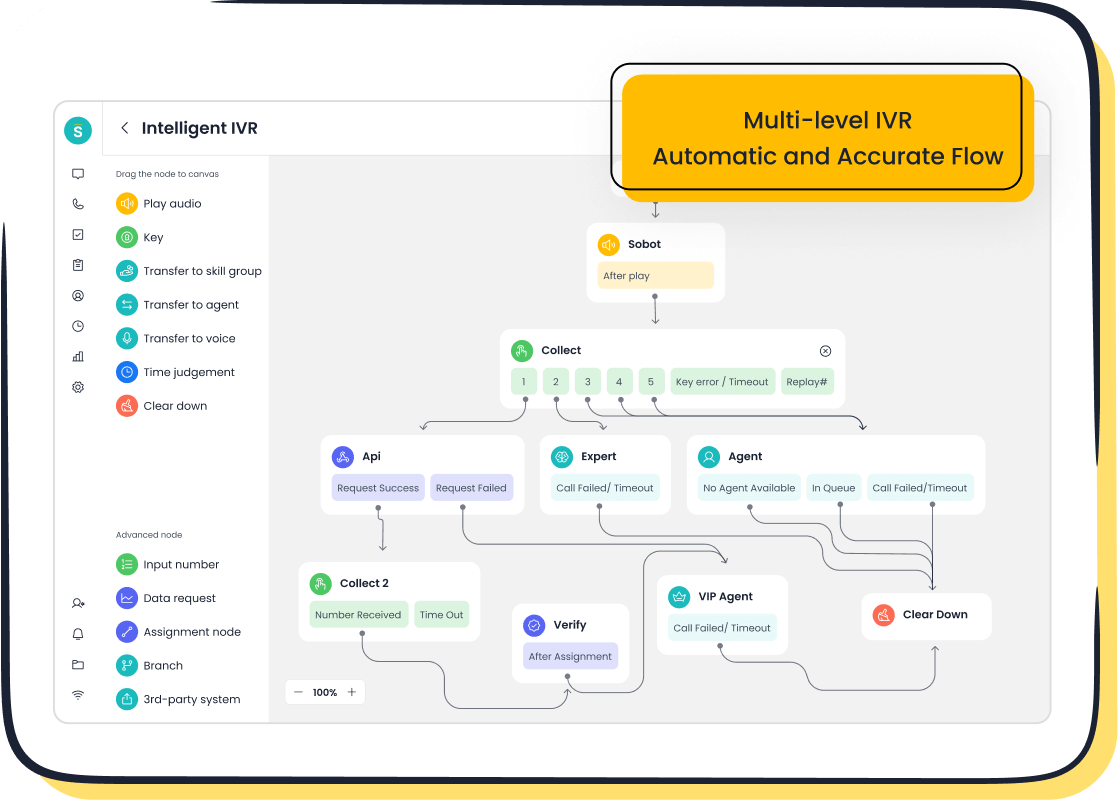
Sobot’s Voice/Call Center gives you tools to be more adaptable. Features like intelligent IVR and smart call routing send customers to the right agent fast. Real-time call monitoring lets supervisors help you during calls. Call recording and transcription help you learn from past calls. The AI-powered voicebot handles simple questions, so you can focus on complex problems. These features help you adjust to customer needs and provide better service.
| Feature | Benefit |
|---|---|
| Intelligent IVR | Smart call routing based on customer needs |
| Global number availability | Local numbers in 50+ countries |
| Real-time call monitoring | Supervisors can listen, whisper, or join calls |
| Call recording and transcription | Automatic documentation for quality assurance |
| Voicebot integration | AI handles initial inquiries |
Handling Difficult Situations
You will face tough situations in customer service. Use these strategies to handle them well:
- Stay calm and composed
- Let the customer speak
- Understand their perspective
- Listen actively
- Avoid overpromising
- Provide a tailored solution
These soft skills help you turn difficult moments into positive outcomes. When you stay calm and listen, you build trust and improve customer satisfaction.
Positive Attitude and Time Management
Maintaining a Positive Attitude
You shape every customer interaction with your attitude. A positive attitude is one of the most important soft skills in customer service. When you greet customers with energy and optimism, you create a welcoming environment. Customers feel valued and respected. This approach builds emotional connections and encourages loyalty.
Here is how a positive attitude influences customer loyalty and retention:
| Evidence | Explanation |
|---|---|
| Positive experiences foster emotional connections | A positive demeanor from service staff leads to better interactions, making customers feel valued, which encourages repeat business. |
| Customers prefer companies that provide positive experiences | Companies must revamp processes to meet customer needs, reflecting a positive attitude at every touch-point. |
| Positive service staff convey empathy and care | When staff are positive, customers feel heard and respected, leading to higher retention and attraction of new customers. |
You can use Sobot’s omnichannel solution to keep your attitude consistent across all channels. The unified workspace helps you track conversations and customer history, so you can respond with empathy and positivity every time.
Time Management for Customer Service
Time management is another key soft skill for customer service representatives. You need to handle many tasks each day. Good time management helps you stay organized and productive. Here are some best practices:
- Use a to-do list to plan your day and set priorities.
- Improve your discipline to complete tasks on time.
- Close the most difficult tasks first when your energy is high.
- Delegate more tasks when possible.
- Refuse excessive work to maintain quality.
- Allocate a certain amount of time for each task.
- Take regular breaks to stay motivated.
Sobot’s Voice/Call Center supports your time management. Features like intelligent IVR, call routing, and AI-powered voicebot help you handle calls efficiently. The unified workspace keeps all information in one place, so you can switch between tasks quickly.
Reducing Stress and Improving Experience
You face many challenges in customer service. Stress can build up if you do not manage your time well. Studies show that 74% of contact center representatives are at risk of burnout, and turnover rates can reach 45%. When you use effective time management techniques, you handle your workload better and feel less stress. This helps you stay focused and respond to customers faster.
By reducing stress, you improve your job satisfaction and create a better experience for customers. Sobot’s tools, such as live chat, ticketing system, and AI-powered chatbot, help you automate routine tasks. This gives you more time to focus on complex issues and deliver excellent service. Soft skills like a positive attitude and time management help you succeed in customer service and build lasting relationships with customers.
Teamwork and Conflict Resolution
Collaboration in Customer Service
You need teamwork to deliver great customer support. When you work together, you share knowledge and solve problems faster. Teamwork helps you learn new soft skills from your peers. You can support each other during busy times, which reduces stress and makes the workplace happier. Sobot’s unified workspace lets you see all customer interactions in one place, so you can collaborate easily with your team. You can use live chat, ticketing, and voice tools to share updates and help each other.
Here are some benefits of teamwork in customer service:
| Benefit | Description |
|---|---|
| Improved Employee Mental Health | Team members support each other, reducing stress and fostering a happier work environment. |
| Employee Engagement | Collaboration creates a sense of community, leading to higher motivation and engagement. |
| Improved Communication | Enhances communication among team members, ensuring consistent customer service delivery. |
| Increased Profits | Happy, motivated employees contribute to higher productivity and customer loyalty, boosting profits. |
| Skill Development | Teamwork encourages knowledge sharing and helps employees develop new skills. |
You will find that teamwork also reduces burnout and increases job satisfaction. When you handle cases together, you resolve issues faster and create a better customer experience.
Conflict Resolution Skills
You will face disagreements in customer support. Conflict resolution is a key soft skill for every team member. You need to address issues quickly to keep the team strong. Set clear communication rules with your group. This helps everyone understand what to expect. Build psychological safety so you and your teammates feel safe sharing ideas and feedback. Use mediation if a problem grows bigger. Try cognitive reframing to focus on solutions, not problems. Watch for early signs of tension and address them before they grow.
| Technique | Description |
|---|---|
| Set Clear Communication Rules | Create team-agreed guidelines to avoid misunderstandings. |
| Build Psychological Safety | Foster an environment where everyone feels safe sharing ideas and feedback. |
| Use Mediation | Bring in a neutral facilitator for conflicts that escalate. |
| Apply Cognitive Reframing | Shift perspectives to focus on solutions, not problems. |
| Predictive Conflict Management | Spot early tension signs and address them proactively. |
Remember, conflict can help your team grow. Leaders should expect and manage conflict as part of team development. When you address conflict early, you build deeper relationships and achieve greater success.
Building a Supportive Team Environment
You need a supportive team to thrive in customer service. A strong team culture encourages you to share ideas and solve problems together. Sobot’s contact center tools, like AI-powered chatbots and ticketing systems, give you access to the data you need to help customers quickly. When you feel empowered to make decisions, you resolve issues faster. Supervisors should train you and your teammates to delegate tasks and share authority. This reduces business risks and helps everyone grow.
| Strategy | Description |
|---|---|
| Enhanced Problem-Solving and Innovation | A strong team culture encourages collaboration and diverse perspectives, leading to better problem-solving and innovation. |
| Increased Employee Satisfaction and Reduced Turnover | Positive work environments with mutual respect lead to higher job satisfaction and lower turnover rates. |
| Improved Performance and Productivity | Shared values and goals streamline efforts, enhancing overall performance and productivity. |
| Lower Risk of Employee Burnout | Supportive cultures help distribute workloads and provide emotional support, reducing burnout risks. |
| Attraction and Retention of Talent | Strong cultures attract and retain employees who value supportive environments. |
You will see that a supportive team environment leads to better performance and less burnout. When you have the right tools and support, you can deliver excellent customer support and develop your soft skills every day.
Customer Service Soft Skills Training with Sobot
Importance of Ongoing Training
You need customer service soft skills training to keep your team strong and effective. Soft skills shape every customer interaction. Skills like empathy and clear communication help you solve problems and make customers feel valued. Ongoing training gives you the chance to practice these skills and improve your service. When you focus on customer service soft skills training, you help your team resolve issues faster and keep customers coming back. Managers should check in with you often to find strengths and areas for growth. This approach makes sure your training matches your needs and helps you deliver better results. According to Forbes, ongoing soft skills training leads to higher customer satisfaction and loyalty.
Leveraging Sobot Voice/Call Center for Training
Sobot’s Voice/Call Center and omnichannel solutions make customer service soft skills training easier. You can use the unified workspace to review calls, chats, and tickets. The platform lets you listen to call recordings and read transcripts. Supervisors can give you feedback right away. Sobot’s AI-powered voicebot and chatbot handle simple questions, so you can focus on learning advanced skills. The system supports live chat, ticketing, and phone calls, giving you many ways to practice. You can join role-play sessions or simulations to build your confidence. Sobot’s tools help you learn by doing, which is the best way to master soft skills.
Measuring and Improving Soft Skills
You can measure your progress in customer service soft skills training with Sobot’s analytics and unified workspace. The platform tracks your interactions and gives you reports on your performance. You can use these methods to see how you are doing:
| Method | Description | Pros | Cons |
|---|---|---|---|
| Situational Judgment Tests | Choose the best action in real scenarios | Shows decision-making and people skills | May not cover all soft skills |
| Behavioral Interviews | Answer questions about past experiences | Reveals real-life use of soft skills | Can feel formal |
| 360-Degree Feedback | Get input from peers and supervisors | Gives a full view of your skills | May be biased |
| Personality Assessments | Measure traits like communication and adaptability | Finds key traits for customer service | May not show skills in action |
| Workplace Simulations | Practice real challenges in a safe setting | Shows how you use soft skills in real time | Takes time to set up |
You can also use self-assessments and feedback from customers. Sobot’s analytics help you spot trends and set goals for improvement. With regular customer service soft skills training, you keep growing and deliver the best service possible.
Soft skills shape every customer interaction. Leaders recognize that empathy, active listening, and clear communication drive customer satisfaction and loyalty. Sobot’s contact center solutions help you build emotional intelligence, teamwork, and adaptability. Ongoing training with Sobot’s tools increases engagement and performance. You create stronger relationships and a positive feedback loop. Invest in soft skills training for long-term success. For support or resources, reach out to Sobot and explore their chatbot, live chat, voicebot, and ticketing system.
FAQ
What are the most important soft skills for customer service representatives?
You need empathy, active listening, clear communication, problem-solving, adaptability, and teamwork. These skills help you build trust and improve customer satisfaction. Sobot’s contact center solutions support you in developing these skills every day.
How can Sobot help with customer service soft skills training?
Sobot offers tools like live chat, AI Agent, voicebot, and ticketing system. You can review call recordings, practice role-play, and get feedback from supervisors. The unified workspace makes customer service soft skills training easy and effective.
Why is ongoing customer service soft skills training important?
You improve your service with regular training. You learn new ways to solve problems and connect with customers. Sobot’s analytics help you track your progress and set goals. Ongoing customer service soft skills training keeps your team strong.
Can Sobot’s Voice/Call Center improve adaptability in customer service?
You use Sobot’s Voice/Call Center to handle calls efficiently. Intelligent IVR and smart routing help you adjust to customer needs. Real-time monitoring and AI-powered voicebot support your adaptability and problem-solving skills.
How do you measure improvement in customer service soft skills training?
You check your performance with Sobot’s analytics. You use feedback from supervisors, customers, and peers. You review call transcripts and chat logs. Regular measurement helps you see growth and focus on areas for improvement.
See Also
Essential Strategies for Effective Call Center Quality Management
Transforming Customer Support with AI-Powered Service Agents
Comprehensive Overview of Call Center Quality Management Systems