Key Customer Service Soft Skills to Prioritize When Hiring


You need to focus on customer service soft skills when hiring for your team. The most important skills include:
- Communication: You share information clearly and adapt your message to each customer.
- Listening: You notice what customers say and understand their needs.
- Problem-solving: You find creative solutions for tough issues.
- Acknowledgment: You show customers that you value their concerns.
- Positive language: You use words that build trust and keep conversations friendly.
Research shows that strong soft skills increase job satisfaction and help teams perform better. Sobot stands out by using Sobot AI and Sobot call center solutions to deliver customer-centric, innovative service.
Top Customer Service Soft Skills

Customer service soft skills help you build strong relationships with customers and solve their problems effectively. Sobot believes that these skills are the foundation of excellent service. Sobot’s agent training programs focus on developing these abilities, ensuring every team member can deliver a customer-centric experience. Let’s look at the most important soft skills in customer service and see how they work in real life.
Tip: Mastering these soft skills in customer service can set your team apart and boost customer satisfaction.
| Skill | Definition | Practical Example |
|---|---|---|
| Communication | The backbone of customer service; involves clarity and tone. | Clear and concise messaging that enhances customer experience. |
| Empathy | Understanding and sharing the feelings of another. | Connecting with customers on a human level, making them feel heard and valued. |
| Problem-solving | Involves resolving complaints or finding suitable products. | Addressing a customer's issue effectively or suggesting alternatives that meet their needs. |
| Adaptability | Being open to change and learning new skills. | Quickly adjusting to new customer needs or business changes. |
| Patience | Maintaining composure in challenging situations. | Providing thoughtful responses to customers, helping them remain calm and cooperative. |
Communication
You need strong communication skills to succeed in customer service. Communication means more than just talking. You must listen carefully, speak clearly, and use the right tone. Effective communication helps you explain solutions, answer questions, and make customers feel comfortable.
Sobot trains agents to use clear language and positive words. For example, Samsung’s customer service team uses Sobot’s unified workspace to keep all customer information in one place. This helps agents respond quickly and accurately. When Samsung added Spanish language support with AI translation, it improved communication for more customers. As a result, Samsung achieved a 97% customer satisfaction rate.
| Example | Description |
|---|---|
| Communication Skills | John consistently maintains a positive tone and demonstrates active listening when interacting with customers. He effectively communicates solutions and ensures customer understanding. |
| Customer Satisfaction | Your ability to articulate responses clearly and with empathy has led to a noticeable increase in customer satisfaction scores. |
You can see the impact of communication in customer service soft skills through higher Net Promoter Scores (NPS) and Customer Satisfaction (CSAT) scores.
Empathy
Empathy is the heart of emotional intelligence. You show empathy when you understand and share a customer’s feelings. This skill helps you connect with customers and build trust. When you show empathy, customers feel valued and respected.
Sobot encourages agents to listen carefully and respond with understanding. Samsung’s team, for example, uses empathy to handle customer concerns. They make sure every customer feels heard, even when the issue is complex. Studies show that 59% of people will leave a brand after several bad experiences, and 17% will leave after just one. Empathy can help you keep customers loyal and reduce churn.
- Empathy enhances customer satisfaction.
- It builds trust between you and your customers.
- It reduces the chance that customers will leave.
Empathy also helps you stay calm and patient, which is important for handling tough situations.
Problem-Solving
Problem-solving is one of the most valuable customer service soft skills. You use this skill to find solutions for customer issues. Good problem-solvers listen, ask questions, and think creatively. You need to understand the problem before you can fix it.
Sobot’s training teaches agents to use active listening and personalized engagement. Samsung’s agents, for example, use customer data to offer tailored solutions. They follow up with customers to make sure the problem is solved. This approach leads to faster resolutions and happier customers.
Some effective problem-solving techniques include:
- Active listening: Ask questions and listen to understand the problem.
- Empathy: Acknowledge the customer’s feelings.
- Personalized engagement: Use customer data to make each interaction meaningful.
- Multi-channel support: Help customers on the channel they prefer.
- Follow-up: Check in after solving the problem to ensure satisfaction.
These steps help you resolve issues quickly and build trust.
Adaptability
Adaptability means you can adjust to new situations and learn new skills. In customer service, things change fast. You might face new products, new technology, or different customer needs. Adaptable agents stay calm and flexible.
Sobot’s omnichannel solution helps agents adapt by giving them tools to manage all types of customer interactions. Samsung’s team, for example, handled a sudden increase in customer demand by using Sobot’s platform to manage calls, chats, and messages in one place. This made it easier to provide seamless support.
Adaptability lets you:
- Customize your approach for each customer.
- Stay ahead of changing customer expectations.
- Learn from setbacks and improve your skills.
Adaptable agents often show high emotional intelligence and help create a positive team culture.
Patience
Patience is essential for handling difficult or complex customer issues. You need patience to listen fully, explain solutions, and keep a positive attitude. Customers value friendly service more than quick answers. Studies show that 96% of customers believe empathy is crucial in the contact center, which links closely to patience.
Sobot’s training programs teach agents to stay calm and patient, even when customers are upset. Samsung’s agents use patience to de-escalate tense situations and provide thoughtful responses. This approach leads to better resolutions and higher satisfaction.
Patience helps you:
- Understand customer issues completely.
- Avoid over-promising and manage expectations.
- Build long-term relationships with customers.
Note: When you combine patience with other customer service soft skills, you create a service experience that customers remember and trust.
Real-World Impact: Samsung’s Success with Soft Skills
Samsung’s partnership with Sobot shows how soft skills in customer service drive real results. Samsung made it easy for customers to get help and offered fast solutions. They provided live support through SMS and added Spanish language support with AI translation. These changes improved communication and made customers feel valued. Samsung’s focus on empathy, adaptability, and problem-solving led to a 97% customer satisfaction rate and a 30% increase in agent efficiency.
You can see that customer service soft skills are not just nice to have—they are essential for success. Sobot’s approach to agent training and customer-centricity ensures that every interaction leaves a positive impression.
Importance of Soft Skills in Customer Service

Customer service soft skills shape every customer interaction. When you use these skills, you create positive experiences and build trust. Sobot’s omnichannel solution and Voice/Call Center product help you apply these skills across all channels, making every conversation count.
Customer Satisfaction
Soft skills like empathy, communication, and patience directly impact how customers feel about your service. When you listen and respond with care, customers feel valued. Sobot’s platform lets you manage calls, chats, and messages in one place, so you can focus on each customer’s needs. Samsung used Sobot’s solution to unify its support channels. This led to a 97% customer satisfaction rate. Studies show that 69% of consumers are more likely to buy again if they feel heard. Empathy and acknowledgment make a big difference.
| Soft Skill | Impact on Customer Service |
|---|---|
| Communication | Effective engagement, fewer misunderstandings, better efficiency. |
| Empathy | Builds trust and connection, leading to higher satisfaction. |
| Patience | Maintains professionalism, helps resolve problems calmly. |
| Flexibility | Adapts to change, offers tailored solutions. |
| Conflict Resolution | Manages disagreements respectfully, creates a positive environment. |
Team Performance
Your team performs better when everyone uses strong soft skills. Communication and active listening help agents understand customer needs and reduce frustration. When you use problem-solving skills, you resolve issues quickly and support your teammates. Sobot’s unified workspace encourages teamwork and helps agents share information easily. Teams that focus on emotional intelligence and conflict resolution skills work together smoothly and deliver better results.
- Effective communication builds strong customer relationships.
- Active listening reduces misunderstandings.
- Problem-solving skills lead to faster solutions and happier teams.
Business Outcomes
Soft skills drive business success. Companies that invest in these skills see higher revenue and lower employee turnover. Research shows that 85% of job success comes from soft skills. Organizations that focus on conflict resolution and problem-solving can increase revenue by 26%. Sobot’s clients, like Samsung, have seen a 30% boost in agent efficiency and improved customer loyalty. When you build a team with strong soft skills, you create a healthy work environment and achieve better business outcomes.
Evaluate Soft Skills During Hiring
Hiring for customer service roles requires you to look beyond technical knowledge. You need to evaluate soft skills during hiring to find candidates who can deliver excellent service. Sobot’s best practices show that a structured approach helps you identify candidates with integrity, empathy, and a strong work ethic. Here are the most effective ways to assess these qualities.
Behavioral Interviews
Behavioral interviews help you see how candidates use customer service soft skills in real situations. You ask about past experiences to understand their approach to challenges. Sobot recommends using the STAR method (Situation, Task, Action, Result) to guide your questions. This method helps you learn how candidates act under pressure and how they solve problems.
| Method | Description |
|---|---|
| STAR Method | Assesses candidates' application of soft skills in real-life scenarios through structured questioning. |
| 360-Degree Feedback | Gathers insights from various sources to evaluate interpersonal skills holistically. |
| Competency Frameworks | Aligns soft skill assessments with organizational goals through defined skills and behaviors. |
| Psychometric Tests | Standardized assessments to measure emotional intelligence and adaptability through situational questions. |
| AI-Driven Assessments | Uses technology to analyze candidate responses and behaviors for a comprehensive view of soft skills. |
| Role-Play Simulations | Simulates real-world scenarios to assess communication, teamwork, and problem-solving skills. |
Behavioral interviews let you see if a candidate has integrity and a strong work ethic. You can ask about times when they faced ethical dilemmas or had to go the extra mile for a customer. Sobot’s recruitment team uses these interviews to find agents who fit the company’s values.
Tip: Use behavioral interview questions to uncover how candidates handle stress, resolve conflicts, and show empathy.
Soft Skills Interview Questions
You need the right soft skills interview questions to assess candidates. These questions help you learn about their communication, adaptability, and integrity. Sobot’s hiring managers use a mix of questions to cover all key areas.
Here are some sample soft skills interview questions you can use:
- Can you share an instance when you went beyond your job responsibilities to solve a customer issue?
- Describe a time when you resolved a complex problem for a customer.
- Can you relate a situation where you proactively identified a potential issue and took steps to prevent it?
- Tell us about a time when you received harsh criticism from a customer. How did you handle it?
- Share an experience where you used feedback to improve your customer service skills.
- Describe a situation where you had a conflict with a team member, and how you resolved it to serve a customer better.
- Share an experience when you contributed to a team effort to significantly improve a customer’s experience.
- Give an example of how you’ve handled a high-stress situation with a customer.
- Tell us about a time when you had to juggle multiple customers or tasks at once.
- Detail a time you turned a negative customer interaction into a positive experience.
- Can you share an instance where you dealt with an extremely dissatisfied customer but ended up making them happy?
These soft skills interview questions help you see if a candidate can stay calm, adapt, and show empathy. You also learn if they have a strong work ethic and act with integrity. Sobot’s interview process includes these questions to ensure every agent meets high standards.
Note: Always listen for specific examples. Candidates who give detailed answers often have real experience with customer service soft skills.
Role-Play Scenarios
Role-play scenarios let you watch candidates in action. You create situations that test their empathy, communication, and problem-solving skills. Sobot uses role-play in training and hiring to see how candidates respond to real customer issues.
To set up effective role-play scenarios, follow these steps:
- Set Clear Expectations: Explain the purpose and context to the candidate.
- Create a Realistic Scenario: Use challenges that reflect real customer service situations.
- Keep It Structured but Flexible: Allow candidates to adapt their responses.
- Observe Both Verbal and Non-Verbal Cues: Watch for body language and tone.
- Take Detailed Notes: Record actions and responses for fair evaluation.
- Provide Constructive Feedback: Highlight strengths and areas for improvement.
You can also use this checklist to structure your role-play:
- Set the Stage: Introduce the issue and outline objectives.
- Add Context: Give background details for authenticity.
- Assign Roles Strategically: Define roles for each participant.
- Perform the Role-Play: Let candidates act out the scenario.
- Reflect and Debrief: Discuss outcomes and strategies used.
Role-play helps you see if a candidate can show integrity, adapt quickly, and maintain a strong work ethic. Sobot’s best practices include using role-play to assess how agents handle difficult customers and resolve conflicts.
Callout: Role-play exercises reveal skills that interviews alone may miss. Use them to get a complete picture of each candidate.
Reference Checks
Reference checks give you another way to verify soft skills. You contact previous employers or colleagues to ask about the candidate’s communication, integrity, and teamwork. Sobot’s hiring team always checks references with a focus on soft skills to confirm what they learned during the interview.
Best practices for reference checks include:
- Ask open-ended questions to encourage detailed responses.
- Prepare in advance to cover all relevant topics.
- Analyze feedback critically to spot any red flags.
- Gain insights into the candidate’s communication skills.
- Document the results of each reference check to inform hiring decisions.
You can ask references about the candidate’s strong work ethic, ability to handle stress, and how they demonstrate integrity in tough situations. This step helps you make informed decisions and build a team with the right customer service soft skills.
Tip: Always document your findings from references with a focus on soft skills. This helps you compare candidates and make fair choices.
Overcoming Challenges in Assessing Customer Service Soft Skills
You may face challenges when assessing customer service soft skills. These skills are often subjective and hard to measure. Traditional interviews may not show the full picture. Cultural biases and short interactions can also affect your judgment.
| Challenge | Description |
|---|---|
| Subjective nature of soft skills | Soft skills are subjective and lack universal measurement tools, making them hard to quantify. |
| Limitations of traditional interviews | Interviews often do not allow candidates to demonstrate their soft skills effectively. |
| Cultural biases | Personal biases can affect evaluations due to varying communication styles across cultures. |
| Difficulty in brief interactions | Observing soft skills in short interviews is challenging, as these skills often reveal over time. |
To overcome these challenges, use a mix of methods. Combine behavioral interviews, soft skills interview questions, role-play scenarios, and reference checks. Sobot’s approach blends these tools with soft skills training to ensure agents meet high standards for integrity and a strong work ethic.
Note: A structured process helps you evaluate soft skills during hiring and build a team ready to deliver excellent service.
Balancing Soft and Hard Skills in Hiring Decisions
Defining Hard vs. Soft Skills
You need to understand the difference between hard and soft skills when making hiring decisions. Hard skills are measurable abilities. You can see these in action when someone uses CRM tools or speaks multiple languages. These skills help agents use technology and manage calls efficiently. Soft skills focus on how you interact with others. Empathy, adaptability, and active listening help you build trust with customers. Hard skills are task-oriented and improve efficiency. Soft skills are relationship-oriented and create personal connections.
- Hard skills: Technical proficiency, system navigation, language fluency
- Soft skills: Empathy, adaptability, active listening, patience
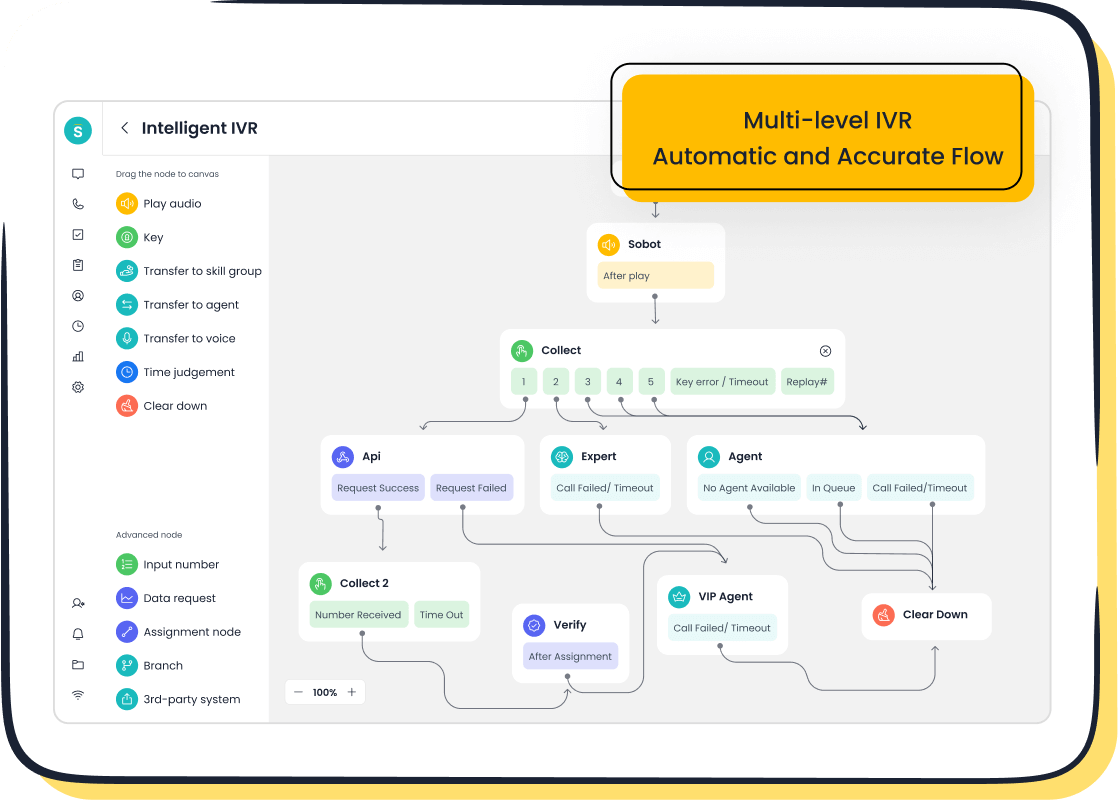
Sobot’s Voice/Call Center product supports both skill types. Agents use advanced call routing and AI-powered tools, but they also need to listen and respond with care.
Integrating Both in Job Descriptions
You can improve skills-based hiring by writing clear job descriptions. List the hard and soft skills needed for customer service excellence. Use bullet points to show daily duties. Make sure you highlight customer focus in every part of the job. Describe your work environment and company values. Include requirements like education, certifications, and language skills. Mention perks such as remote work or training programs.
- List both hard and soft skills for the role
- Use simple bullet points for duties
- Show that customer focus matters in every task
- Share your company’s values and culture
- State education and certification needs
- Highlight unique benefits
This approach helps you attract candidates who fit your team and support customer service excellence.
Weighing Skills for Sobot Voice/Call Center Roles
When you make hiring decisions for Sobot’s Voice/Call Center, you need to balance both skill types. Skills-based hiring means you look for agents who can use technology and connect with people. You should prioritize soft skills for customer-facing roles. Agents must show empathy, patience, and adaptability. These traits help them handle tough calls and keep customers happy. Hard skills matter too. Agents must use the unified workspace, manage call data, and follow workflows. Sobot’s platform makes it easy to train agents in both areas. You can use skills-based hiring to build a team that delivers customer service excellence every day.
Tip: Focus on soft skills first for customer-facing roles. You can teach hard skills with the right training and tools.
Impact of Prioritizing Soft Skills
Customer Experience
When you focus on soft skills, you create better experiences for your customers. Studies show that customer service agents who use empathy, active listening, and adaptability help boost customer satisfaction scores like NPS and CSAT. For example, Sobot’s omnichannel solution lets you connect with customers on their preferred channels. This unified approach makes every interaction smoother and more personal. Samsung’s story with Sobot proves this point. After using Sobot’s solutions, Samsung reached a 97% customer satisfaction rate and saw a 30% increase in agent efficiency. You can see how soft skills like emotional intelligence and rapport building lead to happier customers.
| Soft Skill | Business Impact |
|---|---|
| Empathy | Increases Customer Satisfaction (CSAT) and builds emotional loyalty to the brand. |
| Active Listening | Reduces resolution time and decreases the chance of repeat calls for the same issue. |
| Adaptability | Improves First Contact Resolution (FCR) and de-escalates tense situations effectively. |
Agent Efficiency
You improve agent efficiency when you invest in soft skills. Training your team in communication, patience, and problem-solving helps them handle more requests with less stress. Sobot’s platform supports this by giving agents the tools they need to respond quickly and accurately. Regular feedback and training keep your team sharp. Companies that focus on soft skills see higher productivity and lower turnover. Sobot’s clients, like Samsung, have seen a 30% boost in efficiency after adopting these practices.
- Empathy helps agents manage high-emotion situations.
- Active listening allows agents to adapt to customer needs.
- Training in flexibility and problem-solving prepares agents for any challenge.
Long-Term Success
Prioritizing soft skills leads to long-term business success. You build stronger teams with better interpersonal skills, which means less turnover and higher employee satisfaction. Companies that invest in soft skills training report lower burnout and improved customer loyalty. Research shows that these investments can increase productivity by over 20% and reduce turnover by 23%. Sobot’s approach to agent development ensures your team stays engaged and motivated, leading to better outcomes for your business and your customers.
Prioritizing customer service soft skills helps you build strong rapport with customers and your team. These skills—like empathy, active listening, problem-solving, adaptability, teamwork, conflict resolution, and effective communication—lead to higher satisfaction and better business results.
Conflict resolution skills help you calm tense situations and maintain rapport with customers.
Quick Checklist for Hiring Managers:
- Identify essential soft skills for the role.
- Use structured interviews and behavioral questions.
- Assess candidates with practical scenarios.
- Tag and organize candidates by soft skills.
Choose Sobot’s solutions to support your hiring process and create a customer-focused team.
FAQ
What are the most important soft skills for customer service roles?
You need strong communication, empathy, patience, and adaptability. These skills help you build customer relationships and solve problems quickly. When you use these skills, you make customers feel valued and understood.
How do soft skills influence customer relationships?
Soft skills shape every interaction. When you listen and respond with care, you influence customer relationships in a positive way. Customers trust you more and stay loyal to your brand.
Why is teamwork and collaboration important in customer service?
Teamwork and collaboration help you solve customer issues faster. When you work well with others, you share ideas and support each other. This leads to better service and happier customers.
How can I assess soft skills during the hiring process?
You can use behavioral interview questions, role-play scenarios, and reference checks. These methods show how candidates act in real situations. Look for clear examples of empathy, communication, and adaptability.
Can soft skills be improved after hiring?
Yes! You can improve soft skills with training, feedback, and practice. Encourage your team to learn from each other and share tips. Regular training helps everyone grow and provide better service.
See Also
Essential Strategies for Effective Call Center Quality Control
2024's Leading Customer Service Software Solutions Reviewed
Transforming Support: The Impact of AI Customer Agents

