25 Must-Know Customer Service Quality Assurance Interview Questions


Looking for the right customer service quality assurance interview questions can feel overwhelming. You want to hire the best people or show your skills as a candidate. Good interview questions help you spot top talent and boost customer service. Sobot leads the way with AI-driven tools like Sobot AI and Sobot call center solutions. These tools help companies improve service and handle millions of conversations every day. Understanding these key questions can set you apart and help you deliver better results.
QA Role Overview
Key Responsibilities
When you step into a customer service quality assurance role, you take on a lot of important tasks. You help your team deliver great service and keep customers happy. Here are the main things you might do every day:
- Set up internal quality standards that match your company’s goals.
- Watch and review customer interactions on calls, emails, live chats, and social media.
- Check how agents handle customer conversations and give them helpful feedback.
- Spot training needs by looking at patterns in agent performance.
- Work with other teams to make sure everyone is on the same page.
- Track and report on quality assurance metrics and key performance indicators (KPIs).
- Share detailed reports and insights with managers.
- Create plans to improve KPIs and drive better results.
- Build a positive culture where everyone wants to grow and do their best.
Tip: Using tools like Sobot Live Chat makes it easier to monitor interactions across channels and keep all your quality assurance processes in one place. Sobot’s analytics help you track over 150 indicators, so you always know how your team is doing.
Essential Skills
You need a mix of technical and people skills to succeed in quality assurance processes. Here are some of the most important ones:
- Strategic outlook: You see the big picture and align your work with company goals.
- Data-driven mindset: You use numbers and facts to measure customer satisfaction.
- Communication and storytelling: You explain your findings clearly to others.
- Relationship building: You work well with people from different teams.
- Project management: You handle many tasks and keep things simple.
- Empathy and listening: You understand how customers feel and respond with care.
- Adaptability: You adjust quickly when new technology or customer needs pop up.
Sobot’s omnichannel solution helps you build these skills by giving you real-time data and easy ways to connect with your team. For example, Agilent used Sobot to boost their service efficiency by six times and reach a 95% customer satisfaction score. That’s the power of strong quality assurance processes in action!
Customer Service Quality Assurance Skills
Defining Quality
What does “quality” really mean in customer service quality assurance? You might think it’s just about being polite or solving problems fast. Industry experts say it’s much more than that. Quality assurance is a proactive process. You set clear standards and rules so every customer gets the same great experience, no matter who helps them or which channel they use.
You start by creating guidelines for how agents should talk to customers. You train your team to follow these rules. You check their work often, not just to catch mistakes, but to help them get better. This is different from quality control, which only fixes problems after they happen. With quality assurance, you work to prevent issues before they start.
Note: Quality assurance covers every step of the customer journey. You plan, train, monitor, and improve all the time. This helps you keep service consistent and customers happy.
Experts also say you need to look at every part of your service. You review calls, chats, emails, and even social media messages. You check if agents use the right words, follow company rules, and solve problems well. You give feedback and coaching to help agents grow. This way, you make sure your team’s work matches your company’s standards and keeps customers coming back.
Sobot makes this easier. With Sobot Live Chat, you can set up communication guidelines, monitor conversations across all channels, and use built-in analytics to spot trends. You get a clear view of how your team is doing and where you can help them improve.
Measuring Success
How do you know if your customer service quality assurance program works? You need to track the right quality metrics. These numbers show you what’s going well and what needs work. Here are some of the most common quality metrics you should watch:
- Customer Satisfaction Score (CSAT): This tells you how happy customers are after getting help. You usually ask them to rate their experience in a quick survey.
- Customer Effort Score (CES): This measures how easy it was for customers to get their problem solved.
- Net Promoter Score (NPS): This shows how likely customers are to recommend your company to others.
- First Contact Resolution (FCR): This tracks how often you solve a customer’s problem the first time they reach out.
- First Reply Time (FRT): This is the average time it takes for an agent to respond to a customer’s message.
- Average Resolution Time (ART): This shows how long it takes to fully solve a customer’s issue.
- Internal QA Score: This is your own scorecard for how well agents follow your company’s quality standards.
- Ticket Reopen Rate: This tells you how many cases get reopened after being marked as solved.
- Negative Response Rate (NRR): This tracks the percentage of unhappy customer reviews.
Tip: You don’t need to track every metric at once. Start with a few that matter most to your business. Over time, add more as you grow.
Here’s a simple table to help you remember some key quality metrics:
| Metric Name | What It Measures | Why It Matters |
|---|---|---|
| CSAT | Customer happiness | Shows if customers are satisfied |
| CES | Customer effort | Tells you if support is easy |
| NPS | Customer loyalty | Predicts future business |
| FCR | First-time problem solving | Saves time for everyone |
| FRT | Speed of first reply | Shows how fast you respond |
| ART | Time to solve issues | Helps you spot slowdowns |
| Internal QA Score | Agent performance | Keeps quality high |
Sobot’s analytics dashboard tracks over 150 indicators, including all these quality metrics. You can see trends, spot problems, and make changes fast. This helps you keep your quality assurance processes on track and your team focused on what matters most.
Improving Satisfaction
You want your customers to leave every interaction feeling good. That’s the main goal of customer service quality assurance. When you focus on quality, you don’t just fix problems—you make sure customers feel heard, respected, and valued.
Research shows that companies with strong quality assurance processes get higher customer satisfaction scores. In fact, 86% of organizations say reviewing conversations helps improve service quality. When you track key metrics like CSAT and NPS, you get real feedback from customers. You can use this feedback to train your team, fix weak spots, and celebrate wins.
Remember: “You don’t get what you expect, you get what you inspect.” Regularly checking your team’s work helps you catch small issues before they become big problems.
Here are some ways you can boost satisfaction through quality assurance:
- Monitor interactions: Listen to calls, read chats, and review emails. Look for patterns and areas to improve.
- Give feedback: Share tips and praise with your team. Help them learn from both mistakes and successes.
- Use customer feedback: Run surveys and ask for honest opinions. Use this data to make real changes.
- Train often: Offer regular training sessions based on what you find in your reviews.
- Automate where possible: Use tools like Sobot’s AI-powered chatbots to handle simple questions. This frees up your agents to focus on tougher cases.
Agilent, a leader in life sciences, used Sobot’s omnichannel solution to handle more customer questions with less effort. They saw a sixfold increase in efficiency and a 95% customer satisfaction score. This shows how the right quality assurance processes and tools can make a big difference.
When you use a platform like Sobot, you get built-in analytics, real-time monitoring, and easy ways to collect feedback. You can spot trends, fix issues fast, and keep your customers happy. That’s the real power of customer service quality assurance.
Call Center Quality Assurance
Call center quality assurance is all about making sure your team delivers great service every time a customer reaches out. You want every call, chat, or message to meet your company’s standards. When you get this right, you build trust and keep customers coming back. Let’s break down how you can monitor interactions, set fair evaluation criteria, and handle feedback to keep improving.
Monitoring Interactions
You can’t improve what you don’t measure. Monitoring interactions is the heart of call center quality assurance. You need to know what’s happening on every call, chat, or message. Here’s how you can do it:
- Build a dedicated QA team. Bring together managers, supervisors, and top agents who know your brand and what your customers expect.
- Set clear quality standards. Decide what a “great” call or chat looks like. Cover things like how agents greet customers, solve problems, and follow rules.
- Track key metrics. Watch numbers like Average Handle Time (AHT), Net Promoter Score (NPS), First Call Resolution (FCR), and Customer Satisfaction (CSAT). These show you where you shine and where you need work.
- Use smart tools. Call recording software, QA scorecards, and AI-powered analytics help you review every interaction. Sobot’s omnichannel solution lets you monitor calls, chats, and social messages in one place. You can even use AI to auto-score conversations and spot trends fast.
- Review calls and chats often. Don’t just check a few. Use tools that let you look at lots of interactions quickly. This helps you catch patterns and fix problems before they grow.
- Give feedback right away. When you see something good or bad, let agents know. Quick feedback helps them learn and improve.
- Run audits and root cause analysis. Look for issues that keep popping up. Find out why they happen and fix the process, not just the symptom.
- Train your team. Use what you learn from monitoring to guide training. Close knowledge gaps and help agents grow.
- Motivate with rewards. Gamification and reward programs make quality fun. Celebrate wins and encourage everyone to do their best.
Tip: Sobot Live Chat makes it easy to monitor all your channels. You get real-time analytics and can track over 150 indicators. This helps you spot issues and coach your team faster.
Here’s a quick table of tools and methods you can use:
| Method/Tool | What It Does | Why It Matters |
|---|---|---|
| Call Recording | Saves calls for review | Lets you check real examples |
| QA Scorecards | Rates agent performance | Keeps scoring fair |
| Speech/Text Analytics | Finds patterns in conversations | Spots trends and issues fast |
| AI Auto-Scoring | Scores calls automatically | Saves time and boosts accuracy |
| Real-Time Monitoring | Lets you listen in live | Gives instant feedback |
| Gamification | Adds rewards and challenges | Motivates agents |
When you use these methods, you make call center quality assurance a daily habit, not just a monthly task.
Evaluation Criteria
You need fair and clear rules to judge how well your agents do. The best call center quality assurance programs use a mix of numbers and people skills. Here’s what you should look for:
- Call handling: Does the agent greet the customer well? Do they control the call and keep it on track?
- Active listening: Does the agent really hear what the customer says? Do they ask good questions?
- Communication skills: Is the agent clear and friendly? Do they explain things in a way customers understand?
- Product knowledge: Does the agent know your products or services inside out?
- Problem-solving: Can the agent fix the customer’s issue quickly and correctly?
- Conflict resolution: Does the agent stay calm and helpful, even when the customer is upset?
- Empathy: Does the agent show they care about the customer’s feelings?
- Compliance: Does the agent follow company rules and legal guidelines?
- Collaboration: Does the agent work well with teammates if they need help?
- Documentation: Does the agent keep good records of the call or chat?
You also want to track key metrics like:
- Average Handle Time (AHT)
- First Call Resolution (FCR)
- Customer Satisfaction (CSAT)
- Net Promoter Score (NPS)
- Average Waiting Time
A balanced scorecard works best. This means you look at both numbers and soft skills. You can use weighted scoring to make sure you focus on what matters most for your business.
Note: AI-powered speech analytics can help you review every call, not just a few. This gives you a fair and complete picture of your team’s performance.
Here’s a sample scorecard you might use:
| Criteria | Weight (%) | Example Questions |
|---|---|---|
| Call Handling | 15 | Did the agent greet the customer? |
| Active Listening | 10 | Did the agent confirm understanding? |
| Communication | 15 | Was the agent clear and polite? |
| Product Knowledge | 10 | Did the agent give correct info? |
| Problem Solving | 15 | Did the agent resolve the issue? |
| Empathy | 10 | Did the agent show care? |
| Compliance | 10 | Did the agent follow rules? |
| Documentation | 5 | Did the agent log the call correctly? |
| Collaboration | 10 | Did the agent work with others if needed? |
When you share these criteria with your team, you help them know what’s expected. This builds trust and makes everyone want to improve.
Handling Feedback
Feedback is where the magic happens in call center quality assurance. You want your agents to learn and grow, not just get a score. Here’s how top call centers handle feedback:
- Encourage agents to self-score. When agents rate their own calls, they become more open to feedback and spot their own areas to improve.
- Use positive, simple language. Give feedback that is clear and easy to understand. Focus on what the agent did well and what they can do better.
- Create custom QA checklists. Make training programs that are memorable and motivating. Use real examples from your own calls.
- Use real-time feedback tools. Sobot’s platform lets you give instant feedback right inside the agent’s workspace. This helps agents fix mistakes on the spot.
- Collect customer feedback after every interaction. Use surveys and follow-ups to see how customers feel. This gives you real data to guide your training.
- Hold regular review sessions. Meet with agents to talk about feedback and set goals. Make these sessions supportive, not scary.
- Update your QA scorecards often. As customer needs change, your standards should too. Keep your criteria fresh and relevant.
- Do root cause analysis. If you see the same problem over and over, dig deeper. Fix the process, not just the person.
- Use AI and analytics. Sobot’s AI-driven sentiment analysis can spot trends in customer feedback. This helps you act fast and keep quality high.
Remember: Feedback is a two-way street. When you listen to your agents and your customers, you build a culture of trust and improvement.
Here’s a quick checklist for handling feedback:
- [ ] Let agents self-score
- [ ] Give feedback right away
- [ ] Use positive language
- [ ] Collect customer surveys
- [ ] Hold review sessions
- [ ] Update scorecards
- [ ] Fix root causes
- [ ] Use AI analytics
When you follow these steps, you make call center quality assurance a living process. Your team gets better, your customers get happier, and your business grows.
Sobot’s omnichannel solution and Live Chat tools make all of this easier. You can monitor, evaluate, and give feedback across every channel. You get real-time data, smart analytics, and easy ways to coach your team. That’s how you turn customer service quality assurance into a real advantage.
Analytical Abilities
Identifying Issues
You need sharp eyes to spot problems in customer service quality assurance. Start by looking at customer feedback. This feedback shows you what customers like and what needs fixing. Use tools that track important numbers like Customer Satisfaction (CSAT), Net Promoter Score (NPS), and Customer Effort Score (CES). These scores help you see trends and find weak spots.
Here are some smart ways to identify issues:
- Analyze customer feedback to spot patterns.
- Use QA scorecards to check agent skills like product knowledge and problem-solving.
- Hold regular calibration sessions to keep scoring fair.
- Talk with agents about the QA process so everyone feels included.
- Try root cause analysis. Look at QA scores, call recordings, and agent data to find out why problems keep happening.
- Use AI tools, like Sobot’s analytics, to scan conversations for negative sentiment or missed steps.
Tip: Sobot Live Chat uses AI to review chats and spot issues fast. You can track over 150 indicators and see where your team needs help.
Data-Driven Decisions
When you use data, you make better choices. Data-driven decisions help you fix problems before they grow. For example, companies that use data to improve their process can cut defects by up to 40% and boost customer satisfaction. You can also respond faster to issues and keep customers happy.
Here’s how data helps in customer service quality assurance:
- Personalize service for each customer.
- Spot problems early by watching trends.
- Keep service steady across all channels.
- Use analytics to keep improving.
Sobot’s omnichannel solution brings all your data together. You get a clear view of every customer touchpoint. This helps you make smart moves and keep your service top-notch.
Problem Solving
Solving problems is a big part of customer service quality assurance interview questions. You need a plan to fix things fast. Many teams use frameworks like the 5 Whys, fishbone diagrams, or Six Sigma DMAIC. These tools help you find the real reason behind a problem.
For example, the DMAIC method guides you to:
- Define the problem.
- Measure what’s happening.
- Analyze the cause.
- Improve the process.
- Control the results.
You can also use root cause analysis or a simple checklist to break down issues. Sobot’s analytics platform makes it easy to spot patterns and test solutions. When you use these methods, you keep your team moving forward and your customers satisfied.
Communication & Feedback

Delivering Feedback
Giving feedback is a big part of customer service quality assurance interview questions. You want your team to grow, not feel discouraged. Here are some smart ways to deliver feedback that really works:
- Share feedback in private. This helps agents feel safe and open.
- Let agents self-evaluate first. When they spot their own strengths and weaknesses, they listen better.
- Use real data from call monitoring and analytics. Sobot Live Chat makes this easy by tracking over 150 indicators, so you can point to exact moments in a conversation.
- Be specific and targeted. Tell agents what went well and what needs work, instead of using general comments.
- Give feedback often and on time. Don’t wait for yearly reviews—regular check-ins help agents improve faster.
- Encourage two-way conversations. Listen to your agents and ask for their thoughts.
- Use surveys to learn how agents like to get feedback and recognition.
Tip: When you use Sobot’s omnichannel solution, you can deliver feedback right inside the agent’s workspace, making it timely and relevant.
Managing Resistance
Sometimes, agents push back against feedback. This is a common topic in customer service quality assurance interview questions. You can handle resistance by building trust and showing you care about their success.
- Start by listening. Ask agents how they feel about their work.
- Focus on actions, not personality. Talk about what happened, not who they are.
- Use facts from recorded calls or chats. This keeps the conversation fair.
- Frame feedback in a positive way. Show how changes help everyone.
- Encourage agents to join in self-assessment. This builds ownership.
- Follow up with clear goals and support.
When you use Sobot’s analytics, you get objective data that helps keep feedback honest and helpful.
Stakeholder Communication
You need to share customer service quality assurance interview questions and findings with different groups. Each group needs a different style. Here’s a quick guide:
| Stakeholder | What to Share | How to Share | Key Tips |
|---|---|---|---|
| Board of Directors | High-level summaries, risks | Reports, charts | Keep it short and clear |
| Senior Management | Actionable insights, impact | Meetings, presentations | Link to business goals |
| Operational Managers | Step-by-step recommendations | Regular meetings, docs | Focus on fixing issues |
| Staff and Employees | Practical examples, daily impact | Training, memos | Use simple language |
| External Stakeholders | Compliance, quality improvements | Formal reports, updates | Stay transparent and professional |
Note: Sobot’s built-in analytics and reporting tools help you create clear, visual reports for every stakeholder. This makes it easy to show progress and build trust.
Customer service quality assurance interview questions often ask how you share results. When you use the right approach, everyone understands what to do next and feels part of the improvement process.
Tools & Technology
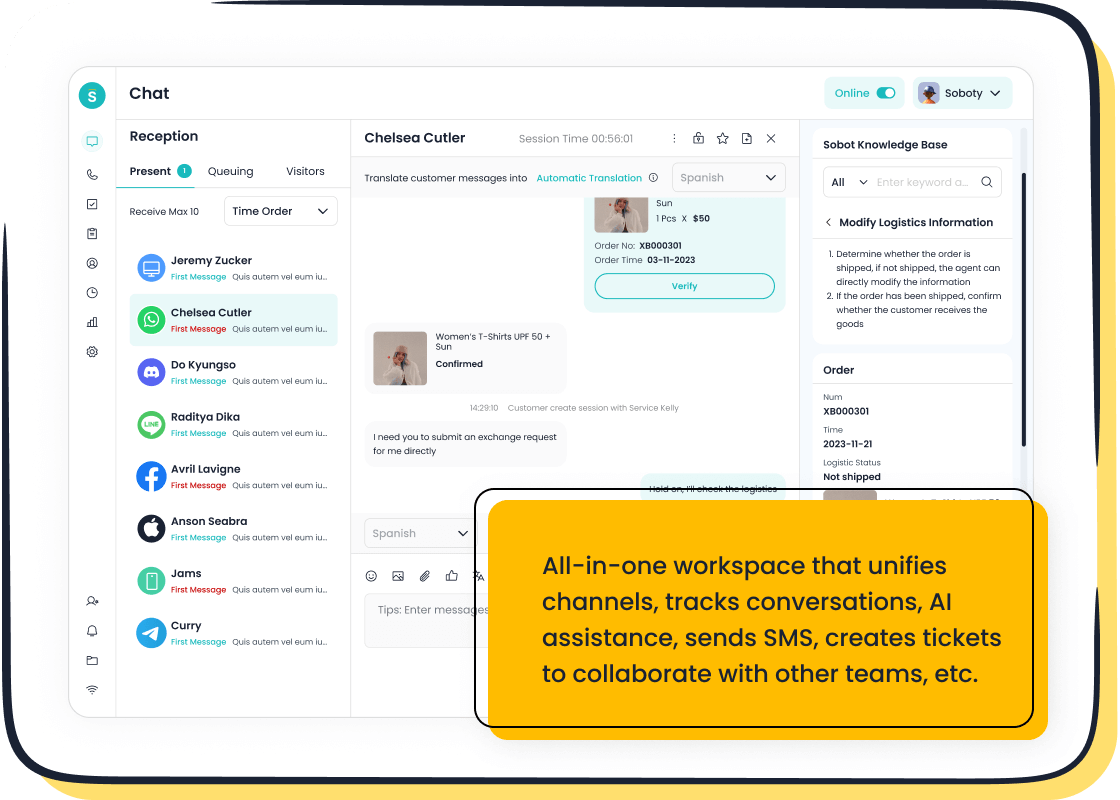
Sobot Live Chat
When you talk about customer service quality assurance interview questions, you can’t ignore Sobot Live Chat. This tool stands out because it brings all your channels together. You can chat with customers on your website, mobile app, WhatsApp, Facebook, and more—all in one place. Sobot uses AI to help you answer questions faster and smarter. You get real-time analytics, so you always know how your team is doing.
Here’s a quick look at what makes Sobot Live Chat a leader:
| Feature Category | Description |
|---|---|
| Omnichannel Support | Connects web, mobile, social media, messaging apps, email, phone, and SMS |
| AI Technologies | Uses NLP and machine learning for better conversations |
| Real-Time Analytics | Tracks KPIs, customer behavior, and team performance |
| Intelligent Routing | Sends chats to the right agent based on skills and topic |
| CRM Integration | Links with your CRM for a full customer view |
| Security Features | Protects data with encryption and authentication |
| Multi-Language Support | Helps you serve customers in many languages |
You can see why Sobot Live Chat is a top choice for customer service quality assurance interview questions. It helps you deliver fast, personal, and secure support.
QA Software Experience
If you want to shine in customer service quality assurance interview questions, you need to know about QA software. Employers look for people who can use both manual and automated testing tools. You should know how to use tools like Postman for API testing and Selenium for automation. Experience with cloud-based QA, Agile teams, and CI/CD pipelines is a big plus. Some companies like to see QA certifications, such as ISTQB.
Here’s what employers value most:
- Manual and automated testing skills
- API testing tools (like Postman)
- Automation frameworks (like Selenium, Cypress)
- Agile and cloud QA experience
- QA certifications
- Team leadership and collaboration
If you have these skills, you’ll stand out in any customer service quality assurance interview.
Analytics Platforms
Analytics platforms help you measure and improve your team’s work. When you answer customer service quality assurance interview questions, talk about how analytics give you real numbers—like average handle time and customer satisfaction scores. Modern platforms, including Sobot, offer dashboards that show all your data in one place. You can spot trends, find problems, and make smart changes.
Some benefits of analytics platforms:
- Track performance with clear metrics.
- Get insights from every channel—calls, chats, emails, and social media.
- Standardize best practices as your team grows.
- Use AI to spot patterns and improve faster.
Sobot’s analytics dashboard lets you see over 150 indicators. You can make data-driven decisions and keep your customer service quality assurance process strong.
Scenario Questions
Challenging Situations
You will often face tough moments in customer service quality assurance. Many interview questions focus on how you handle these challenges. Here are some common situations you might see:
- You need to move from using spreadsheets to a software solution for QA. This can be hard because of data volume and keeping everything organized.
- You must get everyone on your QA team to agree on what “good” looks like. Sometimes, reviewers score things differently. Calibration sessions help everyone use the same standards.
- Sometimes, you do everything right, but the customer still leaves a bad review. This happens when customer expectations do not match your company’s policies.
Tip: Sobot’s omnichannel platform makes it easier to scale your QA process. You can track all your data in one place and keep your team on the same page.
Conflict Resolution
Many interview questions ask how you solve conflicts with customers or teammates. You need strong skills to keep things calm and positive. Here are proven ways to handle conflict:
- Let customers know you understand them. This helps lower their frustration.
- Say sorry for any trouble, even if it is not your fault.
- Listen closely and do not interrupt.
- Ask questions to make sure you know the real problem.
- Stay positive and keep your tone friendly.
- Repeat the problem back to the customer so they know you get it.
- If you need to transfer the customer, explain why and reassure them.
- Work together with the customer to find a solution, like offering a discount or store credit.
- Always follow up to make sure the customer is happy.
You can also use these tips with your team. Open talks and feedback help everyone work better together. Sobot’s analytics tools let you spot issues early and coach your team before problems grow.
Adapting to Change
Change happens fast in customer service. Many interview questions will test how you adapt. Top professionals stay flexible and look for ways to improve. Here’s how you can do the same:
- Use new tools, like Sobot’s AI-powered analytics, to keep up with customer needs.
- Work with your team and share what you learn. Peer reviews and coaching help everyone adjust.
- Look at your QA data often. This helps you spot trends and update your process.
- Hold regular meetings to talk about what is working and what needs to change.
- Reward your team for trying new things and staying positive.
- Collect feedback from agents and customers to find out what works best.
Note: Sobot’s unified workspace and real-time analytics make it easy to adapt your QA process. You can see what is happening across all channels and make changes quickly.
Scenario-based interview questions help you show how you handle real-life problems. When you prepare for these questions, think about your own experiences and how you used tools like Sobot to solve challenges.
Standards & Best Practices
Consistency
You want every customer to get the same great service, no matter who helps them. Consistency is key in customer service quality assurance interview questions. Here’s how you can make it happen:
- Run regular calibration sessions. Your QA team scores the same calls together, so everyone uses the same standards.
- Let agents do self-evaluations. This builds ownership and helps them see where to improve.
- Use standardized forms with clear, weighted criteria. This keeps scoring fair and objective.
- Gather customer feedback through surveys and CSAT tracking. Real customer voices help you spot gaps.
- Track KPIs like First Call Resolution and Customer Satisfaction. Numbers show you where to focus.
- Use technology like Sobot’s analytics and AI tools. These help you review more interactions and spot trends fast.
- Share QA insights with managers. This helps you coach your team and align with business goals.
Tip: Sobot’s commitment to innovation means you get tools that make consistency easy. With Sobot Live Chat, you can monitor all channels and keep your standards high.
Industry Trends
Customer service quality assurance interview questions often ask about new trends. In 2024, you’ll see more companies using AI-driven QA tools. These tools review every customer interaction, not just a few. You get better insights and save time.
- AI tools now analyze all calls and chats, giving you a full picture of agent performance.
- Automation cuts manual work and speeds up feedback.
- Companies using AI for QA see up to 50x ROI and reduce testing time by 80% (source).
- Blockchain and AR are making QA more transparent and interactive.
- Real-time feedback and predictive models help you spot issues before they grow.
Sobot leads the way with AI-powered solutions. You can automate routine tasks, get instant analytics, and focus on what matters most—your customers.
Continuous Improvement
You never stop getting better in customer service quality assurance. Continuous improvement means you always look for ways to grow. Here’s what works best:
- Involve your team in finding and fixing problems. People support what they help create.
- Set clear goals using SMART criteria. Make sure everyone knows what success looks like.
- Use balanced KPIs to track progress—quality, speed, cost, and engagement.
- Lean on technology like Sobot’s AI and analytics to make smarter decisions.
- Offer coaching and empower agents to own their growth.
- Keep training fresh and encourage feedback from everyone.
Agilent’s story shows how best practices pay off. By using Sobot’s omnichannel solution, they boosted efficiency sixfold and reached a 95% customer satisfaction score. They focused on quality, teamwork, and continuous learning. You can do the same by following these standards and best practices in your customer service quality assurance interview questions.
Getting ready for customer service quality assurance interview questions gives you a real edge. You show your skills and boost your confidence. Sobot’s Live Chat and omnichannel platform help you deliver fast, high-quality customer service by bringing all your channels together and using AI to automate tasks. Want to stand out? Try these tips:
- Practice sharing real examples of how you solve problems and handle tough customers.
- Learn the latest tools, like Sobot’s Live Chat, to show your tech skills.
- Align your answers with the company’s values and culture.
You can use these questions as a checklist to prepare for your next big step.
FAQ
What are customer service quality assurance interview questions?
Customer service quality assurance interview questions help you show your skills in checking service quality. These questions often ask how you measure success, give feedback, or use tools like Sobot Live Chat. You might see questions about real-life problems or handling tough customers.
How can Sobot help with customer service quality assurance?
Sobot gives you tools like Live Chat and omnichannel solutions. You can track over 150 indicators, monitor every channel, and use AI to spot trends. This makes it easier to answer customer service quality assurance interview questions with real examples and data.
Why do hiring managers ask scenario-based customer service quality assurance interview questions?
Hiring managers want to see how you solve problems. They use scenario-based customer service quality assurance interview questions to check if you can handle real challenges, adapt to change, and use tools like Sobot to improve service.
What skills should I highlight when answering customer service quality assurance interview questions?
Show your data skills, communication, and problem-solving. Talk about using analytics, giving feedback, and working with tools like Sobot Live Chat. Use examples from your experience to make your answers strong and clear.
Tip: Practice your answers out loud. This helps you feel ready for any customer service quality assurance interview questions you might get!
See Also
Comprehensive Overview Of Call Center Quality Assurance Tools
Effective Strategies For Managing Quality In Call Centers
Top Ten Ways To Improve Live Chat Customer Experience
Essential Principles Of Quality Management Systems In Call Centers

