A Beginner's Guide to Customer Service Partnership Management


Customer service partnership management is all about building strong collaborations with your partners to deliver better customer experiences. It helps you streamline communication, track performance, and ensure everyone works toward shared goals. Imagine having a system that keeps everything organized and efficient. That’s where tools like Sobot's Voice/Call Center come in. With features like smart call routing and real-time monitoring, it simplifies how you manage partnerships. Whether you're in retail, finance, or gaming, this approach can transform how you handle customer interactions.
What Is Customer Service Partnership Management?
Definition and Purpose
How customer service partnership management supports business goals.
Customer service partnership management plays a vital role in helping you achieve your business goals. By fostering strong collaborations with your partners, you can create a seamless customer experience that builds loyalty and trust. This approach enhances customer satisfaction, which directly impacts your bottom line. For example, when you align your partner programs with your strategic objectives, you ensure that everyone works toward the same goals. This alignment not only improves service quality but also boosts customer retention.
Core principles like integrity, transparency, and mutual respect are the foundation of effective partner management. These values help you establish trust and encourage collaboration. When you and your partners share a commitment to common goals, it becomes easier to deliver consistent and ethical customer service. Tools like Sobot's Voice/Call Center can simplify this process by providing features like smart call routing and real-time monitoring, ensuring smooth communication and efficient operations.
The role of partnerships in delivering exceptional customer service.
Partnerships are the backbone of exceptional customer service. They allow you to leverage the strengths of your partners to meet customer needs more effectively. For instance, in industries like retail or gaming, partner relationship management ensures that every interaction is seamless, whether it’s resolving an issue or providing product support. By working closely with your partners, you can uncover hidden customer needs and address them proactively.

Using PRM systems like Sobot's Voice/Call Center, you can streamline workflows and improve response times. Features like intelligent IVR and AI-powered voicebots make it easier to handle customer inquiries efficiently. This not only enhances the customer experience but also strengthens your relationships with partners by aligning their efforts with your service goals.
Scope of Customer Service Partnership Management
Key areas it covers, including communication and performance tracking.
Customer service partnership management focuses on several key areas to ensure smooth operations. Communication is at the heart of it. Clear and consistent communication helps you and your partners stay aligned on goals and expectations. Performance tracking is another critical area. By monitoring metrics like response times and resolution rates, you can evaluate how well your partner programs are performing.

PRM systems make these tasks easier. For example, Sobot's Voice/Call Center offers real-time monitoring and analytics, giving you valuable insights into both partner and customer interactions. This data helps you identify areas for improvement and ensures that your partnerships remain productive and effective.
Examples of industries benefiting from PRM systems.

PRM systems have transformed how industries manage their partnerships. Retail businesses use them to coordinate with suppliers and improve customer service during peak seasons. Financial services rely on PRM to ensure compliance and maintain high service standards. Gaming companies, like OPPO, have seen significant improvements by integrating PRM systems. OPPO used Sobot's solutions to achieve an 83% chatbot resolution rate and a 94% positive feedback rate, showcasing the power of effective partner management.
Whether you’re in education, enterprise services, or life services, PRM systems can help you streamline operations and deliver exceptional customer experiences. By integrating tools like Sobot's Voice/Call Center, you can enhance collaboration and drive better results across your industry.
Key Features of Partner Relationship Management (PRM) Systems
Tools for Collaboration
Shared dashboards and communication platforms.
Collaboration thrives when everyone stays on the same page. PRM systems offer shared dashboards that act as a central hub for communication and coordination. These dashboards organize team efforts, track progress, and provide valuable insights into challenges and achievements. For example, they can display metrics like partner engagement or customer success rates, helping you and your partners align on goals.
Communication platforms integrated into PRM systems, such as Slack or Microsoft Teams, further enhance collaboration. They allow real-time discussions, ensuring quick decision-making and better alignment. With tools like Sobot's Voice/Call Center, you can centralize customer interactions and share critical updates with your partners, keeping everyone informed and productive.
Task and project management features.
Managing tasks and projects across multiple partners can get overwhelming. PRM systems simplify this by offering tools like cross-company collaboration boards. These boards let you assign tasks, set deadlines, and monitor progress in one place. This ensures accountability and keeps projects on track.
For instance, Sobot's Voice/Call Center integrates seamlessly with other tools, enabling you to automate workflows and assign leads efficiently. By reducing manual work, you can focus on strategic initiatives while ensuring smooth operations.
Performance Tracking and Analytics
Metrics for partner performance and customer service outcomes.
Tracking performance is essential for improving partnerships. PRM systems provide metrics like lead generation, deal progression, and customer success rates. These insights help you evaluate partner contributions and identify areas for improvement.
For example, operational efficiency metrics can reveal bottlenecks in workflows, while customer satisfaction scores (CSAT) highlight service gaps. By monitoring these metrics, you can ensure your partners deliver consistent value to your customers.
Insights provided by systems like Sobot's Voice/Call Center.
Performance tracking tools in PRM systems offer actionable insights. For instance, Vodafone improved its first contact resolution by 30% through better issue tracking. Similarly, Sobot's Voice/Call Center provides real-time analytics, helping you optimize staffing and enhance service delivery.
These insights also enable predictive analytics, allowing you to anticipate customer needs. By tailoring your approach based on data, you can boost loyalty and create a more personalized customer experience.
Integration Capabilities
Compatibility with CRM and other tools.
A good PRM system integrates seamlessly with existing tools like CRM or ERP. This ensures smooth data flow and reduces manual errors. For example, Salesforce PRM integrates with Salesforce CRM to synchronize partner data and streamline workflows.
Sobot's Voice/Call Center also excels in integration. It connects effortlessly with CRM systems, creating a unified workspace for managing customer interactions and partner relationships.
Streamlining workflows with PRM systems.
Integration capabilities in PRM systems simplify operations. They eliminate redundancies and improve efficiency by automating repetitive tasks. For instance, Sobot's Voice/Call Center offers features like smart call routing and bulk outbound tasks, ensuring smooth workflows.
By integrating PRM systems with tools like marketing automation platforms, you can enhance collaboration and focus on delivering exceptional customer service.
Benefits of Customer Service Partnership Management
Enhanced Customer Experience
Faster issue resolution through partner collaboration.
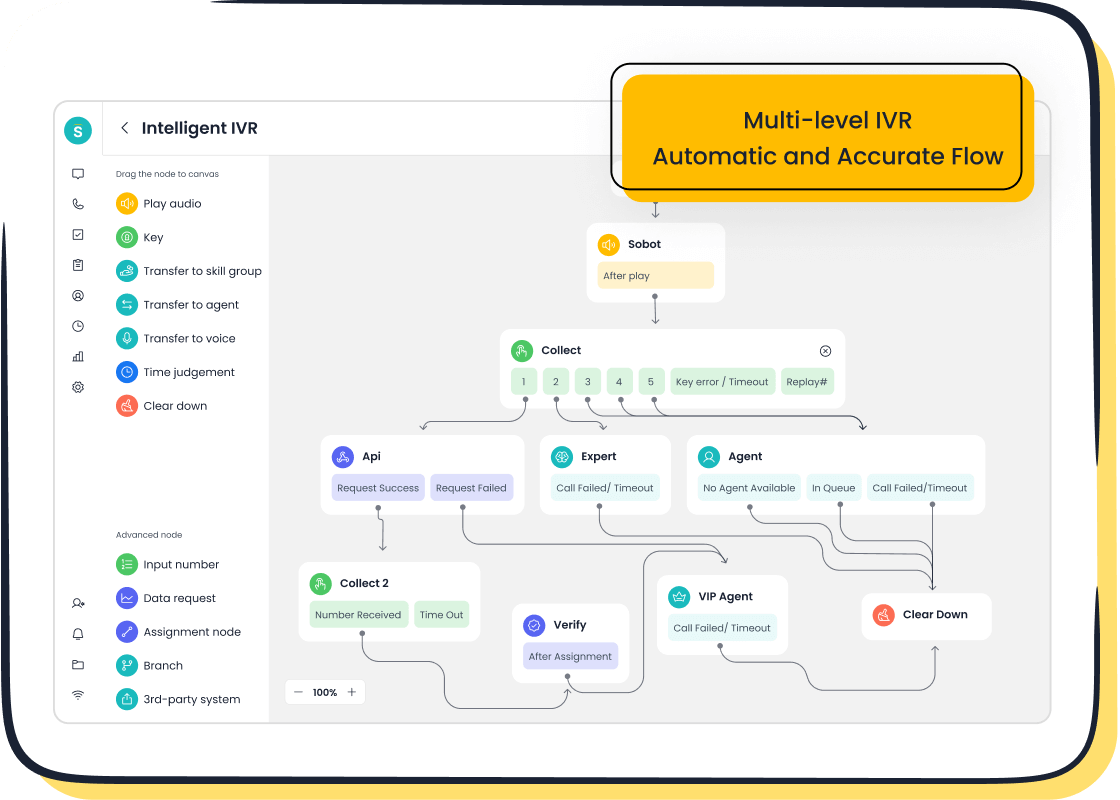
When you collaborate effectively with your partners, resolving customer issues becomes faster and more efficient. For instance, using tools like Sobot's Voice/Call Center, you can route calls intelligently to the right partner or agent, reducing wait times. This ensures customers get the help they need without unnecessary delays.
Here’s how customer service partnership management enhances the customer experience:
- Fast and Efficient Response: Customers appreciate quick resolutions, and a professional PRM system ensures inquiries are handled promptly.
- 24/7 Customer Support: Partnering with call centers enables round-the-clock service, which is especially useful for global businesses.
- Increased Customer Satisfaction and Loyalty: Quick, friendly service makes customers feel valued, boosting retention and loyalty.
Consistent service quality across channels.
Consistency is key to building trust. With PRM systems, you can ensure that customers receive the same high-quality service, whether they’re interacting via phone, email, or live chat. For example, cobrowsing features allow agents and customers to view the same content simultaneously, reducing miscommunication.
| Example | Description |
|---|---|
| Enhanced Interactive Problem Solving | Agents and customers can navigate applications together, improving problem-solving efficiency. |
| Clear and Efficient Communication | Cobrowsing allows simultaneous viewing of web content, reducing miscommunication and enhancing clarity. |
Strengthened Partner Relationships
Clear communication and shared goals.

Strong relationships with your partners start with clear communication. Tools like Sobot's Voice/Call Center provide unified workspaces where you and your partners can share updates, track progress, and align on goals. Joint business planning sessions also help establish mutual objectives, fostering collaboration and teamwork.
Increased trust and accountability.
Trust grows when everyone knows their role and delivers on their commitments. Recognizing partner contributions through rewards programs can motivate them to stay engaged. Regular check-ins and feedback sessions also strengthen accountability, ensuring everyone remains aligned with your partner programs.
Operational Efficiency
Reduced redundancies in processes.
PRM systems streamline workflows by automating repetitive tasks. For example, Sobot's Voice/Call Center offers bulk outbound task automation, saving time and reducing errors. This allows your team to focus on engaging priority prospects and delivering value.
Better resource allocation with tools like Sobot's Voice/Call Center.
Efficient resource allocation is critical for partner program success. With PRM systems, you can prioritize key features and functionalities, ensuring resources are used effectively. Sobot's Voice/Call Center simplifies this process by integrating seamlessly with your existing systems, helping you manage resources and timelines efficiently.
Tip: Communicate resource constraints to stakeholders early to manage expectations and avoid bottlenecks.
How PRM Systems Differ from Other Systems Like CRM
Focus on Partner Collaboration
CRM vs. PRM: Key distinctions.
You might wonder how PRM systems differ from CRM systems. While both are essential tools, they serve distinct purposes.
- Functionality and Purpose: CRM focuses on managing customer relationships, like tracking purchase history or engagement. PRM, on the other hand, is all about partner management. It provides tools for training, resources, and collaboration with your partners.
- User Base: CRM is mainly used by sales reps and customer service teams. PRM is designed for partner managers and sales teams who work closely with channel partners.
- Data Management: CRM handles customer data, such as loyalty metrics. PRM tracks partner performance, like deal progression and engagement levels.
By understanding these differences, you can see why PRM is vital for businesses that rely on partner programs. It ensures your partners have the tools and support they need to succeed.
Why PRM is essential for partner-driven businesses.
If your business depends on partner collaboration, PRM systems are a game-changer. They enhance communication, track performance, and streamline deal management. For example, PRM systems provide advanced analytics to help you make informed decisions. You can monitor partner effectiveness and align their goals with your business objectives.
PRM also boosts engagement by offering incentives and rewards. When partners feel valued, they’re more likely to stay committed. This approach drives collective success and strengthens your partner programs.
Complementary Roles
How CRM and PRM systems work together.
CRM and PRM systems complement each other beautifully. CRM focuses on nurturing customer relationships, while PRM builds a strong network of partners. Together, they create a seamless ecosystem. For instance, CRM automates customer communication, while PRM structures partner engagement.
PRM also provides partners with access to training and resources, ensuring they’re equipped to meet shared goals. Meanwhile, CRM tracks customer behavior, helping you tailor marketing efforts. Both systems aim to improve relationships, but they cater to different stakeholders.
Examples of integrated use cases.
Integrated CRM and PRM systems can transform your operations. For example, Salesforce PRM extends its CRM capabilities to manage partner relationships. It offers features like automated onboarding and lead distribution. Similarly, Kiflo PRM integrates with platforms like HubSpot, ensuring data consistency across systems.
These integrations create a centralized hub for managing both customer and partner relationships. By combining the strengths of CRM and PRM, you can streamline workflows and drive better results.
Challenges and Solutions in Implementing PRM Systems
Common Challenges
Resistance to change from partners.
Getting partners to embrace a new PRM system can be tricky. Many partners resist change, especially when it involves learning new tools or processes. They might feel the system adds unnecessary complexity or disrupts their workflow. This hesitation often stems from a lack of understanding about the benefits of partner relationship management. Misalignment between your goals and your partners’ priorities can also create friction, making it harder to gain their full engagement.
To overcome this, you need to address their concerns early. For example, involve partners in the decision-making process and highlight how the PRM system will simplify their tasks. Clear communication and collaboration are key to easing this transition.
Integration issues with existing systems.
Integrating a PRM system with your current tools, like CRM or ERP, can be another hurdle. Compatibility issues may arise, leading to data silos or workflow disruptions. Without seamless integration, you risk duplicating efforts and losing valuable time.
Choosing a PRM system that supports integration is essential. For instance, Sobot’s Voice/Call Center integrates effortlessly with CRM systems, ensuring smooth data flow and reducing manual errors. This kind of compatibility streamlines processes and enhances the overall efficiency of your partner management solutions.
Actionable Solutions
Training and onboarding for partners.
Proper onboarding partners is crucial for successful PRM implementation. Start by offering training sessions that focus on the system’s features and benefits. This helps partners understand how the platform supports their goals. Tailor the training to address their specific needs and challenges.
You can also provide ongoing support, such as user guides or a dedicated helpdesk. For example, Sobot’s Voice/Call Center offers a unified workspace that simplifies partner collaboration. By equipping your partners with the right tools and knowledge, you can boost their confidence and ensure they fully embrace the system.
Choosing the right PRM system, such as Sobot's Voice/Call Center.
Selecting the right PRM system can make or break your implementation. Look for a platform that aligns with your business needs and integrates seamlessly with your existing tools. A good PRM system should offer features like real-time analytics, task automation, and easy customization.
Sobot’s Voice/Call Center is an excellent example. It provides smart call routing, bulk outbound task automation, and global number availability. These features not only enhance partner engagement but also improve operational efficiency. By choosing a reliable system like Sobot’s, you can set the foundation for a successful partner management strategy.
Steps to Implement a Customer Service Partnership Management System
Assess Your Needs
Identify gaps in current processes.
Before diving into a PRM system, take a step back and evaluate your current processes. Are there bottlenecks in communication with partners? Do you struggle to track partner performance or align their efforts with your goals? Identifying these gaps is the first step toward improvement. For instance, if your team spends too much time manually assigning tasks, a PRM system with automation features could be the solution.
To get a clearer picture, involve your partners in the process. Conduct surveys or hold discussions to understand their challenges. This collaborative approach ensures the system you choose addresses both your needs and theirs.
Define goals for the PRM system.
Once you’ve identified the gaps, set clear goals for your PRM system. Do you want to improve partner onboarding, streamline workflows, or enhance performance tracking? Defining these objectives will guide your decision-making process.
For example, if your goal is to improve customer service, look for a PRM system that integrates with tools like Sobot’s Voice/Call Center. Its features, such as smart call routing and real-time analytics, can help you align partner efforts with your service goals.
Choose the Right System
Key factors to consider, including features and scalability.
Choosing the right PRM system can feel overwhelming, but focusing on key factors makes it easier. Look for essential features like partner onboarding, collaboration tools, and analytics. Scalability is also crucial. As your business grows, your PRM system should adapt to handle more partners and complex workflows.
Ease of use is another important factor. A user-friendly system reduces the learning curve for your team and partners. For example, Sobot’s Voice/Call Center offers an intuitive interface and seamless integration with existing tools like CRM systems. This ensures smooth operations and minimal disruptions.
Researching and comparing vendors like Sobot.
Take time to research and compare PRM vendors. Look for platforms that align with your business needs and offer robust support. A demo or trial period can help you assess the system’s suitability.
Sobot stands out as a reliable choice. Its Voice/Call Center provides features like bulk outbound task automation and global number availability, making it a versatile solution for businesses of all sizes. By choosing a vendor like Sobot, you can ensure your PRM system delivers long-term value.
Onboard and Train Partners
Providing resources and support.
Effective partner onboarding sets the stage for success. Start by providing a welcome package with essential resources and information. This could include training materials, system guides, and access to support channels. Automating parts of the onboarding process can save time and ensure consistency.
For example, Sobot’s Voice/Call Center simplifies partner onboarding with its unified workspace. Partners can easily access the tools they need, reducing the time spent on setup and training.
Ensuring alignment on goals and processes.
Alignment is key to a successful partnership. Create a standardized onboarding roadmap to guide partners through the process. Share your goals and expectations clearly, and encourage open communication.
Performing a needs assessment for each partner can also help. By understanding their unique challenges, you can tailor the onboarding experience to meet their needs. This collaborative approach fosters trust and ensures everyone is working toward the same objectives.
Monitor and Optimize
Regularly review system performance.
To keep your PRM system running smoothly, regular performance reviews are essential. Start by tracking key metrics like partner engagement, deal progression, and customer satisfaction. These numbers give you a clear picture of what’s working and what needs improvement. For example, if response times are lagging, it might signal a need for better task automation or resource allocation.
Using analytics tools can make this process easier. Dynamic dashboards, like those offered by Sobot’s Voice/Call Center, provide real-time insights into performance indicators. You can monitor trends, identify bottlenecks, and make data-driven decisions. Automating lead registration and deal tracking also helps prevent information loss, ensuring your system stays efficient. By centralizing these metrics, you simplify tracking and enhance visibility across your partner network.
Tip: Schedule monthly or quarterly reviews to stay proactive. Consistent monitoring helps you catch issues early and keeps your PRM system aligned with your goals.
Gather feedback from partners and customers.
Feedback is your secret weapon for optimizing your PRM system. Partners and customers often have valuable insights that can help you fine-tune your processes. For instance, partners might suggest ways to improve collaboration tools, while customers could highlight gaps in service quality.
Make it easy for them to share their thoughts. Use surveys, one-on-one discussions, or even feedback forms integrated into your PRM system. Sobot’s Voice/Call Center, for example, allows you to collect and analyze feedback seamlessly. Once you gather this data, act on it. Implement continuous improvement strategies based on the feedback to enhance both partner and customer experiences.
Note: A simple “How are we doing?” survey can uncover hidden opportunities for growth. Listening to your partners and customers builds trust and strengthens your relationships.
Customer service partnership management is your gateway to stronger collaborations and better customer experiences. By focusing on clear communication, performance tracking, and streamlined workflows, you can align your partners with your goals. Tools like Sobot's Voice/Call Center make this process seamless with features like smart call routing and real-time analytics. Whether you're in retail, gaming, or finance, adopting a PRM system can transform your operations. Ready to take the next step? Explore Sobot’s solutions today and see how they can elevate your partner relationships and customer service.
FAQ
What is the main purpose of a PRM system?
A PRM system helps you manage and strengthen relationships with your business partners. It streamlines communication, tracks performance, and ensures everyone works toward shared goals. For example, Sobot's Voice/Call Center offers tools like real-time analytics and smart call routing to enhance collaboration and efficiency.
How does Sobot's Voice/Call Center improve customer service?
Sobot's Voice/Call Center simplifies customer interactions with features like intelligent IVR and AI-powered voicebots. These tools reduce wait times and improve issue resolution. For instance, its smart call routing ensures customers connect with the right agent or partner quickly, boosting satisfaction and loyalty.
Can PRM systems integrate with existing tools?
Yes, most PRM systems, including Sobot's Voice/Call Center, integrate seamlessly with tools like CRM or ERP. This compatibility ensures smooth data flow and eliminates manual errors. For example, integrating with a CRM allows you to track both customer and partner data in one place.
What industries benefit the most from PRM systems?
Industries like retail, finance, and gaming see significant benefits from PRM systems. For instance, OPPO used Sobot's solutions to achieve an 83% chatbot resolution rate and a 94% positive feedback rate. These tools help businesses streamline operations and improve customer experiences.
How do you choose the right PRM system?
Look for features like scalability, ease of use, and integration capabilities. Sobot's Voice/Call Center stands out with its global number availability, bulk outbound task automation, and real-time monitoring. These features make it a reliable choice for businesses of all sizes.
Tip: Always request a demo to ensure the system meets your specific needs.
See Also
Essential Principles for Quality Management in Call Centers
Ten Key Steps for Successful Omnichannel Contact Centers
Effective Strategies for Managing Live Chat Support Agents

