Customer Service Job Duties and How They Shape Customer Experience


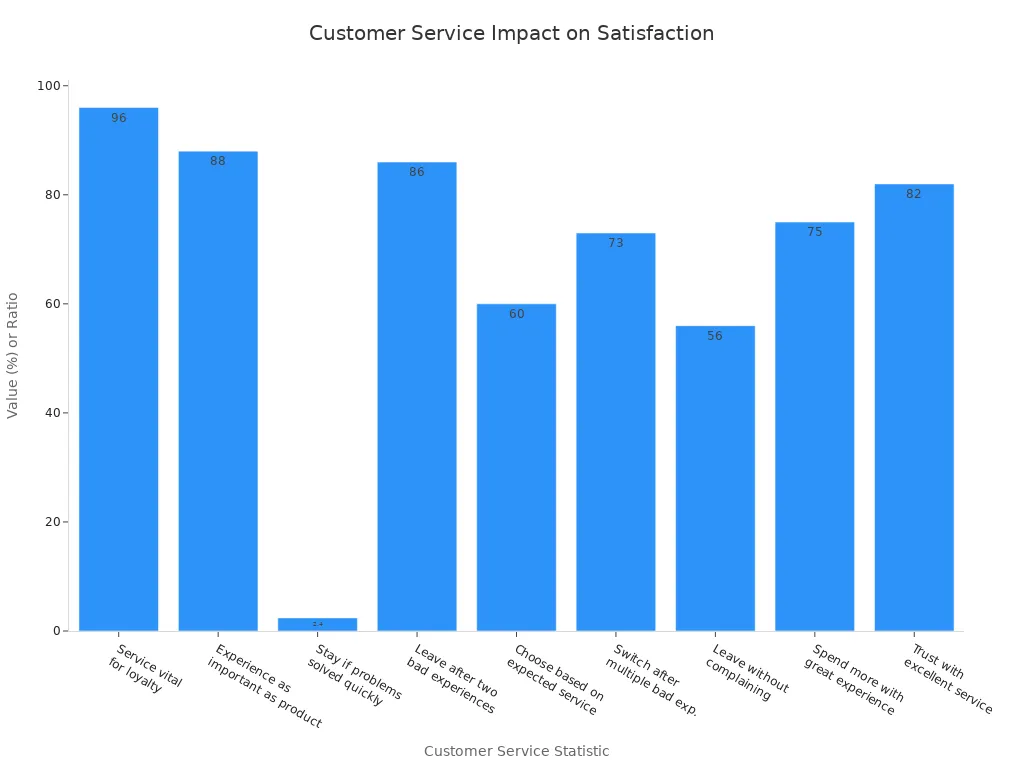
Customer service job duties include helping customers, solving problems, and answering questions. These actions shape how customers feel about your brand. Studies show that 96% of customers think service is vital for loyalty, and 88% value experience as much as the products you sell.
Today, you must meet customers on many channels and respond quickly. Sobot helps you do this with advanced, AI-powered solutions that unify your customer interactions. Learn more at Sobot’s official website.
Understanding Customer Service Job Duties

Defining Customer Service Job Duties
You play a key role in shaping how customers view your company. Customer service job duties cover a wide range of tasks. These include answering questions, solving problems, and helping customers through different channels like phone, email, chat, and social media. You also process orders, handle complaints, and collect feedback. Many companies expect you to keep records and follow company policies.
Here is a table that shows the most common customer service roles and responsibilities:
| Job Duty | Description |
|---|---|
| Provide prompt responses | Respond to customer questions quickly on all channels. |
| Address complaints | Solve customer complaints in a professional way. |
| Maintain product knowledge | Stay updated about products to answer questions well. |
| Identify upselling opportunities | Spot chances to suggest other products or services. |
| Collaborate with teams | Work with other departments to help customers. |
| Record interactions | Keep accurate records in the CRM system. |
| Follow policies | Stick to company rules when helping customers. |
| Improve skills | Take part in training to boost your customer service skills. |
Customer service roles can look different in each industry. For example, in banks, you answer questions about accounts. In retail, you help with returns and refunds. In call centers, you use phones and computers to solve problems.
Why Customer Service Duties Matter
Customer service job duties have a big impact on your company’s success. When you do your job well, you help build trust and loyalty. Studies show that almost 80% of people care about a brand’s service reputation when they decide what to buy. If you give great service, customers are more likely to stay with your company.
Good customer service duties also help your company keep customers. Research shows that satisfied customers are more likely to return. If you handle complaints and questions quickly, you can turn unhappy customers into loyal fans. Brands like Sobot help you manage these tasks with tools that make your work easier and faster. With Sobot’s omnichannel solutions, you can handle all customer service roles in one place, making your job smoother and more effective.
Scope of Customer Service Roles

Channels and Touchpoints
You interact with customers through many channels every day. Each channel is a place where you can shape how customers feel about your brand. Here are some of the main channels and touchpoints you might use:
- Phone
- Live chat
- Social media
- AI chatbots
- SMS
- Self-service portals
- Messaging apps
- Video calls
- Community forums
A touchpoint is any moment when a customer connects with your business. Some touchpoints are planned, like sending an email. Others happen when customers leave reviews online. Every touchpoint matters because it can change how customers see your company.
Organizations use different channels based on their needs. For example, banks often use physical branches, while online stores use digital channels. You need to understand which channels your customers prefer. This helps you deliver better service.
You can measure how well you handle these touchpoints using key metrics:
| Metric | Explanation | Example |
|---|---|---|
| Customer Satisfaction (CSAT) | Shows how happy customers are with a service interaction. | After a support call, you send a CSAT survey to see if the customer was satisfied. |
| Net Promoter Score (NPS) | Measures loyalty and overall experience across all touchpoints. | You ask customers if they would recommend your brand after a purchase. |
| First Contact Resolution (FCR) | Tracks if you solve issues on the first try. | You check how many calls or chats are resolved without follow-up. |
Sobot’s omnichannel solutions help you manage all these channels in one place. This makes your customer service job duties easier and more effective.
Frontline vs. Back-Office Duties
Customer service job duties fall into two main groups: frontline and back-office. Frontline roles put you face-to-face with customers. You answer questions, solve problems, and build relationships. Back-office roles support the frontline by handling tasks behind the scenes.
| Role Type | Responsibilities |
|---|---|
| Front Office | Customer interaction, sales, marketing, public relations, customer service, problem resolution, client communication, market research, relationship building, revenue generation. |
| Back Office | Data entry, research, record keeping, financial management, administrative support, quality control, human resources, facility management. |
Frontline workers have a direct impact on customer satisfaction. You shape the customer’s experience with every interaction. Back-office teams make sure you have the right information and tools. They help you deliver smooth and informed service. When both groups work together, you create a seamless experience for your customers.
Tip: Strong support from back-office teams helps you resolve issues faster and keeps customers happy. Sobot’s unified workspace gives both frontline and back-office teams the tools they need to work together efficiently.
Core Customer Service Duties in Practice
Customer service duties shape every interaction you have with customers. You play a key role in building trust and loyalty. Technology like Sobot’s omnichannel platform, chatbot, AI Agent, live chat, call center, voicebot, ticketing system, and customer contact center help you perform these duties efficiently. Let’s break down the main customer service representative duties and see how you can use technology to improve your work.
Responding to Inquiries and Issues
You answer questions and solve problems every day. Quick responses show customers you value their time. Fast replies boost satisfaction and loyalty. When you respond quickly, you create smoother interactions and help customers feel heard.
Best practices for responding to inquiries and issues include:
- Stay calm to de-escalate situations.
- Get the facts straight to avoid misunderstandings.
- Prepare an action plan to inform customers of steps taken.
- Be polite to maintain professionalism.
- Choose an appropriate tone based on the situation.
- Act on customer feedback to improve service.
Sobot’s live chat and AI-powered chatbot let you respond to customers across channels like web, mobile, and messaging apps. The unified workspace brings all messages together, so you never miss an inquiry. Sobot’s voicebot and call center help you resolve issues by routing calls to the right agent and providing real-time support. You can use Sobot’s ticketing system to track and manage customer requests, making sure every issue gets resolved.
Tip: Fast response times improve customer satisfaction metrics. Customers feel valued when you reply quickly. This leads to greater loyalty and smoother interactions.
Processing Orders and Transactions
Processing orders and transactions is a key part of customer service job duties. You help customers place orders, update inventory, prepare shipping details, and communicate about their purchases. You must keep records accurate and make sure orders go through smoothly.
Standard procedures for processing orders and transactions include:
- Send notifications to buyers and suppliers.
- Update inventory records.
- Prepare shipping details.
- Communicate with customers about their order status.
- Process orders concurrently with assembly to save time.
- Consider stock availability, customer needs, and order priorities.
- Plan using order constraints like minimum order size and fixed receiving days.
- Traditional order processing systems rely on manual labor and handwritten files. Small teams track orders and inventory.
- Modern order processing systems use technology to manage data. This reduces human error and improves efficiency.
Sobot’s omnichannel platform streamlines order processing. You can use AI chatbots to automate customer interactions and reduce manual processing time. The centralized processing system gives you a unified platform to manage transactions and orders. Omnichannel capabilities integrate communication channels, so you can handle orders from email, chat, phone, and social media in one place. Multilingual support helps you serve customers in different markets. AI-powered engagement improves interaction quality and speeds up resolution.
| Feature | Benefit |
|---|---|
| AI chatbots | Automates customer interactions, reducing manual processing time. |
| Omnichannel capabilities | Integrates various communication channels, streamlining order processing. |
| Centralized processing system | Enhances efficiency by providing a unified platform for managing transactions and orders. |
| Multilingual support | Expands service reach, facilitating smoother transactions in diverse markets. |
| AI-powered engagement | Improves customer interaction quality, leading to faster resolution of inquiries. |
Managing Complaints and Feedback
You handle complaints and collect feedback to improve service. Managing complaints is one of the most important customer service duties. You must listen carefully, respond quickly, and offer solutions that fit each customer’s needs.
Effective methods for managing complaints and feedback include:
| Method | Description |
|---|---|
| Efficient Communication Channels | Establish multiple contact options and ensure representatives are well-trained for prompt responses. |
| Prompt and Personalized Solutions | Empower representatives to resolve issues on the spot and tailor solutions to individual needs. |
| Continuous Monitoring | Regularly analyze feedback to identify trends and implement improvements based on customer input. |
AI-powered solutions help you resolve issues faster. Sobot’s AI Agent and chatbot provide real-time support, reducing the burden on human teams. AI tools flag potential issues during support conversations, allowing you to manage problems proactively. Emotion detection lets you identify customer emotions and prioritize urgent cases. AI analyzes customer behavior and predicts potential issues, so you can offer solutions before problems escalate.
| Evidence Type | Description |
|---|---|
| Real-time support | AI provides immediate assistance to resolve customer issues quickly, reducing the burden on human teams. |
| Enhanced productivity | AI tools help agents by flagging potential issues during support conversations, allowing for proactive management. |
| Emotion detection | AI can identify customer emotions, enabling more thoughtful responses and prioritization of urgent cases. |
| Customer behavior | AI analyzes large volumes of customer data to understand preferences and challenges, improving service quality. |
| Predictive solutions | AI can foresee potential customer issues and offer solutions proactively, enhancing satisfaction and loyalty. |
Sobot’s ticketing system automates workflows and manages SLAs, so you can handle complaints efficiently. The unified workspace lets you track feedback and analyze trends. You can use Sobot’s omnichannel solution to collect feedback from all channels and make improvements based on customer input.
Proactive Outreach and Follow-Up
Proactive outreach and follow-up are essential customer service representative duties. You reach out to customers before they ask for help. This shows you care and builds trust. Proactive outreach reduces strain on contact center employees and improves brand reputation.
Benefits of proactive outreach and follow-up include:
| Benefit | Description |
|---|---|
| Reduce strain on contact center employees | Anticipating customer needs reduces call volumes and minimizes strain on support teams. |
| Improve brand reputation | Effective engagement demonstrates a focus on satisfaction, building confidence in the brand. |
| Enhance customer loyalty | Proactive outreach leads to personalized experiences, resulting in higher loyalty and advocacy. |
| Personalized Interactions | Tailored interactions make customers feel valued, improving their overall experience. |
| Build Trust And Loyalty | Proactive care fosters emotional connections, enhancing client retention and loyalty. |
| Enhanced Customer Satisfaction | Quick issue resolution decreases customer annoyance, leading to increased satisfaction. |
| Improved Customer Satisfaction | Addressing issues before customers ask leads to a more positive experience. |
| Faster Problem Resolution | Proactive outreach helps resolve issues before they escalate, saving time. |
| Increased Customer Loyalty | Demonstrating commitment to care fosters trust and encourages repeat business. |
Sobot’s omnichannel platform makes proactive outreach easy. The AI contact center handles complex inquiries across all touchpoints. AI workflows support customers at scale and free your team for important work. Proactive marketing interacts with customers before they need assistance. Automated personalization improves conversion rates through tailored interactions.
| Feature | Benefit |
|---|---|
| AI Contact Center | Instantly handles complex inquiries across all touchpoints |
| AI Workflows | Supports customers at scale and frees team for important work |
| Proactive Marketing | Interacts with customers before they need assistance |
| Automated Personalization | Improves conversion rates through tailored interactions |
You can use Sobot’s live chat, chatbot, and voicebot to follow up with customers after a purchase or support interaction. The ticketing system tracks follow-up tasks and ensures no customer gets overlooked. Sobot’s customer contact center gives you tools to personalize outreach and build lasting relationships.
Note: Proactive outreach helps you resolve issues before they become problems. Customers appreciate when you anticipate their needs and follow up after service.
Customer service job duties require you to respond to inquiries, process orders, handle complaints, and reach out proactively. Sobot’s technology supports these duties and helps you deliver excellent service. You can use AI-powered tools to streamline your work, improve efficiency, and create positive experiences for every customer.
Impact of Customer Service Job Duties on Experience
Building Trust and Loyalty
You build trust and loyalty every time you perform your customer service job duties well. When you listen to customers, respond quickly, and solve their problems, you show that you care. Most people say that trust drives loyalty. Over 80% of consumers stay loyal to brands they trust. You can make customers feel valued by personalizing your service. About 75% of people feel more loyal when brands understand them. High-quality service helps you stand out in a crowded market.
- Excellent service fosters trust and loyalty.
- Emotional connections grow when you make customers feel important.
- Consistent quality sets your business apart.
You can use Sobot’s omnichannel solutions to keep communication clear and consistent. This helps you deliver exceptional experiences and boost customer satisfaction. When you follow through on promises, you turn interactions into long-term relationships.
Turning Challenges into Opportunities
You face many challenges in customer service job duties. Sometimes, you need new technology to improve service. You might also need to manage change when your company updates its systems. These challenges give you a chance to grow.
- Invest in automation and cloud-based tools to improve satisfaction.
- Train your team to handle new systems and changes.
- Use feedback to spot problems and fix them quickly.
You can collect feedback through Sobot’s unified workspace. When you act on feedback, you show customers that their opinions matter. This leads to higher customer satisfaction and helps you deliver exceptional experiences.
Real-World Example: OPPO and Sobot
OPPO improved its customer service job duties by working with Sobot. During busy shopping times, OPPO used Sobot’s chatbot and ticketing system to handle more questions. The chatbot solved 83% of issues. OPPO saw a 57% increase in repurchase rate. Customer satisfaction rose because Sobot’s solutions made service faster and more accurate.
| Metric | Outcome |
|---|---|
| Resolution Rate | 83% |
| Increase in Repurchase Rate | 57% |
You can see how effective customer service job duties, supported by the right tools, lead to better customer satisfaction and loyalty. Sobot helps you manage every step, so you can focus on creating a great customer experience.
Overcoming Challenges in Customer Service
Handling High Volumes and Stress
You face many challenges in customer service job duties, especially when you handle high volumes of calls and messages. Stress can build up quickly. You may deal with upset customers, juggle multiple tasks, and feel pressure to resolve issues fast. These challenges can lead to burnout and high turnover rates among agents.
Here is a table showing common challenges and solutions:
| Challenge | Description | Solution |
|---|---|---|
| Employee Burnout | High stress and workload can lead to burnout. | Stabilize the workforce and create a positive environment. |
| High Turnover Rates | Frequent turnover affects service quality. | Focus on retention strategies and employee support. |
| Recruitment and Training Difficulties | Finding and training new agents is costly. | Develop onboarding and ongoing training programs. |
| Language Barriers | Communication issues with diverse customers. | Provide language training or hire multilingual staff. |
| Handling Multiple Customers | Juggling tasks can overwhelm agents. | Use AI chatbots for basic queries, freeing agents for complex issues. |
| Managing Complaints and Feedback | Difficulties can escalate dissatisfaction. | Train agents in de-escalation and set clear escalation pathways. |

Sobot’s Voice/Call Center helps you manage workload by using natural-language routing and automated call handling. Real-time responses allow you to resolve issues quickly without needing more agents. These features improve efficiency and reduce stress for your team. You can find more details about Sobot’s solutions at Sobot Voice/Call Center.
Tip: When you use AI chatbots and omnichannel platforms, you handle customer service job duties faster and more accurately. This reduces strain and improves customer satisfaction.
Continuous Improvement with Technology
You need to keep improving your customer service job duties to stay ahead. Technology helps you do this. AI and machine learning analyze large datasets and predict outcomes. Real-time analytics give you instant feedback on customer interactions. Omnichannel solutions integrate all communication methods, making your service consistent and personalized.
Here are some advancements you can use:
- AI and Machine Learning: Make smarter decisions and predict customer needs.
- Real-time Analytics: Adjust your service quickly based on immediate insights.
- Omnichannel Solutions: Manage all channels in one platform for a seamless experience.
Ongoing training is important. When you invest in technology training, you boost employee efficiency by 30% and reduce onboarding time by nearly 50%. Targeted training increases confidence in using new software. Tracking learning metrics helps you build a culture of continuous improvement.
Note: You improve customer service job duties by adopting new technology and training your team. This leads to higher productivity and better customer satisfaction.
Sobot’s omnichannel platform and Voice/Call Center support your continuous improvement. You streamline customer service job duties, manage high volumes, and deliver excellent experiences every day.
Customer service job duties shape every customer experience. When you focus on customer service job duties, you build trust and loyalty. Sobot gives you tools to manage customer service job duties across all channels. You can use Sobot’s AI and omnichannel solutions to improve customer service job duties and boost satisfaction. Review your customer service job duties often. For more tips or a demo, contact Sobot. 🚀
FAQ
What are the most important customer service job duties?
You need to answer questions, solve problems, process orders, and handle complaints. These customer service job duties help you build trust and keep customers happy. Sobot’s omnichannel platform supports you in managing these tasks across all channels.
How does technology improve customer service job duties?
You can use AI chatbots, live chat, and call centers to respond faster and reduce errors. Sobot’s solutions help you automate routine customer service job duties, making your work more efficient and accurate.
Why should you track customer service job duties?
Tracking customer service job duties helps you spot trends and improve service. You can use data to see what works. Sobot’s analytics tools show you where to focus for better results.
How do customer service job duties affect customer loyalty?
When you perform customer service job duties well, you build loyalty. Customers return when you solve their problems quickly. Sobot’s unified workspace helps you deliver consistent service, which increases satisfaction and repeat business.
Can Sobot help with training for customer service job duties?
Yes! Sobot offers tools and resources to help you learn new skills. Ongoing training ensures you stay updated and perform customer service job duties at a high level.
See Also
Transforming Support Through AI Customer Service Agents
Exploring the Role of IT Call Center Agents
Top Practices for Quality Management in Call Centers

