Customer Self-Service Applications That Drive Engagement

Customer self service applications are transforming the way people interact with businesses by providing quick answers and minimizing wait times. With Sobot, you can make customer experiences more intuitive and efficient through advanced customer self service applications. By implementing easy and accessible self-service options, you enhance satisfaction and foster stronger engagement.
- 61% of customers prefer self-service for simple issues.
- 80% of high-performing service organizations offer self-service solutions.
- 90% of CX leaders plan to invest more in self-service soon.
What Are Customer Self Service Applications?
Definition and Core Elements
Customer self service applications are tools that let you find answers and solve problems on your own, without waiting for a support agent. These applications help you get information quickly and make your experience smoother. You see them in many places today because they save time and make things easier for both you and businesses.
You can find different types of customer self service applications, such as:
- Knowledge bases with articles, FAQs, and video guides
- FAQ pages that answer common questions
- Chatbots that talk with you and give instant replies
- Community forums where you can share ideas and get help from others
- Automated task management platforms for handling requests
- In-app support that gives help inside mobile apps
- Self-service portals where you manage your account and services
These applications do more than just answer questions. They help businesses work better. For example, self-service portals reduce the workload for agents and speed up service. You can see how they improve efficiency in the table below:
| Feature | Benefit to Operations |
|---|---|
| Self-service portals handle routine tasks | Free up resources for complex issues |
| Faster transaction processing | Improve customer experience |
| Automation of repetitive tasks | Streamline workflow and boost efficiency |
Customer self service applications also lower costs. When you use these tools, you help businesses save money by handling simple tasks yourself.
Sobot’s Approach to Self-Service
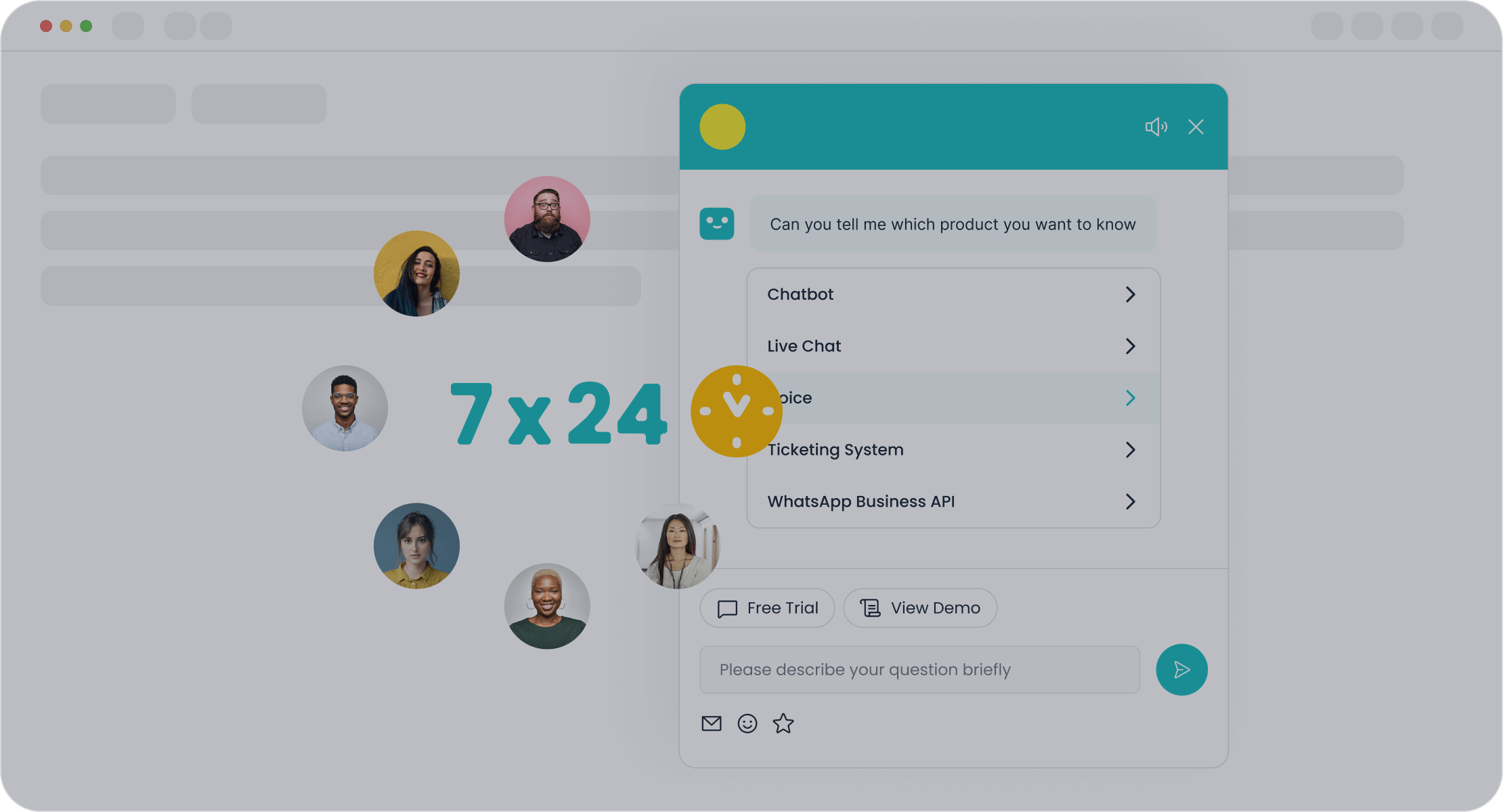
Sobot gives you a full set of customer self service applications. You can use their AI-powered chatbot for instant answers, or reach out through live chat for more help. Sobot’s voice call center and voicebot let you get support over the phone. The ticketing system helps you track and solve issues. All these tools work together in Sobot’s all-in-one customer contact center. This means you get help anytime, on any channel you like. Sobot’s solutions make customer self service applications easy to use, fast, and reliable for everyone.
Customer Experience and Engagement
Empowering Customers with Self-Service
You want fast answers and control over your support journey. Self-service applications give you the power to solve problems on your own schedule. You do not need to wait for an agent. You can find solutions at any time, day or night. This freedom improves your confidence and makes you feel valued.
- You can resolve issues at your own pace.
- Support is available 24/7, so you never have to wait.
- You get personalized help because smart systems remember your needs.
Self-service tools also boost your engagement. When you use smart applications, you interact more with the brand. You feel more connected because you get quick, helpful responses. Research shows that smarter self-service tools make you more likely to stay engaged and solve problems yourself. Here is what studies found:
| Aspect | Findings |
|---|---|
| Effect of Smartness on Engagement | Higher levels of smartness significantly enhance customer engagement. |
| Impact on Self-Efficacy | Increased smartness leads to improved self-efficacy, especially for customers with high personalization needs. |
| Technology Anxiety | The relationship between smartness and technology anxiety is negative but not significant, becoming marginally significant under certain conditions. |
Seamless Omnichannel Support by Sobot
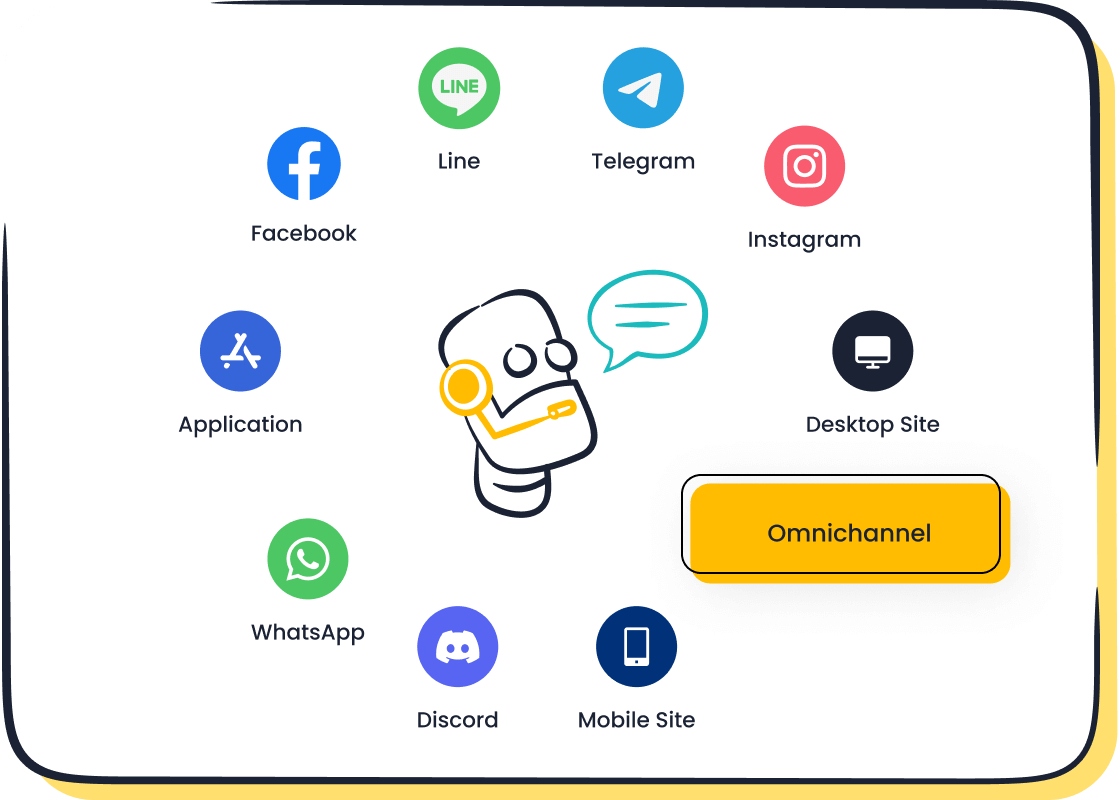
Sobot helps you get support wherever you are—on chat, phone, email, or social media. You do not need to repeat your story. Sobot’s omnichannel support keeps your information in one place. This unified approach reduces friction and makes your experience smooth.
With Sobot, AI agents understand your history, intent, and language. You get the right help, fast. If you need more support, Sobot routes you to a human agent in real time. This system improves satisfaction and helps you feel heard.
Businesses using Sobot’s omnichannel platform see big results:
- Up to 80% of support tickets resolved by AI agents.
- 47% faster response times.
- 25–68% lower customer service costs.
- Customer satisfaction rates as high as 97%.
You get a better customer experience when you have easy access to help on any channel. Sobot’s solutions make every interaction simple, personal, and effective.
Key Features of Self-Service Customer Support
Self-service customer support has become a cornerstone of modern customer experience. You can solve problems, find answers, and manage your account without waiting for an agent. Sobot’s self-service solutions give you powerful tools that make your journey smoother and more efficient. Let’s explore the essential features that drive engagement and satisfaction.
AI Chatbot and Automation
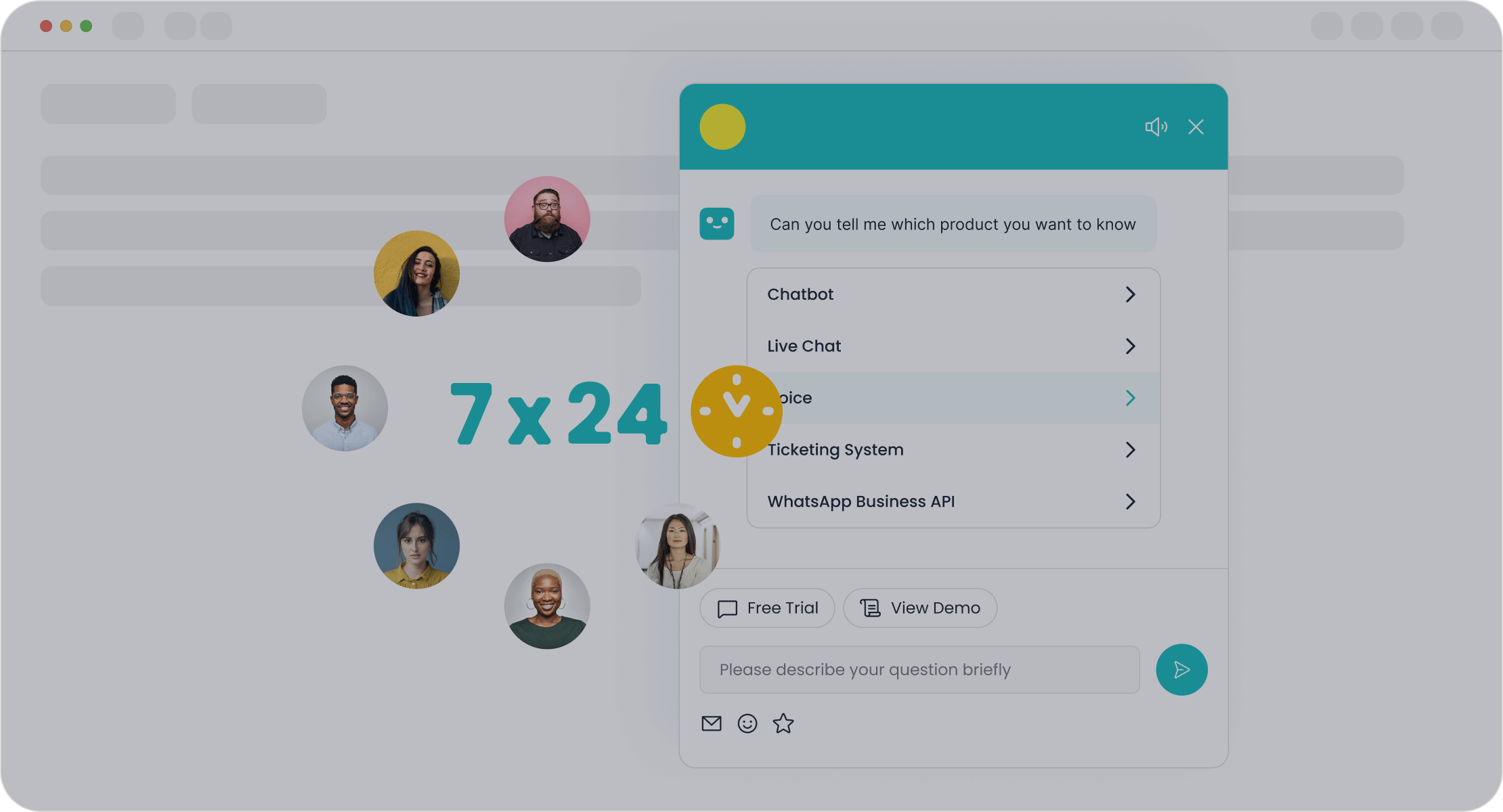
AI chatbots are the heart of self-service customer support. You interact with them to get instant answers, complete tasks, and resolve issues. Sobot’s AI Chatbot stands out because it uses advanced automation to handle routine questions and tasks. You can reset passwords, update account information, and check order status without human intervention. This independence gives you control over your support journey.
Tip: Use the chatbot for quick tasks like tracking orders or updating your profile. You save time and avoid long wait times.
Here are some key features of Sobot’s AI Chatbot:
- You get instant replies to common questions.
- The chatbot operates 24/7, so you always have access to support.
- You can perform tasks independently, such as managing your account or troubleshooting issues.
- The chatbot uses a knowledge base built from articles, PDFs, Excels, and text snippets, making information retrieval easy.
- Automation minimizes the need for agent intervention, enhancing your control and satisfaction.
Insider Intelligence predicts that customer spending through chatbots will grow from USD 2.8 billion in 2019 to USD 142 billion worldwide (source). This growth shows how important self-service customer support is for businesses and customers.
Automation in self-service customer support reduces response times and improves satisfaction. You get immediate access to support, which means faster resolutions. Human agents focus on complex issues, while chatbots handle routine tasks. This optimized resource allocation boosts efficiency.
| Benefit | Impact on Response Times and Customer Satisfaction |
|---|---|
| Immediate access to support | Reduces wait times for customers, leading to faster resolutions. |
| Optimized resource allocation | Frees up human agents to handle complex issues, improving overall efficiency. |
| 24/7 availability | Ensures customers can access support anytime, enhancing satisfaction. |
| Consistent service delivery | Builds trust and reinforces brand reputation through standardized support. |
You experience consistent service every time you use self-service customer support. The chatbot delivers standardized answers, which builds trust and reinforces the brand’s reputation.
Multilingual and 24/7 Support
You expect support in your preferred language and at any time. Sobot’s self-service customer support offers multilingual capabilities and round-the-clock availability. The AI Chatbot can communicate in over 100 languages, making it easy for you to get help no matter where you are.
Note: Multilingual support helps international customers and employees feel valued and understood.
Here’s how multilingual and 24/7 support benefit you:
| Benefit | Description |
|---|---|
| 24/7 Availability | Customers can resolve issues at any time, including late nights and holidays, without waiting for business hours. |
| Instant Responses | Self-service options provide immediate answers, meeting customer expectations for quick support. |
| Cost Efficiency | Businesses can offer continuous support without the need for additional staff or infrastructure. |
You receive instant responses, which meets your expectations for quick support. Businesses save money because they do not need extra staff to cover all hours. Sobot’s self-service solutions use natural language processing to provide human-like replies. This capability allows businesses to support a diverse workforce and international customers effectively.
- You can get help in your preferred language.
- The chatbot understands your intent and provides accurate answers.
- Employees and customers receive assistance that improves productivity and satisfaction.
Sobot’s self-service customer support ensures that you never have to wait for business hours. You resolve issues at your convenience, which increases your satisfaction and loyalty.
Integration with Human Agents
Sometimes, you need more than automated replies. Complex issues require empathy and expertise. Sobot’s self-service customer support integrates seamlessly with human agents. You start your journey with the chatbot, but if your problem needs a personal touch, the system transfers you to a human agent instantly.
Callout: Seamless transitions between chatbot and human agents make your support journey cohesive and efficient.
Here’s why integration matters:
| Benefit | Description |
|---|---|
| Efficient Problem Resolution | Quick handoffs when chatbots reach their limits allow human agents to provide necessary empathy. |
| Personal Touch | Human agents can offer expertise and empathy that chatbots may lack. |
| Optimized Resource Allocation | The ability to return to the chatbot after human intervention ensures a cohesive customer journey. |
You experience efficient problem resolution because the chatbot handles routine tasks, and human agents step in for complex issues. The transition is smooth, so you do not have to repeat your story. Human agents offer empathy and expertise, making your journey more personal.
- You get quick handoffs when the chatbot cannot solve your issue.
- Human agents provide the expertise and empathy needed for complex problems.
- After human intervention, you can return to the chatbot for follow-up tasks.
A smooth transition from chatbot to human agent resolved my issue quickly, showing the importance of seamless handoffs. Sobot’s self-service customer support ensures that your journey remains cohesive, even when switching between automation and human support.
Essential Features Checklist
You want self-service customer support that is reliable, efficient, and easy to use. Sobot’s self-service solutions include these essential features:
- AI-powered chatbots for instant replies and task automation
- Multilingual support for global customers and employees
- 24/7 availability for continuous assistance
- Seamless integration with human agents for complex issues
- Knowledge base built from multiple sources for accurate information
- Easy setup with a point-and-click interface, no coding required
- Reporting and optimization tools for ongoing improvement
Tip: Choose self-service customer support with these features to maximize satisfaction and efficiency.
How Sobot’s Self-Service Solutions Drive Engagement
Sobot’s self-service customer support empowers you to take control of your support journey. You interact with AI chatbots that solve routine issues, saving you time and reducing frustration. You receive support in your preferred language, day or night. When you need more help, human agents step in seamlessly.
Businesses benefit from Sobot’s self-service solutions by reducing operational costs and improving agent productivity. The chatbot handles up to 80% of support tickets, freeing agents for complex tasks. Customer satisfaction rates reach as high as 97%, and response times improve by 47%. These results show the power of self-service customer support in driving engagement and loyalty.
You experience a unified journey across channels. Sobot’s omnichannel platform keeps your information in one place, so you never have to repeat your story. The system remembers your history and preferences, providing personalized support every time.
Real-World Example: OPPO’s Self-Service Journey
OPPO, a global leader in smart devices, partnered with Sobot to enhance its self-service customer support. During peak shopping periods, OPPO faced a surge in customer inquiries. Sobot’s chatbot handled repetitive queries, allowing human agents to focus on complex issues. OPPO optimized its knowledge base, reducing maintenance efforts by 90%. The integration of global customer channels improved data accessibility and satisfaction.
- OPPO achieved an 83% chatbot resolution rate.
- Positive feedback reached 94%.
- Repurchase rates increased by 57%.
This example shows how self-service customer support can transform your journey and boost engagement. You get faster, more accurate answers, and businesses see improved satisfaction and loyalty.
Why You Need Self-Service Customer Support
You want control, speed, and convenience. Self-service customer support gives you all three. You solve problems on your own, get instant replies, and access support anytime. Sobot’s self-service solutions make your journey simple and effective.
- You save time by resolving issues independently.
- You receive support in your preferred language.
- You experience seamless transitions between automation and human agents.
- You enjoy consistent, reliable service across channels.
Self-service customer support is not just a trend. It is a necessity for modern businesses and customers. Sobot’s self-service solutions deliver the features you need to stay engaged and satisfied.
Note: Explore Sobot’s self-service customer support features at Sobot’s official website for more details.
Tips for Implementing Customer Self-Service
You want to deliver a better customer experience and see real results from your self-service strategy. The right approach helps you unlock customer self-service benefits like reduced support costs, a streamlined onboarding process, and optimized customer journey insights. Here are practical tips to help you deploy and optimize superb customer self-service applications.
Start Small and Scale
You do not need to launch every self-service portal at once. Start with one or two self-service options that solve the most common problems. This approach lets you test, learn, and adjust before expanding. You can use Sobot’s easy setup to quickly launch a chatbot or knowledge base. As you see what works, you can add more features and channels.
A phased rollout gives you control and flexibility. You avoid overwhelming your team and your customers. You also reduce risk by focusing on the highest-impact areas first. Governance from day one sets you up for success. Plan for scale from the start so you can grow your self-service tools as your needs change.
| Key Point | Explanation |
|---|---|
| Governance from day one | You set clear rules and responsibilities, which helps you avoid confusion and mistakes. |
| Plan for scale from the start | You design your self-service portal to grow, making it easy to add new features later. |
Tip: Start with a simple self-service portal for FAQs or order tracking. Expand to more advanced self-service interactions as you gain confidence.
This strategy helps you deliver a better customer experience and ensures your self-service experience improves over time.
Plan and Align Teams
A successful self-service strategy depends on teamwork. You need everyone on the same page. Start by clearly defining roles and responsibilities. Each person should know what you expect from them. Use regular check-ins, dashboards, and scorecards to track progress. Address any misalignment or underperformance quickly and constructively.
| Key Action | Description |
|---|---|
| Clearly Define Roles and Responsibilities | Make sure everyone knows their job in the self-service portal rollout. |
| Use Regular Check-ins, Dashboards, and Scorecards | Track your progress and fix problems early. |
| Address Misalignment or Underperformance Promptly | Solve issues quickly to keep your self-service strategy on track. |
You can also develop a shared vision for your self-service tools. Encourage open communication and feedback. Foster cross-functional collaboration by involving support, IT, and marketing teams. This teamwork leads to a streamlined onboarding process and optimized customer journey insights.
Tip: Hold weekly meetings to review your self-service portal progress and share tips for improvement.
When you align your teams, you create a foundation for a better customer experience and improved customer experience across every self-service interaction.
Optimize for Mobile Experience
Most customers use mobile devices to access self-service portals. You need to make sure your self-service options work well on smartphones and tablets. A mobile-optimized self-service portal gives users quick access to answers and support wherever they are. Sobot’s platform makes it easy to design mobile-friendly self-service tools with a point-and-click interface.
Context matters. Generation Z and digital natives expect a seamless user experience on mobile. If your self-service portal is hard to use on a phone, you risk losing engagement and missing out on reduced support costs.
| Evidence Description | Key Insights |
|---|---|
| Contextual factors influence user satisfaction and engagement with mobile self-service applications. | The usage context significantly affects the value-in-use experience, especially for Generation Z, who are digital natives. |
| Understanding the impact of context elements is vital for optimizing mobile applications. | Context acts as a filter between the value proposition and the value-in-use experienced by consumers. |
Note: Test your self-service portal on different devices. Make sure buttons, text, and forms are easy to use on small screens.
Optimizing for mobile leads to a better customer experience, a streamlined onboarding process, and optimized customer journey insights. You also see reduced support costs because customers can solve problems on their own, anytime and anywhere.
Keep Content Updated
Your self-service portal is only as good as the information it provides. Outdated answers frustrate users and hurt customer satisfaction. You need to update your knowledge base, FAQs, and guides regularly. Sobot’s reporting and optimization tools help you track popular search terms and identify gaps in your content.
Updated content leads to quicker resolutions and higher CSAT scores. When you address new issues fast, you show customers that you care about their needs. This approach turns your self-service portal into a trusted resource and a preferred channel for support.
- Keep your knowledge base and FAQs current.
- Track what customers search for and update answers as needed.
- Address common problems before they become bigger issues.
- Optimize your self-service portal so users can find what they need quickly.
Tip: Schedule monthly reviews of your self-service portal content. Use Sobot’s analytics to spot trends and improve your self-service strategy.
A customer-centric approach to content keeps your self-service portal relevant and effective. You deliver a better customer experience, see reduced support costs, and enjoy a streamlined onboarding process.
Actionable Tips Checklist
You can use these tips to guide your self-service strategy:
- Build a straightforward interface for your self-service portal.
- Create a comprehensive knowledge base.
- Use interactive FAQs.
- Make contact information clear and accessible.
- Update content routinely.
- Optimize for mobile devices.
- Focus on continuous improvement.
- Document your current self-service tools and strategy.
- Communicate with all stakeholders.
- Measure, report, and analyze your results.
Callout: Sobot’s easy setup, reporting, and optimization features make it simple to follow these tips and deliver superb customer self-service.
By following these strategies, you create a self-service portal that supports a better customer experience, delivers reduced support costs, and provides a streamlined onboarding process. You also gain optimized customer journey insights that help you improve over time.
How Sobot Supports Your Self-Service Strategy
Sobot gives you everything you need to launch and grow a successful self-service portal. You can set up chatbots, knowledge bases, and ticketing systems without coding. The platform’s reporting tools let you measure performance and optimize your self-service options. You can scale your self-service tools as your business grows, always delivering a better customer experience.
You see customer self-service benefits like reduced support costs, a streamlined onboarding process, and optimized customer journey insights. Sobot’s solutions help you create a superb customer self-service experience that keeps customers happy and engaged.
Common Pitfalls to Avoid
When you design customer self-service applications, you want to make things easy and helpful. However, some common mistakes can lower adoption and satisfaction. You can avoid these pitfalls by focusing on simplicity, accessibility, and integration.
Overcomplicating the Interface
If you add too many steps or complex menus, users get frustrated. Simple tasks should not become long, confusing processes. Many client portals fail because they make things harder, not easier.
"If the new system requires more effort for the client and the process is more complicated than before, adoption will remain low regardless of technical capabilities."
You want your customer self-service tools to feel natural and quick. When users face complicated interfaces, they often return to traditional support channels. This defeats the purpose of self-service.
- Complex interactions reduce user satisfaction.
- Frustration grows when simple actions require many steps.
- Adoption drops if users find the system harder than before.
Ignoring Accessibility
Accessibility matters for everyone. If you ignore it, some users cannot use your customer self-service applications. Younger users often value self-scheduling and digital tools. However, people with limited access or different needs may struggle.
- Digital barriers can prevent Medicaid recipients and other groups from using self-service tools.
- Accessibility features help all users, not just those with disabilities.
You should design your customer self-service platform so everyone can use it. This increases engagement and makes your service fair.
Failing to Integrate Channels
Many users start with customer self-service but need more help. If your channels do not connect, users must repeat information or switch between systems. This leads to lower satisfaction.
- Only 14% of issues get fully resolved through self-service alone.
- 73% of customers start with self-service but escalate to live support.
- Customer satisfaction drops by over 20 points if users must contact support three or more times.
You want to integrate all your channels. This way, users get seamless support and do not have to repeat themselves.
| Mistake | Explanation | Prevention |
|---|---|---|
| Deploying platforms in isolation | Tools without integration lead to low adoption. | Integrate tools into daily workflows. |
| Overcomplicating the interface | Complex steps frustrate users and lower adoption. | Keep the design simple and user-friendly. |
| Ignoring accessibility | Some users cannot access self-service features. | Add accessibility features for all users. |
| Failing to integrate channels | Users must repeat information and switch systems. | Connect all support channels seamlessly. |
By avoiding these pitfalls, you make your customer self-service applications more effective and engaging.
Measuring Success in Customer Self-Service
Key Metrics for Customer Experience
You need to measure how well your customer self-service applications perform. Tracking the right metrics helps you understand if your tools drive engagement and satisfaction. Sobot’s analytics and reporting features make this process easy. You can see real-time data and spot trends that matter.
Here are the most important metrics for customer self-service:
| Metric | Description | Calculation Method |
|---|---|---|
| First Contact Resolution (FCR) | Measures the rate at which issues are resolved on the first contact. | (Resolved requests / Total requests) * 100 |
| Net Promoter Score (NPS) | Assesses customer satisfaction and likelihood to recommend. | % Promoters - % Detractors |
| User Adoption and Engagement | Tracks how many customers use the self-service solution. | Monthly users, views of tutorials, engagement rates |
| Customer Churn Rate | Evaluates the percentage of customers lost over a period. | (Customers lost / Customers at start) * 100 |
| Call Deflection Rate | Measures how effectively self-service channels handle inquiries. | (Inquiries handled by self-service / Total inquiries) * 100 |
You can use these metrics to see if your customer self-service tools help customers solve problems quickly. High FCR means your portal works well. A strong NPS shows customers feel satisfied. Tracking adoption and engagement tells you if people use your self-service options. Lower churn and higher call deflection rates mean your tools keep customers happy and reduce agent workload.
Tip: Sobot’s reporting dashboard lets you monitor these metrics in real time. You can adjust your strategy based on what you see.
Using Feedback for Improvement
Customer feedback helps you improve your customer self-service applications. You can collect feedback through surveys, ratings, and direct comments. Sobot’s analytics tools make it easy to gather and analyze this information.
- Integrating customer feedback is essential for continuous improvement.
- Feedback helps you find areas to optimize your product and service.
- You create personalized experiences that match customer needs.
You can use content analytics to see which documents customers read most. Highlight popular documents on your homepage for easy access. Search gaps show you where customers cannot find answers. Fill these gaps with new guides or FAQs.
| Insight Type | Description |
|---|---|
| Content Analytics | Self-service tools show how effective your documentation is through clicks and searches. |
| Frequent Documents | Documents read often should be easy to find for customers. |
| Search Gaps | Search terms with no results reveal missing content that needs to be added. |
You improve your customer self-service applications by listening to your customers. Sobot’s analytics and reporting features help you track feedback and make changes that boost satisfaction and engagement.
Sobot Success Story: OPPO
Challenges and Solutions
You face many challenges when you try to improve customer self-service. OPPO, a global leader in smart devices, wanted to handle a surge in customer inquiries during busy shopping periods. Customers needed fast answers and easy access to support. OPPO’s team struggled with repetitive questions and a large knowledge base that required constant updates. Agents spent too much time on simple tasks, which slowed down service and lowered satisfaction.
OPPO decided to use Sobot’s customer self-service applications. You see how Sobot’s AI chatbot handled routine questions, freeing agents to focus on complex issues. The chatbot used a smart knowledge base, which reduced maintenance efforts by 90%. OPPO integrated all customer channels, so you could get help through chat, phone, or email without repeating your story. Sobot’s customer self-service tools made support faster and more reliable.
Tip: You can solve common problems quickly with customer self-service applications, leaving agents to help with more difficult issues.
Results and Customer Feedback
You notice big improvements after OPPO deployed Sobot’s customer self-service solutions. Customers resolved issues faster and felt more satisfied. OPPO achieved an 83% first-contact resolution rate. The chatbot resolved 83% of inquiries without human help. Positive feedback reached 94%. Repurchase behavior increased by 57%. You can see these results in the table below:
| Metric | Result |
|---|---|
| First-contact resolution rate | 83% |
| Chatbot resolution rate | 83% |
| Positive feedback | 94% |
| Increase in repurchase behavior | 57% |
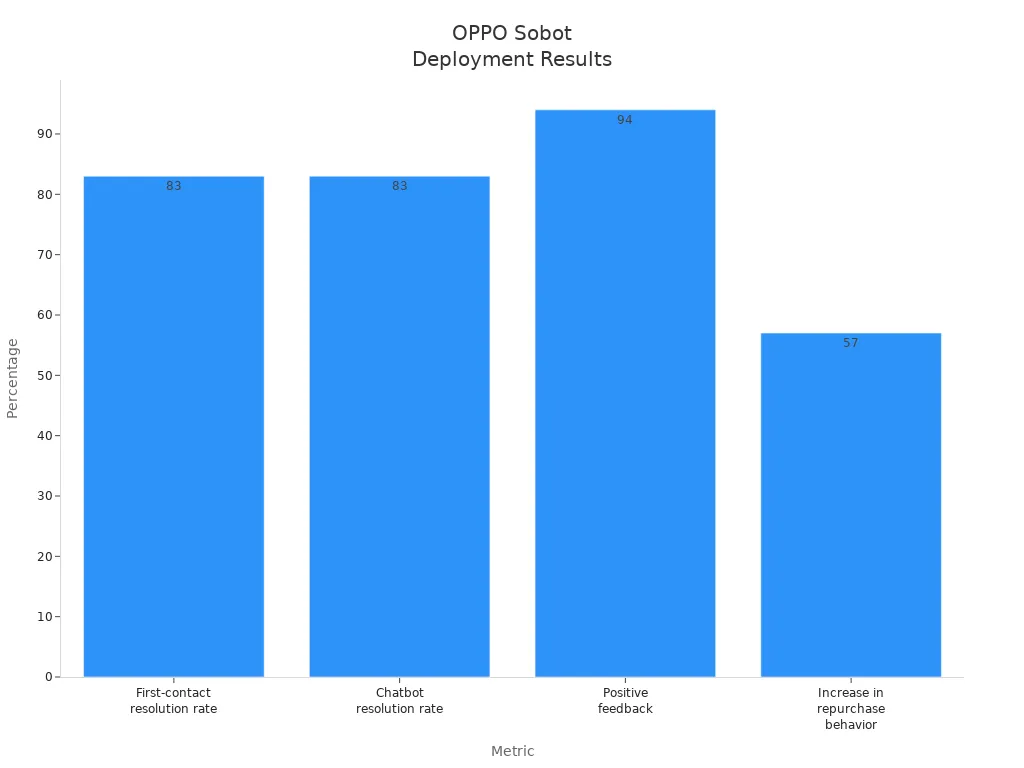
You see that OPPO’s customers responded well to the new customer self-service features. The chatbot helped resolve most issues, and more customers returned to buy again. Sobot’s customer self-service applications made support easier, improved satisfaction, and boosted loyalty. You can trust that customer self-service drives engagement and delivers measurable results.
You drive engagement with customer self-service by starting small, communicating with stakeholders, and offering guidance. Personalization and proactive engagement help you build strong connections. Community building increases loyalty. Sobot’s customer self-service platform boosts agent efficiency by 30% and achieves a 97% CSAT. You access instant customer information across channels. Sobot’s no-code setup and AI Copilot make customer self-service easy. You use AI Insight for data-driven decisions. These strategies improve your customer self-service experience and business outcomes.
FAQ
What are customer self service applications?
Customer self service applications are tools that let you solve problems or get answers without waiting for a support agent. You can use chatbots, knowledge bases, or self-service portals to find information and complete tasks quickly.
How do customer self service applications improve customer experience?
You get instant help with customer self service applications. These tools give you answers any time, in your language. You do not need to wait for business hours. This makes your support journey faster and more satisfying.
Can customer self service applications work with human agents?
Yes. Customer self service applications like Sobot’s chatbot transfer you to a human agent if you need more help. You start with the bot for simple issues, then get expert support for complex problems. This keeps your experience smooth.
Are customer self service applications available 24/7?
You can access customer self service applications any time, day or night. Sobot’s AI Chatbot works around the clock. You always have support, even on weekends or holidays.
Why should businesses use customer self service applications?
Businesses use customer self service applications to save time and money. These tools handle routine questions, reduce agent workload, and improve customer satisfaction. Companies like OPPO saw higher resolution rates and more repeat customers after using Sobot’s solutions.
See Also
Transforming Support Through AI Customer Service Innovations
Enhance SaaS Customer Support Using Live Chat Techniques
Ten Strategies to Improve Live Chat Customer Experience
Increasing E-commerce Customer Happiness with Chatbot Solutions
Enhancing Operational Efficiency with AI Customer Service Tools

