Customer journey contact center meaning and impact


A customer journey contact center manages every step of your interaction with a brand, from the first inquiry to resolution and feedback. You shape the customer journey through every contact point, creating a unique experience. When you understand the customer journey, you help both customers and businesses. You see improvements in satisfaction, loyalty, and conversion rates. Sobot leverages powerful Sobot AI to enhance the customer journey contact center, making each experience seamless and personal. The table below shows why the customer journey matters:
| Metric | Importance |
|---|---|
| Customer Satisfaction (CSAT) | Measures how customers feel about their experience. |
| Net Promoter Score (NPS) | Shows loyalty and likelihood to recommend the company. |
| First Call Resolution (FCR) | High rates mean customers get solutions quickly, building trust in the journey. |
With Sobot call center solutions, businesses can effectively manage these metrics to ensure a positive customer journey.
Customer journey contact center basics

What is a customer journey?
You experience a customer journey every time you interact with a brand. The customer journey describes the path you take from the moment you first learn about a company to the point where you share feedback or seek support. Each step in the journey shapes your impression of the brand. Companies design the customer journey to make every interaction smooth and memorable.
A strong customer journey in contact centers relies on several foundational elements:
- Customer-first mentality
- Seamless omnichannel communication
- Empowered agents with comprehensive training
- Advanced technology and automation
- Data-driven insights and analytics
- Continuous improvement and flexibility
You notice these elements when you receive quick answers, friendly service, and consistent support across different channels. The customer journey helps you feel valued and understood.
Contact centers use different models to map the customer journey. These models help companies visualize your experience and identify areas for improvement. Here is a table showing common customer journey models:
| Template Name | Key Elements |
|---|---|
| Linear Timeline Template | Stages of the journey, Touchpoints, Customer emotions, Opportunities for improvement |
| Empathy Map Template | Customer personas, Emotional states, Pain points, Quotes representing customer’s voice |
| Spider Web Template | Central customer point, Touchpoints and channels, Paths customers may take, Associated emotions |
| Service Blueprint Template | Customer actions, Frontstage and backstage processes, Employee actions, Pain points |
| eCommerce Funnel Template | Stages of online shopping, Digital touchpoints, Customer emotions, Abandonment points |
| Experience Wheel Template | Stages arranged in a circle, Touchpoints, Emotional experience, Pain points |
You see that each model focuses on customer journey touchpoints and emotions. Companies use these models to improve your experience at every stage.
Key touchpoints in contact centers
Touchpoints are the moments when you interact with a brand. Each touchpoint can change how you feel about the company. The customer journey includes many touchpoints, and each one matters.
You encounter touchpoints before, during, and after your purchase. Here is a table that explains these stages and their touchpoints:
| Stage | Touchpoints | Description |
|---|---|---|
| Before | Marketing channels, social media, online reviews, word of mouth | Initial awareness of the brand through various advertising and communication methods. |
| During | Point of Sale (POS), website, call centers, sales assistants | Direct interactions during the purchasing process, including online and offline channels. |
| After | Invoicing, product support, customer feedback surveys | Post-purchase interactions that influence customer satisfaction and loyalty. |
You might see an ad online, visit a website, or call a contact center. Each touchpoint gives you information and shapes your opinion. After you buy something, you may get an invoice, need support, or fill out a survey. These touchpoints help companies understand your needs and improve their service.
You use different channels for each touchpoint. Some channels are interactive, like live chat or phone calls. Others are non-interactive, like billboards or emails. The effectiveness of these channels affects your satisfaction. You expect a consistent experience across all touchpoints. Most customers want to resolve their issues in one contact. For example, 93% of customers using call centers expect quick solutions, and 72% of customers using websites have the same expectation.
You want an omnichannel experience, which means you can interact with brands in many ways. If you get mixed messages from different channels, you may lose trust. A cohesive brand experience makes you feel confident and valued.
Here is a list of customer journey touchpoints you may encounter:
- Before: How you find out about the brand (advertisements, social media, etc.)
- During: Channels you use during the purchase (website, stores, call centers)
- After: Post-sale interactions (invoicing, support, feedback)
You notice that each touchpoint plays a role in your overall journey. Companies focus on improving customer touchpoints to make your experience better.
Sobot’s approach
Sobot helps you enjoy a seamless customer journey by connecting every touchpoint. Sobot uses advanced technology to make your interactions smooth and efficient. You benefit from AI-powered chatbots, live chat, voice call centers, ticketing systems, and WhatsApp Business API. These tools work together to give you fast answers and personalized support.
Sobot’s AI chatbots can reduce customer service costs by 30%. You get quick solutions to common questions, and agents have more time to help with complex issues. When OPPO used Sobot’s integrated chatbot, repurchase rates increased by 57%. You see how smart automation improves your journey and encourages loyalty.
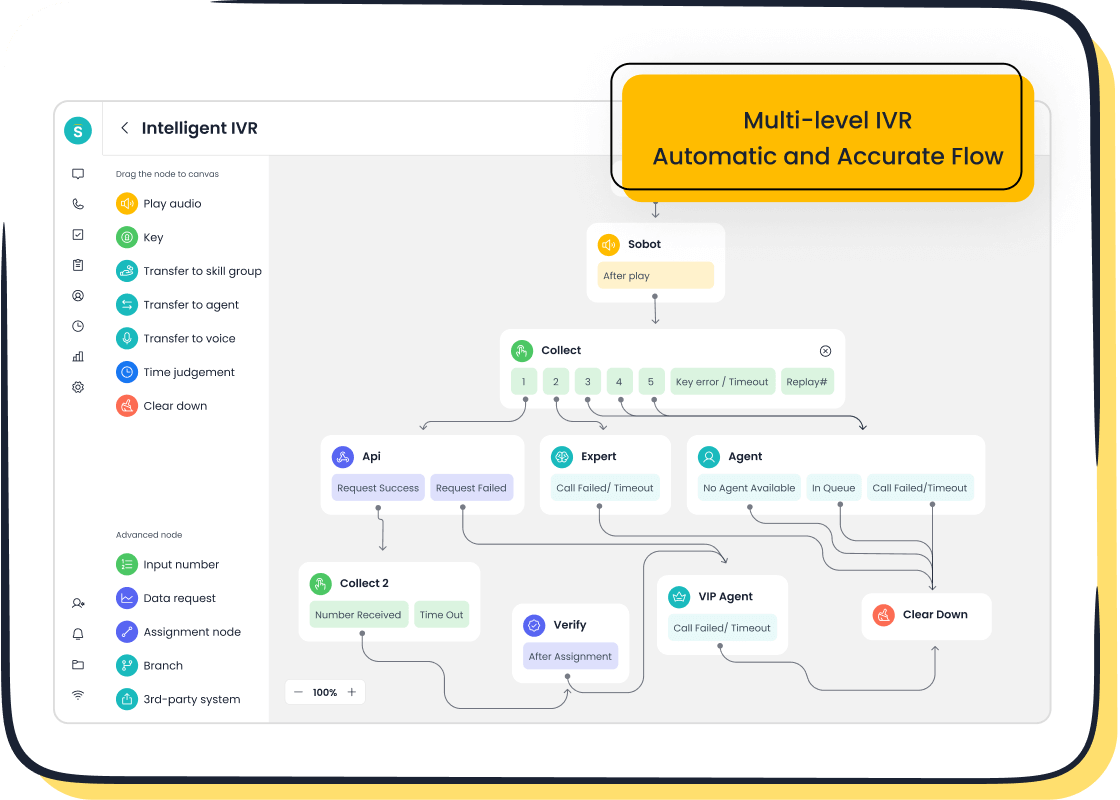
Sobot’s live chat unifies messages from all channels. You get help without switching platforms. The voice call center offers intelligent IVR, smart call routing, and global number availability. You reach support easily, no matter where you are. Sobot’s ticketing system automates workflows and manages service levels, so you get timely responses.
Sobot’s WhatsApp Business API lets you connect with brands on your favorite messaging app. You enjoy secure, scalable, and user-friendly service. Sobot’s solutions use data analytics to monitor performance and find ways to improve your journey. You experience continuous improvement and flexibility.
Sobot supports over 10,000 brands across industries like retail, finance, gaming, and education. Samsung used Sobot’s all-in-one contact center solution and achieved a 97% customer satisfaction rate. Agent efficiency increased by 30%. You see real results from Sobot’s approach to customer journey management.
You can learn more about Sobot’s products and solutions at Sobot’s official website. Sobot’s mission is to enhance every customer journey and make each touchpoint count.
Stages of the customer journey
Understanding the customer journey stages helps you see how each interaction shapes your experience. You move through several steps as you connect with a brand. The table below shows the main stages in a contact center:
| Stage | Description |
|---|---|
| Awareness | You learn about a company, product, or service through ads, social media, or word of mouth. |
| Consideration | You compare options and research solutions for your needs. |
| Decision | You decide to make a purchase based on what you learned. |
| Retention | The company works to keep you happy and encourage repeat business. |
| Advocacy | You share your positive experience and recommend the brand to others. |
| Pre-sale | You evaluate products and decide what fits your needs. |
| Sale | You make the final purchase decision. |
| Post-sale | The company maintains the relationship and builds loyalty. |
Initial contact
You start your customer journey with the initial contact. This stage sets the tone for your entire journey. You might reach out through a call center, live chat, or social media. AI helps companies analyze your behavior and predict what you need. By tracking your actions and preferences, businesses personalize your journey and improve workflows. You see faster responses and more relevant support. Companies measure data points like loyalty, retention, conversion, churn, poor reviews, and returns to understand your journey. You also benefit from performance metrics such as call handle time, customer satisfaction, and interaction analysis.
Tip: When you contact a brand for the first time, clear communication and quick answers make your journey smoother.
Issue resolution
During the issue resolution stage, you expect fast and effective solutions. High call volumes can lead to longer wait times and frustration. You may notice agent burnout, which affects your experience. Sometimes, agents lack the right information to solve your problem. Personalization matters here. When agents understand your journey and needs, you get better service. Companies use knowledge management and smart routing to help you resolve issues quickly. You feel valued when your journey is handled with care.
- Common challenges in issue resolution:
- High call volumes and waiting times
- Agent burnout
- Lack of knowledge management
- Need for personalized interactions
Follow-up and feedback
After your issue is resolved, the journey continues with follow-up and feedback. Companies reach out to make sure you are satisfied. You might receive surveys or calls asking about your experience. Businesses use metrics like Customer Satisfaction Score (CSAT), Net Promoter Score (NPS), Quality Assurance (QA) scores, and First Contact Resolution (FCR) to measure how well they support your journey. Your feedback helps companies improve future customer journeys. You become part of a cycle that shapes better service for everyone.
| Metric | Description |
|---|---|
| Customer Satisfaction Score (CSAT) | Rates your satisfaction with a specific interaction or service. |
| Net Promoter Score (NPS) | Shows how likely you are to recommend the service to others. |
| Quality Assurance (QA) scores | Checks if agents follow service standards during your journey. |
| First Contact Resolution (FCR) | Measures if your issue was solved during the first contact. |
Impact on service and business
Customer satisfaction
You shape the customer journey every time you interact with a contact center. Each step in your journey affects how you feel about the company. When you receive consistent, empathetic, and efficient service, your engagement and loyalty grow. Contact centers play a key role in building customer satisfaction. You notice that exceptional call center experiences help you trust a brand and want to return.
Nearly 80% of Americans say speed, convenience, knowledgeable help, and friendly service matter most for a positive customer experience (source). If you rate a company’s customer experience as perfect, you are six times more likely to repurchase. Companies that invest in the customer journey see measurable results. For example, when customer satisfaction scores drop below 70%, businesses know they must improve the journey to keep you happy.
- Contact centers shape your perception at every stage of the journey.
- Consistent and friendly service increases your engagement and loyalty.
- Mapping the customer journey helps companies improve interactions and satisfaction.
Operational efficiency
You benefit from a well-optimized customer journey because it makes your experience smoother and faster. Companies use data to find bottlenecks and streamline support workflows. When agents have better tools, they help you more efficiently. You get quicker solutions and feel valued throughout your journey.
| Benefit | Description |
|---|---|
| More Efficient Support Workflows | Companies identify bottlenecks and resolve issues faster. |
| Improved Agent Experience | Agents use better tools to serve you. |
| Better Customer Insight | Businesses learn about your behaviors and preferences. |
| Increased Customer Retention | Addressing pain points keeps you loyal. |
| Happier Customers | A smooth journey leads to satisfied and loyal customers. |
| Data-Driven Decision Making | Metrics like AHT, FCR, CSAT, and NPS help companies understand your needs. |
You see that a streamlined customer journey leads to happier customers and more efficient operations. Companies use metrics to track and improve your journey, making each experience better.
Sobot Voice/Call Center benefits
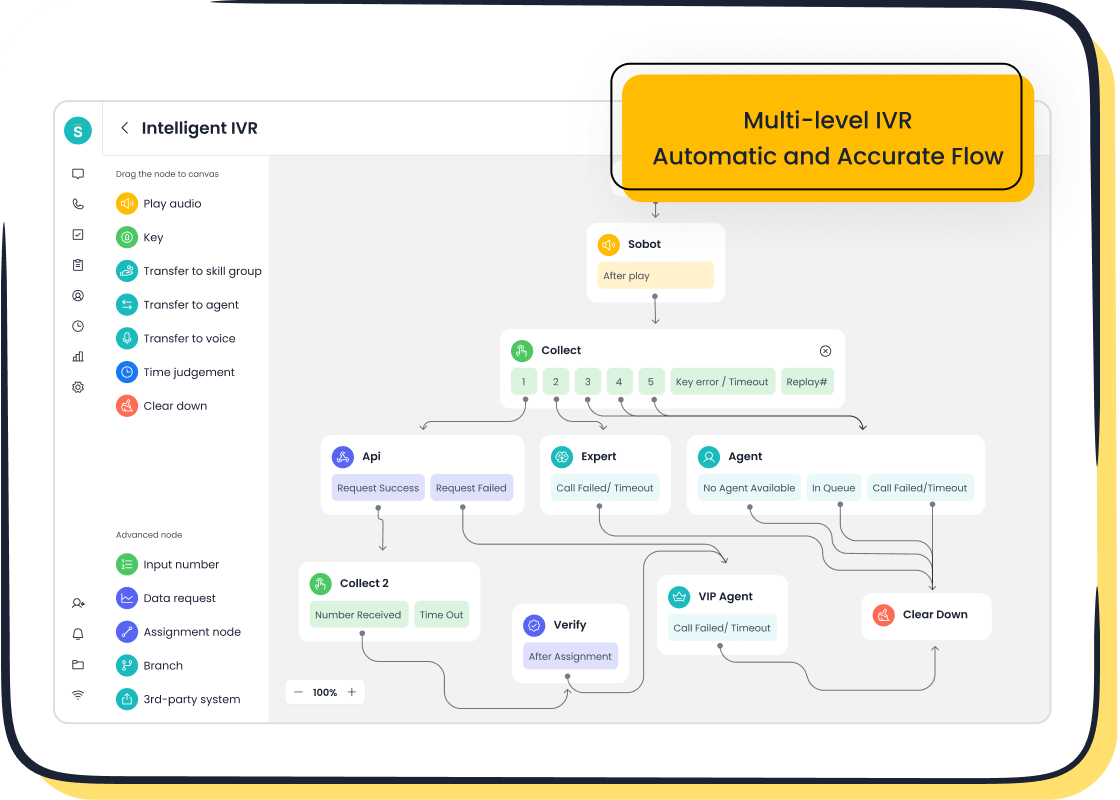
Sobot’s Voice/Call Center helps you enjoy an enhanced customer experience at every stage of your journey. You get fast answers, smart call routing, and global support. Sobot’s system offers 99.99% uptime, so you always reach help when you need it. Agents spend less time on admin work and more time helping you, which increases efficiency.
| Measurable Benefit | Description |
|---|---|
| Enhanced Agent Productivity | Agents focus on your needs, not paperwork. |
| Improved Customer Satisfaction | Real-time monitoring leads to faster solutions. |
| Higher First-Call Resolution Rates | Smart IVR and routing reduce transfers and wait times. |
| Reduced Agent Turnover | Structured support lowers early attrition by 40%. |
| Global Number Availability | You get support worldwide, with local numbers and time zone help. |
| 99.99% Uptime | Reliable service builds your trust. |
| Cost Efficiency | Lower costs let companies invest more in your journey. |
| Increased Customer Loyalty | Better experiences make you want to return. |
Samsung used Sobot’s contact center solutions and reached a 97% customer satisfaction score. You see a 15% increase in pre-sales conversion rates and a 30% boost in agent efficiency. Sobot’s solutions help Samsung manage feedback and improve every customer journey (Samsung case study). You benefit from these improvements every time you interact with a brand using Sobot.
Optimizing the customer journey
Mapping the journey
You can improve your customer journey by creating a clear customer journey map. This map shows every step a customer takes, from first contact to feedback. You start by setting goals for your customer journey map. You build customer personas to understand what your customers need. You work with teams from different departments to gather ideas. You set key performance indicators to measure your customer journey mapping success. You design flexible maps because customer interactions do not always follow a straight line. You update your customer journey map often to keep it accurate.
Tip: Treat your customer journey map as a living document. Update it as your customer experience changes.
Best practices for mapping the customer journey:
- Set clear goals for your customer journey map.
- Create detailed customer personas.
- Involve cross-functional teams for diverse insights.
- Choose KPIs to track your customer journey.
- Make your customer journey map flexible.
- Update your customer journey map regularly.
Tools and best practices
You use tools to visualize and analyze your customer journey. These tools help you see how customers move through each stage. For example, CallMiner Eureka lets you analyze conversations and understand customer behavior. You can connect interactions to insights and improve customer experience.
| Tool Name | Purpose | Key Functionality | Benefits |
|---|---|---|---|
| CallMiner Eureka | Customer journey visualization | Analyzes conversations across channels | Connects interactions to insights |
You analyze traffic and identify key customer journeys. You test if your templates match real customer behavior. You use speech analytics to understand customer interactions. You gather data to visualize the flow of the customer journey. You pool information from online activities and social media. You encourage open data sharing. You capture raw data using Voice of Customer analytics.
Steps to optimize your customer journey:
- Assess your current customer journey.
- Define your ideal customer.
- Segment customers before mapping.
- Map the customer journey.
- Collect customer feedback.
- Make targeted improvements.
Sobot omnichannel solutions
You can optimize your customer journey with Sobot’s omnichannel and AI-powered solutions. Sobot streamlines the customer journey by connecting every channel. You get faster service and better customer experience. Sobot collects customer data to help you make smart decisions. You see shorter waiting times and higher satisfaction. Sobot boosts sales by offering targeted recommendations. You build accurate customer personas for personalized marketing. Sobot uses AI to automate tasks and analyze customer sentiment. You get consistent service and quick resolutions.
| Metric | Result |
|---|---|
| Customer Satisfaction Scores | 35% higher |
| Resolution Times | 25% faster |
| Operational Efficiency | Significant improvements |
| Staffing Needs | Substantial reductions |
| Operational Costs | Enhanced savings |
Sobot’s omnichannel solutions help you visualize and improve every customer journey. You see measurable results in customer satisfaction and operational efficiency. You can learn more about Sobot’s omnichannel platform at Sobot Omnichannel Solution.
You shape every customer journey in a contact center. When you focus on each journey, you see better customer experience and stronger business results. Research shows that integrated solutions and AI improve the customer journey and reduce complexity. Sobot helps you reach high satisfaction, fast response, and strong revenue growth.
| Metric | Value/Impact |
|---|---|
| Customer Satisfaction Score | 95% (Agilent) |
| Chatbot Resolution Rate | 83% (OPPO) |
| Revenue Growth | 187% increase |
Start your customer journey map by focusing on high-value segments and using real customer data. You can avoid common pitfalls by setting clear goals and mapping every step. The future of the customer journey includes AI, omnichannel engagement, and real-time analytics. Begin optimizing your journey today for lasting results.
FAQ
What is a customer journey map?
A customer journey map shows every step a customer takes when interacting with your business. You use it to understand customer needs, improve service, and spot areas where customers face problems. This map helps you create better experiences for every customer.
How does a contact center improve customer satisfaction?
You improve customer satisfaction by offering quick answers, friendly service, and easy access to help. Contact centers use smart tools to track customer feedback and solve problems fast. When you feel heard and valued, you become a loyal customer.
Why is omnichannel support important for customer experience?
Omnichannel support lets you reach customer service through phone, chat, email, or social media. You get help on your favorite channel. This makes your experience smoother and helps you get answers faster. Businesses see higher customer satisfaction with omnichannel support.
How does AI help in managing customer interactions?
AI helps you by answering common customer questions, routing calls, and analyzing feedback. You get faster solutions and more personalized service. AI tools let agents focus on complex customer needs, making your journey easier and more enjoyable.
What metrics should you track to measure customer journey success?
You track metrics like customer satisfaction scores, first contact resolution, and Net Promoter Score. These numbers show how well you serve each customer. By watching these metrics, you find ways to improve your customer journey and keep customers happy.
See Also
A Guide to Successfully Implementing Omnichannel Contact Centers
Best Reviewed Cloud Contact Center Services for 2024
Leading Contact Center Solutions Evaluated for 2024
Transforming Support with AI-Powered Customer Service Agents
Essential Best Practices for Quality Management in Call Centers

