Why Customer-Centricity Is Crucial for Growth in 2025

In 2025, the single most critical driver for sustainable business growth isn't your product or your price—it's your customer.
A customer-centric strategy is now essential, with nearly 90% of businesses competing on experience. This approach builds unbreakable customer loyalty and drives significant profit. A mature customer centric strategy can deliver 2.5 times more revenue growth than less focused rivals. Tools like the Sobot call center, powered by Sobot AI, help every employee act as a customer service strategist. True customer-centricity is your key to winning the market.
THE IMPORTANCE OF CUSTOMER CENTRICITY
The importance of customer centricity cannot be overstated. It is the engine that will power your growth in 2025. To truly succeed, you must understand what this concept means today and how to embed it into your company’s DNA.
DEFINING MODERN CUSTOMER-CENTRICITY
Modern customer-centricity is far more than a tactic for your support team; it is a business-wide strategy. The experts at Gartner define it as the ability of everyone in your organization to understand what customers are feeling and thinking. This requires you to build a strong customer-centric culture where every decision is made with the customer in mind. It’s about creating an environment of "customer obsession" that guides your entire workforce to meet and exceed customer expectations. This customer-centric mindset ensures your strategy grows with your customers, preventing stagnation.
MOVING FROM PRODUCT-FOCUSED TO RELATIONSHIP-DRIVEN
Shifting from selling products to building customer relationships is a fundamental change. This move requires a new way of thinking and operating. You will likely face several challenges on this journey:
- Cultural Shift: Your teams may need retraining to adopt a customer centric service mindset.
- Investment: You must invest in new technology and skilled team members.
- Complexity: Delivering a consistent customer experience is more complex than just selling a product.
- Measurement: You need new metrics to track the health of your customer relationships.
Overcoming these hurdles is essential for long-term success.
USING DATA TO ANTICIPATE CUSTOMER NEEDS
A truly customer-centric approach uses data to move from being reactive to proactive. Instead of waiting for customers to contact you with problems, you can anticipate their needs.
Imagine knowing what your customer wants before they do. Companies like Amazon and Netflix do this every day. They analyze your past behavior to suggest the next product you’ll buy or the next show you’ll love.
You can apply the same logic. By using the right tools to analyze customer data, you can predict future behavior, personalize every interaction, and deliver an exceptional customer experience. This proactive customer centric service is what separates good companies from great ones.
THE IMPACT OF A CUSTOMER-CENTRIC STRATEGY ON GROWTH

Adopting a customer-centric strategy is not just about making people happy; it is a direct investment in your company's long-term growth. When you place the customer at the core of your operations, you unlock powerful benefits that drive revenue, build loyalty, and strengthen your brand.
BOOSTING REVENUE AND PROFITABILITY
A deep focus on customer-centricity translates directly to a healthier bottom line. You create more value for your customers, and they reward you with their business. This approach is proven to deliver impressive financial results.
Research from Deloitte shows that customer-centric companies are 60% more profitable than businesses that are not focused on the customer.
Personalizing the customer experience also plays a huge role. A McKinsey report found that effective personalization can boost your revenue by 5% to 15%. You can achieve this by understanding customer needs and tailoring your interactions, which leads to higher sales and sustainable business growth.
INCREASING CUSTOMER LOYALTY AND RETENTION
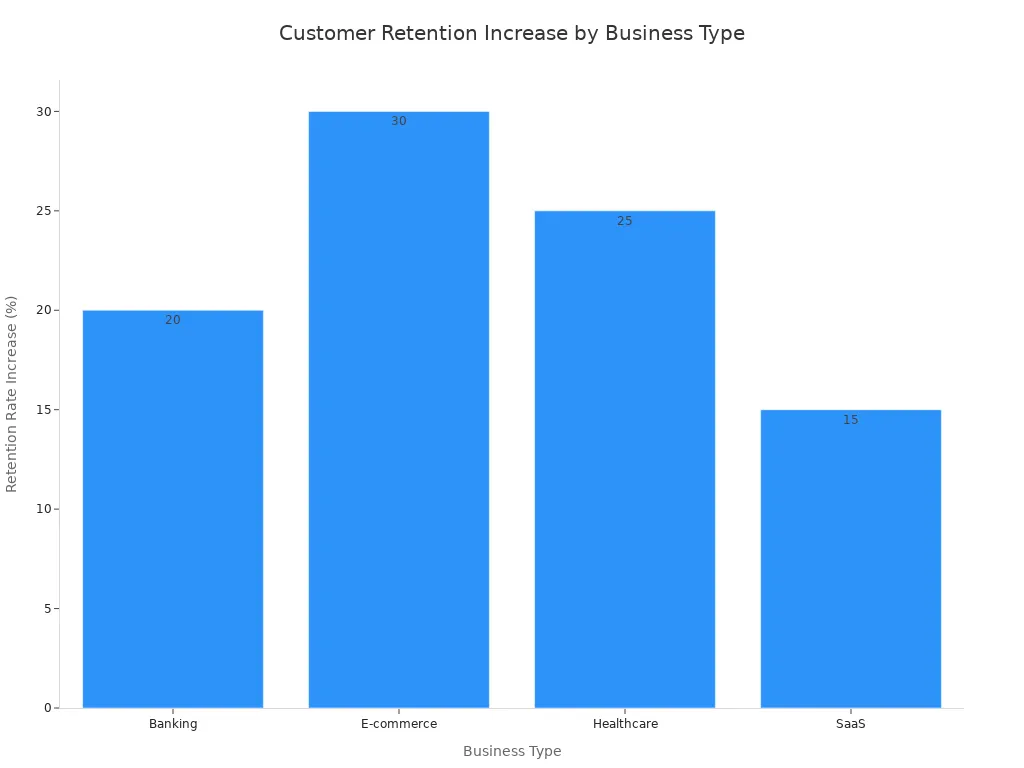
Acquiring new customers is expensive. Building strong customer relationships is a much smarter investment. According to Harvard Business Review, acquiring a new customer can cost 5 to 25 times more than keeping an existing one. True customer-centricity builds the customer trust necessary for lasting customer loyalty. Focusing on customer retention saves you money and creates a stable revenue base for long-term growth. Implementing a customer-centric strategy can significantly improve customer loyalty and retention across various industries.
ENHANCING BRAND REPUTATION THROUGH ADVOCACY
The ultimate goal of customer-centricity is to turn satisfied customers into vocal brand advocates. When you deliver an outstanding customer experience, your customers will share their positive stories. This word-of-mouth marketing is incredibly powerful and builds a strong brand reputation.
Look at the success of OPPO. By using human-machine cooperation and optimizing their knowledge base, they transformed their customer service. This led to incredible results:
- A 94% positive feedback rate.
- A 57% increase in their repurchase rate.
These numbers show how excellent customer satisfaction creates loyal fans. These advocates not only return to buy more but also encourage others to do the same, creating a cycle of growth.
BUILD A WINNING CUSTOMER-CENTRIC STRATEGY
Transforming your business requires more than just a customer-centric mindset; it demands a concrete plan. You can build a winning customer-centric strategy by focusing on four key pillars. These steps will help you understand your customers deeply and empower your teams to deliver an exceptional customer experience.
UNIFY CUSTOMER DATA
You cannot serve customers you do not understand. The first step is to create a complete, 360-degree view of every customer. This means breaking down data silos and bringing all information into one place. A full customer view includes:
- Data collection: Gathering everything from contact details to purchase history and feedback.
- Touchpoints: Tracking interactions across your website, social media, email, and support channels.
- Integration: Combining all this data into a single, unified profile for clear analysis.
This is where powerful tools become essential. Sobot’s solutions for Retail provide true omnichannel support, unifying data from every channel. Imagine an agent using the Voice/Call Center's Unified Workspace. They can see a customer's past calls, live chat history, and support tickets all on one screen. This single view eliminates the need for customers to repeat themselves and equips your team to solve problems faster.

MAP THE CUSTOMER JOURNEY
Once you have unified data, you can map the entire customer journey. This process helps you see your business from the customer's perspective. You can identify pain points and find opportunities to improve their experience. A comprehensive map tracks the key stages your customers go through:
- Awareness: When they first discover your brand.
- Consideration: As they research and compare options.
- Decision: The moment they choose to buy from you.
- Onboarding: Their initial experience with your product or service.
- Loyalty: When they become repeat buyers and advocates.
You can use collaborative tools like Miro or Canva to visualize this journey with your team. Mapping the journey reveals what customers are doing, thinking, and feeling at each step, giving you a clear roadmap for improvement.
EMPOWER TEAMS AS A CUSTOMER SERVICE STRATEGIST
Your frontline agents are your most valuable asset in building customer-centricity. You must empower them to be more than just problem-solvers. You need to turn every agent into a customer service strategist. A true customer service strategist uses data and tools to anticipate issues and create better outcomes.
Providing your team with real-time customer data is the key. It streamlines processes, automates tasks, and gives agents instant access to case histories and recommended actions. This approach accelerates first-contact resolution and ensures customers feel understood.
This is exactly what Sobot’s platform is designed to do. Features like intelligent IVR automatically route customers to the right agent, saving valuable time. Once connected, the agent has all the customer's information at their fingertips. This transforms them from a reactive agent into a proactive customer service strategist. An empowered customer service strategist can deliver the high-quality customer centric service that builds loyalty. You are not just closing tickets; you are building relationships with every interaction. This makes each team member a vital customer service strategist for your brand.
PERSONALIZE THE CUSTOMER EXPERIENCE
Personalization is the ultimate expression of a customer-centric strategy. It shows customers you know them and value their business. Today, generic experiences are not enough. You must deliver hyper-personalized interactions that cater to individual customer needs. The results speak for themselves. Personalized product recommendations can increase conversion rates by over 300%.
Leading brands use unified data to create amazing personalized moments.
| Brand | Hyper-Personalization Strategy | Key Outcomes |
|---|---|---|
| Diane von Furstenburg (DVF) | Consolidated all shopper history into a single mobile profile for stylists to use for one-to-one communications. | Creates a seamless 'personal stylist' experience for every shopper. |
| Sculpted by Aimee | Used an integrated system to capture emails at checkout and send segmented post-purchase follow-ups. | Increased email capture by 275% and found that omnichannel shoppers spend 3-4x more. |
You can achieve this level of customer centric service by using your unified customer data to tailor every touchpoint. Send personalized offers, recommend relevant products, and communicate with customers on their preferred channels. This level of detail makes customers feel seen and valued, turning one-time buyers into lifelong fans.
MEASURING THE SUCCESS OF YOUR CUSTOMER-CENTRIC APPROACH
A winning strategy needs clear metrics. You must measure your success to prove the value of your efforts. The right metrics are more than just numbers on a dashboard. They are vital signs that show the health of your customer relationships. Tracking these key performance indicators (KPIs) helps you understand what is working and where you need to improve your customer-centric approach.
TRACKING CUSTOMER LIFETIME VALUE
Customer Lifetime Value (CLV) is one of the most important metrics for a customer-centric business. It tells you the total revenue you can expect from a single customer account. A higher CLV means you are building stronger, more profitable relationships.
You can calculate CLV with a simple formula. First, you need to find your Customer Value.
- Customer Value = Average Purchase Value x Average Number of Purchases
Then, you can determine the full Customer Lifetime Value.
- Customer Lifetime Value = Customer Value x Average Customer Lifespan
Improving your CLV is a direct result of a better customer experience. In fact, 86% of buyers are willing to pay more for it. You can increase CLV by focusing on loyalty programs, upselling, and cross-selling. These strategies make customers feel valued and encourage them to spend more over time.
IMPLEMENTING NET PROMOTER SCORE
Net Promoter Score (NPS) measures customer loyalty with a single, powerful question: "How likely are you to recommend our company to a friend or colleague?" Customers respond on a scale of 0-10. This feedback helps you categorize them into three groups:
- Promoters (9-10): Your most loyal and enthusiastic fans.
- Passives (7-8): Satisfied but not loyal enough to be advocates.
- Detractors (0-6): Unhappy customers who can damage your brand.
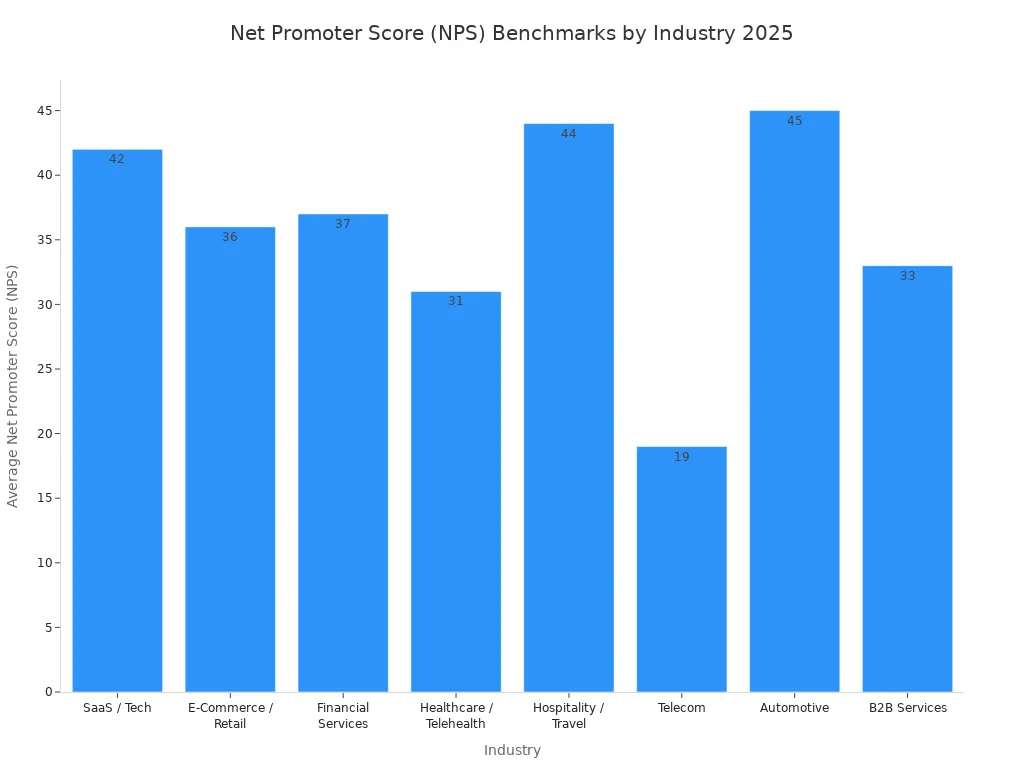
Your NPS is the percentage of Promoters minus the percentage of Detractors. But what is a good score? It varies by industry.
| Industry | 2025 Avg NPS | Good Range |
|---|---|---|
| E-Commerce / Retail | 36 | 35–50 |
| SaaS / Tech | 42 | 40–55 |
| Financial Services | 37 | 35–50 |
| Hospitality / Travel | 44 | 40–55 |
Actionable Tip: Don't just collect scores. Analyze the open-ended customer feedback that follows the NPS question. This is where you will find the "why" behind the number. Use these insights to fix problems and double down on what customers love.
Improving your NPS is a core goal of true customer-centricity. Solutions like Sobot for Ecommerce & Retail are designed to do just that. By unifying customer data and enabling personalized service, Sobot helps businesses boost customer satisfaction and aims to improve NPS by as much as 35%.
MONITORING CUSTOMER CHURN RATE
Customer churn is the percentage of customers who stop doing business with you over a certain period. It is the enemy of sustainable growth. A high churn rate signals that you are failing to meet customer expectations. You can calculate it with this formula:
Churn Rate = (Lost Customers / Total Customers at start of period) x 100
For many subscription businesses, a healthy churn rate is below 14% annually. The main reasons for churn often include poor onboarding, product issues, or a competitor's attractive offer. A proactive customer-centric approach is your best defense against churn.
You can reduce churn by:
- Perfecting Onboarding: Guide new customers to find value in your product quickly.
- Engaging Proactively: Use valuable content and personalized messages to build strong relationships.
- Rewarding Loyalty: Offer incentives and special perks to your best customers.
By focusing on these areas, you create an environment where customers want to stay. This directly impacts your bottom line, as increasing retention by just 5% can boost profits by 25-95%.
In 2025, customer-centricity is not just a good idea; it is the foundational strategy for survival and long-term growth. You must move beyond viewing it as a service tactic. A business-wide commitment to customer-centricity is what drives profitability and resilience in a competitive market. The time for discussion is over.
You must act now. Don't wait for a grand plan. Pick one touchpoint in your customer journey this week and find one small way to improve it. Exploring a powerful customer-centric strategy with solutions like Sobot can be your first step toward building a stronger future.
FAQ
### What is the single most important first step to becoming customer-centric?
You must unify your customer data. A customer-centric strategy fails without a complete view of your customer. Start by breaking down data silos. Combine information from all touchpoints into one place. This gives your team the insights needed to deliver exceptional service.
### Is a customer-centric strategy only for large companies?
No. Customer-centricity is for businesses of all sizes. It is a mindset, not a budget item. You can start small by listening to feedback and making one improvement at a time. A strong customer-centric approach helps you compete with anyone, regardless of your size.
### How do I choose the right technology for my customer-centric strategy?
You should choose tools that create a single view of the customer. Look for platforms that unify all your communication channels, from calls to live chat. The right technology empowers your team with the data they need to personalize every single interaction effectively.
See Also
Discovering the Foremost Cloud-Based Contact Center Platforms for 2025
Evaluating the Leading Contact Center Software Solutions: A 2024 Review
Comprehensive Reviews of Premier Cloud Contact Center Services in 2024
A Ten-Step Guide to Deploying Omnichannel Contact Center Solutions Effectively