Customer Care Training Games Your Team Will Love

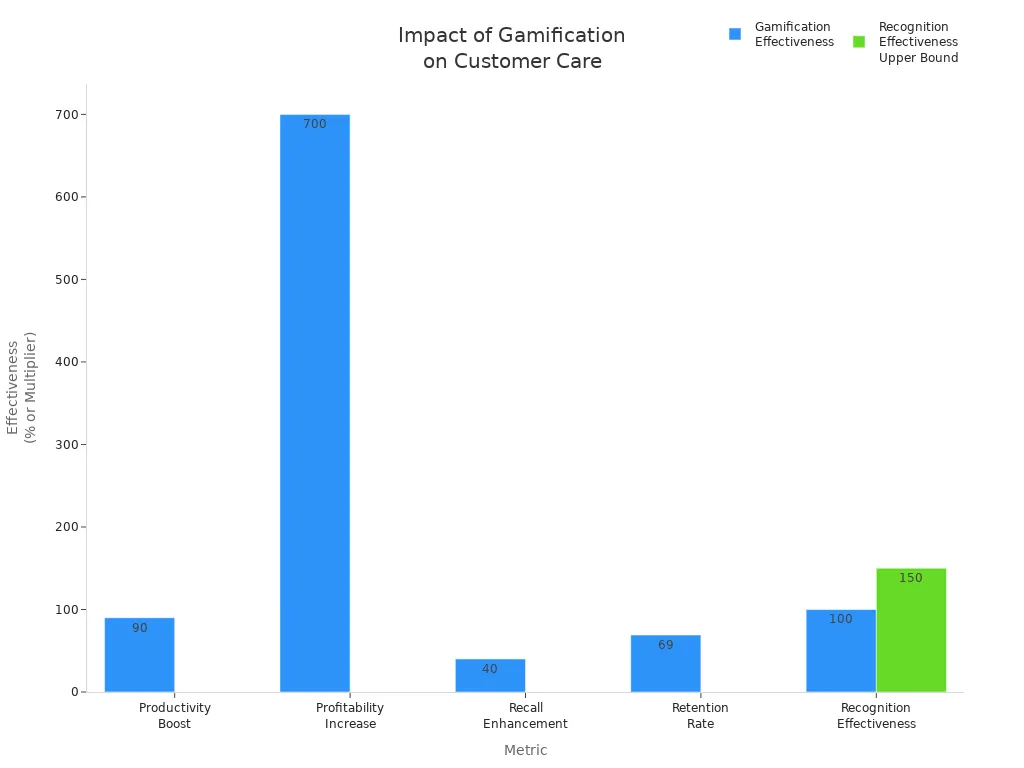
You can boost your team's energy and skills with customer care training games that make learning fun and practical. These activities help your agents build strong communication, problem-solving, and empathy skills. Teams using games powered by Sobot and Sobot AI see higher engagement and better results. The right training supports customers and improves daily interactions, especially when integrated with the Sobot call center. Studies show that gamification increases productivity by 90% and boosts recall by 40%.
| Statistic | Description |
|---|---|
| 90% of employees | Believe gamification boosts their productivity in the workplace. |
| 7x more profitable | Companies using gamification are seven times more profitable. |
| 40% enhancement | Gamification enhances recall and memory by 40%. |
| 69% retention | Employees are 69% more likely to stay with a company for 3+ years. |
| 100-150% effectiveness | Gamification methods outperform traditional recognition methods by 100% to 150%. |
Why Use Customer Service Training Activities
Boosting Team Engagement
You want your team to feel motivated and connected. Customer service training activities help you achieve this by making learning interactive and enjoyable. When you use customer care training games, you create a space where everyone participates and shares ideas. Interactive activities simulate real customer interactions and encourage agents to practice communication and active listening.
- Training games build essential soft skills and help agents practice under pressure.
- Employees show more enthusiasm and apply learned skills in real situations.
- Ongoing training leads to higher employee engagement and a stronger sense of belonging.
You notice that team collaboration activities improve morale and loyalty. Employees who feel valued and supported are less likely to leave. Companies with strong training programs report higher retention rates and better team spirit.
Building Key Skills
Customer service training activities focus on developing important skills for your team. You see agents improve their communication, empathy, and problem-solving abilities. Communication-focused training helps agents listen to customers and respond with empathy.
- Training enhances employee performance and customer service quality.
- Employees gain confidence and knowledge to handle challenges.
- Training and development foster skills and competencies, leading to higher job satisfaction.
You notice that agents who practice active listening and empathy create meaningful interactions with customers. These skills help your team solve problems quickly and build a customer-centric culture.
Driving Customer Service Excellence
You want your team to deliver outstanding customer experiences. Customer service training gives your agents the tools to achieve customer service excellence. You measure success using clear goals and metrics.
| Metric Type | Description |
|---|---|
| Clear Goals and Metrics | Set objectives like improving customer satisfaction scores and reducing response times. |
| Pre- and Post-Training Tests | Assess knowledge and skills before and after training. |
| Performance Observation | Evaluate staff in real or simulated situations. |
| Customer Feedback | Collect insights through surveys and feedback forms. |
| Business Outcomes | Track customer satisfaction ratings and online reviews. |
You see that training activities lead to better customer satisfaction and loyalty. Agents who master communication and problem-solving skills create positive customer experiences and meaningful interactions.
Criteria for Effective Customer Care Training Games
Engagement and Fun
You want your team to enjoy customer care training games. When games are fun, your team feels more motivated to participate. You see higher engagement when activities include real-life scenarios, role play, and interactive challenges. Sobot’s Voice/Call Center lets you create lively training sessions with features like smart call routing and AI-powered voicebots. These tools help you simulate real customer calls, making training both exciting and practical. When you add elements like active listening and customer empathy building, your team learns to walk in their shoes and respond with care.
Learning Outcomes
Effective customer care training games must help your team learn and grow. You should look for games that improve knowledge transfer, skill development, and behavior change. Experts recommend using models like the Kirkpatrick Model or Phillips ROI Approach to measure results. You want to see your team apply new skills, such as empathy and problem-solving exercises, in real customer interactions. Sobot’s analytics tools track progress and show how training impacts business goals. This data helps you see if your team is truly learning and improving.
Tip: Use pre- and post-training tests to measure learning outcomes and adjust your approach as needed.
Adaptability for Teams
Every team is different. You need customer care training games that adapt to your team’s size, skill level, and industry. Sobot’s unified workspace and omnichannel solutions make it easy to customize training for any group. You can set up multilingual scenarios, adjust for time zones, and use real customer data to create relevant challenges. Integrating technology in training helps your team become comfortable with the tools they use every day.
- Integrating customer service software in training games builds familiarity.
- Realistic scenarios boost adaptability and confidence.
Ease of Use
You want training to be simple to set up and easy for everyone to join. Sobot’s drag-and-drop IVR and seamless integration with CRM systems make it easy to launch training sessions. Real-time analytics give you instant feedback, so you can adjust activities on the fly. When training is easy to use, your team spends more time learning and less time figuring out the system.
Note: Choose customer care training games that require minimal setup and offer clear instructions for the best results.
Top Customer Care Training Games
You want your team to learn and grow with customer care training games that make every session engaging. These activities help you build skills, boost motivation, and create a positive customer experience. Let’s explore five top customer service training activities that drive results.
Telephone Tag
Telephone Tag is a classic activity that teaches your team the importance of clear communication and active listening. You start by sharing a message with one agent. That agent passes the message to the next person, and so on, until it reaches the last team member. The final person shares the message aloud. You compare the original message with the final version.
- You see how small changes can lead to misunderstandings.
- Your team learns to focus on listening and clarity.
- You practice passing information accurately, which helps solve customer problems faster.
Telephone Tag works well for all team sizes. You can use it to highlight the value of listening and careful communication in customer care training games.
The Impossible Request
The Impossible Request challenges your team to handle tough customer service scenarios. You give agents a request that seems impossible to fulfill, such as a customer asking for a refund on a product they never bought. Your team must respond with empathy, problem-solving, and professionalism.
- You encourage creative thinking and flexibility.
- Your team learns to stay calm under pressure.
- You practice finding solutions even when the answer is not obvious.
This activity helps you build confidence and problem-solving skills. You see agents develop empathy and learn to turn difficult situations into positive customer experiences.
Customer Role Play
Customer Role Play is one of the most effective customer service training activities. You assign roles to your team—some act as customers, others as agents. You create scenario-based role-plays that reflect real-life challenges, such as handling complaints or solving a billing problem.
| Evidence Type | Outcome | Description |
|---|---|---|
| Increase in Empathy | Positive | Role play increases empathy among participants. |
| Safe Practice Environment | Positive | Provides a supportive setting for practicing communication skills. |
| Exposure to Unusual Scenarios | Positive | Lets you experience and navigate uncommon situations. |
| Peer Feedback | Positive | Highlights the value of receiving feedback from peers during training. |
You use role play to improve communication and empathy. You give your team a safe space to practice active listening and problem-solving. You see agents become more confident in handling sensitive issues. Role play helps you gather feedback and refine your approach. Studies show that role play boosts empathy and communication, especially in healthcare and customer service settings (Lohmann et al., 2019).
Tip: Rotate roles so everyone experiences both sides of the conversation. This builds empathy and understanding.
Say Yes Only
Say Yes Only is a customer care training game that empowers your team to find solutions for customers. You challenge agents to respond to every customer request with a positive answer. You encourage them to think beyond policies and procedures.
- You teach your team to focus on customer satisfaction.
- You help agents develop creative problem-solving skills.
- You build loyalty by offering personalized solutions.
Feedback from training sessions shows that strict policy adherence can lead to poor customer service. You empower your team to say yes and find ways to help customers. This approach increases satisfaction and loyalty.
- Customers want employees to think beyond rules to improve service quality.
- Personalized solutions lead to better customer experiences.
- Empowered staff create lasting relationships with customers.
You see how Say Yes Only transforms your team’s mindset. You encourage agents to solve problems and deliver exceptional service.
Sobot Scenario Simulation
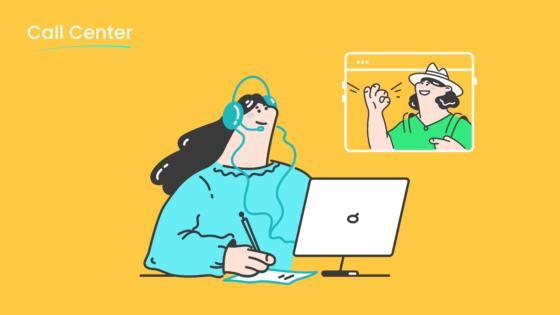
Sobot Scenario Simulation uses technology to create realistic customer service training activities. You use Sobot’s Voice/Call Center to design scenario-based role-plays that mirror real customer interactions. You set up smart call routing, multilingual support, and time zone adjustments. You track agent performance with real-time analytics.
You can reference the Weee! customer story as a real-world example. Weee! faced challenges with inflexible IVR systems and language barriers. By using Sobot’s Voice/Call Center, Weee! created adaptable training scenarios for agents. The solution included a flexible IVR, integrated workbench, and multilingual templates. Agents practiced handling complex problems, such as resolving issues for customers in different regions. The result was a 20% increase in agent efficiency and a 50% reduction in resolution time. Customer satisfaction reached 96% (Weee! case study).
You benefit from technology-driven customer care training games in several ways:
- Technology-driven training games enhance engagement, motivation, and collaborative skills.
- You see improved communication and teamwork.
- Realistic simulations prepare your team for actual customer interactions.
- You use analytics to measure learning outcomes and adjust activities.
Note: Technology-driven games outperform traditional methods in engagement and satisfaction. You create a dynamic learning environment that supports collaboration and skill-building.
You use Sobot’s Voice/Call Center to simulate real calls, track progress, and provide instant feedback. You prepare your team for any customer scenario, building confidence and expertise.
Benefits of Technology-Driven Training Games
- You increase engagement and motivation.
- You foster collaboration and teamwork.
- You improve communication and problem-solving skills.
- You create a safe space for learning and practicing new skills.
- You measure results with analytics and adjust activities for better outcomes.
You see that customer care training games powered by technology help your team deliver outstanding customer service. You build a culture of learning, empathy, and problem-solving.
Customer Service Training Comparison Table
Features Overview
You want to choose the best customer service training for your team. Comparing different activities helps you see which options fit your needs. The table below shows the main features of five popular training activities. You can use this overview to decide which activity matches your goals.
| Training Activity | Main Feature | Technology Use | Team Size | Customization | Analytics Available |
|---|---|---|---|---|---|
| Telephone Tag | Communication focus | Low | Any | Low | No |
| The Impossible Request | Problem-solving practice | Low | Any | Medium | No |
| Customer Role Play | Real-life scenario practice | Medium | Any | High | No |
| Say Yes Only | Solution-focused mindset | Low | Any | Medium | No |
| Sobot Scenario Simulation | Technology-driven scenarios | High | Any | High | Yes |
Tip: You can use Sobot Scenario Simulation to track progress with analytics and adjust training for better results.
Strengths and Suitability
You want to know which customer service training activity works best for your team. Each activity has strengths that help you solve different problems. You can match the activity to your team’s needs and goals.
- Telephone Tag helps you improve communication and listening skills. You can use it for quick team-building sessions.
- The Impossible Request builds problem-solving skills. You challenge your team to think creatively and stay calm.
- Customer Role Play gives you a safe space to practice handling real customer problems. You can use it to boost empathy and confidence.
- Say Yes Only teaches your team to focus on solutions. You encourage agents to find ways to help customers, even in tough situations.
- Sobot Scenario Simulation uses technology to create realistic training. You can customize scenarios, track results, and solve complex problems with data.
You can choose activities based on your team size, industry, and training goals. Technology-driven training like Sobot Scenario Simulation works well for teams that want detailed feedback and analytics. You can use simple activities for quick skill-building or advanced simulations for deeper learning.
Choosing the Right Customer Service Training Game
Assessing Team Needs
You start by looking at your team’s size, experience, and daily challenges. Small teams often benefit from simple activities that build trust and communication. Large teams may need more structured customer service training with clear roles and feedback. You consider your industry and the types of customers you serve. Retail teams face fast-paced problems, while financial services teams handle sensitive issues. You match training games to your team’s workload and customer expectations. If your team handles many calls, you choose activities that improve problem solving and speed.
Aligning with Training Goals
You set clear goals for your customer service training. You want your team to improve communication, problem solving, and empathy. You pick activities that match these goals. For example, if you want better problem solving, you use games like the 5 Whys or quickfire rounds. If your goal is to boost collaboration, you choose role play or feedback circles. You measure progress with tests and feedback. Sobot’s solutions help you track metrics like employee performance, innovation, and retention rates.
| Metric Type | Description |
|---|---|
| Employee Performance Metrics | Tracks productivity and efficiency improvements |
| Innovation Indicators | Measures new ideas generated through collaborative efforts |
| Employee Retention Rates | Analyzes turnover rates before and after training |
Considering Learning Styles
You notice that people learn in different ways. Some prefer hands-on activities, while others like to watch or listen. Many experts say that learning styles are flexible and change with context. Cognitive load theory suggests you should match training methods to the complexity of the problem. You focus on activities that help your team adapt and use different strategies. You avoid labeling your team by fixed learning styles. Instead, you offer a mix of customer service training games to keep everyone engaged.
- Educational psychologists recommend matching instruction to content complexity.
- Research shows little evidence for tailoring training to fixed learning styles.
- People adapt their learning strategies based on the situation.
Implementation Tips
You want your customer service training to succeed. You use practical tips to make activities effective for any team.
- Create bingo cards with customer service actions.
- Hold feedback circles after role plays.
- Use quickfire problem rounds to build decision-making speed.
- Try role reversal exercises to boost empathy.
- Use the 5 Whys game for problem solving.
- Practice nonverbal challenges to improve communication.
- Share customer stories to build emotional intelligence.
- Recreate online customer experiences to find pain points.
Sobot’s solutions support ongoing customer service training and excellence. You use Sobot’s Voice/Call Center to adapt to change, bridge skills gaps, and stay competitive. You improve employee performance, engagement, and build a skilled workforce.
| Benefit | Description |
|---|---|
| Adaptation to change | Helps teams adjust to new customer expectations and tools |
| Skills gap | Bridges gaps and prepares employees for future challenges |
| Competitive edge | Integrates new trends and technologies to keep your business relevant |
| Improved Employee Performance | Enhances skills for better efficiency and job performance |
| Enhanced Employee Engagement | Boosts morale and loyalty, reducing turnover rates |
| Building a Skilled Workforce | Equips employees to handle industry challenges |
You choose customer service training games that fit your team’s needs and goals. You use technology to track progress and support continuous improvement.
You see how customer care training games boost engagement and help your team master essential skills. Teams love activities like Product Knowledge Jeopardy and Empathy Mapping because they make learning fun and practical. Technology-driven solutions, such as Sobot’s AI chatbots, improve efficiency and let agents focus on complex issues. Try these training games and share your experiences with your team. When you create a culture of learning, you build stronger customer connections and drive service excellence.
| Training Game | Key Benefit |
|---|---|
| Product Knowledge Jeopardy | Encourages teamwork and quick thinking. |
| Empathy Mapping | Builds understanding of customer emotions. |
| Building Rapport Challenge | Improves communication and active listening. |
| Tone of Voice Challenge | Teaches adaptation of tone for better engagement. |
| Speed Response Drill | Fosters collaboration and fast communication. |
Tip: Use feedback and scenario discussions to keep your team motivated and learning every day.
FAQ
What are customer care training games?
Customer care training games are activities that help your team practice customer service skills. You use these games to improve communication, problem-solving, and empathy. These games make learning fun and help your team deliver better service every day.
How do customer care training games boost team performance?
You see higher engagement and faster skill development when you use customer care training games. Studies show that gamification increases productivity by 90%. Your team learns to solve problems and communicate clearly, which leads to better customer experiences.
Can you use customer care training games for remote teams?
Yes, you can use customer care training games with remote teams. Many games work online, such as scenario simulations and role plays. Sobot’s Voice/Call Center lets you create virtual training sessions, track progress, and connect teams across locations.
How often should you run customer care training games?
You should run customer care training games regularly. Weekly or monthly sessions keep skills fresh and boost team morale. Frequent practice helps your team stay sharp and adapt to new customer service challenges.
What technology helps with customer care training games?
You use platforms like Sobot’s Voice/Call Center to create realistic training scenarios. These tools offer smart call routing, analytics, and multilingual support. Technology-driven customer care training games help you measure results and improve your team’s skills.
See Also
Essential Strategies for Effective Call Center Quality Control
Ten Ways to Enhance Customer Satisfaction in Live Chat
Transforming Customer Support with AI Service Agents
Excelling in Live Chat for Superior Customer Service
Comprehensive Overview of Quality Assurance Tools for Call Centers

