CSAT NPS CES Comparison for Customer Service Teams 2026


You want to know which metric works best for customer service teams. The answer depends on your business goals, where your customers are in their journey, and what outcomes you want. For example, you use NPS to measure loyalty and advocacy, CSAT score meaning helps you understand satisfaction after key interactions, and CES shows how easy it is for customers to complete tasks. Sobot helps brands improve customer satisfaction and efficiency with advanced solutions. You will get clear definitions, practical guidance, and actionable recommendations.
CSAT Score Meaning and Importance
What Is CSAT?
You often hear about csat score meaning when you want to measure how happy your customers feel after an interaction. CSAT stands for Customer Satisfaction Score. This metric lets you ask customers how satisfied they are with a service, product, or experience. You usually see csat surveys with a scale from 1 to 5. A higher score means greater satisfaction. CSAT NPS CES Comparison for Customer Service Teams 2026 shows that csat is a simple way to track customer satisfaction after support or sales interactions. Sobot’s chatbot, live chat, and ticketing system help you collect csat survey responses across channels. You can use csat score meaning to see how well your team meets customer needs.
How Is CSAT Calculated?
You calculate csat by dividing the number of satisfied responses (those rating 4 or 5) by the total number of responses, then multiplying by 100 to get a percentage. For example, if 80 out of 100 customers rate their experience as 4 or 5, your csat score meaning is 80%. You can use csat surveys with different scales, like 1 to 10, but the method stays the same. Decide which values count as positive, then count how many customers chose those values. Sobot’s platform makes it easy to automate csat survey collection and calculation. You can track csat score meaning in real time and spot trends in customer satisfaction.
- To calculate csat score meaning:
- Divide satisfied responses by total responses.
- Multiply by 100 for a percentage.
- Use csat survey scales like 1–5 or 1–10.
When to Use CSAT in Customer Service
You should use csat surveys right after customer support interactions, post-purchase, or after product updates. CSAT NPS CES Comparison for Customer Service Teams 2026 recommends sending surveys while the experience is fresh. Sobot’s omnichannel solutions let you reach customers on WhatsApp, email, or chat. You can also use csat score meaning at regular intervals for ongoing services. Samsung, a Sobot client, improved its csat score meaning by 20% and reduced complaints by 25%. Higher csat leads to more repeat purchases and lower churn rates. Sobot’s AI-powered tools help you anticipate customer needs and boost satisfaction.
| Scenario | Description |
|---|---|
| After support interactions | Send csat survey while experience is fresh. |
| Post-purchase or service completion | Capture overall satisfaction after transaction. |
| Regular intervals for ongoing services | Track satisfaction over time. |
| After product updates or feature releases | Gather feedback on new features. |
| Post-event or training sessions | Understand participant satisfaction. |
| During non-peak hours | Ensure customers give thoughtful responses. |
Tip: Use csat surveys in multiple scenarios to get a full picture of customer satisfaction. Sobot’s unified workspace helps you manage csat score meaning across all channels.
NPS and Customer Loyalty
What Is NPS?
You use nps to measure how likely your customers are to recommend your company to others. Net promoter score is a simple metric that shows customer loyalty and advocacy. You ask customers one question: “How likely are you to recommend our service to a friend?” NPS helps you see if your customers feel positive about your brand. Many companies, including two-thirds of Fortune 1000 firms, rely on nps to understand customer loyalty. CSAT NPS CES Comparison for Customer Service Teams 2026 highlights that nps gives you a clear view of customer perceptions and predicts future growth. NPS ranges from -100 to 100, showing how strong your customer loyalty is.
- NPS measures the likelihood of customers recommending your service.
- NPS score calculation subtracts the percentage of detractors from promoters.
- NPS helps you track customer loyalty and advocacy.
- NPS survey results show how customers feel about your brand.
How to Measure NPS
You measure nps by sending an nps survey to your customers. You ask them to rate their likelihood to recommend your company on a scale from 0 to 10. You group responses into promoters (9-10), passives (7-8), and detractors (0-6). NPS score calculation is simple. You subtract the percentage of detractors from promoters. This method gives you a quick pulse check on customer loyalty. CSAT NPS CES Comparison for Customer Service Teams 2026 recommends using nps with other metrics like CSAT and CES for a full view of customer experience.
- NPS survey asks customers to rate from 0 to 10.
- Promoters support your brand and drive advocacy.
- Detractors may share negative feedback.
- Passives are neutral and do not affect nps score calculation.
NPS in Customer Service Teams
You can use nps to improve your customer service team’s performance. Sobot’s contact center solutions help you track nps and boost customer loyalty. Sobot’s AI Agent and unified workspace let you personalize communication and manage customer data efficiently. You see real-time nps survey results and spot trends in customer loyalty. CSAT NPS CES Comparison for Customer Service Teams 2026 shows that Sobot’s platform helps brands improve nps by 35%. Retail and e-commerce clients use Sobot to deliver efficient service and enhance advocacy.
| Metric | Value |
|---|---|
| Brands Served | 10,000 |
| NPS Improvement | 35% |
Tip: Use nps surveys regularly to understand customer loyalty and advocacy. Sobot’s solutions make it easy to track nps and act on feedback.
CSAT NPS CES Comparison for Customer Service Teams 2026 recommends combining nps with other metrics for a complete customer view. You can use Sobot’s tools to analyze customer feedback and drive advocacy.
CES and Customer Effort
What Is CES?
You use ces to measure how easy it is for a customer to interact with your company. CES stands for Customer Effort Score. This metric helps you see how much effort a customer feels they need to solve a problem or complete a task. When you focus on ces, you can find out where customers struggle and where you can make things easier. CES is important because it shows you the friction points in your service. If a customer finds it hard to get help or finish a process, they may not come back. CSAT NPS CES Comparison for Customer Service Teams 2026 highlights that reducing customer effort leads to higher loyalty and better reviews.
How to Calculate CES
You can measure ces by asking customers how easy it was to solve their problem. The survey might say, “Company X made it easy to solve my problem,” and customers rate their agreement from “Strongly Disagree” to “Strongly Agree.” You can use a scale like this:
- Very Difficult
- Difficult
- Neutral
- Easy
- Very Easy
For ces score calculation, you add up all the scores and divide by the number of responses. This gives you the average ces. Here is a simple table to show the method:
| Method | Description |
|---|---|
| CES Calculation | Average score: sum of all responses divided by the number of responses. |
You can use ces surveys after support calls, chat sessions, or any customer interaction. CSAT NPS CES Comparison for Customer Service Teams 2026 recommends using ces to track how your team reduces effort for every customer.
CES in Reducing Customer Friction

You want to make every customer interaction smooth. Sobot’s Voice/Call Center helps you do this with automation and a unified workspace. When you use Sobot, you give agents all the information they need in one place. This means a customer does not have to repeat details. Sobot’s AI-powered voicebot answers common questions fast, so customers get help right away. You can route calls smartly, so the right agent helps the customer the first time. CSAT NPS CES Comparison for Customer Service Teams 2026 shows that lowering customer effort with ces leads to happier customers and fewer complaints. When you focus on ces, you build trust and keep customers coming back.
Tip: Use ces surveys often to find out where customers face friction. Sobot’s tools help you spot problems and fix them quickly.
CSAT vs NPS vs CES: Key Differences
What Each Metric Measures
You need to understand what each customer satisfaction metric tells you. CSAT, NPS, and CES all measure different things, and each one gives you a unique view of your customer service. Here is a table to help you see the differences:
| Metric | Measurement Focus | Type of Metric | Use Case |
|---|---|---|---|
| CSAT | Customer satisfaction with a specific interaction | Short-term or long-term | Evaluating specific interactions or features |
| NPS | Likelihood to recommend | Long-term | Broader evaluation of overall customer experience |
| CES | Customer effort in resolving issues | Transactional | Reducing time to resolution and customer friction |
CSAT measures how satisfied a customer feels after a single interaction. You use it to check if your team met expectations during a support call or chat. NPS looks at the likelihood that a customer will recommend your company to others. This metric helps you track loyalty over time. CES focuses on how easy it is for a customer to get help or solve a problem. You use it to find out if your processes create friction.
- CSAT gives you a quick look at satisfaction after each touchpoint.
- NPS shows you the strength of your customer relationships and loyalty.
- CES tells you if your service makes things easy or hard for your customers.
When you use all three, you get a full picture of your customer experience. CSAT NPS CES Comparison for Customer Service Teams 2026 shows that combining these metrics helps you spot strengths and weaknesses in your service.
Pros and Cons for Customer Service
Each metric has its own advantages and disadvantages. You need to know these before you choose which one to use. Here is a table that breaks down the main pros and cons:
| Metric | Advantages | Disadvantages |
|---|---|---|
| CSAT | 1. Simplicity and Intuitiveness 2. Customizable Rating Scales 3. High Response Rates 4. Immediate Feedback 5. Benchmarking Opportunities | 1. Potential for Bias 2. Short-term Perspective 3. Ambiguity in Scoring 4. Limited Depth of Feedback 5. Response Bias |
| NPS | 1. Proven to Predict Customer Loyalty and Business Growth 2. Simplicity and Ease of Use 3. Global Benchmarking 4. Employee Engagement 5. Immediate Feedback for Quick Action | 1. Potential for Misinterpretation 2. Vulnerability to Gaming 3. Lacks Depth Without Additional Questions 4. Cultural Bias 5. Focus on Promoters Over Others |
| CES | 1. Predictive Power of Customer Behavior 2. Specific and Actionable Insights 3. Ease of Implementation 4. Strong Indicator of Referral Likelihood 5. Comprehensive Coverage of Client-Facing Processes | 1. Limited Scope 2. Lack of Detailed Feedback 3. Immediate Survey Requirement 4. Exclusion of External Factors 5. No Segmentation |
You see that CSAT is easy to use and gives you fast feedback. You can customize the survey and get high response rates. However, you may get biased results because only very happy or unhappy customers respond. NPS is simple and helps you predict loyalty and growth. It works well for benchmarking against other companies. Still, it can be misinterpreted if you do not ask follow-up questions. CES gives you actionable insights about where customers struggle. It is easy to implement and helps you reduce friction. The downside is that it does not give you deep feedback or cover every part of the customer journey.
You may also face challenges when you use these customer satisfaction surveys. For example, CSAT surveys often get low response rates, sometimes only 5%. The answers may come from customers who feel very strongly, so you do not always get a balanced view. To solve this, you can use AI tools like Sobot’s unified workspace to collect and analyze feedback from every interaction, not just surveys. For NPS, you should ask open-ended questions after the main survey to learn more about customer experiences. This helps you find areas to improve. CES works best when you send the survey right after a support call or chat, so you get accurate feedback.
Choosing the Right Metric
You want to pick the best metric for your goals. CSAT NPS CES Comparison for Customer Service Teams 2026 recommends matching the metric to your business needs and the stage of the customer journey.
- Use CSAT when you want to measure satisfaction after a specific event, like a support call or product delivery. For example, Samsung used Sobot’s omnichannel solution to improve its csat score calculation and reached a 97% satisfaction rate. This helped Samsung spot issues quickly and improve agent performance.
- Choose NPS if you want to track loyalty and see how likely customers are to recommend your brand. Retail and e-commerce companies use Sobot’s solutions to boost NPS by 35%. This helps them understand long-term loyalty and advocacy.
- Pick CES when you want to reduce customer effort and make processes smoother. Sobot’s Voice/Call Center helps you lower effort by giving agents all the information they need in one place. This means customers do not have to repeat themselves, and you can resolve issues faster.
Here are some scenarios to help you decide:
- If you want to know how happy a customer feels after a chat, use CSAT.
- If you want to see if your customers will tell friends about your service, use NPS.
- If you want to find out if your support process is easy, use CES.
Tip: You do not have to choose just one. CSAT NPS CES Comparison for Customer Service Teams 2026 shows that using all three customer satisfaction metrics gives you a complete view. Sobot’s platform lets you track and analyze all these metrics in one place, so you can make better decisions.
Customer satisfaction metrics help you improve service, build loyalty, and grow your business. When you use CSAT, NPS, and CES together, you get the best results. Sobot’s solutions make it easy to collect, analyze, and act on customer feedback. You can improve your csat score calculation, boost loyalty, and reduce customer effort. CSAT NPS CES Comparison for Customer Service Teams 2026 proves that a balanced approach leads to higher satisfaction and stronger customer relationships.
Combining Metrics for Better Customer Satisfaction Score
Benefits of Using Multiple Metrics
You get a complete view of your customer experience when you combine csat, nps, and ces. CSAT NPS CES Comparison for Customer Service Teams 2026 shows that each metric covers a different area. CSAT measures how happy customers feel after a specific interaction. NPS checks long-term loyalty and the chance customers will recommend your service. CES looks at how easy it is for customers to solve problems. When you use all three, you see both immediate satisfaction and lasting loyalty. You also spot friction points in the customer journey. This approach helps you build a strong customer experience program.
| Metric | Focus Area | Contribution to Customer Satisfaction |
|---|---|---|
| CSAT | Customer happiness | Measures immediate satisfaction with a service or product |
| NPS | Long-term loyalty | Predicts customer advocacy and growth potential |
| CES | Ease of experience | Evaluates the simplicity of the customer journey |
Tip: Using multiple customer experience metrics helps you understand what drives satisfaction, loyalty, and ease for every customer.
Integrating Metrics with Sobot Solutions
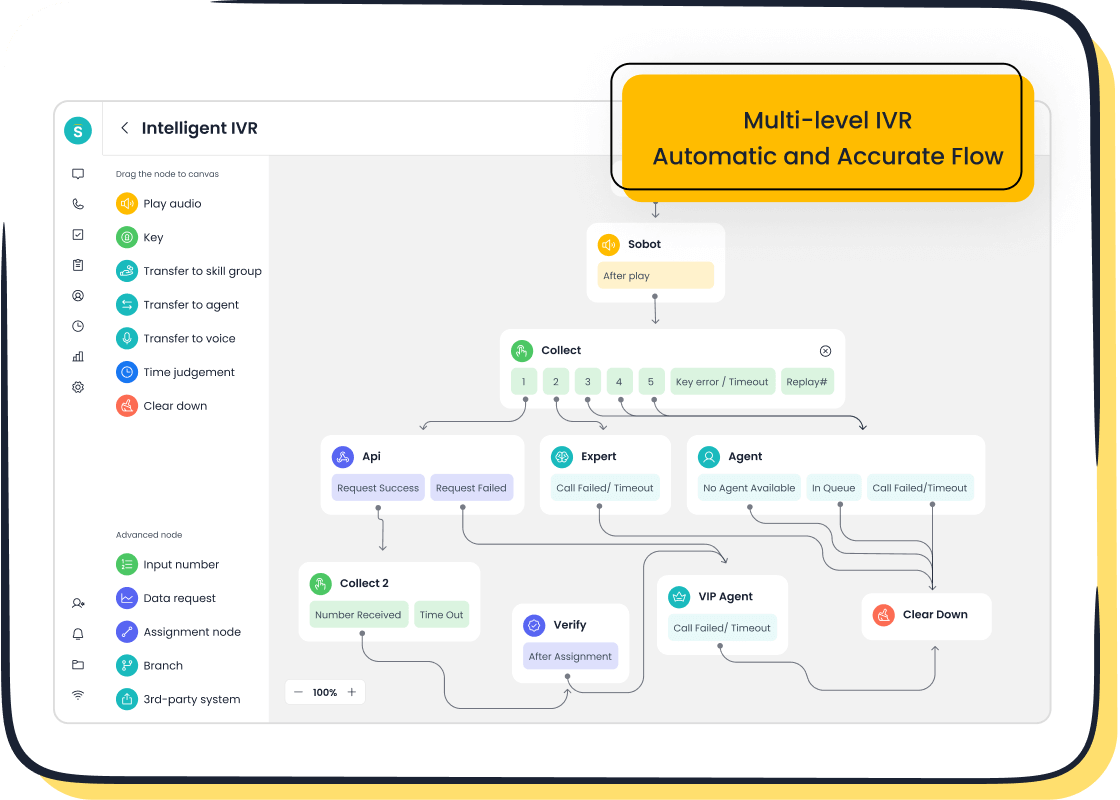
Sobot’s platform lets you track csat, nps, and ces in one place. You use AI-driven sentiment analysis to find out how customers feel. The dashboard gives you real-time insights, so you can respond quickly to customer feedback. Multilingual support helps you measure customer experience across different languages. CSAT NPS CES Comparison for Customer Service Teams 2026 highlights that Sobot’s tools improve customer service efficiency. For example, Agilent saw a sixfold increase in efficiency after using Sobot’s chatbot. OPPO reached an 83% resolution rate and a 94% positive feedback rate with Sobot’s chatbot.
- Sobot’s platform unifies csat, nps, and ces measurement.
- AI tools help you analyze customer feedback and emotions.
- Real-time dashboards let you act fast to improve customer experience.
Practical Steps for Implementation
You can start measuring customer experience by following these steps:
| Step | Description |
|---|---|
| 1 | Use various metrics to gather comprehensive data on customer satisfaction. |
| 2 | Understand customer journey touchpoints to identify areas for improvement. |
| 3 | Empower employees through coaching to enhance customer interactions. |
| 4 | Automate processes to ensure timely responses and actions. |
CSAT NPS CES Comparison for Customer Service Teams 2026 proves that combining metrics leads to better results. You see improvements in csat by 25–45%, faster resolution times, and higher first contact resolution. Operational costs drop, and ROI increases. You build a stronger customer experience program by measuring customer experience with csat, nps, and ces. Sobot’s platform makes improving customer experience easy and effective.
You have learned that CSAT, NPS, and CES each play a unique role in customer service. Your choice should match your business goals and where your customers are in their journey. See the table below for guidance:
| Metric | Purpose | Influence on Business Goals and Customer Journey |
|---|---|---|
| NPS | Measures customer loyalty and overall sentiment | Provides a big picture overview and helps identify larger issues in customer experience |
| CSAT | Evaluates satisfaction with specific interactions | Offers insights into particular customer interactions, guiding improvements in those areas |
| CES | Assesses ease of interaction | Focuses on reducing friction in customer interactions, aligning with customer journey optimization |
You can use Sobot’s platform to unify measurement and improve every response. As customer expectations change, keep these best practices in mind:
- Understand what your customers expect from each response.
- Use feedback to drive continuous improvement.
- Monitor and adapt your strategies as expectations evolve.
Customers want personalized experiences. When you adapt your approach, you build loyalty and satisfaction.
FAQ
What is the main difference between CSAT, NPS, and CES?
CSAT measures satisfaction after a specific event. NPS checks if customers will recommend your brand. CES shows how easy it is for customers to solve problems. CSAT NPS CES Comparison for Customer Service Teams 2026 helps you see when to use each metric.
How often should you measure these metrics?
You should measure CSAT and CES after every key interaction. NPS works best when you check it quarterly or twice a year. CSAT NPS CES Comparison for Customer Service Teams 2026 suggests regular tracking for better insights.
Can you use all three metrics together?
Yes! You get a full view of customer experience when you use CSAT, NPS, and CES together. CSAT NPS CES Comparison for Customer Service Teams 2026 recommends combining them for the best results.
How does Sobot help with CSAT NPS CES Comparison for Customer Service Teams 2026?
Sobot gives you tools to track CSAT, NPS, and CES in one place. You can see real-time feedback and make quick changes. CSAT NPS CES Comparison for Customer Service Teams 2026 shows Sobot’s platform improves satisfaction and loyalty.
See Also
Best Reviewed Contact Center Solutions for the Year 2024
Leading Cloud Contact Center Services Evaluated for 2024
2024's Ten Best Software for Customer Service Excellence

