Why Every Business Needs a CRM Strategy Example


You want your business to grow. A strong customer relationship management strategy makes that possible. When you use a CRM, you keep all customer details in one place. This saves your team hours each week and helps them respond faster. Studies show most businesses see sales rise by 21-30% after using a CRM. Sobot gives you an innovative way to manage customer interactions and boost results. Take a moment to think about your current approach. Is it helping you reach your goals, or is it time to explore a CRM strategy example that works?
CRM And Business Growth
Why CRM Matters
You want your business to grow and succeed. A CRM strategy gives you the tools to make that happen. When you use CRM, you bring together people, process, and technology. This approach helps everyone in your company work toward the same goal. You can see how each part works in the table below:
| Component | Description |
|---|---|
| People | Everyone in your company uses CRM, from employees to managers. |
| Process | You build strong relationships by keeping customer interactions steady and reliable. |
| Technology | CRM collects and analyzes data, so you know what your customers want. |
| Automation | You save time by letting CRM handle routine tasks. |
| Integration | CRM connects marketing, sales, and support for better teamwork. |
| Data Management | You use customer data to create personal connections. |
| Social Media | CRM helps you manage your online presence. |
| Risk Management | You protect your business reputation with better control. |
| Cloud Solutions | CRM gives you more storage and flexibility. |
Impact On Customer Experience
A CRM strategy changes the way you serve your customers. You keep all customer information in one place. This makes it easy for your team to find what they need. You reduce mistakes and save time. The table below shows how CRM improves customer experience:
| Feature | Description |
|---|---|
| Centralizing Customer Information | You get one source of truth for customer data. |
| Reducing Administrative Tasks | CRM handles routine work, so your team can focus on customers. |
| Enhancing Collaboration | Your team works together to give customers a smooth journey. |
You also track customer behavior and create messages that fit each group. You see every step of the customer journey, so you can respond faster.
Driving Sales And Retention
CRM does more than organize data. It helps you sell more and keep customers coming back. Studies show that 58% of businesses see higher sales revenue after using CRM. About 53% report better customer retention. You can see more results in the table below:
| Metric | Percentage |
|---|---|
| Businesses reporting increased sales revenue | 58% |
| Improved customer satisfaction/retention | 53% |
| Higher-quality customer service | 49% |
You want your business to meet and beat sales goals. CRM makes that possible. You connect marketing, sales, and customer service. You use data to make smart choices. You build loyalty and create a better customer experience every step of the way.
CRM Strategy Benefits
Enhanced Customer Communication
You want every customer interaction to feel personal and timely. A CRM strategy gives your team a single view of each customer, making it easy to track conversations and follow up. When you use CRM, you turn scattered messages into a smooth journey. Your team can see loyalty data and respond faster. Regular meetings become more effective because CRM insights help you solve problems in real time. This approach leads to better customer experiences and stronger relationships.
Data-Driven Decisions
CRM systems give you the power to make smart choices. You can see what works and what needs to change. With CRM, you track customer behavior, sales cycles, and marketing results. The data helps you create targeted campaigns and improve your strategy. You get clear insights that show you how to align your offers with what customers want. The table below shows how CRM impacts your business outcomes:
| Evidence Description | Impact on Business Outcomes |
|---|---|
| CRM creates targeted marketing campaigns based on customer data | Increases satisfaction and loyalty |
| CRM serves as a hub for actionable marketing insights | Improves segmentation and effectiveness |
| Automation of repetitive tasks | Boosts operational efficiency |
| Improved internal communication | Strengthens client relationships |
| CRM analyzes customer behavior and preferences | Shortens sales cycles and aligns with buyer needs |
Increased Productivity
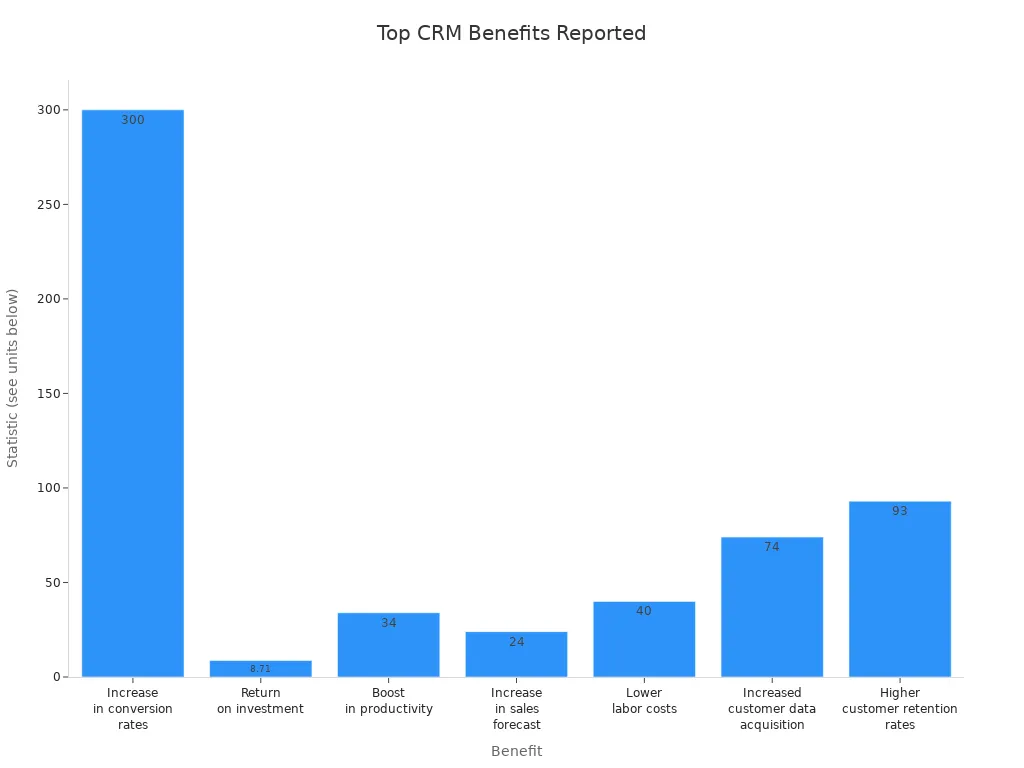
A CRM strategy helps your team work smarter, not harder. You save time by automating routine tasks. Your sales and support teams see a 34% boost in productivity. Companies using CRM report a 300% increase in conversion rates and a return of $8.71 for every dollar spent. The chart below highlights these benefits:
You break down silos, so everyone works from the same data. This leads to faster responses and better customer service.
Customer Retention
You want your customers to stay loyal. CRM strategy gives you tools to keep them engaged. You can send personalized offers and reminders, which increases loyalty and redemption rates. After using CRM, 93% of businesses report higher retention rates. Many see a jump of 10-29% in retention. These customer retention strategies help you build lasting value and create memorable customer experiences throughout the journey.
CRM Strategy Example With Sobot

You want a crm strategy example that actually works in the real world. Sobot gives you a clear path to success. You can see how to set goals, integrate powerful tools, train your team, and measure results. This crm strategy example shows you how to build strong relationships, boost efficiency, and create a customer experience that stands out.
Setting Goals And Needs
Start with your business goals. Do you want to increase sales, improve customer satisfaction, or reduce agent workload? You need to know what you want before you choose the right crm systems. Sobot helps you match your needs with the right features. You can use the table below to see how Sobot’s crm strategy example addresses common business goals:
| Feature | Benefit |
|---|---|
| Personalized Communication | Routes customers to suitable sales for 1:1 consultations by needs. |
| Automated Booking Management | Utilizes booking slots to reduce missed appointments and automate lead handling. |
| Precise Targeting | Boosts loyalty with timely updates and targeted offers. |
| Security Measures | Provides end-to-end encryption and compliance with GDPR, HIPAA, ensuring data protection. |
| Operational Efficiency | Unifies channels, reducing the need for multiple subscriptions and improving overall efficiency. |
| ROI | 234% return on investment, indicating significant financial benefits. |
| Efficiency Improvement | 60% reduction in agent workload, enhancing productivity. |
| Conversion Rate Increase | 15% increase in conversion rates, showing effectiveness in customer engagement. |
| Customer Experience (NPS) | 35% improvement in Net Promoter Score, reflecting enhanced customer satisfaction. |
| Resolution Time | Less than 1 minute, combining AI and human efforts for quick responses. |
You can set clear targets for your crm implementation. For example, you might want to raise your Net Promoter Score by 30%, or cut your response time to under a minute. Sobot’s crm strategy example gives you the tools to reach these goals.
Integrating Sobot Voice/Call Center
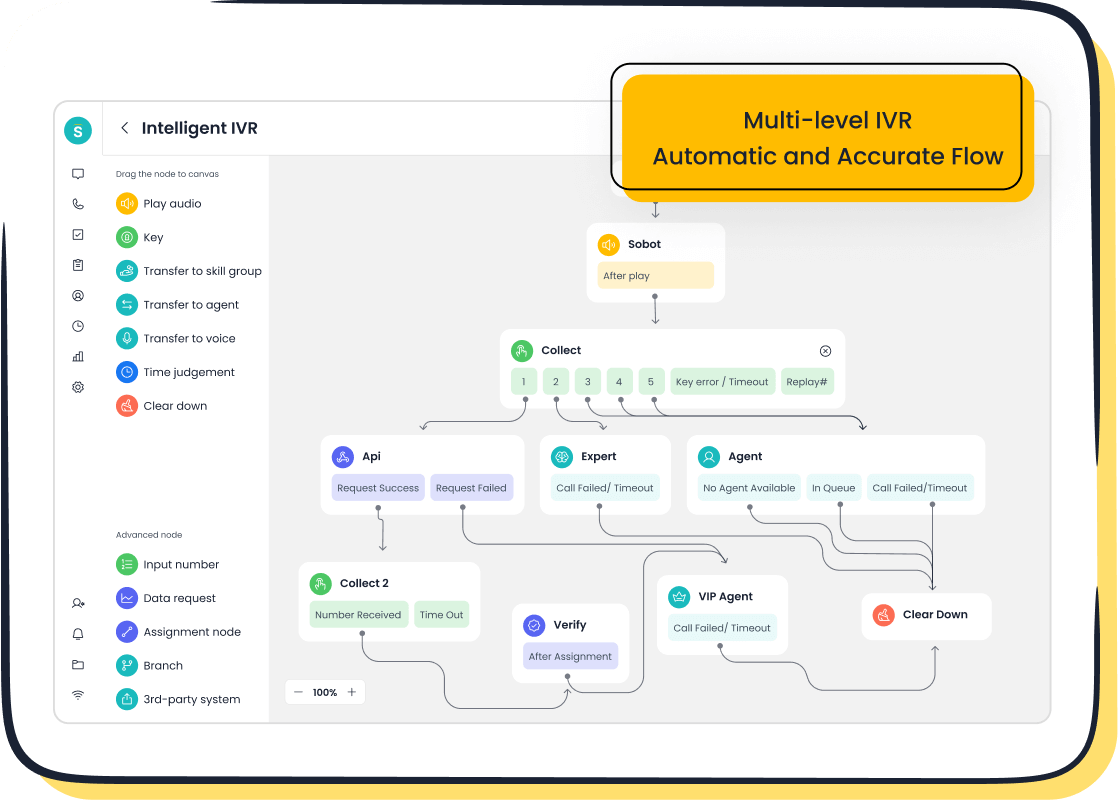
You want to connect with customers everywhere. Sobot’s Voice/Call Center makes this easy. You can bring all your calls, chats, and messages into one workspace. This crm strategy example shows you how to unify customer contact and boost efficiency step by step:
-
Planning (1-2 weeks):
Map out your communication channels. Decide which touchpoints matter most. Define your workflow needs and integration points. -
Configuration (2-4 weeks):
Set up your channels. Connect Sobot Voice/Call Center with your crm systems like Salesforce, HubSpot, or Zoho CRM. Configure AI-powered call routing, design IVR menus, and set up team structures. -
Training (1-2 weeks):
Teach your agents how to use the platform. Test workflows and adjust based on feedback. -
Launch and Optimization (Ongoing):
Roll out the system gradually. Monitor performance with analytics. Gather feedback and keep improving.
You get omnichannel support, intelligent call routing, and a unified workspace. Sobot’s platform connects with e-commerce tools like Shopify and communication apps like Microsoft Teams. You can track every customer interaction and use analytics to spot trends. This crm strategy example helps you build relationships that last.
Tip:
Sobot’s Voice/Call Center supports global numbers, AI-powered voicebots, and secure data transfer. You can serve customers anywhere, anytime.
Samsung used this crm strategy example to transform its customer service. By integrating Sobot’s all-in-one contact center, Samsung unified its communication channels and improved data connectivity. The result? A 30% increase in agent efficiency and a 97% customer satisfaction rate. You can read more about Samsung’s success here.
Training And Workflow Automation
You want your team to perform at their best. Sobot’s crm strategy example includes easy-to-use training tools and workflow automation. You can set up call flows, automate ticketing, and use AI chatbots to handle routine questions. This lets your agents focus on building relationships and solving complex problems.
| Evidence Description | Impact |
|---|---|
| Users find the platform easy to use and manage, facilitating quick setup of call flows and routing. | Enhances employee performance by reducing setup time and complexity. |
| Significant time-saving capabilities are reported, leading to efficient team communication. | Increases productivity and allows agents to focus on complex tasks. |
| Businesses report a 94% increase in agent productivity and a 92% improvement in customer issue resolution speeds. | Directly correlates with improved employee performance and customer satisfaction. |
| Proper training reduces frustration and accelerates platform adoption. | Leads to better performance and quicker response times. |
| The platform provides data for informed decision-making. | Supports continuous improvement in service quality and customer satisfaction. |
You can automate repetitive tasks with Sobot’s AI Agent and chatbot. The live chat feature brings all messages into one inbox, so nothing gets lost. The ticketing system tracks every issue and automates follow-ups. You save time, reduce errors, and keep your team focused on what matters most—building strong relationships.
Measuring Success
You need to know if your crm strategy example works. Sobot gives you powerful tools to measure results. You can track key metrics like:
- Customer Satisfaction Score (CSAT): See how happy your customers are after each interaction.
- Net Promoter Score (NPS): Find out how likely customers are to recommend your business.
- Customer Effort Score (CES): Measure how easy it is for customers to get help.
- Sentiment Analysis: Understand the emotional tone of customer conversations.
- First Call Resolution (FCR): Track how often you solve issues on the first try.
You can use analytics to spot trends and make smart decisions. Sobot’s dashboard gives you real-time insights into customer data, agent performance, and workflow efficiency. You can adjust your crm strategy example as you go, making sure you always improve relationships and results.
Note:
Sobot’s crm strategy example is not just about technology. It’s about building relationships, using data, and creating a customer experience that keeps people coming back.
You want a crm strategy example that delivers real results. Sobot’s all-in-one platform gives you everything you need—voice/call center, chatbot, AI Agent, live chat, ticketing system, and a unified customer contact center. You can build stronger relationships, improve efficiency, and grow your business with confidence.
Omnichannel CRM For Customer Success

Unified Customer Data
You want every customer interaction to feel seamless. Sobot’s Omnichannel Solution brings all your customer data together in one place. You get a single customer view that combines information from calls, emails, social media, and chat. This unified approach lets you see the full story behind each customer. You can connect your marketing tools and support channels, so your team always has the latest details. Real-time updates help you respond quickly and make smarter decisions. With analytics and reporting, you understand what your customers want and how they behave. This gives you the power to deliver value at every touchpoint.
- Single customer view for complete profiles
- Integration with social media and email marketing
- Real-time data for instant responses
- Analytics for better decision-making
Personalized Service
You want your customers to feel special. Sobot helps you create personalized interactions by using data from every channel. When you know your customer’s history, you can offer the right solution at the right time. This approach leads to higher customer satisfaction and stronger ongoing relationships. Businesses that use omnichannel CRM see more engagement and fewer support requests. For example, companies have reported a 25% increase in engagement and a 30% drop in support queries after switching to personalized experiences. You build trust and boost customer loyalty by meeting expectations every time.
- Tailored communication based on real-time data
- Higher engagement and satisfaction rates
- Fewer support queries with proactive service
AI And Automation
You want your team to work smarter, not harder. Sobot’s platform uses AI and automation to handle routine tasks and complex inquiries. Features like conversational intelligence and workflow automation reduce the time your agents spend on repetitive work. This means your team can focus on building customer-centric approaches and solving real problems. Companies using these tools see up to a 70% drop in support requests and an 80% positive experience rate. Automation also cuts staffing needs during busy seasons by 68%. You save time, reduce costs, and deliver personalized experiences that keep customers coming back.
Sobot’s Omnichannel Solution gives your business the tools to centralize communication, empower agents, and create loyal customers. You can turn every interaction into an opportunity for growth.
You need a crm strategy to achieve sustainable business success and drive strategic growth. Companies that set clear goals, train teams, and track results see higher sales, better retention, and improved customer satisfaction. Sobot stands out with true omnichannel integration, advanced AI, and strong support. Ready to transform your contact center? Visit Sobot’s website or email marketing@sobot.io to start your journey.
FAQ
What is a CRM strategy and why does it matter for business growth?
A CRM strategy helps you organize customer data and interactions. You use it to drive growth by improving sales, retention, and satisfaction. Companies with a strong CRM strategy see faster growth and better results than those without one.
How does Sobot’s CRM strategy example support business growth?
Sobot’s CRM strategy example gives you tools to unify communication channels. You track every customer interaction and use data to boost growth. Businesses like Samsung saw a 30% increase in agent efficiency and a 97% satisfaction rate after using Sobot.
Can CRM strategy help small businesses achieve growth?
Yes! You use CRM strategy to streamline operations and build relationships. Small businesses often see rapid growth when they adopt CRM tools. You gain insights, automate tasks, and create a foundation for sustainable growth.
How does CRM strategy compare to competitors for driving growth?
Sobot’s CRM strategy stands out with omnichannel integration and advanced AI. You get real-time analytics and workflow automation. Competitors may offer similar features, but Sobot’s focus on growth and efficiency delivers stronger results for your business.
What metrics should you track to measure CRM strategy growth?
You track metrics like customer satisfaction, Net Promoter Score, conversion rates, and agent productivity. These numbers show how your CRM strategy drives growth. You use analytics to spot trends and adjust your approach for even more growth.
🚀 Tip: You can visit Sobot’s website for more CRM strategy examples that drive growth.
See Also
Essential Aspects of CRM Software for Call Centers
Best No-Cost CRM Solutions for Call Centers in 2024
Comprehensive Overview of Omnichannel Call Center Solutions

