AI Features to Automate Your Service

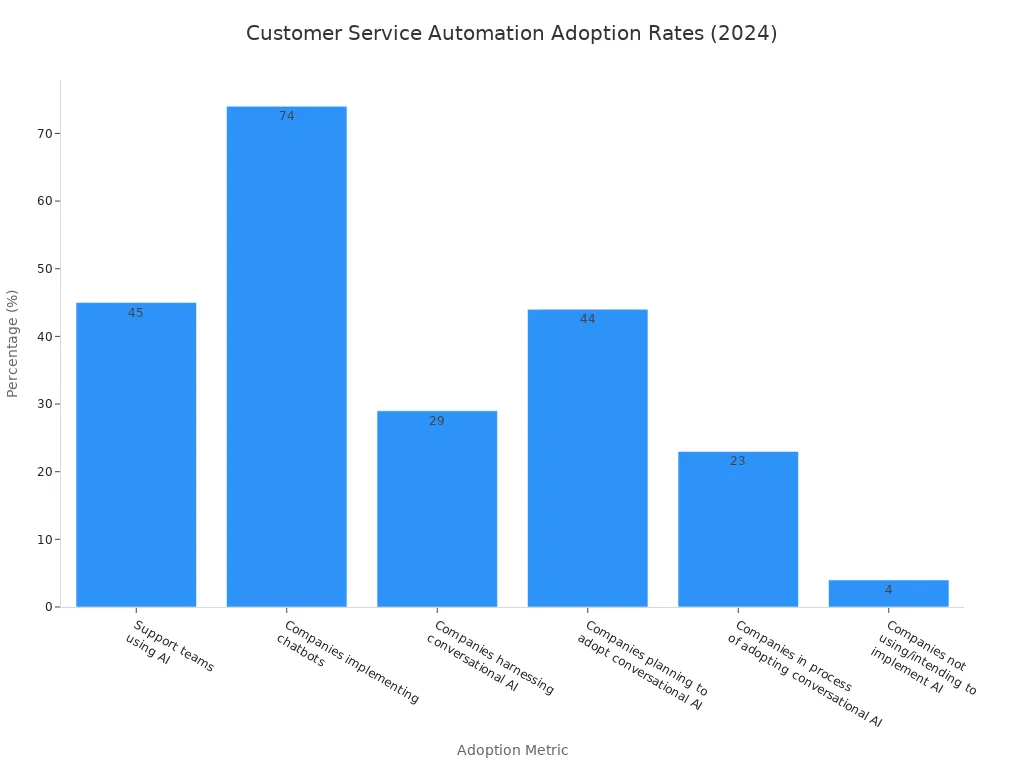
Artificial intelligence automates customer support by handling routine tasks. This frees up human agents for complex issues, while tools like AI-powered agents and intelligent routing from providers like Sobot deliver instant, personalized support. These critical ai features to automate customer support directly solve pain points like long wait times and high operational costs. The impact of ai in customer service is significant, with businesses seeing a 25% decrease in expenses. This makes adopting an ai-powered customer service strategy using customer service ai essential for growth.
Critical AI Features to Automate Customer Support

Implementing the right artificial intelligence tools transforms a support center from a cost center into a growth driver. Key features streamline workflows, enhance customer interactions, and provide data-driven insights for continuous improvement. These critical AI features to automate customer support are the building blocks of a modern, efficient service operation.
AI-Powered Agents & Chatbots for 24/7 Support
AI-powered agents and chatbots provide immediate, round-the-clock assistance. These virtual customer assistants handle a high volume of routine inquiries without human intervention. This 24/7 availability ensures customers receive help whenever they need it, significantly reducing wait times and improving satisfaction. Research from Boston Consulting Group shows that customer satisfaction with AI assistants now matches the levels previously seen with human agents, proving their effectiveness.
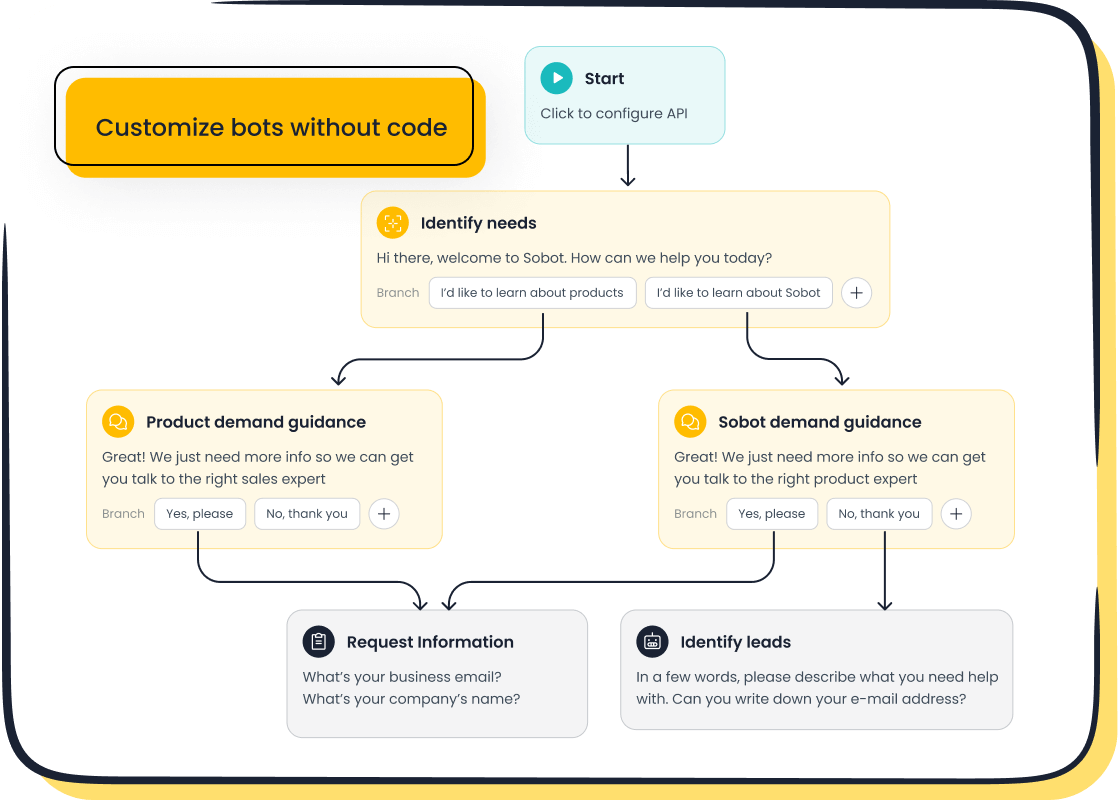
For example, Sobot’s AI Chatbot is a prime example of advanced customer service chatbots. It offers a no-code, point-and-click interface, allowing businesses to design and deploy automated workflows without any programming knowledge. This ease of use empowers teams to create sophisticated conversational flows quickly. The chatbot’s multilingual support is another key advantage.
"Personalized service begins with understanding: Hearing their own language makes customers feel seen and respected. This emotional connection fosters trust, which is key to long-term loyalty." - Maeve Sekulovski
The impact of multilingual support on business metrics is substantial. Companies that communicate in a customer's native language see higher engagement and loyalty.
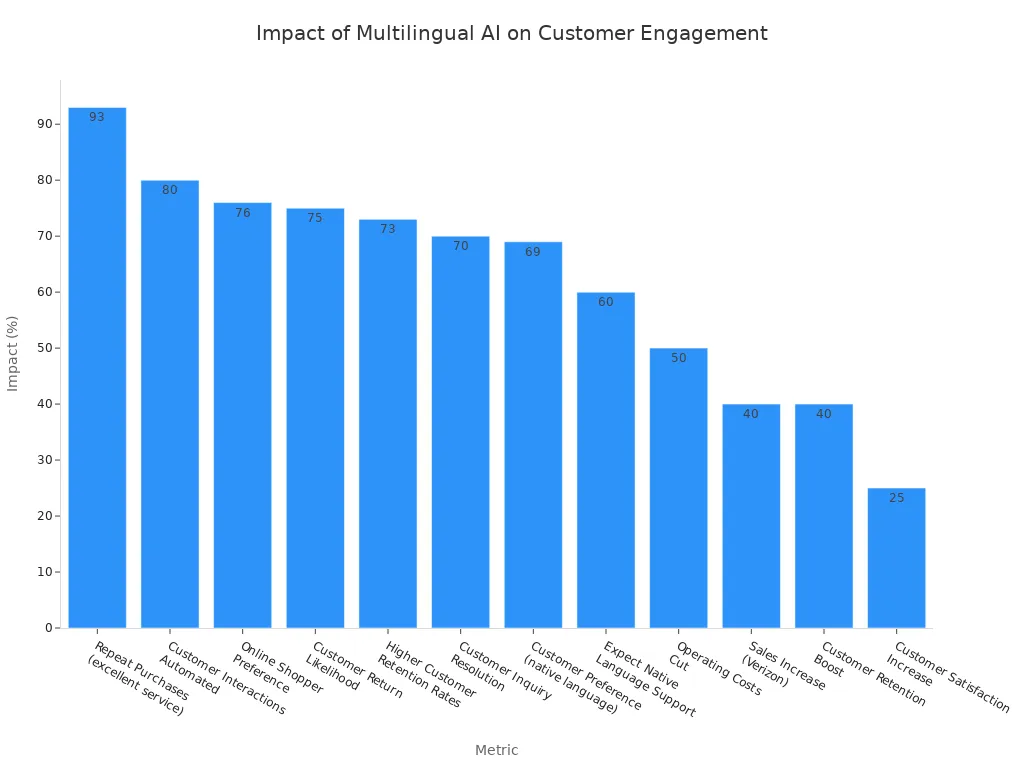
By automating responses to common questions, Sobot's chatbot can improve agent productivity by up to 70%. This frees up human agents to handle more complex and sensitive issues, making the entire support operation more efficient. The use of AI in customer service, particularly through chatbots, directly addresses the need for scalable, always-on support.
Intelligent Routing with Customer Service AI
Intelligent routing is a cornerstone of efficient customer support. This technology uses customer service AI to automatically analyze incoming tickets and direct them to the most appropriate agent or department. This process eliminates manual sorting and ensures that inquiries are handled by the person with the right skills and knowledge from the very beginning.
Platforms like Sobot’s Ticketing System excel at this. The system automatically categorizes tickets based on content, sender, and other predefined rules. It then assigns them to the best-suited agent instantly. This automation can reduce average ticket resolution time by 20-30%.
Intelligent routing systems use several AI algorithms to achieve this speed and accuracy:
- Real-Time Ticket Categorization: AI analyzes ticket content, keywords, and sentiment to sort inquiries. For instance, a message containing "billing error" and "urgent" is immediately sent to a high-priority queue for the finance team.
- Smart Agent Matching: The system matches tickets with agents based on their availability, skill set, and current workload. This minimizes escalations and ensures a faster resolution.
- Ticket Prioritization: AI flags tickets from key customers or those with urgent sentiment, moving them to the front of the line for immediate attention.
By providing agents with complete context—including customer history and previous interactions—these systems dramatically accelerate resolution times. This is a powerful application of AI in customer service.
Automated Summarization & Response Generation
Human agents spend a significant amount of time on administrative tasks, such as taking notes after an interaction or drafting responses. AI-powered tools can automate these tasks, saving valuable time and boosting agent productivity.
Automated summarization is one of the most impactful critical AI features to automate customer support. AI can analyze a long conversation transcript and generate a concise summary in seconds. Studies show that AI summarization has a 92% acceptance rate among agents, with no edits needed after review. This feature alone can save agents anywhere from 30 seconds to three minutes per interaction.
Sobot’s AI copilot is designed to provide this type of real-time assistance. It works alongside human agents, offering features like:
- Conversation Summaries: Instantly creates summaries of chats or calls, ensuring accurate record-keeping and seamless handoffs between agents.
- Response Generation: Suggests relevant and accurate automated responses based on the conversation's context and the company's knowledge base.
This AI-powered customer service tool helps agents respond faster and more consistently. It also reduces the cognitive load on agents, allowing them to focus more on the customer's emotional needs and complex problem-solving. The use of AI in customer service for summarization and response generation directly leads to a more efficient and satisfied support team.
Predictive Analytics to Anticipate Customer Needs
Predictive analytics uses historical data and machine learning algorithms to forecast future outcomes. In customer service, this means anticipating customer needs, identifying potential issues before they escalate, and personalizing interactions at scale. This proactive approach is a game-changer for AI in customer service.
E-commerce businesses use predictive analytics to forecast purchasing behavior and market trends. By analyzing customer data and behavioral patterns, companies can:
- Identify Churn Risks: Predictive models can identify customers who are likely to stop using a service. For example, Travis Perkins reduced customer churn by 54% by applying predictive analytics to its customer data. Hydrant achieved a 260% higher conversion rate on its win-back campaigns by targeting customers identified as likely to churn.
- Personalize Marketing: Companies like Spotify analyze listening history to create hyper-targeted ads and customized playlists, driving user engagement and retention.
- Optimize Inventory: By forecasting demand for certain products, businesses can manage their stock more effectively and avoid stockouts during peak seasons.
This feature provides the data-driven insights necessary to move from a reactive to a proactive service model. It allows businesses to address customer needs before they even have to ask, creating a seamless and delightful experience.
AI-Driven Self-Service Portals
Modern customers prefer to find answers on their own. AI-driven self-service portals, such as intelligent knowledge bases and FAQ sections, empower them to do just that. These portals use AI to provide instant, accurate answers to a wide range of questions.
An AI-powered knowledge base is more than just a static library of articles. It uses Natural Language Processing (NLP) to understand a customer's query, no matter how it's phrased, and retrieves the most relevant information. This is one of the most effective critical AI features to automate customer support for common issues.
Here’s how AI enhances self-service:
- Instant, Verified Answers: AI instantly pulls information from help centers, internal guides, and past tickets, ensuring the answers are always accurate and up-to-date.
- Contextual Understanding: Advanced AI models interpret unclear messages to understand customer intent, guiding them to the right solution more effectively.
- Personalized Messaging: The system can tailor content based on the user's history or customer segment, providing a more relevant self-service experience.
By enabling customers to resolve issues independently, AI-driven self-service portals reduce the number of tickets reaching human agents. This improves efficiency and allows customers to get the help they need without waiting, making it a vital component of AI in customer service.
The Business Impact of AI in Customer Service

Integrating AI into customer service operations delivers transformative business results. Companies see major improvements in efficiency, customer satisfaction, and revenue. The use of AI in customer service is no longer a luxury but a core component of a successful business strategy, especially in competitive industries like retail and e-commerce.
Increased Efficiency and Significant Cost Savings
AI automation directly boosts operational efficiency. It handles repetitive tasks, which frees up human agents to focus on complex problem-solving. This shift dramatically reduces operational costs. For example, Sobot's AI solutions can cut customer support expenses by up to 50%. This is especially valuable for retail and e-commerce businesses that face high inquiry volumes during peak shopping seasons. Automating common questions about orders, shipping, and returns allows companies to scale support without hiring more staff.
Faster Response Times & 24/7 Availability
Customers expect fast answers at any time of day. AI delivers on this expectation with 24/7 availability. AI chatbots handle multiple inquiries at once and provide instant answers. One company saw its average query resolution time drop from 11 minutes to under 2 minutes after implementing an AI chatbot. This speed is critical for customer retention.
Research shows that seven out of ten shoppers highly value 24/7 support. Providing immediate help leads to more completed purchases and builds loyalty. The constant availability of AI in customer service meets this core customer need.
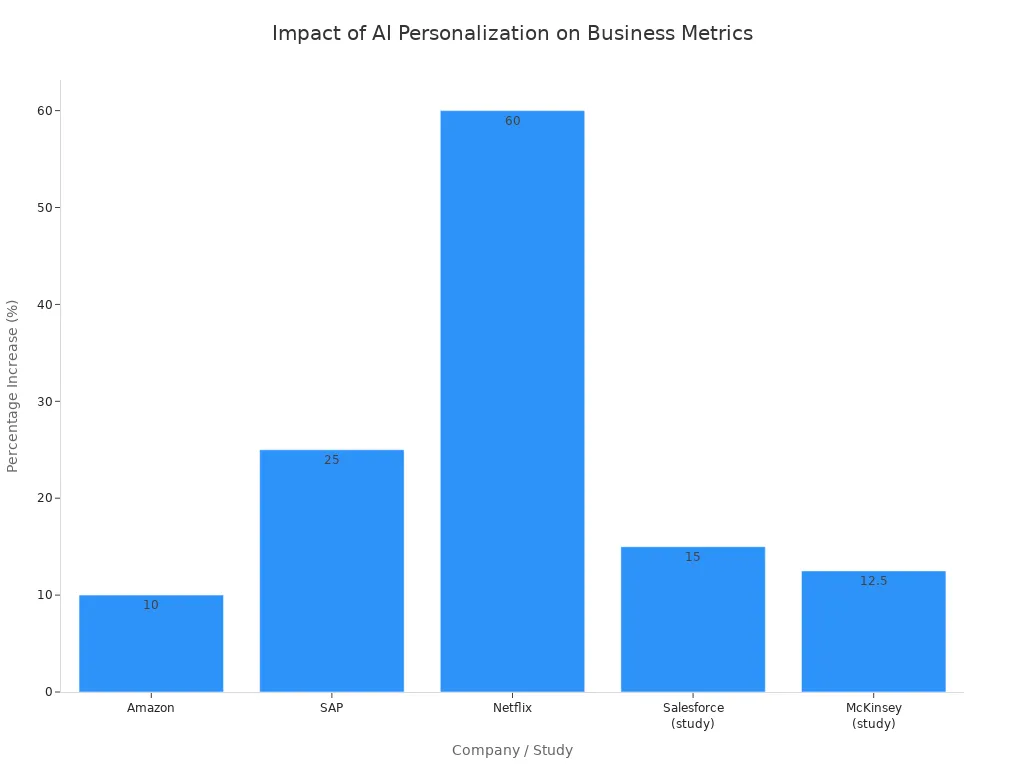
Enhanced Personalization with AI-Powered Customer Service
AI enables businesses to deliver a highly personalized customer experience at scale. It analyzes customer data to offer relevant product recommendations and tailored support. This level of personalized service makes customers feel understood and valued. AI-powered customer service can also boost sales. Sobot's platform, for instance, helps increase conversions by 20% through smart self-service and personalized messaging. The impact of AI in customer service personalization is clear across industries.
Improved Agent Productivity and Satisfaction
AI tools act as a powerful assistant for human agents. By automating routine tasks, AI increases agent productivity and job satisfaction. A key benefit of AI in customer service is its ability to resolve common issues independently. The electronics giant OPPO provides a powerful example.
- By implementing Sobot's customer service AI, OPPO achieved an 83% chatbot resolution rate.
- This led to a 94% positive feedback rate from customers.
- Most impressively, the company saw a 57% increase in its repurchase rate.
These results show how the right critical ai features to automate customer support empower agents, improve customer happiness, and drive business growth. The effective use of AI in customer service creates a better environment for both customers and employees.
Strategically Implementing Artificial Intelligence
A strategic approach is essential for successful AI adoption. Businesses can maximize benefits and minimize risks by carefully planning their implementation. This involves identifying the right problems to solve, choosing the correct tools, and scaling thoughtfully. A good strategy ensures that the use of ai in customer service aligns with broader business goals.
Identify Key Pain Points to Automate First
Businesses should first identify key pain points. AI is most effective for standardized processes and high-volume inquiries. Starting with these areas delivers quick wins and builds momentum. This initial process optimization sets the stage for broader adoption. Common issues well-suited for initial automation include:
- Shipping updates
- Order status requests
- Payment queries
- Returns and exchanges
- Product FAQs
Focusing on these repetitive tasks frees up human agents for more complex, individual cases.
Choose the Right Tools and Ensure Integration
Selecting the right tool is critical. The platform must integrate seamlessly with existing systems like customer relationship management (CRM) software. This ability to connect tools helps streamline workflows. Key criteria for choosing a platform include its integration capabilities, security compliance, and omnichannel support. Businesses should also test the AI's quality with real-world conversations. This ensures the chosen ai in customer service solution meets specific needs.
Start Small with a Pilot Program and Scale
A phased rollout reduces risk. Businesses should start with a small pilot program. A successful pilot focuses on one task and about 20% of support volume. Teams can set clear goals, such as achieving an 80% automation rate. After validating the pilot's success with data-driven insights, the program can expand. This methodical approach allows for adjustments and ensures the artificial intelligence solution is fine-tuned before a full launch.
Balance Automation with a Human Touch
Effective ai in customer service knows when to involve a human. It is vital to automate experiences while providing an escalation path for complex issues. Clear triggers should be defined for handing off a conversation to a human agent.
A seamless handoff is crucial. The system should transfer the full chat history so the customer does not have to repeat themselves.
Escalation is necessary for:
- Complex or rare questions
- Signs of customer frustration
- High-priority situations or sensitive issues
This balance ensures efficiency without sacrificing customer satisfaction.
Prioritize Data Security and Ethical Use
Data security is non-negotiable. An ai-powered customer service platform must comply with data protection regulations. Proper data collection and analysis are essential for building trust. Key regulations include:
| Regulation | Scope | Key Requirements |
|---|---|---|
| GDPR | European Union | Requires explicit consent for data processing and gives individuals rights over their data. |
| CCPA | California, USA | Focuses on transparency and gives consumers the right to opt-out of data sales. |
Choosing a compliant platform protects both the business and its customers. This focus on security is a cornerstone of responsible ai in customer service.
AI features like chatbots and intelligent routing transform support operations. Businesses see major benefits from AI in customer service, including lower costs and better agent productivity. The success seen with OPPO, which achieved a 57% increase in its repurchase rate, shows the powerful impact of AI in customer service. This technology drives both efficiency and growth.
Ready to enhance your customer interactions? Embark on Your Contact Journey today by exploring an AI solution.
FAQ
What is the main purpose of an AI chatbot?
An AI chatbot automates customer interactions. It solves common questions on its own. The chatbot also assists human agents. This process improves a company's overall productivity and service efficiency.
How does AI help cut customer service costs?
AI chatbots operate 24/7 without needing extra staff. They handle routine inquiries automatically. This function can save businesses up to 50% on agent-related costs, making customer support more affordable.
Is coding needed to set up a chatbot?
No, coding is not required for a tool like the Sobot AI Chatbot. It uses a simple point-and-click interface. This feature allows businesses to design and launch automated workflows quickly and easily.
Can AI handle customers in different languages?
Yes, advanced AI chatbots offer multilingual support. They can interact with customers in their preferred language. This capability helps businesses connect with a global audience and improve the customer experience.
See Also
Essential Capabilities of Customer Relationship Management for Call Centers
Streamlining Operations: The Efficiency of Call Center Automation Explained
Artificial Intelligence in Customer Service: Enhancing Operational Efficiency Significantly
Key Functionalities of Interactive Voice Response Systems for Enhanced Service
Elevating SaaS Customer Support Through Strategic Live Chat Implementation