The Pros and Cons of Enterprise Chatbots

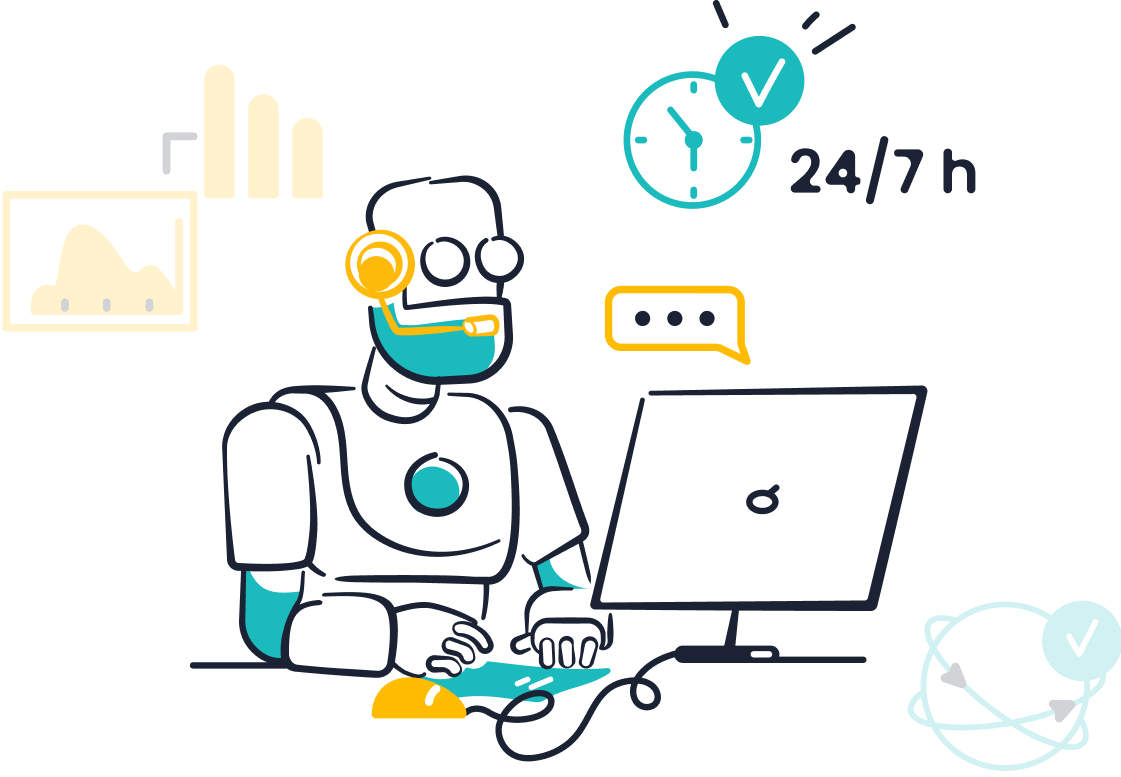
Many businesses are adopting chatbots. Reports show 37% of businesses use them for customer support. This technology presents a core dilemma for leaders. Chatbots promise efficiency and savings. However, they also risk a poor customer experience. This guide helps analyze the trade-offs. It clarifies the pros and cons for any business.
The key challenge is balancing automation benefits against the potential for customer frustration. Understanding conversational chatbot for ecommerce vs enterprise support differences is crucial. Sobot helps companies navigate this decision.
The Pros of Enterprise Chatbots for Business Growth
Enterprise chatbots offer significant advantages for businesses aiming for sustainable growth. These AI-powered tools are more than just automated responders. They are strategic assets that enhance customer service, drive efficiency, and unlock valuable data. Integrating chatbots allows a business to scale operations, improve customer satisfaction, and ultimately strengthen its bottom line. Let's explore the key benefits.
Scaling 24/7 Customer Service and Support
One of the most powerful benefits of artificial intelligence chatbots is their ability to provide uninterrupted customer assistance. Customers expect immediate responses, regardless of the time or day. Human-only support teams cannot realistically meet this demand without significant cost. Chatbots fill this gap perfectly. They operate 24/7 across websites, mobile apps, and messaging platforms without needing breaks.
This constant availability ensures that every customer receives a prompt initial interaction. For many common customer inquiries, the chatbot can provide a complete resolution on its own. This capability allows a business to offer scalable, around-the-clock service.
| Company | Service Provided | 24/7 Support Provided For |
|---|---|---|
| SWICA | IQ Chatbot | Information on insurance policies and coverage |
| DZT | AI Chatbot | Automating international guest communication for tourists |
| TEAG | moinAI Chatbot | Offering stability and continuous service during a crisis |
A prime example of this is OPPO, a leading smart device innovator. By implementing Sobot's chatbot solution, OPPO established an effective human-machine cooperation model. This system achieved an incredible 83% chatbot resolution rate, handling most routine inquiries automatically. This freed human agents to focus on more complex issues, leading to a 94% positive feedback rate and enhanced service quality.
Boosting Efficiency and Reducing Agent Costs
Automation is a key driver of operational efficiency. Enterprise chatbots excel at handling high volumes of repetitive tasks. This automation directly reduces the workload on human agents. Agents no longer need to spend their time answering basic questions like "Where is my order?" or "How do I reset my password?"
By automating routine inquiries, AI-powered chatbots allow agents to focus their expertise on more demanding interactions that require critical thinking and empathy.
This shift has a massive impact on productivity and costs.
- Industry reports from Gartner show companies can reduce customer service costs by up to 30% by implementing chatbots.
- For simple, repetitive inquiries, chatbots can achieve an 80–90% deflection rate, meaning the issue is resolved without ever reaching a human agent.
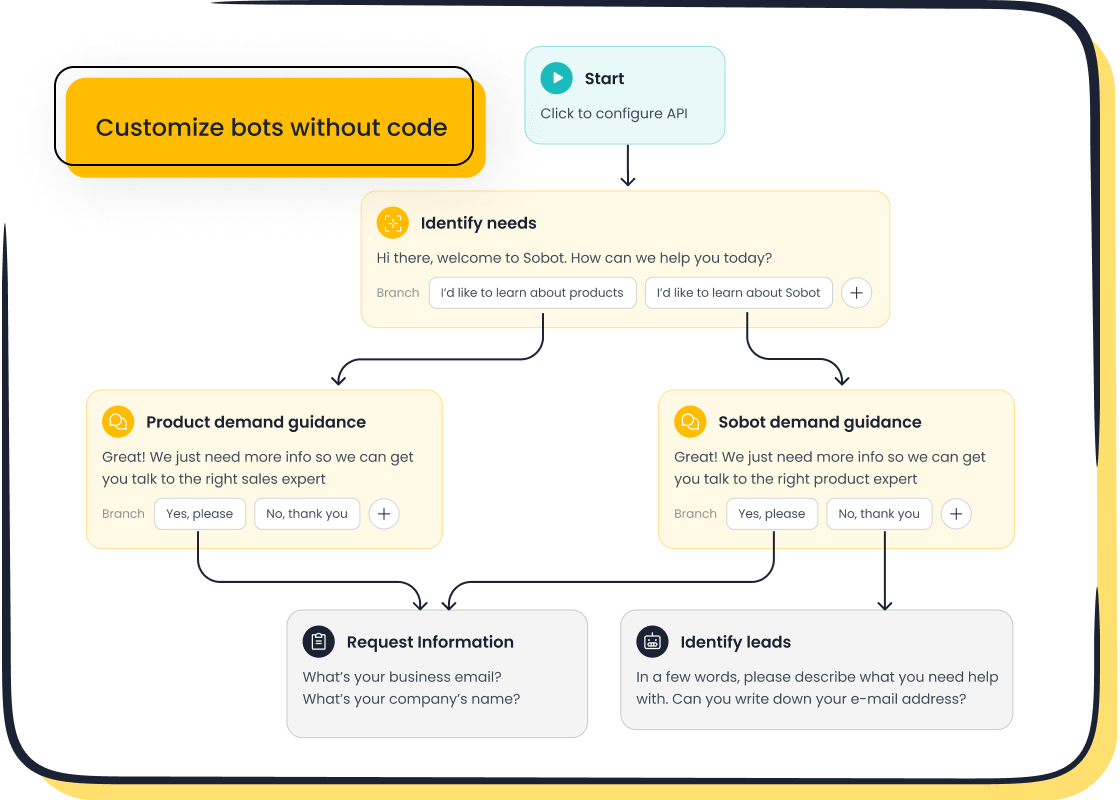
Solutions like the Sobot AI Chatbot are designed for maximum impact. They can improve agent productivity by 70% and save up to 50% on agent costs by triaging customer inquiries 24/7. Furthermore, modern platforms have made implementation much easier. The Sobot Chatbot features a no-code, point-and-click interface, allowing businesses to design and deploy powerful automation workflows without needing a team of developers.
Improving Conversions with Proactive Engagement
Chatbots are not just for reactive support; they are powerful tools for proactive engagement. Instead of waiting for a customer to ask a question, chatbots can initiate conversations at key moments in the user journey. This proactive interaction can guide users, answer questions before they are asked, and drive conversions.
For example, a chatbot can:
- Welcome new visitors and offer assistance.
- Provide product recommendations based on browsing history.
- Offer a discount to a user showing signs of abandoning their cart.
The results of proactive engagement are compelling. Websites using AI chatbots have seen conversion rates increase by as much as 23%. Some businesses even report that leads generated through a chatbot convert at three times the rate of traditional sign-up forms. This is because the interaction is immediate, contextual, and helpful. The chatbot provides a form of personalized service at scale, making the customer feel valued and supported throughout their journey.
Gaining Customer Insights Through Data Collection
Every interaction a chatbot has with a customer is a valuable source of data. Analyzing these conversation logs provides deep insights into customer behavior, needs, and pain points. This data is a goldmine for improving products, services, and the overall customer experience.
By analyzing chatbot interactions, a business can understand:
- Common Questions: What are the most frequent issues customers face? This can highlight problems with a product or gaps in documentation.
- User Intent: What are customers truly trying to achieve? Understanding intent helps refine marketing messages and service offerings.
- Drop-off Points: Where in the conversation do users get frustrated and leave? This helps identify areas where the chatbot’s script or knowledge base needs improvement.
- Customer Sentiment: AI can analyze the emotional tone of conversations, providing a real-time pulse on customer satisfaction.
This continuous feedback loop allows for data-driven decision-making. Businesses can identify emerging trends, address customer frustrations proactively, and refine their conversational AI strategy for better personalization and service. Ultimately, these insights help create a more customer-centric organization.
The Cons and Risks of Enterprise Chatbots
While enterprise chatbots offer compelling benefits, they are not a universal solution. Business leaders must carefully weigh the potential downsides before committing to this technology. The risks extend beyond financial investment. A poorly implemented chatbot can damage brand reputation and alienate the very customers it is meant to serve. Understanding these challenges is the first step toward making an informed decision and mitigating potential harm.
High Initial Implementation and Maintenance Costs
A significant barrier to adopting enterprise chatbots is the cost. The initial investment can be substantial. The price depends heavily on the chatbot's complexity, the number of systems it needs to integrate with, and its AI capabilities. Simple FAQ bots are more affordable. However, true enterprise-grade solutions that handle complex tasks require a larger budget.
The average cost for an enterprise AI chatbot can range from $50,000 to $120,000. Some highly advanced solutions command investments of $200,000 or more. The development approach also impacts the price. Building a custom solution is often more expensive upfront than purchasing a subscription from a platform provider.
| Approach | Average Upfront Cost |
|---|---|
| Platform (Buy) | $30,000 – $80,000 |
| Custom (Build) | $80,000 – $150,000+ |
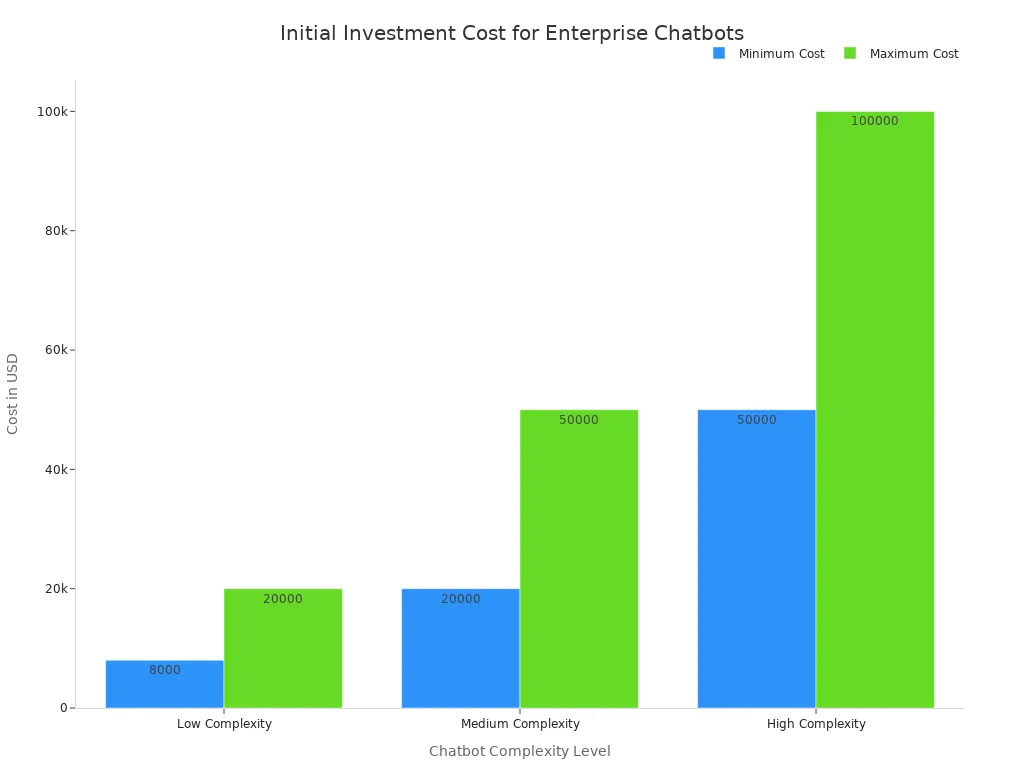
The expenses do not end after launch. Ongoing maintenance is crucial for a chatbot's success and adds to the total cost of ownership. These recurring costs can include:
- Annual Maintenance: This typically costs 15-20% of the initial development price each year.
- Hosting and Infrastructure: Cloud services can range from $100 to over $5,000 monthly, depending on usage.
- Data Training: Retraining the AI model to keep it accurate can cost between $2,000 and $10,000 quarterly.
- Licensing Fees: Using third-party AI services or platforms involves recurring subscription fees.
These costs underscore the importance of a clear budget and a realistic assessment of the expected return on investment.
Limited Understanding of Nuance and Emotion
Humans communicate with more than just words. We use tone, sarcasm, and context to convey meaning. This is an area where even sophisticated chatbots struggle. Their inability to grasp emotional nuance can turn a helpful interaction into a frustrating one. A customer might make a sarcastic comment like, "Great, just what I needed," after a problem. A chatbot might interpret this literally and respond cheerfully, escalating the customer's frustration.
This limitation stems from how chatbots are trained. They learn from vast amounts of transactional data, not from emotionally charged conversations. Their sentiment analysis often relies on simple keywords rather than understanding the overall tone. This can lead to several problems:
- Tone-deaf replies during sensitive situations, like a service outage or a payment failure.
- "Faux empathy" phrases like "I understand your frustration" can sound robotic and insincere.
- Failure to detect urgency, causing delays in escalating a distressed customer to a human agent.
When a chatbot cannot understand the emotional state of a customer, it fails to provide the empathy and reassurance that a human agent can offer. This gap can make a customer feel unheard and undervalued.
Risk of a Poor Customer Experience
The ultimate risk of a flawed chatbot strategy is a poor customer experience. When a chatbot fails, it reflects badly on the entire brand. Recent studies show this is a widespread problem. As many as 70% of users have reported feeling frustrated when interacting with a chatbot. This frustration often comes from common design flaws that are entirely avoidable.
A chatbot without a clear purpose or a well-defined personality can feel irritating and unhelpful. It creates a negative perception of the business and can drive customers away.
Some of the most common design mistakes include:
- Undefined Purpose: The chatbot tries to do too much or its role is unclear to the user.
- No Memory: The bot cannot remember previous parts of the conversation, forcing the customer to repeat information.
- Lack of Personality: A bot without a defined persona feels robotic and fails to create a positive connection.
- Misleading the User: Hiding the fact that a user is talking to a bot can erode trust when they find out.
- No Visuals: Text-only conversations can be less engaging and harder to understand.
A single negative interaction can be enough to lose a customer for good. Therefore, designing a chatbot with the user's journey in mind is not just a best practice; it is essential for protecting your brand and retaining your customer base.
Functional Limitations with Complex Queries
Today's chatbots are powerful, but they have clear limits. They excel at handling simple, repetitive questions with predictable answers. However, they often struggle with complex, multi-layered queries that require reasoning or access to multiple data sources. The core functionality of many bots is not yet advanced enough to replace human expertise entirely.
Some common challenges for current AI technology include:
- Knowledge Base Decay: Outdated or conflicting information in the knowledge base can lead the AI to provide incorrect answers.
- Hallucinations: In some cases, chatbots may invent facts or information, which completely erodes user trust.
- Technical Routing Errors: A failure to correctly classify a user's intent can send them down the wrong conversational path or fail to connect them to the right system.
- Escalation Failures: A chatbot may not recognize when a problem is beyond its capabilities and fail to hand the conversation over to a human agent when necessary.
These limitations mean that chatbots cannot be a complete substitute for a human support team. They are best used as the first line of defense, handling common issues and gathering information before escalating more complex problems to a person who can solve them.
Enterprise Support vs. Ecommerce: Key Chatbot Differences
Not all chatbots are created equal. The context of their use dramatically changes their design, complexity, and capabilities. A chatbot for a small online store has vastly different requirements than one for a global enterprise. Understanding the conversational chatbot for ecommerce vs enterprise support differences is crucial for selecting the right technology for your business. The primary distinction lies in the depth of integration and the complexity of the problems they are built to solve.
Understanding Conversational Chatbot for Ecommerce vs Enterprise Support Differences
The core of the conversational chatbot for ecommerce vs enterprise support differences is the nature of the user's goal. Ecommerce interactions are often transactional and straightforward. Enterprise support, however, involves complex, multi-step problem-solving that requires a deeper understanding of business processes.
Ecommerce chatbots focus on simple, high-volume tasks like order tracking. Enterprise support chatbots must navigate complex customer issues, acting as a true extension of the service team.
This fundamental difference in purpose dictates every other aspect of the chatbot's design, from its AI engine to its security protocols.
Integration Complexity with Business Systems (CRM, ERP)
Enterprise support chatbots require deep and robust integrations with core business systems. Solutions like Sobot's Omnichannel Solution are designed to connect seamlessly with platforms like Salesforce and internal knowledge bases. This allows the AI to pull customer history, check account details, and create support tickets automatically. This level of integration presents unique challenges:
- Backend Integrations: Connecting with CRM and ERP systems is essential for providing context-aware answers.
- Data Security: Protecting sensitive customer and business data during this interaction is a primary concern.
- System Complexity: Poor integration can lead to data inconsistencies and a fragmented customer experience.
Handling Multi-Layered vs. Transactional Queries
The type of inquiries a chatbot handles is a key differentiator. An ecommerce bot typically answers simple questions like, "Where is my order?" These are transactional and have a single, clear answer.
In contrast, enterprise support chatbots must manage multi-layered customer inquiries that may require information from different departments. Resolving a billing discrepancy, for example, might involve checking payment history, service usage logs, and account status. This requires advanced conversational AI and workflow automation to guide the user through a diagnostic process, gather necessary information, and escalate to the right human agent if needed.
Security and Compliance Requirements
Because enterprise chatbots handle sensitive data, they must adhere to strict security and compliance standards. This is a major factor in the conversational chatbot for ecommerce vs enterprise support differences. An enterprise solution must be designed to comply with regulations such as:
- GDPR (General Data Protection Regulation) for handling EU residents' data.
- HIPAA (Health Insurance Portability and Accountability Act) for protected health information.
This requires implementing robust security measures like end-to-end data encryption, role-based access controls, and regular security audits to protect the business and its customers.
After weighing the pros and cons, the best path forward is clear. A hybrid model combining conversational AI chatbots with human agents delivers superior customer service. This approach boosts first-contact resolution and reduces agent turnover. Sobot's platform excels here, blending AI tools like chatbots with live agents for seamless customer service. This integrated support service is the key to navigating conversational chatbot for ecommerce vs enterprise support differences. It ensures every customer receives excellent service.
Embark on Your Contact Journey.
FAQ
How difficult is it to set up enterprise chatbots?
Modern solutions make setup straightforward. For example, the Sobot Chatbot uses a no-code, point-and-click interface. This allows your team to design and deploy powerful automation workflows without needing any programming experience, significantly reducing implementation complexity and time.
What happens when a chatbot cannot answer a complex question?
A well-designed chatbot will not create a dead end. It recognizes its limitations and performs a seamless handoff to a human agent. This hybrid approach ensures the customer gets the correct answer without frustration, combining AI efficiency with human expertise.
Can enterprise chatbots support a global customer base?
Yes, advanced chatbots are designed for global business. The Sobot AI Chatbot is multilingual, allowing it to interact with customers in their preferred language. This capability is essential for providing consistent, scalable support across different regions and markets.
How do chatbots improve agent productivity?
Chatbots handle high volumes of repetitive inquiries 24/7. This automation frees human agents to focus on complex, high-value tasks. Solutions like Sobot can improve agent productivity by up to 70%, allowing your team to accomplish more with less effort.
See Also
Key Advantages of Integrating Chatbots on Your Website
Elevating E-commerce Customer Happiness Through Chatbot Technology
Your Essential Guide to Selecting Optimal Chatbot Software

