Conversational AI vs Chatbots Which to Choose?

Choosing between conversational AI vs chatbots depends on your business needs. The decision on conversational ai for ecommerce vs traditional chatbots is simpler than you think.
The Short Answer: Use traditional chatbots for simple, repetitive tasks on a tight budget. These rule-based chatbots work well. Choose advanced conversational AI for complex customer service automation. This AI is vital when understanding context is key to improving customer satisfaction and the overall customer experience.
Platforms like Sobot offer powerful ai-powered chatbots that provide this deeper level of understanding. This choice in the chatbot vs conversational ai debate defines your approach to customer service.
Conversational AI vs Chatbots: The Core Differences

To make the right choice in the conversational ai vs chatbots debate, you first need to understand their fundamental differences. One follows a script, while the other holds a conversation. This distinction is crucial when deciding between conversational ai for ecommerce vs traditional chatbots.
What Traditional Chatbots Do: Rule-Based Replying
Traditional chatbots, often called rule-based chatbots, operate on a simple "if-then" logic. Think of them as a digital flowchart. You program these chatbots with specific keywords and predefined answers. When a user types a recognized keyword, the chatbot delivers a scripted response.
The strengths of these chatbots lie in their simplicity. However, their weaknesses are significant. They cannot understand context, typos, or slang. If you ask a question outside their script, they fail. These rule-based chatbots are static; they do not learn from customer conversations and require manual updates to handle new questions. This technology has its roots in early systems from the 1960s that used basic pattern-matching. While effective for simple tasks, these chatbots lack the intelligence for true engagement.
What Advanced Conversational AI Does: Context-Aware Understanding
Conversational AI represents a major leap forward. Instead of just matching keywords, conversational AI uses advanced technologies to achieve a deep level of understanding. This is the core of the chatbot vs conversational ai difference. This AI is powered by:
- Natural Language Processing (NLP): This allows the AI to read and process human language.
- Machine Learning (ML): This enables the AI to learn from past interactions and improve over time.
- Natural Language Understanding (NLU): This is the key to intelligence. NLU helps the AI grasp the user's intent (what they want) and identify entities (key details like dates or product names).
Because of this advanced AI, conversational AI can handle complex, multi-turn dialogues and generate personalized responses. It understands context, provides better personalization, and creates a superior customer experience. Modern ai-powered chatbots use this technology to offer a seamless, omnichannel experience. The evolution from basic ML to powerful Large Language Models (LLMs) has made this AI incredibly fluent and context-aware, moving far beyond the weaknesses of rule-based chatbots.
When to Choose Traditional Chatbots
While advanced conversational AI is powerful, it isn't always necessary. Sometimes, a simpler, more direct solution is the best fit for your goals and budget. Traditional chatbots shine in specific scenarios where efficiency and cost-effectiveness are top priorities. The strengths of these chatbots are their simplicity and speed of deployment.
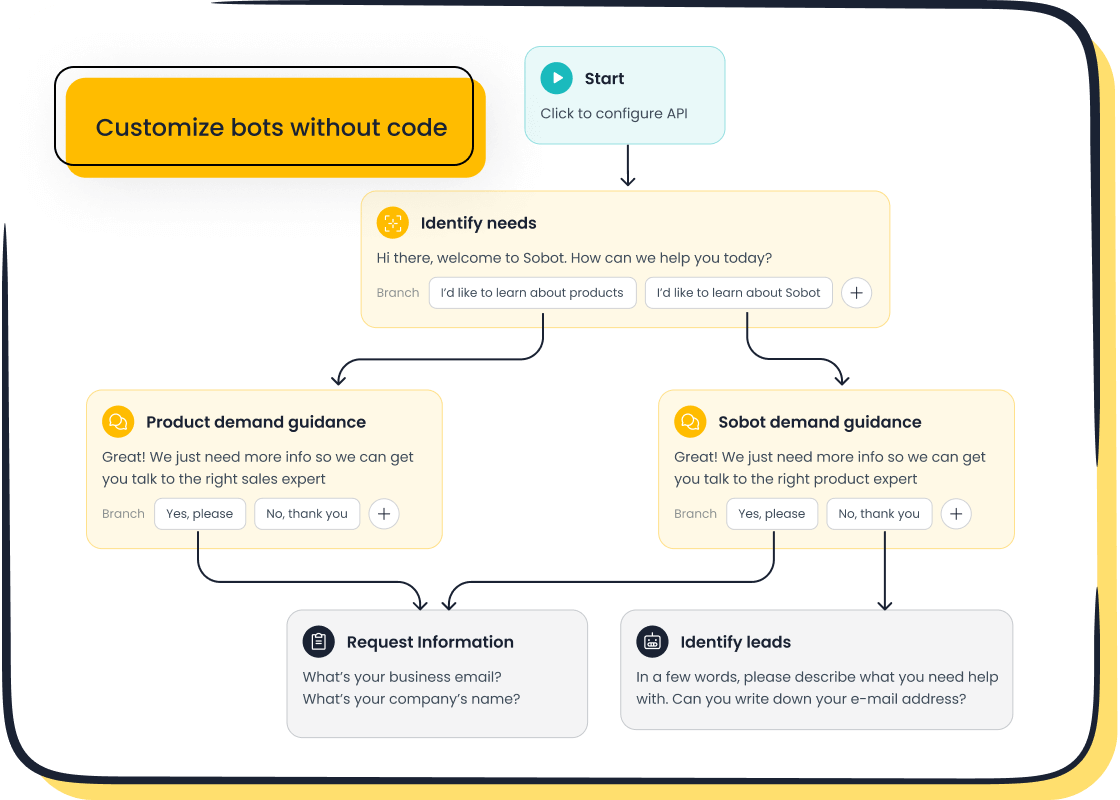
Platforms like Sobot offer easy-to-use, no-code chatbot builders designed for these exact needs. You can quickly deploy rule-based chatbots for tasks like lead capture or basic FAQs without needing a team of developers. This makes them an excellent starting point in the conversational ai for ecommerce vs traditional chatbots discussion.
For Simple Lead Capture
If your main goal is to collect basic user information, traditional chatbots are a perfect tool. You can program a chatbot to ask for a name, email address, and phone number in a structured way.
- Example Interaction:
- Bot: "Hello! Would you like to subscribe to our newsletter for 20% off your first order?"
- User: "Yes"
- Bot: "Great! What is your email address?"
These chatbots guide users through a simple, linear process. Their primary strength here is automating a repetitive task, freeing up your team while ensuring you never miss a potential lead.
For a Small, Fixed Set of FAQs
Does your business receive the same few questions over and over? Answering queries like "What are your hours?" or "What is your return policy?" is an ideal job for rule-based chatbots. Their main weakness is an inability to handle questions outside their script, but for a fixed set of questions, this is not an issue.
The effectiveness of chatbots for FAQs is measured by:
- Containment Rate: The percentage of issues the bot resolves without human help.
- First Contact Resolution: The percentage of issues solved on the first try.
Studies show that different AI models vary in response quality and readability, so even for simple FAQs, the right tool matters. The goal is to provide clear, plain English answers that resolve user queries instantly.
For Basic User Routing
Traditional chatbots can act as a digital receptionist for your website. They can ask initial qualifying questions to understand what a visitor needs and then direct them to the right place. This simple function is a key differentiator in the chatbot vs conversational ai debate for businesses just starting out.
A well-designed chatbot becomes more than just an FAQ tool. It acts as a frontline support assistant, managing high-volume inquiries while routing complex cases to human agents.
For example, a chatbot can ask, "Are you looking for sales, support, or product information?" Based on the user's answer, it can transfer them to the correct department's live chat queue or provide a link to the relevant page. This ensures customers don't have to repeat themselves and your team receives inquiries with full context, improving overall efficiency. This is one of the key strengths of using chatbots for routing. The conversational ai vs chatbots choice becomes clearer when you define the task's complexity.
When to Choose Conversational AI for Ecommerce
When your goal is to scale your business and create a superior customer experience, the choice in the conversational ai vs chatbots debate becomes clear. You need more than a simple script-follower. You need a solution that drives growth. This is where conversational AI excels, especially in the competitive world of e-commerce. Platforms like Sobot’s AI Solution for retail provide this power. They integrate with your CRM and order systems for true personalization and a smarter approach to customer conversations.
To Automate Complex Customer Support
Your customers have questions that go beyond "What are your hours?". Conversational AI provides ai-driven support that understands context and resolves complex issues. This level of customer support automation saves your team time and reduces operational costs. For example, Sobot's AI can autonomously handle up to 62% of cases, saving thousands of staff hours. This is one of the key strengths of advanced AI. These ai-powered chatbots act as intelligent agents, not just simple responders.
To Provide Personalized Product Recommendations
Conversational AI turns your website from a static catalog into a personal shopping assistant. The AI analyzes customer data to offer smart ecommerce product guidance. This level of personalization drives sales and customer engagement.
- Personalized recommendations can boost conversion rates by as much as 288%.
- Targeted campaigns based on user behavior can increase conversions by 50%.
- This strategy can even increase Average Order Value (AOV) by up to 369%.
This is a major difference in the conversational ai for ecommerce vs traditional chatbots discussion. Traditional chatbots cannot offer this dynamic level of understanding.
To Manage Post-Purchase Inquiries
The customer experience does not end at checkout. Conversational AI helps you manage post-purchase questions 24/7, which is crucial for building trust and satisfaction.
With conversational AI, you can proactively send tracking updates, which reduces "Where is my order?" questions by up to 70%. The AI also simplifies returns and exchanges through a guided conversational flow, turning a potential frustration into a positive interaction.
This always-on support ensures customers feel valued even after they have made a purchase.
To Offer a Unified Sobot-Powered Experience
Your customers interact with you on your website, on social media, and through email. Conversational AI creates omnichannel consistency, ensuring a seamless experience everywhere. Sobot unifies all these touchpoints into one intelligent platform. By integrating with your CRM, the AI has a full view of the customer journey.
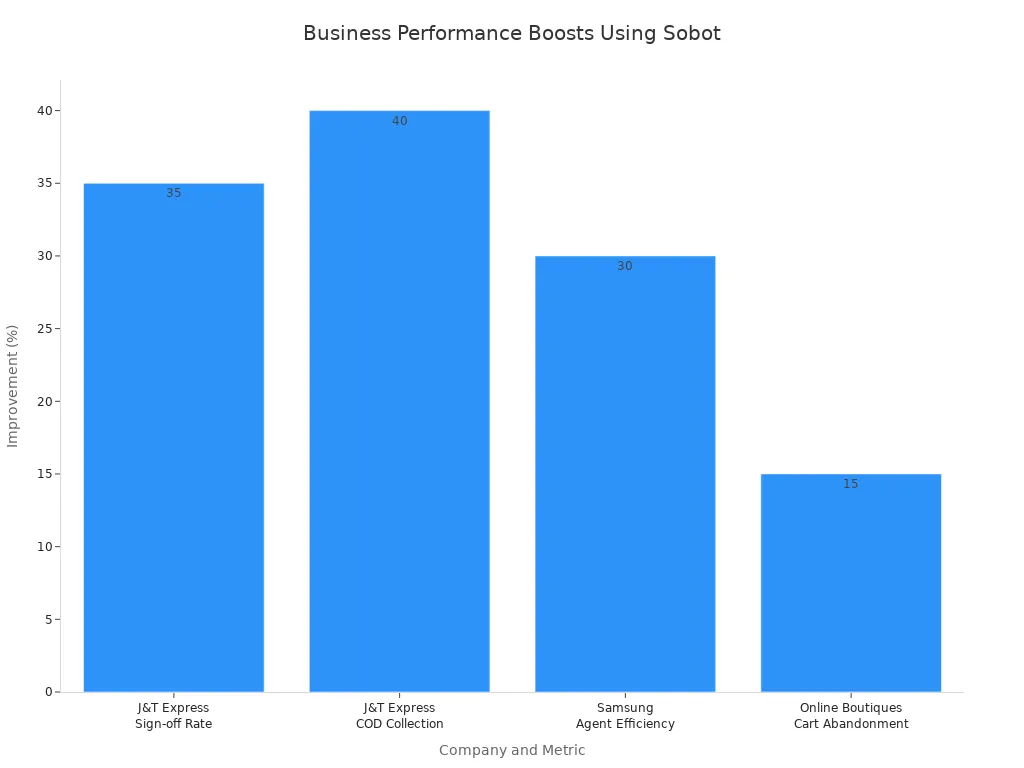
Luxury brand Michael Kors used Sobot to unify its channels and personalize service. The results were powerful:
- A 95% customer satisfaction rate.
- A 20% increase in conversion rates.
This shows the strengths of a truly integrated omnichannel strategy powered by AI. Other businesses see similar gains in efficiency and sales.
Ultimately, the chatbot vs conversational ai decision is about your ambition. While traditional chatbots redirect users, conversational AI resolves issues, drives sales, and builds lasting customer relationships.
Chatbot vs Conversational AI: A Decision Framework

Making the right choice in the conversational ai vs chatbots debate is a strategic business decision. You need a clear framework to evaluate your needs. This decision impacts your budget, your team's efficiency, and most importantly, your customer experience. To simplify this, you can compare the technologies across four key areas: query complexity, business goals, budget, and the end customer experience.
The table below gives you a quick overview of the chatbot vs conversational ai comparison.
| Feature | Traditional Chatbots (Rule-Based) | Conversational AI |
|---|---|---|
| Query Complexity | Handles simple, repetitive questions with predefined answers. | Manages complex, multi-turn conversations and understands user intent. |
| Business Goal | Cost reduction through basic task automation and user routing. | Revenue growth and cost savings. Aims to reduce support costs by up to 50% and increase sales and conversions by over 20%. |
| Budget | Lower initial cost. Ongoing costs for manual updates and maintenance. | Higher initial investment. Delivers long-term ROI through efficiency, scalability, and sales growth. |
| Customer Experience | Functional but limited. Can be frustrating if the query is outside its script. | Personalized and human-like. Builds loyalty by understanding context and sentiment. |
Comparing Query Complexity
The first factor to consider is the type of questions you need to answer. The weaknesses of simple chatbots become clear when faced with complex user needs.
Traditional chatbots work best with low-complexity queries. They follow a script.
- Example Query: "What are your store hours?"
- How it works: The bot recognizes the keyword "hours" and provides a pre-written answer.
These rule-based chatbots struggle when users ask unexpected questions or use casual language. Their resolution rate for simple FAQs typically falls between 40-60%. If a user's question is not in the script, the bot fails, creating a dead-end experience.
Conversational AI, on the other hand, is built for high-complexity interactions. It uses Natural Language Understanding (NLU) to grasp what a user truly wants, even with messy or unclear input. Modern AI tools can resolve 75% of customer inquiries without any human help. Leading platforms like Sobot use this advanced AI to achieve resolution rates of 80-90% by integrating with systems like your CRM. This allows the AI to handle personalized and complex requests.
| Query Type | Traditional Chatbot Handling | Conversational AI Handling |
|---|---|---|
| Unexpected questions | Struggles and often fails. | Understands messy or unclear input. |
| Casual language | Requires exact keywords. | Grasps intent from conversational language. |
| Personalized responses | Provides generic answers. | Personalizes answers based on past chats and user data. |
Comparing Business Goals and ROI
Your business goals directly influence the right technology choice. Are you focused purely on deflecting simple questions, or are you aiming for revenue growth?
If your primary goal is basic cost reduction, chatbots offer an affordable solution for automating repetitive tasks. They can handle a high volume of simple questions, freeing up your agents. However, their impact on revenue is minimal. Their strengths lie in efficiency, not growth.
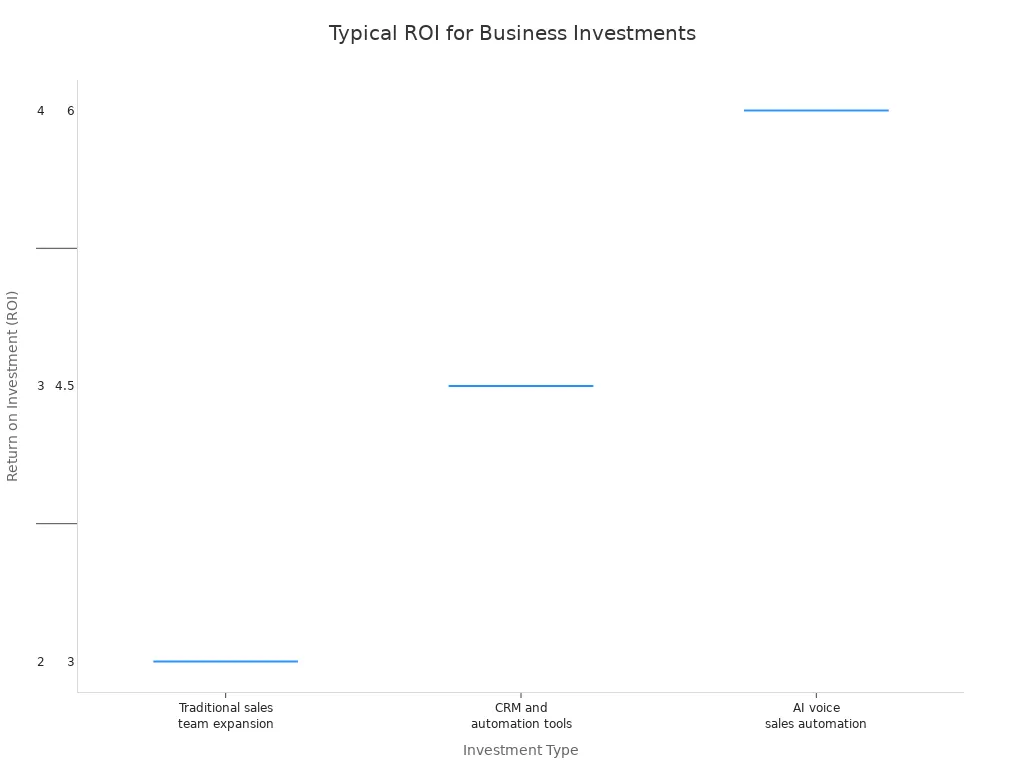
If your goals include revenue growth and significant long-term savings, conversational AI is the clear winner. The initial investment is higher, but the return on investment (ROI) is far greater. For example, businesses using AI for sales automation see a 6-12x ROI, compared to just 2-4x from expanding a traditional sales team.
Platforms like Sobot use conversational AI to help businesses:
- Increase qualified leads by engaging customers proactively.
- Boost conversion rates with personalized product recommendations.
- Reduce operational costs by automating up to 75% of inquiries.
This focus on both savings and growth is a core value of investing in advanced AI.
Comparing Budget and Investment
Budget is a practical concern for every business. While it may seem like a simple choice between cheap and expensive, the real story is about initial cost versus long-term value.
Traditional chatbots have a lower upfront cost. Many platforms offer simple, no-code builders for a low monthly fee. However, you must account for ongoing operational costs. These chatbots require constant manual updates. Every time your pricing, policies, or products change, an engineer needs to update the bot's rules. These maintenance costs can range from $1,000 to $10,000 annually, depending on the complexity.
Note: The "cheaper" option can become expensive over time. You are paying for a tool that requires continuous manual effort and has limited capabilities. Its weaknesses include an inability to learn or scale without significant human intervention.
Conversational AI requires a higher initial investment. This cost covers the advanced technology, including Machine Learning (ML) models, and integration with your business systems. However, this investment delivers significant long-term financial benefits. A scalable AI platform reduces manual workloads, handles demand spikes without extra staffing costs, and improves efficiency across the board. The higher upfront cost unlocks a much greater potential for ROI, making it a strategic investment rather than just an expense.
Comparing the End Customer Experience
Finally, consider the experience you want to provide your customers. This is perhaps the most important factor in the conversational ai for ecommerce vs traditional chatbots decision.
Chatbots offer a functional but impersonal experience. When they work, they are fast. When they fail, they are frustrating. A customer who has to rephrase their question multiple times or hits a "Sorry, I don't understand" message is not a happy customer. While some users report satisfaction around 70% when a chatbot solves their problem, many others feel frustrated with AI support solutions that lack true understanding.
Conversational AI creates a superior, human-like customer experience.
Conversational AI enhances the customer experience by enabling more human-like interactions, allowing ai-powered chatbots to understand context, intent, and sentiment. This level of sophistication cultivates stronger customer relationships and fosters brand loyalty.
This advanced AI can achieve customer satisfaction (CSAT) scores of 80% or higher, which is considered excellent. By providing personalized, context-aware support across any channel (omnichannel), you build trust and increase customer lifetime value. A positive experience turns a one-time buyer into a loyal advocate for your brand. The pros of this approach are clear: happier customers who spend more and stay with you longer.
Choosing between chatbots and conversational AI is a strategic decision about your business's future. You must decide on your primary goal. Do you want simple chatbots that redirect users, or do you need a solution that resolves complex issues? The weaknesses of basic chatbots are clear. These chatbots cannot grow with you. Advanced chatbots powered by AI and ML offer deep understanding. This is why a comprehensive platform like Sobot is the modern standard. It provides powerful conversational AI, live chat, and ticketing to drive both efficiency and growth.
FAQ
What is the simplest way to tell the difference?
Think about their main job. Traditional chatbots follow a script to answer simple, specific questions. Conversational AI uses intelligence to understand what you mean, not just what you type. It can solve complex problems and hold a real conversation.
How hard is it to build these chatbots?
You can build many chatbots without any coding knowledge.
Platforms like Sobot provide a point-and-click interface. This lets you design and launch a bot for basic tasks very quickly. A more advanced AI setup might need some help with integration.
Can conversational AI really increase sales?
Yes, it can. The AI acts as a personal shopper by offering smart product recommendations and 24/7 support. For example, Sobot's platform helps businesses boost conversion rates by over 20% by engaging customers at the perfect moment.
Can I start with a simple chatbot and upgrade later?
Absolutely. Many businesses begin with rule-based chatbots for basic FAQs or lead capture. As your company grows, you can move to a more powerful AI solution. Using a unified platform makes this transition smooth and easy.
See Also
Selecting Optimal Chatbot Software: A Comprehensive Guide for Businesses
Crafting Effective Chatbots: Boosting Your Website's Online Success
Effortlessly Implementing Website Chatbot Examples for Seamless User Experience

