Guide to Conversational AI Chatbots for Ecommerce

Did you know that nearly 70% of online shopping carts are abandoned?
What if you could answer every query with instant responses, improving response times and guiding shoppers to the perfect product? A conversational AI chatbot service for ecommerce is your solution. This AI technology transforms your customer service. The use of AI in customer service creates a better customer experience. An advanced AI chatbot uses conversational AI to help your business. A Sobot chatbot is a great example of this AI. These conversational AI chatbots are powerful. Such AI chatbots are the future of AI customer service. This chatbot is a key AI asset for customer service. This chatbot is a great example of AI in customer service. Customer service chatbots are the answer.
What is an AI Chatbot for Ecommerce?
An AI chatbot for ecommerce is more than just a simple tool. It is a sophisticated piece of software designed to simulate human conversation. You can use this technology to interact with your customers on your website or app. This conversational AI chatbot service for ecommerce acts like a virtual sales assistant. It provides instant customer support and guides shoppers through their buying journey.
AI Chatbots vs. Rule-Based Bots
You might wonder about the difference between various types of chatbots. The main distinction lies between rule-based bots and AI-powered chatbots. Rule-based chatbots follow a strict, pre-programmed script. They can only respond to specific commands and cannot handle unexpected questions. AI chatbots, on the other hand, use artificial intelligence to understand and respond to a wide range of customer queries.
The choice between them often comes down to functionality and cost.
| Feature | Rule-Based Chatbots | AI Chatbots |
|---|---|---|
| Functionality | Handle straightforward, scripted tasks like FAQs. | Use dynamic conversation flows and understand user intent. |
| Complexity | Basic, follows a fixed path. | Advanced, with AI capabilities for learning. |
| Development Cost | Cheaper to develop initially. | Higher development costs due to AI integration. |
While rule-based bots are simpler, AI chatbots offer a much richer and more effective customer experience.
Core Tech: NLP and Machine Learning
The magic behind an AI chatbot is its core technology: Natural Language Processing (NLP) and Machine Learning (ML).
- Natural Language Processing (NLP) allows the chatbot to understand human language. It can decode slang, typos, and complex sentences. For example, if a customer types, "Got any comfy kicks for my weekend hikes?" the AI understands they are looking for comfortable hiking shoes.
- Machine Learning (ML) enables the chatbot to learn from every interaction. The AI analyzes conversation data to improve its responses over time. This helps the chatbot predict customer needs and provide better assistance, acting like an attentive sales associate.
This technology is the foundation of modern AI in customer service.
Why Ecommerce Needs Intelligent Conversation
In today's competitive market, a great customer experience is essential. Intelligent conversation powered by AI helps you stand out. By 2027, chatbots are predicted to become the primary customer service tool for 25% of companies.
AI chatbots provide 24/7 availability, which is crucial for global ecommerce. They offer instant responses, reducing wait times and improving customer satisfaction. Brands like Sephora and H&M use AI to offer personalized recommendations and virtual try-on experiences. This level of AI customer service drives engagement and sales. Using AI in customer service allows you to automate order management, from product selection to tracking returns. This makes the entire process smoother for your customers.
Core Benefits of an AI Chatbot for Customer Service
Integrating a conversational AI chatbot service for ecommerce offers more than just automated replies. You can transform your customer service and drive real business growth. The right AI chatbot becomes a vital part of your team. It delivers measurable results across your entire customer journey.
Boost Sales and Average Order Value
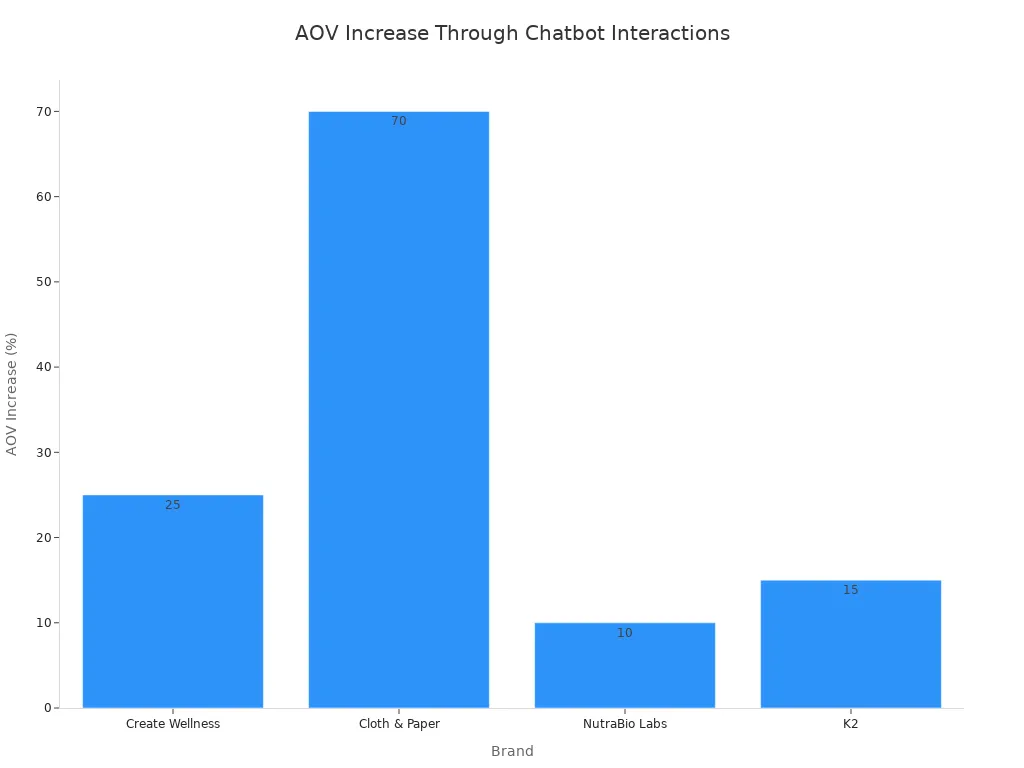
You can use a chatbot to actively boost your sales. An AI chatbot acts as a 24/7 sales assistant. It uses personalization to guide shoppers to the right products. This creates a natural upsell opportunity. The chatbot can suggest complementary items, increasing the value of each order. This use of AI in customer service can increase average order value (AOV) by around 11%.
Many brands already see great results. This personalized approach helps build customer trust and encourages larger purchases.
| Brand | AOV Increase through Chatbot Interactions |
|---|---|
| Create Wellness | 25% higher AOV |
| Cloth & Paper | 70% higher AOV |
| NutraBio Labs | 10% higher AOV |
| K2 | 15% higher AOV |
Provide 24/7 Instant Customer Support
Modern customers expect fast answers. Failing to provide immediate help means losing sales to competitors. A chatbot offers 24/7 availability. This ensures no customer query goes unanswered, day or night. Excellent customer service is crucial, as 93% of consumers are likely to make repeat purchases from businesses that provide it. An AI chatbot delivers the real-time customer service that shoppers demand. This level of AI customer service is essential for global brands.
Reduce Operational Costs
AI chatbots significantly lower your operational expenses. The chatbot automates responses to common questions. This frees your human agents to handle more complex issues. Businesses often see customer support costs drop by 30-40% after implementing AI. A powerful chatbot improves agent productivity by 70% and can cut expenses by up to 50%. This makes AI in customer service a smart financial decision.
Enhance Customer Satisfaction and Loyalty
A great customer experience builds loyalty. Quick, accurate support from a chatbot improves customer satisfaction. This positive interaction builds customer trust and encourages repeat business.
Real-World Success: Leading tech brand OPPO used Sobot's customer service chatbots to great effect. They achieved an 83% chatbot resolution rate and 94% positive feedback. This focus on quality AI in customer service led to a 57% increase in their repurchase rate.
This shows how effective AI can be. A quality chatbot directly contributes to a better bottom line by keeping your customers happy and coming back for more.
Top Ecommerce Use Cases for Your Chatbot
You can unlock the full potential of a conversational AI chatbot service for ecommerce by applying it to specific, high-impact areas of your business. An AI chatbot is not just for answering questions. You can use it as a proactive tool to drive sales, improve efficiency, and enhance the entire customer journey. Let's explore the top ways you can use a chatbot.
Proactive Engagement and Lead Generation
You can turn your website from a passive storefront into an active sales floor. A chatbot allows you to engage visitors before they even ask a question. This proactive approach helps you capture leads and guide potential customers toward a purchase. The AI can identify a visitor who is lingering on a product page and initiate a helpful conversation.
You can use several strategies for proactive engagement:
- Surveys and Questionnaires 📝: Your chatbot can ask visitors about their style or needs. H&M uses this method to suggest products. This gathers valuable data for personalization and qualifies leads.
- Multilingual Support 🌎: You can offer help in multiple languages. This builds trust with a global audience and encourages more engagement.
- 24/7 Availability: Your chatbot provides constant support. It answers queries instantly, which is vital for capturing leads around the clock.
- Feedback Collection: You can use the chatbot to ask for ratings and reviews. This gathers feedback and boosts your store's credibility.
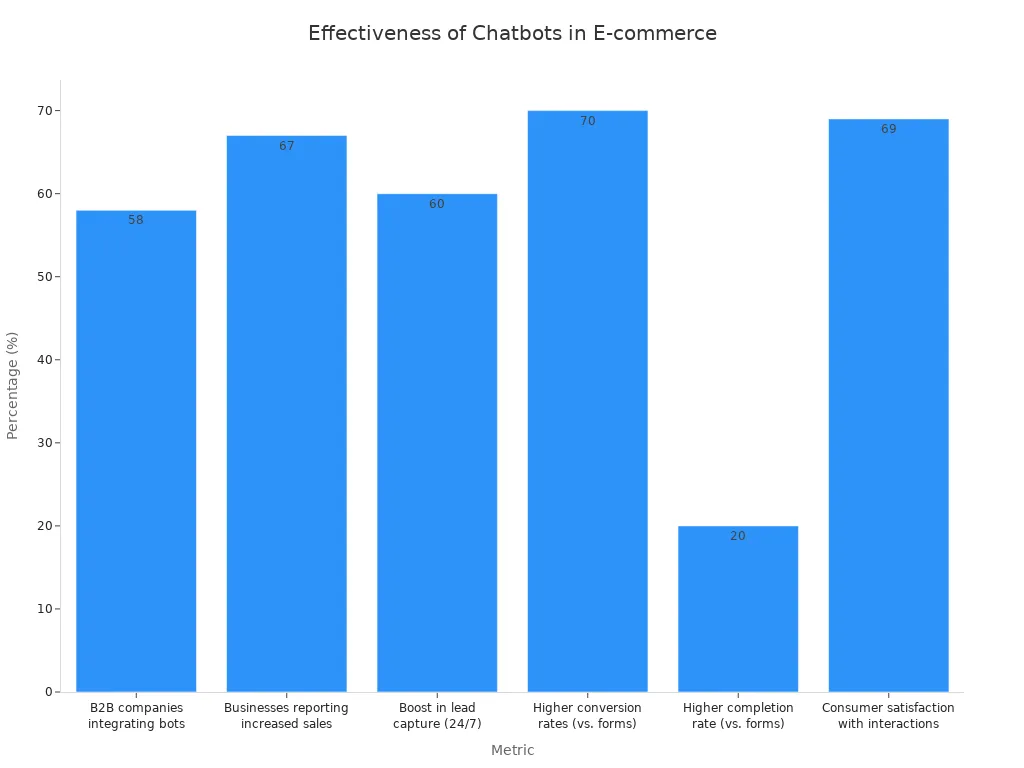
This level of proactive customer service delivers powerful results. Businesses that integrate bots see a significant return on their investment.
| Metric | Impact of Chatbots on Lead Generation |
|---|---|
| Businesses Reporting Increased Sales | 67% |
| Lead Conversion Rate (vs. Web Forms) | 3x Higher on Average |
| Consumer Satisfaction with Chatbot Interactions | 69% |
| Completion Rate for Interactive Quizzes | ~20% Higher than Forms |
Personalized Product Recommendations
You can transform the shopping experience with personalized recommendations. Your AI chatbot acts like a smart personal stylist. It asks customers about their preferences, budget, and needs to suggest the perfect products. This creates highly effective personalized interactions. This use of AI in customer service makes customers feel understood and valued.
Many top brands use this strategy effectively:
- Sephora's Beauty Bot uses quizzes to provide personalized makeup suggestions, just like an in-store consultation. This approach helped them increase conversions by 11%.
- Lidl’s Winebot helps you choose wine. It asks about your taste and food pairings before offering tailored recommendations.
- Nike's StyleBot asks about your preferred look and occasion to build a complete, personalized outfit.
This level of personalization has a massive impact on your sales. It moves beyond generic suggestions and creates a purchase-driving dialogue.
Businesses using AI for personalization see conversion rates jump from an average of 3.1% to 12.3%. That is a 4x increase. Personalized product recommendations alone can account for up to 31% of an ecommerce store's revenue.
This tailored approach builds strong brand loyalty and boosts customer satisfaction.
Automated Order and Shipping Tracking
"Where is my order?" is one of the most common questions in ecommerce. You can automate the entire process with a chatbot. This frees up your customer support team and provides a better experience for your shoppers. The chatbot can integrate with your order management system to provide instant, real-time updates.
An order tracking chatbot offers several key features:
- Real-Time Updates: Customers get instant information on their order status, from processing to final delivery.
- 24/7 Self-Service: Shoppers can check their order status anytime without needing to contact a human agent.
- Proactive Notifications: The chatbot can send automated messages about shipping confirmations, delays, and delivery alerts.
- Reduced Support Tickets: This automation drastically cuts down the number of repetitive queries your team has to handle.
Providing this transparent, self-service option builds significant customer trust. It improves the post-purchase experience and enhances overall customer satisfaction.
Abandoned Cart Recovery
You can recover a significant portion of lost sales with an intelligent chatbot. An AI chatbot can detect when a user is about to leave your site with items still in their cart. It can then proactively intervene to save the sale. The AI uses predictive analytics to identify abandonment behavior and engages the customer at the perfect moment.
A well-configured AI agent can recover 15-25% of abandoned carts within the first 30 days. Proactive chat engagement can lift conversions by 20-25% compared to waiting for the customer to ask for help.
Your chatbot can use advanced workflows to understand why the cart was abandoned. It can:
- Use natural language processing to understand customer concerns.
- Offer a discount code or free shipping to incentivize the purchase.
- Answer last-minute questions about the product or shipping policy.
- Intelligently route complex issues to a human agent for a seamless handoff.
This powerful use of AI in customer service turns a potential lost sale into a completed order.
Managing Returns and Refund Queries
You can streamline your returns process and make it a positive experience. Customer service chatbots can automate most of the steps involved in managing returns and refunds. This reduces the workload on your team and provides customers with a fast, easy process. The quality of your returns process directly impacts customer loyalty.
A chatbot automates returns by connecting your backend systems. It understands the customer's request, applies your store's return policy, and takes action—all without human help. This AI customer service approach offers huge benefits.
| Benefit | Strategic Impact of an Automated Returns Chatbot |
|---|---|
| 50%+ Faster Refund Cycle | Reduces the manual 8-10 day process to under three days. |
| Fewer "Where Is My Refund?" Tickets | Eliminates over 30% of common support queries with proactive updates. |
| Actionable Data | Tags return reasons to help you identify product or process issues. |
| Encourage Exchanges | Instantly checks inventory and can offer bonus credit for an exchange over a refund. |
By automating these queries, your chatbot frees up agents to handle more complex issues. This improves efficiency and provides a high-quality, personalized service when it matters most.
Implementing Your Conversational AI Chatbot Service for Ecommerce
Putting a powerful AI chatbot to work for your business is a strategic process. You can follow a clear, step-by-step implementation plan to ensure success. This journey transforms your customer service from a cost center into a revenue driver. Let's walk through the six essential steps to launch your conversational AI chatbot service for ecommerce.
Step 1: Define Your Goals and KPIs
Before you write a single line of dialogue, you must define what success looks like. Your goals give your chatbot a clear purpose. You should set SMART (Specific, Measurable, Achievable, Relevant, Time-bound) objectives. For example, you might aim to "reduce cart abandonment by 15% in Q3" or "increase qualified leads by 30% within six months."
Once you have your goals, you need Key Performance Indicators (KPIs) to track your progress. These metrics tell you how well your AI in customer service is performing.
- Resolution Rate: This measures how often the chatbot solves a customer's problem without needing a human agent. A high rate means your chatbot is effectively handling common queries.
- Containment Rate: This tracks the percentage of conversations handled entirely by the AI from start to finish. It is a direct indicator of your chatbot's independence and cost-saving potential.
- Human Handover Rate: This is the opposite of the containment rate. It shows how often a human agent needs to step in. You want to keep this rate low for common issues.
- Customer Satisfaction (CSAT): This KPI reflects how happy customers are with their chatbot interactions. You can measure this with a simple post-chat survey. High CSAT scores are directly linked to loyalty and sales.
- Conversion Rate: This tracks how often a chatbot interaction leads to a desired action, such as a sale or a sign-up. It is the ultimate measure of your chatbot's ROI.
Step 2: Choose the Right Platform like Sobot
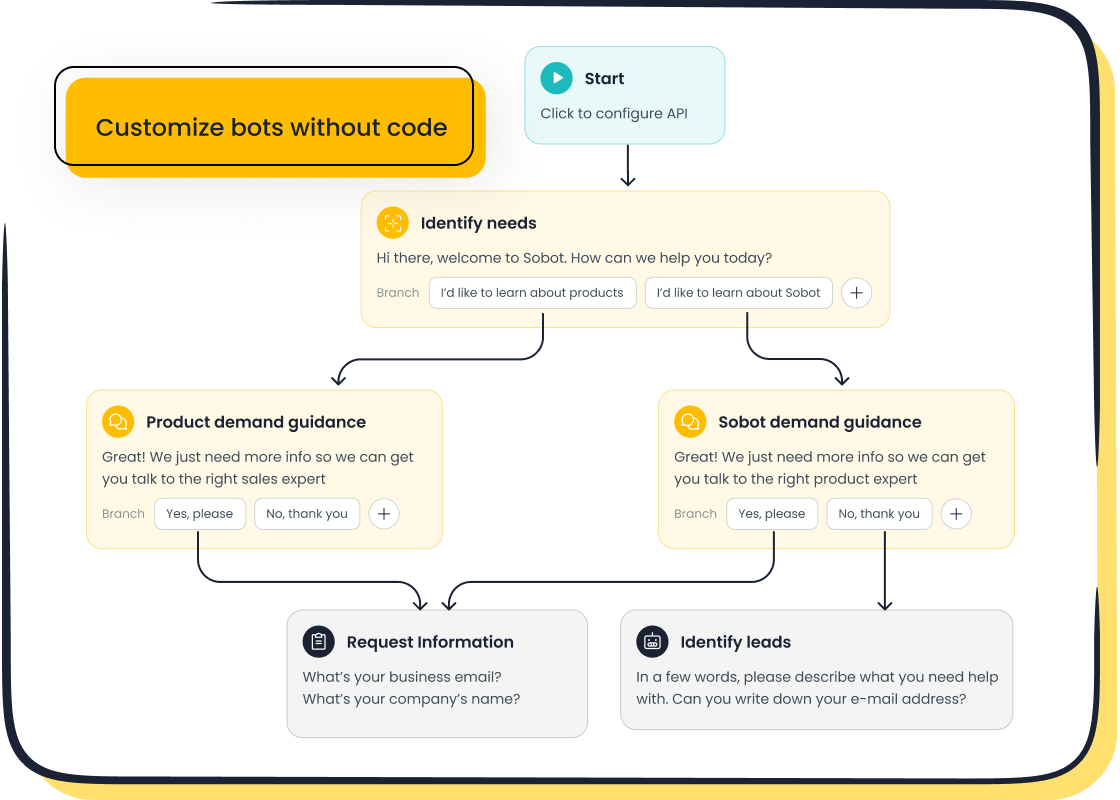
The platform you choose is the foundation of your AI customer service strategy. You need a solution that is powerful yet easy to use. A platform with a no-code, point-and-click interface, like Sobot, empowers your team to build and manage sophisticated conversation flows without needing any programming experience. This dramatically speeds up the implementation process.
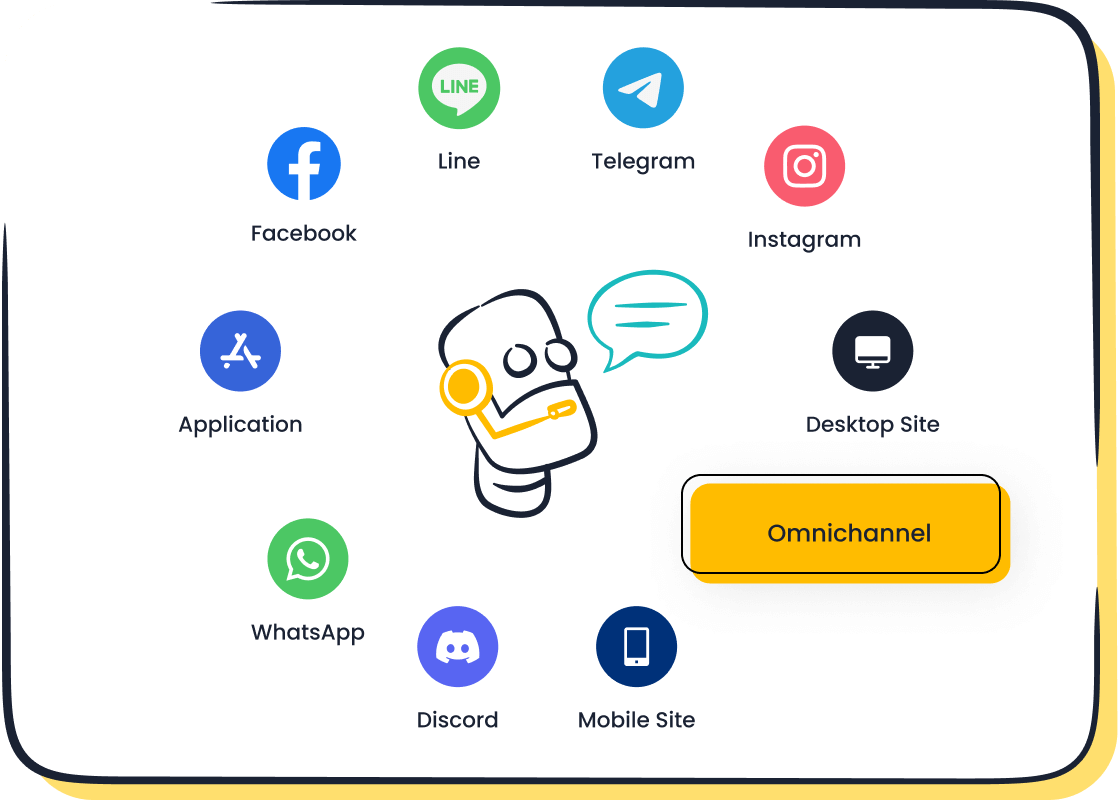
Your platform must also support omnichannel communication. Customers want to connect with you on their preferred channels. That is why choosing an official WhatsApp Business Solution Provider (BSP) is so valuable.
Why an Official WhatsApp BSP Matters Partnering with a BSP like Sobot gives you direct, secure access to the WhatsApp Business API. This enables enterprise-grade scalability, robust system integrations with your CRM and payment gateways, and full compliance with data privacy rules. You can manage a high volume of messages and deliver true personalization at scale.
Finally, look for a platform that simplifies knowledge management. A great AI chatbot can build its intelligence from your existing documents. Sobot, for instance, allows you to create a comprehensive knowledge base from various sources, including PDFs, articles, and simple text snippets. This makes training your AI both fast and efficient. By choosing a comprehensive solution like Sobot, you also gain access to an entire suite of tools, including Live Chat, a Voice Call Center, and a Ticketing System, creating a truly unified customer contact center.
Step 3: Design the Conversation Flow
Now you can start designing the actual conversations. A conversation flow is a map of the dialogue between your chatbot and the customer. Your goal is to create a natural, helpful, and brand-aligned experience.
Here are key practices for designing an effective flow:
- Craft a Brand-Aligned Tone: Your chatbot should sound like it is part of your team. Develop a personality that reflects your brand, whether it is friendly and casual or formal and professional. This consistency builds trust.
- Guide Users with Clear Options: Do not overwhelm users with too many choices. Present a few clear, visually distinct options that guide them toward the most common goals, like "Track My Order" or "Get Product Help."
- Make the Chatbot Feel Human: Use conversational artificial intelligence and natural language processing to ensure your chatbot understands and responds naturally. A friendly, confident tone makes the interaction feel less robotic and more like a quality conversation.
- Always Offer a Human Handoff: The best customer service chatbots know their limits. You must provide a clear and easy way for a user to connect with a human agent. This is crucial for complex issues or when a customer shows strong buying intent.
Step 4: Train Your Chatbot with Ecommerce Data
An AI chatbot is only as smart as the data you give it. Training is the process of feeding your chatbot the information it needs to answer questions accurately and understand customer intent. This is where a strong knowledge base becomes critical.
You will train your chatbot using a variety of ecommerce-specific data, such as:
- Frequently Asked Questions (FAQs): Your existing FAQ page is a perfect starting point.
- Product Information: Details about your products, including specifications, materials, and care instructions.
- Policy Documents: Your shipping, return, and refund policies.
- Past Conversation Logs: Anonymized data from past customer support chats can teach the AI how real customers talk and what they ask for.
The more high-quality data your chatbot has, the better it will perform. This continuous learning process is a core part of what makes AI in customer service so powerful. It allows the chatbot to improve its accuracy and personalization over time.
Step 5: Integrate with Your Ecommerce Stack
Your chatbot should not operate in a silo. To provide a truly seamless customer experience, you must integrate it with your existing ecommerce tools and systems. Integration gives your chatbot the context it needs to provide personalized and accurate help.
Key integrations for an ecommerce chatbot include:
- Ecommerce Platforms: Direct connections to platforms like Shopify and WooCommerce allow the chatbot to access order history and customer data.
- Customer Relationship Management (CRM): Integrating with your CRM gives the chatbot a complete view of the customer's relationship with your brand.
- Inventory Systems: This allows the chatbot to provide real-time stock availability information.
- Payment Gateways: For handling transactions or processing refunds directly within the chat.
- SMS & Email Marketing Tools: Connecting with tools like Klaviyo or Attentive unifies your marketing and support, allowing the chatbot to create support tickets from SMS replies.
These integrations empower your chatbot to do more than just talk; they allow it to take action and solve problems instantly.
Step 6: Test, Launch, and Monitor
Before you unleash your chatbot on your customers, you must test it thoroughly. A rigorous testing phase ensures a smooth launch and helps you catch any potential issues before they impact customer satisfaction.
Your testing checklist should include:
- Validate the Conversational Flow: Go through every possible path a user might take. Make sure there are no dead ends and that the conversation feels natural.
- Test Natural Language Understanding (NLU): Try to confuse the chatbot. Use slang, typos, synonyms, and different sentence structures to see how well it understands user intent.
- Check for Edge Cases: Test how the bot handles unexpected or nonsensical inputs. What happens if a user just types "help" or a random emoji?
- Verify the Handoff Protocol: Ensure the transfer to a human agent is seamless. The agent should receive the full conversation history for context.
- Stress Test: Simulate high traffic volumes to ensure your chatbot remains responsive during peak shopping periods.
- Security and Privacy Testing: Confirm that all data is encrypted and that the chatbot complies with privacy regulations like GDPR.
After a successful launch, your work is not done. You must continuously monitor your chatbot's performance against the KPIs you set in Step 1. Review conversation logs to identify areas for improvement, and use A/B testing to optimize responses. This ongoing cycle of monitoring and refinement is key to long-term success.
Best Practices for AI in Customer Service
Implementing a chatbot is just the first step. You must follow best practices to maximize its value. These guidelines help you create a better customer experience and build lasting customer trust. Proper management of your AI in customer service ensures long-term success.
Ensure a Seamless Human Handoff
Your chatbot will not be able to answer every question. You need a smooth process to pass conversations to a human agent. A poor handoff frustrates customers and hurts your brand. Excellent customer service depends on this transition.
Tip: A great handoff feels like a natural continuation, not a restart.
Follow these key steps for a seamless transfer:
- Set Clear Triggers: Your chatbot should know when to offer help from a person. This happens when the AI cannot understand a query or when a customer asks to speak with an agent.
- Provide Full Context: The AI must give the human agent the entire conversation transcript. This stops agents from asking customers to repeat themselves.
- Manage Wait Times: You should inform the customer about their place in the queue. This manages expectations and reduces frustration.
Craft a Consistent Brand Personality
Your chatbot is a representative of your brand. You should give it a personality that matches your company's tone. This creates a consistent and trustworthy customer experience. A chatbot with a clear personality helps build a stronger connection with your audience. This use of AI in customer service strengthens your brand identity. The quality of this interaction reflects on your entire business.
Continuously Analyze and Optimize
Your work is not finished after you launch your chatbot. You must constantly analyze its performance to make it better. This ongoing optimization is a core part of using AI in customer service. You can track key metrics to find areas for improvement. For example, a high bounce rate might mean your chatbot's opening message is not engaging. A high repetition rate shows the AI is not understanding user intent. This analysis helps you refine your AI customer service.
Be Transparent About Using a Bot
You should always be honest with your customers. Let them know they are interacting with a chatbot. This transparency builds trust from the start. You can give your AI a name to make the interaction feel more personalized, but do not try to trick users into thinking it is a human. Clearly explain what the chatbot can and cannot do. This honesty is fundamental to good customer support and building customer trust.
Conversational customer service chatbots are no longer a novelty. They are an essential tool for modern ecommerce. This AI technology boosts sales, improves efficiency, and creates a superior customer experience. The right AI chatbot transforms your AI in customer service. This chatbot is a key AI asset for your business. The future of AI customer service is this type of AI chatbot. Your next step is to evaluate your needs. Explore a powerful chatbot platform like Sobot to see how this AI can help your business grow. This is the future of AI in customer service.
FAQ
How hard is it to set up an AI chatbot?
You can set up a powerful AI chatbot without any coding. Platforms like Sobot offer a point-and-click interface. This makes building your chatbot simple. You design the conversation flow using easy-to-understand blocks. This AI tool is user-friendly.
Can a chatbot speak multiple languages?
Yes, a modern AI chatbot can support many languages. This feature is essential for global ecommerce businesses. Your chatbot can interact with customers in their preferred language. This AI capability helps you build trust with a wider audience.
How does a chatbot save my business money?
A chatbot reduces operational costs significantly. The AI chatbot handles common questions 24/7. This frees up your human agents for complex issues. This form of AI customer service can cut support expenses by up to 50%.
What makes an AI chatbot different from a basic chatbot?
An AI chatbot uses advanced technology like Natural Language Processing. It understands customer intent, learns from conversations, and provides personalized responses. This makes the AI chatbot much smarter and more effective for AI in customer service than a simple rule-based bot.
See Also
Elevating E-commerce Customer Happiness Through Intelligent Chatbot Solutions
Best Live Chat Platforms for E-commerce Success This Year
Driving E-commerce Sales Growth With Effective Live Chat Tools
Your Essential Guide To Selecting Optimal Chatbot Software Solutions
Simple Steps To Integrate Effective Website Chatbot Examples Seamlessly