Contact Center Trends Explained and Their Importance


Contact center trends show how businesses adapt to improve customer service and operations. These trends impact customer experience, agent productivity, and business growth. For example, 81% of customers want personalized experiences, and 83% of enterprises plan to invest in generative AI. Companies using Sobot and Sobot AI can automate routine tasks and give agents more time for complex issues. The table below highlights key statistics shaping contact center operations:
| Trend | Statistic | Source & Year |
|---|---|---|
| Customers preferring personalized experience | 81% | The ACA Study, 2024 |
| Enterprises investing in GenAI | 83% | Gartner, 2024 |
| Contact centers that are omnichannel | 25% | ICMI, 2024 |
| Customers cutting spend after bad experiences | 53% | Brad Cleveland, 2024 |
Adopting new trends helps organizations deliver better customer experience and achieve more efficient operations.
Contact Center Trends

Definition
Contact center trends describe the patterns and changes shaping how businesses interact with customers. These trends reflect the adoption of new technology, digital transformation, and evolving customer expectations. Companies use these trends to improve service, boost efficiency, and stay competitive.
| Key Trend | Explanation | Industry Data |
|---|---|---|
| Omnichannel Engagement | Connects customers across phone, chat, email, and social media. | 71% of consumers want a consistent omnichannel experience, but only 29% feel they receive it. |
| AI and Automation | Uses artificial intelligence to handle routine tasks and support agents. | AI tools in contact centers are projected to grow from $1.8B in 2023 to $17.05B by 2032. |
| Self-Service Options | Empowers customers to solve issues using chatbots and knowledge bases. | 81% of customers prefer self-service before contacting agents. |
| Cloud-Based Solutions | Moves contact center technology to the cloud for flexibility and scale. | Market forecast: $87.10B by 2029, up from $27.22B in 2024. |
| Advanced Analytics | Uses data to personalize interactions and optimize workflows. | 92% of organizations report returns on data and AI investments. |
| Remote and Hybrid Work | Supports agents working from different locations using digital tools. | Remote work increases employee happiness by up to 20%. |
| Fractional Workforces | Employs part-time or on-demand agents to handle peak periods. | Flexible agent models help manage call fluctuations. |
Contact center technology now includes AI-powered chatbots, cloud platforms, and unified workspaces. Sobot, for example, offers an all-in-one solution that brings together voice, chat, and automation. This approach helps businesses manage customer interactions across digital channels and supports digital transformation.
Why They Matter
Contact center trends matter because they shape how companies serve customers and grow their business. These trends drive digital transformation, improve customer satisfaction, and help organizations adapt to changing needs.
- 71% of customers expect businesses to know why they are calling without repeating themselves. Effective contact center technology and CRM systems make this possible.
- 53% of customers must repeat their reason for calling to multiple agents, showing gaps in data accessibility.
- Voice support remains strong, with inbound calls rising to 55.4% in 2023. Many customers still prefer speaking to a real person.
- 28% of customers hang up after waiting on hold for five minutes or less. Reducing wait times is critical.
- 50% of call center managers say they lack enough automation, even as AI adoption grows.
- 86% of agents feel they do not have enough resources to serve customers well.
- 60% of failed first contact resolutions happen because agents cannot access the right data.
- 20-30% of call volume relates to unresolved issues, which points to inefficiencies.
- Integrating new contact center tools remains a challenge for many managers.
- 49% of business owners use call center software or knowledge bases to improve productivity.
- The AI tools market in contact centers is growing rapidly, showing the importance of digital transformation.
Note: 50% of customers are less likely to spend money with a business if it responds slower than expected. Speed and efficiency in customer service are more important than ever.
Contact center trends also support digital transformation by enabling self-service, cloud migration, and advanced analytics. For example, 88% of customers expect brands to offer an online self-service portal. Companies like Sobot help businesses meet these expectations with AI-powered chatbots, unified workspaces, and cloud-based solutions. These tools allow agents to access customer data quickly, resolve issues faster, and deliver personalized experiences.
Organizations that follow these trends see real benefits. Strong employee experience leads to four times higher profits and double the revenue. Advanced analytics improve customer satisfaction and reduce costs. Digital transformation strategies, such as moving to cloud-based contact center technology, help companies scale and adapt to new challenges.
Contact center trends guide businesses toward better customer service, smarter use of technology, and ongoing digital transformation. Companies that embrace these trends stay ahead in a fast-changing world.
Customer Experience
Omnichannel Engagement
Omnichannel engagement stands out as a leading customer experience trend. Companies now connect with customers through phone, chat, email, and social media. This approach ensures that every customer receives consistent service, no matter which channel they choose. Studies show that 90% of customers expect a seamless experience across all channels. Businesses with strong omnichannel strategies retain 89% of their customers, while those without only keep 33% (source).
Sobot’s omnichannel solution helps companies unify customer support, sales, and marketing. Agents can view all customer interactions in one workspace, which improves response quality and reduces wait times. For example, OPPO, a global smart device brand, used Sobot to integrate its customer channels. During peak shopping periods, OPPO handled more inquiries efficiently and improved customer satisfaction. The company achieved an 83% chatbot resolution rate and a 94% positive feedback rate. This real-world impact shows how omnichannel engagement can boost service quality and customer loyalty.
Companies that use omnichannel solutions see higher customer satisfaction and stronger business growth.
Personalization
Personalization shapes the quality of customer experience. Customers want service that feels tailored to their needs. Research shows that 80% of customers are more likely to do business with companies offering personalized experiences. AI-powered tools, like those from Sobot, help deliver this level of service. Sobot’s platform uses AI to automate repetitive tasks, provide 24/7 support, and offer self-service options. These features allow agents to focus on complex issues and give customers faster, more accurate responses.
Personalized support increases customer loyalty and lifetime value. Forrester Research found that companies with high customer experience scores see more repeat purchases and brand recommendations. Sobot’s AI-first strategy enables businesses to deliver human-like, scenario-based support. This approach not only improves customer experience but also drives operational efficiency and revenue growth.
Personalization and omnichannel engagement together set a new standard for customer support quality.
Contact Center Technology

Modern contact center technology helps businesses meet high customer expectations. Companies use advanced technology to improve service, save costs, and stay competitive. Today, contact centers rely on AI, automation, and cloud solutions to deliver fast and reliable support.
AI and Automation
AI and automation have changed how contact centers work. AI, or artificial intelligence, helps computers understand and solve problems like a human. Automation lets systems handle simple tasks without human help. These tools make customer service faster and more accurate.

Sobot’s Voice/Call Center uses AI-powered voicebots to answer calls, understand customer needs, and route them to the right agent. The unified workspace gives agents all the information they need in one place. This technology reduces wait times and improves first-call resolution rates. Automation also helps with after-call work, so agents can focus on helping more customers.
The table below shows how AI and automation improve contact center performance:
| KPI Category | Metric | Target Improvement/Range |
|---|---|---|
| Customer Experience | Customer Satisfaction Score (CSAT) | 15-25% improvement |
| Net Promoter Score (NPS) | 20-point increase | |
| Operational Efficiency | Average Handle Time (AHT) | 25-40% reduction |
| Agent Utilization | 75-85% productive time | |
| Business Impact | Cost Per Contact | 30-50% reduction |
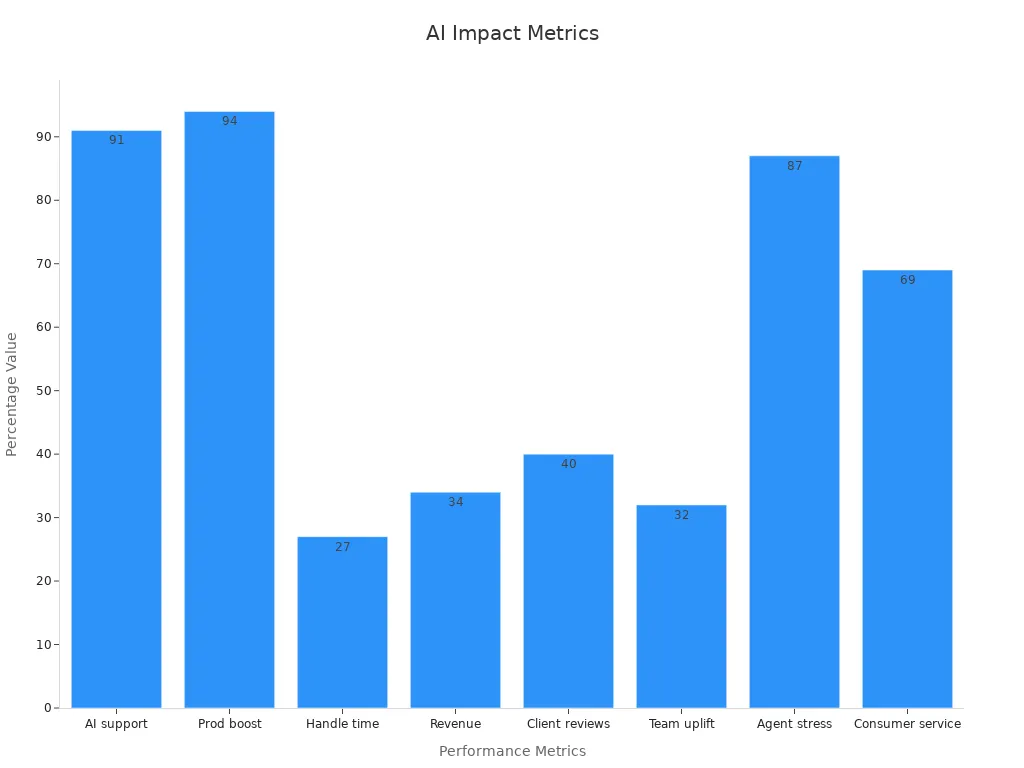
AI and automation also boost agent productivity and reduce stress. Studies show that 94% of teams see better productivity with conversational AI and chatbots.
Cloud Solutions
Cloud technology has become the backbone of modern contact center technology. Cloud solutions let companies run their contact centers online, without expensive hardware. This makes it easy to scale up or down as needed.
Sobot’s Cloud Call Center offers 99.99% uptime and supports global operations. The platform provides secure, encrypted data transfer and works on mobile devices. Cloud solutions help companies support remote work, manage agents worldwide, and integrate with other business tools.
Key benefits of cloud contact center technology include:
- 92% of calls handled within SLA, showing high efficiency.
- 94% voicemail detection rate, proving strong call management.
- Pay-as-you-go models help businesses control costs.
- Cloud platforms support AI, automation, and self-service tools for better customer experience.
Cloud technology gives companies the flexibility to adapt quickly and deliver seamless service across all channels. Sobot’s cloud solutions help businesses stay agile and competitive in a fast-changing world.
Data and Analytics
Customer Insights
Contact centers use data and analytics to understand what customers want and need. By collecting information from every digital channel, companies can create a complete view of each customer. This helps agents deliver high-quality service and solve problems faster. Sobot’s omnichannel platform gathers data from chat, voice, and social media, giving agents real-time access to customer profiles.
Companies that use digital analytics can spot trends and predict what customers will do next. For example, predictive analytics help teams prepare for busy times and improve resource planning. Real-time dashboards show live customer feedback, so managers can fix issues quickly.
Creating a 360-degree customer view leads to better loyalty and higher satisfaction.
| Statistic | Insight and Operational Impact |
|---|---|
| 70% of visitors leave an online store without buying due to high shipping costs or complicated checkout | Customer insights help businesses simplify checkout or offer free shipping, improving sales and retention |
| 73% of consumers switch brands after multiple bad experiences | Addressing pain points reduces churn and improves loyalty |
| 76% of customers expect personalization; brands succeeding here are 71% more likely to improve loyalty | Personalization driven by insights boosts loyalty |
| Companies using AI-powered customer insights are 60% more profitable | Customer insight utilization links to higher profitability |
Performance Improvement
Data and analytics drive digital transformation in contact centers. Managers use analytics to track key metrics like Average Handle Time, First Contact Resolution, and Net Promoter Score. Sobot’s cloud-based solutions provide real-time analytics, helping teams measure quality and make quick changes.
- Data-driven continuous improvement increases operational efficiency and customer satisfaction.
- IDC reports organizations using advanced analytics achieve 5%-6% higher productivity and profitability.
- Predictive analytics can increase efficiency by 15% and customer satisfaction by 20% (Forrester).
- Real-time analytics allow contact centers to address issues immediately, improving response times.
- Workforce analytics help managers spot inefficiencies and coach agents, leading to better quality and less burnout.
Workforce analytics also reveal how much time agents spend on calls. If each agent saves 30 minutes a day, a team of 600 can save over $1.5 million per year. Sobot’s cloud platform supports this digital transformation by making analytics easy to access and use.
Data-driven feedback loops and digital tools help contact centers move from reactive to proactive service, ensuring high quality and strong customer loyalty.
Employee Experience
Remote Work
Remote work has become a major trend in contact centers. Many companies now allow agents to work from home or other locations. Research by Bloom et al. (2015) found that employees in a Chinese call center were more productive when working remote compared to those in the office. This study shows that remote arrangements can help agents handle more customer calls and solve issues faster. The nature of contact center tasks, such as answering customer questions and providing support, fits well with remote work. Management quality and clear goals also play a big role in remote productivity.
Sobot’s cloud-based solutions make remote work possible for contact center teams. Agents can access customer information, handle service requests, and provide support from anywhere with an internet connection. The platform offers secure data transfer and a unified workspace, which helps remote agents stay connected and productive. Companies using Sobot can scale their remote teams quickly to meet customer demand during busy periods. Remote work also helps companies hire talent from different regions, improving service for a global customer base.
Remote work gives contact centers flexibility and helps agents deliver better customer service.
Engagement
Employee engagement is key to contact center success. Engaged agents feel motivated and take pride in helping customers. Studies show that companies with engaged employees are 21% more profitable and 17% more productive, according to Gallup. Highly engaged agents understand customer needs and provide better service and support. Glassdoor found that higher employee ratings lead to higher customer satisfaction scores.
Supportman.io reports that engaged employees solve problems thoroughly and follow up with customers, which improves loyalty and service quality. SQM’s research shows that the top 15% of engaged agents have half the customer defection rate compared to less engaged peers. Brands with high engagement see a 24% higher Net Promoter Score and more positive reviews. Sobot’s unified workspace and AI tools empower agents, making their jobs easier and boosting engagement. When employees feel valued and supported, they deliver better customer experiences and help the business grow.
Staying updated on contact center trends drives business growth and improves customer experience. Many leaders plan to use AI and digital technology, as 70% expect better agent productivity and 65% of customers want instant responses. Companies like Sobot help organizations meet these rising expectations with advanced digital solutions. Teams should review current contact center operations, explore omnichannel strategies, and invest in digital transformation. Ongoing learning and adaptation to new trends ensure strong service, efficient operations, and lasting customer loyalty.
FAQ
What is an omnichannel contact center and why does it matter?
An omnichannel contact center lets a customer reach a business by phone, chat, email, or social media. This approach gives every customer a smooth experience. Sobot’s omnichannel solution helps companies manage all customer messages in one place, improving satisfaction and loyalty.
How does AI improve customer service in contact centers?
AI helps contact centers answer customer questions faster. For example, Sobot’s AI-powered voicebots can understand what a customer needs and route calls to the right agent. This technology reduces wait times and increases first-call resolution rates, making every customer interaction more efficient.
Why is customer data important for contact centers?
Customer data helps agents understand each customer’s history and needs. With Sobot’s unified workspace, agents see all customer information in real time. This leads to faster problem-solving and more personalized service. Companies using data-driven tools report higher customer satisfaction scores.
Can contact center agents work remotely?
Yes, many contact center agents now work from home. Sobot’s cloud-based platform supports remote work by giving agents secure access to customer information anywhere. Remote work helps companies hire the best agents and serve every customer, no matter where they live.
How do analytics help improve customer experience?
Analytics show how well a contact center serves each customer. Managers use data to track response times and satisfaction scores. Sobot’s analytics tools help teams spot trends and fix problems quickly. Companies using analytics see better customer loyalty and higher sales.
See Also
Best Contact Center Platforms Evaluated For The Year 2024
Effective Strategies For Managing Call Center Quality
Leading Cloud-Based Contact Center Services Rated 2024
Best Ten Analytics Tools For Call Centers In 2024
Comprehensive Guide To Quality Management Systems In Call Centers

