Contact Center Standards for Better Team Efficiency


Contact center standards set clear rules and expectations for how your team works. These standards help you reach higher levels of customer satisfaction, first call resolution, and handle time. In contact centers, team efficiency means agents solve problems quickly, follow best practices, and deliver great service. You can see the impact in key metrics:
| Metric | Industry Standard | Description |
|---|---|---|
| Customer Satisfaction | 75% - 84% | Most centers aim for above 75%. |
| First Call Resolution | 70% - 79% | Top performers reach 80% or higher. |
| Average Handle Time | ~10 minutes | Fast responses boost efficiency. |
Sobot leads with innovation and Sobot AI tools, making Sobot call center solutions a smart choice for teams that want to follow strong contact center standards.
Team Efficiency in Contact Centers
Defining Team Efficiency
You can think of team efficiency as how well your contact center team uses time and resources to reach high productivity and strong performance. When your team works efficiently, agents handle more calls, solve problems faster, and keep customers happy. In the contact center industry, team efficiency often means agents meet or beat important benchmarks for productivity and performance. Here is a table that shows how experts define team efficiency:
| Metric | Description |
|---|---|
| Average Handle Time (AHT) | Shows the average time an agent spends on a call. This is key for measuring productivity and performance. |
| First Contact Resolution Rate (FCR) | Tracks the percentage of issues solved in the first interaction. High FCR means better productivity and performance. |
| Case Escalation Rate | Measures how often cases go to supervisors. Lower rates show higher productivity and performance. |
Why Efficiency Matters
When you focus on team efficiency, you boost both productivity and performance. Efficient teams answer more calls, solve more problems, and keep customers satisfied. Top companies use analytics to track the customer journey and improve key performance indicators like quality score and contact resolution. Analytics tools help you understand what customers need, which leads to better strategies for productivity and performance. Root cause analytics can help you find and fix problems quickly, which lowers call times and increases customer satisfaction. Predictive analytics can even help you solve issues before they become bigger problems, raising your productivity and performance.
Tip: When you use analytics to guide your team, you can improve both productivity and performance at every step.
Key Metrics
You need to track the right metrics to measure team efficiency. These metrics help you see where your team stands and where you can improve productivity and performance. Here are some of the most important metrics:
- First Call Resolution (FCR)
- Average Handle Time (AHT)
- Average Speed of Answer (ASA)
- After-Call Work (ACW)
- Occupancy Rate
- Agent Utilization
- Adherence to Schedule
- Customer Satisfaction (CSAT)
You should review these metrics often and compare them to industry standards. This helps you keep productivity and performance high. A table below shows how each metric supports team efficiency:
| Metric | Description |
|---|---|
| First Call Resolution (FCR) | Shows how many issues get solved on the first try. High FCR means better productivity and performance. |
| Average Handle Time (AHT) | Measures how long each customer interaction takes. Lower AHT means higher productivity and performance. |
| Customer Satisfaction (CSAT) | Tells you how happy customers are with your service. High CSAT means your productivity and performance are strong. |
| Average Speed of Answer (ASA) | Tracks how fast agents answer calls. Faster answers mean better productivity and performance. |
| Call Abandonment Rate | Shows how many customers hang up before reaching an agent. Lower rates mean higher productivity and performance. |
| Customer Effort Score (CES) | Measures how easy it is for customers to get help. Lower effort means better productivity and performance. |
Contact Center Standards for Performance
Setting clear standards in your contact center is the foundation for strong call center performance. When you use the right standards and KPIs, you give your team a clear path to follow. This helps you reach your service level targets, improve performance, and make better decisions every day. Sobot’s unified metrics and analytics make it easier to track these standards and see real results.
Setting Clear KPIs
Key Performance Indicators (KPIs) are the main tools you use to measure call center performance. You need to pick KPIs that match your business goals and customer needs. When you set clear KPIs, you help your team focus on what matters most. This leads to better service level results and higher performance.
Here is a table of the most effective KPIs for call center performance:
| KPI Name | Description |
|---|---|
| Average Handling Time (AHT) | Measures the average time taken to handle a customer interaction, including post-call work. |
| First Call Resolution (FCR) | Percentage of inquiries resolved during the first contact. |
| Customer Satisfaction (CSAT) | Gauges customer satisfaction after an interaction, usually through surveys. |
| Service Level | Percentage of calls answered within a specified timeframe. |
| Abandonment Rate | Percentage of customers who disconnect before reaching an agent. |
| Occupancy Rate | Percentage of time agents spend handling interactions compared to their availability. |
| Agent Utilization | Percentage of time agents spend on active interactions versus idle time. |
| Customer Effort Score (CES) | Indicates the effort a customer must expend to resolve an issue. |
| Net Promoter Score (NPS) | Measures the likelihood of customers recommending the company. |
| Customer Retention Rate | Percentage of customers who continue to do business over a specific period. |
| Average Speed of Answer (ASA) | Average time taken for a call to be answered by an agent. |
| SLA Compliance | Tracks the ability to meet predefined service level targets. |
| Contact Quality Score | Assesses agent performance in handling interactions. |
| Employee Satisfaction (ESAT) | Measures the satisfaction level of contact center agents. |
You should review these KPIs often. When you use Sobot’s analytics, you can see all your metrics in one place. This unified view helps you spot trends, fix problems, and keep your team focused on service level goals. You can also compare your results to industry standards and adjust your targets as needed.
Note: Clear KPIs help you measure call center performance and guide your team to better results.
Aligning Goals
You need to make sure your team’s goals match your company’s goals. When everyone works toward the same targets, you get better call center performance and higher service level results. Many organizations use proven frameworks to align goals at every level.
Here is a table that shows which frameworks are most common for different sizes of agencies:
| Framework | Small Agencies | Mid-Size Agencies | Large Agencies |
|---|---|---|---|
| SMART Goals | High | Medium | Low |
| OKRs | Medium | High | High |
| Balanced Scorecard | Low | Medium | High |
| Cascading Goals | Low | Medium | High |
| 4DX | Low | Medium | High |
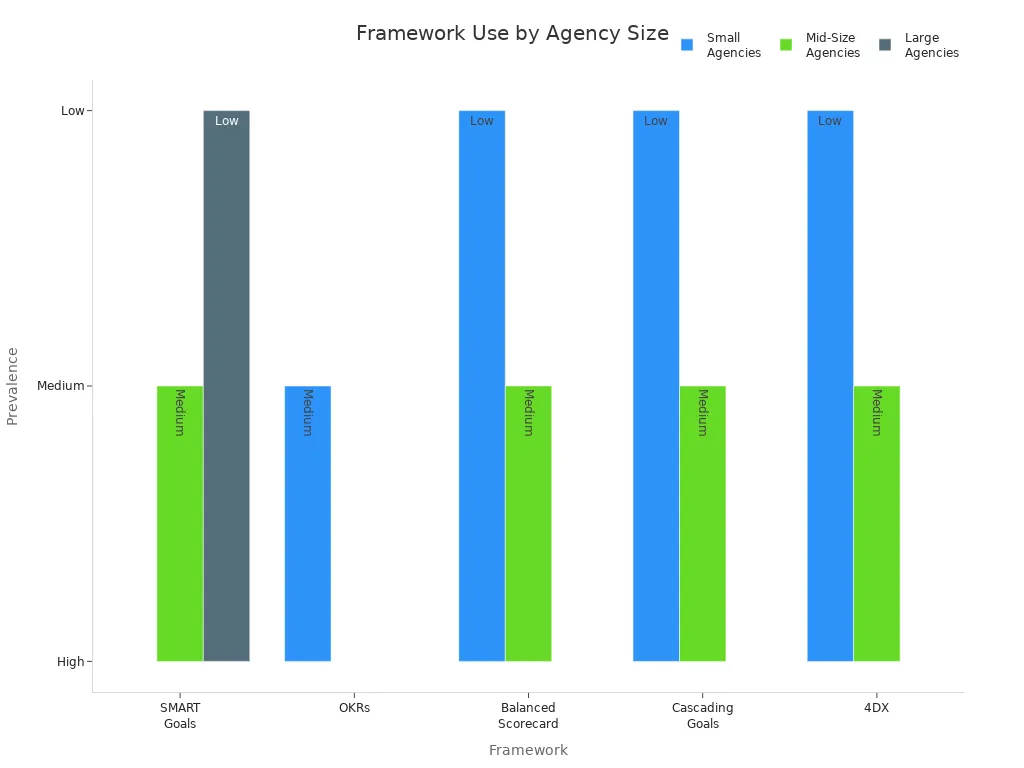
You can use frameworks like OKRs (Objectives and Key Results) or SMART goals to set clear targets for your team. These frameworks help you break down big goals into smaller steps. When you use Sobot’s unified analytics, you can track progress on each goal and see how your team’s work supports the company’s mission. This approach makes performance management easier and more effective.
Tip: Aligning goals helps you boost call center performance and keep everyone moving in the same direction.
Measuring Performance
Measuring performance is key to understanding how well your contact center works. You need to use the right metrics and tools to get a full picture of your team’s effectiveness. Sobot’s analytics platform gives you real-time data on every part of your operation. This helps you make smart choices and improve service level results.
Here is a table of common methods for measuring call center performance:
| Metric | Description | Importance |
|---|---|---|
| Customer Effort Score (CES) | Measures the effort a customer perceives they had to exert. | High CES means customers work too hard, leading to frustration. |
| First Response Time (FRT) | Tracks the time it takes for an agent to provide an initial response. | Fast responses create a positive first impression. |
| Average Handle Time (AHT) | Calculates the average time an agent spends on a customer interaction. | Balances efficiency and quality. |
| First Contact Resolution Rate (FCR) | Tracks the percentage of issues resolved during the initial contact. | Higher FCR means higher customer satisfaction. |
| Customer Satisfaction (CSAT) Scores | Gathers direct customer feedback on their experience. | Reflects customer perception of service quality. |
You should use these metrics to guide your performance management process. When you measure call center performance with real-time analytics, you can spot problems early and make quick changes. Sobot’s unified workspace lets you see all your data in one dashboard. This makes measuring productivity and tracking service level targets simple and accurate.
Callout: Advanced analytics tools, like those from Sobot, help you improve operational efficiency and customer satisfaction. Predictive analytics let you monitor performance in real time and match customers with the right agents. When you analyze all your interaction data, you streamline operations and reduce costs. High-quality data supports better decisions and continuous improvement.
Here is a table that shows the impact of unified metrics and analytics on call center performance:
| Description | Impact on Call Center Performance |
|---|---|
| Advanced analytics tools enhance operational efficiency and customer satisfaction. | Improved service quality and decision-making capabilities. |
| Predictive analytics facilitate real-time monitoring and enhance decision-making. | Better alignment of customers with suitable agents, improving customer experience. |
| Analyzing 100% of interaction data streamlines operations. | Increased operational efficiency and reduced costs. |
| Optimizing staffing levels based on analytics leads to cost savings. | Enhanced service delivery and resource utilization. |
| High-quality data is essential for informed decision-making. | Ensures accuracy and reliability in performance analytics. |
| Successful integration of analytics tools provides valuable insights. | Supports continuous improvement in agent performance and customer satisfaction. |
Sobot’s approach to unified metrics and analytics gives you the tools you need for effective performance management. You can track every service level, measure call center performance, and make changes that boost effectiveness. This leads to better results for your team and happier customers.
Agent Productivity and Training
Onboarding Standards
You need strong onboarding standards to boost agent productivity from day one. When you bring new call center agents into your team, a fast and structured onboarding process helps them reach full productivity quickly. This approach leads to higher employee retention and better customer experience. Here are some key points:
- Accelerated onboarding lets agents become productive faster, which increases call center productivity.
- Early wins during onboarding give agents confidence and help them stay with your company longer.
- Agents who know your products and processes can solve problems quickly, improving customer experience.
A good onboarding program includes cultural training, role-specific lessons, and regular feedback. When you hire call center agents with strong communication skills and a customer-focused mindset, you set the stage for high agent productivity and performance.
Ongoing Coaching
Ongoing coaching is essential for agent productivity and agent performance. You should give call center agents regular feedback and support. This keeps them engaged and helps them improve their skills. Companies that focus on coaching see a 60% increase in employee engagement. Personalized coaching leads to better call center productivity, faster call resolution, and higher customer satisfaction. In fact, 91% of agents who receive coaching report job satisfaction, compared to only 57% without coaching.
| Evidence Type | Description |
|---|---|
| Employee Engagement | Companies excelling in customer experience see a 60% increase in engaged employees. |
| Performance Improvement | Coaching leads to better metrics like call resolution time and customer satisfaction scores. |
| Agent Satisfaction | 91% of agents receiving personalized coaching report job satisfaction compared to 57% without. |
Gamification and Motivation
Gamification can transform agent productivity and call center productivity. You can use leaderboards, rewards, and instant feedback to motivate call center agents. About 70% of organizations use gamification, and 89% of employees feel more competitive and eager to finish tasks when gamified. Agents who receive gamified training feel more motivated and less bored.
- Clear goals give agents direction and boost agent performance.
- Rewards increase engagement and encourage effort.
- Feedback helps agents improve agent productivity right away.
Sobot’s training tools and gamification features help call center agents stay motivated and productive. Companies using Sobot’s AI tools have seen agent productivity rise by up to 400%. Automation of repetitive tasks saves time and lets agents focus on complex issues. OPPO, a global smart device brand, used Sobot’s solutions to achieve an 83% chatbot resolution rate and a 94% positive feedback rate. This success shows how the right tools and training can drive agent performance and call center productivity.
Technology for Call Center Productivity
Modern contact centers rely on technology to boost call center productivity and improve every part of call handling. You can use advanced tools to make your team faster, smarter, and more efficient. Sobot’s Voice/Call Center platform gives you powerful features that help you reach new levels of performance.
Sobot Voice/Call Center
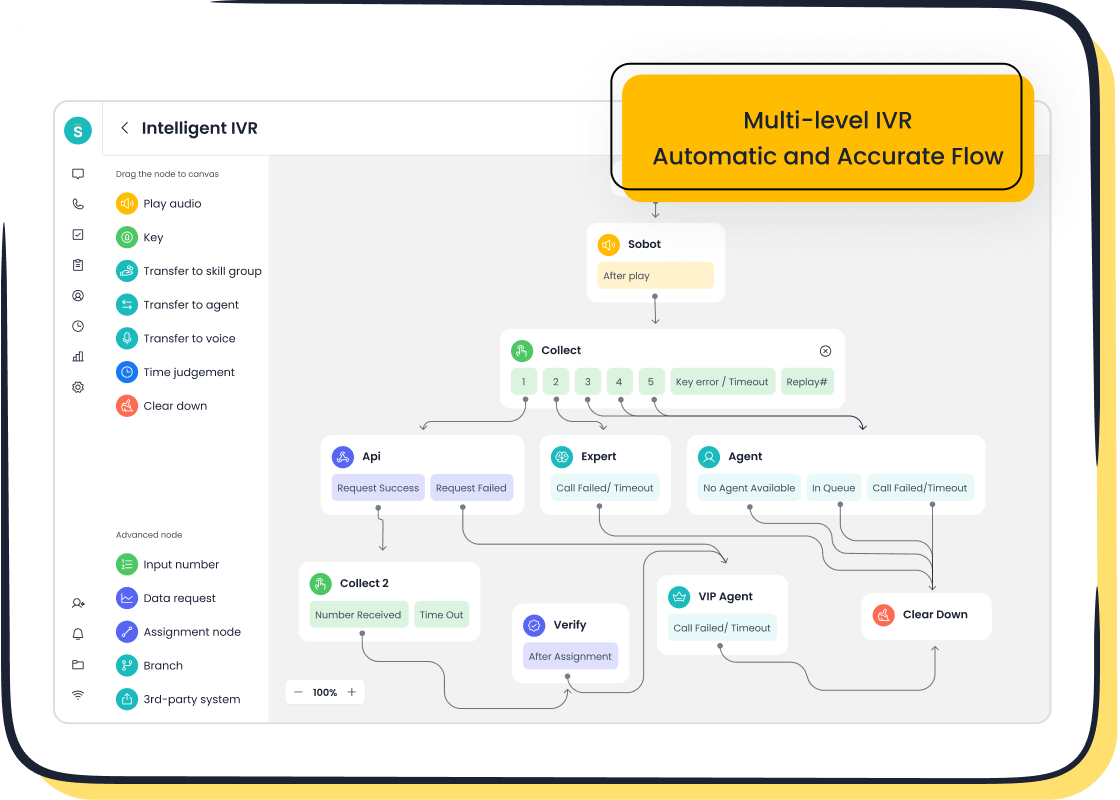
Sobot’s Voice/Call Center solution brings together intelligent IVR, AI-powered voicebots, and a unified workspace. These features help you automate routine tasks and make call handling smoother for your agents.
- Intelligent IVR lets you set up custom greetings and menus. You can route calls to the right agent or team in real time. This reduces wait times and helps customers get answers faster.
- AI-powered voicebots handle common questions and guide callers through simple processes. You free up agents to focus on complex issues.
- The unified workspace gives agents all the information they need in one place. Agents see customer details, call history, and tickets without switching screens.
You can see the impact of these features in real numbers. Sobot’s automation handles up to 80% of routine queries. Agents save about 1.2 hours each day. You get a return of $3.50 for every $1 invested. First responses happen about 28 seconds faster. First-contact resolution goes up by 25%. Ticket closure rates improve by 37%. Assisted-contact costs drop by 20–30%. Escalations fall by up to 40%.
| Benefit | Measurement |
|---|---|
| Routine-query automation | Up to 80% |
| Time saved per agent | 1.2 hours per day |
| Return on investment | $3.50 per $1 invested |
| Faster first responses | ~28 seconds faster |
| First-contact resolution uplift | ~25% reported |
| Ticket closure improvement | ~37% reported |
| Reduction in assisted-contact costs | 20–30% reduction |
| Escalation reduction | Up to 40% |
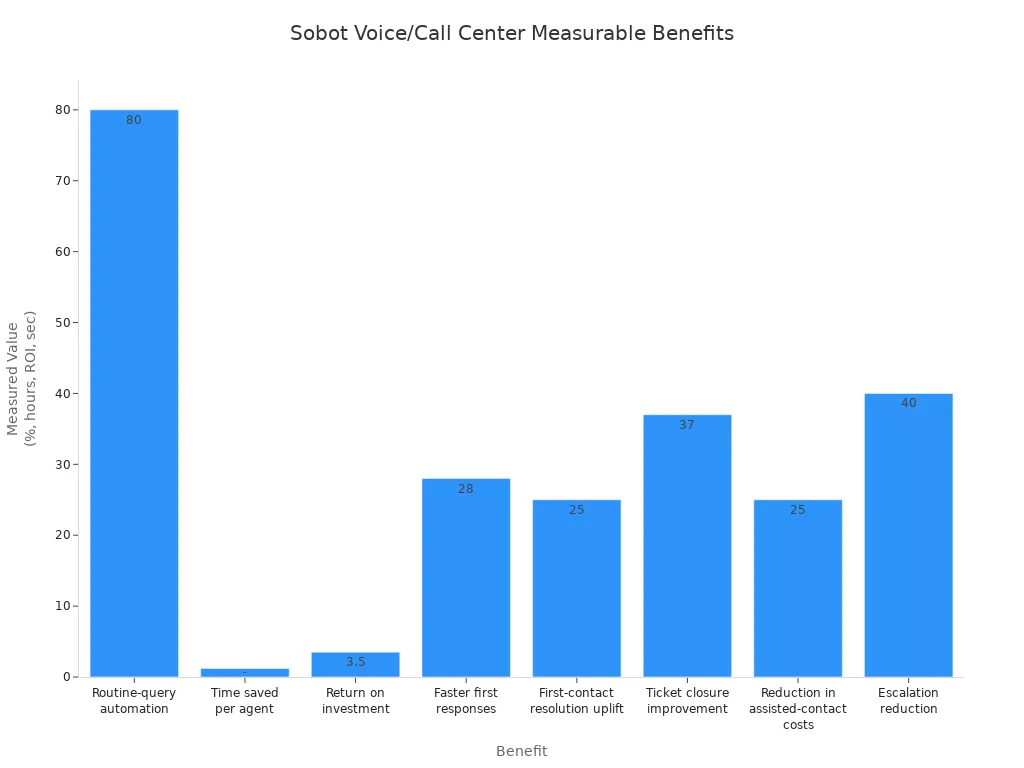
You can also see how AI call screening cuts average handling time by 30–40%. For example, a Shopify store used Sobot to reduce wait times from 4 minutes to 45 seconds. They resolved 60% of routine inquiries without human help. These results show how technology can transform call center productivity and make call handling easier for everyone.
AI and Automation
AI and automation change the way you manage call handling. You can use AI to automate data entry, call routing, and even customer inquiries. This frees up your agents to work on more rewarding tasks and helps your team reach higher levels of call center productivity.
- AI automates routine tasks like data entry and call routing. Agents spend less time on repetitive work.
- Chatbots answer common questions and guide customers through simple steps. Agents focus on complex problems.
- Automation tools handle repetitive tasks, so your team can work faster and smarter.
Industry data shows that AI can boost productivity for repetitive tasks by 40%. A 2023 Deloitte study found that AI-powered tools let agents focus on complex issues, which increases overall efficiency. About 87% of contact center and IT leaders say conversational AI reduces agent effort and costs. Automation leads to a 65% jump in agent efficiency.
You can see how top companies use automation to improve call center productivity:
- Amazon uses automated outbound communications to send notifications and keep customers engaged.
- Zappos schedules calls automatically, making sure customers get timely responses.
- Spotify automates customer interactions across channels, building loyalty.
- Southwest Airlines uses forecasting automation to predict call volumes and optimize staffing.
- Cisco automates workflow operations, reducing manual effort and speeding up tasks.
| Example | Automation Type | Contribution to Efficiency |
|---|---|---|
| Amazon | Automated outbound communications | Streamlines sending notifications, enhancing customer engagement and satisfaction. |
| Zappos | Call scheduling automation | Ensures timely responses to inquiries, boosting operational efficiency and customer satisfaction. |
| Spotify | Customer interaction automation | Engages customers across multiple channels, increasing brand loyalty through consistent communication. |
| Southwest Airlines | Forecasting automation | Predicts call volumes, optimizing workforce and resource allocation for peak times. |
| Cisco | Workflow operations automation | Streamlines internal processes, reducing manual effort and speeding up task completion. |
You can use Sobot’s automation features to handle call routing, outbound tasks, and customer inquiries. This helps you save time, reduce costs, and improve call handling for every customer.
Tip: When you use AI and automation, you make your call center more productive and give your agents more time to solve important problems.
Unified Workspace
A unified workspace brings all your call handling tools and customer data together. You can see everything you need in one dashboard. This makes call center productivity much higher because agents do not waste time switching between systems.
Sobot’s unified workspace lets agents manage calls, tickets, and messages from every channel. You can access customer profiles, call history, and chat logs instantly. This helps you deliver faster and more accurate service.
Companies with unified contact center workspaces use more advanced technology. You can see the difference in adoption rates:
| Technology | % of Enterprises with UCC | % of Enterprises without UCC |
|---|---|---|
| Desktop Analytics | 76% | 30% |
| CRM | 75% | 34% |
| Knowledge Management | 72% | 26% |
| Single Sign-On | 65% | 26% |
| Enterprise Social Collaboration Tools | 59% | 17% |
| WebRTC | 59% | 15% |
| Enterprise Search | 56% | 18% |
| Call Recording | 73% | 26% |
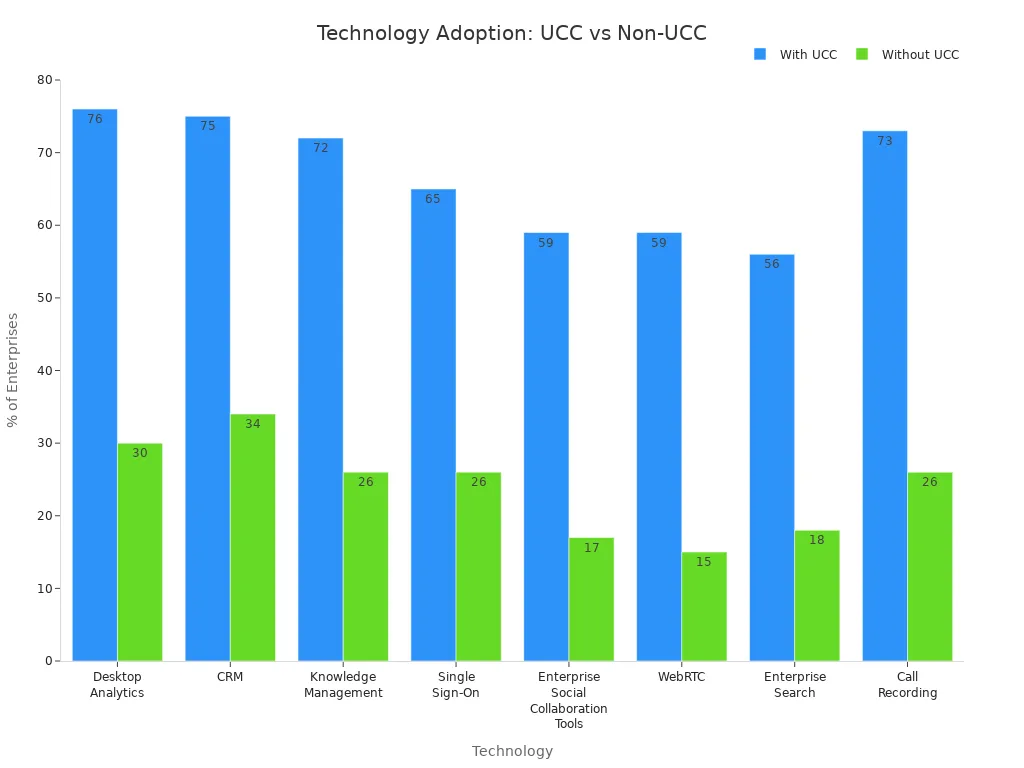
You can see that unified workspaces help agents work faster and smarter. They improve call handling by giving agents instant access to the right information. This leads to better customer experiences and higher call center productivity.
Note: When you use a unified workspace, you make every part of call handling easier. Your agents spend less time searching for data and more time helping customers.
Sobot’s unified workspace supports global telephony, encrypted data transfer, and seamless integration with CRM systems. You can use it on mobile devices, so your team stays productive anywhere. These features help you keep call center productivity high and make call handling smooth for every agent.
Workflow and Process Optimization
Standard Operating Procedures
Standard operating procedures (SOPs) help you set clear steps for every task in your contact center. When you use SOPs, you give your team a guide for handling calls, solving problems, and following best practices. This approach boosts call center productivity by making sure everyone works the same way. Involving your top-performing agents in writing SOPs brings real-world insights. You should set clear, measurable goals for each procedure and review them often to keep them up to date.
| Metric | Impact Description |
|---|---|
| Improved First Call Resolution (FCR) | Agents equipped with clear guides solve problems on the first call, reducing callbacks. |
| Higher Customer Satisfaction (CSAT) | Consistent service across agents builds customer trust and satisfaction. |
| Reduced Average Handle Time (AHT) | SOPs eliminate guesswork, leading to shorter and more efficient conversations. |
The global market for SOP management software reached $124.8 billion in 2023. This shows how important standardized processes are for call center productivity and operational performance.
Workflow Automation
Workflow automation lets you use technology to handle routine tasks. You can automate ticket routing, data entry, and follow-ups. This change increases call center productivity by up to 30% and cuts operational costs by 35%. Automation also reduces human errors by 95%, so your data stays accurate. When you automate simple jobs, your agents can focus on complex customer needs. This shift leads to a 20% rise in customer retention and a 35% boost in employee engagement.
Sobot’s omnichannel solution uses AI to manage up to 70% of routine inquiries. The unified workspace and knowledge base integration ensure agents always have the right information. OPPO, a global smart device brand, used Sobot’s tools to improve customer satisfaction by 30% and cut resolution time by half.
Reducing Bottlenecks
You can reduce bottlenecks by setting service level agreements (SLAs) and automating repetitive tasks. SLAs help agents know what to prioritize. Automation lowers manual errors, with over half of organizations seeing fewer mistakes after adopting it. Keeping your internal knowledge base updated also shortens handle times and improves first call resolution.
| Feature | Impact on Contact Center Operations |
|---|---|
| Unified workspace | Reduces repetition and enhances first-contact resolution |
| Voice AI + IVR | Increases phone handling capacity without extra staff |
| Knowledge base integration | Ensures consistent answers across all channels |
| Automation rates | AI manages up to 70% of routine inquiries |
| Reported impact | CSAT improved by ~30%; resolution time reduced by ~50% |
Tip: When you use Sobot’s workflow tools, you make call center productivity soar by removing delays and helping your team work smarter.
Employee Engagement and Performance

Recognition and Rewards
You can boost team morale and performance by recognizing and rewarding your agents. When you celebrate achievements, you help agents feel valued and motivated. Many studies show that recognition programs make a big difference in contact centers:
- Businesses with high employee engagement are 21% more profitable.
- Competitive reward programs lead to a 27% gain in employee performance.
- Companies with recognition programs see productivity and engagement levels 14% higher than those without.
- Recognition links directly to improved engagement, with organizations seeing up to 48% higher engagement rates.
- Employees who receive great recognition are 20 times more likely to be engaged.
- 37% of employees say recognition from superiors is the best way to improve engagement.
You can use strategies like peer-to-peer recognition, monthly awards, and instant feedback to keep your team motivated. These strategies help you build a positive culture and encourage agents to give their best effort.
Work-Life Balance
Work-life balance is important for keeping agents happy and productive. If you meet your team’s needs for flexibility, you reduce turnover and improve retention. The table below shows how work-life balance affects performance in contact centers:
| Evidence | Explanation |
|---|---|
| Agents are more likely to leave if their needs for flexibility and work-life balance are not met. | Lack of balance leads to higher turnover rates. |
| Employees today have more job options from companies willing to match their preferences. | Competitive job market makes balance essential for retention. |
| Agents want to keep the workplace flexibility given to them during the pandemic. | Flexibility increases satisfaction and performance. |
You can use strategies like flexible scheduling, remote work options, and wellness programs to support your team. These strategies help agents manage stress and stay focused at work.
Engagement Strategies
You can use many strategies to improve team morale and productivity in your contact center. The most effective strategies include:
- Clear communication channels
- Recognition and rewards
- Employee training and development
- Work-life balance
- Employee well-being programs
- Leadership development
- Employee feedback mechanisms
- Employee involvement in decision-making
Companies with strong engagement strategies see 2.5 times more revenue growth. Regular feedback channels can cut turnover by 14.9%. Agents with emotional support resources perform 23% better and experience less burnout. You can use these strategies to create a positive work environment and help your team succeed.
Overcoming Challenges in Productivity
Change Management
You face many challenges when improving productivity in your contact center. Change management stands out as one of the biggest hurdles. You need to help your team adapt to new tools, processes, and expectations. Focusing on company culture helps everyone accept change. Open communication between departments builds trust and cooperation. You should use a structured process for change management. This approach keeps your goals clear and your team focused. Regular evaluations and benchmarks let you track progress and hold everyone accountable. When you involve employees in the change process, you create a sense of ownership and commitment. These steps make improving productivity smoother and more successful.
Tip: Engage your team early and often during change. This builds buy-in and reduces resistance.
Consistency Across Teams
Consistency is key for improving productivity across all teams. You want every agent to deliver the same high level of service. Leading contact centers use a mix of technology and training to achieve this. The table below shows some of the most effective tools and frameworks:
| Framework/Tool | Description |
|---|---|
| AI-Powered Coaching | Analyzes trends and recommends coaching based on real interactions. |
| Auto QA & Interaction Scoring | Evaluates all calls and chats automatically, tying results to coaching and performance. |
| Gamification & Recognition | Uses points and badges to motivate agents and reinforce positive behaviors. |
| Omnichannel Support | Unifies customer history across channels for personalized service. |
| Agent Empowerment | Gives agents the authority and tools to resolve issues quickly. |
You can start small with two or three channels and scale up. Prioritize data integration and unified reporting. Train agents on each channel’s etiquette and monitor customer preferences. These steps help you maintain consistency and keep improving productivity.
Sustaining Improvements
Sustaining gains in productivity requires ongoing effort. Regular coaching and gamified learning keep agents engaged. Automation removes manual tasks, freeing up time for more valuable work. Many contact centers now use AI to streamline workflows and eliminate bottlenecks. You should schedule regular training sessions to keep agents up to date with new tools and trends. Scenario-based training gives agents practical experience. Setting clear goals and expectations helps everyone stay on track. Prioritizing employee engagement boosts morale and supports long-term success. When you focus on these strategies, you make improving productivity a continuous process.
You can boost your team’s efficiency by following clear contact center standards. When you use strong onboarding, ongoing coaching, and workflow automation, you see a real rise in customer satisfaction score. Sobot’s solutions help you reach higher customer satisfaction and improve every customer satisfaction score. Companies like Zappos, Delta Airlines, and Ritz-Carlton show how the right strategy leads to a better customer satisfaction score and higher customer satisfaction.
| Company | Key Strategy | Impact on Efficiency |
|---|---|---|
| Zappos | Built relationships and used robust CRM systems | Higher customer satisfaction score and loyalty |
| Delta Airlines | Used social media for real-time support | 85% faster response, better customer satisfaction score and agent efficiency |
| Ritz-Carlton | Gave employees authority to resolve issues | Quick solutions, higher customer satisfaction score and repeat business |
Take the next step to improve your customer satisfaction score. Choose Sobot to help your team deliver the best customer satisfaction.
FAQ
What are contact center standards?
Contact center standards are rules and best practices that guide how your team works. These standards help you deliver consistent service, improve team efficiency, and reach higher customer satisfaction. You can use them to set clear goals and measure your team’s progress.
How do contact center standards improve team efficiency?
Contact center standards give your team clear steps to follow. When everyone uses the same process, you reduce mistakes and save time. For example, using standard scripts can cut average handle time by 20%. You see better results and happier customers.
Which metrics should I track to measure contact center standards?
You should track metrics like First Call Resolution (FCR), Average Handle Time (AHT), and Customer Satisfaction (CSAT). These numbers show if your contact center standards work well. Regular reviews help you spot trends and make improvements.
Can technology help enforce contact center standards?
Yes! Technology like Sobot’s unified workspace and AI tools help you follow contact center standards. Automation handles routine tasks, so agents focus on complex issues. Real-time analytics let you monitor performance and keep your team on track.
Why do contact center standards matter for customer satisfaction?
Contact center standards ensure every customer gets the same high-quality service. When you follow these standards, you solve problems faster and build trust. Studies show that strong standards can raise customer satisfaction scores by up to 30%.
See Also
Top Strategies for Effective Call Center Quality Management
Understanding the Efficiency of Call Center Automation
Enhancing Call Center Performance Through Effective Monitoring

