Mastering the Art of a Consistent Voice in Customer Service


Imagine calling a company for help and feeling like you're speaking to a friend who truly understands you. That’s the magic of a consistent voice customer service. It builds trust and strengthens bonds with customers, making them feel valued. In fact:
- 90% of highly satisfied customers are more likely to recommend a brand.
- Companies offering excellent service are 3.5 times more likely to retain customers.
When your voice reflects your brand identity, it creates emotional connections. This connection can lead to a 306% higher customer lifetime value. But maintaining consistency across teams and channels isn’t always easy. That’s where Sobot can help enhance your voice customer service experience.
Understanding the Customer Service Voice

What is a customer service voice?
Your customer service voice is more than just words. It’s the tone, style, and language you use when communicating with customers. It’s how you express empathy, personality, and emotion in every interaction. This voice shapes how customers perceive your brand and builds trust over time.
A consistent customer service voice can make a big difference. Brands that define their voice well often see a 20-30% increase in customer satisfaction rates. It’s not just about solving problems; it’s about creating a connection that feels authentic and reliable.
Think of your customer service voice as the personality of your brand in action. It’s what makes your customers feel heard and valued.
Differences between voice and tone in customer service
Voice and tone might sound similar, but they’re not the same. Your voice stays constant—it’s the overall personality of your brand. Tone, on the other hand, changes depending on the situation.
Here’s a quick comparison:
| Tone Type | Effect on Audience |
|---|---|
| Casual | Increased trustworthiness by 0.4 points |
| Enthusiastic | Boosted engagement by up to 23% |
| Professional | Improved credibility scores by 0.5 points |
For example, your voice might always be friendly and approachable, but your tone could shift to professional when handling a serious issue or enthusiastic when celebrating a customer’s success. Balancing these elements ensures your service feels genuine and adaptable.
Why the customer service voice is crucial for customer perceptions
Your customer service voice plays a huge role in shaping how customers view your brand. Every interaction leaves an impression, and those impressions add up.
- Positive experiences create loyal customers who stick around and recommend your brand.
- Negative experiences can damage your reputation and drive customers away.
Studies show that 84% of brands saw revenue growth after improving customer service. Customers are more likely to share negative experiences than positive ones, so getting your voice right is essential. When your voice reflects empathy and consistency, it builds trust and encourages positive word-of-mouth.
A strong customer service voice isn’t just good for your customers—it’s great for your business.
The Role of Consistency in Voice Customer Service
How consistency builds trust and credibility
Consistency in your customer service voice is like a handshake—it’s the first step in building trust. When customers know what to expect from your brand, they feel more confident in their interactions. A consistent service approach reassures them that you’ll deliver the same level of care every time.
Imagine calling a company and hearing the same friendly tone and clear communication across different departments. It feels reliable, doesn’t it? That reliability builds credibility. Customers trust brands that maintain a steady voice, whether they’re chatting online or speaking on the phone.
Consistency also reduces confusion. When your tone and voice guidelines are clear, customers can focus on solving their issues instead of deciphering mixed messages. This clarity strengthens the connection between your brand and your audience, making them more likely to return.
The impact of a consistent customer service voice on satisfaction and loyalty
A consistent customer service voice doesn’t just make interactions smoother—it boosts satisfaction and loyalty. When customers experience low-effort service, they’re more likely to stick around and recommend your brand.
Here’s how consistency impacts key metrics:
| Metric | Description |
|---|---|
| Customer Effort Score (CES) | Low-effort experiences increase loyalty and repurchase likelihood. |
| Net Promoter Score (NPS) | High scores show customers are eager to recommend your brand. |
| Customer Satisfaction Score (CSAT) | Directly correlates with loyalty and overall satisfaction. |
Research shows that customers value ease and efficiency. When your service feels seamless, they’re more likely to trust you. On the flip side, high-effort experiences can drive them away. By maintaining a consistent customer experience, you create a foundation for long-term loyalty.
Aligning voice with brand identity and values
Your customer service voice should reflect your brand’s personality. It’s not just about answering questions—it’s about creating a connection that feels authentic. A strong brand voice humanizes your business and makes it relatable.
To align your voice with your brand identity, start with your mission and values. These guide your tone and voice guidelines, ensuring every interaction feels genuine. For example:
- Employees should embody your company’s values to deliver consistent messaging.
- Reliable customer interactions build trust in your brand identity.
- A unique value proposition paired with consistent communication fosters loyalty.
When your voice mirrors your brand’s ethos, customers feel like they’re interacting with a company that truly understands them. This alignment strengthens your brand identity and attracts customers who resonate with your values.
Tip: Think of your customer service voice as the bridge between your brand and your audience. Keep it consistent to ensure every interaction feels meaningful.
Steps to Define and Develop Your Customer Service Voice
Understanding your audience and their expectations
Defining your customer service voice starts with understanding who you’re speaking to. Your audience isn’t just a group of people; they’re individuals with unique needs, preferences, and expectations. To connect with them effectively, you need to know what they value most in a customer service experience.
Here’s how you can get started:
- Listen to your customers: Voice of Customer (VoC) research is a powerful tool. It involves gathering feedback through surveys, interviews, social media, and direct interactions. This helps you capture what your customers truly want and expect.
- Segment your audience: Not all customers are the same. By identifying key customer segments, you can tailor your service to address specific pain points. For example, younger customers might prefer quick responses via chat, while older customers may value detailed phone support.
- Act on feedback: Once you’ve collected data, use it to refine your approach. If customers frequently mention long wait times, prioritize faster response strategies.
When you understand your audience, you can craft a customer service voice that resonates with them. This not only improves customer satisfaction but also builds a stronger connection between your brand and its audience.
Creating a style guide for consistent customer experience
A style guide is your blueprint for delivering a consistent customer experience. It ensures that every interaction reflects your brand voice, no matter who’s handling the conversation or which channel is being used.
Here are some strategies to include in your style guide:
| Strategy | Description |
|---|---|
| Streamlining Processes | Standardize workflows, response times, and escalation procedures to ensure consistency. |
| Leveraging Data | Use analytics to monitor interactions and identify areas for improvement. |
| Multichannel Consistency | Ensure customers receive the same quality of service across all platforms. |
For example, if your brand voice is friendly and approachable, your style guide should outline how to maintain that tone in emails, chats, and calls. It might include sample phrases, do’s and don’ts, and even emojis that align with your brand personality.
Sobot’s Omnichannel Solution can help you implement these guidelines seamlessly. By unifying customer interactions across channels, it ensures your team delivers a consistent brand voice, whether they’re responding via email, social media, or phone. This not only enhances the customer experience but also strengthens customer loyalty.
Leveraging Sobot's Voice/Call Center for defining and refining your voice
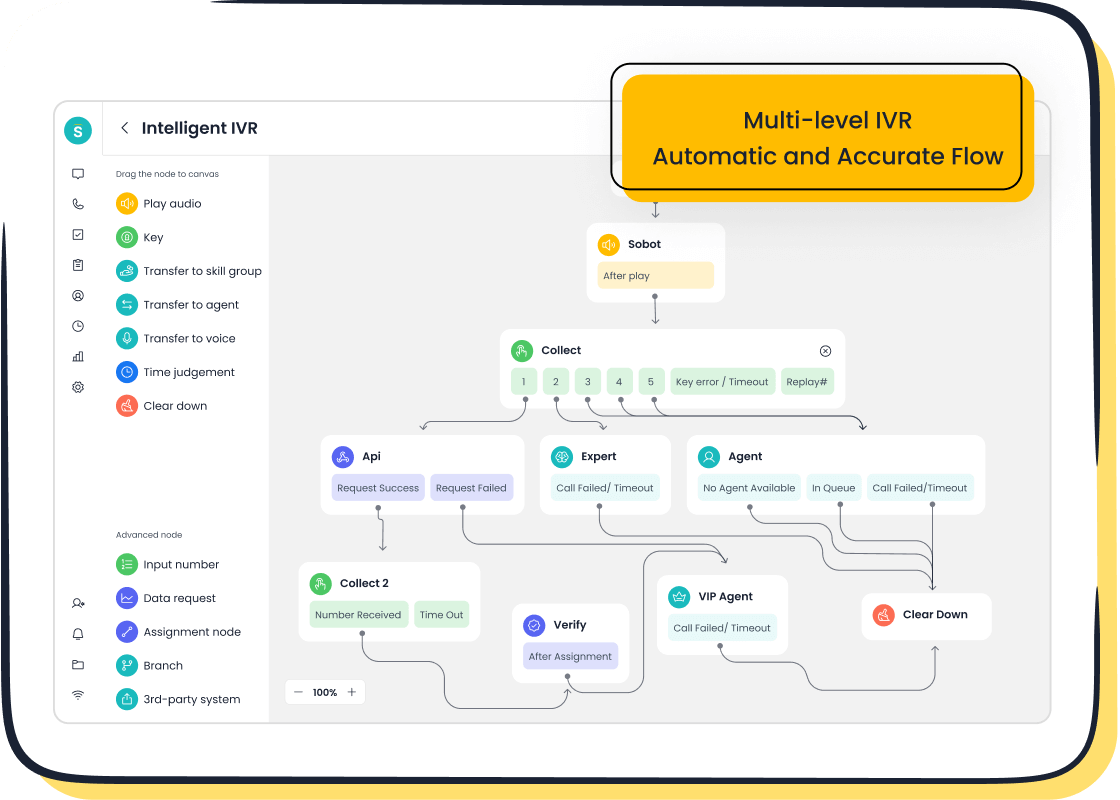
Sobot’s Voice/Call Center is a game-changer when it comes to defining and refining your customer service voice. It offers tools that help you maintain consistency while adapting to customer needs in real time.
Here’s how Sobot can make a difference:
- Intelligent IVR: Customize greetings and route calls to the right agents effortlessly. This ensures customers feel valued from the moment they connect.
- Unified Workspace: Agents can manage calls and access customer information in one place, reducing response times and improving accuracy.
- Monitoring and Analysis: Real-time data insights help you identify patterns and refine your tone and voice guidelines.
- AI-Powered Voicebot: With intelligent interaction and intent recognition, the Voicebot ensures customers receive accurate and empathetic responses.
The results speak for themselves. Brands using Sobot’s Voice/Call Center have reported a 20% reduction in inbound discussion volume and a 96% increase in positive feedback. Customer satisfaction scores have soared to 97%, proving the effectiveness of this solution in delivering a consistent customer service voice.
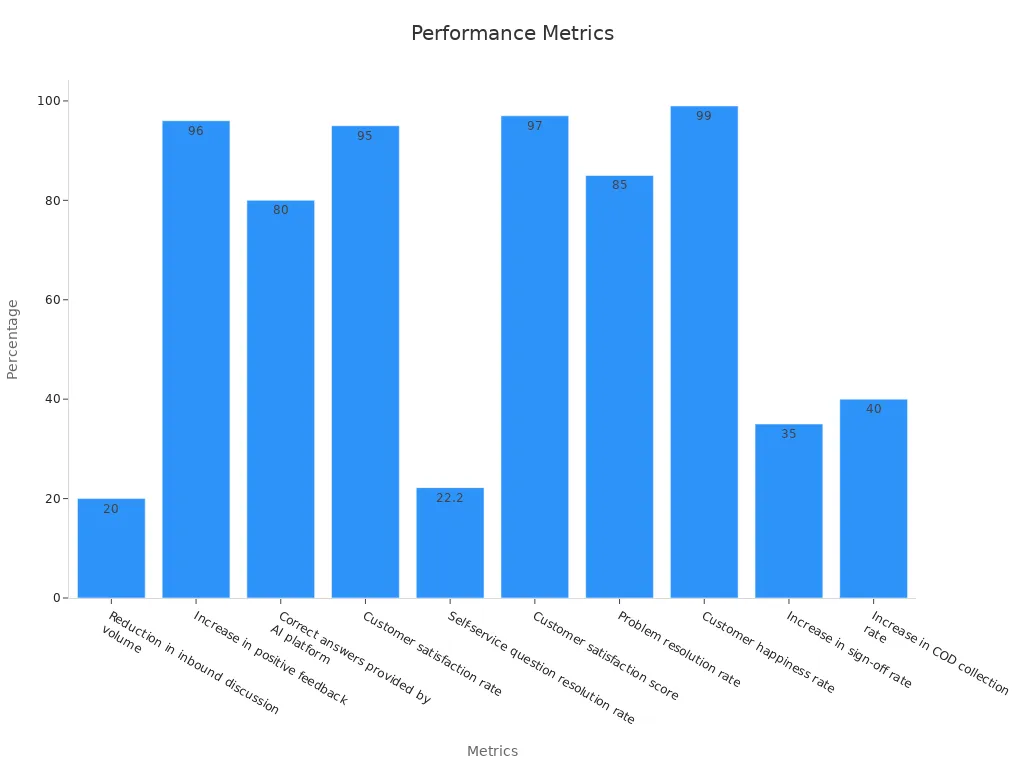
By leveraging Sobot’s advanced tools, you can align your customer service voice with your brand identity while meeting customer expectations. This not only enhances the overall customer service experience but also fosters long-term customer loyalty.
Maintaining Consistency Across Teams and Channels
Training your team to adopt the customer service voice
Your team is the backbone of delivering a consistent customer experience. To ensure they adopt your customer service voice effectively, training is essential. Start by introducing your tone and voice guidelines during onboarding. This helps new team members understand your brand voice from day one.
Role-playing exercises can also work wonders. For example, simulate real-life scenarios where agents practice handling different customer emotions—like frustration or excitement—while maintaining the brand voice. This builds confidence and ensures they’re prepared for any situation.
Regular workshops are another great way to reinforce these skills. Use these sessions to share updates, address challenges, and celebrate successes. When your team feels supported and aligned, they’re more likely to deliver a consistent service that resonates with customers.
Tip: Encourage your team to share their experiences. Their insights can help refine your approach and make your customer service voice even stronger.
Using tools like Sobot's Voice/Call Center for uniformity
Technology plays a huge role in maintaining a consistent customer experience. Sobot’s Voice/Call Center is a powerful tool that ensures your team stays aligned with your brand voice across all interactions.
Here’s how it helps:
- Intelligent IVR: This feature lets you customize greetings and route calls to the right agents. Customers feel valued when they’re connected to someone who understands their needs.
- Unified Workspace: With all customer information in one place, agents can provide accurate and personalized responses. This reduces errors and enhances customer satisfaction.
- Real-Time Monitoring: Managers can track calls as they happen, identifying areas for improvement and ensuring consistent service delivery.
For example, imagine a customer calling about a delayed order. With Sobot’s tools, the agent can quickly access the customer’s history, empathize with their frustration, and offer a solution—all while maintaining the brand voice. This seamless experience builds trust and strengthens customer loyalty.
Monitoring and providing feedback for continuous improvement
Consistency isn’t a one-time effort—it’s an ongoing process. Monitoring your team’s performance and providing constructive feedback are key to continuous improvement.
Use tools like Sobot’s Real-Time Performance Dashboard to track metrics such as call duration, sentiment scores, and customer effort. These insights highlight what’s working and where adjustments are needed. For example, if you notice a spike in negative sentiment during certain interactions, you can address it immediately.
Here’s a breakdown of useful analytics:
| Feature | Description |
|---|---|
| Real-time call monitoring | Spot potential issues, like customer frustration, before they escalate. |
| Real-Time Performance Dashboard | View key statistics like call duration and sentiment scores for actionable insights. |
| Coachable Insights | Identify areas where agents need support and provide targeted feedback. |
| VoC Insights | Detect patterns in customer feedback, such as NPS and CSAT trends, without relying on surveys. |
Feedback should be specific and actionable. Instead of saying, “Be more empathetic,” try, “Acknowledge the customer’s concern before offering a solution.” This clarity helps agents improve and ensures a consistent service experience.
Remember, continuous feedback isn’t just about fixing mistakes. It’s about celebrating wins and motivating your team to keep delivering exceptional service.
Examples of Brands Excelling in Customer Service Voice

Case study: Weee! and Sobot's Voice/Call Center
Weee!, America’s largest online Asian supermarket, is a shining example of how a consistent customer service voice can transform operations. Before partnering with Sobot, Weee! faced challenges like inflexible IVR systems and language barriers. These issues slowed down their service and frustrated customers. By implementing Sobot’s Voice/Call Center, they turned things around.
Sobot’s flexible IVR system allowed Weee! to route calls intelligently, ensuring customers connected with the right agents. The unified workspace streamlined communication, while multilingual support bridged language gaps. These changes led to a 20% boost in agent efficiency and a 50% reduction in resolution time. Most impressively, their customer satisfaction score soared to 96%. This case proves that the right tools and a consistent brand voice can elevate customer service to new heights.
Lessons from brands with strong customer service voices
Brands that excel in customer service share some common strategies. Here’s what you can learn from them:
- Value customers’ time: Studies show that 66% of adults prioritize quick and efficient service. Brands that respond rapidly to inquiries build trust and loyalty.
- Leverage feedback: Just Eat, for example, improved satisfaction by involving restaurant partners in feedback loops. They closed 97% of detractor feedback within 48 hours, showing the power of listening to customers.
- Consistency is key: Companies with a consistent brand voice across all channels see a 33% revenue increase. This highlights the importance of aligning your service with your brand identity.
These lessons emphasize that a strong customer service voice isn’t just about words—it’s about actions that reflect your brand’s values.
Key takeaways from successful implementations
Successful brands understand that customer engagement drives results. Here are some key takeaways backed by data:
| Statistic | Impact |
|---|---|
| 91% of consumers prefer personalized offers. | Personalization fosters loyalty and repeat business. |
| 60% of customers expect consistency across channels. | Consistency builds trust and enhances the customer experience. |
| Engaged customers represent a 23% higher share of wallet and profitability. | Engagement directly boosts revenue and customer retention. |
These insights show that focusing on personalization, consistency, and engagement can significantly improve your customer service outcomes. Tools like Sobot’s Voice/Call Center make it easier to achieve these goals by unifying interactions and providing actionable insights.
Common Pitfalls to Avoid in Voice Customer Service
Over-reliance on automation without personalization
Automation can streamline customer service, but relying too much on it can backfire. Customers want to feel heard and understood, and automation often lacks the empathy needed to achieve this. For example, AI systems can’t truly grasp human emotions or validate a customer’s frustration. This can leave customers feeling disconnected and unimportant.
Here’s what happens when automation overshadows personalization:
- 82% of U.S. consumers prefer more human interaction in customer service.
- Automated systems struggle with unique problems that require creative solutions.
- Customers often feel frustrated when their concerns aren’t addressed effectively.
Empathy, active listening, and flexible problem-solving are irreplaceable. While automation can handle repetitive tasks, it’s the human touch that builds trust and loyalty. Balancing automation with personalized service ensures customers feel valued and supported.
Failing to adapt tone to different customer scenarios
Imagine calling for help during a stressful situation and receiving a cheerful response that feels out of place. That mismatch can make customers feel misunderstood. Adapting your tone to fit the scenario is crucial for delivering quality service.
Failing to tailor communication can lead to negative experiences. Customers expect you to understand their concerns and respond appropriately. For example, a serious issue might require a professional tone, while a celebratory moment calls for enthusiasm.
Adapting your tone enhances interactions and shows you care. A personalized approach demonstrates that you understand customer preferences, improving overall service quality. When your tone aligns with the situation, customers feel heard and appreciated.
Neglecting to update the voice as the brand evolves
Your brand isn’t static, and your customer service voice shouldn’t be either. As your brand grows, your voice must adapt to reflect new values, products, or audiences. Neglecting this evolution can create a disconnect between your service and your brand identity.
Voice of Customer programs often fail due to poor governance and outdated practices. When feedback isn’t analyzed properly, it leads to unreliable data and ineffective strategies. Low participation rates and poorly designed questions can also result in misleading insights.
To avoid these pitfalls, regularly review your voice guidelines. Update them to match your brand’s current identity and customer expectations. This ensures your service stays relevant and resonates with your audience.
Tip: Treat your customer service voice as a living entity. Keep it fresh and aligned with your brand’s journey to maintain strong connections with customers.
Defining and maintaining a consistent customer service voice is more than just a strategy—it’s the foundation of trust and satisfaction. When your service feels reliable, customers notice. They’re more likely to stick around, recommend your brand, and feel connected to your values.
Take the next step by refining your approach. Use tools like Sobot’s Voice/Call Center to unify your service and ensure every customer interaction reflects your brand’s identity. Start today, and watch your customer relationships grow stronger.
FAQ
What is the best way to maintain a consistent customer service tone?
Start by creating clear guidelines for your team. Train them to adapt their tone based on the situation while staying true to your brand’s voice. Tools like Sobot’s Voice/Call Center can help ensure consistency across all customer service interactions.
How can I make customer service interactions feel more personal?
Focus on personalized interactions by addressing customers by name and referencing their history with your brand. Use tools that provide customer insights, like Sobot’s unified workspace, to tailor your responses and create a high-quality service experience.
Why is customer feedback important for improving customer service?
Customer feedback helps you understand what’s working and what needs improvement. It’s a direct line to your customers’ expectations and experiences. Use this feedback to refine your customer service strategy and deliver more effective customer service.
How does authenticity impact customer support communications?
Authenticity builds trust. When your team communicates honestly and empathetically, customers feel valued. This strengthens relationships and enhances the overall customer experience, making your brand more relatable and trustworthy.
What role does technology play in delivering effective customer service?
Technology streamlines customer support communications by automating repetitive tasks and providing real-time insights. Tools like Sobot’s Voice/Call Center ensure seamless customer interaction, helping your team deliver consistent and efficient service.
See Also
Excelling in Live Chat for Customer Assistance
Comparative Analysis of Leading Customer Feedback Tools
Essential Strategies for Quality Management in Call Centers

