Choosing the Right Healthcare Support Service for 2026


Imagine you need help for a loved one’s changing health needs in 2026. You want support services in healthcare that fit your family, your budget, and your values. Generational trends show that people now expect flexible and personalized options, not just standard care. You also look for easy ways to connect, so technology like sobot makes your experience smoother and more reliable.
Support Services in Healthcare: 2026 Overview
When you look for support services in healthcare in 2026, you see many choices. Each option fits different needs and lifestyles. You want to know what works best for you or your loved one. Here is a guide to the main types of care you will find.
Home Care Options
Home care lets you stay in your own house while getting help. You may need help with daily tasks, medical care, or both. Nurses, aides, or therapists can visit you. Home care now uses smart devices to track health and send updates to your care team. This makes it easier for you to get the right support services in healthcare without leaving home. Many people choose home care for comfort and independence. You can also use home care for short-term recovery or long-term needs. Home care is growing fast because more people want to age in place.
Assisted Living Choices
Assisted living gives you a safe place to live with help nearby. You get your own room or apartment. Staff help with meals, medicine, and daily tasks. In 2026, assisted living uses AI devices that watch for changes in your health. These devices alert caregivers before problems get worse. Smart home technology also checks your routines and tells staff if something is wrong. Assisted living offers social activities and group events. You can enjoy your privacy and get support when you need it. Assisted living is a popular choice for people who want both freedom and safety.
Trends in Assisted Living (2026):
Trend Description AI Integration Devices track behavior patterns and alert caregivers to health changes before emergencies occur. Passive Remote Monitoring Smart home technology monitors daily routines and alerts caregivers to any variations or changes.
Hospice and Palliative Care
Hospice and palliative care focus on comfort and quality of life. You may choose these support services in healthcare if you have a serious illness. Teams of doctors, nurses, and counselors work together. They help you manage pain and symptoms. In 2026, digital health tools help teams share information and plan care. Telehealth lets you talk to your care team from home. More people can get hospice and palliative care now, but it is important to make sure your wishes are known.
Telehealth and Virtual Support
Telehealth lets you see doctors and nurses online. You can get care without leaving your house. In 2026, telehealth uses AI to help with checkups and manage long-term health problems. Wearable devices track your health and send data to your doctor. You can get mental health support through video calls. Telehealth is part of hybrid care models, mixing in-person and online visits. This makes support services in healthcare more flexible for you.
Community-Based Services
Community-based services give you help close to home. You can join adult day programs, meal delivery, or transportation services. These support services in healthcare help you stay active and connected. Many centers offer group activities and health checks. You can use community-based services with home care or assisted living. This gives you more choices and support.
Projected Growth in Healthcare Support Services (2026):
Healthcare Support Service Projected Growth in 2026 Outpatient Care Higher than inpatient care Post-Acute Care Significant expansion Behavioral Health Expected patient volume growth Physician Practices Anticipated increase in demand Ambulatory Surgery Centers (ASCs) Growth in patient volume
You have many support services in healthcare to choose from in 2026. Each one offers different benefits. You can mix and match home care, assisted living, hospice, telehealth, and community-based services to fit your needs.
Comparing Support Services in Healthcare
Choosing the right support services in healthcare can feel overwhelming. You want to know how each option compares. You need to look at the level of care, the quality of communication, and how well each service adapts to your needs. This section gives you a clear side-by-side view, so you can make the best choice for yourself or your loved one.
Levels of Care and Support
Support services in healthcare offer different levels of care. Some focus on daily help, while others provide comfort during serious illness. You should know what each service does best.
Here is a table that shows the main differences between assisted living and hospice care. Home care fits between these two, offering both daily help and some medical support at home.
| Aspect | Assisted Living | Hospice Care |
|---|---|---|
| Primary Purpose | Supports independence for seniors needing daily assistance | Provides comfort-focused care for terminal illness |
| Medical Focus | Emphasizes health maintenance and coordination with healthcare providers | Focuses on symptom management and pain relief |
| Duration of Care | Long-term solution lasting months to years | Typically short-term, under six months |
| Cost and Coverage | Average $4,000 to $6,000 per month, limited Medicaid coverage | Fully covered by Medicare, Medicaid, and most private insurance |
| Location Options | Residential care facilities designed as senior living communities | Can be provided at home, assisted living, nursing homes, hospice centers, or hospitals |
Home care gives you help with daily tasks and some medical needs. You can stay at home and get visits from nurses or aides. Assisted living offers a safe place to live with help nearby. Hospice care focuses on comfort when you have a serious illness. Telehealth adds another layer, letting you talk to doctors online for checkups or advice. Community-based services support you with meals, rides, and group activities.
You should match your needs to the right level of care. If you want to stay independent, home care or assisted living may work best. If you need comfort and support at the end of life, hospice care is the right choice. Telehealth and community-based services can add extra support.
Customer Experience and Communication
Good communication makes support services in healthcare work better for you. You want quick answers, clear information, and easy ways to reach your care team. The quality of your experience depends on how well these services connect with you.
Here is a table that shows what affects your experience with different support services in healthcare:
| Factor | Description |
|---|---|
| Patient Trust | You may worry about telehealth quality, fearing mistakes without in-person exams. |
| Data Privacy | You want your health data safe. Complex digital systems can make you worry about privacy. |
| Reimbursement Models | Payment rules often favor in-person visits, which can make you less happy with telehealth. |
| AI Accountability | You want to know that AI tools are safe and checked by experts. |
| Interoperability | You need your health records to move easily between services for better care. |
| Hybrid Care | You like having both online and in-person visits for more choices and less hassle. |
Support services in healthcare now use advanced tools to improve your experience. Sobot’s Voice/Call Center helps you connect with your care team quickly. You can schedule appointments, get reminders, and ask questions in real time. Sobot’s system sends you updates and answers common questions right away. If you have an urgent problem, the system sends your call to the right person fast.
Here is how advanced communication tools like Sobot make a difference:
| Feature | Impact on Healthcare Communication |
|---|---|
| Real-time messaging | You can book appointments and get follow-ups instantly. |
| Automated appointment reminders | You remember your visits and miss fewer appointments. |
| Handling patient inquiries | You get quick answers to common questions. Urgent issues go to skilled staff. |
With Sobot, you feel more in control. You get the information you need, when you need it. This makes support services in healthcare more reliable and less stressful.
Flexibility and Customization
You want support services in healthcare that fit your unique needs. Flexibility and customization matter more than ever in 2026. Services now use smart systems to adjust care for each person.
Here is a table that shows how flexible and customizable support services in healthcare have become:
| Aspect | Description |
|---|---|
| Flexibility | Services use modular systems to change and grow with your needs. |
| Customization | You get features that match your health problems or lifestyle. |
| Interoperability | Your health data moves easily between doctors, hospitals, and home care. |
| Real-Time Data Exchange | Your care team sees your health updates right away, so they can act fast. |
| Integration | Services connect with many devices and apps for complete care. |
You can now mix and match support services in healthcare. For example, you might use home care and telehealth together. You can add community-based services for social support. If your needs change, your care plan can change too. This makes it easier to stay healthy and happy.
Sobot’s Voice/Call Center supports this flexibility. The system works with many healthcare platforms and devices. You can reach your care team by phone, chat, or online. The system keeps your information safe and easy to access. This helps your care team give you the right support at the right time.
Tip: When you compare support services in healthcare, look for options that let you change your plan as your needs change. Ask if the service uses advanced communication tools like Sobot for better support.
Support services in healthcare in 2026 give you more choices, better communication, and care that fits your life. You can feel confident that you will find the right support for your needs.
Pros and Cons: Home Care, Assisted Living, Hospice
Home Care: Benefits and Drawbacks
You may choose home care if you want to stay in your own house and receive support. Home care gives you independence, comfort, and one-on-one care. You do not need to relocate, and you can enjoy familiar surroundings. Home care also offers flexibility, so you can adjust your care plan as your needs change. Many people find companionship and reduced caregiver burden with in-home care. You may need to make changes to your home for safety and mobility. Home modifications can help you move around and reduce injuries for caregivers. However, home care can lead to social isolation, family friction, and caregiver stress. You may also face challenges with communication and economic factors that affect service availability.
| Care Type | Advantages | Disadvantages |
|---|---|---|
| Home Care | No relocation, independence, comfort of home, one-on-one care, companionship, flexibility | Home modifications required, ongoing property maintenance, social isolation, family friction, caregiver burnout and stress |
Assisted Living: Pros and Cons
Assisted living gives you a safe place to live with 24/7 support. You do not need to worry about home maintenance or meal planning. Staff provide meals, help with daily tasks, and offer social and recreational activities. Assisted living creates a supportive community where you can interact with peers. You get tailored care for your needs, which can improve your quality of life. However, you must leave your home and adjust to new routines. Assisted living can be expensive, and you may have less privacy. Some facilities have strict rules, and you may depend more on staff for daily activities. There is also a risk of exposure to contagious diseases.
-
Pros:
- 24/7 care and support
- Safety and security
- Social life and activities
- Family caregiver relief
- No home maintenance
-
Cons:
- Leaving home
- High costs
- Limited privacy
- Possible staffing shortages
- Facility rules
Hospice: Strengths and Limitations
Hospice care and palliative care focus on comfort care and quality of life for people with serious illnesses. You receive support from a team of doctors, nurses, and counselors. Hospice care provides higher patient satisfaction, fewer emergency room visits, and cost-effective services compared to other long-term care options. You get whole-person care that respects your dignity and wishes. However, hospice care can be underused, especially in rural areas with workforce shortages. You may experience delays in symptom management if there is not continuous monitoring. Access to home-based palliative care may be limited.
| Strengths of Hospice Care | Limitations of Hospice Care |
|---|---|
| Higher patient satisfaction | Underutilization of home-based palliative care |
| Fewer emergency room visits | Limited access in rural areas due to workforce shortages |
| Cost-effective compared to PCUs | Delays in symptom management due to lack of continuous monitoring |
Telehealth: Opportunities and Challenges
Telehealth brings new opportunities for home care, assisted living, hospice, and palliative care. You can connect with doctors and nurses from anywhere, which improves access and convenience. Telehealth reduces costs and lets you schedule visits outside regular hours. You can use AI and predictive tools to manage your health. However, telehealth has challenges. You may worry about privacy and data security. Insurance coverage can vary, and some exams are hard to do online. Technical issues may also affect your experience.
Tip: Use telehealth to supplement your home care, assisted living, or hospice plan. This can help you get the right support and improve your comfort care.
Cost Comparison and Payment Options
Average Costs by Service Type
You want to know how much support services in healthcare will cost in 2026. A clear cost comparison helps you plan. Home care costs about $30 to $40 per hour. If you need full-time help, you may pay $6,000 to $8,000 each month. Assisted living costs range from $4,500 to $7,000 per month, depending on location and services. Hospice care costs less for families because Medicare and Medicaid often cover most expenses. You may see costs for hospice at $200 to $300 per day if you pay out-of-pocket. These options let you balance independence, comfort, and your budget.
| Service Type | Average Monthly Costs (2026) | Notes on Coverage |
|---|---|---|
| Home Care | $6,000 – $8,000 | Costs vary by hours and needs |
| Assisted Living | $4,500 – $7,000 | Some Medicaid, mostly private pay |
| Hospice Care | $200 – $300 per day | Medicare/Medicaid often covers |
Insurance, Medicare, Medicaid
You have many options to help pay for healthcare support services. Medicare covers people age 65 and older and some younger people with disabilities. It has four main parts: Part A for inpatient care, Part B for outpatient care, Medicare Advantage for private plans, and Part D for prescription drugs. Medicaid helps low-income families, with eligibility based on the poverty line, which is $32,150 for a family of four. You should know that Part A and Part B deductibles are rising. The monthly premium for Part B is now $202.90. The out-of-pocket cap for Part D has increased to $2,100. These options can lower your costs and give you more independence.
- Medicare covers hospital, outpatient, and prescription drug costs.
- Medicaid supports low-income families and covers long-term care.
- Private insurance may pay for some services, but you should check your plan.
Out-of-Pocket and Alternative Payments
You may need to pay some costs yourself. Out-of-pocket payments cover services not paid by insurance, Medicare, or Medicaid. You can also look at other options. Direct primary care lets you pay your doctor directly for routine visits. Bundled payment plans give you one price for a group of services, which helps you manage costs for chronic conditions. These options make it easier to plan and keep your independence.
Tip: Ask about all payment options before you choose a service. This helps you avoid surprises and find the best fit for your needs.
Technology and Trends in Healthcare Support
AI and Automation in Care
You see artificial intelligence (AI) and automation changing support services in healthcare every day. AI helps doctors and nurses work faster and smarter. Almost all health plan leaders—97%—expect AI to improve clinical care by 2026. Most health system leaders agree. AI makes healthcare more efficient and accurate. For example, Highmark Health uses an AI agent to handle prior authorization requests. This process now takes minutes instead of weeks. Northwestern Medicine uses AI to draft radiology reports in real time, which helps doctors make quicker decisions.
AI also helps with routine tasks. It checks insurance eligibility, schedules appointments, and sends reminders. This means staff can spend more time helping patients. Predictive analytics in AI finds high-risk patients early, so you get care before problems grow. Automation in support services in healthcare saves time and money. Clinicians using smart technology save 20% of their documentation time. Hospitals report higher earnings because of better records.

Sobot Voice/Call Center for Healthcare
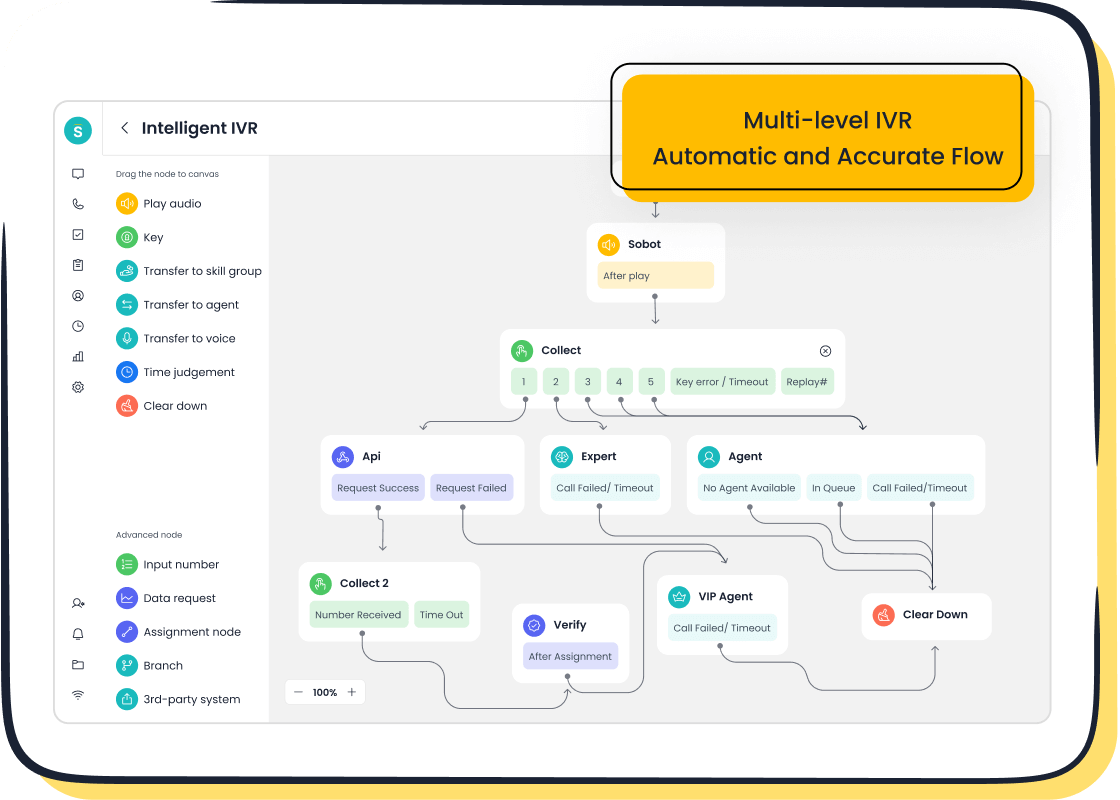
Sobot brings advanced communication tools to support services in healthcare. The Sobot Voice/Call Center lets you reach your care team by phone, chat, or online. The system uses AI-powered voicebots and chatbots to answer common questions fast. You can schedule appointments, get reminders, and ask about office hours or prescriptions. Sobot’s integration with WhatsApp makes it easy for you to connect in the way you prefer.
With Sobot, healthcare providers have reduced response times by three hours. Patient satisfaction scores have gone up by 25%. Automated reminders help you remember appointments, which means fewer missed visits. If you have an urgent issue, Sobot routes your call to the right person quickly. You get answers and support when you need them most. Learn more about Sobot’s healthcare solutions at Sobot Voice/Call Center.
Enhancing Communication and Experience
You want support services in healthcare that are easy to use and reliable. Sobot’s omnichannel contact center brings all your messages, calls, and tickets into one workspace. This means your care team sees your information in real time. You get quick answers, and your records stay safe. The chatbot and live chat features let you ask questions any time, day or night. Automated systems handle routine requests, so staff can focus on complex care.
Healthcare providers use Sobot to send instant appointment reminders and follow-ups. This keeps you engaged and informed. Automated systems manage questions about insurance and prescriptions. Urgent medical issues go straight to skilled staff. Sobot’s technology makes support services in healthcare more personal and efficient. You feel more connected and confident in your care.
Tip: Choose support services in healthcare that use advanced tools like Sobot. This ensures you get fast, accurate, and secure communication every time.
How to Choose the Right Service
Assessing Needs and Preferences
You need to start by looking at your health needs and what matters most to you. Think about your daily routine and how much help you want. Some seniors want to stay at home and enjoy aging in place. Others may need more support from caregivers or want to join a senior care community. Families should talk together about health goals, safety, and comfort. If you need hospice or palliative care, ask your doctor about the best services for your condition. Seniors often want to keep their independence, but some need more help with daily tasks. Make a list of your needs and share it with your caregivers.
Evaluating Service Quality
You want high quality in all health services. Look for senior care providers with good reviews and trained caregivers. Ask about staff experience and how they handle emergencies. Check if the services offer hospice or palliative care for serious illness. Seniors should see if the community has activities and social events. Families can visit the center and talk to other caregivers. Good health services will listen to your needs and adjust care plans. You should feel safe and respected.
When to Change Services
Sometimes, you need to change your health services. Watch for signs that your needs are not being met. If you feel unsafe or your health gets worse, talk to your caregivers. Seniors may need more help as they age. Families should notice if caregivers seem stressed or if there are many mistakes. If you use hospice or palliative care, check if you get enough support. When services do not fit, look for new options.
Organizations are under intense pressure to find solutions and alternatives that will allow them to continue functioning as close to normal as possible. Many of those alternatives present risks and challenges that must be carefully considered.
Given the extreme and unprecedented financial and operational impacts, many health care organizations are considering their options for obtaining services elsewhere, including identifying alternate vendors and evaluating contractual rights and remedies, including termination.
Step-by-Step Decision Guide
You can follow these steps to make smart decisions about health services:
- Mark open enrollment dates on your calendar.
- Gather required documents like ID, proof of income, and past coverage.
- Check if you qualify for special enrollment because of life changes.
Here is a table to help you compare plan types:
| Plan Type | Key Feature | Best For |
|---|---|---|
| Employer-Sponsored | Group rates, shared costs | Employees, dependents |
| Individual | Personal selection | Self-employed, freelancers |
| Government | Income/age-based eligibility | Seniors, low-income |
| Marketplace | Subsidies, plan variety | Individuals, families |
In 2025, one in five Americans used a community health resource for care or advice. These services help seniors and families fill gaps in care. You can use these resources to get advice, find caregivers, or learn about hospice and palliative care. Always review your needs and talk to your caregivers before making decisions.
When you choose support services in healthcare for 2026, focus on what matters most. Think about these key factors:
- Patient navigation for clear guidance
- Shared decision-making for better outcomes
- Cost-saving strategies for smart spending
- Preventive care for long-term health
- Digital health tools for easy access
Reflect on your needs, budget, and preferences. Talk with professionals. Try Sobot’s solutions for better communication. Stay updated on new trends. You can make confident choices for your health.
FAQ
What are support services in healthcare?
Support services in healthcare help you with daily tasks, medical needs, and emotional support. You can choose home care, assisted living, hospice, telehealth, or community-based services. These options improve your quality of life and make care easier for you and your family.
How do I know which support services in healthcare fit my needs?
You should list your health needs and preferences. Compare home care, assisted living, hospice, and telehealth. Ask your doctor for advice. Use tools like Sobot’s Voice/Call Center to connect with providers and get information quickly.
Are support services in healthcare covered by insurance?
Most support services in healthcare have coverage through Medicare, Medicaid, or private insurance. Home care and hospice often get full or partial coverage. Assisted living usually needs private pay. Always check your plan details before choosing a service.
How does technology improve support services in healthcare?
Technology makes support services in healthcare faster and more reliable. AI tools schedule appointments, send reminders, and answer questions. Platforms like Sobot help you reach your care team easily. You get updates and support in real time.
Can I combine different support services in healthcare?
You can mix home care, telehealth, and community-based services. This gives you flexible support. Many people use several support services in healthcare to match changing needs. Ask providers about customizing your care plan.
See Also
Discovering Leading Cloud Contact Centers for 2025
Best Customer Service Software Options for 2024
Enhance SaaS Support Using Effective Live Chat Techniques

