AI Chatbot Comparison Zendesk vs Intercom

Choosing the right AI customer service software depends on your primary goal. This comparison of AI tools for customer support examines two popular platforms. Zendesk's AI excels at support efficiency. Intercom's AI focuses on proactive customer engagement.
Many businesses are shifting their strategy.
- A recent study shows 54% of businesses now prioritize a proactive customer service model.
A third option, Sobot, offers an integrated AI solution. It unifies sales, marketing, and support. This quick comparison helps you decide.
| Platform | Best For | Verdict 🎯 |
|---|---|---|
| Zendesk | Enterprise Support | Ideal for complex, high-volume ticketing. |
| Intercom | Proactive Engagement | Perfect for SaaS lead conversion. |
| Sobot | All-in-One Solution | Best for E-commerce & global businesses. |
Core AI Capabilities: Zendesk vs Intercom
Understanding the core ai engine of each platform is key. Zendesk and Intercom use different approaches to automation. Zendesk builds for robust support structures. Intercom designs for dynamic customer interactions. Their underlying technologies reflect these distinct goals.
Zendesk AI for Enterprise Support
Zendesk AI is built for large-scale support operations. The company develops its own proprietary ai models. It combines this in-house technology with models from partners like OpenAI. This strategy powers its intelligent chatbots and automation features. Zendesk's platform uses acquisitions like Klaus and Ultimate to enhance its capabilities. This allows for advanced ai-powered routing and workflow automation. The goal is to create the best ai support agents that can handle a high volume of customer inquiries efficiently.
Intercom's Fin AI for Proactive Engagement
Intercom's Fin AI is a powerful conversational ai tool. It is built on OpenAI's GPT-4 technology. Fin excels at proactive engagement. It uses the context from outbound messages to provide personalized advice. For example, Fin can guide a new user through setup or highlight useful product features. This approach turns simple customer interactions into opportunities to add value. The focus is less on just closing tickets and more on creating a helpful, ongoing dialogue.
Head-to-Head on AI Resolution Rates
Resolution rate is a critical metric for any ai tool. Zendesk reports its ai can resolve up to 80% of issues autonomously. This aligns with industry predictions that ai agents will handle most common issues. The core difference in their features comes from their AI architecture.
| Feature | Intercom's Fin AI | Zendesk's Answer Bot |
|---|---|---|
| Core Technology | Built on OpenAI's GPT-4 | Proprietary NLP & ML models |
| Data Source | Help articles, past chats | Structured knowledge base |
| Understanding | Advanced contextual ability | Relies on keyword matching |
| Proactive Action | Initiates conversations | Primarily reactive to queries |
While both platforms offer strong automation, Intercom's generative ai provides a more natural and flexible experience. Zendesk's system offers powerful, structured automation for high-volume support teams.
Comparison of AI Tools for Customer Support

A direct comparison of AI tools for customer support reveals different philosophies. Zendesk provides features for structured support. Intercom offers features for dynamic engagement. This comparison of AI tools for customer support highlights how each customer service software approaches automation.
Key Feature Matrix: Support vs Engagement
The main difference between the platforms is their core focus. Zendesk is a customer service software built around a powerful ticketing system. Its AI enhances this structure. Intercom prioritizes a conversational, chat-first experience. Its AI is designed for proactive messaging and sales.
This table shows a clear comparison of their primary features:
| Feature/Aspect | Intercom | Zendesk |
|---|---|---|
| Primary Focus | Customer messaging and engagement | Customer support and ticketing |
| Key AI Features | Proactive chatbots, in-app messages | AI-powered bots, knowledge base |
| Target Audience | Sales and marketing teams | Support teams focused on resolution |
Zendesk’s deep ticketing integration makes it ideal for managing high volumes of requests. Intercom’s conversational AI is better for turning website visitors into leads.
Agent Assistance and Copilot Tools
Both platforms offer AI tools to help human agents work faster. These tools are some of the best AI support agents available. They provide a new level of customer support automation.
- Zendesk's AI Copilot helps agents with tasks like summary generation and categorization. This support automation is built for efficiency within a structured workflow.
- Intercom's Fin AI Copilot assists agents directly within a conversation. It provides real-time information and suggestions.
The goal of this AI customer service is to make agents more effective. Zendesk focuses on organizing the support queue. Intercom focuses on enriching the live conversation.
Analytics and Reporting Capabilities
Measuring AI performance is crucial for any AI customer service platform. Both platforms provide detailed analytics. Zendesk’s BotQA dashboard monitors key metrics. It tracks bot deflection rates and escalations to human agents. This helps teams understand the effectiveness of their automation. Intercom’s AI Analyst offers similar insights into its conversational customer service. It helps you see how the AI performs in real time. This final comparison of AI tools for customer support shows that both offer strong reporting, but they measure success differently based on their core goals.
Introducing Sobot: The All-in-One AI Alternative
While Zendesk and Intercom offer specialized tools, some businesses need a single platform for all customer interactions. Sobot provides an all-in-one alternative. It unifies sales, marketing, and support into one comprehensive contact center solution. This approach eliminates the need for multiple tools and subscriptions.
Sobot's Unified AI Customer Service
Sobot delivers a truly unified AI customer service experience. The platform integrates every customer channel and communication method, from live chat and email to its voice call center and ticketing system. Its powerful Five-AI system architecture is a key differentiator. This system includes:
- Omnichannel AI: Covers every customer touchpoint.
- Scenario-based AI: Offers tailored automation for industries like e-commerce.
- Multi-faceted AI: Provides AI Agents, Copilots, and performance insights.
- Generative AI: Uses advanced LLMs for smarter conversations.
- Secure AI: Ensures data privacy and compliance.
This comprehensive feature set allows businesses to build powerful AI workflows for scalable support and proactive marketing.
Key Advantages of Sobot's AI Chatbot
Sobot's no-code, multilingual AI chatbot offers significant advantages. Its features are designed for ease of use and powerful performance. Businesses can use a visual builder to design and deploy automation without needing a development team. Key features show how AI chatbots improve customer service:
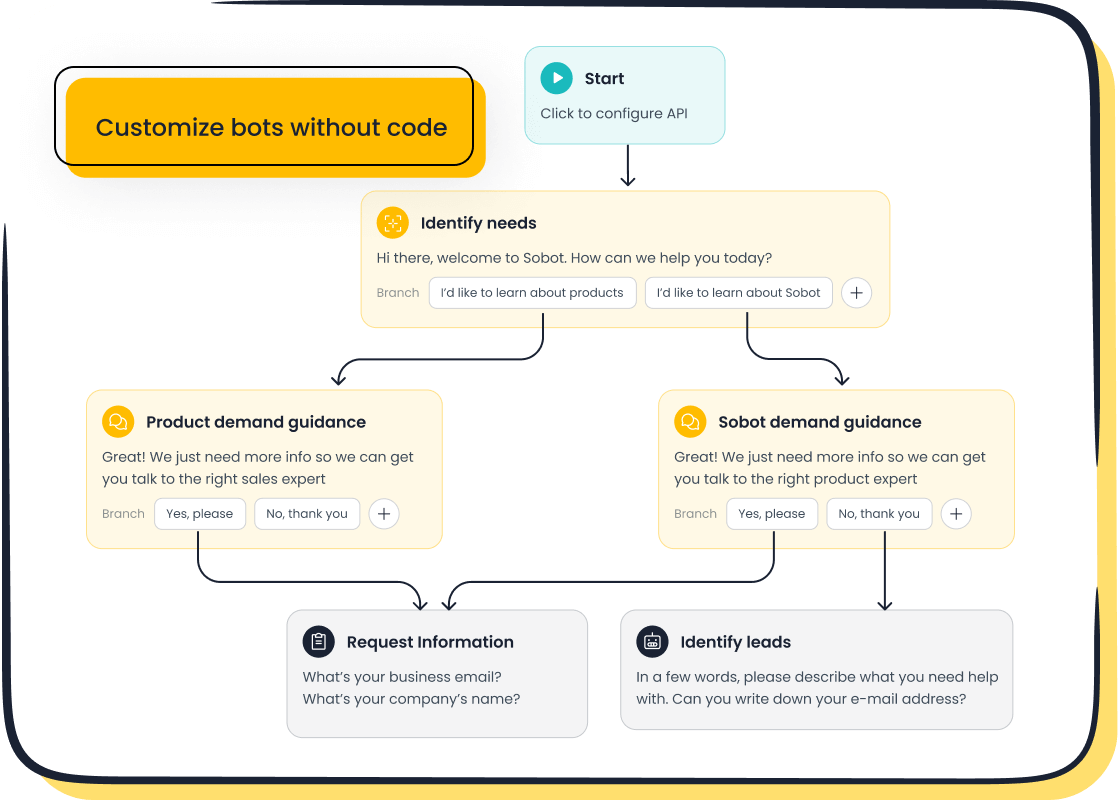
- Omnichannel Presence: The AI operates across chat, email, voice, and social media.
- Easy Setup: A point-and-click interface simplifies chatbot creation.
- Global Reach: Multilingual support helps you serve a diverse audience.
- High Security: The platform ensures data security and GDPR compliance.
These capabilities make the AI a valuable tool for boosting efficiency and conversions.
Proven Success: The OPPO Case Study
Sobot's AI delivers measurable results. The partnership with global smart device leader OPPO is a clear example. OPPO needed to improve customer service efficiency during peak shopping periods. By implementing Sobot's AI chatbot, they achieved remarkable outcomes.
OPPO deployed an emotionally intelligent chatbot that led to an 83% resolution rate. This advanced automation also drove a 57% increase in repurchase behavior, showing the AI's impact beyond just answering questions.
This success story proves the value of an integrated AI strategy.
Who is Each Platform Built For?
Choosing the right platform depends entirely on your business model and primary objectives. One company may need a robust system for handling thousands of daily tickets. Another might need a tool to convert website visitors into paying customers. This section breaks down the ideal user for Zendesk, Intercom, and Sobot to help you make an informed decision.
Choose Zendesk for Complex Ticketing
Zendesk is the industry standard for large-scale customer support. Its platform is built around a powerful ticketing system designed for structure and efficiency. This customer service software is best suited for large enterprises with complex operational needs.
Choose Zendesk if your organization fits these descriptions:
- You manage high volumes of support tickets across many channels like email, phone, and social media.
- You require deep integration with other enterprise systems (e.g., Salesforce, Jira).
- You need advanced reporting and analytics to manage thousands of agents.
- Your focus is on resolution times, agent productivity, and support process automation.
Zendesk's ai and automation tools are designed to streamline these complex workflows. Many industries rely on this structured approach for their support operations, including:
- Retail and E-commerce
- IT support
- Healthcare
- Education
- Financial Services
For businesses where support is a large, structured department, Zendesk provides the necessary tools for control and scale.
Choose Intercom for Sales and Engagement
Intercom is the go-to choice for businesses that prioritize proactive customer engagement and lead conversion. It is favored by fast-growing SaaS companies and product-led growth teams. The platform's philosophy is "chat-first," turning every interaction into an opportunity.
Choose Intercom if your goals are:
- To convert anonymous website visitors into qualified leads.
- To onboard new users with proactive, automated messages.
- To prioritize a modern, conversational user experience over a traditional ticketing queue.
Intercom's ai excels at creating these engaging experiences. A quick response time is critical for customer engagement, and Intercom's combination of live chat and generative ai delivers instant, relevant answers. This approach has a measurable impact.
For e-commerce businesses, Intercom's blend of automated messaging and agent intervention has led to a 30% increase in conversion rates.
Companies effectively use Intercom's features to capture leads directly from their website. The platform's automation helps turn simple questions into sales opportunities.
| Company | Intercom Use for Lead Conversion |
|---|---|
| Phytech | Uses a bot to ask homepage visitors about their crops, then captures their email to provide more information. |
| Intercom | Generates over 100,000 leads from its own blog using gated content and targeted calls-to-action within the chat. |
If your primary goal is growth driven by sales and marketing conversations, Intercom is one of the strongest platforms available.
Choose Sobot for an Integrated Solution
Sobot is built for businesses that need more than just a specialized tool. It is the ideal choice for companies seeking a single, unified solution for support, sales, and marketing. This is especially true for e-commerce brands and businesses with a global, multilingual customer base.
Choose Sobot if you:
- Need an all-in-one solution to manage every customer contact point.
- Serve a global audience and require powerful multilingual support.
- Want to unify your sales, marketing, and support teams on one platform.
- Prefer a no-code ai chatbot builder for easy setup and deployment.
Sobot's all-in-one customer service software eliminates data silos and simplifies your tech stack. Its multilingual ai capability is a significant advantage for international companies. The system allows you to build a knowledge base in one language and deploy it across others, reducing maintenance workload by up to 80%.
The new energy company Renogy, which serves customers in over 30 countries, faced challenges with its previous chatbot. After implementing Sobot's AI Agent, Renogy saw a 35% increase in direct response rate and a 90% reduction in knowledge base workload.
This proves the power of an integrated ai customer service platform. Sobot provides the tools to enhance efficiency, cut costs, and boost conversions without needing multiple subscriptions.
Pricing Models and ROI
Understanding the pricing model of each platform is crucial for calculating your return on investment (ROI). Zendesk, Intercom, and Sobot use different approaches. These differences can significantly impact your total support costs.
Zendesk's Per-Agent Pricing
Zendesk uses a traditional per-agent pricing model. This approach is predictable and easy to budget for. You pay a set fee for each support agent on your team per month. This makes it a popular choice for large enterprises that need stable financial planning.
However, advanced AI and automation features often require purchasing higher-tier plans or add-ons. This can increase the total cost beyond the base agent price.
Intercom's Usage-Based Model
Intercom’s pricing is more complex. It combines a per-seat fee with usage-based charges. This means your monthly bill can change based on activity. For example, Intercom charges $0.99 for each successful resolution its Fin AI completes. This cost is in addition to the monthly fee for each agent seat.
Other usage-based costs can include:
- Email and SMS campaigns
- WhatsApp conversations
- Advanced proactive support features
This model offers flexibility, but it can make budgeting difficult. Costs may rise during busy periods as your team and AI handle more customer interactions.
Sobot's Value-Driven Approach
Sobot offers a value-driven approach tailored to your business needs. Instead of a rigid plan, Sobot creates a custom price based on the value you receive. This model provides a clear connection between cost and performance. The pricing considers several factors to build a plan that fits your goals.
These factors include:
- Number of agents
- Required feature tiers
- Advanced AI capabilities
- Integration and setup needs
This method ensures you only pay for the features and capacity you need. It aligns the cost of the AI platforms with your specific ROI targets, making it an efficient choice for businesses wanting a unified solution.
Making Your Final Decision
Choosing the right customer service software is a major decision. The best platform will align with your business goals, integrate with your existing tools, and scale as you grow. This final comparison of ai tools for customer support will help you make a confident choice.
How to Choose the Best AI Customer Service Platform
To find the best ai customer service platform, you must look beyond marketing claims. Ask vendors direct questions about their technology. A strong AI partner will provide clear answers.
Before you commit, ask these key questions about their AI:
- What business goals does the AI support? Understand if the AI is built for support, sales, or both.
- What data was used to train the AI? Transparency about data sources is essential for security and avoiding bias.
- How can we control and monitor the AI? Look for tools that track accuracy and provide audit trails for compliance.
Answering these questions will help you evaluate the true capabilities of any ai customer service solution.
Integration and Scalability Checklist
Your new AI tool must work with your current systems. A lack of integration creates data silos and limits the power of automation. Use this checklist to evaluate how well new platforms will fit into your workflow.
- [ ] Connects to your other tools (APIs): Can the AI share data with your CRM or e-commerce platform?
- [ ] Reads your data: Can the AI learn from product info, PDFs, and your knowledge base?
- [ ] Offers strong security: Does the platform protect customer data with encryption and follow rules like GDPR?
- [ ] Supports workflow automation: Can the AI handle complex tasks across different systems?
- [ ] Scales with your business: Can the AI handle more conversations as your company grows?
Final Verdict: Zendesk vs Intercom vs Sobot
Your final choice depends on your primary business need. Each customer service software offers a distinct advantage. These ai tools recommendations are based on their core strengths.
| Platform | Core Strength | Ideal User |
|---|---|---|
| Zendesk | Structured Support & Ticketing | Enterprises needing powerful, large-scale support automation. |
| Intercom | Proactive Sales & Engagement | Growth-focused businesses wanting to convert website visitors. |
| Sobot | Unified All-in-One Solution | Global businesses needing a single platform for sales, marketing, and support. |
Ultimately, the right AI platform is the one that solves your biggest challenge, whether it's managing tickets, driving sales, or unifying your entire customer journey.
Your choice comes down to your primary goal. Zendesk is the leader for support-focused enterprises. Intercom excels at engagement for growth-focused businesses. Sobot offers the best all-in-one value for companies wanting a unified customer journey. The right ai platform depends on your needs. Evaluate if your business requires a specialized support ai, a sales-focused ai, or a unified solution. This will help you make the best choice for your company. Ready to unify your customer experience? Embark on Your Contact Journey with Sobot.
FAQ
What is the main difference between Zendesk and Intercom?
Zendesk is best for managing high volumes of support tickets. It focuses on support efficiency. Intercom is best for proactive customer engagement. It helps turn website visitors into leads. Each platform serves a different primary business goal.
How hard is it to set up an AI chatbot?
It varies by platform. Sobot’s AI chatbot is easy to set up. It uses a no-code, point-and-click interface. This allows you to build and launch your chatbot without needing any programming skills, saving time and resources.
What does an all-in-one solution like Sobot do?
An all-in-one solution unifies your customer service tools. Sobot combines live chat, a voice call center, a ticketing system, and an AI chatbot into one platform. This connects your sales, marketing, and support teams for better efficiency.
Which AI customer service platform is right for my business?
Your choice depends on your main goal.
- Zendesk: Choose for complex, large-scale support.
- Intercom: Choose for sales and marketing engagement.
- Sobot: Choose for a unified, global solution for e-commerce and other industries.
See Also
Understanding Live Chat Support Costs: A Comprehensive Comparison Guide
Best Live Chat Platforms of 2024: An In-Depth Comparison
Shopify Versus Competitors: The Top 10 Live Chat Tools
Comparing Leading Interactive Voice Response Software Solutions for Your Business
Your Essential Guide To Selecting The Ideal Chatbot Software

