Types of Contact Centers Explained


Businesses looking to improve customer service often explore different types of contact centers. Experts classify these centers in three main ways: by function (inbound or outbound), operational model (in-house or outsourced), and channel integration (omnichannel). The industry is growing rapidly, showcasing the increasing importance of a strong communication strategy.
| Metric | Value |
|---|---|
| Market Size in 2024 | USD 46.18 Billion |
| Projected Market Size in 2034 | USD 399.41 Billion |
| Compound Annual Growth Rate (CAGR) | 21.8% (from 2025 to 2034) |
Understanding the various types of call centers is the first step to enhance the customer experience. This knowledge helps leaders compare and select a good customer contact center. With a clear strategy, companies like those using Sobot can effectively manage interactions. Embark on Your Contact Journey.
Core Types of Contact Centers by Function
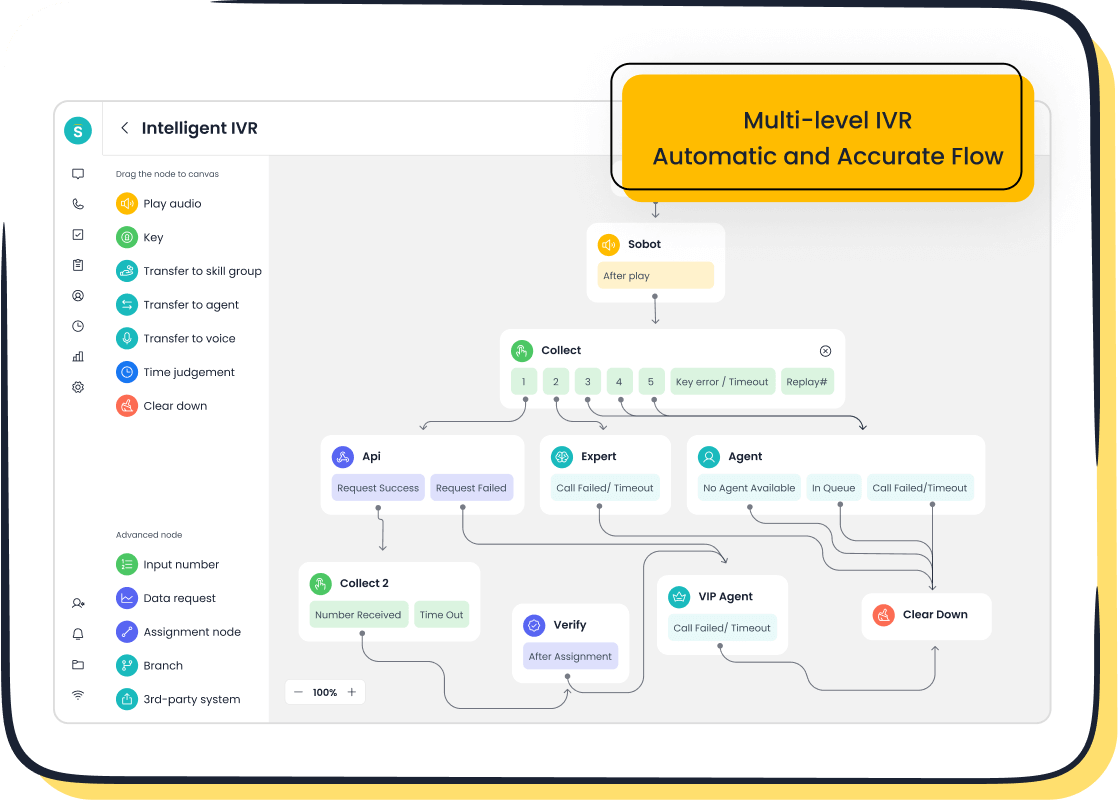
The function of a contact center defines its primary purpose. It determines whether agents primarily receive calls or make them. Understanding this distinction is fundamental when exploring the different types of call centers. A versatile platform like Sobot's Voice/Call Center provides the flexibility to support all functional models, allowing businesses to adapt their strategy as their needs evolve.
The Inbound Call Center
An inbound call center is a facility where agents receive incoming calls from customers. The main goal of an inbound contact center is to provide reactive support. Customers initiate contact for assistance, information, or to resolve issues. This model is the backbone of customer service for many industries.
Key industries rely heavily on the inbound call center model for customer support:
- Healthcare: Patients call to ask about bills, check on insurance claims, or book appointments.
- Banking and Finance: Customers connect with agents to discuss account questions without visiting a physical branch.
- Retail: Agents handle customer complaints, answer product inquiries, and process orders.
- Transportation: Travelers call to make reservations or book tickets for flights and trains.
- Restaurants: Customers phone in to place orders, track a delivery, or provide feedback.
An effective inbound contact center directly impacts customer satisfaction. A good Customer Satisfaction (CSAT) score is a key indicator of success. Many businesses aim for a score above 75% to show they meet customer expectations.
Achieving a high CSAT score requires efficiency. Long wait times frustrate customers. This is where technology like an automated call center becomes vital. Sobot's platform uses Intelligent IVR (Interactive Voice Response) to greet callers and guide them through a menu. Its Smart Call Routing then automatically directs the call to the most qualified agent or department. This process reduces wait times and improves the overall customer service experience.
| CSAT Score Category | Percentage |
|---|---|
| Industry Benchmark Average | 78% |
| Good (Industry Standard) | 75% to 84% |
| World-Class | 85% or higher |
| Percentage of Call Centers Achieving World-Class | 5% |
The Outbound Call Center
An outbound call center operates in the opposite way. Agents in an outbound contact center make outgoing calls to customers or potential customers. This approach is proactive. Instead of waiting for customers to call, the business initiates the conversation. The most common use is for sales and telemarketing.
However, an outbound contact center serves many purposes beyond sales. These activities help build customer relationships and gather important data.
- Customer Surveys: Agents or automated systems call customers to collect feedback on their experience.
- Appointment Reminders: Businesses call to confirm upcoming appointments, reducing no-shows.
- Market Research: Companies conduct polls to learn about customer needs and product interests.
- Fundraising: Non-profits reach out to potential donors to solicit donations for a cause.
- Proactive Support: Agents may call a customer to follow up on a previous issue or offer technical help.
The success of an outbound sales campaign is often measured by its conversion rate. B2C campaigns typically see lower rates due to the nature of cold calling.
| Category | Conversion Rate |
|---|---|
| Average | 1%–3% |
| Good | 3%–5% |
| Excellent | 5%–8% |
To manage these campaigns effectively, businesses need powerful tools. An outbound call center can leverage Sobot's Bulk Outbound Task feature. This tool automates large-scale calling lists and assigns leads to agents based on priority. It streamlines the workflow for sales, lead generation, and market research, making the entire process more organized and productive.
The Blended Contact Center
A blended contact center combines both inbound and outbound functions. Agents in a blended call center handle incoming customer support calls and make outgoing calls during less busy periods. This hybrid model is becoming the standard for modern operations. Research shows that 70% of U.S. contact centers now use some form of call blending.
The primary advantage of a blended contact center is efficiency. It maximizes agent productivity by eliminating idle time. When the queue for inbound calls is empty, agents can switch to outbound tasks like follow-up calls or customer surveys. This varied workload also helps keep agents more engaged and motivated. An automated call center system is essential for this model to work smoothly.
A blended call center requires a sophisticated platform. Agents need the ability to switch between tasks without friction. A unified platform like Sobot's is designed for this purpose. It provides a single workspace where agents can manage inbound calls, execute outbound campaigns, and access customer data from integrated CRMs. This seamless transition between different types of contact centers tasks allows a blended call center to operate at peak productivity, improving both customer service and operational performance. The blended call center truly represents a flexible and powerful approach to managing customer communications.
Key Types of Call Centers by Operational Model
A business must decide how to run its contact center. This operational model is a critical choice. It affects costs, control, and scalability. Companies can build their own teams, hire another company, or use different technology setups. These choices define the various types of call centers available.
In-House vs. Outsourced (BPO)
A major decision for any business is whether to manage its contact center internally or to outsource it. An in-house call center is owned and operated by the company itself. The business hires, trains, and manages its own agents. This model gives a company complete control over its brand voice and customer service quality.
An outsourced call center, often managed by a Business Process Outsourcing (BPO) provider, is a third-party company hired to handle customer interactions. Businesses choose an outsourced contact center for several key reasons:
- Cost Savings: Outsourcing significantly reduces expenses related to salaries, benefits, and infrastructure.
- Access to Expertise: BPOs provide specialized knowledge and access to advanced technology.
- Scalability: Companies can quickly scale their support teams up or down to meet demand.
- Focus on Core Business: It frees up internal resources to concentrate on primary business functions.
The cost difference between these two models is substantial. Running an in-house team in a high-cost country can be far more expensive than partnering with a BPO in a location with lower labor costs.
| Category | In-House (U.S.) | Outsourced (Philippine BPO) | Potential Savings |
|---|---|---|---|
| 10 Agents (Annual Cost) | Over $750,000 | $150,000–$200,000 | Over $500,000 |
| Infrastructure (Per Employee/Year) | $5,000 - $15,000 | Absorbed by BPO | Eliminated |
| Recruitment & Training (Per Position) | $4,000+ | Absorbed by BPO | Eliminated |
Choosing an outsourced contact center helps companies avoid many hidden costs. These include software licenses, server maintenance, and compliance overhead, which are all handled by the BPO partner.
On-Premises vs. Cloud-Based
Another key distinction among the types of contact centers is the technology infrastructure. This choice comes down to on-premises versus cloud-based solutions.
An on-premises contact center houses all its hardware and software on-site. The company is responsible for buying, maintaining, and upgrading its servers and systems. This model offers maximum control over data and security. Industries with strict compliance rules, like finance and healthcare, often prefer this setup. They can implement custom security protocols and know exactly where their data resides.
A cloud-based contact center, in contrast, operates on servers hosted by a third-party provider. Agents access the system through the internet. This model eliminates the need for large upfront investments in hardware. The provider handles all maintenance, updates, and security.
Security Note: While on-premises solutions offer more direct control, cloud providers invest heavily in advanced security. Reputable cloud services often feature data encryption, multi-factor authentication, and dedicated security teams that monitor threats 24/7. This level of security can be difficult for an individual company to achieve on its own.
The two models also differ in their security responsibilities.
- On-Premises: The organization is fully responsible for all aspects of security, from physical server access to data protection.
- Cloud-Based: Security is a shared responsibility. The provider secures the infrastructure, while the company secures its own data, applications, and user access.
| Characteristic | On-Premise Contact Centers | Cloud Contact Centers |
|---|---|---|
| Control | Full control over hardware and software | Limited; depends on the provider |
| Maintenance | Requires an in-house IT team for updates | Provider handles all maintenance |
| Security | In-house team manages all security controls | Mostly managed by the provider |
| Disaster Recovery | Requires in-house planning and resources | Often built-in by the provider |
Cloud-based automated call centers are becoming the industry standard due to their flexibility, scalability, and cost-effectiveness.
The Virtual Contact Center
A virtual call center is a type of cloud-based contact center where agents work from different locations. They are not tied to a single physical office. This model relies entirely on cloud technology to connect agents, managers, and customers. The rise of remote work has made the virtual call center an increasingly popular choice.
The market for cloud-based and virtual solutions is growing rapidly. This growth reflects a major shift in how businesses approach customer support operations.
| Market Segment | Projected CAGR | Period |
|---|---|---|
| Cloud-based Contact Center | 21.73% | 2025-2034 |
| Contact Center as a Service | 20.3% | 2025-2030 |
One of the biggest advantages of a virtual call center is its impact on staffing. Companies can recruit talent from anywhere in the world, creating a diverse and skilled workforce. This flexibility also improves employee satisfaction and retention. Agents appreciate the ability to work from home and control their schedules, which reduces turnover—a common problem in traditional centers.
The virtual model offers significant benefits:
- Wider Talent Pool: Businesses can hire the best agents regardless of their location.
- Increased Flexibility: Agents can work hours that fit their lifestyle, improving work-life balance.
- Lower Costs: Companies save money on office space, utilities, and other overhead expenses.
- Business Continuity: A distributed workforce is less vulnerable to local disruptions like power outages or bad weather.
The virtual contact center represents the future of customer engagement. It combines the power of cloud technology with the flexibility of remote work to create an efficient, resilient, and agent-friendly operation.
Contact Centers by Channel Integration
The channels a business uses to communicate with customers define its integration strategy. This choice directly impacts the customer experience. Companies can offer support on many channels or connect them all for a seamless journey. This distinction separates a multichannel contact center from a superior omnichannel contact center.
Multichannel Support
A multichannel contact center offers customer service across several platforms. Customers can reach out through their preferred method. Common channels include:
- Phone support
- Email and support tickets
- Live chat
- Social media
This approach provides options, but the channels often operate independently. This separation creates a disconnected experience. For example, an agent on a phone call may not see a customer's previous live chat conversation. This forces customers to repeat information. Studies show that 55% of consumers feel like they are talking to separate departments, not one company. A multichannel call center can lead to frustration and lower customer satisfaction.
Sobot's Omnichannel Solution
An omnichannel contact center represents the evolution of customer communication. It integrates all channels into a single, unified system. This creates a seamless conversation that can move from one channel to another without losing context. An omnichannel call center provides a consistent and personalized customer experience. This model is a core feature of modern automated call centers.
Sobot’s Omnichannel Solution helps businesses achieve this ideal state. It connects every touchpoint, from chatbots to live agents.
A powerful example is OPPO, a leading smart device brand. By using Sobot's omnichannel capabilities, including its chatbot and ticketing system, OPPO built a highly efficient customer service operation. This strategy resulted in:
- An 83% chatbot resolution rate, freeing up human agents for complex issues.
- A 57% increase in repurchase rate, showing a direct link between great service and customer loyalty.
This level of integration is what defines true omnichannel contact centers. As an official WhatsApp Business Solution Provider (BSP), Sobot ensures businesses can connect with customers on today's most popular messaging platforms. An omnichannel call center turns every interaction into a part of a single, ongoing relationship, which is key for excellent customer service. This approach is central to the design of effective automated contact centers and multichannel contact centers aiming to upgrade their systems.
How to Compare and Select a Good Customer Contact Center

Choosing the right platform is a critical decision. To compare and select a good customer contact center, a business must evaluate its unique needs against the available options. This process ensures the final choice supports long-term success and enhances customer service. A thoughtful approach helps companies compare and select a good customer contact center that delivers real value.
Aligning with Business Goals
The first step to compare and select a good customer contact center is to define clear business objectives. What does the company want to achieve? Setting specific contact center goals provides a roadmap for the selection process. Common goals include:
- Improving customer satisfaction scores.
- Increasing first-contact resolution rates.
- Boosting sales and lead generation.
- Reducing operational costs.
Clearly defined goals help businesses identify the essential features needed to improve contact center performance. This alignment ensures the investment directly contributes to the company's overall strategy.
Evaluating Budget and Scalability
Budget is a major factor when you compare and select a good customer contact center. Costs for call center software vary widely based on features and the number of users.
Typical Monthly Costs Per User:
- Basic Software: $25–$75 for essential features like call routing and recording.
- Enterprise (CCaaS): $75+ for advanced solutions with omnichannel support and AI.
While cost is important, scalability is crucial for growth. A business needs a solution that can expand with it. Cloud-based platforms like Sobot offer this flexibility. With a robust cloud infrastructure and global number availability, companies can easily add agents or enter new markets without major hardware investments. This makes it easier for customer service teams to adapt to changing demands.
Assessing Technology and Integration Needs
Technology is the engine of a modern contact center. When you compare and select a good customer contact center, assessing its technical capabilities is vital. The right call center software must integrate smoothly with existing systems to avoid data silos.
Key features to look for include:
- CRM Integration: Connects with systems like Salesforce and Shopify for a unified view of the customer.
- Omnichannel Support: Unifies communication across phone, email, chat, and social media.
- AI and Automation: Uses chatbots and intelligent routing to improve efficiency.
System stability is non-negotiable. Sobot guarantees 99.99% system stability, ensuring reliable customer service. Its seamless integration capabilities empower businesses to build a connected and efficient technology ecosystem. For expert guidance on finding a solution that fits your specific needs, contact Sobot's specialists at marketing@sobot.io.
The best contact center aligns with specific business goals, whether for inbound support or an outbound sales engine. An integrated omnichannel experience is powerful; companies with strong engagement retain 89% of their customers. Modern solutions like Sobot provide the flexibility to build an efficient and scalable operation. They deliver all-in-one tools that enhance customer service and improve operational efficiency, creating a superior customer experience.
Ready to build a better contact center? Learn how Sobot can help you achieve your goals at sobot.io.
FAQ
What is the main difference between a call center and a contact center?
A call center primarily handles voice calls. A contact center manages communications across multiple channels. These channels include email, live chat, social media, and phone calls, offering a more integrated approach to customer service.
Why are cloud-based contact centers so popular?
Cloud-based centers offer great flexibility and scalability. Businesses can easily add agents and features without buying expensive hardware. This model also supports remote work, which helps companies hire talent from anywhere in the world.
How does an omnichannel approach improve the customer experience?
An omnichannel strategy connects all communication channels. It creates a single, seamless conversation. Customers do not need to repeat information, which makes their journey smoother and more satisfying. This leads to a better overall experience.
Can a small business benefit from a contact center?
Yes, small businesses can greatly benefit. Modern cloud solutions are affordable and easy to set up. They help small teams manage customer interactions efficiently, improve professionalism, and support business growth without a large initial investment.
See Also
Evaluating Leading Contact Center Solutions: A Comprehensive 2024 Review
Best Cloud Contact Center Services: In-Depth Reviews for This Year
A 10-Step Guide to Deploying Effective Omnichannel Contact Center Solutions
Your Essential Guide to Mastering Omnichannel Call Center Software
Implementing Top Quality Management Best Practices for Call Centers

