Cloud vs. On-Premise Which Deploys Faster?


A cloud contact center deploys significantly faster than an on-premise contact center, often in a matter of days versus months. The typical contact center deployment timeline highlights this difference:
| Characteristic | On-Premise Contact Centers | Cloud Contact Centers |
|---|---|---|
| Deployment Time | A few weeks to a few months | A few days to a few weeks |
Cloud solutions remove the primary bottleneck of any on-premise solution: physical hardware. This cloud approach allows a business to improve its customer experience quickly. A customer benefits from a modern experience without the long waits of an on-premise setup, a speed exemplified by cloud platforms like Sobot.
Key Differences in Deployment Timelines

The key differences between cloud and on-premise deployment are not small. One path takes months of planning and physical work. The other path takes weeks of digital configuration. Understanding the contact center deployment timeline for each approach shows why businesses seeking speed choose the cloud.
The On-Premise Contact Center: A Months-Long Process
An on-premise contact center project is a major undertaking. The deployment timeline often stretches across several months. This long process is due to its reliance on physical infrastructure. Each step adds significant time and cost to the project.
The journey begins with hardware.
- Procurement and Shipping: The IT team must first specify, order, and wait for physical servers, networking gear, and phones. This procurement and delivery phase alone typically takes between 2 to 8 weeks. Delays here can push the entire project schedule back.
- Installation and Setup: Once the hardware arrives, the real work begins. An on-premise solution requires extensive time for hardware setup. Technicians must physically install servers in a data center. They install the necessary software. They then configure the entire system. This phase can take many more weeks to get fully operational.
- Integration and Testing: The new on-premise contact center must connect with existing business systems like a CRM. These integrations often require custom development and rigorous testing. This ensures data flows correctly between the old and new technology.
This entire sequence makes the on-premise deployment a slow, step-by-step process. It demands significant internal resources and careful project management to avoid costly delays that impact the customer experience. The key differences in this approach create a high barrier for businesses needing to adapt quickly.
The Cloud Contact Center: A Weeks-Long Process
A cloud contact center offers a much faster path to launch. Deployment can happen in a few days to a few weeks. The cloud removes the biggest bottleneck: physical hardware. The provider manages all servers and infrastructure. This allows a business to focus on configuring the software to meet its specific needs.
The migration process to the cloud is streamlined and efficient. It follows a clear set of steps that prioritize speed and business goals.
- Define Needs: The first step is to outline what the business wants to achieve. This includes the features needed to improve the customer experience.
- Choose a Provider: The team evaluates cloud options based on features, scalability, and cost.
- Configure and Go Live: This is where the cloud truly accelerates the timeline.
🚀 Speed in Action: With a cloud solution, a company can be ready for its first customer call in as little as five business days from the order.
Setting up the system is remarkably fast. Supervisors can create user accounts and agent profiles in minutes. They can begin building interactive voice response (IVR) call paths almost immediately after subscribing. Agents can access the system using their own computers, which removes the need for special hardware installation.
The typical cloud implementation plan looks like this:
- Assess Requirements: Document current operations and define clear objectives for the cloud migration.
- Configure the Platform: Translate requirements into operational settings. This includes creating agent accounts, defining routing rules, and customizing workspaces.
- Integrate Business Systems: Connect the cloud platform to CRM and other tools using pre-built connectors and APIs.
- Launch a Pilot: Test the setup with a small group of agents to address any issues.
- Train and Migrate: Train all agents on the new platform and complete the full migration.
This entire process happens through a web-based interface. It empowers teams to build and adapt their contact center without waiting for IT. The result is a faster deployment, a quicker return on investment, and a better experience for every customer.
Why Cloud Deployment is Faster

The speed of a cloud contact center comes from its fundamental design. Cloud solutions remove the physical barriers that slow down traditional projects. This modern approach accelerates the entire process from planning to launch, giving businesses a critical advantage. The cloud empowers companies to improve the customer experience without the long waits of an on-premise setup.
Eliminating Hardware Delays
An on-premise contact center project begins with a long wait. Teams must order physical servers and networking equipment. Lead times for new hardware often range from 4 to 12 weeks. This delay happens before any real setup can even begin. The cloud eliminates this entire step. With a cloud-based solution, the infrastructure is already built and managed by the provider. A business can sign up and get started immediately, turning a months-long waiting game into an instant start.
Reducing the Internal IT Burden
On-premise deployments demand significant time from a company's internal IT team. They are responsible for installing servers, configuring networks, and managing data security. This work pulls them away from other important business tasks. Cloud-based solutions shift this burden to the provider. The provider handles all maintenance, updates, and data security. This frees up the internal IT team to focus on strategic goals that directly help the customer.
Enabling Instant Scalability
Businesses must adapt to changing customer demand. An on-premise system makes this difficult. Scaling up requires buying and installing more hardware, a slow and expensive process. The cloud offers instant scalability.
🚀 Scale on Demand: A cloud contact center allows a business to add or remove agents with just a few clicks. This flexibility is perfect for handling seasonal peaks or unexpected events without paying for unused resources.
This efficiency ensures that contact center operations can grow with the business, providing a consistently great experience for every customer.
Gaining Automatic Feature Updates
Upgrading an on-premise system is a major project. Adding new technology or features often requires new hardware, software licenses, and significant cost. This makes it hard to keep up with evolving customer expectations. The cloud is different. Cloud providers automatically roll out new features and security updates to all users. This means a business always has the latest technology to improve agent performance and the customer experience without any extra work or cost.
Sobot: A Real-World Cloud Contact Center Deployment Timeline
Theoretical speed is one thing; real-world execution is another. Sobot's cloud contact center exemplifies how a modern cloud contact center as a service platform turns deployment speed into a practical advantage. Unlike an on-premise project that takes months, Sobot's cloud solution enables businesses to go live quickly. This rapid contact center deployment timeline helps a customer receive better service, faster. The entire cloud migration process is designed for efficiency, typically following a clear four-phase plan:
- Planning (1-2 weeks): Define goals and map the
customerjourney. - Configuration (2-4 weeks): Set up channels, workflows, and integrations.
- Training (1-2 weeks): Prepare agents and managers for the new system.
- Launch (ongoing): Go live and continuously optimize for performance.
Instant Infrastructure Readiness
The biggest difference from an on-premise deployment is that the cloud infrastructure is ready from day one. There is no hardware to order or install. Sobot provides a stable system with a 99.99% SLA and a global network. This means a business gets a reliable and secure platform immediately. The provider manages the complex backend, including data security, so the internal team can focus on the customer. This instant readiness removes the primary bottleneck of any on-premise project.
Rapid, Web-Based Configuration
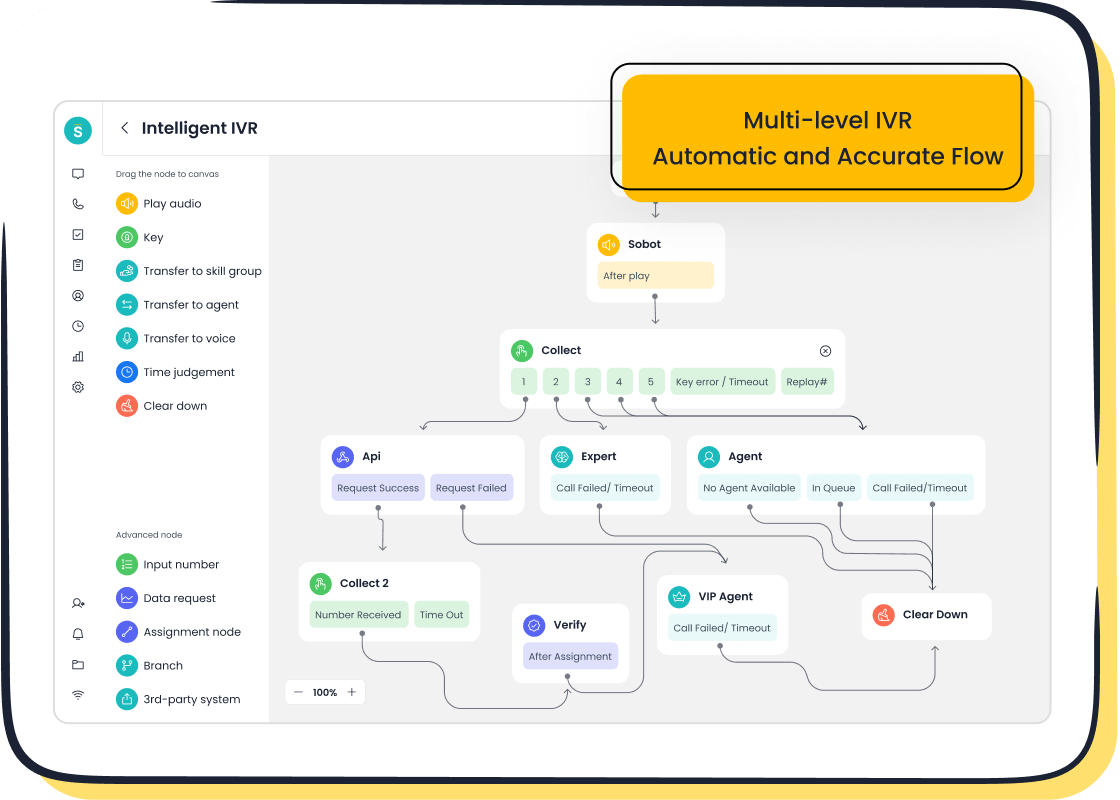
Sobot's cloud platform empowers teams to build their ideal contact center without writing a single line of code. The intuitive, user-friendly interface is a key reason why 85% of teams can implement the software in under a week.
🚀 Build Without Code: Features like the drag-and-drop IVR builder allow managers to design and launch complex call flows in real time. This is a massive time-saver compared to the rigid, IT-dependent configuration of an
on-premisesystem.
This web-based control gives businesses the agility to adapt their customer experience on the fly.
Streamlined API Integrations
Integrating new technology with existing systems is a major hurdle in a traditional contact center deployment timeline. Custom integrations for on-premise solutions are costly and slow. Sobot's cloud-based solutions solve this with an "Integration Made Simple" approach. The platform offers seamless connections to essential business tools. For example, it provides a pre-built API for popular CRMs like Salesforce. This ability to quickly sync data makes the entire cloud setup faster and more powerful from the start.
The Business Impact of Rapid Deployment
The speed of a cloud deployment directly impacts business success. It moves a company from planning to profit much faster than an on-premise alternative. This rapid launch creates tangible value for the business and a better experience for every customer.
Faster Time-to-Value for Your Customer
Faster deployment means a faster time-to-value. A business sees a return on its investment sooner. More importantly, the customer feels the benefits immediately. A swift cloud migration improves the entire customer experience, while a slow on-premise project leaves customers waiting.
📈 Real Results: A rapid cloud deployment leads to fewer dropped calls and can increase Customer Satisfaction (CSAT) scores by up to 20%. This improved experience builds stronger customer loyalty.
An on-premise system's high upfront cost and long setup delay this value. With cloud solutions, a business can quickly enhance its customer communications. This leads to better retention and higher revenue. The lower initial cost of a cloud platform also means resources can be used for other growth initiatives. The positive impact on the customer is clear and measurable.
Increased Business Agility
Business agility is the ability to adapt to market changes. A cloud contact center provides this flexibility, whereas an on-premise system creates rigidity. The rapid deployment of a cloud platform is just the beginning. Its true power lies in its ongoing adaptability. This efficiency allows a company to stay ahead of changing customer expectations.
A cloud system empowers a business to:
- Scale Instantly: Add or remove agents with a few clicks to handle demand spikes.
- Make On-the-Fly Changes: Adjust call flows or update scripts in real time without IT help.
- Innovate Faster: Access new AI tools and features as the cloud provider releases them.
This level of control is impossible with a static on-premise architecture. Improving agent performance or refining a customer interaction in a cloud environment is simple. A cloud approach transforms the contact center from a cost center into a strategic asset that drives the business forward.
For businesses where speed is a priority, the choice is clear. A cloud contact center offers a dramatically faster path to a modern customer experience hub than a traditional on-premise contact center. The on-premise approach involves high upfront cost and long waits. The cloud eliminates these delays. Solutions like Sobot exemplify this speed, turning a months-long on-premise project into a matter of weeks. For any organization that needs to adapt quickly, improve the customer experience now, and see a faster return on investment, the cloud is the definitive answer for contact center deployment. The cloud gives every customer a better experience.
FAQ
How fast can a business launch a cloud contact center?
A business can launch a cloud contact center in days or weeks. The cloud infrastructure is ready immediately. This speed allows companies to improve their operations quickly. A modern cloud platform removes long hardware delays, making the entire process faster than traditional methods.
Is a cloud contact center secure?
Yes, a cloud contact center is very secure. Leading cloud providers prioritize data security with encryption and compliance measures. Sobot, for example, ensures strong data security for all its cloud services. This approach often provides more robust protection than a company can manage on its own.
Can a cloud system adapt to changing customer expectations?
A cloud system adapts easily to meet new customer expectations. Providers automatically roll out new features. This gives a business the latest tools to enhance its service. The flexibility of the cloud helps companies stay competitive and responsive without major new projects.
How does a cloud deployment improve customer communications?
A cloud deployment directly improves customer communications. The fast setup means better tools are available sooner. This leads to greater efficiency and better agent performance. The cloud provides a stable and feature-rich platform, ensuring every interaction is smooth and professional.
See Also
Discovering the Leading Cloud Contact Center Solutions for 2025
Comprehensive Reviews of Leading Cloud Contact Center Services in 2024
Demystifying the Expenses of Outsourcing Live Chat Support Services
Elevate Your SaaS Customer Support Using Effective Live Chat Strategies
Enhancing Retail Customer Engagement Through Strategic Live Chat Implementation

