Your Guide to Cloud IVR Solutions vs On-Premise


Choosing the right IVR system is a critical decision for your business. The market has heavily favored cloud options, with cloud IVR solutions holding a 76% revenue share in 2023. This guide helps you compare these modern systems against traditional on-premise setups.
You essentially have two paths: a flexible, vendor-hosted service like the Sobot call center, or a self-owned, in-house IVR. The Sobot AI platform represents the advanced capabilities of today's cloud technology.
Understanding the Core Models
To make the right choice, you first need to understand how each IVR model works. One model gives you flexibility through a service, while the other gives you ownership through hardware. Let's break them down.
Defining Cloud IVR
Think of cloud IVR solutions as a subscription service. You partner with a provider who hosts and manages the entire system on the internet. You access the IVR technology through the cloud without needing to buy or maintain any physical equipment. This approach gives you access to powerful, modern features.
A modern cloud IVR system is built for growth and reliability. Its architecture often includes:
- AI-Powered Routing: Intelligently directs callers to the right agent or department.
- Speech-to-Text: Converts voice into text for easier analysis.
- Secure Tenant Isolation: Keeps your company's data private and safe.
- Real-time Analytics: Provides live dashboards to track call metrics and agent performance.
This structure allows the service to scale easily, handling more calls as your business grows.
Defining On-Premise IVR
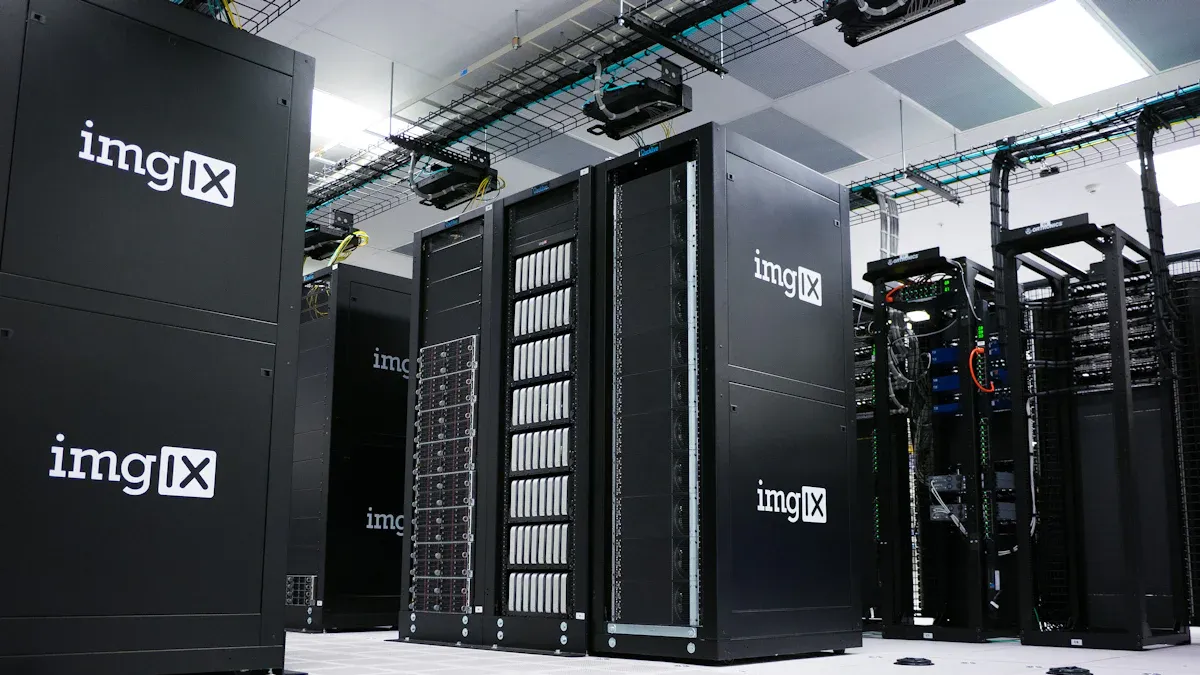
An on-premise IVR is the traditional approach. You purchase and house all the necessary hardware and software at your own business location. Your IT team takes full responsibility for installation, management, and maintenance. This model requires a significant upfront investment in physical infrastructure.
A typical on-premise setup involves several key components you must manage:
- Hardware:
- Servers to run the IVR applications.
- Storage devices for call recordings and logs.
- Telephony Infrastructure:
- A Private Branch Exchange (PBX) system to manage internal and external calls.
- Telephony gateways and interface cards.
- IVR Software:
- Voice recognition engines.
- Platforms for designing call flows.
This option gives you direct control over every aspect of the system.
Key Differences in IVR Systems
When you compare cloud and on-premise IVR systems, you will find major differences in how they handle costs, growth, and daily operations. Understanding these key differences helps you decide which model fits your business goals. Let's explore the five main areas that set them apart.
Cost Structure and TCO
Your total cost of ownership (TCO) is one of the most important factors. The two models approach costs from opposite directions.
-
Cloud IVR: This model uses a subscription-based, operational expense (OpEx) approach. You pay a predictable monthly or annual fee. This fee covers the software, hosting, and maintenance. Cloud IVR solutions remove the need for large upfront costs. For example, Sobot's economic SaaS model bundles everything into one payment, making budgeting simple and predictable. You avoid expenses related to hardware, facility space, and administration.
-
On-Premise IVR: This model requires a significant capital expense (CapEx). You must purchase all the hardware, software licenses, and telephony infrastructure yourself. These upfront costs can be very high. You also need to budget for ongoing expenses. These costs include maintenance fees for updates, technical support, and system troubleshooting to keep your IVR running smoothly.
Scalability and Flexibility
Your business needs can change quickly. Your IVR system must be able to adapt.
Cloud-Based Solution: A cloud-based solution offers incredible flexibility. You can easily scale your capacity up or down to match call volume. If you experience a sudden spike in calls during a holiday season, you can add more lines instantly. When demand returns to normal, you can scale back down. This agility is a key advantage for growing companies. Providers like Sobot guarantee high availability with a 99.99% SLA, ensuring continuous availability for your customers. This reliability is built into the service.
On-Premise System: Scaling an on-premise system is a slow and expensive process.
- You must purchase and install new physical hardware to handle more calls.
- Your IT team is responsible for managing uptime and any incidents.
- If a server fails, you risk significant downtime unless you have invested in a fully mirrored backup system, which doubles your hardware costs.
Implementation and Maintenance
Getting your system running and keeping it that way are also key differences.
Cloud IVR You can deploy a cloud system very quickly. Since the infrastructure is already in place, setup can take just hours or days. The vendor handles all ongoing maintenance, software updates, and security patches. This frees up your IT team to focus on other important tasks.
On-Premise IVR Implementation takes much longer. You have to install hardware on your servers and software on individual computers. Your internal IT team is fully responsible for all maintenance. This includes:
- Managing servers and security.
- Applying software updates.
- Troubleshooting any system issues.
This requires skilled IT personnel and adds to your long-term operational costs.
Control and Customization
The level of control you have over your system varies greatly between the two models.
An on-premise IVR gives you complete control. You own the hardware and software, so you can customize every aspect of the system to fit unique workflows. This is useful if you need deep integration with legacy on-site equipment. However, this level of customization often requires specialized developers and can be complex to manage.
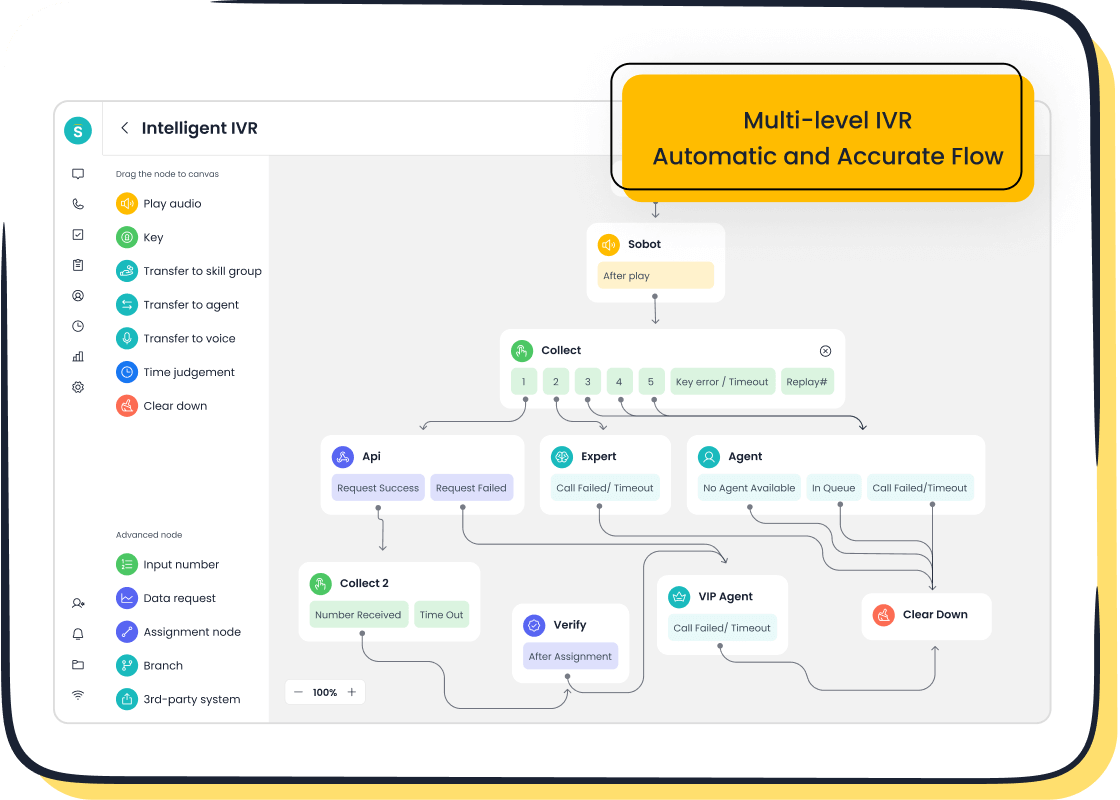
Modern cloud ivr solutions now offer powerful customization tools that are easy to use. For instance, Sobot’s platform includes a drag-and-drop intelligent IVR builder. This allows you to design and modify call flows, menus, and routing rules in real-time without writing any code. You can easily set up logic for business hours, holidays, or skill-based routing, giving you impressive control without the technical burden.
Security and Compliance
Protecting customer data is non-negotiable. Both systems offer strong security, but they achieve it in different ways.
With an on-premise system, you have total control over your data security. Your team manages all security protocols and is responsible for ensuring compliance with regulations like HIPAA or GDPR. This can be ideal for organizations with extremely strict data residency rules or those who want to keep all sensitive information behind their own firewall.
With a cloud-based solution, you entrust your security to the provider. Leading providers take this responsibility very seriously. They invest heavily in security infrastructure and undergo rigorous third-party audits to prove their systems are safe. Many top providers hold certifications like SOC 2 Type 2 and ISO 27001, which confirm their commitment to protecting your data according to global standards. This ensures your system meets strict security and privacy requirements without you needing to manage the infrastructure.
Making the Choice: Cloud vs. Premise-Based IVR
Now you understand the core differences. The final decision comes down to your company's specific goals, resources, and priorities. One path offers agility and innovation, while the other provides absolute control. Let's look at clear scenarios to help you identify the right fit for your business.
When to Choose Cloud IVR
You should choose a cloud-based solution if your business values flexibility, rapid growth, and operational efficiency. This model is ideal for most modern companies, especially those looking to the future.
Consider a cloud-based IVR if these situations sound familiar:
- You Need to Scale Quickly. Your business experiences seasonal peaks, or you are in a high-growth phase. A cloud-based solution allows you to add or remove lines instantly to match call volume, so you only pay for what you need.
- You Want to Improve Workforce Efficiency. You want to automate more tasks and free up your agents. Cloud platforms can automate up to 90% of incoming call flows, handle payments securely 24/7, and reduce manual labor, allowing you to manage more tasks without expanding your team.
- Your Team Works Remotely. Your agents are distributed across different locations or work from home. Cloud systems are accessible from anywhere with an internet connection, providing a unified workspace for your entire team.
- You Have a Limited IT Team. You want to focus your IT resources on core business projects, not on maintaining a phone system. The vendor manages all updates, security, and maintenance for you.
Case Study: How Weee! Boosted Efficiency with the Cloud
America's largest online Asian supermarket, Weee!, faced challenges with its old, inflexible IVR system. It couldn't adapt to customer needs, and managing different languages and time zones was difficult.
By switching to Sobot's cloud-based solution, Weee! transformed its customer service. The new, flexible IVR and integrated agent workspace led to incredible results:
- Agent efficiency increased by 20%.
- Customer issue resolution time was cut in half.
- Customer satisfaction soared to 96%.
This success story shows how moving to the cloud can solve major operational headaches and dramatically improve customer experience.
When to Choose On-Premise IVR
A premise-based IVR is a more traditional choice, but it remains the right option for a small number of organizations with very specific and demanding requirements.
You should consider an on-premise IVR in these specific circumstances:
- You Face Strict Data Sovereignty Rules. Your organization operates in an industry like government, finance, or healthcare. Legal regulations may mandate that all customer data must be stored on-site within your own data centers and behind your own firewall. A premise-based IVR gives you complete physical control over your data.
- You Have Complex Legacy System Integrations. You need to connect your IVR deeply with older, on-site hardware or software that cannot easily integrate with cloud APIs. An on-premise system can sometimes be customized more deeply for these unique situations.
- You Have a Large, Specialized IT Department. Your company has the internal IT resources and expertise required for the job. This includes staff skilled in telephony, server management, and security. Your team must be ready to handle all system maintenance, software updates, and troubleshooting.
A Word of Caution on Resources ⚠️
Choosing an on-premise system is a significant commitment. You are responsible for everything. This includes purchasing hardware, managing software licenses, and performing regular system health checks. If your team lacks the specialized knowledge for custom workflows or CRM integrations, you will need to budget for expensive third-party consultants.
For most businesses today, modern cloud ivr solutions offer a more practical, scalable, and cost-effective path. However, for those with the resources and regulatory need for total control, an on-premise system remains a viable, though demanding, option.
Modern Features of Advanced Cloud IVR Solutions
Modern cloud IVR solutions go far beyond simple call routing. They offer powerful tools that automate tasks, empower your team, and create better customer experiences. These features are what set a progressive cloud platform apart from a traditional system.
AI and Automation in Voicebots
AI-powered voicebots are changing customer service. They use natural language processing (NLP) to understand exactly what your customers want. This technology allows the system to predict caller intent and provide immediate help.
An AI voicebot can handle complex tasks 24/7, such as:
- Scheduling appointments
- Checking order statuses
- Verifying customer identity securely
Sobot’s AI-powered Voicebot uses this technology to resolve common issues without a human agent. This increases your first-contact resolution rate and gives customers faster answers, improving their satisfaction.
Drag-and-Drop IVR Builders
You no longer need an IT team to make changes to your phone menu. A modern cloud-based solution gives you the power to control your call flows. For example, Sobot’s platform includes a drag-and-drop intelligent IVR builder.
This tool lets you visually design and edit your IVR in real-time. You can create new menus, update holiday greetings, or change routing rules with a few clicks. This eliminates your dependency on technical staff and saves you time and money.
Seamless CRM and API Integration
A powerful IVR connects with your other business tools. Seamless integration with your Customer Relationship Management (CRM) system allows for highly personalized interactions. When your systems are connected, the IVR can greet callers by name and reference their past interactions.
This real-time data access ensures customers are routed to the right agent immediately. Sobot’s call center solutions integrate easily with your existing CRM, creating a smarter, more personal experience for every caller.
Global and Remote Accessibility
A cloud-based solution is built for a global and remote workforce. You can get local phone numbers in over 150 countries, helping you build a local presence anywhere. Your agents can connect to the system from any location. All they need is a computer, a stable internet connection, and a headset. This flexibility makes it easy to support customers across different time zones and scale your team without geographic limits.
Your choice between an on-premise or cloud-based solution depends on your goals. A traditional on-premise system offers total control but requires a large budget and IT team. A modern cloud-based solution provides flexibility, lower costs, and advanced features. This makes it the ideal choice for most businesses today. The right IVR system aligns with your company's unique needs and resources.
Ready to see the benefits firsthand? Explore how Sobot's platform can transform your customer interactions. Request a demo to begin your contact journey.
FAQ
How quickly can I set up a new IVR system?
You can deploy a cloud IVR solution in just hours or days. The provider manages all the infrastructure for you. An on-premise IVR takes much longer. It requires you to purchase and install physical hardware and software, which can take weeks or months.
Can a cloud IVR solution integrate with my CRM?
Yes. Modern cloud IVR solutions offer seamless integration with your existing CRM. This connection allows for personalized customer interactions. For example, the system can greet callers by name and provide agents with instant access to the customer's history, creating a smarter experience.
What happens if my call volume suddenly increases?
A cloud-based solution scales instantly to meet demand. You can add more capacity during busy periods and scale back down when things are quiet. With an on-premise system, you must purchase and install more hardware, which is a slow and expensive process.
See Also
Setting Up Your IVR: A Comprehensive Guide to Interactive Voice Response
Comparing the Best Interactive Voice Response Software Solutions Available Today
The 10 Best IVR Interactive Voice Response Software Options for 2024
Your Essential Guide to Omnichannel Call Center Software Implementation
Reviewing the Top Cloud Contact Center Services for This Year 2024

