Cloud Contact Center Solutions Transforming Business Operations


Cloud contact center solutions are transforming business operations in 2025. Companies face urgent challenges in customer service, including meeting high customer expectations, managing costs, ensuring data security, and integrating new technology. Sobot AI and cloud-based solutions help address these needs by providing immediate, personalized service across channels. Sobot call center uses cloud computing to boost efficiency and security. As shown below, 60% of businesses have adopted these platforms.
| Year | Percentage of Businesses Adopting Cloud CCaaS |
|---|---|
| 2025 | 60% |
Business Transformation with Cloud Contact Center Solutions
Customer Experience Impact
Cloud contact center solutions drive a new era of digital transformation for businesses. Companies now deliver digital customer service that meets rising expectations for speed, personalization, and convenience. Customers want answers fast, and they want to use their preferred channels. Cloud contact center platforms make this possible by unifying communication and providing real-time insights.
Companies that embrace digital transformation with cloud contact center solutions see measurable improvements in customer experience.
| Customer Experience Metric | Improvement Percentage/Points |
|---|---|
| Customer Satisfaction (CSAT) | 15-20% |
| Net Promoter Score (NPS) | 10-15 points |
| Customer Effort Score (CES) | 25-30% reduction |
| Journey Completion Rate | 30-40% improvement |
| Sentiment Evolution | 30-40% more at-risk customers |
| Channel Preference Alignment | 85-90% alignment |
| Problem Resolution Time | 35-50% reduction |
AI-powered automation and omnichannel routing play a key role in this transformation. These features allow customers to switch between channels without repeating themselves. AI handles routine questions instantly, reducing wait times and improving first-call resolution rates. Unified customer profiles give agents the full context they need to resolve issues quickly, creating a positive experience for every interaction.
- First call resolution (FCR) measures how many inquiries get solved on the first try. Higher FCR means agents solve problems faster and customers leave happier.
- Average handling time (AHT) tracks how long agents spend on each request. Lower AHT means customers get help faster and agents can help more people.
- Streamlined processes in cloud contact centers improve both FCR and AHT, leading to higher customer satisfaction.
Digital customer service powered by AI and cloud contact center solutions aligns with customer-centric strategies. Companies can now offer seamless, personalized support across voice, chat, email, and social media. This transformation results in higher loyalty and better business outcomes.
Operational Efficiency Gains
Operational efficiency stands at the heart of digital transformation in contact centers. Cloud contact center solutions help businesses scale up or down as needed, so they only pay for the workforce they use. This flexibility reduces costs and avoids the burden of idle staff during slow periods.
- Companies eliminate the need for expensive on-premises infrastructure, saving on hardware and maintenance.
- Remote access to tools and data allows flexible staffing and better cost control.
- Built-in disaster recovery and automatic updates minimize downtime and IT expenses.
- Minimal upfront investment compared to traditional setups.
- Automatic updates reduce IT demands and downtime.
- Support for remote work lowers office space and utility costs.
According to a Frost & Sullivan study, cloud-based contact centers can cut operational costs by up to 43% for large centers with 500 agents. This cost efficiency supports ongoing digital transformation and frees up resources for innovation.
AI-driven automation further boosts efficiency. It reduces wait times, improves first-contact resolution, and lets agents focus on complex issues. Generative AI and conversational AI tools can increase productivity by up to 87%. In one report, 94% of respondents said conversational AI improved productivity in their contact centers.
| Benchmark Metric | Description |
|---|---|
| First Call Resolution (FCR) | Percentage of calls resolved on the first interaction, crucial for customer satisfaction. |
| Average Handle Time (AHT) | Average duration to handle a customer call, impacting operational efficiency. |
| Customer Satisfaction (CSAT) | Customer feedback on their experience, essential for evaluating service quality. |
AI and digital transformation enable companies to automate repetitive tasks, optimize workflows, and provide agents with the information they need. This transformation leads to faster response times, higher agent productivity, and better digital customer service.
Sobot Success Story
Samsung’s partnership with Sobot highlights the real-world impact of cloud contact center solutions. Samsung faced the challenge of managing a high volume of customer inquiries across multiple channels. The company needed a unified platform to streamline operations and improve efficiency.
Sobot delivered an all-in-one cloud contact center that integrated voice, chat, and digital customer service channels. AI-powered chatbots handled routine questions, freeing agents to focus on complex cases. The unified workspace connected with Samsung’s internal systems, giving agents a complete view of each customer’s history.
- Samsung achieved a 97% customer satisfaction rate through Sobot’s multilingual capabilities and real-time insights.
- The company saw a 30% increase in agent efficiency after implementing Sobot’s solution.
- VIP customers received customized video support, enhancing their positive experience and loyalty.
This transformation allowed Samsung to provide seamless, customer-centric service. Agents accessed all the information they needed in one place, reducing repetitive questions and speeding up resolutions. The integration of AI and digital transformation tools helped Samsung deliver digital customer service that exceeded expectations.
Samsung’s story shows how cloud contact center solutions drive measurable transformation in both customer experience and operational efficiency. Companies that invest in these technologies position themselves for long-term success in a digital-first world.
Contact Center Technology Trends for 2025
Contact center technology trends continue to reshape how businesses interact with customers and optimize operations. In 2025, organizations focus on three core areas: AI and automation, omnichannel engagement, and predictive analytics. These trends drive improvements in agent efficiency, customer satisfaction, and workforce optimization.
AI and Automation
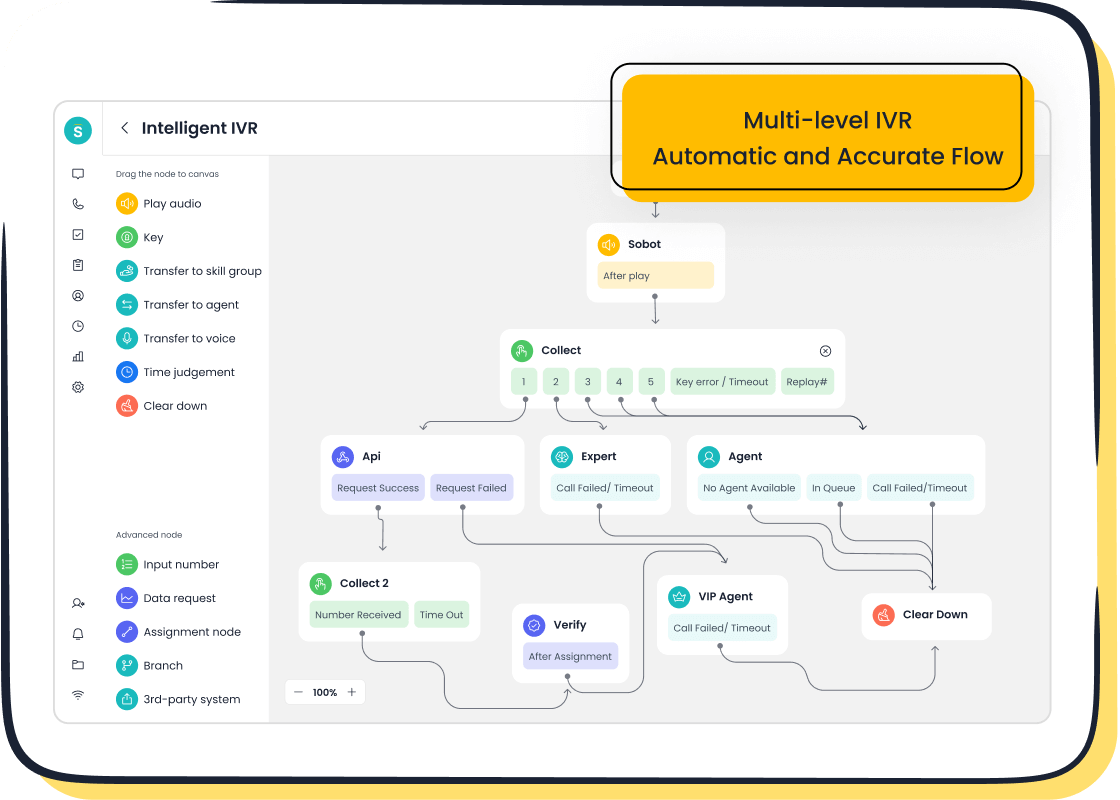
AI in the contact center stands as a game-changer for customer service. Companies deploy intelligent automation to handle routine tasks, freeing agents to address complex issues. Sobot’s AI-powered Voice/Call Center exemplifies this shift, using advanced voicebots and real-time analytics to deliver faster, more empathetic support.
By the end of 2025, over 60% of organizations are projected to leverage real-time analytics in contact centers (source).
AI-driven solutions enhance both agent and customer experiences. The following table highlights the impact of these technologies:
| Evidence Description | Statistic |
|---|---|
| Positive customer experiences with AI-powered service | Approximately 80% |
| Perception of AI agents' empathy | Almost 50% |
| Reduction in resolution times by AI chatbots | Up to 50% |
| Increase in repeat purchases due to personalized support | 36% |
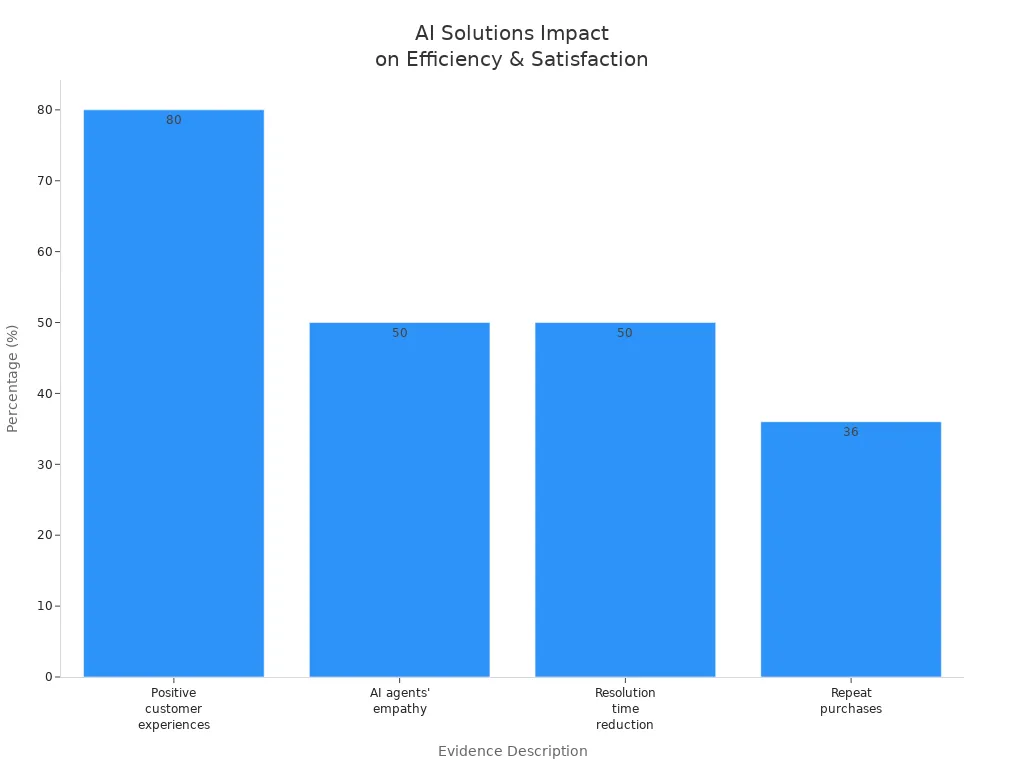
AI in the contact center enables agents to access unified customer profiles, reducing repetitive questioning and improving first call resolution. Automation tools route inquiries to the right agent, analyze sentiment, and provide instant responses. These contact center technology trends help businesses deliver personalized support, increase repeat purchases, and reduce resolution times.
Contact center trends also show a growing emphasis on workforce optimization. Companies use AI to forecast call volumes, schedule agents, and monitor performance. This approach ensures the right resources are available at peak times, improving both efficiency and customer satisfaction.
Tip: Intelligent automation not only streamlines workflows but also empowers agents to focus on high-value interactions.
Omnichannel Engagement
The omnichannel approach has become essential for modern contact centers. Over 75% of global contact centers adopted omnichannel solutions by 2024 (source). These platforms integrate voice, chat, email, and social media into a unified workspace, allowing customers to choose their preferred communication channel.
- Multichannel interaction volumes are projected to exceed 35 billion per year globally.
- Integration of channels increases average customer engagement duration by 15%.
Sobot’s Omnichannel Solution enables agents to manage all interactions from a single dashboard, improving response times and consistency. This contact center technology trend supports seamless transitions between channels, so customers never have to repeat themselves.
| Metric | Description | Impact on Customer Retention and Loyalty |
|---|---|---|
| Customer Lifetime Value (CLV) | Total value a customer brings over their lifetime. | A 10% increase in CLV can lead to a 30% increase in company value. |
| Retention Rates | Percentage of customers who continue to make purchases. | Highlights the importance of effective retention strategies. |
| Engagement Metrics | Email open rates, social media likes, app usage. | Provides insight into customer interaction across channels. |
Starbucks uses a unified customer experience strategy, integrating in-store and digital experiences. This approach leads to better customer retention and enhanced brand loyalty.
Contact center trends indicate that testing and optimizing personalization efforts can improve retention metrics. Companies using real-time data often see gains in customer lifetime value and repeat purchase rates. Cross-channel testing reveals insights that help tailor marketing strategies.
Note: Omnichannel engagement platforms not only improve customer satisfaction but also drive long-term loyalty and higher company value.
Predictive Analytics
Predictive analytics stands out among contact center technology trends for its ability to anticipate customer needs and optimize operations. Companies use these tools to forecast call volumes, predict hold times, and route inquiries to the most suitable agents.
Common use cases for predictive analytics in contact centers include:
- Predicting hold times to manage customer expectations and queue management.
- Forecasting call volume and peak times to optimize agent scheduling.
- Utilizing predictive call routing to connect customers with the most suitable agents.
- Analyzing customer behavior to anticipate future needs and improve service.
- Enhancing first call resolution by identifying patterns in customer issues.
- Improving sales offers by understanding which products resonate with customers.
- Reducing churn by identifying at-risk customers through conversation analysis.
Predictive analytics helps businesses anticipate customer needs, allowing them to provide timely support before issues escalate. By analyzing past interactions, companies identify trends and prepare their teams for common inquiries, leading to quicker resolutions. These tools enable agents to have answers ready before customers even reach out, enhancing the overall customer experience.
- Companies notice a spike in inquiries about a specific product feature.
- They proactively send out guides or adjust support scripts to address potential confusion.
- This approach builds customer trust and prevents minor issues from escalating into major complaints.
Workforce optimization benefits from predictive analytics as well. Managers use data to schedule agents efficiently, reducing idle time and improving service levels. Contact center technology continues to evolve, making predictive analytics a vital part of proactive customer service.
Proactive support powered by predictive analytics transforms customer interactions, turning reactive service into a strategic advantage.
Top Technology Trends Shaping Cloud Contact Centers in 2025
Industry analysts highlight several contact center technology trends that will define the future:
- Distribute your workforce
- Continue remote operations
- Prioritize digital-first
- Expand CX self-service
- Rethink security policies
- Restart your sales engine
- Build a new training program
These trends reflect the growing importance of flexibility, security, and digital-first strategies in contact center technology. Companies that embrace these changes position themselves for success in a rapidly evolving market.
Companies that invest in AI-driven solutions, omnichannel engagement, and predictive analytics will lead the way in customer experience and operational excellence.
Enhancing Customer Experience with Sobot

Unified Workspace
Sobot’s unified workspace transforms the customer journey by bringing every interaction into one easy-to-use platform. Agents can view customer history, manage tickets, and respond across channels like voice, live chat, WhatsApp, and email—all from a single dashboard. This approach streamlines agent assistance and ensures no detail gets lost, even as customers move between channels. The workspace uses omnichannel AI to cover every touchpoint, scenario-based AI for industry-specific needs, and multi-faceted AI tools such as Copilot and Insight. Generative AI powers smarter responses, while secure AI protects data and builds trust. Over 300 management reports help teams monitor quality and improve the customer experience.
| Feature | Description |
|---|---|
| Omnichannel AI | Covers every customer touchpoint across various platforms, ensuring seamless communication. |
| Scenario-based AI | Tailored for specific industries like e-commerce and retail, enhancing customer interactions. |
| Multi-faceted AI | Includes various AI functionalities such as AI Agent, Copilot, and Insight for comprehensive support. |
| Generative AI | Utilizes advanced LLMs for improved customer service capabilities. |
| Secure AI | Ensures data privacy and compliance, fostering customer trust. |
| Comprehensive Management Tools | Offers over 300 statistical reports for process monitoring and quality inspection. |
| Experience-Led Philosophy | Focuses on user experience, making the platform easy to use and efficient. |
Sobot’s unified workspace supports industries like retail, finance, and gaming. For example, a retail agent can track a customer’s order status, answer questions, and resolve issues without switching systems. In finance, agents handle sensitive data securely while providing fast, accurate support. Gaming companies use the workspace to manage high chat volumes and deliver quick solutions.
Personalization
Personalization stands at the core of Sobot’s customer experience strategy. The platform uses AI-powered agent assistance and real-time analytics to understand customer needs and deliver personalized attention at every stage of the customer journey. Sentiment-aware systems boost customer satisfaction by up to 25%. Companies using emotion analytics see churn drop by 15%, and first contact resolution improves by 20–40%. AI chatbots and sentiment analysis help businesses reduce service costs by up to 30% and increase customer retention.
- AI technologies like chatbots and emotion analytics enhance customer engagement.
- Businesses using these tools see measurable improvements in first contact resolution.
- Personalized attention leads to higher satisfaction and loyalty.
Sobot’s personalization features adapt to each customer’s preferences. For example, a gaming company can offer tailored support for VIP players, while a financial service provider uses real-time data to recommend relevant products. This approach ensures every customer journey feels unique and valued.
Self-Service Options
Sobot empowers customers to solve problems independently through self-service options like AI chatbots, knowledge bases, and automated workflows. Although only 14% of customer service issues are fully resolved through self-service today (Gartner), the demand for these tools continues to grow. By 2025, 80% of service organizations expect to use generative AI to boost productivity and customer experience. Businesses automate repetitive tasks, saving up to 2.5 billion hours each year. Productivity can rise by as much as 400%, and 44% of AI adopters report lower operational costs.
- 69% of customers prefer to solve problems on their own.
- 81% attempt self-service before contacting support.
Sobot’s self-service options help customers at every step of the customer journey, from finding answers to tracking orders. This reduces wait times, improves satisfaction, and allows agents to focus on complex issues. Companies in retail, finance, and gaming benefit from faster resolutions and lower costs, while customers enjoy greater control over their experience.
Contact Center Technology and Security
Data Privacy
Cloud contact center solutions must protect sensitive customer information at every stage. Businesses face strict requirements from global data privacy regulations. These rules shape how companies collect, store, and use customer data. The most critical regulations in 2025 include GDPR, CCPA, TCPA, and HIPAA. Each regulation sets clear standards for data handling and customer rights.
| Regulation | Purpose | Key Requirements |
|---|---|---|
| GDPR | Protects EU residents' personal data | Obtain explicit consent, promote data security, respect data subject rights, appoint a DPO, conduct impact assessments, notify authorities of breaches |
| CCPA | Enhances privacy rights for California residents | Disclose how voice data is used, face fines for violations |
| TCPA | Protects consumers from unwanted calls | Prohibits calls without consent, restricts use of auto-dialers, enforces Do Not Call Registry |
| HIPAA | Protects sensitive health information | Ensures confidentiality and security of health data |
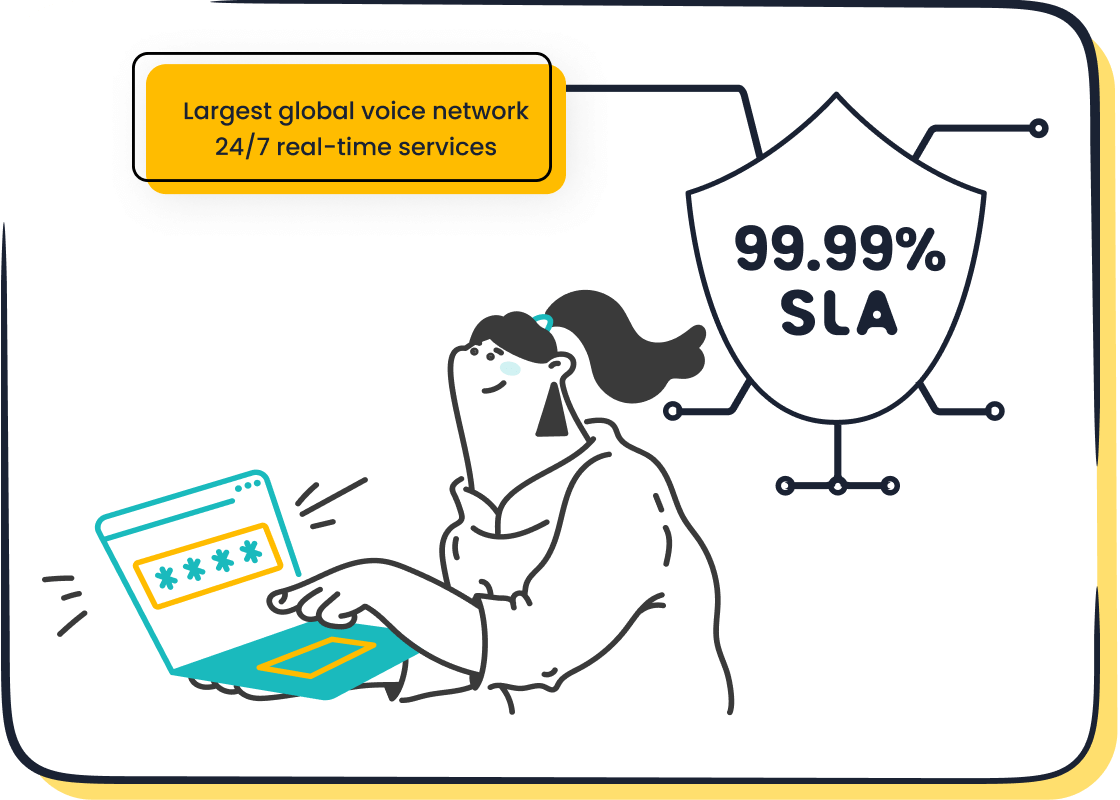
Sobot cloud contact center solutions use encrypted data transfer and secure storage to meet these standards. The platform’s 99.99% uptime ensures customer data remains available and protected at all times. Companies that prioritize data privacy build trust and loyalty with their customers.
Compliance
Contact center technology trends in 2025 demand strict compliance with both local and global standards. Sobot demonstrates a strong commitment to compliance through multiple international certifications and regional data centers. These measures help businesses operate confidently across borders.
| Compliance Measure | Description |
|---|---|
| Secure AI Pillar | Emphasizes data protection and adherence to regulations |
| International Certifications | Holds multiple certifications in information, cloud, and system security |
| Regional Data Centers | Located in the U.S., Europe, and Asia for reliable performance and compliance |
Sobot’s secure AI aligns with strict regulations, ensuring that cloud contact center solutions remain compliant in every region. Regional data centers support fast, reliable service while meeting local legal requirements. This approach helps businesses avoid costly penalties and maintain customer confidence.
Voice Biometrics
Voice biometrics technology has become a key part of modern contact center technology trends. It verifies customer identity using unique voice patterns, reducing the risk of fraud. Advanced systems now detect synthetic voice fraud with up to 99% accuracy. Deepfake identification reaches 88% effectiveness, while liveness detection achieves 98.3% accuracy.
- Voice biometrics prevent unauthorized access and protect sensitive information.
- These tools help cloud contact center solutions deliver secure, seamless customer experiences.
By adopting voice biometrics, companies strengthen security and build trust. Customers feel safer knowing their identities are protected by advanced technology. This commitment to security sets leading cloud contact center solutions apart in a competitive market.
Future Contact Center Trends and Sobot Innovation
Remote Workforce
Cloud contact center solutions now empower businesses to support remote and hybrid teams with ease. Sobot’s platform enables agents to work from anywhere, using secure access and real-time collaboration tools. Companies benefit from flexible staffing, which helps them scale up during peak periods or reduce costs when demand drops. Managers monitor performance and provide feedback through live dashboards, ensuring consistent service quality. Sobot’s mobile compatibility allows agents to handle calls and messages on any device, keeping operations running smoothly even outside the office.
Digital-First Strategies
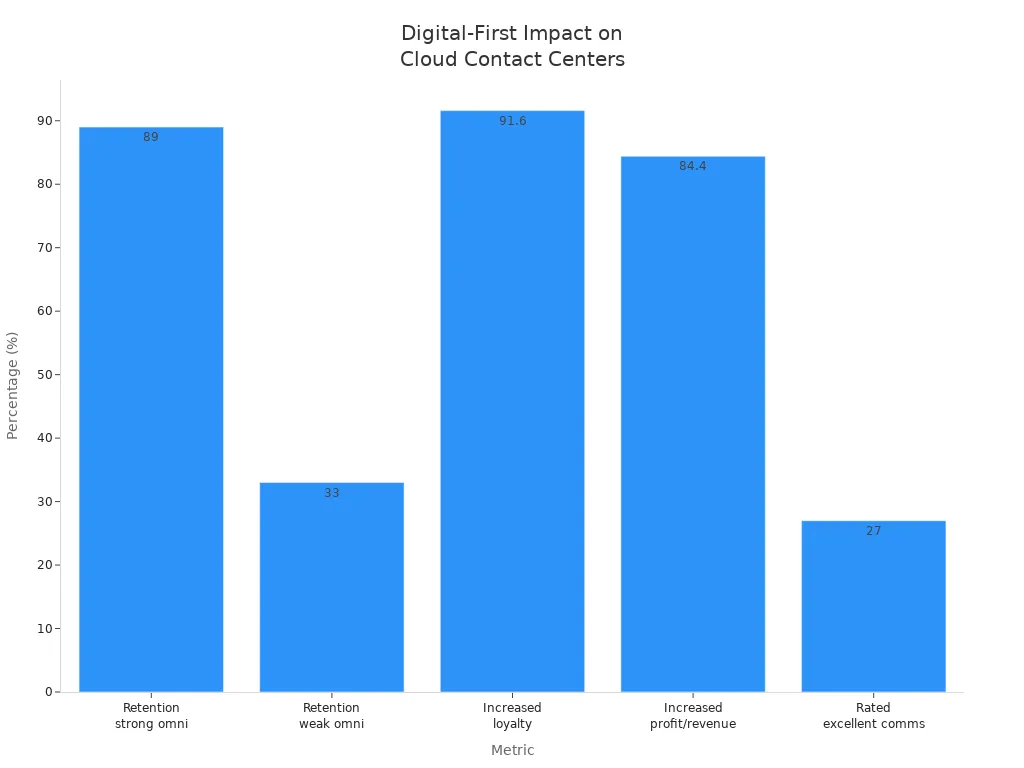
Digital-first strategies shape the future of customer engagement. Sobot’s cloud contact center solutions deliver seamless digital experiences across chat, email, voice, and social media. Customers receive timely, relevant responses, which increases satisfaction and loyalty. Businesses with strong omnichannel engagement report an 89% customer retention rate, compared to only 33% for those with weak engagement. Over 91% of companies see increased loyalty, and 84% report higher profits when using digital-first approaches.
| Metric | Value |
|---|---|
| Customer retention rate for strong omnichannel engagement | 89% |
| Customer retention rate for weak omnichannel engagement | 33% |
| Companies reporting increased customer loyalty | 91.6% |
| Companies reporting increased profit/revenue | 84.4% |
| Businesses rating their seamless communication as excellent | 27% |
- Digital messaging options save time and effort for customers.
- Seamless channel hopping improves efficiency in contact centers.
- Higher customer satisfaction is driven by reduced customer effort.
Sobot’s digital-first tools help businesses meet rising expectations and build lasting relationships.
Continuous Improvement
Continuous improvement remains essential for optimizing cloud contact center solutions. Sobot analyzes 100% of interaction data, enabling real-time monitoring and quick issue resolution. AI-powered knowledge management gives agents instant access to information, while predictive analytics forecast trends and optimize staffing. Regular training keeps teams updated on the latest contact center technology trends. Sobot’s commitment to innovation ensures businesses adapt quickly to market changes and maintain high service standards.
Companies that use data-driven strategies and advanced technologies see better customer satisfaction and operational efficiency. Sobot’s focus on continuous improvement helps organizations stay ahead in a fast-changing digital landscape.
Cloud contact center solutions drive business transformation by improving customer experience and operational efficiency. Companies benefit from new automation, analytics, and digital tools. Key takeaways for organizations include the end-of-life of legacy systems, hybrid cloud options, and advanced self-service.
- Integrate cloud-based contact center technology for flexibility.
- Use dashboards to analyze customer data.
- Optimize workforce management and simplify workflows.
Teams that adopt these strategies position themselves for future success.
FAQ
What are cloud contact center solutions?
Cloud contact center solutions use internet-based platforms to manage customer interactions. They offer features like AI automation, omnichannel support, and real-time analytics. Companies improve customer satisfaction and reduce costs by adopting these solutions. Learn more.
How do contact center technology trends impact business operations?
Contact center technology trends, such as AI and predictive analytics, help businesses automate tasks and personalize service. Companies using these trends report up to 43% lower operational costs and higher customer satisfaction. See the data.
Why do companies choose Sobot for their contact center needs?
Sobot provides cloud contact center solutions with 99.99% uptime, encrypted data transfer, and global compliance. Samsung improved agent efficiency by 30% and reached a 97% customer satisfaction rate after using Sobot’s platform.
What security measures do cloud contact center solutions offer?
Cloud contact center solutions protect data with encryption, voice biometrics, and compliance with regulations like GDPR and CCPA. Sobot’s platform ensures secure communication and meets international standards. Read about GDPR.
Can cloud contact center solutions support remote workforces?
Yes. Cloud contact center solutions allow agents to work from anywhere using secure access and mobile compatibility. Sobot’s platform supports remote teams, helping companies scale operations and maintain service quality.
See Also
Best Reviewed Cloud Contact Centers For 2024
A Comprehensive Guide To Omnichannel Contact Center Setup
Leading Contact Center Solutions Evaluated For 2024

