What Does a Client Service Agent Do in 2025


The role of a client service agent in 2025 has transformed into a dynamic and technology-driven profession. You now serve as the bridge between businesses and their customers, addressing inquiries and resolving issues across multiple digital platforms. Advanced tools like Sobot empower you to deliver faster, more personalized support. As customer expectations rise, your ability to blend empathy with efficiency becomes crucial. This evolution in the client service agent job description highlights the growing importance of human connection in a world driven by automation and artificial intelligence.
Key Responsibilities of a Client Service Agent in 2025
Managing Customer Inquiries Across Omnichannel Platforms
In 2025, you will manage customer inquiries across various digital platforms, ensuring seamless communication. Customers expect quick responses whether they reach out via email, social media, live chat, or phone. As a customer service agent, your ability to navigate these channels efficiently is crucial. Omnichannel solutions like Sobot's platform simplify this process by unifying all customer interactions into a single workspace. This allows you to access customer data instantly and provide personalized responses.
For example, if a customer contacts you through WhatsApp and later follows up via email, Sobot's omnichannel solution ensures you have all the context in one place. This integration not only saves time but also enhances the customer service experience. According to a study by Salesforce, 76% of customers expect consistent interactions across departments and channels. By mastering omnichannel tools, you can meet these expectations and build trust.
Resolving Issues with Empathy and Efficiency
Resolving customer issues requires a balance of empathy and efficiency. Customers value a human touch, especially when dealing with complex problems. As a customer service representative, your role involves understanding their concerns and providing solutions quickly. Emotional intelligence and interpersonal skills play a significant role here. For instance, acknowledging a customer's frustration and offering a clear resolution can turn a negative experience into a positive one.
Sobot's AI-powered Voicebot can assist you by handling routine inquiries, allowing you to focus on more challenging cases. This collaboration between technology and human agents ensures faster resolutions without compromising empathy. A real-world example is OPPO, which achieved a 94% positive feedback rate by integrating Sobot's chatbot and ticketing system. Such tools empower you to deliver exceptional support while maintaining a personal connection with customers.
Leveraging AI and Automation for Proactive Support
AI and automation have revolutionized what customer service representatives do. In 2025, you won't just react to customer issues; you'll anticipate them. AI-driven tools analyze customer behavior and predict potential problems, enabling you to offer proactive support. For example, if a customer frequently searches for troubleshooting guides, the system can alert you to reach out with a solution before they even ask.
Sobot's AI-driven CRM systems and chatbots are excellent examples of this technology in action. These tools handle repetitive tasks, such as answering FAQs, freeing you to focus on strategic problem-solving. Additionally, data analytics provide insights into customer preferences, helping you tailor your approach. This proactive strategy not only enhances customer satisfaction but also strengthens long-term relationships.
Collaborating with Teams to Enhance Customer Satisfaction
Your role as a customer service agent in 2025 involves more than just individual problem-solving. Collaboration with teams is essential for delivering exceptional customer service experiences. Working closely with colleagues allows you to share insights, brainstorm solutions, and ensure consistent service across all channels. For example, when handling a complex issue, you might need to coordinate with the technical team to resolve the problem efficiently. This teamwork ensures customers receive accurate and timely support.
Modern tools make collaboration easier. Platforms like Sobot's unified workspace allow you to access shared customer data, track progress, and communicate with team members in real time. This integration reduces delays and improves the overall workflow. According to a study by McKinsey, companies that prioritize collaboration see a 20-25% increase in productivity. By leveraging these tools, you can streamline your responsibilities and enhance customer satisfaction.
Team-based collaboration also fosters continuous learning. Regular training sessions and knowledge-sharing activities help you and your colleagues stay updated on new technologies and best practices. For instance, Sobot's analytics tools provide insights into customer behavior, which you can discuss with your team to refine strategies. This collective effort not only improves your skills but also strengthens the team's ability to deliver consistent and high-quality support.
Using Tools Like Sobot's Voice/Call Center for Seamless Communication
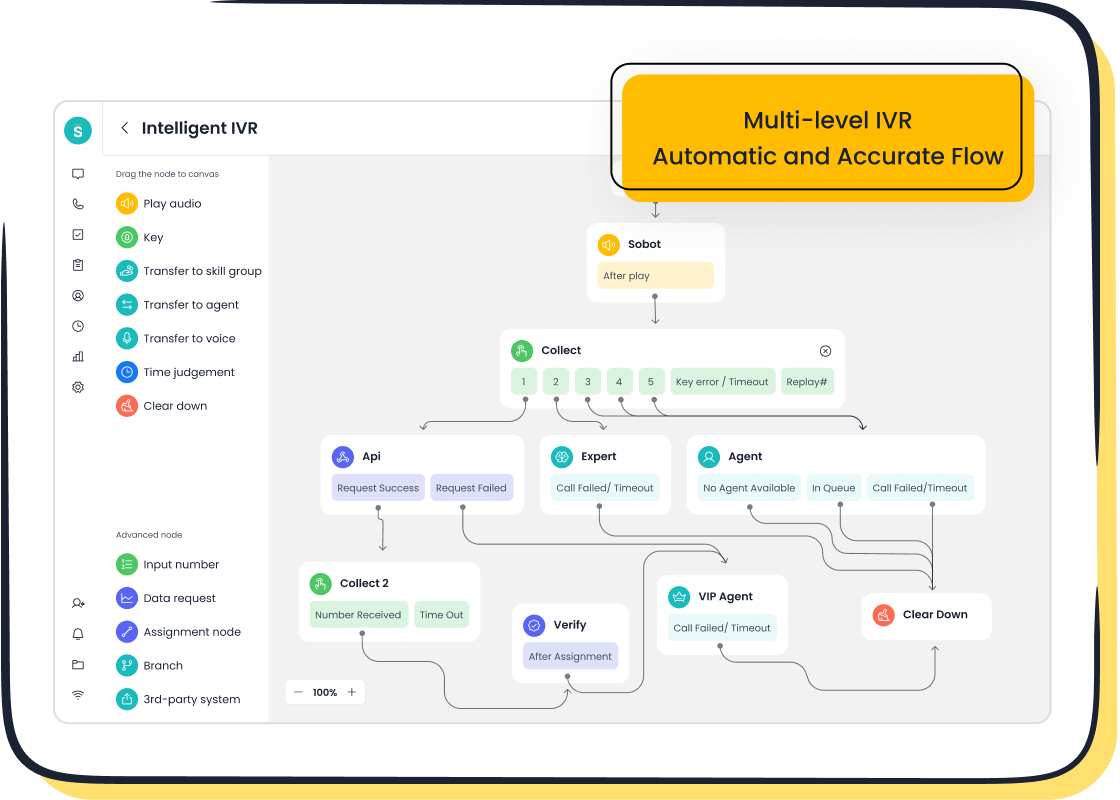
Effective communication is at the heart of customer service representatives' work. In 2025, tools like Sobot's Voice/Call Center redefine how you interact with customers. This platform offers features such as intelligent IVR, smart call routing, and AI-powered Voicebot, enabling you to handle inquiries efficiently. For example, the Voicebot can recognize customer intent and provide instant solutions, reducing average handle time.
Sobot's Voice/Call Center also supports global communication, allowing you to connect with customers across different time zones. Its unified workspace ensures you have access to all relevant customer information during calls, enhancing your ability to provide personalized support. With a system uptime of 99.99%, you can rely on its stability even during peak periods.
Consider a scenario where a customer calls with a billing issue. Using Sobot's call tracking and monitoring features, you can quickly retrieve their transaction history and resolve the problem. This seamless integration of technology and interpersonal skills ensures a positive customer service experience. According to HubSpot, 93% of customers are likely to make repeat purchases from companies offering excellent communication. By mastering tools like Sobot's Voice/Call Center, you can build trust and loyalty.
Essential Skills for Client Service Agents in 2025
Advanced Communication and Interpersonal Skills
Your ability to communicate effectively defines your success as a customer service agent. Clear communication ensures customers understand solutions, while interpersonal skills help you build trust. Active listening plays a vital role in understanding customer concerns. For example, when resolving complaints, listening attentively allows you to address the root of the issue. Empathy and patience are equally important. They help you remain calm during challenging interactions and provide thoughtful responses.
Communication skills extend beyond verbal exchanges. Written communication, such as emails or chat messages, must be concise and professional. You also need conflict resolution skills to handle disputes tactfully. According to research, strong communication skills improve customer satisfaction and create positive customer experiences. By mastering these skills, you enhance your customer service practices and deliver consistent follow-up that builds loyalty.
Adaptability to AI-Driven Tools and Technologies
In 2025, technology shapes the customer service job. As a customer service representative, you must adapt to AI-driven tools like chatbots and CRM systems. These technologies simplify your responsibilities by automating routine tasks. For instance, AI can handle repetitive inquiries, freeing you to focus on complex issues. Your ability to learn and use these tools efficiently improves customer service experience and operational productivity.
Adaptability also involves adjusting to new customer service practices. AI tools evolve rapidly, requiring ongoing training to stay updated. For example, Sobot’s omnichannel solution integrates multiple platforms, allowing you to manage inquiries seamlessly. By embracing these innovations, you enhance customer satisfaction and deliver faster support. Adaptability ensures you remain effective in a dynamic environment.
Problem-Solving and Critical Thinking Abilities
Problem-solving skills are essential for resolving complaints and addressing customer concerns. You need to analyze situations, identify issues, and develop solutions quickly. Critical thinking helps you evaluate options and choose the best course of action. For example, when a customer faces a billing error, your ability to investigate and resolve the issue ensures a positive outcome.
Problem-solving abilities also involve creativity. You may encounter unique challenges that require innovative approaches. Collaboration with your team can enhance your problem-solving efforts. Research highlights the importance of these skills in improving customer satisfaction. By refining your problem-solving abilities, you contribute to better customer experiences and long-term loyalty.
Tip: Practice active listening and empathy during customer interactions. These skills complement your problem-solving efforts and improve overall service quality.
Emotional Intelligence and Empathy in Customer Interactions
In 2025, emotional intelligence plays a vital role in your work as a customer service agent. Customers expect more than just solutions; they want to feel understood and valued. Empathy allows you to connect with them on a personal level, turning challenging situations into opportunities to build trust.
When a customer shares their frustration, your ability to listen actively and acknowledge their feelings makes a difference. For example, instead of simply offering a refund for a delayed order, you can apologize sincerely and reassure them that their concerns matter. This approach not only resolves the issue but also strengthens the relationship.
Emotional intelligence also helps you manage your own emotions during stressful interactions. Staying calm and composed ensures you provide thoughtful responses, even when faced with difficult customers. Regular training in emotional intelligence can sharpen these skills, enabling you to handle complex situations with confidence.
Empathy, combined with problem-solving, creates a powerful toolkit for delivering exceptional support. By understanding the customer's perspective, you can tailor your solutions to meet their unique needs. This human touch sets you apart in a world where automation often dominates customer interactions.
Multitasking and Time Management in a Digital-First World
As a customer service agent, you juggle multiple tasks daily. In a digital-first world, managing time effectively becomes essential. Customers expect quick responses, whether they contact you through live chat, email, or phone. Your ability to prioritize tasks ensures no inquiry gets overlooked.
Multitasking involves handling several responsibilities at once. For instance, you might assist a customer on a call while responding to a live chat inquiry. Tools like Sobot's omnichannel platform simplify this process by consolidating all interactions into one workspace. This setup allows you to switch between tasks seamlessly, saving time and improving efficiency.
Time management also involves setting clear goals for each shift. Start by organizing your tasks based on urgency. For example, address high-priority issues first, such as billing errors or technical problems. Use tools like timers or task lists to stay on track and avoid distractions.
Effective multitasking and time management improve your productivity and enhance the customer experience. By staying organized, you can provide timely support and maintain a high standard of service. These skills are essential for excelling in the client service agent job description of 2025.
Tools and Technologies Shaping the Client Service Agent Job Description

AI-Driven CRM Systems for Personalized Interactions
AI-driven CRM systems have become essential for delivering personalized customer experiences. These systems analyze customer data to provide insights that help you tailor your interactions. For example, if a customer frequently purchases specific products, the CRM can suggest related items during your conversation. This proactive approach enhances satisfaction and builds loyalty.
Businesses across industries are adopting AI-driven CRM systems at a rapid pace.
- 63% of retail organizations now use AI to improve customer service.
- These systems reduce response times and increase efficiency, allowing you to focus on complex issues.
Sobot’s AI-powered CRM integrates seamlessly with omnichannel platforms, enabling you to access customer data in real time. This integration ensures you can provide consistent and personalized support across all channels. By leveraging AI-driven CRM systems, you can anticipate customer needs and deliver solutions that exceed expectations.
Omnichannel Solutions Like Sobot for Unified Customer Support
Omnichannel solutions redefine how you manage customer interactions. These platforms unify communication channels, ensuring you can handle inquiries from email, social media, live chat, and phone in one workspace. This consolidation eliminates the need to switch between tools, saving time and improving efficiency.
Sobot’s omnichannel solution is a prime example of this technology. It integrates AI-driven automation to handle repetitive queries, freeing you to focus on more complex issues. The unified workspace provides instant access to customer data, enabling you to deliver fast and personalized responses.
Imagine a scenario where a customer contacts you via WhatsApp and later follows up through email. Sobot’s platform ensures you have all the context in one place, allowing you to provide seamless support. This capability not only enhances the customer experience but also boosts your productivity.
Note: Companies that adopt omnichannel solutions see a 30% increase in productivity and improved customer satisfaction scores.
Chatbots and Virtual Assistants for Routine Inquiries
Chatbots and virtual assistants have revolutionized how you handle routine inquiries. These tools automate responses to frequently asked questions, allowing you to focus on more complex tasks. For instance, a chatbot can guide customers through troubleshooting steps, reducing the need for human intervention.
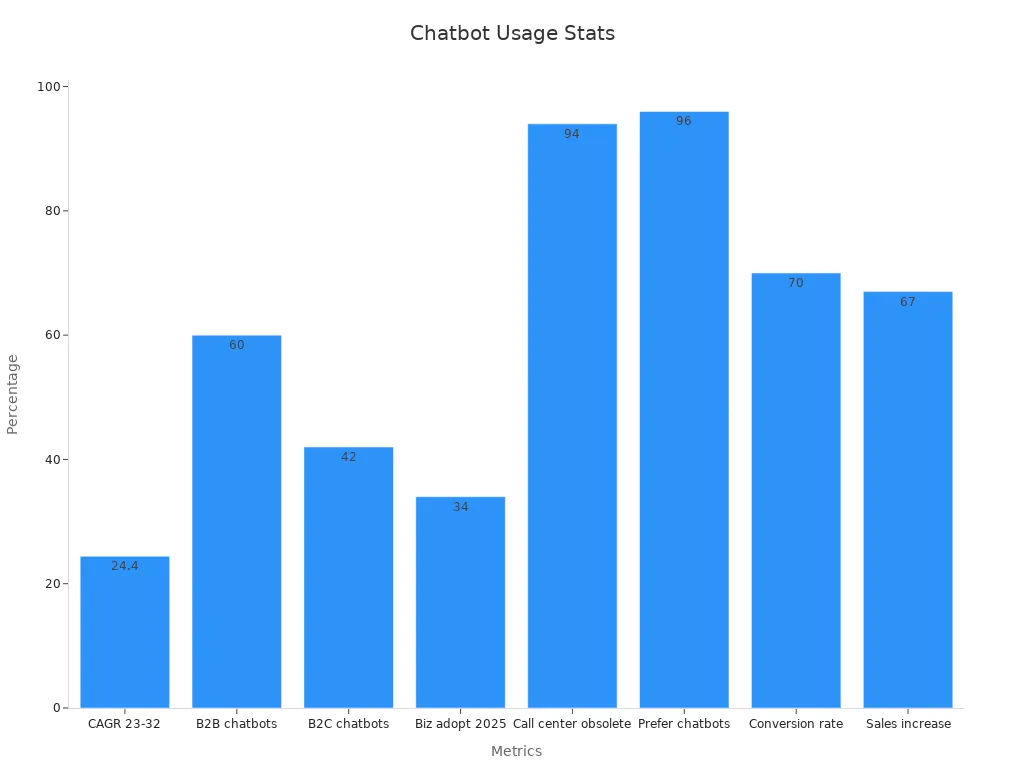
The global chatbot market demonstrates the growing importance of this technology:
| Statistic/Insight | Value/Percentage |
|---|---|
| Global chatbot market value (2023) | USD 5.1 billion |
| Projected market value (2032) | USD 36.3 billion |
| CAGR (2023-2032) | 24.4% |
| B2B companies using chatbots | 60% |
| B2C companies using chatbots | 42% |
| Projected increase in businesses adopting chatbots by 2025 | 34% |
| Consumers believing chatbots will make call centers obsolete | 94% |
| Consumers preferring chatbots over traditional support | 96% |
| Chatbot conversion rates in retail and finance | 70% |
| Increase in sales through chatbot interactions | 67% |
Sobot’s AI-powered chatbot takes this technology further by offering multilingual support and ChatGPT-enabled capabilities. It provides 24/7 availability, ensuring customers receive assistance anytime. For example, OPPO achieved an 83% chatbot resolution rate by integrating Sobot’s chatbot system. This success highlights how virtual assistants can enhance efficiency and customer satisfaction.
By using chatbots and virtual assistants, you can streamline your workflow and deliver faster resolutions. These tools empower you to focus on building meaningful connections with customers, ensuring a balanced approach between automation and human interaction.
Data Analytics Tools for Customer Behavior Insights
Data analytics tools have become essential for understanding customer behavior in 2025. These tools help you analyze patterns, preferences, and trends, enabling you to provide more personalized support. For example, if a customer frequently purchases specific products, data analytics can highlight this trend. You can then recommend related items or offer tailored promotions, enhancing their experience.
Sobot’s omnichannel solution integrates advanced analytics to give you actionable insights. It consolidates data from multiple channels, such as live chat, email, and phone calls, into a unified dashboard. This feature allows you to track customer interactions and identify recurring issues. For instance, if many customers report the same technical problem, you can escalate it to the relevant team for resolution.
According to a report by McKinsey, companies that use data analytics improve customer retention by up to 25%. These tools also help you measure key performance indicators (KPIs) like response time and resolution rates. By monitoring these metrics, you can identify areas for improvement and enhance your service quality.
Tip: Use analytics to predict customer needs. For example, if a customer searches for troubleshooting guides, reach out proactively with a solution.
Data analytics tools not only improve efficiency but also foster stronger customer relationships. By understanding their behavior, you can anticipate their needs and exceed their expectations.
Collaboration Tools for Team-Based Problem Solving
Collaboration tools play a vital role in team-based problem-solving. These tools allow you to work seamlessly with colleagues, ensuring consistent and efficient customer support. For example, when handling a complex issue, you might need input from the technical or billing team. Collaboration tools make it easy to share information and coordinate efforts.
Sobot’s unified workspace is an excellent example of such a tool. It provides a centralized platform where you can access customer data, track progress, and communicate with team members in real time. This setup reduces delays and ensures everyone stays on the same page. For instance, if a customer’s issue requires multiple departments, you can use the workspace to assign tasks and monitor updates.
A study by Deloitte found that companies using collaboration tools see a 20% increase in productivity. These tools also enhance transparency, as everyone involved can view the status of a task. This feature minimizes misunderstandings and ensures timely resolutions.
Note: Regular training sessions can help you and your team maximize the benefits of collaboration tools. These sessions ensure everyone understands how to use the platform effectively.
Collaboration tools not only streamline workflows but also promote a culture of teamwork. By working together, you can solve problems faster and deliver exceptional customer experiences.
Career Growth Opportunities for Customer Service Representatives
Transitioning to Customer Success Management Roles
As a customer service representative, you can transition into customer success management roles by leveraging your experience in understanding customer needs. These roles focus on building long-term relationships and ensuring customers achieve their goals with a company's products or services. Your ability to resolve issues and provide personalized support prepares you for this shift.
In this role, you will guide customers through onboarding, monitor their progress, and identify opportunities to enhance their experience. For example, if a customer struggles with a product feature, you can proactively offer solutions or additional resources. Companies value professionals who can turn satisfied customers into loyal advocates. This career path allows you to play a strategic role in driving customer retention and business growth.
Specializing in AI and Technology Integration
Specializing in AI and technology integration opens doors to exciting opportunities in customer service. Your familiarity with tools like chatbots, CRM systems, and omnichannel platforms positions you to become an expert in implementing and optimizing these technologies. This specialization not only enhances your career prospects but also aligns with industry trends.
- The U.S. Bureau of Labor Statistics projects around 356,700 annual job openings in computer and information technology roles, including AI-related jobs.
- Employment in these fields is expected to grow faster than average from 2023 to 2033.
- The rising demand for AI solutions, such as chatbots and virtual assistants, drives this growth.
By gaining expertise in AI, you can help businesses improve efficiency and customer satisfaction. Training in AI tools and their applications will make you a valuable asset in this evolving field.
Advancing to Leadership Positions in Customer Service
Your experience in customer service can pave the way for leadership roles. As a team leader or manager, you will oversee operations, mentor agents, and implement strategies to improve performance. Your ability to handle complex issues and collaborate with teams equips you for these responsibilities.
Leadership roles require strong decision-making and communication skills. For instance, you might analyze performance metrics to identify areas for improvement or lead training sessions to enhance your team's capabilities. These positions allow you to influence company policies and contribute to shaping exceptional customer experiences.
Advancing to leadership roles not only boosts your career but also provides opportunities to inspire and guide others. By demonstrating initiative and a commitment to excellence, you can achieve significant professional growth.
Exploring Roles in Customer Experience Strategy
Customer experience strategy roles offer exciting opportunities for career growth. These positions focus on designing and implementing strategies that enhance customer satisfaction and loyalty. As a client service agent, your ability to understand customer needs and deliver exceptional service prepares you for this transition. In these roles, you analyze customer feedback, identify pain points, and develop solutions that improve the overall experience.
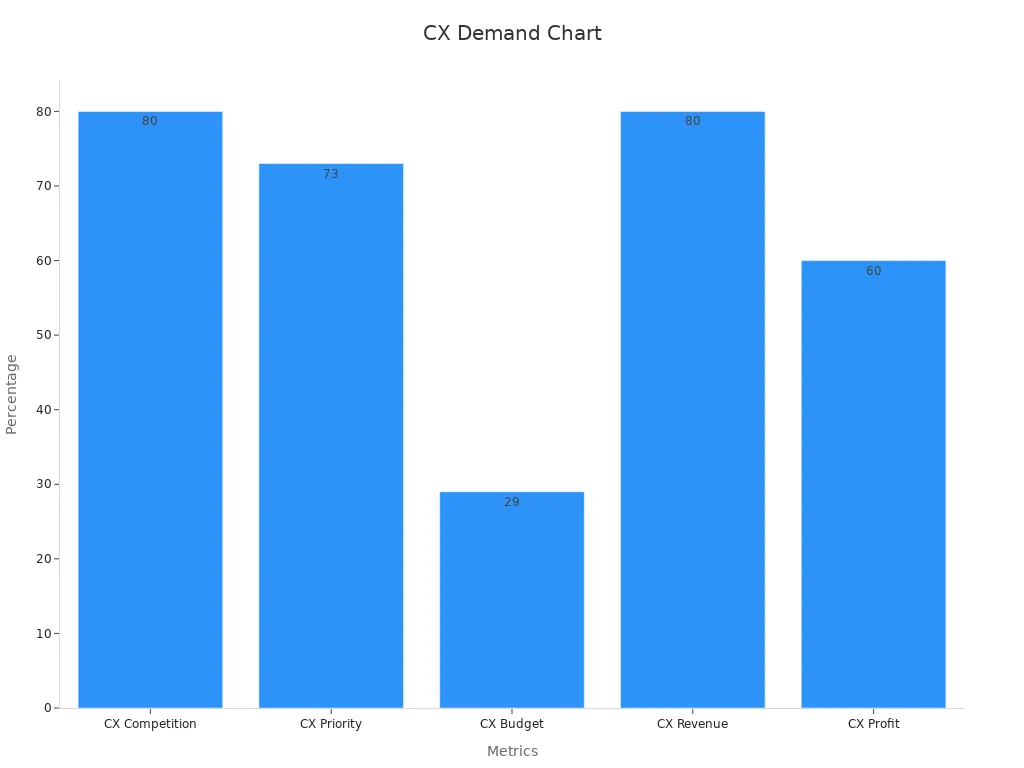
Organizations increasingly prioritize customer experience (CX) as a competitive advantage. A study by Gartner reveals that 80% of companies expect to compete primarily based on CX. Similarly, PwC reports that 73% of customers consider CX the most important factor when deciding to purchase from a company. Brands that focus on CX see significant benefits, including an 80% increase in revenue and profits that are 60% higher than those of non-customer-centric companies.
| Statistic | Source |
|---|---|
| 80 percent of organizations expect to compete mainly based on CX. | Gartner |
| 73 percent of customers now say CX is the number one thing they consider when deciding whether to purchase from a company. | PwC |
| Organizations that demonstrate how customer satisfaction is associated with growth, margin, and profitability are more likely to report customer experience success and are 29% more likely to secure more CX budgets. | Gartner |
| Of companies that focus on CX, there’s an 80 percent increase in revenue. | Zippia |
| Customer-centric brands report profits that are 60 percent higher than those that fail to focus on CX. | CX Index |
By stepping into customer experience strategy roles, you contribute to shaping how businesses interact with their customers. Your insights and solutions drive customer satisfaction, retention, and loyalty, making you a key player in achieving organizational success.
Opportunities in Training and Mentoring New Agents
Training and mentoring new agents provide a rewarding path for career advancement. As an experienced client service agent, you can share your knowledge and skills to help newcomers succeed. Mentorship programs improve employee satisfaction and retention rates, creating a positive work environment. By guiding new agents, you enhance their abilities and contribute to the overall success of the team.
Mentoring also impacts customer experience metrics. Programs focused on training agents lead to improvements in CSAT (Customer Satisfaction), AQM (Assurance Quality Metrics), and availability scores. These benefits translate into better service quality and stronger customer relationships. Mentees often experience professional growth, gaining autonomy and career advancement opportunities.
| Metric/Benefit | Description |
|---|---|
| Employee Satisfaction | Peer mentoring programs improve employee satisfaction significantly. |
| Retention Rates | Participants in mentorship programs have higher retention rates compared to non-participants. |
| Customer Experience Metrics | Improvements in CSAT, AQM, and Assurance of Availability and Help scores due to mentoring. |
| Professional Development | Mentees experience better schedule options, increased autonomy, and career advancement. |
| Support and Collaboration | High level of support for both mentees and mentors enhances the overall work environment. |
By taking on a mentoring role, you not only help others but also refine your leadership and communication skills. This experience prepares you for future opportunities, such as team leadership or customer success management roles. Training new agents allows you to make a lasting impact on your organization and the people you work with.
The Evolving Role of Customer Service Agents in 2025

Balancing Human Interaction with AI-Driven Automation
In 2025, your role as a customer service agent involves balancing human interaction with AI-driven automation. Customers appreciate the efficiency of AI tools but still value the empathy and understanding only you can provide. For example, Sobot’s AI-powered Voicebot handles routine inquiries, allowing you to focus on complex issues that require a personal touch. This collaboration ensures faster resolutions while maintaining the human connection customers expect.
A study by PwC found that 82% of consumers want more human interaction in customer service, even as automation grows. You can use AI tools like Sobot’s omnichannel platform to streamline workflows and free up time for meaningful conversations. When a customer feels heard and understood, they are more likely to trust your brand. By mastering this balance, you contribute to exceptional customer experiences that drive loyalty and satisfaction.
Tip: Use AI for efficiency but always add a personal touch to build stronger relationships.
Meeting the Demands of Tech-Savvy Customers
Tech-savvy customers in 2025 expect seamless and personalized service. They interact with brands across multiple platforms, from social media to live chat. Your ability to navigate these channels efficiently is crucial. Sobot’s omnichannel solution simplifies this process by unifying customer interactions into one workspace. This tool helps you provide consistent support, whether a customer contacts you via WhatsApp or email.
According to Salesforce, 76% of customers expect consistent experiences across channels. You can meet these demands by leveraging tools like Sobot’s AI-driven CRM systems. These systems analyze customer data to offer insights that help you tailor your responses. For instance, if a customer frequently purchases gaming accessories, you can recommend related products during your conversation.
Note: Tech-savvy customers value speed and personalization. Use advanced tools to deliver both effectively.
Contributing to Brand Loyalty and Long-Term Relationships
Your role in 2025 goes beyond resolving issues. You play a key part in building brand loyalty and fostering long-term relationships. Customers who receive exceptional service are more likely to return and recommend your brand to others. For example, OPPO achieved a 57% increase in repurchase rates by using Sobot’s chatbot and ticketing system to enhance customer interactions.
Loyalty grows when customers feel valued. You can use tools like Sobot’s Voice/Call Center to provide personalized support during calls. Features like intelligent IVR and call tracking help you address concerns quickly and accurately. Research by HubSpot shows that 93% of customers are likely to make repeat purchases from companies offering excellent communication.
By focusing on customer satisfaction and using advanced tools, you strengthen relationships that drive long-term success. Your efforts contribute to a positive brand image and sustainable growth.
Staying Ahead of Industry Trends and Innovations
Staying informed about industry trends keeps you competitive in 2025. The customer service landscape evolves rapidly, driven by advancements in AI, automation, and omnichannel solutions. To stay ahead, you must actively seek knowledge and adapt to new tools and practices.
Here are some ways to stay updated:
- Follow Industry News: Subscribe to blogs, newsletters, and podcasts focused on customer service innovations. Platforms like Sobot’s blog provide insights into emerging technologies and best practices.
- Participate in Training Programs: Many companies offer workshops and certifications on AI tools, CRM systems, and omnichannel platforms. These programs enhance your skills and keep you relevant.
- Engage in Networking: Join online forums and attend industry events. Connecting with peers helps you exchange ideas and learn from their experiences.
- Leverage Analytics: Use data analytics tools to monitor customer behavior and identify trends. For example, Sobot’s omnichannel solution provides actionable insights that help you refine your strategies.
Tip: Dedicate time each week to learning something new about your field. Small, consistent efforts lead to significant growth over time.
By staying proactive, you position yourself as a valuable asset to your organization. You also gain the confidence to tackle challenges and embrace innovations that improve customer experiences.
Emphasizing the Human Touch in a Digital-First World
In a world dominated by technology, the human touch remains essential. Customers value empathy and understanding, especially during complex interactions. Your ability to connect on a personal level sets you apart.
Here’s how you can emphasize the human touch:
- Listen Actively: Pay attention to what customers say. Acknowledge their concerns and show genuine interest in solving their problems.
- Personalize Interactions: Use customer data to tailor your responses. For instance, Sobot’s AI-driven CRM helps you access customer history, enabling you to offer relevant solutions.
- Show Empathy: Express understanding and compassion. Simple phrases like “I understand how frustrating this must be” can make a big difference.
Note: While AI tools handle routine tasks, your role involves building trust and loyalty through meaningful conversations.
Balancing technology with empathy ensures customers feel valued. This approach strengthens relationships and fosters long-term loyalty.
The role of client service agents in 2025 has evolved into a blend of technology and human connection. You must adapt to AI tools like Sobot’s omnichannel platform to meet rising customer expectations. Technology enables efficiency, but your empathy and problem-solving skills create trust. For example, OPPO improved its chatbot resolution rate to 83% using Sobot’s solutions. By embracing innovation and focusing on customer-centricity, you shape exceptional experiences that drive loyalty. Your ability to balance automation with a personal touch ensures success in this dynamic field.
FAQ
What is the role of AI in customer service in 2025?
AI helps you automate routine tasks like answering FAQs and analyzing customer data. It enables proactive support by predicting customer needs. Tools like Sobot’s AI-powered Voicebot and CRM systems improve efficiency, allowing you to focus on complex issues that require human interaction.
How does Sobot’s omnichannel solution simplify customer interactions?
Sobot’s omnichannel solution unifies all communication channels into one workspace. You can manage inquiries from email, social media, live chat, and phone without switching tools. This integration saves time and ensures consistent, personalized responses, enhancing customer satisfaction and productivity.
What skills are essential for a client service agent in 2025?
You need advanced communication, emotional intelligence, and adaptability to AI tools. Problem-solving and multitasking skills are also crucial. These abilities help you deliver exceptional service, build trust, and meet the demands of tech-savvy customers.
How can you balance automation with human interaction?
Use AI tools like Sobot’s Voicebot for efficiency while focusing on empathy during complex interactions. Listen actively, personalize responses, and show understanding. This balance ensures faster resolutions while maintaining the human connection customers value.
What career opportunities exist for customer service agents?
You can transition into roles like customer success management, AI specialization, or leadership positions. Opportunities also include customer experience strategy and mentoring new agents. These paths allow you to grow professionally while contributing to organizational success.
See Also
Transforming Customer Support With AI Service Agents
Discovering Leading Cloud Contact Centers For 2025
Best Reviews Of Cloud Contact Center Services 2024

